
The market producing doctorates in the humanities is showing no signs of slowing down. The fact is we’re all human, and many of us aren’t very technically inclined, unless we have to be. There are fewer and fewer jobs for these bright students who graduate with doctorates in the humanities, but the plight of the “privileged” is no concern to wider society. Let the eggheads figure it out. At the same time, wisdom in the job market is that careers in Science, Technology, Engineering, and Math (STEM subjects) are growing and showing the most promise for future careers. The pace of technological change is so rapid that yes, obsolescence for new devices is six months or less. My iPhone 4 is a dinosaur, although when I first held it some three years ago it was so advanced that I was afraid of it. A moment’s reflection will reveal that the most advanced technology is already in use in the military since staying ahead of the enemy is always the bottom line.
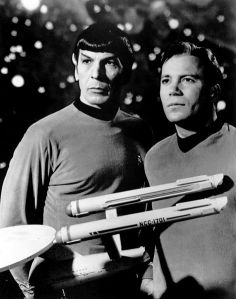 This situation has led to some concern, and not just among those of us in the humanities. Some in the world of STEM are saying that quality of life suffers. To indulge a stereotype, try to imagine geeks without Star Trek. We know that Star Trek was as much fantasy as science fiction. My iPhone makes a communicator look just plain silly. Star Trek is, however, creative indulgence. While many would hesitate to raise it to the status of “art” it is part of the Arts: fine arts, literature, film, music, and some television. The stories it tells are the stories of human beings (and one alien) struggling against often more advanced civilizations. In the end, humanity always wins. If we exit the stereotype, scientists are often musicians and writers as well. Some become novelists or consultants on box-office busters. We are more than meat machines.
Recently voices have been heard suggesting that STEM should be STEAM. The Arts have an integral role to play in the scientific and technological fields. Even some numbers are imaginary. The basis for developing imagination is the Arts. Although we could have made it to this point in our development without Star Trek, the fact is that many of us growing up with it, as well as the more silly, but also influential Lost in Space, and what we now know is a most assured cash cow, Star Wars, know that these shows helped shaped the present we inhabit. Arts give us visions. There continue to be those who castigate the Arts as “soft” and “weak” and tangential to the cold hard facts. But they are wrong. Humans can’t survive without a source of warmth and energy. And the first great engines of advancing civilization still have much to teach us, for those engines ran on steam.

 Steve A. Wiggins