Colorful Space

Lovecraftian horror translates to film unevenly.  Even when it’s successful, as in Color Out of Space, it really isn’t that close to reading Lovecraft.  “The Colour Out of Space” is among my favorite Lovecraft stories.  To me, it feels perhaps his closest to Poe, and Poe is my personal muse.  I knew that it couldn’t be made cinematic without changing things a bit, and that it would be pretty gnarly.  I was correct on both counts.  In very broad brush strokes, the movie follows the story: a colorful meteorite on an isolated farm begins changing the crops and the people who live there.  Instead of crumbling, however, they are struck by the color and become other.  The mother and her youngest son, for example, are fused together creating one of the most cringe-worthy scenes I’ve watched in a long while.  The movie emphasizes family, even when things go horribly awry.

Defying Lovecraft’s well-known avoidance of focus on female characters, the movie’s focal point in Lavinia accords with Poe’s concern for threats against beautiful women.  She’s the teenage daughter of the family and the film opens with a scene where she uses Wicca to try to heal her mother of cancer.  The love between Nathan (Nicolas Cage) and his wife is movingly shown.  The movie was recommended to me during a conversation about Nicolas Cage in horror.  Maybe it’s because he’s in so many movies in total, I’d never really considered him a scream king, but he’s nailed the role quite capably, with the notable exception of The Wicker ManColor Out of Space is pretty extreme body horror but the movie is artistically done.  You almost don’t mind feeling violated in that way because of the visual appeal of the non-horror focused parts.

The acting is uniformly strong.  In a nod to Lovecraftian fans, Lavinia uses the Necronomicon as the basis for her Wiccan rites.  Some of the scenes seem to reference Evolution and others eXistenZ.  Transforming the action from Lovecraft’s setting in the early twentieth century to the early twenty-first is done pretty well.  The family is isolated when the meteorite prevents electronics, including cars, from working.  The movie does offer some alien creatures, unlike Lovecraft’s basic story.  And these creatures point to a planet with tentacly beings that naturally tie this story into the Cthulhu mythos.  Lovecraft’s own story doesn’t make this move, but of course, the Cthulhu mythos only really developed among his fans.  In all, Color Out of Space exceeded my expectations, even though it was a box office flop. 


Dark Lovecraft

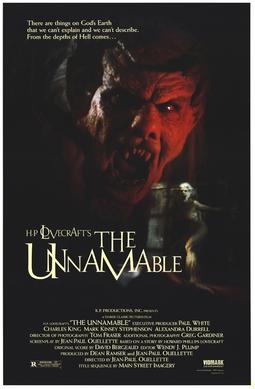
There is no shortage of Lovecraftian horror movies out there.  I watched The Unnamable because I found it on a list of dark academia movies.  And also, well, it’s horror.  I’ve most likely read Lovecraft’s original story at some point in time, but I didn’t remember it at all.  The dark academia part comes in because it involves college students and a haunted house.  A low-budget offering, this is hardly great cinema.  It’s not sloppy enough to qualify as a bad movie.  That puts it somewhere around “meh.”  The film opens with Joshua Winthrop being killed by the monstrous daughter that he keeps locked in a closet of his house.  Then, in the present day (the movie is from 1988) three college guys talk about it and the skeptic decides to spend the night in the house to disprove the monster tale.  He is, of course, killed.  Although his two companions don’t go looking for him, others end up in the house.

A couple of upperclassmen looking to score with freshmen coeds, talk two women into going to the house with them.  As they start to enact their plan, the monster kills them one-by-one, leaving the virginal final girl alive.  Meanwhile, the other two students whose friend was killed, also come to the house.  They manage to rescue the final girl and escape the creature by invoking the Necronomicon’s spells.  The music cues are often comical, suggesting that this isn’t to be taken seriously.  They also spoil the dark academia atmosphere.  For me, a horror film works best if it’s either clearly horror or clearly comedy horror.

It did, however, raise a question in my mind.  Dark academia and horror do have some crossover.  H. P. Lovecraft often had professorial types as his protagonists.  Was he writing a form of dark academia?  It’s difficult to say.  Lovecraft’s work was known as “weird fiction” in his time, and it has become its own kind of genre.  (Just try to publish in the rebooted Weird Fiction without your Lovecraft cap on and see how you fare.)  I’ve been pondering genres for quite some time, and since I watch movies because they’re free or cheap, often, I see some unconventional fare.  There’s no question that The Unnamable is horror.  When the movie ended I was sad for the monster.  She’d been living according to her nature, and really didn’t deserve the treatment she received from a bunch of trespassers.  Not a great movie, it nevertheless made me think.


Filming the Void

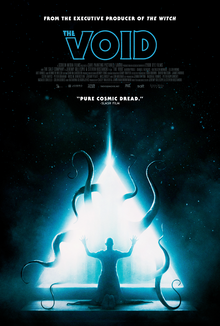
Once you move away from major studios, it turns out that Lovecraftian horror is rather prevalent.  Seeing that The Void was rated higher than many offerings on FreeVee, well, why not.  It was compared to the intellectual works of Benson and Morehead, but to me it matches more closely with Older Gods.  Like many movies in this genre, The Void isn’t easy to follow and having commercial interruptions doesn’t help.  (In movies made for television, directors know to offer cues at specified times to allow for a break.  I’m not sure that those at FreeVee, or Tubi, or Plex, or their ilk, or even Hulu, know how to do this well.)  So there are these mysterious cultists—somehow “new religionists” just doesn’t seem to cut it—who apparently want to bring about the apotheosis of their leader in a rural setting. 

Meanwhile a local sheriff finds a young man fleeing from a couple of guys who are killing people and takes him to the hospital.  This hospital, however, is being closed down and there’s only a skeleton crew there to handle emergencies until it can be decommissioned.  Once the guys trying to kill the young man arrive, the hospital is surrounded by the cultists.  By the way, there will be spoilers—just saying.  It never is adequately explained how these killing guys know who these cultists are, unless it happened so fast that I missed it.  In any case, all trapped in the hospital there’s the problem with a monster that has tentacles (Lovecraftian) that takes over the body of a nurse, then a tries to get a state policeman.  Lots of axes and gunfire, and the numbers in the hospital are reducing.

It turns out that the kindly old doctor is the leader of the cult and he’s trying to raise the old gods so that he can bring his daughter back to life.  The sheriff, who’s been the protagonist all along, knocks said doctor into the eponymous void, leaving only two people alive in the hospital.  It’s not really explained where the cultists, who made it into the hospital, went.  Nevertheless, this is a good example of horror and religion (which is ironically Lovecraftian).  The doctor’s unconventional religion is the cause behind the hospital mayhem, and, apparently the killings being conducted by the interlopers are attempts to stop it.  As a horror film it’s effective, if a bit disjointed.  It seems that there’s still a lot to unpack from films that try to bring Lovecraft’s ideas onto the silver screen, major studio or not.


Gateway Horror

I’m in two minds about The Gate.  Part of me says “bad movie” while another part says, “Yeah, I’d watch it again.”  A third part of me knows I probably will.  It came out in 1987 as family-friendly horror.  There’s far too much going on for the run-time and the acting is lackluster (child actors who can really pull horror off are rare; perhaps those with more life experience make it believable).  It does have some Poltergeist vibes, though.  So, Glen (12) and his sister Al (15) are allowed to stay home without a babysitter for three days.  A couple nights before, a storm blew over a tree in the backyard, and Glen, with his friend Terry, accidentally open the eponymous gate at the hole by breaking open a geode, allowing demons to come into the world.  And, of course, the parents are gone.

Glen fears he is losing his sister to, well, growing up.  They used to do model rockets, but now she’s interested in boys.  Terry listens to heavy metal and discovers in an insert to an album of a European band, Sacrifyx, that they’ve opened the gate.  As night falls, the stop-motion demons attack.  They’re little and can be blocked by doors.  Al, Glen, and Terry have to figure out how to stop the demons and seal the gate without the Dark Book insert from the Sacrifyx album.  What to do?  They grab a Bible and try reading a bit.  When it doesn’t seem to be working, Terry utters an expletive and throws the Bible into the hole.  It works!  But, ah, this is only the false resolution.  The really big demon bursts through a hole in the living room floor after Terry and Al are both taken.  Glen, left to his own devices, launches a model rocket at the demon, destroying it.

Okay, sounds bad, right?  The reason, it seems to me, is that it doesn’t put religion to work for itself.  The instincts seem good—use the Bible—but the demons are too corporeal and too physical.  There’s no possession here.  In fact, the demons are the old gods (we’re in Lovecraft territory now) who want to take over the world once again.  There’s some good material to work with in The Gate, and if I ever get around to a sequel to Holy Horror I’ll have to include this one.  Overall, the message seems to be that if the Bible doesn’t work, use a rocket.  Oh, and don’t give up on your sister.


Squidish

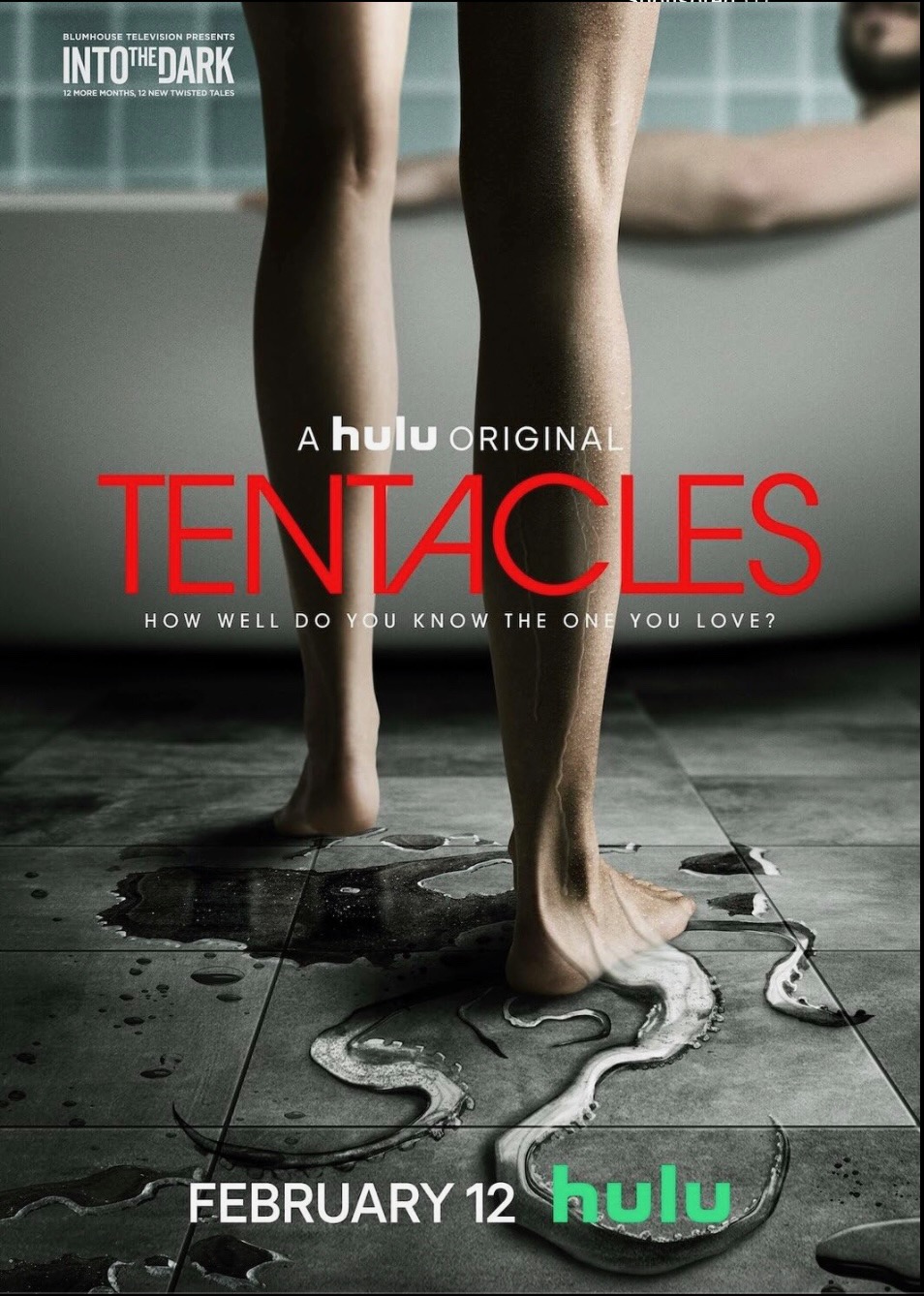
I was attracted to the Lovecraftian aspect of the title.  Of Tentacles, I mean.  I wasn’t aware that Into the Dark was a Hulu series of television shows based on holiday horror.  I watched Pure without realizing that.  Movies these days are complicated.  In any case, Tentacles caught my attention and although it isn’t a tier-one horror film, it’s fun in its own way.  Tara, a desperate young woman, is looking to buy a house.  She finds Sam, who’s trying to sell his parents’ place and seduces him into letting her renovate it.  The two fall in love and Tara reveals she’s being stalked by an ex.  Sam has, however, come down with an illness that doctors can’t identify.  Something is putting tentacles into his ears as he sleeps.  It doesn’t take long to figure out that Tara’s not what she claims to be.  She’s some kind of creature that originated in the ocean, but survives on land by taking part of her victims and slowly becoming their double.  The original, of course, must be disposed of.

This is a serviceable little movie.  The acting is good, particularly on Tara’s part.  There’s enough mystery and energy to keep viewers engaged, despite the commercials.  It also made me realize that Into the Dark might be worth exploring a little more intentionally.  When I went to my usual places to find out more about what I’d just watched, it was a little tricky.  To find the write-up on IMDb you needed to find the series title first so that you could click onto the individual episode.  This is so different than either the major studios or independent filmmakers.  Streaming services, however, have been offering some good home-grown horror.  I’ve seen some notable examples from Netflix, Amazon, and, of course, Hulu.

Anything with tentacles seems to have a tangible Lovecraft connection these days.  In large part it seems to be because of the internet success of Cthulhu.  Those who spend lots of time online know who the Old One is without having ever read H. P. or having watched horror.  He’s become the monster with tentacles, something my college sci-fi professor would doubtlessly have commented upon.  Lovecraft himself would have, I suspect, enjoyed the notoriety but would likely have felt some disappointment regarding the point he was trying to get across.  (That’s more evident in Older Gods.)  The vacuousness of being alone in a meaningless universe was more his aesthetic.  Still, it inspired some fun films for a sleepy weekend afternoon, and its tentacles keep on reaching.


Gods and Crafts

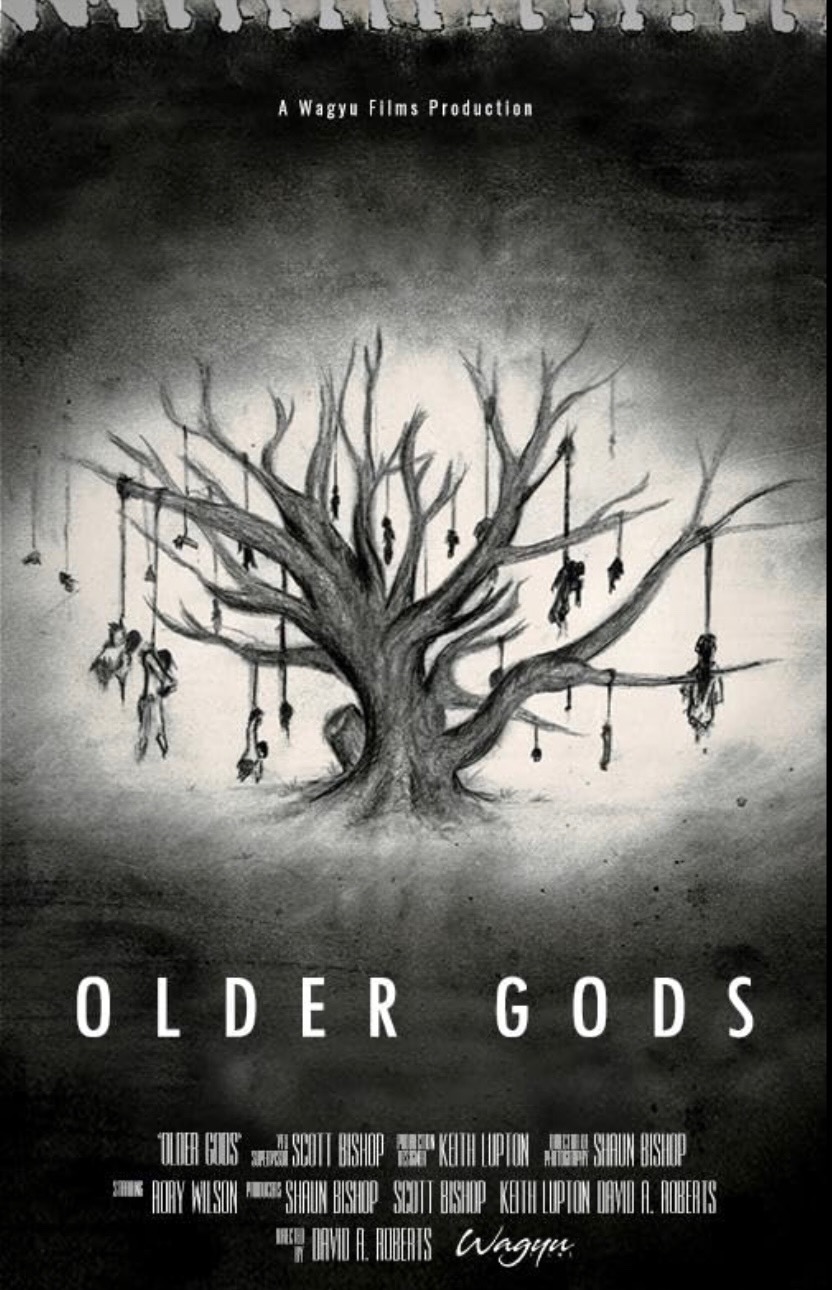
Those of us who write fiction, I suppose, often ponder what it would be like having a kind of writing named after us.  Knowing that’s not likely to happen we might cast an envious eye toward, say Lovecraftian horror, which has become a sub-genre in its own right.  When a friend pointed me to Older Gods, an independent Lovecraftian horror film shot in Wales, I was glad to see it already out on a free streaming site (with commercials, of course).  Winner of several accolades, the movie isn’t easily understood although the plot is fairly simple.  A man has gone to Wales to find answers regarding a lifelong friend’s suicide there.  A recorded message tries to explain what this friend had stumbled upon that led him to his extreme act.  A world-wide underground religion is attempting to awake one of the older gods to bring about the end of the world.

The problem is these devotees of the older gods—one deity in particular, called “The Origin”—hunt down anyone who learns about them.  They give them the choice to join or to have their families killed, followed by themselves.  If they do join, it hastens the end of the world.  In other words, the engine driving this movie is religion.  Shot with a very low budget over a very short span of time, it manages not to fall into the “bad movie” category, and actually edges into the “good” category.  The film crew, reportedly, numbered only seven (no extensive credit roll here), and the story is based on a premise introduced by H. P. Lovecraft.  The older gods, who care nothing for humans, are asleep beneath the sea, awaiting the signal to awake.

Since this movie was only recently released, not much in the way of online summaries is yet available.  The reason this might be important is that Lovecraftian narrators not infrequently go insane.  In other words, is our protagonist a reliable narrator or not?  Did he, like his deceased best friend, go insane?  This is never resolved.  Those devoted to the religion of the older gods are unrelenting.  Lovecraft, famously an atheist, knew the power of religious belief.  His nihilistic universe included a scary place for believers.  When these themes come together, with or without tentacles, we seem to be in territory named after its creator.  Older Gods is a slower paced, thoughtful film that leaves you unsettled.  And there’s no doubt regarding its true origin.