Belated Lughnasadh

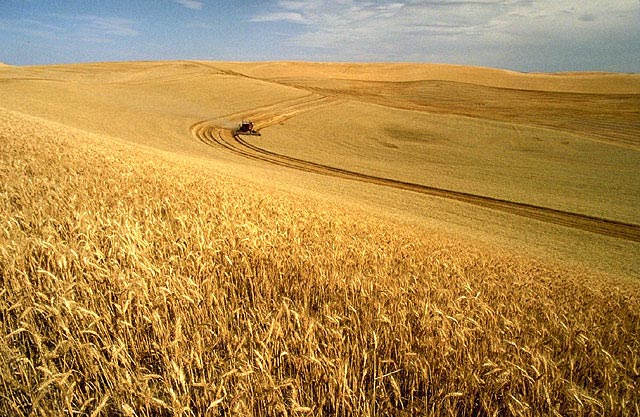
We’re accustomed to think of summer as a “non-holiday” season beyond the bookends of Memorial and Labor Days, and the midsummer Independence Day.  Still, ancient people felt the turning of the year at the start of August with the festival of Lughnasadh.  I often forget it myself, although I’ve been feeling a tinge of autumn in the air this past week.  You can smell it at the very tip of your nose if you’re sensitive enough.  The cool of the pre-dawn air presages changes to come.  The wheel turns constantly.  Lughnasadh was actually Sunday (August 1).  Along with Samhain (Halloween), Imbolc, and Beltane (May Day), it divides the year into quarters (now called cross-quarter days since they fall roughly midway between the solstices and equinoxes).  It reminds us that summer is getting on; Lughnasadh was the festival of early harvest.

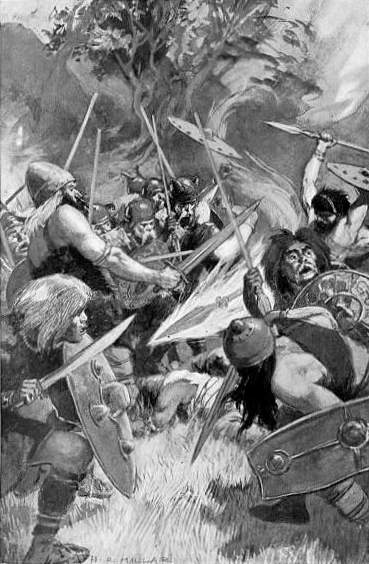
Lughnasadh was originally said to have been initiated by Lugh, one of the most prominent of Celtic deities.  Several European cities, such as Lyon, have names that likely derive from Lugh.  A warrior god renowned for his ability with crafts, he was also a savior god.  Although I’m no expert in Celtic mythology, it’s difficult to live in a Gaelic country for three years and not absorb some of the fascination for it.  Unlike Greek mythology, there aren’t large numbers of ancient literary pieces that tell the full story.  There are tales enough to know that Lugh was a major god of pre-Christian Europe and that as Christianity spread he was challenged by another savior god.

Although now rather obscure in much of the world, the Christian holiday of Lammas, or “Loaf Mass” was settled on August 1, likely to draw attention from Lughnasadh.  It too was a celebration of first fruits, for as reluctant as we are to let the light and warmth of summer go, plants are beginning to feel the onset of fall.  Lammas is a festival of communion—thus the loaf—and continues to be celebrated with local customs.  It includes the blessing of bakeries or of bringing bread to church to be blessed.  Lost in the modern rendition of summer, Lughnasadh or Lammas is barely recognized by most of us.  I’d never heard of it until I began researching holidays for a book I wrote that was never published.  Festivals that celebrate the changing seasons have an appeal to those of us isolated indoors behind screens all the time.  Perhaps it’s time to bring some summer holidays back. Lugh says yes.
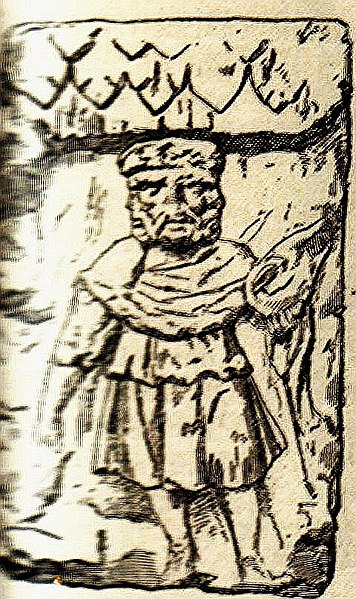
Perhaps Lugh, via Wikimedia Commons

Disputed Parentage

What has Athens to do with Jerusalem, Tertullian famously asked. Much, seems to be the rhetorical answer. Today, August 1, is Lammas. It is said to commemorate the wheat harvest and Lammas is taken to be derived from Anglo-Saxon hlaf-mass, or “loaf-mass.” Beneath this apparent Christian celebration is the pagan festival of Lughnasadh. I’ve posted on Lugh before, but holy days are often seasonal, and it is time to consider Lammas again. Lammas is the last of the cross-quarter days that divide the European pagan year. Some communities bake bread to celebrate it, sometimes in the shape of a person (those of you who’ve seen the original Wicker Man know what I mean).

Christianity was born a persecuted religion that grew to be a persecutor. Deeply rooted pre-Christian traditions were eradicated or sublimated in the growth of Christendom. The modern pagan movement may not have an unbroken line of tradition, but it is a tradition that has ancient antecedents. What Christianity could not conquer it assimilated. Much of what became Christianity derived from Judaism. Much of Judaism had its origins in folk religions of ancient Western Asia. In its European context, Christianity adopted the heathen traditions that fit within the pattern of Christian thought. Agricultural celebrations quite frequently matched events in the imperial religion. Or, if no so events existed, new traditions were invented. It is quite plain that that is why we celebrate Christmas in December.

Why is it that Christianity has so vociferously disavowed its lowly parentage? Being a chthonian religion should be no mark of shame. What is wrong with different but equal? Many people fear and despise those who declare themselves pagan, but paganism is a religion like any other, concerned with morality, justice, and living in accord with the power “out there.” So as August wends its way into the calendar, and the earth begins its inevitable tip towards lengthening nights and the cooling of the days, we might do well to consider Lammas. Whether from the Christian angle of Saint Peter in Chains or from the Pagan angle of Lughnasadh, Lammas is a time to eat bread and reflect, two of the most human of activities. And perhaps with thought will come tolerance.


August Ancestry

Lugh

Now that August is in full swing, it is appropriate to think of Lugh. It would have been more appropriate, I suppose, to have considered him on Lughnasadh (August 1) but I’m afraid I missed the deadline. August is the only month with no officially recognized holidays, either lighthearted or serious, in the United States. Back in Celtic Britain the first of August was one of the quarter days, or days when the rent was due and religious festivals were celebrated. When Scotland was Christianized, Lughnasadh was kept under the name Lammas-mass, a festival of the first harvest of the year. The Christian correlation became the deliverance of Peter from prison or Saint Peter in Chains.

Lugh was, without doubt, one of the most important gods of the Celts. It has been suggested that the Celts understood their gods not to be transcendent beings of a different order than humans, but rather as their own ancestors. They apparently believed that gods came from great humans. Lugh is a warrior god, and occasionally god of the sun. His favored epithet is “long arm” or “long hand,” indicating his felicity with spears and swords. So widely was he known that many important cities were named after him, including Lyon in France, Vienna (known by one of his epithets), and perhaps even London itself. When Romans conquered the Celtic lands, the festival in August was that of the Caesar from whom the month takes its name, Augustus. Apart from the minor Christian festival of Peter in Chains, the month of August was simply forgotten as the seat of holy days.

The origins of gods differ in diverse cultures. The assumption of most people today seems to be that gods exist as an ontological reality and we reverence them because of their factual existence. The Celts, on the other hand, grew their own gods in the tradition that a noble human was worthy of veneration and full of undying power. Lugh may have been one such person. If he was, he has been lost in the heavy haze of hoary antiquity. He comes to us today in August, but more often in March. The word leprechaun is an Anglicized version of the Irish phrase “Lugh the cobbler” (one of his many associations). As such he is remembered every time we pour ourselves a bowl of Lucky Charms.

Part Lugh, part Potter