
I have to admit to having not seen the Lego Movie. As a kid, I grew up without Legos. We were a family of modest means, so Lincoln Logs were more our style. When I first came to see Legos, they appeared restrictive to me with their pixel-like determination. Of course, Legos have come a long way since then. My wife sent me the story in Newsweek about the Martin Luther figure (not, I hear, featured in the movie) that surprised Playmobil, the parent company, by becoming their fastest selling figure ever. I suspect that the company put the figure out just a year before the five-century mark of the 95 theses that essentially created Protestantism, to catch a little of the interest that anniversaries always bring. Although I have no data to back me up, my guess is that the majority of sales have been to adults. Little Luther with his quill and German Bible, it seems, tickles adult minds more than pre-adolescent ones.
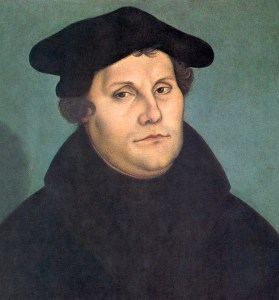
This startling statistic ought to give pause to those who claim religion is irrelevant. Remember, Star Wars and Batman figures have also been available and collectable in Lego format. Even so, a German monk has outsold them all. This, it seems to me, indicates both an appreciation of irony and a very deep-seated need for finding meaning in life. After all, Star Wars is more than escapism. Lutherans are, by no measure, the largest Christian denomination. There is something, however, about Luther. Sure, those in the early modern period who had problems with the church were legion. Martin Luther did something about it. He took his life in his hands to address the wrongs he saw. Like most religious founders, he wasn’t advocating for a new religion, but a reformed one. The rest, as they say, is history.
The media tells us again and again that we are a secular people and that the church no longer moves us. Stagnating attendance figures and more vocal unbelief have become so common that many people feel a little embarrassed to admit that they believe something, anything. But do actions not speak more loudly than words? 34,000 Martin Luthers sold in 72 hours. Perhaps not Rock Star numbers, but very respectable for a bit of plastic. I wonder if this might not be a sign. Perhaps, with Luther, we ought to take the time to sit down and write out what we believe. Maybe our Wittenberg door should be that of Congress rather than a castle church. Or maybe it can be the door of our own minds. Luther, dead nearly half a millennium now, has shown us what a leader with vision can accomplish despite the centuries. And with a bit of plastic.
 Steve A. Wiggins