Locating Yourself

How do you come to where you spend your life?  It could be where you’re born.  I was born in Franklin, Pennsylvania.  Neither of my parents were.  On my mother’s side we had a tradition of wandering.  We eventually moved to Rouseville, a refinery town not too many miles from where I grew up initially, but very different in character.  I knew I wanted to get away.  I lived in Grove City next, only as a student.  For a short while I resided with some friends in the South Hills of Pittsburgh before moving to Boston to attend seminary.  Like many who go to Boston for school, I wanted to settle there.  I did so for about a year after graduation, making a living, such as it was, selling cameras.  My next move was precipitated by love.  I moved to Ann Arbor, Michigan to be with my fiancée, but I’d already been accepted to Edinburgh University, so an international move was imminent.

Roseville

Edinburgh, like Boston, is a spiderweb.  We would’ve stayed if we legally could have, but with a job market for academics already tanking, we headed back over the Atlantic.  My wife was a grad student at the University of Illinois, so we moved first to Tuscola (family there), then Savoy (on the outskirts of Champagne-Urbana).  Meanwhile I commuted to Delafield, Wisconsin, home of Nashotah House.  We eventually moved to Delafield and stayed until I was no longer wanted.  Our move to Oconomowoc was necessary to keep our daughter in the same school.  The possibility of full-time employment drew me to Somerville, New Jersey.  We would stay there until my daughter had a chance to graduate.  Depression convinced me that I’d run out the clock in that apartment, but a financial advisor suggested Pennsylvania, where I was born.  Thus we ended up in the Lehigh Valley.

I’ve liked every place I’ve lived.  If I had my druthers, however, I would’ve ended up teaching at a small college in Maine.  Several friends have moved to Maine as I’ve jealously watched.  The places we spend our lives, at least in my case, are determined by a measure of fate.  Nashotah House was the only job I was offered from Edinburgh.  Gorgias Press was the only job I was offered after the seminary.  Moving to my home state was volitional, of course.  As a couple we’d have been content in Massachusetts, Michigan, Wisconsin, or New Jersey.  Economics, of course, has a heavy hand in all of this.  I sometimes think that, if I could ever retire, moving to Franklin again would be a way of coming full circle.  But then, life is change and we end up, it seems, where we’re meant to be.  Perhaps Canada?


Gothic Illumination

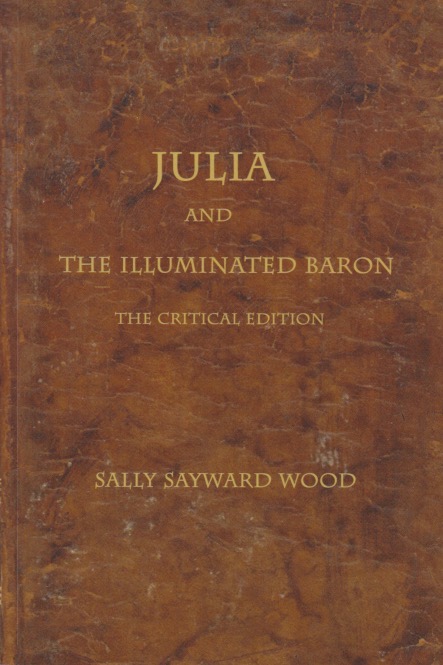
A mere month ago I had never heard of Sally Sayward Wood.  She has seldom received much attention, and it may be in part because her literary finesse wasn’t quite that of her compatriots.  Wood, however, was the earliest American woman to write a gothic novel.  She was also Maine’s first novelist.  I learned of Julia and the Illuminated Baron from a rather unexpected source, but my interest in the history of horror meant that I knew I would have to read it.  Original printings are extremely rare, but the University of Maine has brought them back into circulation.  Julia was published in 1800 and it is old-style gothic.  Set in France, among the aristocracy, it has gloomy castles, dastardly villains, and damsels in distress.  The story also involves an extremely complex set of titled gentry that end up being fairly closely related by the end of the novel.  Well into the story (after about 150 pages) it grows somewhat exciting, but the denouement is something you can see coming, though.

What is really striking about this gothic romance is the extreme vitriol served up to the Illuminati.  In particular, Wood seems quite affronted by their atheistic outlook, stating rather boldly that without Christian sensibilities that morals can’t be preserved.  This wasn’t an uncommon view around the turn of the nineteenth century, of course.  The Enlightenment had begun to take hold and not a few people were very concerned about the implications.  Social change must be slow, if it is to have lasting impact.  Quick change leads to reactionary backlashes, as anyone who looks at history knows.  Still, this makes Wood’s villain particularly nasty.  Perhaps even more surprising is that such biases continue today.

Gothic was an important part of early American literature.  It owes quite a bit to its European forebears, but it developed into its own form in the New World.  When she does mention America, Wood ladles praise on George Washington.  She was born, of course, before the Revolutionary War, when Maine was still part of Massachusetts.  All of this makes me feel somewhat less of a pariah, knowing that the early American tradition was part of the family tree for horror.  In today’s parlance gothic might seem far from the slasher, but without gothic we’d never have had our classic ghost stories that first gave people the frisson that begged for further expression.  Julia and the Illuminated Baron is a bit too satisfied with the wealthy overlords of the second estate.  It is a work of fantasy, however, of one of the earliest American women to try her hand at fiction.


Wild Moose Chase

I don’t remember the details, but I’m pretty sure we didn’t ask permission.  It was summer and a seminary friend and I were going camping in Maine.  You see, Maine has always been my favorite state.  Not only does it have dramatic cliffs over the gray north Atlantic, it’s also home to moose.  I always wanted to see a moose in the wild.  So I talked a friend into camping in Maine so we could see a moose.  He was from North Carolina and hadn’t ever seen one either—moose are limited to the very northern states in the US, those that border Canada.  Like many seminary students, I worked during the summer, but weekends were made for Maine.  We trundled up into the wooded part (the largest part) of the state, and drove up an old logging road that looked like it hadn’t been used for quite a long time, and set up a tent.  We didn’t see any moose, though.

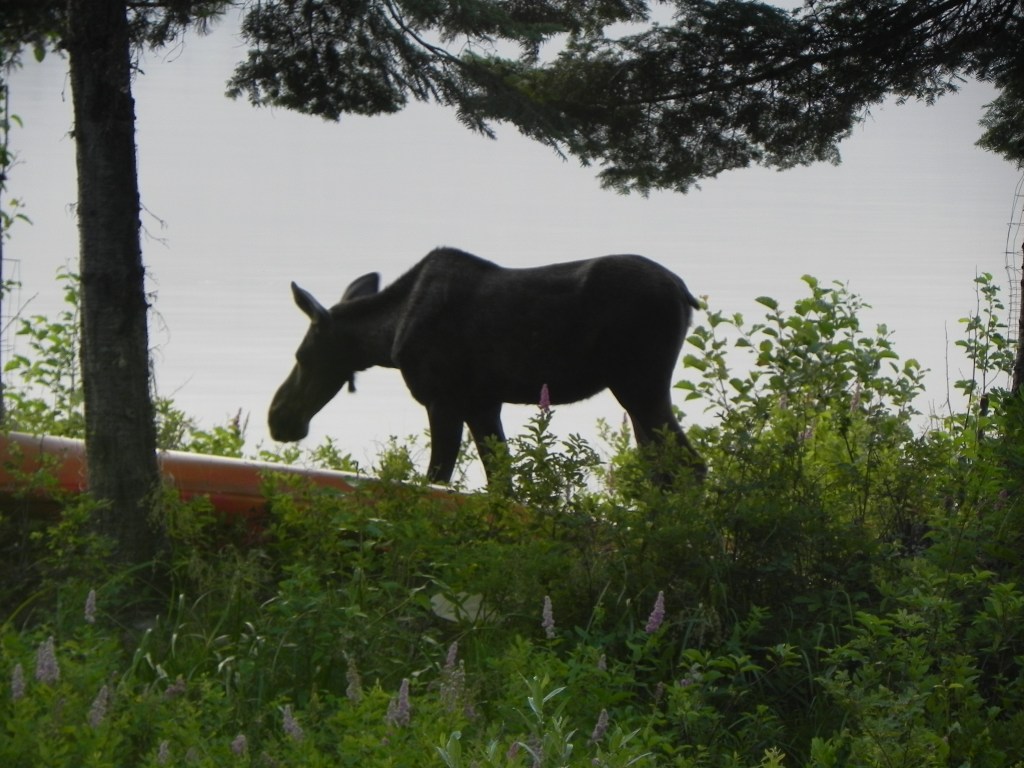
A few weeks later I was able to persuade my friend to try again.  This time we drove to Mooselookmeguntic Lake.  We stayed at a proper campground.  The very name of the place means “moose feeding place.”  We saw no moose.  The next morning we asked the park ranger if they we around that area.  “I saw two on my way home last night,” he said.  So it often is in life.  Things abundant to the locals are exotic to those from elsewhere.  I never did see a moose in Maine until my honeymoon many years later.  They are elusive creatures, large but shy, particularly around those “not from around here.”  Eventually my path crossed those of the majestic moose.  Mostly in Idaho.

An Idaho moose

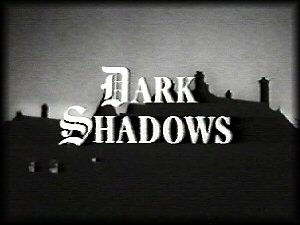
What’s behind my moose obsession?  I can’t really say.  I first became consciously aware of moose as a teenager and I knew that we didn’t have them in Pennsylvania (there are still, however, a few elk left in the state).  And besides, Maine was my favorite state.  That was because of childhood reading—there was no internet, and books are amazing for the imagination.  I suppose my love of Maine with its Dark Shadows and rocky coast may have spurred my desire to witness a moose in its chosen habitat.  There are giants in the woods of Maine.  They walk silently through the night.  For those fortunate enough to live in the state, they may be common.  For some of the rest of us, at least, they are transcendent.


Young Reading

It was more the lede line than the story.  Melissa Kirsch’s “The books we read when we’re young help shape the adults we become in ways we don’t always grasp” caught my attention.  My own current rereading of Dark Shadows books certainly reflects that.  As my You Tube video on Dark Shadows considers, it was the books more than the television show that shaped my young mind.  Consciously, I know that’s probably the main reason I’ve always wanted to live in Maine.  It may seem strange to some to want to move where a vampire frequently visits, but there was more going on in those stories than I realized.  It would be enough to make me tremble were I a young persons’ fiction writer.  They have so much influence.  Spending my younger years searching for a father took me some strange places.

My other young reading was, naturally, the Bible.  I can’t remember how young I was when I began to try to read through the King James.  Eventually I did get through, and then I started all over again.  Clearly my entire life has been impacted by that early fear of Hell that drove me to the Scriptures.  Perhaps that combination of Bible and Dark Shadows novels led to Holy Horror and its aftermath.  In other words, my youthful reading led to what has become a vocation, of sorts.  That elusive university, or college job in Maine never came to fruition.  I tried many times to get a toehold there, Bible in hand.  I’ve ended up back in Pennsylvania, where I started.  And I’m still reading.

I’ve read a good number of good books, but it has been some time since one set my life off on a different trajectory.  Some books have lead me to write books, and books I read often suggest even more books.  Whether I die today or thirty years from now, books will have defined my life.  I grew up reading them and wanting to write them, with no real idea how to do the latter.  One of those childhood books convinced me that a career outside the church was one not worth having.  Indeed, were I clergy now my enjoyment of horror would certainly garner more attention than it does in my current role as “some guy.”  I am, however, that person who grew from a worried-looking kid who’d not yet figured out that my reading choices would lead to a life measured by books.

The ultimate adventure…

Smaller Wolves

It was in Maine.  In 1987.  I can’t remember how Paul and I found this place to camp.  I don’t remember making reservations, but we drove along in his 1968 VW Beetle, unpacked a tent along a  rutted logging road, and set up camp for the night.  We were there to try to find moose.  In the middle of the night we were awakened by howling in the woods.  We were many miles from any other humans and nobody knew where we were.  Were there wolves in these woods?  Paul turned to me.  “Wolves don’t attack people, do they?” he asked.  I said no.  He pulled out a very large knife.  “I was in the civil air patrol,” he explained.  “You know what to do with this, right?  If a wolf bites your arm, cut your arm off and run away.” Not the best advice.  As we drifted off to sleep we were awoken again by furious sniffing outside the tent.  The next morning we saw no moose but found tracks all around our temporary home.  We convinced ourselves they were wolf tracks.  They were actually tracks of coyotes.

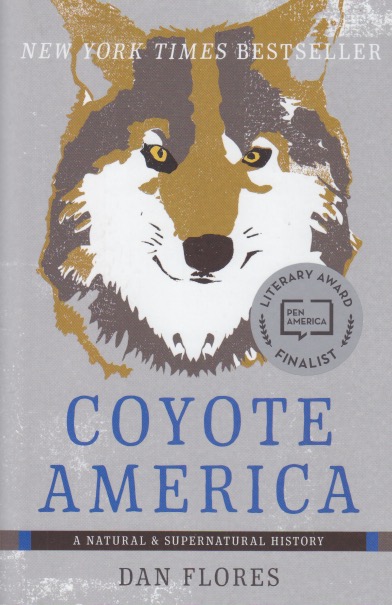
Most people in America have a coyote story to tell.  I can’t recall how I learned about Dan Flores’ Coyote America: A Natural and Supernatural History.  I’ve always been drawn to nature writing, but it was probably the “supernatural” that caught my attention.  This is a fascinating book with a rollercoaster ride through emotional responses.  Flores makes the case that Coyote was the first god of America.  Indian mythology is full of this character and his antics.  But the heart of the book focuses on the many decades of efforts—still ongoing—of the government to eradicate coyotes.  Millions of them have been killed for spurious reasons, largely because the government pays attention to ranchers who pay a lot of money to be minded.  Coyotes naturally find their balance in nature, which we insist on disrupting.  One of their survival strategies has been to move east.  Even moving into cities.

I’ve heard coyotes in Wisconsin, and I saw at least one while out jogging in the early mornings there.  Since moving east I’ve not spotted any, but they are, I know, here.  I’m largely on the side of nature, but the first ever documented adult human wolf fatality took place in another place I’ve camped, Cape Breton Highlands National Park in Nova Scotia, in 2009.  Reading this made my human pride rear up—we don’t face predators well.  The book goes on to touch on how I, and many others my age, learned of coyotes—through Wile E. in animated form.  This book is difficult to read in many parts, but it is an absolutely mesmerizing journey through many lenses of what it means to be American.  Whether you’re canine, or human.


Collinsport

Nothing is ever wasted.  That’s my economy of the soul.  I spent my tween years mooning about Maine.  I’d grown up watching Dark Shadows after school and I’d begun reading the pulp fiction based on the series by Marilyn Ross.  My mother wondered how I could waste my time on vampire nonsense when there was sun shining outside and other kids to play with.  Little did she know that I was learning valuable lessons for the future.  My fascination with Maine—still intact—led me to vacation there whenever possible and over my career I’d applied to more than one or two jobs there based primarily on the potential reward of living in the same state as Collinwood and its spooky mansion  atop the cliffs overlooking the stormy Atlantic.  Once some friends in Norwalk, Connecticut took us to see the  Lockwood–Mathews Mansion, used for Collinwood in the movie House of Dark Shadows.   Such is the draw of childhood imagination.

What were these lessons I’ve mentioned?  Well, Collinwood stands outside the quaint fishing village of Collinsport.  Both are named after the family that houses some very dark secrets, as well as shadows.  Barnabas Collins is a vampire.  He has run-ins with many supernatural creatures, including ghosts, witches, and a few Scooby-Doo kinds of cases where someone’s faking the paranormal.  But Barnabas isn’t the only monstrous Collins.  His cousin Quentin, whom I kind of remembered being his ally, was an unstable werewolf.   Of course, I’m not sure there is such  a thing as a stable werewolf, but still.  Those in the family stay loyal, despite the beasts that lurk within their walls.  Some of the early Collinses were involved in the slave trade.

The Collins family has a long association with the state of Maine.  During the groovy 1970s they seemed somewhat progressive while maintaining the aloofness of the aristocracy they’d become.  Despite Tim Burton’s spin on it, they were the undisputed lords of Collinsport.  You felt you could trust them.  Unelected though they were, they possessed an innate sense of social responsibility.  I also learned as a child that, as appealing and tortured as they might be, you could never really trust a Collins.  Barnabas was not evil, but he was a vampire.  He required blood to survive, and his victims, like those of the current Collins of Maine, Susan, were female.  Any girl who trusted a Collins was in danger, unless she was their willing servant.  I was not squandering my childhood afternoons.  I was learning lessons about trust and its costs.


A Glimpse at the Future

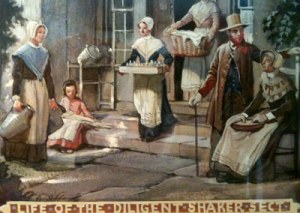
Last month one of the three remaining Shakers died. In this era of religion unawareness, not many Americans, I expect, could identify this dying religion. The Shakers aren’t the Quakers—we like to give religions we don’t understand pejorative monikers—they are a group that grew out of the Friends but that had important differences. Shakers believe, especially, in celibacy. It had to grow through conversion since Shakers could not reproduce biologically. At their height there were about 6000 of them—the number of Twitter followers of a fairly successful humanities professor, I suspect. They were hard-working and their brand of furniture endures beyond the life of the sect. The official count of Shakers worldwide now stands at two.

This little bit of news saddened me. Not that I’ve ever been tempted to join the Shakers—it would be a bit of a stretch for a family man—but I’ve always admired countercultural groups. Like many religious sects of the late eighteenth century, the Shakers were millenarians. That is, they believed in the imminent second coming of Christ. Given this belief, biological reproduction wasn’t really necessary. In fact, it was counter-productive. Like so many of the slumberers of the Great Awakening, the Shakers eventually settled in upstate New York. Since their lifestyle was different, they had to form their own communities. The last community is in Maine. When the last two Shakers go to their reward, barring a miracle, the denomination will be extinct.

life_of_the_diligent_shaker

The Shakers were distinctive for yet another reason as well. They were open to, and often defined by, female leadership. This might be expected in a world where men have difficulty controlling themselves in mixed company. Catholic monasteries locked men in without women. To agree to live in a mixed gendered community but without mixed gendered relations took a dose of will power that borders on the saintly. The Shakers won’t be the only religion to have gone extinct, when that happens. Religions, like organisms, grow, thrive, and die. This little group had a disproportionate impact on society. Those who watched Michael Flatley throwing his body across the stage to the haunting joyfulness of the Shaker Hymn “Simple Gifts” likely had no idea that the world owed one of its most beautiful melodies to a group of people living celibate lives in the woods of Maine. The Shakers’ unique contributions to the weird and wonderful world of religion will be missed by at least one.


Ultimate Superlative

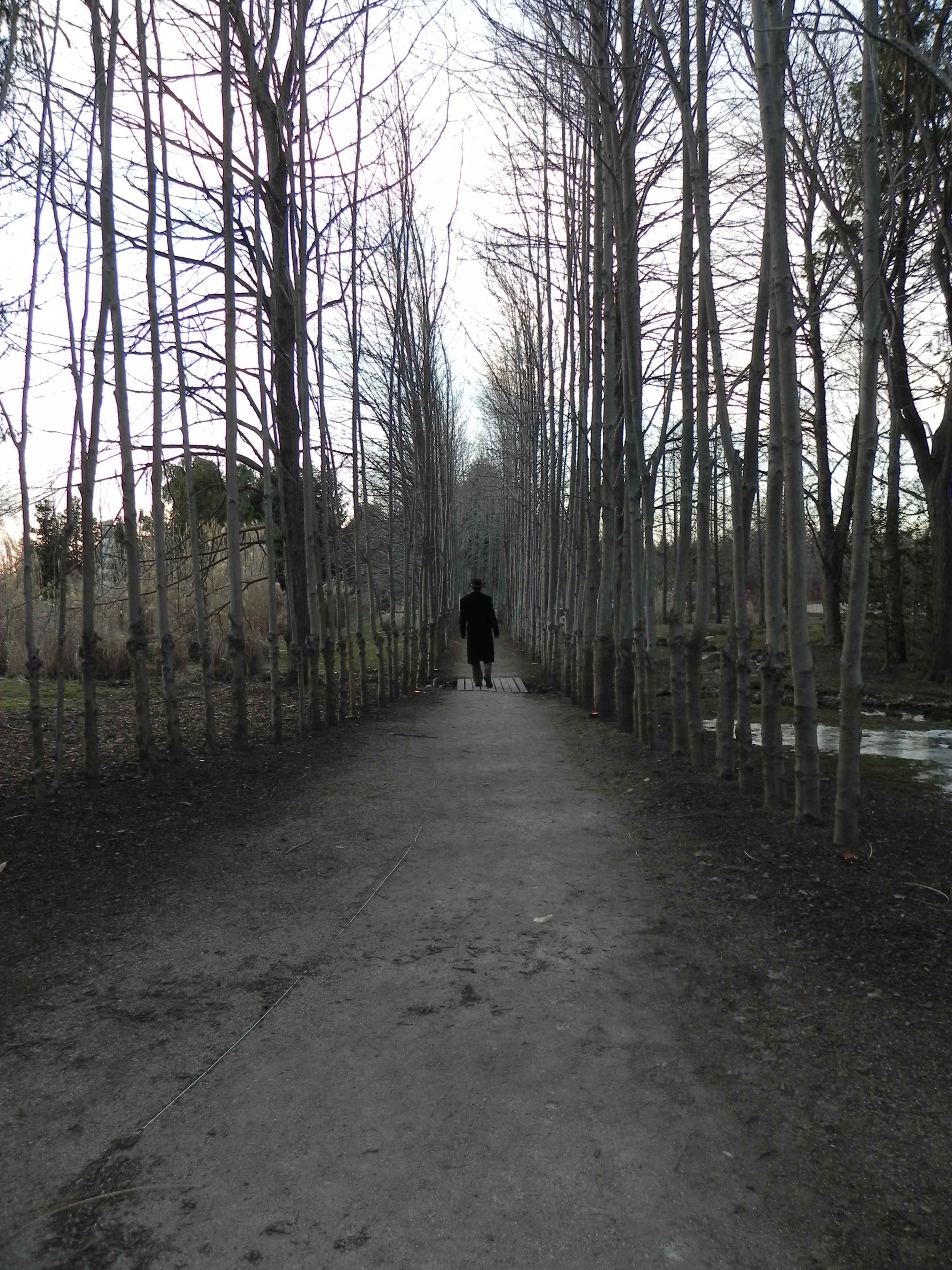
“Push men too far and they fall off the cliff.  Push great men too far and they soar.”  The words are those of my novelist friend K. Marvin Bruce.  Unless you read this blog you’ve probably never heard of him; his novel publishing record is about as successful as my academic career.  Still, I think quite a bit about Marvin’s plight.  He seems to be a gifted writer—he sends me copies of his stuff—but publishers take no notice.  He’s had a few short stories appear in online journals; two of them even won prizes, but the internet is a very crowded place.  It’s not easy to get noticed. Those who try to make a living smithing words often face a dilemma; it feels like all the momentous words have already been taken.

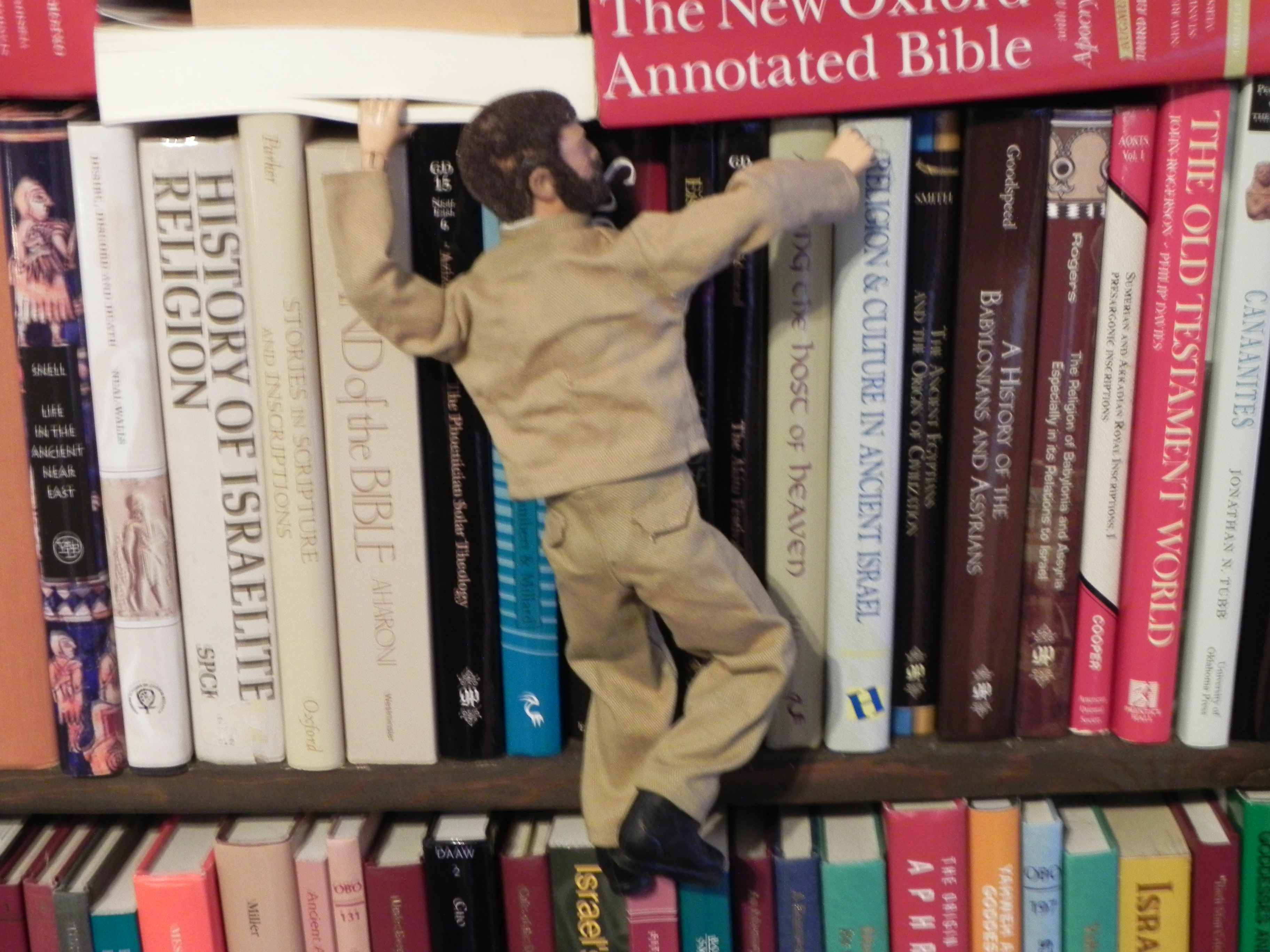
Marvin on a superlative walk

Marvin on a superlative walk

I mentioned in a recent post that we are suffering from a crisis of superlatives.  The other day I was in a mall (this is a foreign activity for me—the people all look far trendier than I do, and they seem to think this is the place to be, not just where you have to go to have your laptop serviced).  I saw a mother walking by holding the hand of her maybe three-year-old son.  His little tee-shirt read “Über Awesome.”  I recall when awesome really meant full of awe.  And that was rare, reserved for things like towering, severe Midwestern thunderstorms alive with constant lightning, or gray north Atlantic waves crashing mercilessly into the cliffs of Maine. I stood, small and insignificant on the prairie or the coast, utterly at a loss for words. Yes, it was that impressive. My superlatives, however, have all been absconded. We live in a world where “greatest” sounds somewhat ordinary. Even the apocalypse has grown thin from overuse, and that used to be the ultimate end of everything. How weak it all sounds.

Over the past few weeks I’ve been watching the second Star Wars trilogy. While the special effects are impressive, it suffers compared to the original trilogy. One of the reasons, in my idiosyncratic hermeneutic, is that the Jedi knights were reconceived, or reconceptualized. They are action figures, hands on hips, ready to dart into a fight. “May the force be with you,” has become a mere “God bless you.” Was not the real strength of Obi Wan his silence and lack of haste? Was Luke ever more impressive than when he slowly walked into the cave of Jabba the Hut, light saber tucked away, only to be used when such an awesome weapon was called for? It takes a certain placidity of soul to stare long into the abyss. Perhaps this is a metaphor for our superlatives. Calm lives of measured, considered action. This seems to be what the world lacks. To find it would truly be experience simple greatness.


Maine Event

We have no control over where we’re born. Place, however, has a sacred significance. Many people have a sense of where they belong. Life may be a prolonged journey, like that of a salmon, to find one’s way there. While in seminary, one of my professors had the class introduce itself by name and town of birth. This was in Boston, at a school with a highly eclectic student body. I was born in the small town of Franklin, Pennsylvania. Other than having been the setting for an X-Files episode may years later (not filmed there, of course), it was not the kind of place anyone was likely to have heard of. In a class of maybe 50, imagine my surprise when an older gentleman announced he was born in Franklin, Pennsylvania. We was not of my generation, but it turns out, we had origins in common. As the introduction passed further forward, someone about ten years my senior announced, with a glance at the first student, that he was from Franklin as well. By the time it reached me, this seemed more of a synchronicity than a mere coincidence. We were all entering Juniors (the starting year of seminary), all born in the same hospital, and none of us had known the others existed prior to that day.

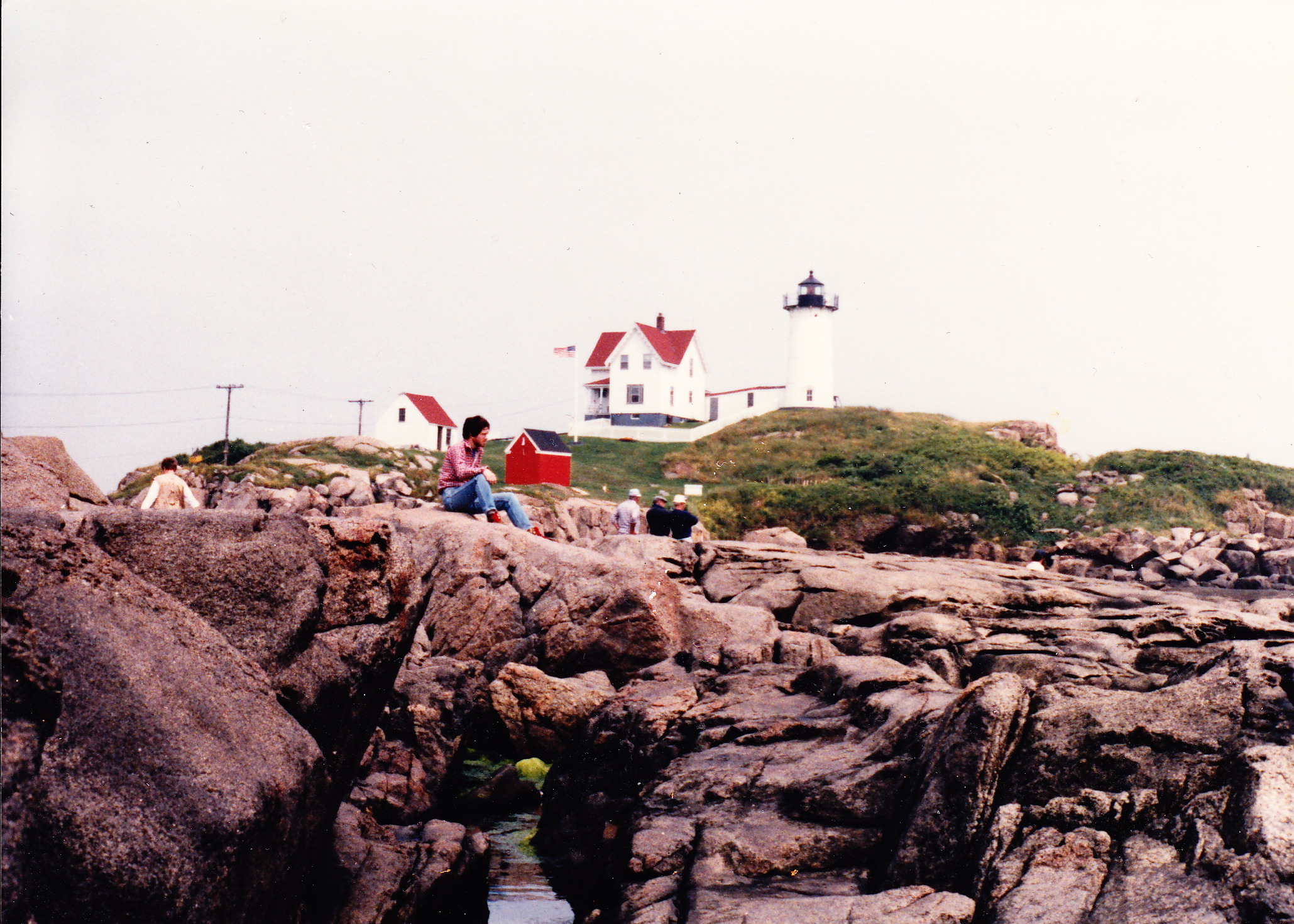
I was in Boston, however, because of a deep-down conviction that I belonged in New England. More specifically, Maine. After having grown up for about a decade in Franklin, we moved to Rouseville, Pennsylvania when my mother remarried. Apart from the industrial, drug-intensive culture, there was a haunting sense that this was not where I belonged. I began to read voraciously. My literary adventures found my spiritual home: Maine. Vividly I could imagine its rocky coasts and large stretches of northern woodland. I had never been to Maine—had never even seen the ocean at that point—but I knew, without a doubt, that Maine was my spiritual home. While a student in Boston I made several trips to Maine, each one convincing me more that I shouldn’t be leaving when Sunday afternoon rolled around. I should be staying here.

Life has, however, kept me from my beloved Maine. Academic jobs, mythical beasts that they are, are location-specific. You have to follow the jobs (I almost wrote herd there, but there’s nothing close to a herd of such employment). The population of Maine doesn’t support the number of schools that places like Massachusetts, New York, and Pennsylvania do. Even all of these were closed to me. Maine never abandoned my dreams. I moved to Wisconsin, following a job that abandoned me. I moved to New Jersey to take another, which also abandoned me. One of the motifs to which I constantly return is the sacredness of place. A sense that a person belongs somewhere. Out in the ocean, many salmon are captured before they make it to the stream of their birth. I wonder what their thoughts might be as they lie gasping for breath, knowing deep in their piscine souls, that this is not where they were meant to be.

Maine


Sobek to the Beginning

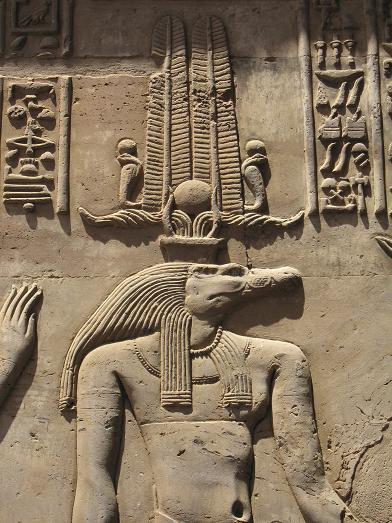
From some of my earliest reveries, Maine has been my favorite state. This strange feature had to have been gleaned from books since I never visited Maine until my early twenties. Since that time I’ve returned as frequently as possible; however, over a decade spent in Wisconsin made the trip somewhat daunting. So last night, still dealing with lingering intense emotions from the county fair, I decided to watch Lake Placid, the 1999 horro-comedy set in Maine. The movie is generally brainless escapism, and even the scenery is that of British Columbia rather than New England. It had been years since I’d seen the film, so I was surprised when Kelly Scott stated in defense of Hector Cyr that crocodiles were worshipped as gods by many ancient peoples, making them more prayed to than Jesus. This was, naturally, a healthy dose of celluloid hyperbole, yet it did bring to mind Sobek, the Egyptian deity mentioned by name in the film.

The ancient Egyptians venerated many animals as possessors of god-like qualities. Crocodiles, naturally dangerous to humans as well as to many large mammals, would suggest themselves as a form of divinity. Sobek was never a major focus of the Egyptian collective of gods, yet the mummified remains of crocodiles and the striking iconography of the deity attest his cult. The ancient Egyptians had no way of knowing that the crocodile had withstood the pressures of evolution for millions of years, a striking example of a body plan and lifestyle requiring no improvement. Few creatures have the staying power of the crocodile, an animal capable of feats more incredible than the fabricated beast in Lake Placid.

While Jesus has nothing to fear from crocodile worship (or, apparently, the Beatles), religion grasps, even unwittingly, to the unchanging. In a culture shifting so rapidly that our eyes barely have time to focus before something completely novel is thrust before them, the stable image of the crocodile may still serve as a useful symbol of something our religious forebears knew that we should continue to recollect. Stability is worthy of admiration. In a bizarre way, throwing Maine together with crocodiles may be an antidote for melancholy, but only in the right environmental conditions.


Biblical Weddings

Maine is getting ready to vote tomorrow on the legalization of gay marriages. With conservatives hopped up on fears that such a move will destroy traditional, patriarchal privilege, the Bible is beaten rather severely as proponents seek evidence for man + woman = marriage in holy writ. The funny thing is, the Bible says very little about marriage.

In an era when marriage is often associated with houses of worship and a smiling, tolerant divine face beaming down on a couple about to do “the bad thing” with divine sanction, it is difficult to realize just how little the Bible talks about it. The Hebrew Bible is particularly mute when it comes to the particulars of wedding ceremonies: “Then Isaac brought here into his mother Sarah’s tent. He took Rebekah, and she became his wife,” according to Genesis 24.67. No sacral ceremony here, by prior arrangement, sex equals marriage. A few chapters later when his son Jacob marries, there is a feast mentioned, but no sacerdotal functionary hovering nearby (one who might have actually noticed that Jacob ended up with the wrong woman, by the by). And so the biblical narrative limps on with patriarchs bedding and marrying their women with no mention of God. Eventually religious folks got a little nervous about this and ceremonies with divine approval were introduced, but that is not even in the case with the wedding at Cana, which, in desperation, the Book of Common Prayer latches onto for a marriage lection: “The bond and covenant of marriage was established by God in creation, and our Lord Jesus Christ adorned this manner of life by his presence and first miracle at a wedding in Cana of Galilee” (the Order for The Celebration and Blessing of a Marriage). Apart from the difficulty of a covenant being an uneasy peace between a superior and inferior party, this introduction relies on a literal Adam and Eve and the means for a large wedding party to get drunk, courtesy of the miracle in Cana. Apart from Paul’s putative comments regarding the marital status of early church leaders, we hear little else in the Bible.

I have nothing against weddings; I was the groom in a particularly stylish wedding in Ames, Iowa some years back. The problem I see is that the Bible is being forced to say what it does not. If the few biblical marriages are all heterosexual, it simply reflects the options open at the time. How does allowing gay marriages threaten the marital bless of the heterosexual? It seems to me that the only thing to be lost is “privileged status” and benefits allotted to those formally united in the eyes of the law. Unless things have changed recently, even in a religious marriage a state-issued license is required! Why not allow firm affirmations and privileges of loving couples without relying on non-existent biblical platitudes? I hope Maine will do the right thing tomorrow.