Reflecting Ourselves

There once was an old man from New Hampshire. No, this isn’t a limerick. He was famous enough to get his face on the state quarter, back when they were doing that state quarter thing. Then he fell. The Old Man of the Mountain was no more. We like to see ourselves in stone. On a trip with my wife and a couple of friends in my post-grad days in Edinburgh, we were driving around the Isle of Skye. The largest of the Inner Hebrides, the island has a mysterious natural beauty. One of the most famous monuments on Skye is the Old Man of Storr. Postcards always show it to be a rock pillar jutting up by itself at the base of a mountain. As we approached the old man from the north, I got the joke. My friends still dispute it, but if you look at the mountain crest above the pillar, it forms a perfect profile of an old man’s face. Then what is the rock pillar? It’s just the right distance from the old man’s face to be, well, you get the picture. I’m convinced that those from Skye laugh at all the tourists taking a picture of the old man’s naughty parts.

The technical term, as I’ve discussed before, for seeing that which isn’t really there is pareidolia. Some people call it matrixing. Our brains, wired to see other people, often see them where they don’t exist. The Old Man of the Mountain formed a passable human face before the rock face collapsed in 2003. This past week I read an article in the Washington Post of the collapse of Duckbill, a rock formation in Oregon’s Cape Kiwanda State Natural Area. Like many cases of pareidolia, this rock pillar was only seen as a duck by those whose brains make the connection. People like to go see that sort of thing. It makes us feel less alone.
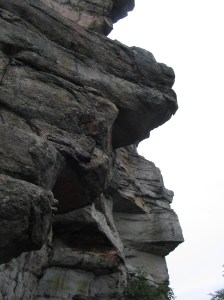
Do you see it?

Do you see it?

The article by Cleve R. Wootson Jr., however, points out that Duckbill didn’t jump. He was pushed. A group of eight guys, caught on video, rocked the pillar until it toppled. This is why we can’t have nice things. The deliberate destruction of monuments is a crime, and the culprits are being sought. Make Way for Ducklings, the Robert McCloskey children’s classic, was cast in bronze in Boston’s Public Garden. In 2009 vandals stole one of the ducklings, which was quickly replaced. It’s difficult to understand the mentality of those who wish to destroy our duckbilled friends. Yes, Duckbill was only rock. No, I never had the chance to see it. As long as the Old Man of Storr lies recumbent in the Scottish highlands, however, we will have grounds to wonder.

To the Swift

Despite its generally secular reputation, one of the great charms of New England is its churches. I was forcefully reminded of this during my recent trip to Boston. Each city along the way boasts impressive churches that might be glimpsed even from the highway, and although there are now many taller buildings it is possible to imagine the days when the steeples stood over all. Boston’s historic churches remain stunning symbols of the power Christianity once held in this city. We first climbed off the T at Arlington in the shadow of the great stone Arlington Church. On the Esplanade the looming steeple of the Church of the Advent violently reminded me of the deep mysticism that drew me to the Episcopal Church even while I was a Methodist seminary student. Park Street Church, King’s Chapel, The Old North Church, the Old South Church, and finally Trinity Church in Copley Square invited us to gander and ponder. Almost like fossils, these churches remind us of the history of what made the city, or the nation, what it is.

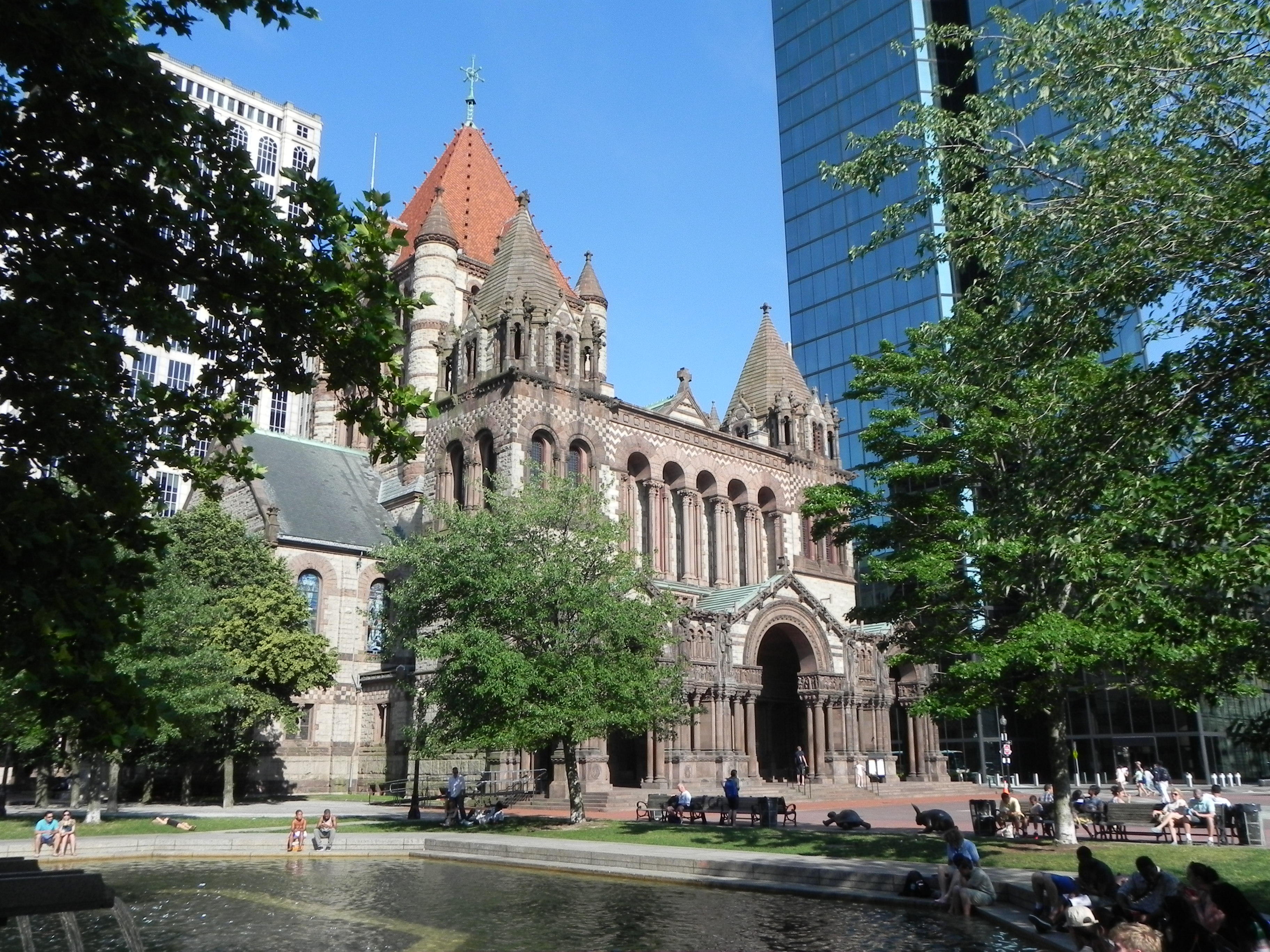
Trinity Church lies nestled at the base of the John Hancock Tower, Boston’s tallest building. A blue glass Brobdingnagian, this prophet of capitalism represents the highest possible aspirations of our race, so we are led to believe. The material triumph over the spiritual. And yet the tourists stop to photograph the stunning church. It is on the street level, down here among us mere mortals. Upon closer examination, I noticed the statue of the tortoise and the hare in the plaza of Copley Square, the holy terrapin racing toward the sanctuary, it appears from my angle. It seems that I have unexpectedly received a kind of epiphany.

Look closely.

Look closely.

I first came to Boston many years ago as a spiritual seeker. In the intervening years during which I was attempting to find out what that might mean in a life that was intellectually honest, many bronze sculptures appeared in this city. The one commemorating Robert McCloskey’s Make Way for Ducklings, installed after I completed my studies at Boston University, would not have caught my pre-parental attention, as I had never read the book. Now you have to stand in line even to snap a picture. The work of local artist Nancy Schön, both “Make Way for Duckings” and “The Tortoise and the Hare” are part of Boston’s continual evolution of character. Officially, we are told, the turtle and rabbit are representative of the Boston marathoners who trudge the final feet past this church toward the finish line. To me, this sculpture suggests something more as the hare dawdles and the tortoise breaks toward the church. It may be a marathon, indeed, but the race, I remind myself, is not always about being swift.