Defining Humanity

Positions of power replicate themselves. In a sense this is understandable as power is the most addictive substance on the planet. Once superiority is asserted, it will never allow itself to be uprooted. With the recognition of homosexual marriage in New York, many heated reactions sprouted from the position of power man-plus-woman (always in that order) camp. Such a response was predictable and anticipated. I suspect it is largely based on fear. I have many friends with differing sexual orientations than mine. Raised to castigate such individuals, that outlook became increasingly difficult to uphold once I got to know my gay friends as people. I count them among my most loyal friends. People are people.

The problem lies in labels. Humans are natural categorizers: bird, fish, or mammal? Predator or prey? Religious or secular? We want our world to stay true to categories we devise. People, however, are seldom easily classified. Still, we try: skin color, ethnic ancestry, religious heritage, sexual orientation. People are people. The world of trite classification is ending, and those in positions of power tremble. Anything that is different might upset the economic balance that keeps those on top in their positions. (My own amateur observation, however, is that the economic balance is naturally top-heavy and readily upsets itself. It seems to have been that way since before this blog began.) Would we not do better to try to understand those who are different than ourselves?
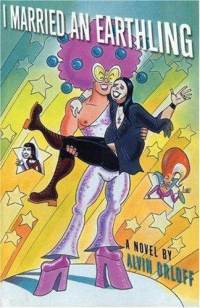
As an exercise in this direction, I recently read Alvin Orloff’s smart satire, I Married an Earthling. As my long-term readers know, I have a slight soft-spot for aliens, and this story of a gay man finding nothing but rejection on earth and eventually marrying an alien seemed quite fitting in the present climate. Not part of the gay subculture, many aspects of the story were foreign to me, but what was painfully clear throughout is that people are people. Some are accepting, others are not. When reality offers so few options that he must flee his own planet, Chester, one of the protagonists, takes to the stars. At a couple points before his exodus, he notes the role that religion played in his antagonists’ outlooks. The book is lighthearted and funny overall, but the serious issue remains. Those in power tend to horde privilege. When that happens, economies—material and spiritual—collapse.

Biblical Weddings

Maine is getting ready to vote tomorrow on the legalization of gay marriages. With conservatives hopped up on fears that such a move will destroy traditional, patriarchal privilege, the Bible is beaten rather severely as proponents seek evidence for man + woman = marriage in holy writ. The funny thing is, the Bible says very little about marriage.

In an era when marriage is often associated with houses of worship and a smiling, tolerant divine face beaming down on a couple about to do “the bad thing” with divine sanction, it is difficult to realize just how little the Bible talks about it. The Hebrew Bible is particularly mute when it comes to the particulars of wedding ceremonies: “Then Isaac brought here into his mother Sarah’s tent. He took Rebekah, and she became his wife,” according to Genesis 24.67. No sacral ceremony here, by prior arrangement, sex equals marriage. A few chapters later when his son Jacob marries, there is a feast mentioned, but no sacerdotal functionary hovering nearby (one who might have actually noticed that Jacob ended up with the wrong woman, by the by). And so the biblical narrative limps on with patriarchs bedding and marrying their women with no mention of God. Eventually religious folks got a little nervous about this and ceremonies with divine approval were introduced, but that is not even in the case with the wedding at Cana, which, in desperation, the Book of Common Prayer latches onto for a marriage lection: “The bond and covenant of marriage was established by God in creation, and our Lord Jesus Christ adorned this manner of life by his presence and first miracle at a wedding in Cana of Galilee” (the Order for The Celebration and Blessing of a Marriage). Apart from the difficulty of a covenant being an uneasy peace between a superior and inferior party, this introduction relies on a literal Adam and Eve and the means for a large wedding party to get drunk, courtesy of the miracle in Cana. Apart from Paul’s putative comments regarding the marital status of early church leaders, we hear little else in the Bible.

I have nothing against weddings; I was the groom in a particularly stylish wedding in Ames, Iowa some years back. The problem I see is that the Bible is being forced to say what it does not. If the few biblical marriages are all heterosexual, it simply reflects the options open at the time. How does allowing gay marriages threaten the marital bless of the heterosexual? It seems to me that the only thing to be lost is “privileged status” and benefits allotted to those formally united in the eyes of the law. Unless things have changed recently, even in a religious marriage a state-issued license is required! Why not allow firm affirmations and privileges of loving couples without relying on non-existent biblical platitudes? I hope Maine will do the right thing tomorrow.


Anat, Kali and the Violent Femmes

“Women and men,” runs the chorus of the They Might Be Giants song of that same title, “… everywhere they go love will grow.” Women and men. Thus it has always been. The Sumerians seem to have speculated, on a broken tablet concerning the creation of humanity, that some six varieties of gender had been ordained by the gods. This story reminds me of just how dicey gender definition can be. Despite the howls of protestation from man + woman = marriage crowd, the concept of gender is actually complex and diverse. The lowly slime mold of the genus Physarum has a combination of multiple sex-controling genes mixed with several different types of sex-cells, leading to a bewildering 500 different sexes. You’ve got to wonder what the Physarum bar-scene is like! So the whole women and men combination seems a little tame by comparison.

The ancients did, however, toy with standard gender role concepts. The Ugaritic goddess Anat, sometimes described as a “tomboy,” was perceived as a literal femme fatale, joining her in the company of Ishtar and Kali as warrior women-goddesses. She was a proto-Amazon (before they laid aside their male-bashing and set up a very lucrative web-site). Anat wears the severed heads and hands of slain warriors and stomps in blood-puddles, laughing all the while. Where did the ancients derive such violent feminine images as Anat and Kali? Some sociologists suggest that these myths were intended to solidify gender roles, although they seem to confuse the violent male with the shy and retiring female stereotypes. Perhaps the Ugaritians and other ancient folk knew deep down that gender is only a vague attempt to classify something that is really far more complex than it seems. Just when gender is nailed down you find yourself in a bloody mess as Anat swats at you again and again.

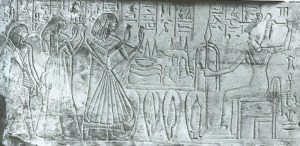
Anat ready to smite Egyptians who just don't understand the Violent Femmes

Anat ready to smite Egyptians who just don\’t understand the Violent Femmes

Nashotah is not far from Milwaukee where the folk-punk, genre-defining band the Violent Femmes started out. In college many of my overtly Christian radical friends told tales of how the Violent Femmes were a closet Christian rock group, based on some of the religious themes in Gordon Gano’s lyrics. When I listen to their CDs, however, I hear the same old angst that has plagued humankind for ages — what does a guy have to do to impress a girl (the same question may be reversed, turned upside-down, or dis-and-re-articulated, depending on whether you are female, male, or slime mold). At Ugarit they would have understood the Violent Femmes — listen to “to the kill” and tell me it’s not so! I would suggest that Gordon and the guys aren’t as much closet Christians as closet Ugaritians, struggling with the Anats and other violent femmes of their world and trying to make sense of it all.