Little Bang

I’ve always been interested in the sky.  At times it feels like I’m in love with it.  Having attended a Sputnik-era high school—a rural high school with an actual planetarium!—I took the offered astronomy course.  Buoyed up by this, I also enrolled in a college astronomy class only to discover that that career track involved far too much math for my humble abilities.  Still, I learned a lot about the nighttime sky.  I’ve also been a lifelong reader of lay science.  I very much appreciate scientists who write so that nonspecialists can understand them.  So it was that I was glad to see a New York Times letter by Adam Frank and Marcelo Gleiser titled “The Story of Our Universe May Be Starting to Unravel.”  I’ve mentioned Gleiser here before because I’ve read a couple of his wonderful books.  But this article was mind-expanding.

Frank and Gleiser suggest that the Big Bang Theory may, eventually, need to be replaced.  They point out that small inconsistencies have crept into it over the years (keep in mind that it was really only “confirmed” within my lifetime, back in the sixties).  Most of these have been patched up with quilt-work astrophysics, but the James Webb Space Telescope is making some of those past patches strain a bit at the seams.  Fully formed galaxies are being spied too far back in time (for stargazing is looking into the deep past) for the standard model.  They shouldn’t be there, but they are.  The letter interestingly raises the point that the scientific study of quantum physics, as well as that of consciousness, also strain the standard models.  Perhaps it’s time for a rethinking of reality?
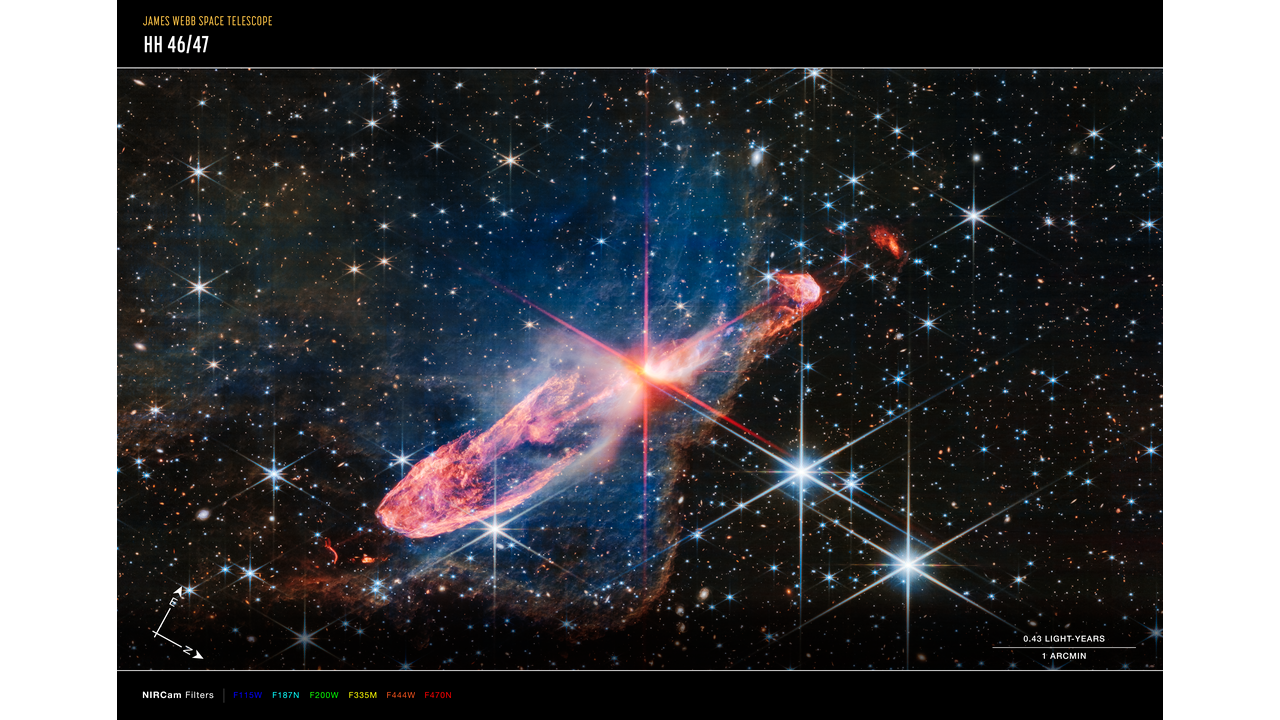
Image credit: NASA, public domain

Isn’t this breathtakingly exciting?  To be alive when a major leap of understanding the universe we call home may be discovered?  The authors point out that cosmology and philosophy often have to interact.  Our understanding of the universe is a human understanding, not sacred writ.  The scientific method is built to be falsifiable.  If it’s not, it’s not science.  (This often separates it from some religions which declare themselves unfalsifiable, and therefore likely wrong.)  New scientific discoveries are made daily, of course, but new paradigms only tend to come on the scale of lifetimes, or several generations.  We don’t see them all the time.  I guess it’s heartening to see that the system works.  When science becomes orthodoxy, we run into similar problems that we encounter with religions.  A bit of humility and a ship-load of wonder can go a long, long way.


Infinite but Expanding

What could be more humbling than living in an infinite but expanding universe? Since the days of Copernicus, Brahe, Kepler, Galileo, and Newton we’ve known that the apparent reality of both our own lives and that portrayed in Holy Writ is inaccurate. The earth doesn’t hold still, and the sun doesn’t rise or set. The universe isn’t a layer-cake with Heaven above and Hell beneath. Instead it’s mind-numbingly massive. The only appropriate response, it would seem, would be silent awe. Marcelo Gleiser, whose work I’ve mentioned before, is a rare scientist. Rather than continually slapping the rationalist card on the table and declaring science the trump suit, he brings an element of humility to his writing. So much so that he’s willing, almost eager, to engage religion. Not in debate, but in conversation.

The Prophet and the Astronomer is a wide-ranging book that is tied together around the theme of the end of the world. A few weeks back we had yet another brush with a biblical literalist declaring the end of all things. Gleiser, although his book was published over a decade ago, was called in to comment in various places. This book opens by discussing ancient ideas of the end of the world. These are necessarily religious ideas. We don’t fully understand ancient concepts, but enough remains for us to see that apocalypses have their origins in Zoroastrian thought. Judaism encountered such thinking and the book of Daniel ran with it. Early Christians also had the world’s end on their minds, and the book of Revelation developed into a full-blown apocalypse. The world, or at least the western hemisphere, has never been the same since. Centuries of living under the threat of a cataclysm that could come at any second surely takes its toll.

Gleiser then shifts to the real harbingers of potential apocalypses. Comets and asteroids still exist and could theoretically deliver what the Bible implies might happen—a fiery end to the planet. This is sobering stuff. But the book doesn’t stop there. Bidding adieu to the dinosaurs, The Prophet and the Astronomer sweeps us into this great, expanding universe and how it may end, scientifically. Black holes and the heat death of the universe can be truly terrify. What is remarkable about the book, however, is that Gleiser openly acknowledges that science can’t give the comfort and meaning that religion can. Instead of saying, “be tough, face facts” he suggests that scientists might consider a narrative that adds value to a cold, dark universe. That’s not to say some of the story isn’t technical and some of the concepts aren’t difficult to grasp, but it is to suggest that science and religion should sit down and talk sometime. Hopefully before the end of the world.


Doomsday, Again?

It’s hard to keep a good apocalypse down. Ever since Jesus of Nazareth did his best Arnold Schwarzenegger impression of “I’ll be back” some of his followers have obsessed when just when that will be. Sorry for the late notice, but the current prediction is for tomorrow. If you’ve got any weekend plans, you might want to rethink them. I know traffic in Jersey is already bad enough without white horses breaking through the clouds. An article my wife promptly sent me from NPR, “Is The Apocalypse Coming? No, It Isn’t!” by Marcelo Gleiser, addresses the documentary The Sign. No doubt about it, there’s some impressive astronomical gyrations here, but planets moving through constellations do not an apocalypse make. As Gleiser points out, the real question is why people believe such predictions so passionately.

Larry Norman’s song “I Wish We’d All Been Ready” captures the mood nicely. Growing up in a tradition that believed, as only literalists can, that this world is the center of the cosmos, Norman’s song haunted my teenage years. These were the heady days of Hal Lindsey and a very hot Cold War. I had to register for the draft. There was unrest in the Middle East. Sonny and Cher had split up. The signs were aligned, it seemed. As they had been nearly every year since about 30 CE. Paul of Tarsus was waiting. And John of Patmos. And Timothy LaHaye. True believers all. Conviction begets conviction. Seeing another fully convinced is a powerful incentive.

Even now, if I’m honest, I shudder a little when I hear such predictions. What if, by some odd chance, they are right? Raised in that tradition, it’s nearly impossible to jettison that private fear. Rationally I know that clever people can make all kinds of connections that have nothing to do with the Bible. I know that John’s Revelation isn’t about the end of the world. I know that the views of Paul were bound by the developments of his age. I know the Rapture was invented in the nineteenth century (CE). Still, the chill slithers through me when I consider how it felt as an uncertain teen on the brink of Armageddon. I could envision it clearly. Some who were utterly sure swayed me. Specific dates and times weren’t biblical, but the wait for any moment now was even more terrifying. Tomorrow will begin and end just as any other day on planet earth. And another apocalypse will enter the planning stages, coming soon to a universe near you.


The Science of Being Human

Not so long ago, when I was still a professor, a colleague told me he had no interest in science. We studied religion, he reasoned, and science had little to add. I was in the midst of a research project at the time. That project was exploring how what we know of evolution (or knew at the time) might inform our understanding of ancient texts. Of course, I was working in relative isolation, noting in my cover letters to universities that my research would benefit from an institution with a cooperative and collegial atmosphere between the sciences and humanities. If you’ve read this blog before, you know how that ended. No cooperative schools ever thought such research was worth sponsoring. After all, there are younger, less expensive specialists out there examining ancient religions in microscopic detail. The rest of the world, of course, wonders why.

This divide, as so eloquently delineated by Marcelo Gleiser in a piece on NPR, is starting to grow narrower. Science is taking us, in many fields, very close to the humanities. And we can’t make sense of some of it without admitting our human limitations. This is what I so admire about Gleiser’s writing—he is a scientist who understands that arrogance has no place in intellectual inquiry. Biology, as I long ago expected, holds one of the keys of this dilemma. Our brains evolved for a specific purpose—to help us survive in a predatory world. They did not evolve into processing systems to comprehend, as one sage put it, life, the universe, and everything. No one brain can hold all that knowledge. Like it or not, that brain in human. And humans need humanities.

Some scholars among the humanities like to claim that science has reached too far. The problem is, any scholar who is a true scholar is also a scientist. We use scientific methods to understand our admittedly speculative, or at least subjective, subject matter. Science isn’t the enemy here. Arrogance is. As Gleiser has stated in other venues, we have to approach the world with humility. We know so very little. Part of that world is that beyond human reach, and part of that world is what humans have done. They’re both part of the larger picture. But humans live on a small planet that we now know is only one of many, many more throughout the visible universe. And we know the visible universe is only part of the story. But we can’t be honest if we forget that the minds trying to understand all this are, no matter how evolved, only human.

dscn6303


Simply Beautiful

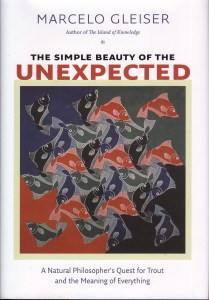
Simple BeautyThe scientific method has been a boon to humanity. Knowing how to sharpen the rational faculties has demonstrated its benefits time and time again. Sometimes, however, overemphasis on rationality contains hidden costs. Humans are not always rational, and sometimes this is a very good thing. Culturally we’re told that reason trumps emotion and that evolution has somehow led us to this. That’s only part of the story. Marcelo Gleiser’s excellent The Simple Beauty of the Unexpected serves as a wonderful corrective to this one-sided view. Although I’ve been trained in rationalistic thinking, my humanities background lacks the credibility of similar training in the sciences. Gleiser, as a physicist, demands respect. As he notes throughout this book, physics asks the hard questions. The only proper response, he rightly declares, is humility. Arrogance in any human endeavor may make for a good story, but it is bad citizenship on this planet.

I have to confess to being one of those poor souls who really doesn’t care about fishing that Gleiser mentions early on in his book. That doesn’t mean that I don’t agree with his outlook and mature thoughts on the subject. Using fly-fishing as a kind of bait, he draws the reader in to consider some deep and meaningful questions about life. Although he describes fishing literally, he clearly has a metaphorical usage in mind as well. Rare is the scientist who will admit that science can’t answer all questions, and moreover, wouldn’t want it to. Showing the limits of rational thought can feel like taking one’s clothes off in front of a crowd for those wedded to empirical evidence. Applied science clearly works very successfully. That’s not the same as having all the answers. Gleiser beautifully illustrates this, acknowledging that the spiritual has a role to play even among the rigorously trained and actually employed of the intelligentsia. This is a very important book.

Admitting that some things happen for which there is no rational explanation, Gleiser advocates for appreciating the wonder rather than trying to force science into situations where its explanatory power fails. This doesn’t happen often—indeed, rarity is what makes the unexpected so wondrous—but when it does happen we need to, like a fisher, accept it as part of the way the art unfolds. In Gleiser’s terms, not every fishing trip is successful. If you always had success, what would be the point in trying? He ventures into the murky waters of religion a time or two, but this is catch-and-release, not for the kill. The Simple Beauty of the Unexpected is an example that includes itself. Those who read it will learn what this means.


Kidnapped by Religion

The title is, unfortunately, not mine. My wife sent me a story on NPR entitled “Humility Is Embedded In Doing Science, But What About Spirituality?” by Barbara J. King. The piece is largely an interview with physicist Marcelo Gleiser about his new book, The Simple Beauty of the Unexpected. Of course, now it’s on my reading list. The interview treads the well-worn path of science versus religion. Science is presented as humble (which I don’t doubt, when in the right hands—or the right minds, rather) while religion is arrogant, claiming to know everything. Gleiser states that spirituality has been “kidnapped by religion” but still has a place in the life of a scientist. I wish there were more of them like Gleiser.

Now, I have to admit my data are limited. I read science books—I have since I was a teenager—but with a layman’s eye. My scientist dreams were dashed against the unyielding rocks of complex mathematics, something evolution cruelly withheld from my gray matter. I wouldn’t have survived high school pre-calc without my younger brother’s help. I’ve nevertheless read the pre-chewed, partly-digested science regurgitated for the formulaically challenged, and find myself, like Glieser, awed at the wonder of it all. Still, I also find many scientists—at least those with the loudest voices—claiming that what they’ve discovered is all there is. There is only matter, and we with our three-pound brains have figured it all out, by the gods, without the gods! We know all that can possibly be known will conform to the system our brains have developed, and there are no gods out there and no spirits in here and that pang you’re feeling in your gut is merely physiological, not spiritual.

I haven’t read The Simple Beauty of the Unexpected, but I have found many scientists walking the same trail I’m on. We are those who are seeking the truth, and who don’t assume the answers. Religion need not be arrogant. At its best, it’s not far from science. As a species, we have developed rationality extremely well (even if we fail to use it). Much of biological existence, however, is emotion, or feeling. That we sometimes leave behind. It participates in reality as much as rationality does. I’m reminded of this every time I hear someone in the business world refer to “soft” skills. What mere humans bring to this rationalistic business of making money. We’re just the squishy stuff that CEOs can’t live without because wealth mean nothing if you can’t compare it to someone else’s. Humility? I agree, Dr. Gleiser, we must maintain a sense of wonder. For those of you who say we’re just a number waiting to be quantified, I would humbly ask for 42, if it’s not already taken.

DSCN0633