The Problem with Shaving

Evil may be an abstract concept, but that doesn’t mean it isn’t real.  Sorry for the double negative—finding the right angle of approach is difficult sometimes.  I say that because I believe that the misattribution of evil is tearing civilization apart.  Science has rightfully taught us the tricks for understanding the material universe.  Problem is there’s more to the universe than material.  If all our minds consist of are electro-chemical signals, well, this batch swirling in my head isn’t alone in doubting itself.  (Think about that.)  So, here’s the problem—those on the opposite side of the political spectrum rending the United States into shreds aren’t evil.  They’re doing what they believe is right, just like the lefties are.  The evil comes from forces trying to tear good people on both sides apart.  The simplest solution, Mr. Occam, isn’t always the best.

Putting it out on the table, right and left have some basic disagreements.  By far the majority of them are sexual.  Both sides believe what they’ve been taught or what they’ve learned.  Sex, of course, is one of the great dividers of humankind.  It brings us together and it tears us apart.  Religions have always been very interested in sexuality—who does what to whom and what to make of the consequences.  None of it is easy to sort out.  Since the Bible voices first-century (and earlier) opinions on a matter they understood even less than we, the situation is very complex indeed.  Especially since many people wrote all the self-contradictory words within its stolid black, pigskin leather covers.
Complexity reigns in the world of explanation for both politics and sex.  Put them together and see what happens (if a Clinton, impeachment, if a Trump, nothing).  The issue with Occam’s razor is that the simplest solution doesn’t always explain things best.  It’s not evil to suggest woman plus man equals marriage.  Unenlightened, maybe, but not evil.  The truth is that things are more complicated than they seem.  A society taught, in many ways, that only one solution works could easily boil it all down to one size fits all.  Evil is the desire for political power that draws its energy from making each group think the other is evil.  I realize this courtesy often goes in only one direction.  That too is part of the evil machinations of a system that divides instead of seeks common ground.


Hey Jude

Reading Jude the Obscure was, at times, like reading my own biography. Authors strive for that effect, to be sure, but Thomas Hardy hits close to home on this one. I don’t mean in the aspect of marrying the wrong woman and losing his true love, but rather in the sense of what Jude was meant to and couldn’t be. For any readers behind on their Hardy, Jude Fawley was an orphan who grew up with scholarly abilities but no connections to university folk. Teaching himself Greek and buying what books he can afford, he eventually moves to Christminster (Hardy’s version of Oxford) in order to begin his studies at the university there. His application is summarily rejected because he is a working-class nobody who would be happier not overreaching himself. He then decides to try to become a parson only to find that path blocked to him as well.

Okay, so that’s a bit brief for a 400-page novel, but you get the gist of it. Hardy, according to the introduction, added the university theme later since the novel’s main focus is on the hypocrisy of the church regarding marriage. Both Jude and his true love (and cousin) Sue end up marrying other people who make them miserable. They each separate and then live together and raise children until tragedy causes Sue to have a religious conversion and return to her first husband. Jude dies in obscurity, as the title warns. Hardy was famous for his anti-church sentiments and Jude the Obscure was one of his most criticized works. The university theme, however, was the part I just couldn’t let go.

Being from the working class you may not have any idea how higher education functions. Even with raw talent and ambition, there are so few places available that you can easily find yourself in the rejected pile. Jude fatefully moves back to Christminster, hoping on some deep level that he’ll be accepted. That never happens although his fellow stone-cutters know that he is just as learned as the professors who regularly parade through town. The author didn’t intend to write cheerful stories. The friend who first suggested I read Hardy’s work knew about that tendency. The world is a place of comfort for some and struggle for others. Like Jude, those on the outside just can’t see what’s wrong with their own earnest application to be counted among the educated. Like any country club, however, the real point of it all is to learn how to game the system. Like taking a sad song and making it, well, better.


Commitment

Marriage is a human institution. As those who invented it, we should be able to define it. Biology may not help here, since animals become mating pairs in many different ways. Besides, we’re selective in our application of science to the question. Not only that, human views of marriage have changed quite a bit over time, and the practice of marriage is still not uniform today. Back in biblical times, for example, polygamy was more or less normal. Marriages were arranged for tactical and economic reasons, and bonding for love had, one can only guess, very little to do with it. It was practical, pragmatic, and of use to the state. Prior to that, if the evidence is to be believed, “marriage” was a communal practice among groups of maybe 150 individuals. The purpose was the same: social harmony and cooperation.

An article on The Wild Hunt has me thinking about this again. (And you thought I was going to be discussing gay marriage, didn’t you?) According to a recent piece by Christina Harrington, handfasting, the marriage among pagan communities, has now been legally recognized in England and Wales. As far as we can tell, again delving back to the Bible, marriage was not considered a religious matter in antiquity. Part of life, it was handled by families who were witnesses to the promises made. Over time, various religious bodies came to give their blessings to people pledged to each other. In fact, for some religions marriage is perhaps the most important sacrament. Once this happened, however, dominant religions became jealous of their right to declare a marriage binding or not. Even as a child I remember a stigma attached to a merely civil wedding. It is, however, the state the declares a marriage binding.

Photo credit: the ShahMai Network (from WikiMedia Commons)

Photo credit: the ShahMai Network (from WikiMedia Commons)

Marriage is a convenient method to sort out tax statuses among genders with earning disparities. A government has no interest in whether a couple marries for love or not. Even gender doesn’t really matter. Can you tick that “married” box on your tax form or not? So it is that recognizing handfasting is likely, on some level, politically expedient. Meanwhile, those who marry for love have the added benefit of being with someone they chose and having a friend at hand. Tax season is upon us. Valentines Day will soon be here. And in some parts of the world the government is catching up with the times and realizing that marriage is what people make it.


How God Became Male

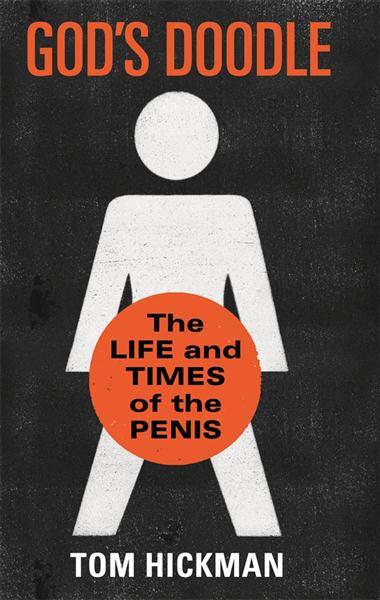
GodsDoodleWhat is gender? Okay, we all know about the mechanics of the thing, but gender is more than just sex. Indeed, it is a psycho-social construct that is difficult to pin down. Sexual reproduction is very common in nature, but we don’t really speak of gender among our fellow animals. Perhaps the decisive factor, in the human realm, is religion. Clearly religion is not the only element, but I often wonder if gender-based commandments didn’t lead many cultures into their current arrangements. The thought occurred to me as I read Tom Hickman’s God’s Doodle: The Life and Times of the Penis. As I informed students in my classes, religion has always shown an interest in sexuality, particularly on providing limitations for it. A recent issue of Christian Century has a cover story about marriage, noting that the widespread prohibitions about homosexual matrimony come from a religion that forbids it. When your stakes are eternal, many people won’t argue.

But I wonder if it goes deeper than that. Gender roles have traditionally been regulated by societies, often on the basis of their religious outlook. Meanwhile, biology, as Hickman reminds his readers, is somewhat more ambiguous. The line between the genders is somewhat of a line in the sand, easily erased. Humans come in a continuum of orientations and biological equipage. Those who don’t match the defined parameters have difficult questions to ponder with a male deity who could think of only two genders. What is a male without a female? Can a male deity exist without a goddess? What, otherwise, is the purpose of a deity’s gender? Wouldn’t a inter-sexual creator may more sense?

Male social behavior has often drawn its entitlement from a bad theology. When feminists first began to raise questions, the orthodox were quick to point out that Jesus was clearly male. As Hickman notes, however, representing him naked on the cross (as crucifixions were historically done) is still rare. Sounds like an effort at keeping the status quo tipped in the favor of one gender that doesn’t want to admit that it slowly morphs into another. We all begin life female, as biologists now understand. Some retain their original gender while males evolve into something different. And with that evolution they tend to make many unsubstantiated claims about the right to make decisions for the other half of the human race. Gender is a lot more complex than many religions would have us believe. Until we learn to treat all people as people, we will still have to ask, and will never adequately answer, how God became male.


Liberty and Justice for

Looks like America will be divorcing the self-proclaimed “Defense” of Marriage Act. It’s a small step, but a small step in the right direction. Religious dogma has too long held sway over politics in this land of religious freedom. It must seem astonishing to rational people the world over how a country founded for the very purposes of religious liberty has homed in on a very narrow sect of one religious tradition and used that as the basis for discriminatory laws. After all, even the Bible says very little about marriage—something about taking your main squeeze into the tent with you and voila, you’re married. The Bible never asks what they’re doing in the privacy of their own tabernacle. Now we have a political system that legislates what can legitimately turn you on. Finally we see some light beginning to dawn in the judiciary system.

I don’t take marriage lightly; those of us who are married seldom do. I also don’t take my status as being the only possible way of finding love in a world that sorely needs more of it. Every day I witness acts of uncaring and sometimes outright cruelty, often in the name of the progress of business. And until yesterday I had to live with the knowledge that it was perfectly legal to discriminate against committed couples just because their gender’s don’t fit a preconceived mold. The land of the free? Maybe, just a little bit yes, now.

Our legal system, which pours out its love on corporate culture, protecting business owners more readily than employees, shielding the wealthy whose lifestyles are beyond scrutiny, ends up telling citizens whom they may love and whom they may not. And we complain against countries with arranged marriages. Freedom for some is not freedom for all. Until we as a nation recommit ourselves to life, liberty, and the pursuit of happiness, we’ll have to take the small steps towards freedom when they come. Yesterday, for at least a little while, I was glad to see that the system can work for the good of all, when it puts its mind to it. America, you can be proud. Say it loud!

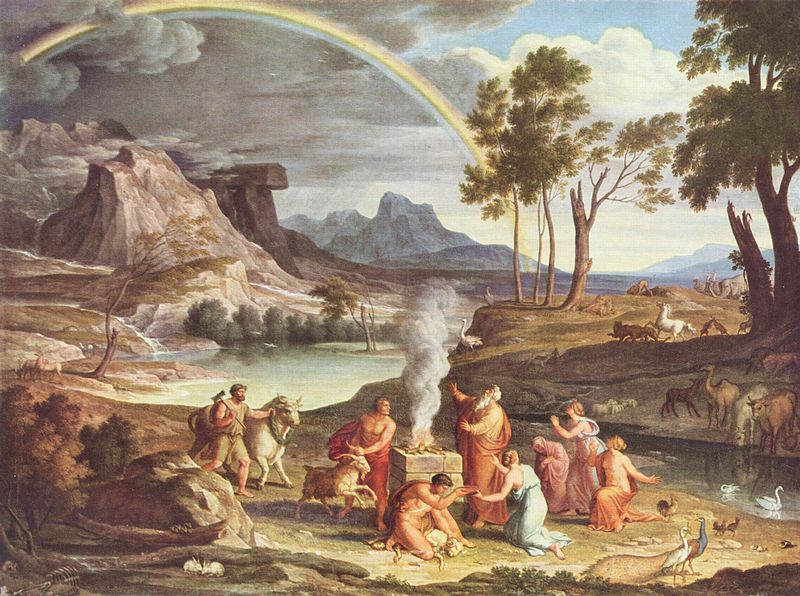
800px-Joseph_Anton_Koch_006


On My Honor

Some old fashioned institutions fear new learning. Although I was a Boy Scout for only a couple of years, I grew up in Cub Scouts and Webelos and had a pretty good idea what boys talked about when they were together. It would’ve shocked me at the time to learn that some Scouts were gay, but then, I was young and most new things shocked me. I later came to learn that not only some Scouts, but also many of the guys I knew from conference-wide church groups were gay. It wasn’t so much that they were in the closet as the rest of the world was. Society wasn’t ready to admit anything that challenged male patriarchy (this was the 60s and that was beginning to shift), and homosexuality did challenge that hierarchy. The Bible could be used to back a husband’s superiority over his wife, but if two men formed a couple—as B-movie computers used to say—”that does not compute.” A society that declared sex had one purpose only—procreation—was already deep in denial about the symbolic power that sexual relations inherently possess, something even the ancient Greeks knew about. How could a culture that out of sync with nature come to embrace true equality?

In the socially conservative icebox of the fin de siècle nouveau (pardon my French), evangelical forces began to declare the Bible as the basis for defining marriage. The problem is that the Bible doesn’t do such a good job of it. Marriage is far from a sacrament, and its main purpose seems to have been to make sure men were kept accountable for the children they sired. After all, they could have as many wives as they could afford, eh, Solomon? The Boy Scouts, so loyal to God and country, preferred not to admit what was already part of their culture. You isolate a bunch of boys together in a cabin in the woods, and what happens? The old myth of Platonic hero-and-sidekick pairs with nary a thought of the pounding chorus of hormones surging through the atmosphere held up remarkably well, considering.

We like to think we live in a more enlightened age. Sexologists tell us that mating is hardly just for reproduction—the natural world belies that. The Bible says little about its purpose, not being of a scientific bent. And yet the Boy Scouts hold up three fingers and go beyond don’t ask, don’t tell. I’m glad to see that they are again considering a look at the obvious. In the Bible that cotton-poly blend you’re wearing is mentioned as evil just a few verses away from one of the few passages that says the same thing about homosexuality (and even that is an overstatement). The Bible was a product of its time, just as the Boy Scouts were a product of theirs. If they want to honor their pledge about keeping morally straight, the Boy Scouts need to consider morality in the light of what we know and open the closet doors to what society has been keeping hidden all along.

Read the green words.

Read the green words.


Here’s the Church, Here’s the Steeple

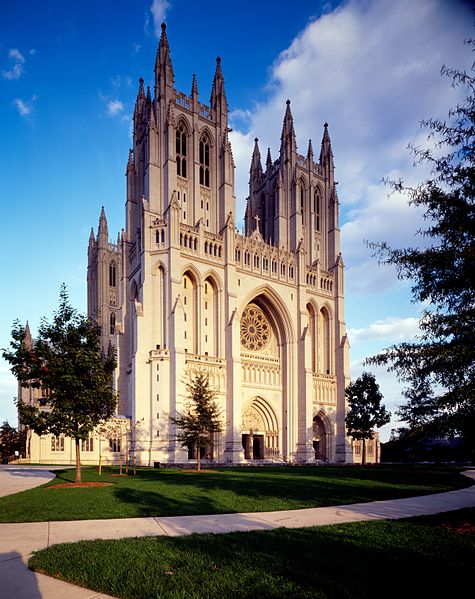
Americans seldom seem to fuss much about religion unless they perceive that it is under threat. We’re real believers in religious liberty that way. The threat angle is a vector worth measuring every once in a while. What gets our collective goat? A story on CNN last week about the National Cathedral caught some attention. Those who think about freedom of religion, liberty of conscience, and all that, might find the implications of a national cathedral itself a tad troubling. Of course, it really isn’t a cathedral for all of the United States, but it is used for many displays of civil religion including several presidential funerals and inaugural prayer services. The cathedral, historically and ironically, is of the Episcopalian brand. Episcopalians boast perhaps the smallest number of mainline protestants in the country, and since they are the remains of the “established church” of England in the States, it is not just a little odd that such an edifice should be associated, however informally, with government in its former colony. The reason that CNN ran the story related to a perceived threat to American religion: same-sex marriages.

Now that same-sex marriages have been approved in three states, some couples desire the symbolism of a wedding in the National Cathedral. It is a victory of social justice that highlights one of the deepest and most persistent of religious concerns—human sexuality. Although many religious denominations have made their peace with evolution by natural selection, few have really considered the implications of reproduction and its discontents. Formally ever since the Enlightenment (and certainly informally for all of human history) sexuality has been a subject of scientific scrutiny. And not just for humans either. As naturalists observe the world of our fellow creatures, we find all kinds of sexual behaviors labelled “unnatural” in humans are quite normal in nature. The reason is the religion that is invested in reproduction. People, many religions teach, are somehow different. Besides, in the days before scientific interest in animal reproduction, few bothered to consider what other animals did, far from human eyes.

For those willing to admit that nature can teach us something about ourselves, same-sex couplings are not limited to humans. They are a part of nature. As Martha McCaughey suggested in The Caveman Mystique, reproduction is only one of a variety of reasons that humans and other animals mate. For us, however, it is a strangely sacral act. All religions have something to say about sexuality, and many express strong feelings about what marriage means. So the Cathedral Church of St. Peter and St. Paul (two men, one might note) is in the news because of what marriages symbolize for many. Marriage is about commitment, not just sex. In a nation where commitment is only fair-to-middling, shouldn’t we applaud the use of the National Cathedral to reinforce such family values? Unfortunately, for many gender differentiation trumps love in what is understood as a legitimate religious outlook.

Carol M. Highsmith's National Cathedral

Carol M. Highsmith’s National Cathedral


Same Sex Sanity

When the people speak, sometimes it’s just nonsense. So the people of North Carolina believe in the exclusive rights of dysfunctional heterosexuals over committed homosexuals. And President Obama makes a powerful statement. As Americans we are reared to respect personal freedom. And what freedom could be more personal than the open expression of love? The reasons given for exclusivity of heterosexual marriage are spurious—certainly the Bible considers marriage in purely pragmatic, not sacred, terms. As citizens of their own time they were as much programmed by their environment as are people today. Marriages were arranged and the concept of sexual orientation simply did not exist. It is not that I castigate marriage—having been married nearly a quarter of a century myself I would be a fool to do so—but I in no way feel threatened by anybody falling in love with anybody else. Nor is it the right of any loving Christian to stand in anyone else’s way.

A God who created gender-changing fish to fry in Hell (particularly on Fridays) seems unnecessarily cruel. (Yes, such fish do exist.) A God who created other animals that exhibit homosexual behavior (bonobos, penguins, elephants, lizards—at least 450 animal species have been caught in the act) and then condemns it is surely working at cross-purposes with the nature he (always he) created. It has become quite clear from nature that sexuality is far more than procreational activity. If your kit is for kid making only, why do so many good, Christian couples have trouble conceiving? And don’t say “God only knows” because Fundies have no monopoly on questions that demand a verdict. What is God playing at here?

Intelligence and sexual behavior seldom go together. Religions, however, have a hard time keeping themselves out of the bedroom. Loving, committed relationships hurt no one. For a religion claiming to be based on love, declaring various expressions of love wrong is diminishing the good in the world. The Bible has very little to say about homosexuality. Good, Bible-believing Christians often turn blind eyes to the many more stringent passages about divorce and remarriage, but single out the very few that mention specific same-sex acts. Do they not see how such cherry-picking makes a mockery of calling anything holy? With all the excised bits, it might be more appropriately called the Holey Bible. For me, it seems they might find it more instructive to observe the moray eels rather than trying to cover their wrasses.


Biblically Married

The Bible says—. Fill in the blank. Go ahead, someone will believe you. The problem with biblical literalism is that it is often held by people who don’t read the Bible. Well, it is a gosh-darn big book—well over a thousand pages—do you know how much quality television watching time that represents? So many fundamentalists are surprised to find out how little the Bible has to say about marriage. In fact, it says almost nothing. There are no marriage rites given, and marriages are mentioned but not described in detail. So when modern-day readers want to find guidance about political policy they have to—to be frank—make a lot of stuff up.

Take North Carolina, for example. Next week they are scheduled to vote on an issue of defining marriage. The intent, apparently, is to bring the state in line with the Good Book. In comes Matthew Vines, an evangelical Christian who’s also gay. Being a Harvard student, he has immediately impressive credentials. He has an on-line biblical exegetical exploration of what the Bible says, and more importantly, doesn’t say, about homosexuality. The other solution, to actually read the Bible, is a little too much to ask. Another part of the problem is that the Bible was written in a very different context, and to understand the Bible’s view on anything, you need to fit it into its context. All this Bible reading—and context too? Better leave it to someone on the television to explain it all.

Leonard Pitts Jr. is a columnist that I’ve come to trust. His good sense comes through in all his work. In Wednesday’s column, he highlights Matthew Vines’ hour-long talk as an example of what happens when common sense meets the Bible. For those who bother to read it, it will become clear that the Bible nowhere defines marriage. It says nothing about sexual orientation. The few passages on homosexual acts have a narrow context (that word!) that must be considered. Nowhere in the Hebrew Bible nor the New Testament is marriage considered a religious matter. It’s simply what people do. So as North Carolina heads to the polls, Bibles clutched in hands, but not in their heads, it might do to watch Matthew Vines as homework. I haven’t seen the video myself. An hour is just too long to take from my busy television-watching schedule.


Paradise by Half

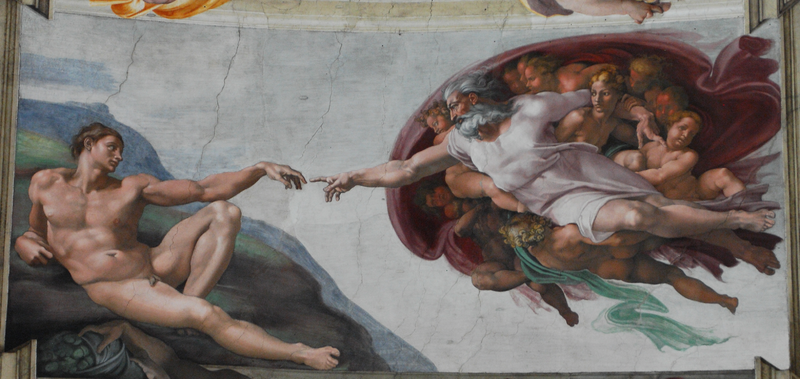
Some times the Bible is best taken in small doses. I’m no technical guru, but I do know that Twitter doesn’t always display the Bible bits I type in daily. Perhaps in some far distant future civilization that has learned how to recover “data” from fried pieces of digital storage devices, the Bible will be woefully incomplete. Maybe not woefully, depending on whose point of view sees it. Reading over passages worn smooth by timeless repetition, it is sometimes difficult to notice the harsh undertones. My twittering is up to Genesis 3 now, the infamous Garden of Eden episode. Over the last few days I’ve tweeted, “And the Lord God called unto Adam and said unto him, Where art thou? And he said, I heard thy voice in the garden, and I was afraid, because I was naked; and I hid myself. And he said, Who told thee that thou wast naked? Hast thou eaten of the tree, whereof I commanded thee that thou shouldest not eat? And the man said, The woman whom thou gavest to be with me, she gave me of the tree, and I did eat. And the Lord God said unto the woman, What is this that thou hast done?”

The weary “blame it on the woman” trope aside, several things stand out. God seems to be interested only in Adam. Perhaps the divine Dad wants to take his boy aside for a man-to-man chat, but it seems more likely in the context that Eve is simply irrelevant. Even Adam’s response is completely void of Eve, “I heard,” “I was afraid,” “I hid.” For a man about to shove the blame off onto his significant other (sorry, Tea Partiers, nowhere does Genesis say Adam and Eve were ever married), he is strangely circumspect about his recondite female. Even God sounds surprised, “Who told thee that thou wast naked?” Hmmm, who else is there in the Garden? Adam suddenly abandons the first person singular and begins his response with, “The woman whom thou gavest…” Blame anyone but Adam. The tragic disappearance of Eve until blame is to be attributed should warn us that the remainder of the Bible will not be a happy book.

The first chapters of Genesis have a lot of uncovering going on. God, like a detective in a CSI drama, tries to uncover the mystery of the naked man. When man is found naked he blames the woman, not even bothering with her name. Much is revealed here. Coming as it does as the first biblical story of human interaction, this tale sets the stage for all subsequent developments. From this point onward, with rare exceptions, the story will be a male narrative. Women will be assigned to, literally, support roles. Is it any wonder that women gather to protest against women’s rights, when under the thumb of such teaching? I suggest that what is required is even more uncovering. If we examine the bare facts of the Bible, we might be able finally to get to the root of this problem. That root lies deep in the literal interpretation of mythology.

Who's missing?