
It wouldn’t be Christmas, in the Christian tradition, without Mary. Still, apart from her later enhanced role in Roman Catholicism, Mary’s part beyond Christmas is minor in the church. She seldom features in biblical accounts of Jesus’ life. It is easy to forget the female role that was so much a part of winter solstice celebrations that coalesced into our modern twelve days (really only one, for work purposes). That’s why I was glad that a friend sent me a link to a site about Mödraniht, or Mother’s Night. Honestly, I had never heard of this holiday before. Given the Germanic penchant for dramatic festivities, it comes as no surprise that Yule involved a night celebrating the feminine aspects of the season. Apart from the occasional references to Mary, we tend to think of this as the time a male son of a male God came to save mankind. What of the women without whom none of this would have been possible?
As Carolyn Emerick notes on her page, we know little about this sacred day because Christianity managed to wipe out most of the pagan traditions of northern Europe. Some, of course, survived and worked their way into Christmas. Modern holidays, being primarily days off work rather than deeply felt celebration (for we live in a world with no need for religion), have gravitated toward what had once been the male preserve of earning a living. Watching movies of Dickensian times, it is clear the women continued to work—likely even more than usual—to bring off a holiday celebration. It was the male prerogative to be the recipient of largess.
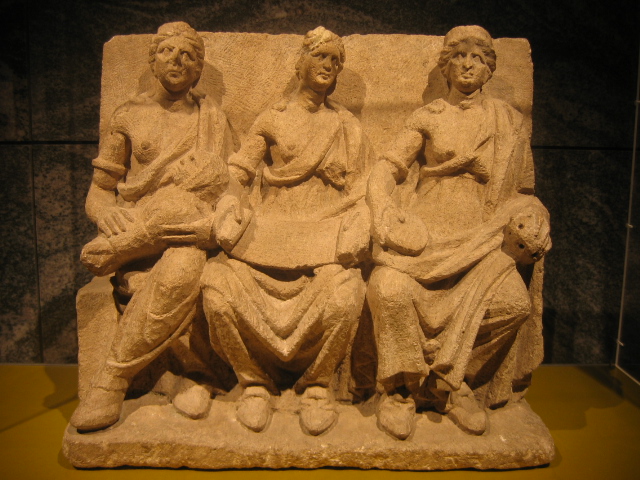
Photo credit: “Urban” WikiMedia Commons
My concern is that gender equality may sometimes be confused with gender stereotyping, or even with patronization. How is it possibly to build equality into a system put into place by generations of men? Is civilization truly civilizing when half of the race and only a very small portion of the planet benefits? The Christmas season, even now rapidly slipping away, is a time for considering equality. Every year modern non-believers and humanists ask for equality—a dream always held at arm’s length, since the holiday earns record profits as it is, and the financial year revolves around it like a Pole Star. It is the time of year when we see if we’ve turned a healthy profit. The rules in the system were set long ago. Even with Mary in the manger, she blends into the background while shepherds, wise men, and other interested males plan to make a holiday of it.
 Steve A. Wiggins