Reason to Believe

Gods, the experts say, are on the way out. Have been for some time. The loudest voices in this arena are the New Atheists who suggest science alone explains everything. Problem is, the gods won’t let go. My wife recently sent me an article from BookRiot. (That’s a dangerous thing to do, in my case.) Nikki Vanry wrote a piece titled “Dallying with the Gods: 16 Books about Gods and Mythology.” Most of what she points out here is fiction, and that makes sense because gods and fiction go together like chocolate and peanut butter. The first book she lists is Neil Gaiman’s American Gods—a book I read years ago and which has subsequently become an American phenomenon. There’s even a television series based on it now. Like Angels in America, only more pagan.

What surprised me most about this list is the books I hadn’t read. Or even heard of. After American Gods, I got down to number 10—Christopher Moore’s Lamb—before reaching another I’d read. Then down to 16, Till We Have Faces, by C. S. Lewis. There are, as Vanry notes, many more. Our experience of the world, as human beings, suggests there’s more to it than what we see. Not everyone would call these things gods, nevertheless there certainly does seem to be intentionality to many coincidences. Things pile up. Then they topple down on you all at once. Seeing such things as the works of the gods makes for a good story. At least it helps explain the world.

Many materialists do not like to admit that humans believe. Call it the curse of consciousness, but the fact is we all believe in things. Even if that belief is as strange as thinking fiction only comes from electro-chemical reactions in a single organ in our heads. Gods often appear in fiction. Frequently they’re in the background. Sometimes they’re called heroes instead of deities. At other times they’re right there on the surface. Such books carry profound messages about believing. It doesn’t matter what the authors believe. Believe they do. And such books sell. As a culture, we may be in denial. What we sublimate comes out in our fiction. There are gods everywhere. Singular or plural. Female, male, or genderless. Almighty or just potent. Reading about them can be informative as well as entertaining. We’ve got to believe in something, so why not gods?


The Way, the Truth

It’s striking how similar world religions can be. Granted, the concept of “religion” as a separate sphere of life is a western one, but throughout the world thinkers have drawn similar conclusions. Until the World’s Congress of Religions of 1893 in Chicago, however, most Americans knew only of the monotheistic traditions. Jews and Muslims had been in this country almost as long as Christians. Nobody paid much mind to the indigenous religions of the original occupants. In any case, in 1893 other religions—those of eastern Asia—entered American consciousness. Buddhism and Hinduism were exotic, if pagan, belief systems. There wasn’t much of a conceptual foundation upon which to build, however, so early on people tended to focus on the differences between them rather than the commonalities.

For me, I first really learned about such traditions in a World Religions course in college. I’d never heard of Daoism (or Taoism) before. The Dao, or “way,” pervades ancient Chinese religious thought. There’s a sense of flow to it—one of the main ideas is not to resist the way, but to bring yourself in line with it. Doing so helps you to realize that you need not be rich to be happy. Sufficiency is, well, sufficient. Meanwhile in the west, Christianity mostly bought into greedy consumerism. Our happiness is measured by what we have. And having, we want more. I’ve been reading about Daoism recently, and it occurs to me perhaps there are some accidental Daoists here in the west. This reading made me think of my father.

I can’t speak much for who he was, since I barely knew him. I only saw him once as an adult, before he died. For a brief moment he took me into his apartment. He owned practically nothing. A television, a few things to sit on. A magazine or two. That was about it. Did he want to acquire more? I didn’t know him well enough to ask. He was raised as a Christian, and I do not know what his religious beliefs were, if any. Thinking back to that experience, however, was the result of reading about Daoism. Being content with little. Not all of us are cut out for monastic life, but my visits to such communities have always left me with the sense that having less is more than enough. I know I’m over-simplifying here. I’m not an expert on Daoism. I’m certainly not an expert on my father. I do believe, however, that things can weigh us down. And even Christianity, read in a certain light, agrees.


Science of the Immaterial

One of the truly frustrating things for the honestly curious is a lack of good resources. Specifically here I’m talking about ghosts. More generally, about the supernatural. “Don’t worry,” laugh the reductionists, “there’s no such thing.” But some of us are seriously curious. Those who are willing to admit candidly the events of life will eventually confess to things they can’t explain. People have been seeing ghosts since at least the Stone Age, and yet finding a serious, non-dismissive approach to the topic can be annoyingly difficult. Curious about the background to the film The Conjuring, I wanted some kind of objective treatment to the Perron family haunting. One of the girls involved has written a three-volume treatment, but that will take some time to get through. So I turned to the investigators, Ed and Lorraine Warren.

The Warrens were (Lorraine is still alive) some of the world’s first ghost hunters. Self-taught and deeply religious, they referred to themselves as demonologists. Lay Catholics, they couldn’t perform exorcisms, but they could assist in them. Apart from the Perrons, they investigated Amityville, the haunted doll Annabelle, and the Snedeker house, and many other famous cases. A guilty pleasure read, Ghost Hunters, written by Robert David Chase, along with the Warrens, thumbs through several of the investigations. When all is read and done, however, people who claim to know better accuse the hauntings of hoaxing and since there is no arbiter, the curious are left with that unsatisfying state of “he said, she said,” but no real answers. Ghost Hunters contains a potpourri of cases, mostly of demonic possession. Nothing about the Perron family, though.

No doubt much of the hoopla around reality television ghost hunting is clever marketing and nothing more. Even the acclaimed Ghost Hunters were caught gaming the system a little on their Halloween specials. That doesn’t stop people from seeing ghosts, however. Some academics have attempted to address the issue and soon find themselves in untenured positions (so much for freedom of speech) or mocked by their more “serious” colleagues. What ever happened to old fashioned curiosity? Materialism isn’t the only show in town, is it? We need treatments of the subject that move beyond the anecdotal. It’s difficult to get a ghost into the machine, apparently. Science hasn’t figured out a way to study the immaterial yet. Until it does, those who want to know the truth will be left relying on those who make a living by addressing questions even empiricists fear to ask.


No Explanation

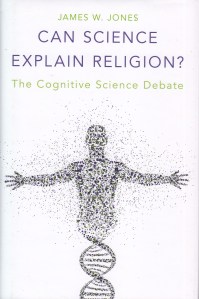
How do you explain that? Everything, I mean. The need to understand “life, the universe, and everything” is as old as our species, and perhaps even older than that. Up until modernity when the limits of physical explanations were reached, gods filled the gaps. Can Science Explain Religion: The Cognitive Science Debate, by James W. Jones, is not an easy book. It demands mental rigor on the part of the reader. It is also a very important book. Mainly addressing the religion debunkers—those who famously declare religion to be pointless and perhaps even evil—the book asks logically, step by step, whether their assertions are rational. Since Jones is, as I once was, a professor of religion, the reader will be forgiven for second-guessing him. Jones makes a very strong case not for the truth of religion, but for its rationality, not its believability.

Beginning with the basics, Jones considers explaining explaining. In other words, can religion be explained scientifically, and if it can what does that logically prove? You need to follow him pretty closely here, but it is worth the journey. Science, as a human enterprise, has its limits. Jones doesn’t disparage science—far from it—just its misuse. The mad passion for a single explanation for everything has led to reductionist thinking. It’s not uncommon for the debunkers to claim everything is physical. Nothing exists that science can’t explain. Jones demonstrates the logical flaws in this approach. Not apologetically, but rationally. Physicalism, like its ancestor logical positivism, runs into serious problems when it comes to explaining much of life. Especially consciousness.

Consciousness remains one of the great mysteries of existence. Nobody knows what it is or where it comes from. Jones isn’t appealing to the “God of the gaps” here, but he is simply taking his own experience as a clinical psychophysiologist and bringing it into the conversation. Mind is not easily explained as a byproduct of matter. The term that has been used in recent years is that consciousness is an emergent phenomenon. Something that is greater than the sum of its individual parts. Jones doesn’t declare science can’t explain this, but rather that when science addresses the question clearly and logically a plurality emerges. One single answer may not be enough to cover it all. I’ve posted many times on this blog about the misuse of Occam’s Razor. Jones here provides a sustained, and rational discussion of questions that have never been answered adequately. Religion doesn’t challenge science, but together they may have more explanatory power than either has separately. Any book that can establish that qualifies as very important.


All There Is To Know

I’m sorry, I didn’t mean to be rude but I just had to laugh. A friend sent me an article from Science Alert titled “A Physicist Just Explained Why the Large Hadron Collider Disproves the Existence of Ghosts.” Intrigued, I read, “there’s no room in the Standard Model of Physics for a substance or medium that can carry on our information after death, and yet go undetected in the Large Hadron Collider.” One of the reasons, I believe, science has trouble among hoi polloi is such arrogant statements as this. I don’t know about ghosts, and for a very good reason. There is no experimental way to test for that which doesn’t exist in the material world. The LHC may tell us all we can know about the world that we perceive (although I doubt it) but it can’t tell us about that for which there is no measure (e.g., consciousness). I don’t mean to get all complex here, but let’s stop and think about this for a moment.

What we know of the universe is what we can perceive and extrapolate from that perception by reason. We, however, don’t perceive everything. Our five senses evolved for one purpose and one purpose only—to survive in this particular environment. That’s a trait, hate to admit it as much as we might, that we share with other animals. It helps to be able to see, hear, touch, taste, and smell things clearly. These traits give us valuable information about the world around us—is that plant poisonous? Is this heat going to kill me? Should I avoid approaching that large, angry-looking bear? Things like that. What our senses don’t tell us is the aspects we didn’t evolve to perceive. We understand everything about nothing. Put another way there is nothing that we understand completely. Entire books can be written about the concept of zero and that’s just an abstract. We only experience a small piece of this universe.

That’s the problem with being in the backwater of the galaxy. I grew up in a backwater so I know what I’m talking about. Things might be different if we lived near the galactic hub, where beings with different senses may well exist. We know, for example, that even on our planet some animals perceive magnetic fields. Who knows what kinds of abilities might have evolved on worlds that posed different challenges to survival than our own? Who are we to say that here in our basement on earth we have a machine that can uncover every possible permutation of anything in the known universe? I don’t know about ghosts, but, I suspect, they’re laughing too.


Hoping for Light

Although the stores have been playing Christmas music for some weeks now, it is technically Advent. I think we could all use a little Advent as days grow shorter and dark nights increase their influence over our lives. As a nation we’ve been brutalized by a minority candidate and this has become a bleak December that Poe would certainly have understood. The spinning mind occasionally falls upon George W. Bush who somehow has begun to look normal. The president who told us when America was under attack we should shop. After all, that’s what people do in December, right? We buy things to make ourselves feel better. It sure is dark outside most of the time. Advent is all about candles and light and hope.

img_2638

One of the more endearing aspects of human beings is our ability to see the positive amid negativity. Darkness is the natural state of the universe. Stars are tiny points of light in an endless cold and dark universe. Most of what’s out there has no light beyond those willing to burn bright enough for others to see. We, however, see the light of daytime as normative, slumbering away the hours of darkness. We thrive in light and the light has to be augmented by candles as we struggle against the natural darkness that would, if it could, encompass the universe. Darkness, despite its emptiness, is endlessly hungry. Advent reminds us that we must be light if we want anyone to see in the growing nighttime.

We miss this important dynamic if we leap straight from Halloween to Christmas, pausing briefly for Thanksgiving. The church has made its fair share of mistakes, but Advent wasn’t one of them. Experts tell us Jesus wan’t born in December. Christmas isn’t really a physical birthday. It’s an ancient rite concerned with the return of light to darkened skies. A fervent appeal for our colorful lights and candles to encourage the light that we know, we believe, is out there to return to us. Scientists tell us that it’s just that the earth lolls at 23 degrees on its axis and all of this is just a balancing act. That may be so. I’ve never been off the earth to check. Down here on the ground, however, the days come only reluctantly and the nights linger longer and longer. And we can choose to see darkness as our natural state, or we can ignite a candle to encourage the light to return.


Things Unseen

The reductionistic mind doesn’t care for mystery. Unlike a lover, the unknown is a problem to be solved so that the march of nice, neat solutions may continue to march on, unabated. Fear of fuzzy thinking leads to a coldness that those of us experiencing life find not a little unsettling. Take the cougar, for example. Right now I’m in one of the few habitats of the grizzly bear in the lower 48. It is also home to mountain lions (pumas, panthers, ghosts of the Rockies). Just a week before I came here a local website posted a rare photo of a cougar caught unawares. These creatures are seldom seen, and are officially extinct for most of the country east of the Mississippi. That doesn’t stop them from existing, however. Reports from my native Pennsylvania continue to be filed. I saw tracks when I was a child, but never saw an actual cat. A friend in West Virginia had seen one shortly before we visited that state some years back. Even New Jersey still gets the occasional sighting. Officially these are misidentifications.

I recently read a couple of books that addressed the beast of Dartmoor, in the United Kingdom. Dartmoor is a wild and remote area and for many years an uncomfortable story has circulated about an unknown creature that haunts the moors. The story is older than Sherlock Holmes as Sir Arthur Conan Doyle had the detective face the hound of the Baskervilles in that region. Those unhappy with the unknown have sought a rational explanation and now some are claiming that escaped cougars are the basis for the tale. A zoo owner even declares that some of his escaped in the 1980s, causing the stories to arise. The fact that the beast had been part of folklore for over a century already at that point suggests that this may be a little too little a little too late. It’s better than mystery anyway.

DSCN0740

My minimal experience on Dartmoor didn’t lend itself to seeing folkloristic beasts. Even my somewhat extended time in this wilderness hasn’t led to a cougar or grizzly sighting. The mysterious gains its reputation by rarity. The thrill of seeing a relatively common moose is akin to theophanic. I know it’s just a big deer. It’s more than just a big deer. Wonder is an essential part of the human condition. Without it we become as soulless as the mechanistic universe some so desperately want to explain neatly, according to the rules. Cougars escape. Cougars escape detection. What else might we be missing in a universe we’ve only just begun to explore.


Grasping for Meaning

DSCN6301

How often we’re told—and writers on biblical topics are especially guilty of this—the meaning of a story. Despite what materialists say, we are meaning-seeking creatures. We want to know why. When we read a story we want to know what it means. I occasionally dabble in the pool of fiction. Many times I read the emerging story and wonder what it means. Sometimes the meaning changes over time. Sometimes it means many things at once. Recently I read someone explicating the meaning of the story of Noah. The meaning? No, a meaning. That little article makes all the difference. Definite or indefinite, we need constantly to remind ourselves that stories bear meanings. Plural. They mean nothing otherwise.

Those of us who spend a lot of time with sacred texts see that it suggests something specific to us. Those who manage to gain followers start their own religions. The problem comes when one meaning is fixed to a text. I often saw this growing up as a Fundamentalist. I also saw it frequently at Nashotah House. This verse means this. Nothing other. Any interpretation outside this particular one is heresy. Heresy is, of course, punishable by death. Lest you think this is just the idle musing of an underemployed biblical scholar I must remind you that wars have been fought over such things. People have died. All for someone’s mistaking an indefinite article for a definite. There are those who say certain canons of the Mass must not exclude the definite article or otherwise all you’re getting is a very cheap and meager lunch out of the deal. For this you put on your best clothes?

We read stories for entertainment, but if they mean nothing they are quickly forgotten. Dreamtime stories, as David Abram reminds us, may lack plot but they have place. They take us to a place where we aren’t physically present. Or if we are physically present, we need to be taken there in mind as well as body. They give life meaning. Ironically, as a culture, fewer and fewer people find meaning in their work. Living for the weekend, they find their sense of fulfillment by what they do when not on the clock. And some of that time has traditionally been demanded by those who offer worship experiences. After all, weekends were their idea in the first place. There may be some meaning in that. If there is it is only one meaning among many. And even while attending, it is best to keep an eye or ear open for something other than the meaning which the ordained may insist is the only true one.


Vitruvian Savior

If memory serves, I was still in seminary when “Piss Christ” was first unveiled. As photographic art, I can’t say when the shutter snapped, but I seem to recall animated discussion over it and since seminary animated discussion has been at a premium, so I think I’d remember something like that. In any case, the artwork still has the power to shock and enrage as the world teeter-totters in its love-hate relationship with religion. Some people seem surprised when other people respond somewhat pointedly to what they perceive as affronts to their beliefs. The thing about beliefs is, well, people believe them. In this day of electro-chemical signals between synapses it may be hard to attribute any substance to belief. Still, if someone makes that claim, insult their mother and see what happens. Beliefs, by their nature, are sacred.

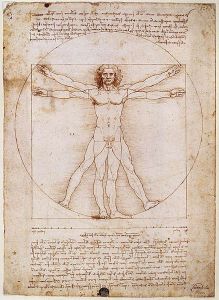
438px-Vitruvian

I was reminded of this when my wife pointed out to me a story about Dartboard Jesus. If you’re not a Rutgers University person (as I no longer am), it takes only a little imagination to visualize this artwork. Conjure a dartboard in your mind. Then picture a crucifix superimposed on it with darts instead of nails. Red darts, if that helps. You’ve got it. The official name of the piece is “Vitruvian Man,” but the public outcry was enough to have the piece removed from public display. I taught (strictly as an adjunct, no complications, please) at Rutgers for four years. People sometimes expressed surprise that multiple sections of Intro to “Old” and New Testaments filled up every semester. I wonder if the university ever takes measure of its students’ beliefs. I had Seventh-Day Adventists in my courses. I had Jains, Muslims, and Hindus. I had Atheists and, God help us, Episcopalians. One thing all these people had in common was belief. Not beliefs, but more singular: belief.

No one in the world intentionally believes falsely. Indeed, should Oxford Dictionaries be trusted, belief is “Something one accepts as true or real.” By definition, it seems, beliefs are believed. Artists serve a valuable function in expressing ideas that words struggle to articulate. There is more going on when your crucifix is juxtaposed to a glass of urine or a dartboard than you might otherwise imagine. It says something about belief. In some cultures such heresy is punishable by death. It isn’t so much a matter, I would suggest, of freedom of expression as it is a matter of advocacy. Artists are teachers and even teachers sometimes don’t consider how their lessons will be taken. Respecting belief, perhaps, is something electro-chemical signals leaping tall synapses in a single bound simply don’t understand.


Soul Library

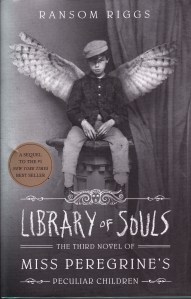
LibrarySoulsThere’s a kind of trinitarian logic to the trilogy format. Long before Hegel’s model of thesis, antithesis, and synthesis, people have grouped things into threes. And there is a hook that film-makers have used to ensure that viewers will come back for the third installment: the cliffhanger. The second episode leaves everything unresolved and you’ll be sure to see the third. Think of the original Star Wars trilogy, or Back to the Future, or even Pirates of the Caribbean. In each case the first film could stand alone, but the second insisted on a third. This is a little trickier with books since, as we all know, publishing is a slow business and writing takes time. I saw Miss Peregrine’s Home for Peculiar Children, by Ransom Riggs, in 2011. I knew I would read it since the cover alone was so intriguing. Young adult literature, it turns out, has come a long way since I was able to classify myself that way. Then Hollow City came out. It ended as a cliff hanger (remember the formula), back in 2014. Just over a year and a half later, The Library of Souls was released.

Having just finished the trilogy, reading each as it came out, I would say that, like most trilogies, the first installment was the best. Freshest, a new idea, where characters exist with whom the reader participates by in filling in the blanks, a series grows more complex as it expands. Some elements that weren’t there at the beginning have to be read back into the previous installments. In my case, I’ve read so many books in the interim that some of the details have grown hazy due to the simple passage of time. Still, Riggs is to be highly commended for bringing souls back into discourse among the young. Too long we’ve been sold the story that we have no souls.

I’m not going to go into any great detail here since those who want to learn how Riggs handles the tale will read his books, but I will say that a stubborn materialism has settled over intellectual culture. Some neuroscientists have naively said, “we’ve looked for it and can’t find it, therefore it must not exist.” And since most of us don’t have access to their kinds of equipment or training, we’re told to acquiesce. Give up your souls—buy into materialism. Buy stuff. That’s what we’re all about. It is a relief, in the midst of all of this, to have a popular writer suggesting, through fiction, that it is souls that make us who we are. The books aren’t preachy. Indeed, it would be difficult to say they are religious in any conventional sense. They are, however, soulful. And for that I am very glad to have read them, even as a middle-aged adult.


Dream Time

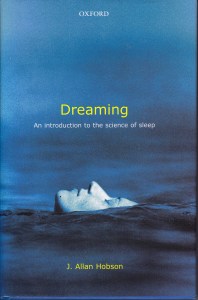
DreamingLike most people, I seldom remember my dreams. When I do, or when only the powerful feeling remains, I know that they are very emotional events. Something is always going on, and my attention is riveted. I recently read J. Allan Hobson’s Dreaming: An Introduction to the Science of Sleep. It must be intimidating, I have to note right away, for a neuroscientist to write a book. Our understanding is changing so rapidly that even academic treatments become a kind of ephemera. Published over a decade ago, it shows its age. Even I’m aware that changes in brain science have occurred and perceptions have changed somewhat since then. What struck me most, however, is Hobson’s absolute confidence that mind is a function of the brain, and that dreams are merely the madness we experience when we sleep. The madness I don’t mind so much. The materialism, however, I think is largely wrong.

Consciousness remains a great unknown. There is disagreement around whether it is emergent—coming from the brain, or receptive—perceived by the brain. Or perhaps something completely different. One of the greatest human foibles is to claim that we understand anything completely. I’ve always been amazed—knowing that the world involves much more than just sight, sound, scent, taste, and touch—that some scientists are so quick to write off complex experience as “merely” activity in the brain. Some animals, for example, seem to perceive magnetic fields. Others use navigation devices we simply don’t comprehend. They may experience senses we don’t even have. And yet, we happily claim that we’ve gotten this one nailed down. Dreams are only activities in the brain when we sleep.

Only? How can any dreamer say that this is only chemical reaction in our heads? The experience of dreaming is, implicitly, so much more than just random thoughts. Hobson does a good job describing how dreams are a form of madness, a psychosis when the reasoning part of our brains are inhibited. Fair enough, but who can experience madness and think it completely material? Our minds are more complex, it seems to me, than we give them credit for being. Hobson begins the book by noting that dreams used to be within the purview of religion. Since has now claimed them. We have an entire universe in our skulls, and yet we insist that although we don’t understand it, we can be certain that it is nothing but material. My dreams continue to suggest a different reality.


Super Reality

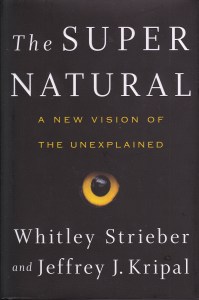
Super NaturalReality is not often, if ever, what it appears to be. As creatures that evolved to survive in this particular environment, we have passed along and received the skills that make this possible. One of those skills is filtering. We filter out most of the stimuli that surround us daily (and nightly), and that with only five senses. We don’t experience reality as it is. It is with this in mind that I read The Super Natural by Whitley Strieber and Jeffrey Kripal. Perhaps unlike many who will read this book, my attraction was based on Jeffrey Kripal’s involvement. In anticipation, late last year I read Whitley Strieber’s Communion, but I have great respect for Jeffrey Kripal’s work, and consider anything he writes well worth the reading. This book, then, is a strange hybrid between the experiencer and the open-minded analyst who brings the toolbox of religious studies to what most academics dismiss as “the paranormal.”

This is one of those books that will distort perceptions of reality. That’s not because Strieber and Kripal simply accept each other’s versions of events or conclusions. They don’t. Both are free to disagree with one another. Kripal, as a recognized academic, brings something rare to the table. He is willing to listen to people who have experienced what standard approaches wipe away as “merely anecdotal.” Ask yourself: what do we have to say that isn’t anecdotal? We don’t experience all of reality, and the filters we use go both ways—what we perceive is filtered, and what we share with others is filtered. As much as a materialist may hate to admit it, she or he still has feelings. And our senses, keep in mind, can be fooled. We’ve all seen mirages or thought we heard something that nobody said. Our brains evolved with lots of false positives. Who are we to judge that someone else’s anecdote is impossible? That’s what super nature can do to you.

It is also refreshing to see that, although the day when a physicist’s name as a household word may have passed (excluding Sheldon Cooper, of course), those who remain recognizable from the past—Niels Bohr, Werner Heisenberg, Wolfgang Pauli, Erwin Schrödinger—were not strict materialists. As The Super Natural points out, these foundational figures of quantum physics all turned to mysticism of some sort or another to help them come to grips with what the empirical evidence was showing. I do wonder how we’ve come, since then, to have so many brilliant people who have lost a sense of wonder about the anomalies that exist in everyday experience. Who hasn’t felt a shiver of pleasure at a particularly poignant coincidence or glitch in the matrix? Maybe most of us will never have as many uncanny experiences as Whitley Strieber, but we might be losing something valuable if we don’t at least listen to what he, and others like him, have to say.


Faith for Sale

Materialism can be defined in a number of different ways. One of the more common is that people desire material things. We want stuff. Now, we all need things to survive. My sympathies are always with the poor for whom each decision can be a potential tragedy. Spend too much on something and you may not have enough left to purchase something you need. As people, though, we all long for nice things. So it is that places like dollar stores exist. The dollar store is not the same as the “five and dimes” with which I grew up. The latter stocked things that were, in large measure, practical. Things you might need: pencils, string, soap. A dollar store, however, may lead you down a different path. A lot can be had for a dollar. Some of it may seem to promise more than it can deliver.

IMG_2670

My wife sent me a photo of a dollar store where the window was lined with what appears to be religious statuary. I’d be lying if I weren’t to admit that my first impulse was to go and purchase some cheap salvation. I’m sure the statues aren’t made of stone. I’m not even Catholic, so I’m not sure a one-dollar Mary would help with much of anything. Still, it is something to buy. Something material. Something that seems to make promises beyond itself. Here is the danger of the dollar store. It’s only a dollar!

Every now and again I play with this thought-experiment: if I knew that I would only survive one more year, what would I buy? Many things seem superfluous in the face of eternity. Would material comforts, or larks, do anything more than depreciate the little I would leave to others? That game tends to show materialism in a rather crass light. What do I really need to buy? We all have our weaknesses, for sure, but it can’t hurt once in a while to think that the material is just that: material. And we might have a very different set of values if we didn’t measure worth in terms of material gain. Faux-stone Mary would likely back me up on that.


Thinking about Thought

The history of thought can be compared to a slow-moving pendulum. At other times it can be more like a ping-pong game. Acceptability for ideas can take time, but sometimes the perceptions change rapidly. Having been raised in a small town in a Fundamentalist setting, it is difficult to assess where exactly the “status quo” was when I was growing up, but by the time I had reached college it was pretty clear that the challenge science posed to my particular brand of religion was pretty firmly entrenched. Materialism—in the philosophical sense—had obviously gained several champions. B. F. Skinner and his followers applied this template to human beings, and it became fairly common to hear that we were basically automatons. (Ironically, double predestination in the Calvinism I was learning about taught pretty much the same thing.) Today there are even more vocal heralds proclaiming that all that is, is material. If it can’t be measured empirically, it can’t exist. The pendulum, or ping-pong ball, has come to one side of the table, or arc, awaiting rebuttal.

An article in Scientific American from two years ago (my personal pendulum sometimes moves slowly as well) asks the question “Is Consciousness Universal?” The article by Christof Koch describes panpsychism, the theory that anything beyond a certain level of organization is conscious. Koch begins by discussing dogs. Those of us who’ve spent time with dogs know that they are clearly conscious, although a materialist would say they are just as much dumb matter as we are. But panpsychism goes beyond dogs and horses and other “higher” mammals. Anyone who has taken the time to study any animal in depth, particularly those that are obviously mobile and can seek what they wish to find, knows that animals have will, and intension. The loss of meaning only comes with materialism.

Integrated information is the term Koch uses to describe the baseline of consciousness. Of course, this would need to account for more than the merely biological. Computers may be sufficiently complex, but the information they “possess” is not integrated, thus keeping them from being truly conscious. I’m not enough of a scientist to understand all the technicalities, but I do know that something as simple as common sense suggests that consciousness is part of all animals’ experience of life. As some scientists have long realized, feeling, or emotion, is integral to the thought process. Only when we realize that we share this world with a great variety of conscious creatures will we begin to make any progress toward understanding the difference between mind and mindfulness.

DSCN5295


Ghost Rider

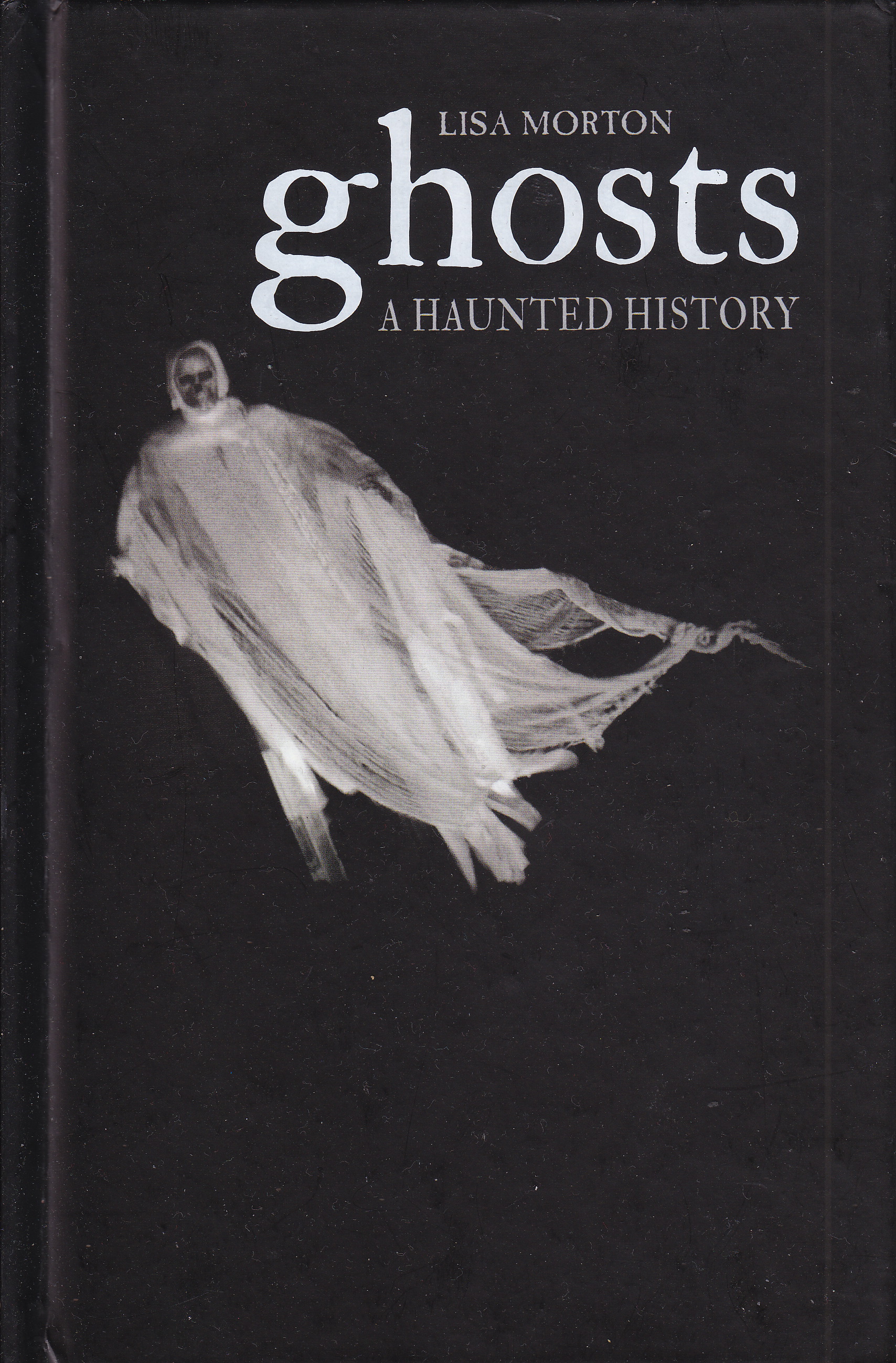
GhostsOf all frightening creatures, ghosts are by far the most ubiquitous. Believed in by every civilization ever recorded and throughout the world, not even science has been able to displace them. Lisa Morton’s Ghosts: A Haunted History offers a brief tour through the realm of the dead. With a sense of how ancient the phenomenon is, she also notes time and again how religions have an uneasy but steady relationship with disembodied spirits. After all, religions give us souls that science strives to take away. What makes Morton’s study so interesting is its restlessness. Not focusing on one culture or time period, the reader learns about Asian ghosts as well as the familiar translucent variety favored in the western world. Ghosts are everywhere.

Now that October has invited thoughts of long nights and falling leaves, I often ponder a world without ghosts. If rationalism of the materialistic variety had its way, this would be simply a natural season like any other. No need to be frightened as the sun takes on that quality that suggests some things should not be seen, and the air feels as if anything might happen. Spooky houses are merely wanting maintenance and every creak and rustle can be explained. There are no ghosts in the night and Halloween is only for children. It seems to me, rather, to be the season of belief. It’s more tangible now, the world where unanswered questions dwell. Ghosts, whether in our mind or in this physical world, are part of the ambiance without which autumn isn’t worth having.

Are ghosts real? I can’t say that I have any evidence one way or the other. We all die, and we all wish we didn’t have to. In this world some are lucky enough to make their wishes come true. Might it be that some have found a way to stay when the physical party is over? Religions are uncomfortable with ghosts since they refuse to be contained in any Heaven, Hell, or Purgatory. They simply are. People of every education level and social standing see them and some believe while others explain them away. Without going over to the other side we likely will never be able to prove whether they are really real or not. As Morton amply demonstrates in her thoughtful little book, they will never go away as long as consciousness and death coexist.