Happy Beltane!

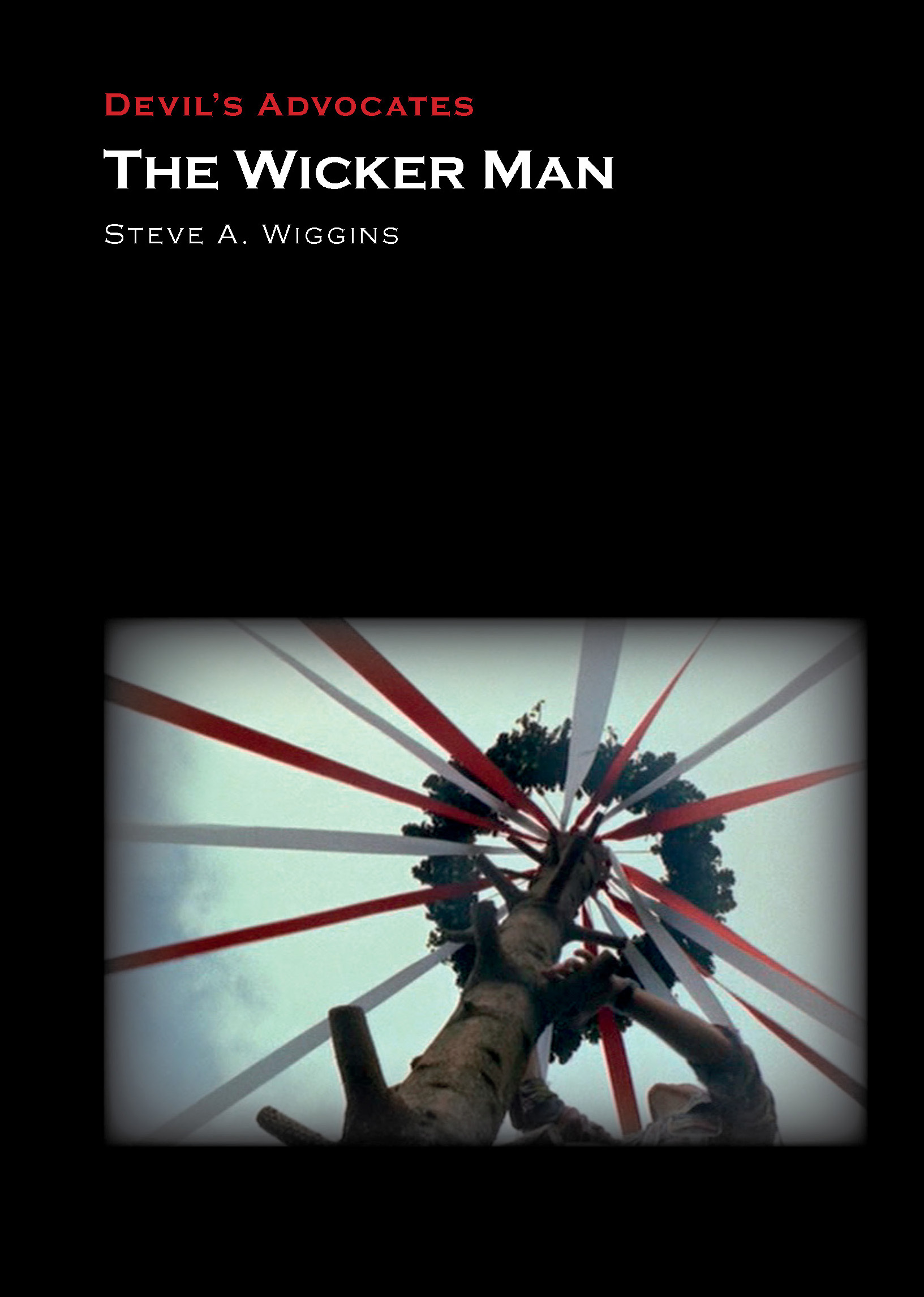
They creep up on you, these holidays with no official recognition.  I’ve been so busy that it didn’t even occur to me that today was Beltane—May Day—until my wife mentioned it to me before I headed up to bed last night.  Why is that important?  It’s not a day off work, so why bother?  Well, for one thing it’s the fuel behind my book published in the summer of last year.  Or, according to the Celtic calendar, the fall (just before Lughnasadh).  In other words, this is the first May Day for The Wicker Man.  I should’ve been trying to drum up a little interest, but things have been busy.  Besides, my profile hasn’t grown since its publication.  Nobody even cites it on the Wikipedia page for the movie, although it takes a distinct angle.  So I’ve been busy with other things.

I’ve been trying to find a publisher for my next book.  A couple friends know what it’s about but mostly nobody else because it’s time-sensitive.  Agents haven’t nibbled.  Well, one did.  He had me rewrite the book and then decided he couldn’t sell it after all.  Back to square one.  Even presses that publish mostly non-PhDs weren’t even interested enough to respond to queries.  Nothing like writing a book to make you realize how insignificant you are.  Like Sgt. Howie, I’m caught on Summerisle.  Ironically, I didn’t even think of writing a post for my book today when I was jogging yesterday and a haze over the moon (I know the movie ends with the sun—I’ve seen it a time or two) made me think, “That sky looks like the ending of The Wicker Man.”  Well, when I get back from my jog I have to start right in to work.  And Beltane’s not a holiday in these parts.

May Day used to be celebrated, even in the United States.  Now it’s just disappeared into the haze of work days.  And we don’t have time even to watch movies on work days.  That’s a weekend activity.  Of course, my weekends are full of trying to find publishers.  Two are currently considering my unagented book.  Four have already rejected it.  I’m thinking that I could use a trip to the Green Man with Howie.  At least on Summerisle they know how to celebrate May Day.  Of course, it’s the ending that makes it horror.  And Beltane snuck up on me this year.  Without it, The Wicker Man wouldn’t even exist.


Release the Wicker

One of the many fascinating things about The Wicker Man is that even its release date can cause confusion.  There should be nothing so simple as to look up when a movie first hit theaters, but especially in trans-Atlanic efforts the dates are often different between the UK and the US.  The Wicker Man had a limited UK release on June 21 (quite close to Midsummer, it turns out) of this year.  It’d been released before, of course.  The initial UK release date was December 6, 1973 (twenty days before the US release date of The Exorcist).  Making its way to the US, it was first released on May 15, 1974—not long after May Day.  One of the features of the curious history of the movie is that it lacked support from its own studio.  Not surprisingly, it performed better overseas, particularly in America.

Release dates can be important, and can make a difference in a film’s success.  Again, the quirkiness of The Wicker Man reveals this—although set in late April-early May, it was filmed in November.  Actors had to suck on ice chips to prevent their breath from being visible.  And who’s thinking about May Day when getting ready for Christmas?  All of these factors swirl around in a mythology that the movie has developed.  My book went to the printer yesterday.  It should be out in August-September, hopefully in time to catch the interest of those who’ve gone to see it in theaters again.  I’ve lost track of how many times I’ve seen it.  I’ve watched all three released versions.  It feels like an old friend.

From the beginning, the plan was to release my book this year, due to the fiftieth anniversary of the movie.  It’s funny how simply surviving half a century can make something interesting to people.  There are plenty of 1973 movies that aren’t getting any particular boost this year.  The thing about The Wicker Man is that it became a cult classic.  Although it was never a mainstream hit, it has sent out its tentacles far and wide.  I notice references to it is unexpected places.  If you’re attuned to this you say to yourself, “that movie really made an impact.”  And it did.  When I first pitched this book idea to the editor of Auteur, I told him I’d do whatever I could to make a 2023 release.  Of course, I started writing it before Nightmares with the Bible came out.  My next book after the Wicker Man doesn’t have an anniversary release in mind.  That’s good, because like a moon-shot it’s nerve-racking to aim for such a narrow target, years in advance.


50 Years Ago on May Day

Word is starting to get out about The Wicker Man.  One of the most intelligent of horror movies, it turns fifty this year.  Aware of the coming anniversary, I pitched a volume in the series Devil’s Advocates on the movie a few years back.  I was delighted that my take on the film was unique enough to qualify and my volume has now appeared on Liverpool University Press’ website.  And, as an added bonus, a blog post I guest wrote on the book will also appear shortly.  And it’s May Day.  The Wicker Man is the third person of the unholy trinity of folk horror.  The other two films are Witchfinder General and The Blood on Satan’s Claw, both of which I’ve reviewed here.  But 1973 was also the year another person of another unholy trinity, The Exorcist, was released.  This other trinity began with Rosemary’s Baby and concluded with The Omen.  If you’re curious about it, I wrote quite a bit about it in Holy Horror.

Fiftieth-year anniversaries are significant, given how young the film industry is.  Depending on the publisher, it may be difficult to get advance notice out.  My colleague Joseph Laycock, along with Eric Harrelson, wrote The Exorcist Effect.  This is a book I’m very excited for, although it’s not yet on its publisher’s website.  Academic publishing can be slow that way.  Another fiftieth anniversary Wicker Man book is coming out in October—John Walsh’s The Wicker Man: The Official Story of the Film.  The publisher, Titan books, not hampered by university press processes, had the book well advertised a couple of months back.  I’m looking forward to reading that one as well.  These fiftieth anniversary books are a boon for those who watch intelligent horror.

Academic publishers, you see, classify books in different ways than trade publishers do.  If you’re not sure what a trade publisher is, it is essentially anyone whose books you see in actual bookstores.  Academic publishers tend to focus on library sales and sales to academics who are willing to shell out fifty, a hundred, or sometimes more, bucks for a book.  (In my teaching days, although we had no expense budgets at Nashotah House, I would occasionally (very rarely), after careful family consultation, shell out the academic press price for a book I needed for research and the library wouldn’t buy.)  My last three books have been written for wider readerships, but have been published by academic presses.  On this fiftieth anniversary year, I’m planning on reading a couple of good books.  And thinking about May Day fifty years ago.


Wicker Lessons

Beltane creeps up unnoticed.  Not an official holiday in these parts, it is, hopefully, a sign of slightly warmer weather than we’ve been having in April.  It’s also the day that I can’t help but think of The Wicker Man.  One of the early intelligent horror offerings, it came out 49 years ago.  My book on the movie, as far as I know, is still scheduled to come out next year, on its fiftieth anniversary.  Watch this space for further announcements.  In any case, today I have a piece on The Wicker Tree—the “spiritual sequel” to the movie, appearing on Horror Homeroom.  Societies in old Europe tended to celebrate this as the beginning of summer, which explains why Midsummer comes half-way through June.  The seasons aren’t always the same in all times and places.

In Germanic countries, Walpurgisnacht, which began last night, was a time of concern about witches.  Our modern calendar tries to concentrate our fears in late October, but they are appropriate any time of year.  These days Beltane’s more of a day when we expect warmer weather to start rolling in and perhaps, especially this year, hopes for peace.  May tends to be a hopeful time—it’s a transition.  The persistence of our fears suggests that learning to deal with them might well be a good idea.  Instead of hiding monsters away, why not face them?  The Wicker Tree isn’t a great horror movie, but something holds true for it—the monsters are us.  In that film capitalism is the real horror.

What makes The Wicker Man the classic that it is is religion.  More specifically, the clash between religions, neither of which is willing to yield.  This is largely behind religious violence throughout history, up to the present.  Religions convinced that they’re the only possible way to the truth can’t recognize that believers of other religions feel exactly the same way.  Yet May is about transitions—one season giving way to another.  It’s part of the inexorable change that marks life on this planet.  We may not fear witches in the mountains any more, but we still fear what’s out there.  Beltane is a hopeful holiday—a day of blessing animals and building fires to encourage the strengthening sun.  Instead of making it a day of clashing beliefs, perhaps we should look for our common humanity in it.  Perhaps we can learn a deeper lesson from The Wicker Man.


Next Trick

Book contracts make me happy.  For my next trick, I’ll be writing a book on The Wicker Man for the Devil’s Advocate series.  This will be a short book, and hopefully priced down where individuals can afford it.  The Devil’s Advocate series was initiated by Auteur Publishing some years ago.  The series covers individual horror films in about 128 pages.  I pitched the idea of The Wicker Man for a couple of reasons.  One, Auteur didn’t have one in the series.  And two, I’ve been working on holiday horror for some time.  Holiday horror encompasses movies where a holiday features in the story, generally in a significant way.  Think Halloween, or April Fool’s DayThe Wicker Man takes place during a pagan celebration of May Day, falling neatly into the category.  You may see, in coming weeks, posts about various Wicker Man books.

While still in the horror genre, this next book will be a departure from the supernatural horror of Nightmares with the Bible.  Demons are frightening, no doubt, but Wicker Man is more about how religion can motivate people toward evil.  It is part of what has been termed the “unholy trinity” of early folk horror, classed with Witchfinder General and The Blood on Satan’s Claw.  This “unholy trinity” overlaps in time another famous threesome: Rosemary’s Baby, The Exorcist, and The Omen.  There can be little doubt that modern horror really began in 1968, which also gave us Night of the Living Dead.  Folk horror utilizes both folklore and the landscape—generally rural—as the basis for its fear.  And you can’t get much more isolated than Summerisle.

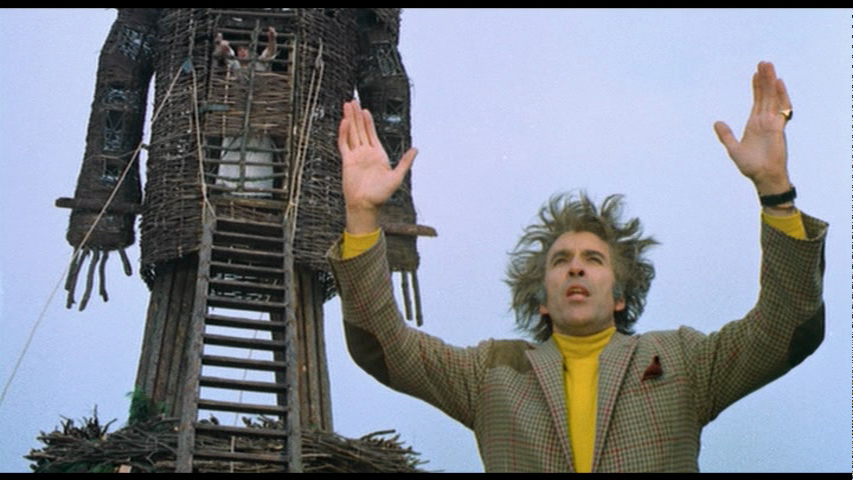
The hope is to get this book out in 2023.  That will be the fiftieth anniversary of the release of The Wicker Man.  Although it came out when I was eleven, I didn’t see it for another thirty years at least.  By that point in time I’d watched and read about enough horror to find out about and appreciate this particular, indeed, peculiar movie.  I was blown away the first time I saw it.  It is quirky but stunning.  Christopher Lee maintained throughout his career that it was his best movie.  I haven’t seen all of Lee’s movies (who has?) but I’m inclined to agree.  I’ll be getting to know this movie in some depth over the next several months.  Having watched it many times already, I’m drawing a map for a journey to Summerisle. You’re welcome to come along.


Joyous Beltane

Every year around Beltane, I think of The Wicker Man.  Of course, the holiday itself, aka May Day, is no cause for alarm.  What makes the movie so effective—and I mean the original film, of course—is the fear of others’ religions.  My last two books have explored the nexus of horror and religion and The Wicker Man always stands out as an example of how naturally the two go together.  May Day, or Beltane, represents one of the cross-quarter days.  It falls roughly halfway between the vernal equinox and the summer solstice.  Days are noticeable longer now than they were back before the equinox, and Beltane, like many cross-quarter days, uses the symbolism of light to remind us of the seasonality of life.  While the light is here we should make use of it.

Photo by Ameen Fahmy on Unsplash

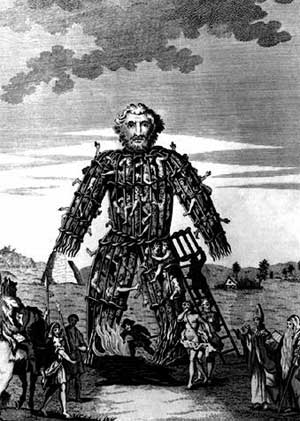
Agricultural festivals—and many ancient holidays began as such—acknowledge the importance of the lives of animals pastoralists depended upon.  Imbolc, the start of spring, was marked by sheep beginning their lambing.  Beltane was the point at which cattle could be driven to pasture.  It stands opposite Samhain, the origin of our Halloween, with Lughnasadh falling between.  These holidays were often celebrated with bonfires (thus The Wicker Man), but fire was understood as protective rather than destructive.  Although the Celts seem to have originated in east-central Europe, they were pushed to the northern fringes of the British Isles by other invading peoples.  Their location in chillier climes suggests that fire may have also held a practical purpose.

May Day is celebrated throughout much of Europe as a day associated with fertility.  This, it seems, was a major cause of concern among Christian missionaries.  Fertility is, of course, a natural hope.  Agrarian peoples rely on it to survive.  Fire served to bless the animals and to keep away the mischief of the little people, or nature spirits.  Much of what we know of Beltane, as with other Celtic holidays, has to be reconstructed since the Celts didn’t leave a scholarly archive that could be farmed for information.  Indeed, prior to widespread literacy what would’ve been the point of writing down what the folk already knew?  It was obvious that summer was on the way.  Even in years when the temperatures struggle to warm consistently, there are hints that “the light-soaked days are coming.”  The bonfires of Beltane represent the warmth and light that are on their way.  And what religion could object to that?


Cross Quarters

Happy Beltane!  We could use a holiday right about now.  For those of us who are under the spell of intelligent horror, May Day brings The Wicker Man to mind.  Not the remake, please!  I first saw it about a decade ago—my career history has made watching horror an obvious coping mechanism—and I was struck by the comments that the film was a cautionary tale.  One of the problems with being raised as a Fundamentalist is that you tend to take things literally and I supposed that the cautionary tale was against Celtic paganism.  The Wicker Man is about the celebration of Beltane on a remote Hebridean island, and it was only as I watched it a few more times and reflected on it that I came to realize the caution was about those who took their religion too seriously, pagan or not.

Photo credit: Stub Mandrel, via Wikimedia Commons

Lord Summerisle, after all, admits that his religion was more or less an invention of his grandfather.  More of a revival than an invention, actually.  In other words, he knows where the religion came from, and he has a scientific understanding of the soil and how and why crops fail.  That doesn’t prevent him from presiding over May Day celebrations to bring fertility back to the land.  The people, as often is the case with religions, simply follow the leader.  Of course, Beltane is a cross-quarter day welcoming spring.  It is celebrated in Celtic countries with bon fires and obviously those fires are to encourage the returning of the sun after a long winter.  The days are lengthening now.  I can go jogging before work.  The light is returning.

Capitalism, which is showing its weak side now, doesn’t approve of too many holidays.  Like Scrooge they think days off with pay are picking the pockets of the rich.  The government stimulus packages show just how deeply that is believed in this country.  Celts we are not.  So as I watch the wheel of the year slowly turning, and see politicians aching to remove restrictions so that money can flow along with the virus, I think that cautionary tales are not misplaced.  The love of money can be a religion just as surely as the devotion to a fictional deity.  Herein is the beauty of The Wicker Man.  Beltane is upon us.  As we broadcast our May Day it could be wise to think of the lessons we might learn, if only we’d consider classic cautionary tales.


Holy May Days

The first few weeks of May are peppered with holidays, some religious, some secular. As my regular readers know, I’ve been working on a book about holidays for kids, so I showcase a few pieces on this blog, on occasion. Instead of providing several posts on May’s holidays, I’m combining the first three special days into a holiday compendium for early May.

May Day (May 1) is, in origin, a religious holiday. It is an ancient, pre-Christian Celtic holiday called Beltane, it celebrates fertility, and it is a day that workers throughout the world fight for fair treatment. Sometimes it is associated with Communism. So, where do we begin to unpack all that? To start with, May Day is a cross-quarter day (Groundhog Day and Halloween are two others). Cross-quarter days fall halfway between the solstices and equinoxes – the days that mark the change of seasons. Ancient Europeans believed that cross-quarter days allowed spirits of the dead and other supernatural beings into the human world, as can be seen in the Germanic Walpurgis Night (April 30-May 1). Although named after a saint (Walburga, d. Feb. 25, 779) Walpurgis Night has deep pre-Christian roots in northern Europe. It celebrates the coming of May, or summer, with huge bonfires lit at night. It Germany it was also called Witches’ Night (Hexennacht) because it was believed that witches gathered on Brocken mountain to await the coming of May. The Celtic May 1 is Beltane. For the Celts Beltane marked the start of summer and it was one of their two major holidays (the other comes around Halloween). Like the Germanic tribes, the Celts lit bonfires on Beltane. Druids would light two fires to purify those who would pass between them. In Ireland people would dress their windows and doors with May Boughs and would set up May Bushes. These were signs of the returning fertility of the earth. This tradition survives in parts of the United States in the form of the May Basket. May Baskets are filled with treats and are left at someone’s door. The tradition is to knock and run, but if you get caught, the gift recipient gets to kiss you! These days, however, an unexpected basket at the door is more likely to result in a call to the bomb squad, so let your sweetie know ahead of time if you plan to give a May Basket!

Today is Cinco de Mayo, and like most things Hispanic, it is misunderstood by many Angelos. Frequently Cinco de Mayo is represented as Mexico’s day of independence. What it actually commemorates, however, is a historic battle. Napoleon III’s French Army was in Mexico in 1862. These guys were in the state of Puebla where an outnumbered Mexican force under 33 year-old General Ignacio Zargoza actually beat them on May 5. In the States, Cinco de Mayo is becoming a day to showcase Mexican culture, kind of like St. Patrick’s Day is for Irish culture. The Battle of Puebla is not Mexico’s independence day – that falls on September 16 and often escapes notice in the United States.

And, of course, Sunday is Mother’s Day. People around the world celebrate their mothers at various times of the year, but many don’t realize that this holiday goes back to the ancient Near East. Cybele was an ancient goddess associated with all things motherly. Originally from the Levant, the Greeks and Romans believed her to have been from Turkey (Phrygia). She had a festival day at the vernal equinox. Although there is no direct connection with the date or form of our Mother’s Day, it is possible that this annual recognition of an exceptional mother gave people the idea for Mother’s Day. Whatever it ancient origins may have been, Mother’s Day as we know it started in the United States as a protest against the Civil War. Many women believed war to be wrong. During the Civil War Anna Jarvis organized Mothers’ Work Days (as if they didn’t already have enough to do!) to improve sanitation for both armies. Julia Ward Howe wrote the Mother’s Day Proclamation, which was a document calling for the end of the war. The idea was to unite women in protest and bring the conflict to a close. After the war ended Anna Jarvis’ daughter (who had the same name as her mother) campaigned for a memorial day for women. Because of her efforts, a Mother’s Day was celebrated in Grafton, West Virginia in 1908. After that various states began to observe Mother’s Day, and President Woodrow Wilson made it a national holiday in 1914, ironically the year the First World War began. It is celebrated on the second Sunday in May.

For whatever spirits, political ideals, or goddesses you admire, May is the appropriate time to celebrate.