A Second Post?

A second post in one day?  Not really.  As much as I’d love to post more, work drains me.  But I also realize I post early and some people may miss my musings because they’re so early.

Enough prologue.  This is simply a public service announcement.  McFarland is offering 40% off when you order two horror books, through the end of October.  Now that Holy Horror’s price is reasonable, you can really make a killing.  To take advantage of this limited-time sale, use the code HALLOWEEN2024 at checkout.

McFarland prices their books reasonably for an academically inclined small press.  And they have a great selection of horror-themed titles.  Check it out!  Back to your regularly scheduled programming.  (I’ll post again in the early morning, as usual.)


Under Construction

It’s fascinating, watching a book taking shape.  Just yesterday I noticed Sleepy Hollow as American Myth is now up on McFarland’s website.   And yes, it’s on Amazon too.  Go ahead and preorder!  (It hasn’t made it to Bookshop.org yet, though.)  I have to say the feed to Amazon was much quicker this time than it was with The Wicker Man.  That book took several weeks to appear, probably because it was with a UK publisher.  Yes, it does make a difference.  Now the trick is to try to get people interested in the Legend of Sleepy Hollow again.  I’m thinking I ought to join Historic Hudson Valley.  They might be interested in such a book.  It is, in a sense, right in their back yard.

The thing about writing a book is that you come to suppose other people are interested in your obsession.  I know that Sleepy Hollow is deeply embedded in American culture.  I also know that some of the fandom began to die down when Fox’s Sleepy Hollow went off the rails.  Most analysts suggest, with good reason, that the show failed when it began foregrounding white characters and writing Americans of color into the background.  A great part of the appeal was the melting-pot aspect of the cast, no doubt.  In the book, however, I suggest a somewhat different reason for the decline.  It’s one I’ve seen no one else suggest.  I’m hoping that we can both be right.  In any case, that was the fandom that got this book started.

You see, I had written my first popular culture article on the role of the Bible in Sleepy Hollow.  That article, published in the Journal of Religion and Popular Culture, led to the book Holy Horror.  I was already thinking about a project around Sleepy Hollow then, but I had a couple more books to finish first.  I’m excited about this one because it marks a move away from publishing primarily about religion to publishing primarily about a story.  There’s still religion there, of course.  We have the Old Dutch Church to pay mind to, but there’s even more about the Headless Horseman, and Ichabod Crane.  And so much more!  Sleepy Hollow as American Myth was a lot of fun to write.  I’m not sure when the book will be out, but I’m hoping next year.  Maybe if I can generate a little excitement around this Halloween—it is closely connected with the story, as I explore—there’ll be some interest next time.  Until then there are still plenty of steps to be taken. 


Book Stages

There are stages to it.  Writing a book, I mean.  One stage, for me, is realizing that you’re writing one.  I started work on Sleepy Hollow as American Myth years ago, without realizing it.  That was followed by the stage of comprehending that I had a book idea and intentionally writing it.  I suspect that, in the throes of The Wicker Man, I thought “I should do a similar book on Sleepy Hollow.”  Devils Advocates, which is an excellent series, however, feeling the strain on academic presses, was moving to hardcover-first releases (the kiss of death).  I started writing the book anyway, hoping that maybe it might find trade interest.  It is still possible that an agent is out there who would’ve moved it in that direction, but I wanted the book out before Lindsey Beer’s movie gets released.  After the book is drafted, the next stage: find a publisher. (Unless you have an agent.)

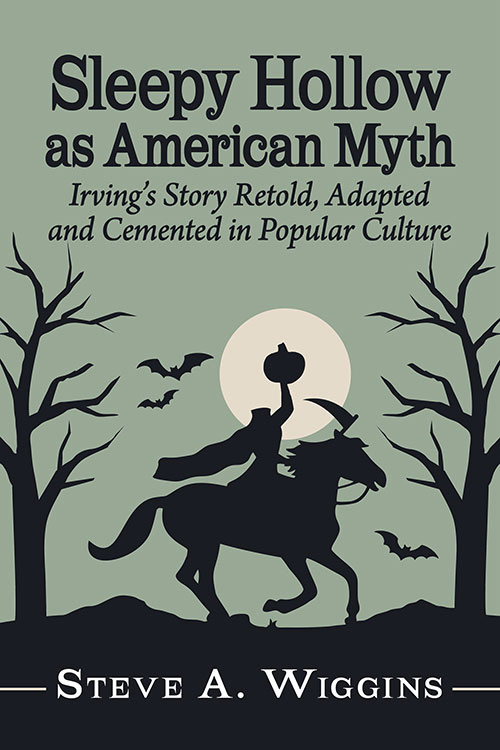
Since this is my sixth book, I felt confident (a strange, foreign feeling for me) that I could locate a publisher.  I’d done it five times before.  McFarland did a nice job with Holy Horror, but what sold me is that they dropped the price on it.  Many academic publishers continue to raise prices each year, so if you don’t buy a book right away you’ll end up paying a lot for this muffler.  The next stage is waiting to see what the cover will look like.  That wait is over.  Here it is, the cover of Sleepy Hollow as American Myth:

(Feel free to share widely, get everyone all excited!)  I’m currently in the waiting stage.  Waiting for proofs.  Of course, I’ve been working on my next couple of books as well.  You can’t just sit around, otherwise these tomes will never get written.  I haven’t decided which one will cross the finish line first.  If I had an agent they’d be able to tell me which might be more marketable, but since I work alone I’m left to my own devices.  I am bound and determined that the next book will go to a trade press.  I’m trying hard to scrub any whiff of academia from it.  In the meantime, however, I’m enjoying looking at the cover for my current book.  There aren’t a ton of nonfiction books out there on “The Legend of Sleepy Hollow.”  In fact, as nonfiction I know of only one other.  This isn’t what we in the biz call “a crowded bookshelf.”  I’m doing all the pre-publication promo that I can.  I’d be grateful for any shares or likes at this stage.


International Standard

Probably nobody gives them much of a thought.  ISBNs, that is.  International Standard Book Numbers.  An ISBN is a book’s unique identifier.  And they cost money.  I’m not sure how self-publishing works, but at some stage, whether it’s obvious or not, you have to pay for an ISBN if you want wide distribution.  And since they cost money, most publishers don’t assign an ISBN until a contract is signed.  If a deal falls through, hopefully they can recycle the ISBN and assign it to another book.  The system only began in the 1960s and not all books printed their ISBNs.  The thing about them is, the best way to find the book you’re looking for is by using the ISBN rather than the title.  Titles can’t be copyrighted, and that’s why you see so many books with the same name.  The ISBN won’t let you down.

My book, The Myth of Sleepy Hollow, now has an ISBN.  I just found out yesterday.  It’s 978-1-4766-9757-4, in case you’re curious.  It won’t lead to anything on the web yet since I haven’t submitted the manuscript and work hasn’t begun on the title.  It is, however, a step in that direction.  In the past, when I’ve signed book contracts, I’ve always felt a little anxious until the ISBN is assigned.  Is the publisher really sure about this?  Once they assign an ISBN they’ve started to invest in your ideas.  My book has existed in draft form for several months, but I’m going through it again, for the umpteenth time, to make it presentable to the world.

One of my jobs at Gorgias Press, my first full-time publishing gig, was to assign ISBNs.  They had to buy blocks of them and they came in a printout in a large notebook.  If a project with an ISBN didn’t materialize, some White-Out and a pen could save the company some money.  It was all very hands-on.  I imagine it’s gone electronic these days.  The ISBN is a technical code, by the way.  The 13-digit code, which is now common (it used to be ten), has a meaning.  The schematic below explains that.  The “group” section has to do with language and that’s followed by the publisher’s ID.  Simple deduction (and dashes) tell me that 4766 is McFarland.  That’s followed by the title identifier.  I’m not a numbers person, however.  Those of us drawn to the words part generally try to provide the inside content.  And since it’s a weekend I’d better get to it.  I have a submission deadline I’d like to meet. But I’m thinking about the ISBN.

Image credit: Sakurambo; via Wikimedia Commons, GNU Free Documentation License

Number Six

Signing a book contract always makes me happy.  There’s a validation to it.  Someone thinks my thoughts are worthwhile.  And now I can reveal what it’s about.  Regular readers likely already have some inkling, due to the number of times I referenced Sleepy Hollow over the past couple of years.  I’ll provide more details closer to the time, but it struck me back when working on Holy Horror that few resources exist for “The Legend of Sleepy Hollow,” despite its status as such a well-known story.  An agent or two agreed with me that the topic was good but they really weren’t sure it was a commercial project.  This despite the fact that Lindsey Beer is slated to write and direct a reboot of the famous 1999 movie.  It seemed that a book on the topic available at the time might sell.

John Quidor, The Headless Horseman Pursuing Ichabod Crane, public domain via Wikimedia Commons

I tried a number of independent publishers that don’t require agents.  I learned that most of them won’t even reply to your emails.  It seems that to get published by any trade publisher you have to be already famous.  Or maybe my idea’s just not good.  Weird.  Finally I found a university press that thought it might be a good fit, and it occurred to me that McFarland, who recently dropped the price on Holy Horror, would be a good press for this kind of thing.  McFarland made an offer first, and yesterday they sent a contract.  Hopefully the book will be out next year.

This is quite a personal project.  The story is one of my early memories—most likely due to the Disney version of the story, and most likely as seen on television.  My treatment is, as in all of my books, idiosyncratic.  I look at things differently than other people do.  And I’ve been looking at Sleepy Hollow for half a century or so, and I’ve read quite a lot about Washington Irving and the Hudson Valley.  I don’t want to say too much since others write more swiftly than I do and some presses speed books along.  For the time being I can enjoy that rare feeling of having a book contract and an editor who’s excited about my project.  I do hope that the next book, number seven, might find a trade publisher.  What’s it about?  Well, I’m working on two at the moment, and it depends which reaches book length first.  And I can’t say anything since someone may scoop me.  So I’ll just bask a little bit before starting another work day.


Price Drop

Here’s a public service announcement for your Friday.  If you’ve been wanting to read Holy Horror but found the price too high, McFarland has now lowered the cover price to under $30.  Here’s the link: Holy Horror.  Of my non-academic books, this has been my “best seller.”  Since I’m currently shopping around another book, and since agents aren’t interested (at least not any more), I wondered whether McFarland might look at it.  The editor who handled Holy Horror had left, and the new editor responded to my concern about pricing by telling me that they lower prices after a couple of years.  She noticed, however, that Holy Horror had been overlooked in the price lowering process, so voila!  It’s now affordable.

This model, while not the same as trade publishing’s efforts to get primarily front-list sales, seems to make sense.  Too many publishers raise prices year after year, so if you don’t buy immediately you’ll pay more.  McFarland tends toward a paperback first model.  The first couple of years are aimed at library sales—and they do well at those—then they lower for individual purchase.  All I had to do was ask.  Two years ago I asked Lexington/Fortress Academic if they’d do a paperback of Nightmares with the Bible.  That poor book never had a chance.  The editor said they were considering it.  Instead they did the trick that publishers seem to like: decoupling the ebook price from the hardcover.  So you can buy some expensive electrons instead of holding a real book.  So it goes.  I’ve written a museum piece.

It’s a little too soon to say about The Wicker Man.  My experience has been that university presses, particularly British ones, like to raise prices rather than chasing sales.  If you’re reading this blog you know that I’ll market my books.  I even printed bookmarks for Holy Horror at my own expense.  Maybe it’s time to start distributing them again.  What a difference ten dollars can make!  I’m a book booster.  (You might not have noticed.)  I’m glad that McFarland understands that individuals will buy books, even if they’ve been out for a while.  The standard wisdom among academic publishers is “three years and then you’re done.”  If you’re inclined to help prove that business model wrong, you can now get Holy Horror without having to take out a second mortgage.  That’s cause for hope—any writer has the dream that her or his book will keep on selling.  Sharing this information will, it seems, make it wider known. Please pass it on.


Book Festival

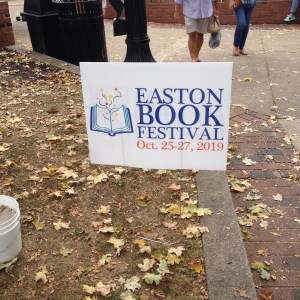
So it’s here.  The Easton Book Festival begins today.  The weather?  Partly sunny, temps in the mid-60s.  There’s no excuse not to go!  (Well, actually, there are plenty of reasons, but if you’re in the area please consider it!)  I have to admit that my involvement with it was opportunistic.  I contacted the organizer because I was looking to promote my autumnally themed book, Holy Horror, in the season for which it was written.  I understand delayed gratification.  What author isn’t delighted when her or his book arrives?  Thing is, mine came around Christmas time, and, while a wonderful gift, nobody was thinking about scary movies during the joyful winter season.  My observation is this: books are lenses to focus thoughts.  I enjoy Halloween, but I also enjoy Christmas.  One follows the other.  The Easton Book Festival just happens to be during the former rather than the latter.

It’s heeerrreee…

My own involvement with the festival doesn’t start until tomorrow.  Today’s a work day, after all.  Employers don’t give days off for self-promotion (or even for writing books) so festivals are extra-curricular activities.  I’ll be on a panel discussion tomorrow at the Sigal Museum and on Sunday afternoon I’ll be doing a presentation on my book, same venue.  Maybe I’ve got this backwards (nobody tells you these things), but I’m not doing this primarily to sell books.  I’m doing it to promote dialogue.  During my less-than-stellar book signing last week at the Morvarian Book Shop I had only one brief conversation of substance.  It was with a scientist who pointed out that science and religion had nothing to do with one another.  I guess my hopes for the events of the next two days are that folks might want to discuss the ideas in the book.  Or at least think about them.

Sunday morning I’ll be giving a church presentation on the book as well.  Being in the publishing biz I’ve learned the importance of authors getting out there to talk about their books.  Hands up, who’s read a McFarland catalogue lately?  Case in point.  The only problem with all of this is that I still have to get my weekend errands done.  My daily schedule doesn’t allow for trips to the grocery store or even putting gas in the car.  And no matter how much time I put into work, there’s always more to do.  Festivals, of course, are intended to be time set apart from regular pursuits.  So I’m going to put on respectable clothes and I’m going to speak about what’s on my mind this time of year.  If the Lehigh Valley’s in your orbit, I’d be glad to see you there.


Thoughts on a Book Signing

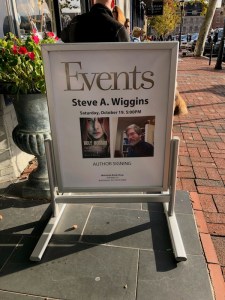
I’m a small-town boy.  Having the opportunity to hold a book signing, even if nobody requested said signing at the event, in the oldest continuously operated bookstore in the country was an honor.  This is a prelude to the Easton Book Festival next weekend, in which I have two roles—part of a panel discussion and an individual presentation on Holy Horror.  Putting yourself out there when you’re a writer is important, even if nobody pays attention.  I thought quite a lot about it; horror movies are almost always successful, but do people like reading about them?  Well, some of us do, obviously, but the average viewer, probably not so much.  And then there’s the somewhat embarrassing juxtaposition of the Bible.  People know what it is, but don’t want to talk about it.

Two people stopped to chat at the signing desk.  One was an adjunct geology professor.  We discussed science and religion, which is something on which I used to teach classes.  He thought the book idea was interesting, but not enough to read it.  The Moravian Book Shop scheduled this on the evening of their sold out ghost tours.  Quite a few people came in for a Saturday night, mostly for the haunted Bethlehem walks.  The second conversation was with a ghost tourist who thought the book idea was unusual.  It is.  I admit it.  As I say in the book itself, “If you see something, say something.”  So it was with me, with Bibles in movies.  The bookstore did a nice display, but then, I have an awareness of the smallness of my impact.  No surprises here.

The thing that really struck me was just how many people avoid looking at you when you’re behind a table with your books.  I know I’ve done the same thing.  I’ve gone into bookstores when an event was going on, not knowing about it and having no interest whatsoever in the book being presented.  That’s the way these things go.  I wasn’t doing this to make sales.  McFarland isn’t the kind of publisher you use to make money.  For me it was all about the experience.  It was like seeing my name outside a church in Manhattan.  It doesn’t do anything for you materially, but at least you can say you had it happened to you once.  The signing was advertised in the local paper, and on its website.  Maybe someone out there took a glimpse and saw something that sparked their curiosity.  It doesn’t matter if they buy the book.  As a teacher at heart, it is simply the interest that I’m hoping to raise.


Better Late Than

It seems that Holy Horror is now available, although I haven’t seen it yet.  According to the McFarland website it’s in stock just in time for the holidays.  Those of you who know me (few, admittedly) know that I dabble in other social media.  One of my connections on Goodreads (friend requests are welcome) recently noted that he does not like or watch horror.  Indeed, many people fall into that category.  His follow-up comments, however, led me to a reverie.  He mentioned that reading the lives of the saints and martyrs was horrific enough.  One of the claims I make in Holy Horror is that Mel Gibson’s Passion of the Christ is a horror film.  My friend’s comment about martyrs got me to thinking more about this and my own revisionist history.

Traditionally horror is traced to the gothic novel of the Romantic Period.  Late in the eighteenth century authors began to experiment with tales of weirdly horrific events often set in lonely castles and monasteries.  From there grew the more conventional horror of vampire and revenant tales up into the modern slasher and splatter genres.  I contest, however, that horror goes back much further and that it has its origins in religious writing.  Modern historians doubt that the mass martyrdoms of early Christianity were as widespread as reported.  Yes, horrible things did happen, but it wasn’t as prevalent as many of us were taught.  The stories, nevertheless, were written.  Often with gruesome details.  The purpose of these stories was roughly the same as the modern horror film—to advocate for what might be called conservative social values.  The connection is there, if you can sit through the screening.

Holy Horror focuses on movies from 1960 onward.  It isn’t comprehensive, but rather it is exploratory.  I’ve read a great number of histories of the horror genre—a new one is on my reading stack even as I type—and few have traced this phenomenon back to its religious roots.  Funnily, like horror religion will quickly get you tagged as a weirdo.  Perhaps it’s no coincidence that both goths and priests wear black.  As I’ve noted before on this blog, Stephen King’s horror novels often involve religious elements.  This isn’t something King made up; the connection has been there from the beginning.  We may have moved into lives largely insulated from the horrors of the world.  Protestants may have taken the corpus from the crucifix for theological reasons, but for those who’ve taken a moment to ponder the implications, what I’m saying should make sense.  Holy and horror go severed hand in bloody glove.


Editing the Week

Every great once in a while I have to pull my head from the clouds and remind myself I’m an editor.  Actually, that happens just about every Monday morning.  Surprisingly, academics who have trouble getting published don’t bother to consult editors for advice.  Having sat on both sides of that particular desk, I certainly don’t mind sharing what I’ve learned since publishing isn’t as straightforward as it seems.  It has its own mythology and authors—I speak from experience here—feel extremely protective of their books.  Nevertheless, editors are under-utilized resources when it comes to figuring out how to approach a topic.  They often possess valuable advice.

It’s easy to think publishing exists to preserve and disseminate ideas and insights, tout court.  The idea that if you get past your dissertation committee you’ve done service that requires wide readership is natural enough.  Publishers, however, have other angles to consider.  Books incur costs, and not just paper, glue, and ink.  There are many people involved in bringing a book from idea to object, and each of them has to be paid to do their part.  (Many academics in the humanities may not understand the concept of “overhead,” but it’s an everyday reality in the publishing world.)  Not only that, but even the book itself is a matter of negotiation.  My latest book (and I suspect well over 90 percent of the authors with whom I work have no idea that I write books as well) had a chapter expunged and a new one written at the behest of my McFarland editor.

One of the pervasive myths in this business is that authors write whatever book they want and then find a publisher.  Sometimes that works.  Often when it does the authors are disappointed in the results.  There are presses that specialize in cranking out such works, slapping an enormous price tag on them, selling them to libraries, and then letting them go out of print.  I’ve been there.  I know.  Academics want prestige presses to take their books to a higher profile, but without having to change things according to the advice of an editor.  There are hidden lives of editors.  I can’t share much of that here, but I can expound its corollary—taking advantage of free editorial advice makes good sense.  I wouldn’t be bothering you with such mundane thoughts on this blog, but when I rolled out of bed today I learned it was Monday morning.


Where Was I?

Finally!  I have sent my proofs and the index for Holy Horror back to McFarland and I find myself in that state following intensive concentration on one thing.  Well, as much as work will allow such concentration.  Those who write books know how difficult it is to switch gears from fifth back to first while driving at highway speeds.  As soon as the email arrived stating that the proofs were ready, I dropped everything to get them read, outside work hours, of course.  With mind focused on a single goal—get the job done—I’ve managed to forget where I was before being interrupted by my own work.  I recall it had something to do with demons, though.

Perhaps the most taxing part of trying to write while employed full time is keeping track of where you are.  The luxury of spending hours outside of class doing the index, for example, is compressed into the little free time I have between writing for this blog and work—between a blog and a hard place, as it were.  Indexing, which can be quite pricey when a professional does it, is  much easier with a searchable PDF than it ever was going through a printout page-by-page to find obscure references you forgot you ever wrote.  It reminded me of the time I had Owen Chadwick over for dinner at Nashotah House.  I recalled someone asking him about something he’d once written and he looked puzzled for a moment and then replied, “One writes so many things.”  Indeed.  Millions and million of words in electrons, if not on paper, mark the status of a life.  And indexing will prove it to you somehow.

This morning I awoke with the proofs and index safely emailed back to the publisher.  What was I doing before that?  I know that work is looming just a short hour or two ahead, and I need to accomplish part of my life’s work before going to work.  I can’t afford to waste this time.  Nightmares with the Bible is coming along nicely.  A very drafty draft of the book exists.  I have some more research to do, however, and the annotated bibliography—ah, that’s where I left off!—is still a shambles.  Not only that, but I’ve got a stack of reading on the topic next to my chair.  Time to put on a pot of coffee and warm up those typing fingers.  I’ve got real work to do.


Breaking News

Herostratus, it is said, tried to destroy the Temple of Artemis so that he might become famous. His name is now associated with gaining fame at any cost. In case any of my readers suppose I might be like Herostratus, I would be glad to confirm that I’m not the Steve Wiggins in the headline below. While I do have a beard, I’ve only been to Tennessee once that I know of. When a friend contacted me to ask why I’d shot the deputy (but I did not shoot the sheriff) it reminded me of a post on this blog from many years ago about sharing the name of the gospel singer Steve Wiggins. He’s always at the top for any Google search, which is why I always tell people to use my middle initial when seeking even more than you can find on this blog: “Steve A. Wiggins” usually brings me up. I’m not as desperate as Herostratus yet.

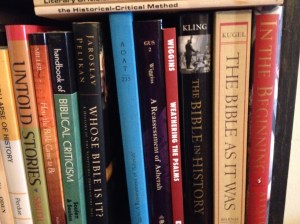
Names can be tricky that way. I’ve written a number of books in my life, and three of them are either published or in production. Holy Horror, which is now available on McFarland’s website (the book itself will be out in August) is listed on Amazon. It isn’t paired with my other two books yet, perhaps because it is so different. My Amazon author page brings up A Reassessment of Asherah and Weathering the Psalms, but it’s a little coy about Holy Horror. This blog isn’t quite like trying to destroy Artemis’ temple, but then, it isn’t exactly a Twitter-follower magnet either.

I have a friend who has a fictional Twitter account. He has more than twice the number of followers I do, and his Twitter persona is made up. I follow people who don’t follow me back. I do hope this isn’t how Herostratus got started. It is tragic that a deputy was shot and killed by an armed Wiggins in the south. I’m no friend of the NRA, and like most of the world I believe we’d be better off with far fewer guns, and Herostratus is pretty much forgotten today. In fact, every time I want to mention him I have to do a Google search to find his name. Destroying property of the gods, apparently, doesn’t always give you lasting fame. Looking at what’s happening in DC these days I see confirmation of that all the time. But then don’t take my word for it—I’m only a blogger with a tiny Twitter following. Just don’t accuse me of having a gun or trying to sing in public.


Updates

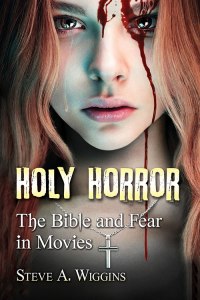
So, I’m getting ready to update this website. I’ll give you a warning before things change. Another update, however, is in order. I’ve been promising that I’d let you know when my forthcoming book with McFarland received its final title. Well, drum roll please! The final title is actually the first title I proposed—Holy Horror: The Bible and Fear in Movies. And it has an ISBN: 978-1-4766-7466-7. And a cover design too, but I can’t share that just yet. It is appropriately lurid, matching the subject. But in all seriousness, the book makes a case for the fact that many people understand their religion via popular media. Being a bad boy, I look at it through horror movies.

The title Holy Horror was a play on Douglas Cowan’s excellent book, Sacred Terror. I recall reading that book, starting the night I bought it as SBL, curled up in the swank conference hotel bed, turning pages until I couldn’t hold my eyes open any longer. It had honestly never occurred to me that religion scholars could get away with writing about horror movies. Cowan had the natural advantage of being a Canadian, something I’ve always longed to be. He also has a secure university post. I was, at the time, just a guy trying to feel secure in what seemed like (and turned out in reality to be) a threatening seminary position that was shortly to end.

It may be difficult to understand how horror can be consoling. It can. I’m a squeamish guy. I don’t like blood and gore. I hate being startled. Nevertheless, I took comfort in this genre as my career was falling apart. Holy Horror was a cathartic book for me to write. There’s more than a little metaphor in it. One thing that will become clear to readers is that the Bible is no stranger to horror movies. Ironically, many of them are strangely conservative—Carol J. Clover’s classic Men, Women, and Chainsaws (which I’ve reviewed on this blog) made that point clearly. Horror often has the same message as your typical Disney film, although it’s presently slightly differently. How so? Well, I can’t say very much here or you’ll have no reason to read my book. McFarland does a great job with publishing this kind of title. You won’t find it in Barnes and Noble, and not likely in your local indie either, but it’ll be available on Amazon and these days that’s enough. And before long these pages will change to reflect its coming.


Nightmares with

One of my greatest phobias is that people will think I’m arrogant. Those who know me realize that I’m highly self-critical, as befits a lapsed Fundamentalist. Self-image isn’t my strong suit. So it is with great trepidation that I celebrate a tiny bit at another book contract. Book number three (still not officially titled) now rests with McFarland Books. Shortly after I signed the contract for the book nameless here forevermore, Lexington and Fortress Academic announced a new series: Horror and Scripture. Maybe you know the feeling too. You’ve just done something you’re proud of and then you’re upstaged. My book deals with the Bible and horror films—what could be more Horror and Scripture than that?

The new Lexington/Fortress series has two editors. One of them is a friend of mine. (Monsters and horror don’t often mix with the Good Book, and those few of us interested in such things receive glances askew.) She asked me if I’d consider contributing to the series. This takes a lot of careful thought on my part. I have a sum total of about an hour a day to write, often less. I can read research-related material on the bus, if I can stay awake, but other than weekends—already quite busy catching up from not being home all week—I have very circumscribed writing time. Nevertheless, I do get up at 3:00 a.m. so that I can have that vital hour to write. Why not focus my efforts onto another book? Perhaps insanely, I submitted a proposal. This week a contract came.

In the short span of one year I’ve gone from being able to claim two books to four, almost like a parable. My untitled book is written and submitted. My contracted book is already half-drafted. After my McFarland book I’d already begun work on a sequel, you see. It lacked form and substance, but the proposal forced me to bring it together. Now, barring any unforeseen disaster, I should be able to submit this new book within a couple of years. By admitting this to you, dear readers, I fear I open myself to accusations of either arrogance, or at least greed. It is, actually, rather like this: my wife often tells me “we must cut the coat to fit the cloth.” I don’t have an academic position, but I’ve learned a lot about the publishing industry over the past decade. Research is a constant in my life, as it is with most credentialed people, no matter their jobs. So it is with fear and trembling that I announce my next book: Nightmares with the Bible. Watch this space for cryptic updates as the details unfold. And please don’t think less of me for it.


On the Nature of Publishers

An occupational hazard of the editor is paying obsessive attention to publishers. That stands to reason. Many academics are less concerned than some publishers think they are about such matters as who publishes their book. I suspect that many have, for whatever reason, found no welcome home among elite publishers. This happens often enough to make many scholars less worried about reputation than the practical matter of getting a publisher interested at all. There are a lot of original thoughts out there, and some of them occur to a person and just won’t let her or him go. An example: what terms are used for weather in the Psalms and why? Before you know it you’ve awaken before the sun for five years and written 75,000 words on the topic and you want to get it published without having to pay someone to do it. That kind of thing. I’ve been pleasantly surprised by the number of scholars who understand this kind of reasoning.

Also, it’s a matter of scale. I work for a premier publisher in the academic world. It may surprise many people to find out just how often when someone asks what I do (not very often, for the record) and then follows it up who I do it for, the interrogator has never heard of my employer. Academic presses, even important ones, are really only known among academics. Keep scale in mind. If you’ve ever walked passed Norton’s offices in Manhattan, and then those in which I spend my days, you know what I mean. Academia is small scale. For the average person reading a book is something they generally choose not to do. Of those who do read, very few read academic books. Those who read academic books tend to stick to their own discipline, or related ones. You get the picture—smaller returns at each step.

So, having written a book about horror movies, where do I take it? This isn’t one of those footnoted, look-how-erudite-I-am kind of books. It’s more of a I-noticed-something type. The question then becomes, who publishes such kinds of thing? I do worry about academic reputation—who doesn’t?—but this is a book I want the correct readers to find. That’s why McFarland suggested itself. People reading on pop culture, know to keep an eye on their offerings. Hopefully enough people will find it to have justified the effort. It won’t impress those enamored of collecting (academic) names. It isn’t the kind of book my employer would publish. Nor would I want them to. Call it an occupational hazard. Like any subject, knowing too much about publishing can take away from the fun.