Technologies of Hope

Having an immediate family member with cancer means that you look for hope everywhere.  Those who’ve brushed up against this family of diseases hopefully know that support groups abound.  Given my schedule, I don’t get out much on workday evenings, but we recently attended a survivors’ event hosted by the Andy Derr Foundation (donations accepted).  Two prominent local oncologists spoke and their tone was hopeful—always hopeful.  What really struck me was how much cancer treatment has progressed even just in the last five years.  The “cure for cancer” does not yet exist, but many technologies of hope do.  I sat there awestruck.  There are women and men spending their lives working to treat what used to be nearly always a fatal condition.  It was inspiring.

On the way home I was musing about how much we could advance in human health care if we had the budget of the military.  A vlogger we follow, John Green, happens to be a bestselling fiction author.  He is now writing a nonfiction book on tuberculosis.  This disease, for the most part, is completely treatable.  His efforts have led to lowering the cost of supplies to treat it for cash-poor countries.  I suspect he knows the same thing.  Our government decides which priorities it will fund.  Our fear—let’s be honest about this—funnels billions and billions to military budgets.  (And you wonder why I watch horror movies?)   I’m a dreamer, I confess.  But what if, world-wide, we put our money into medical budgets?  Can you even begin to imagine where we’d be by now?

I know most medical personnel are paid quite well.  My family member’s cancer medication costs more than she makes in a year, per single dose.  The technologies of hope those doctors were describing would be phenomenally expensive.  If only as a nation we had trillions of dollars at our disposal.  If only.  None of this, of course, should overshadow the tremendous work being done by nonprofits like the Andy Derr Foundation.  Channeling hundreds of thousands of dollars into research and treatment, they are making a difference.  Those beautiful survivors there that night are proof of the lives they’re helping save.  We have the ability to do amazing things.  If we support, and love one another, we can overcome a scourge that many, many families will experience, if they haven’t already.  Good work is being done.  And the good will behind it is cause for great hope.


Aching Backs

The other day someone mentioned to me (virtually, of course, since real conversation is limited to immediate family) that she was going to the chiropractor.  This simple spinal adjustment comment made me curious since my mother has used a chiropractor to manage back pain for as long as I can remember.  I also had heard many disparaging comments about chiropractors over the years and decided to look up some information.  Medical science, if we can hypostatize it that way, considers chiropractic a pseudoscience.  Part of the reason is that the medical training required to be a chiropractor doesn’t come up to the level of a MD degree.  The main reason, however, as far as I can determine, is that chiropractic was founded on the basis of receiving information from “the other world.”

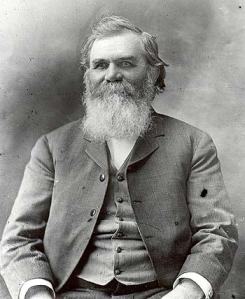
Creator unknown, via Wikimedia Commons

Daniel David Palmer founded chiropractic in the 1890s.  His knowledge of how to do it came from a doctor dead for half a century.  Some of the tenets of chiropractic are spiritual rather than physical.  Not being based on empirical studies going back to such traditional medical ancestors like Galen, the new way of understanding medicine was labeled as a kind of religion—an alternative medicine.  Now, I’m not a medical person.  In fact I’m rather squeamish.  I try not to look too deeply into biology, but this is fascinating.  There are more than 70,000 chiropractors in the United States alone.  If what they are doing doesn’t really help people then why do they keep going back?  Is it a matter of believing that you’ve been helped relieving pain?

Often cost effectiveness is given as the reason people use chiropractors.  In these days of Covid-19 we know that medical practitioners have been on the front lines for many months.  We also know that in the United States many people can’t afford standard medical treatment.  Our government has staunchly refused to nationalize health care, as every other government in developed nations has done, preferring to keep it a free market.  The end result is many people simply can’t afford to go to the doctor.  I don’t know if chiropractic is a pseudoscience or not, but if it provides at least short-term relief for people who can’t afford standard treatment is this a bad thing?  I don’t know much about the topic, but the whole thing seems worthy of further exploration.  Any time the mind in brought in to help heal the body, I suspect, we are knocking on the door of religious thinking.


Changing Times

Demons are an embarrassment.  The typical scholar of the historical Jesus can’t avoid the fact that one of Jesus’ main activities is exorcism.  You can go the whole way through seminary not hearing about that aspect even as you become very well acquainted with the two-source hypothesis.  That’s why I found Graham H. Twelftree’s Jesus the Exorcist: A Contribution to the Study of the Historical Jesus so refreshing.  Here is someone willing to address the topic generally swept off the table.  If the gospels are to be believed, then Jesus was an exorcist.  And if he was an exorcist, that must imply a thing or two about demons, no matter how embarrassing.  There’s a lot to this question, of course, and things are never as simple as they seem.

Many of those who look for the Jesus of history suggest that the Galilean sage simply accepted the framework of his era in which various diseases such as epilepsy were considered demonic.  As he healed such people—also somewhat of an embarrassment since it implies the supernatural—he understood their maladies in the same way his contemporaries did.  That tidy package, however, doesn’t sit well with narratives that assume a world full of demons.  Things have changed since the first century, of course.  After the Middle Ages demons fell out of favor.  And yet, the gospels remain pretty much unchanged, trying to fit into a new worldview.  This is the uncomfortable place in which those who seek the historical Jesus find themselves.

Twelftree approaches and analyses the text at its word.  The casting out of demons was an eschatological (end-times) act.  It was the beginning of the end for the evil spirits that torment this world.  Of course, two thousand years have come and gone and, according to some, demons are still with us.  The number of requested exorcisms has been on the rise.  The end times have lasted a lot longer than anyone anticipated.  It’s beginning to look like politicians can do what God seems reluctant to affect.  Bringing about the end of the world is no matter of clearing the house of demons, but rather letting evil take the helm.  If that’s a mixed metaphor, let’s just say demons are masters of confusion.  Since medical science has given us a great deal of comfort and relief from suffering, we’re glad to let demons go as the explanation of diseases.  But that doesn’t make things any easier for those looking at the first century when, as Twelfree demonstrates, Jesus was an exorcist.