Kings of Israel

Eating out is something that has become more of a habit than it should. Still, when we get together with friends it’s a cause for celebration, and a restaurant is usually somehow involved. You only live once. Well, maybe. In any case, while waiting for a seat at a new place I happened to glance over at the bar. Two huge bottles of wine stood there. I asked our friends if they knew what they were called. I can’t recall how I’d learned, but the proper name for them is “Jeroboams.” Jeroboam, in case your reading of 1 Kings is somewhat rusty, was the first king of Israel when the “United Monarchy” split into Israel v. Judah after Solomon’s reign. The curiosity of my friends led me to research the subject a bit. What I found was alcohol of biblical proportions.

Another name for the same size bottle as a large Jeroboam is Rehoboam. Rehoboam was Solomon’s son, the king of Judah while Jeroboam took over Israel. Moving up to a 6 litre bottle the name becomes Methuselah. Methuselah, of course, is the Bible’s oldest man. Symbolically, if you do the math, he drowned in the flood. Nine litres will be called a Salmanazar, also known as Shalmaneser, a king of Assyria who attacked Samaria. Twelve litres, and perhaps the namers were getting a bit tipsy here, is either Balthazar or Belshazzar. The former, while not biblical, is the name of one of the three Magi from the visit of the wise men. Belshazzar was, according to Daniel, king of Babylon and is somehow scripturally mixed up with Nebuchadnezzar. Nebuchadnezzar, by the way—famous for his madness in Daniel—denotes 15 litres. An 18 litre bottle, depending on which line you’re following (if you can) is either Melchior—another of the Magi—or Solomon, the father of Rehoboam and one time boss of Jeroboam. The 27 litre bottle is called Goliath, for obvious reasons. And if you’re still standing, the 30 litre bottle may either be Midas or Melchizedek. The latter is the mystical king of Salem, later to be called Jerusalem.

I’m personally no fan of wine, so much of this was news to me. Not all bottle sizes are biblical, but many of them are. Spirits, in all seriousness, were taken to be related to the spirit world in ancient times. And the Bible, a book most familiar to those engaged in the industry of wine, was a natural place to find often ironic names. According to John, Jesus’ first miracle was changing water to wine at the wedding at Cana. Prohibitionists shudder to read that the carpenter from Nazareth changed six jars, each holding between 20 and 30 gallons, into free spirits. Wine bottles, perhaps to society’s benefit, never grow so large. But it’s time to go, our food has arrived.

Order of Melchizedek

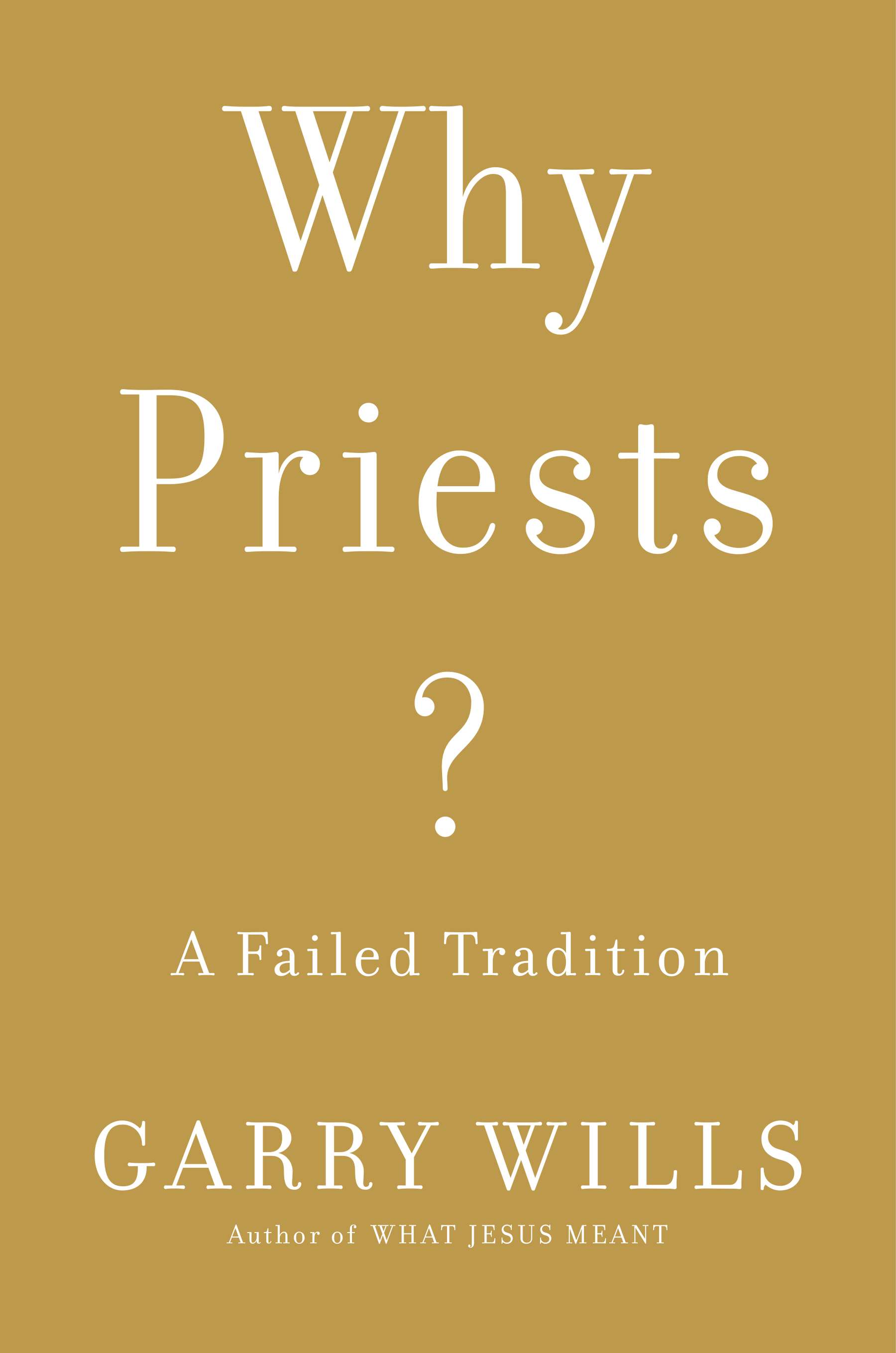
WhyPriests?A considered reflection from a long-time believer is a force never to be taken lightly. Garry Wills is a lifelong Catholic and an intellectual. His book, Why Priests? A Failed Tradition, was recommended to me by a friend and it is indeed a book that raises most profound questions. To someone born Protestant, such as the current writer, many of the arguments Wills marshals are strangely familiar. Many were lobbed in Fundamentalist harangues where clergy that believe in a literal six-day creation proved surprisingly adroit at finding the chinks in Catholic armor. The New Testament says nothing about the Christian movement having its own priests. And even the explicit command that seems to have come from Jesus—call no man father—is immediately reversed once priests become a fixture in a priestless faith. Wills explores the origins of these practices not to tear apart the religion of which he remains a loyal part, but to suggest that religious tolerance is the only proper solution. It is amazing how much of Catholic thought goes back to the disputed book of Hebrews with its mysterious Melchizedek.

While I have never been a Catholic, I have always been haunted by the idea that my religion was some kind of innovation. After all, the stakes were beyond stratospheric. If you pick the wrong one, at least according to what I was taught, Hell awaits at the end of the day. Then I discovered that my own Fundamentalism also had a history. We were called Protestants because we protested Catholicism. As I moved into the Methodist tradition, at least there seemed to be a continuity—John Wesley was an Anglican and Anglicans were really kind of English Catholics. Or so it seemed. Naturally, I became an Episcopalian since going Roman seemed like it came with exceptional amounts of accretions that were clearly not biblical. Such accretions are much of what Wills explores. Traditions that become doctrine. And exclusive. Those on the outside can hope for Purgatory at best, and the very Hell I was trying to avoid remained a distinct possibility. Who was right?

Religions suffer with time. The faith that Jesus seems to have proclaimed had already altered by the time Paul put pen to parchment. Ask any Gnostic. Already, within just three decades, the question became “now what did he say again?” And what exactly did he mean? The core of that message seemed to be love above all else, but that doesn’t make for sexy doctrine. Exclusivity achieves what love could never accomplish. Wills explores how sacraments evolved, and how Scripture became a sword dividing believer from believer. His most sensible solution? Its time to get beyond priests. He doesn’t actually suggest doing away with them, but asks Catholics why they don’t consider closely the implications of their roots. Melchizedek takes on a stature greater than anyone seems to have imagined for an imaginary figure. And a lifelong believer here asks the most basic of questions: what is Christianity truly about?