Monster Epistemologies

A friend ensures that I see internet stories of hidden monsters. Not hidden in that you can’t find them, but hidden in that my freedom to explore the web entails only weekends and even some of those are very busy. In any case, a bestiary from Mental Floss landed on my virtual desk recently and I couldn’t wait until the weekend to check it out. A bestiary is a list of strange creatures, what we might today call monsters, some of which reflect a world not well explored and others which reflect religious, or—admit it—superstitious ideas. In the days when travel was limited and news was slow and unreliable, garbled accounts of strange beasts were compiled in bestiaries. The tradition continues today, as is evidenced by this article by Paul Anthony Jones.

Whenever I see monster stories like this I ask the question: did they really believe such things “back then”? Some of these monsters clearly have analogues in the natural world, but part of my brain reminds me that we are destroying species faster than we can count them in the rainforest, and who knows what we have yet to uncover? Is it really a matter of belief or is it actually a matter of knowing how we know? The fancy word for the latter is “epistemology.” As I used to ask students: how do you know that you know? Has that changed since the days of the bestiary? Knowing about medieval monsters seems to have been the acceptance of the reports of those who, if they hadn’t actually seen the beast, had at least talked to someone who knew someone who had. It is the authority of the senses. Or of reliable reporting. Seeing is believing.
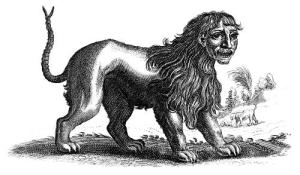
Martigora_engraving

Fast forward to a day of popular cryptozoology. We have monster hunters of many sorts on television. Some claim evidence for what they have seen. Lighthearted laughter is the common response. Monsters just don’t fit into our worldview anymore. Our epistemology has become more circumspect. If it doesn’t come from a lab, like a genetically modified organism, we have no reason to believe it exists. We’d like to create our own monsters, thank you. It’s at times like these that I like to reflect that a bestiary doesn’t sound so different from a breviary. Both are medieval sources of knowledge. Our modern epistemology seems to have grown a little too narrow to see a world that is full of wonder. Unless, of course, it’s on the television. Seeing is believing.


Footprints in the Snow

A friend keenly aware of my interest in the unusual sent me a story about the “Devil’s Footprints” that sometimes occur in snow. The article focuses on an instance in England in 1855 but which was reprised in 2009. The prints, made by a bipedal, cloven-hoofed animal, surmount tall barriers and occur on rooftops as well as on the ground. Such a phenomena is not limited to England. Associated with the Jersey Devil, similar unusual trails were reported during the flap of sightings in the early part of the last century here in New Jersey. As the piece on Mental Floss states, this is most assuredly not diabolical work, but it does make me wonder why people associate the unknown with the Devil.

IMG_2654

As a character in world religions, the Devil can trace his (and, like God, he is almost always a male) origins to the Zoroastrians. Zoroastrian theology is a dualistic outlook: ultimate good versus ultimate evil, Good God versus Bad God. The idea synced particularly well with the burgeoning of apocalyptic thought that hovered in the air during the time that the people of ancient Judah came into contact with Persian thinking. The idea was toned down, of course, to a being with lesser powers than God, but still a real foe with which to contend. By the time of the New Testament, the Devil was ensconced and associated with the Persian accuser known by the title of “the Satan,” or the divine prosecuting attorney. How this character came to be associated with strange footprints in the snow traces an odd trail indeed. The key is the cloven hooves.

No description of the Devil exists in the Bible. The best evidence suggests that the horns, goatish bottom, and cloven hooves come from an association with the Greek demigod Pan. Why Pan was singled out as a particularly bad god is not known. He was popular in ancient Greece. It is certain that the Jews of Jesus’ time would not have recognized a cloven hoofed beast as devilish. The livelihood of too many relied on sheep and goats. Once the transformation took place in the imagination, unexplained cloven footprints appearing in the night suddenly became those of the Devil. As Stacy Conradt points out in her Mental Floss post, several suggestions have been made for creatures of the natural world and their snowy markers. We don’t know what makes the footprints, however, and winter is all the richer for it.