For the Camera

Smile 2 is getting some good critical notice and I hadn’t seen Smile (1) yet.  Psychological horror often bothers me, but I figured I’d grin and bear it.  I’m glad I did.  The ideas in the film, which participates in “the stigma trope,” are disturbing because it’s unclear if Rose (the protagonist) is mentally ill or not.  The stigma trope posits that something has infected someone either by having seen something they shouldn’t (as in Ringu) or by physical contagion (It Follows) and the victim can’t shake it.  Smile may trigger viewers with suicidal phobias since the premise is that an entity feeding on trauma passes from person to person by having the new victim witness the previous victim’s suicide.  Rose is a therapist who hasn’t gotten over the trauma of her mother’s death.  Rose witnesses a patient die by suicide, and who smiles just before she does it.
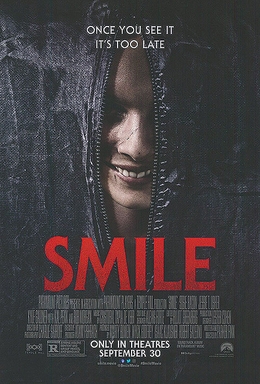
The patient told Rose that she’d watched one of her professors die by suicide.  Rose subsequently learns that the professor also witnessed a suicide and so on and so on.  Each prior victim had watched someone else die.  Now Rose has to figure out how to break the cycle, otherwise she’ll perpetuate it.  The idea of inadvertently obtaining a “sticky” entity is pretty scary, and a very human concern.  One of the more frightening aspects of possession movies is the belief that now that demons know that you know, they will target you.  Interestingly, what makes this film provocative is that the victim has to have suffered trauma before.  As such, it is a study of trauma and its lasting effects.  I suspect most people don’t intentionally traumatize others (world leaders excepted).  Trauma can be dealt with (or not) in very different ways.

Smile did quite well at the box office.  I suspect there are a lot of us traumatized people around.  Capitalism encourages traumatizing others through slow violence, if not the more obvious quick way.  People don’t easily walk away from events that scarred them, particularly if they happened at an early age.  Such people, if experience is anything to go by, find themselves in vulnerable positions in life and rather thoughtless people, often for religious reasons, end up traumatizing them even further.  I have to admit that there were triggers for me in Smile.  I still struggle with a few of my own traumas that were never resolved.  Like Rose, I sometimes don’t know who can really be trusted with such things.  This is a perceptive movie.  I guess now I can put on a happy face and see Smile 2.  But first I’d better talk to my therapist.

Thinking Thinking

Something that’s been on my mind (anticipatory pun) lately, has been thought.  More especially, the quality of thought.  We are conscious beings, although we’re not sure what that means.  Beyond a Cartesian self-awareness.  Everyone knows what it is to have times when you’re not thinking clearly.  Or are feeling confused.  Those of us who tend to live quasi-monastically (keeping to a routine, early rising, writing and reading daily before the 9-2-5 routine) notice the ways subtle things can influence the quality of our thinking.  For me, first thing in the morning is the best time.  (Although I must confess that lately I don’t wake up with the crystalline clarity that I have for years, as if sleep is beginning to intrude on my earliest hours.)  Once I’m up and going, though, routine, you’d like to think, would provide the same results.  But it doesn’t.

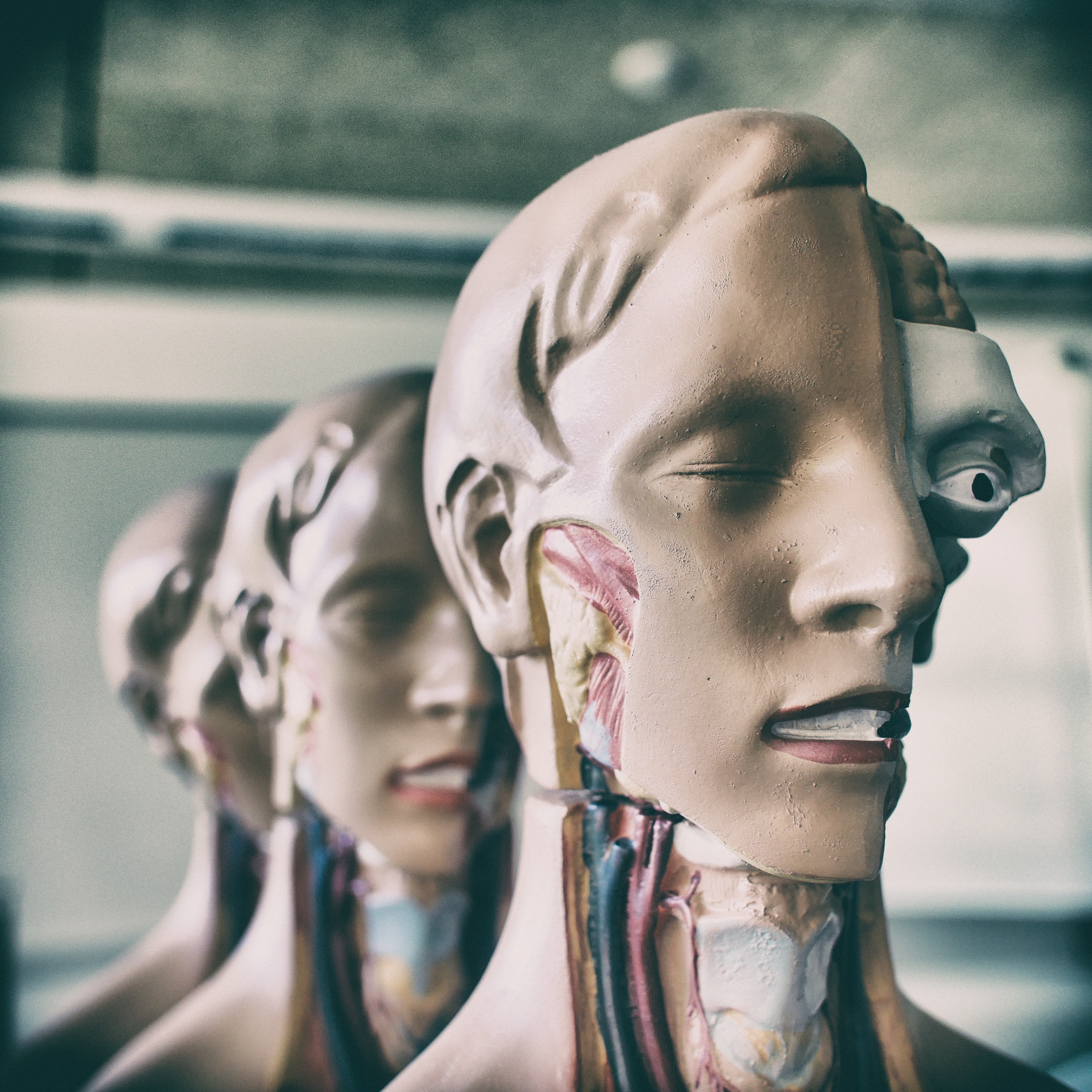
Photo by Pierre Acobas on Unsplash

I’ve written before how the quality of sleep can affect the quality of awake thinking—something we’ve all known all along.  But even when I have somewhat identical nights (same quality of sleep more than one night in a row), the subtleties of difference in thought persist.  To understand this, you need to realize that I’ve been rising well before the sun for a dozen years now.  I awake to a quiet house and spend a couple, sometimes a few, hours writing and reading.  (It’s how I write my books, as well as this blog.  And my fiction.)  Even on “identical mornings” where the weather’s pretty much the same, and all other factors seem equal, the quality of thought differs.  Sometimes it depends on whether I’m writing fiction or non.  As I transition into my reading time, that can make a difference in the reading experience.  I suppose that’s one reason I value good writing.

We don’t understand consciousness.  Identity is also somewhat negotiable at times.  We’ve all known a family member or friend to act “not like themselves.”  More to the point, to think not like themselves.  We have no real way of understanding thinking itself.  I think about thinking quite a bit, and I marvel at how intensely personal it is.  We may, at our will, keep our thoughts to ourselves (and that’s a good thing, in many circumstances).  Thought, it seems to me, ought to be a very high priority in our academic pursuits.  It’s a powerful thing, capable of more than we’re even presently able to imagine.  And it can differ from day to day.  Do you suppose I wrote this after writing fiction or non?


Work for Good

You learn a lot as a primary caregiver.  Since dealing with a family cancer diagnosis last year I joined a local support network for caregivers.  Three things I’ve learned: healthcare is very uneven, we ended up in a good facility, and finding a social worker on your own is very difficult.  I see lots of messages on the support boards from people in poor facilities that can’t find the help they need.  I know what social workers do—I had several friends who majored in social work in college—but in this age of all the information in the world at your fingertips, just try to find a social worker!  I was trying to find a website to suggest to a person on my board who didn’t know where to turn.  Searches bring up links to places trying to sell you their services to find a social worker.  Are we really that callous?  

People tend not to try to find a social worker unless they really need one.  Many people, I suspect, wait until they feel pretty desperate.  This is not when you need some salesperson trying to sell you something.  Medical care can be very expensive—devastatingly so—and there are professionals out there who specialize in helping you get through such things.  Why are they so difficult to find?  I tried government sites that seem more interested in telling you how to become a social worker than how to find one.  If we’re in such a state that we don’t have enough social workers why don’t we pay them more?  Here’s a hint, most politicians could stand a salary cut.  My college friends all said they knew it didn’t pay well, but social work was a way to help people. Saints still walk among us.

We have the means to help everyone.  What we lack is the will.  We continue to let capitalism and the hope of individual wealth run our economy.  Economy means nothing without people.  And we have many people who are willing to receive less personally to help others get by.  Why do we have to hide them behind a pay wall?  What does that say about us?  We’ve been fortunate.  Our medical facility immediately put us in touch with a social worker.  If, however, you end up where healthcare choices are limited, or don’t know how to find a social worker on your own, the internet’s not a great resource, unless you want to pay someone to help you find help.  What have we become?


Using Brains

I’m old enough to know better.  Here’s a thought.  I recently saw a headline that suggested human brains filter out things like ESP because brains evolved to help us survive.  No matter what you believe about ESP, the idea got me to thinking.  We often act as if our brains are able to determine the Truth (that capital is intentional).  At the same time we don’t understand what consciousness is.  We know that other animals have brains and that the evolution of said organ is to help individuals survive to reproduce.  Some animal species end their existence at that point, but others linger on to wonder.  And I’m wondering if our brains are filters.  Stick with me here: we know that there are stimuli that we can’t perceive that other brains can.  For example, it seems that migrating birds can perceive magnetic fields.  Even if they can’t there are magnetic fields that we perceive only through their effects on objects.  Our brains have no direct access.

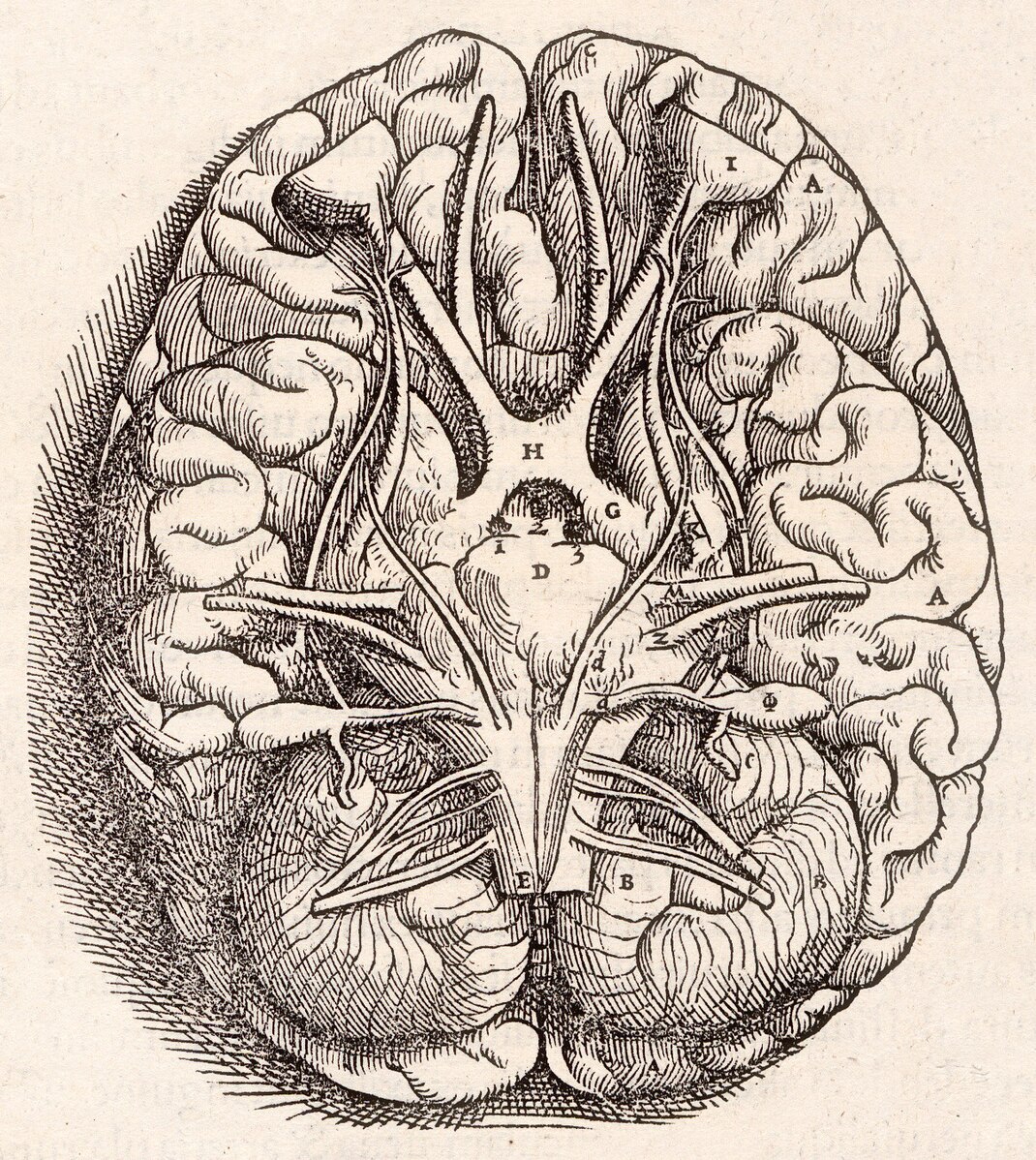
Image credit: Andreas Vesalius‘ Fabrica, showing the Base Of The Brain, by user Ancheta Wis

Here’s where it gets spooky.  If our brains filter out things that may hamper us in survival, what if they overzealously teach us not to perceive things that actually exist?  We’re somewhat limited by our “five” senses, no doubt.  We get along okay.  But what of those people who see things that others don’t?  We tend to medicate them or lock them away, but what if their brains have learned how to shut off part of the filter?  Having written a book about demons, naturally they come to mind as a test case.  Or, if you prefer, ghosts.  We tell our children these things aren’t real.  Trust the filter.  Get on with life in “the real world,” right, Cypher?

I didn’t have time to read the article, but I’d experienced a perspective shift.  If our brains are all about gathering information (and in part they clearly are), that’s one thing.  If they are actively filtering things out, well, that’s quite another.  We laud the imagination of children until they become “old enough to know better.”  Do we teach them to shut out what they can actually see, or sense, in order to accept the inevitable, material, adult world?  This idea has startling implications.  As we plunge ahead inventing AI to do our thinking for us, perhaps we’ve left something even more fundamental behind.  Have we lost interest in the Truth?  We may not be able to access it directly, but I wonder if we’re taught to give up without even trying.