Feathers and Flight

Bird identification must be one of the trickiest activities known to humankind.  My office window overlooks a small segment of a porch roof that is popular with birds.  Whether it’s pecking at some invisible specks on the shingles or dipping a sip from the gutters, they stop by often during the day.  Maybe my brain wiring is odd, but since I was a child I wanted to be able to identify correctly any animal I saw.  We had a few of those Zim Golden Nature Guides that I poured over like a second Bible.  I would study page after page, repeatedly, until I could identify just about any critter I came across.  It seemed, in those days, that all birds were sparrows, starlings, or robins.  There was the occasional blue jay or cardinal, but usually it was the more ordinary, less colorful variety.  Birds are symbols of hope.  Their lightness and ability to fly are what human dreams are made of.
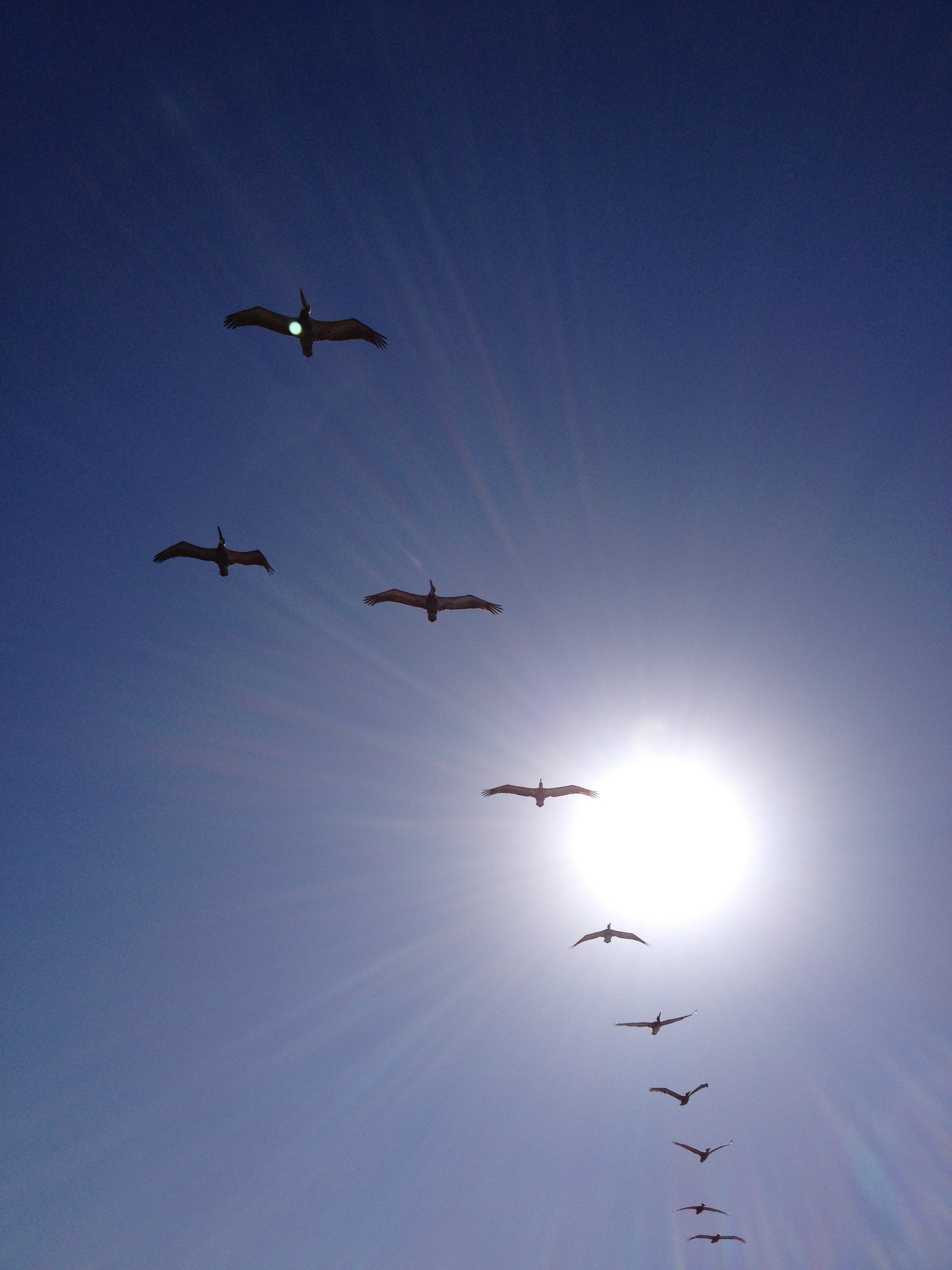
I’m not an avid bird watcher, but I do try to identify them.  I see bald eagles occasionally, several times a year usually, and plenty of red-tailed hawks.  Once in a while, however, a smallish bird hops by that resembles nothing in my field guides.  In frustration I turn to Cornell University’s bird identification app, Merlin.  Almost never can they find anything like what I saw.  Maybe it’s because the app asks the wrong questions.  Never do they say “was the tail long, medium, or short?” for example.  Things you’d actually notice.  They do ask where you saw it, and “on the roof” isn’t an option, let alone “on the roof overlooking my porch.”  I saw an interesting bird the other day that was all gray.  Bill and all.  I saw it next to a starling, from which it was clearly distinct.  It wasn’t in my book and it wasn’t on Merlin.  What could it have been?

This isn’t the first time this has happened.  Strangely, bird color isn’t always a reliable indicator of species although this is what the viewer tends to notice first.  To make positive identification takes close observation of details most people don’t immediately catch.  The more common species are seldom an issue, but the less showy kind are often more difficult to identify.  This strikes me as a life lesson.  We may all know who the showiest are, but those more modest of our avian friends likely live lives of greater satisfaction without people constantly chasing after them.  At least I imagine it so, since I can’t find a write-up about them in my identification guides.  But I can still watch them and gain hope.

Not Camelot

In the English imagination the Arthurian legend is deeply connected with the Christian myth of Britain’s founding. This may not be on the surface, of course, but the places associated with King Arthur (as well as the tales themselves, such as the Holy Grail) overlap with sacred locations. I was reminded of this by a recent Guardian article about Tintagel Castle. Back in the day when my wife and I visited Tintagel with friends, I was still shooting film. Slides, no less. Some wonderful images came out, the way that only Ektachrome delivers, but I haven’t been able to convert them to digital. I guess you’ll have to take my word for it. Tintagel is in the news because English Heritage, the owner of the property, is developing it to make it a larger tourist draw. According to Geoffrey of Monmouth King Arthur was conceived at Tintagel. Not in the castle—now in ruins—that was built centuries later, but on the island that is accessed by footbridge over a dramatic cove on the Atlantic Ocean. It’s enough to make you drop your pastie.

Our own little Merlin

Our own little Merlin

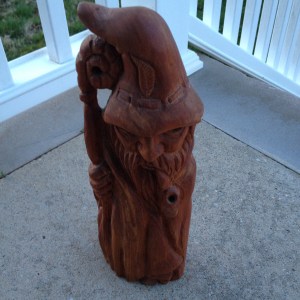
Locals, according to The Guardian, protest the dressing up of the historic site. A bas relief of Merlin has been carved into the living rock, and this is hoped to draw the Glastonbury crowd to the southeast. Glastonbury, upon our visit, was already the home of New Age vendors. It too has connections with Arthur. The staff of Joseph of Arimathea can be seen, still growing after all these centuries. The Holy Grail—likely from Celtic mythology of the cauldron—is also associated with Glastonbury. Oh yes, and also King Arthur’s grave. Even apart from Monty Python, the legendary king has captured the imagination of thousands across the centuries. There’s something about Arthur.

The historicity of the king, however, is vigorously debated. The same is true of many religious founders. Those around whom legends grow become more and more inaccessible with the passing of the years. England was Christianized in the seventh century as part of a political expansion. If Arthur ever lived, it was after that period, perhaps in the days before Beowulf. We just don’t know. It is clear, however, that his legend is intertwined with that of those early Christian days. There never was a Holy Grail—of that we can be fairly certain. In the service of myth-making, it is nevertheless indispensable. Staring out over the Ektachrome sea at the ruins of the island castle of Tintagel, it is only too easy to believe. If only I had the pictures to prove it.