Why Not Love?

I learned a new word the other day: incel.  I’m not too proud to say that I had to look it up.  Although I’m on the internet quite a bit, I’m not really part of “internet culture.”  Incel is a shortened form of “involuntary celibate.”  It refers to an internet culture of mainly white, heterosexual males who consider themselves unable to find (generally) female companionship.  They often lash out at women, and sometimes at any sexually active person.  In general it seems to be a self-pitying, hateful crowd.  They tend towards misogyny and racism and, one suspects, conspiracy theories.  They apparently suffer what a friend of mine called “DSB” (deadly sperm buildup).  But the thing is, love would seem to be the cure.

Certainly women aren’t to blame.  Look, if I managed to find a woman willing to marry me there must be hope for the rest of my gender.  I’m no catch.  And why is it frustrated men take it out on women?   And underplay the achievements of women?  The Women’s March in January 2017 was the largest single-day protest in history.  Accurate numbers are difficult to attain, but it has always struck me that the U.S. Park service agents, with feet on the ground, estimated a million and a half in D.C. alone.  So we were told.  It’s almost as if nobody bothered to count because it was women.  Why is this still an issue?  How incelular are we?  Is it so difficult to give credit where credit is due?

I wonder if anybody foresaw that the internet would develop such subcultures.  Yes, Neal Stephenson’s Snow Crash gave us a metaverse where individuals lived virtually online, but did we fully realize then that sexually frustrated guys would eventually merit their own title and that some of them would perform acts of real life violence based on their own rhetoric?  Rogue males have been part of human culture all along, but the internet has offered a place to band together and become radicalized.  I, for one, had no idea that such subcultures existed.  It took reading an academic work about female leadership to learn about them.  And it makes the world a less comfortable place knowing they’re there.  Learning love is our only hope.  There are people who sublimate their frustration to hate.  What if we tried to make the internet a place where love, with or without physical entanglements, became the dominant meme?  Even those of us who work largely in isolation can see the hope in that.

Photo by Mayur Gala on Unsplash

Word of the Year

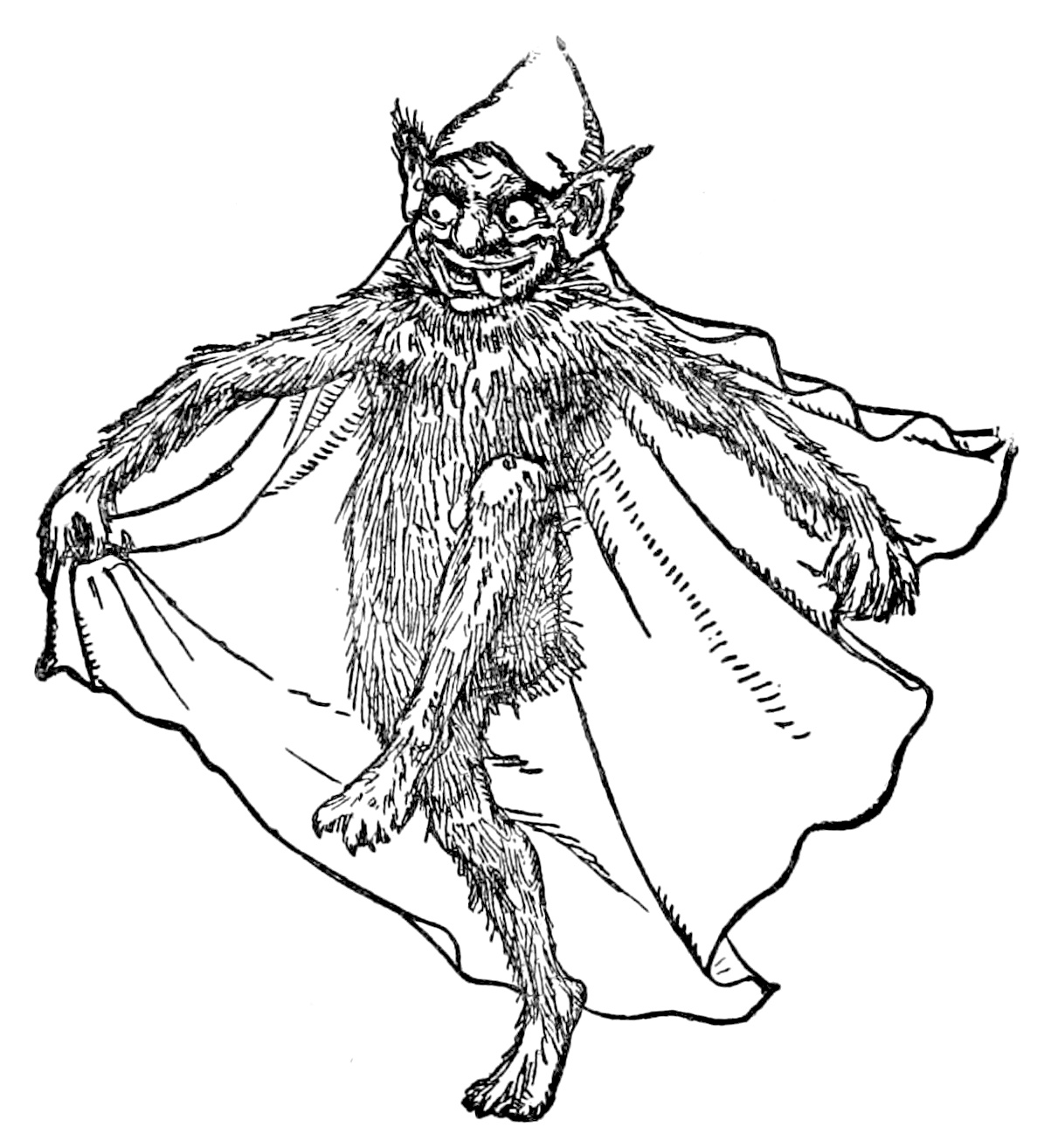
I still have to look up “goblin mode” each time I read it.  I’ve been reading it quite a bit because it was Oxford University Press’ word of the year for 2022.  Throwing voting open to the public for the first time, goblin mode was overwhelmingly chosen, edging out my personal favorite, “metaverse.”  (It’s not every day that a word your brother-in-law invented gets that kind of accolade!)  But goblin mode is in the Zeitgeist.  It means to live an unkempt existence, perhaps hedonistically, without caring what others think.  It is, of course one of the offspring of the Covid-19 pandemic and its lock-downs.  Like social distancing, it’s something some of us had done before we knew what it was called.  But only partially.  I have a mental self-image that I don’t allow myself to show because I don’t like being judged.  I’d be safer in the metaverse, perhaps.

Image credit: Goblin illustration by John D. Batten from “English Fairy Tales” via Wikimedia Commons

Somewhat a natural hermit, I do crave human company and, like most people, I worry about what others think of me.  The thing is, people are natural actors.  We keep our goblins well hidden, usually.  Social life is quite different from the moments we spend alone.  Goblins are, of course, a type of monster.  Somewhat undefined and malleable, they can be compared to demons or fairies.  They do tend to be associated with households, which may make their use with this phrase appropriate.  Goblins tend to be thought of as ugly, thus goblin mode is letting your “ugliness” take over, no matter who may see.  You could be in permanent goblin mode in the metaverse, though.

I have to admit that such things make me feel my age.  The lessons of conformity, even though I was born in the sixties, were pretty deeply impressed.  “Do you want other people to see you like that?”  I wonder if we’re not all insecure at some level—it’s our primate inheritance.  Going into goblin mode, then, is striking back at the natural human acting ability.  It comes at a time when the message of not judging is also prevalent.  In the metaverse, as it was first used in Snow Crash, you chose an avatar that could look like anything you wanted.  I suppose that’s a form of goblin mode too.  We are natural actors.  Watch people in a crowd sometime.  Or at the office.  Or even at home, if they’re not alone.  If other eyes are watching the question always remains “do you want others to see you like that?”  And what we see is probably not authentic.


Degrees of Separation

For some reason lost in the fog of weblandia, I get The New York Times, “The Morning” delivered to my email.  By carefully not clicking the links I can get my day’s worth of fear and paranoia for free.  Not all the news is bad, of course, and I’d be glad to pay if circumstances had been different.  After giving all the sorrow that’s fit to print, “The Morning” ends with an Arts and Ideas section.  By then I’m usually cradling my head in my hands but I look up to see the positive side of humanity.  The other day the article on the Metaverse included this line: “In its simplest form, the term — coined by Neal Stephenson in his 1992 novel ‘Snow Crash’ — describes an online universe that people can share together…” and I realized probably the closest I’ll ever get to the Gray Lady.

I am, as many of my regular readers know, Neal’s brother-in-law.  He mentions me in the acknowledgements to Snow Crash, something that was discovered by someone at work fairly recently, and which probably did more for my stature than my many long hours daily.  When it comes to degrees of separation, fate, I suppose, plays a role worthy of the Joker.  Neal hadn’t written Snow Crash yet when I met his sister.  Her somewhat unlikely friendship with me eventually led to our marriage and it was in the context of a family gathering that the conversation Neal mentions in Snow Crash took place.  Outside publishing, and in particular academic publishing, acknowledgements are seldom read.  I always read them, though, looking for unusual connections.  I’m often rewarded for doing so.

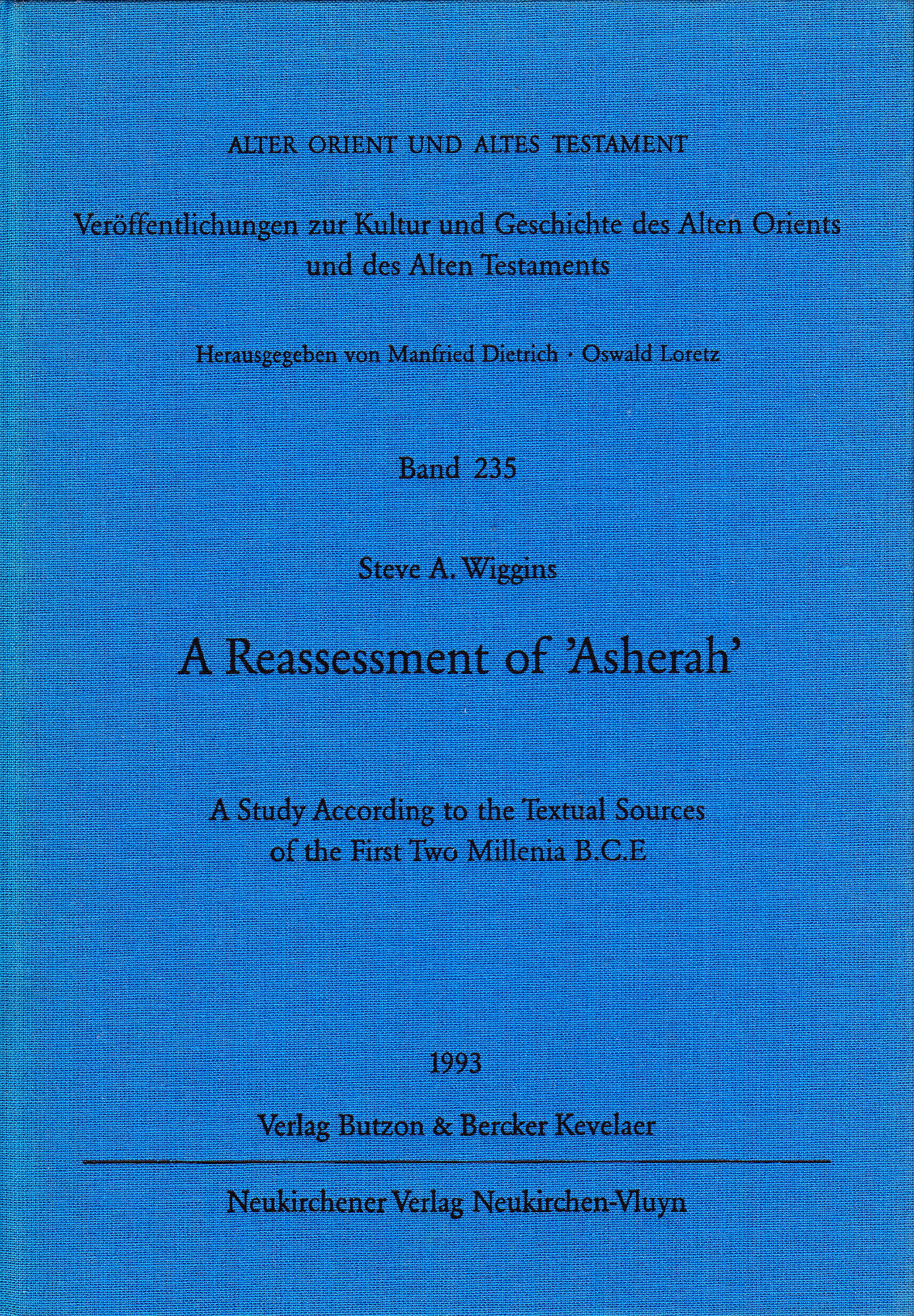
Asherah was, unbeknownst to me at the time, undergoing a resurgence of interest.  My Edinburgh dissertation was published the same year as a more prominent one by Cambridge University Press.  Just a year later, another came out.  Then another.  The internet was really an infant in those days and we learned of such things through printed resources and printed resources are always in arrears by months, if not years.  Of the many Asherah books mine had the distinction of being the most expensive.  Some things never change, I guess.  Suffice it to say, Asherah was on my mind as Neal and I drove to the store to pick up some baby supplies.  I had nothing to do with his coining the word or idea “Metaverse”—he’d already worked that out.  It was Asherah that ended up in the novel.  I was on my way to a short-lived romance with academia at the time.  Family, however, is so much more than degrees of separation.