
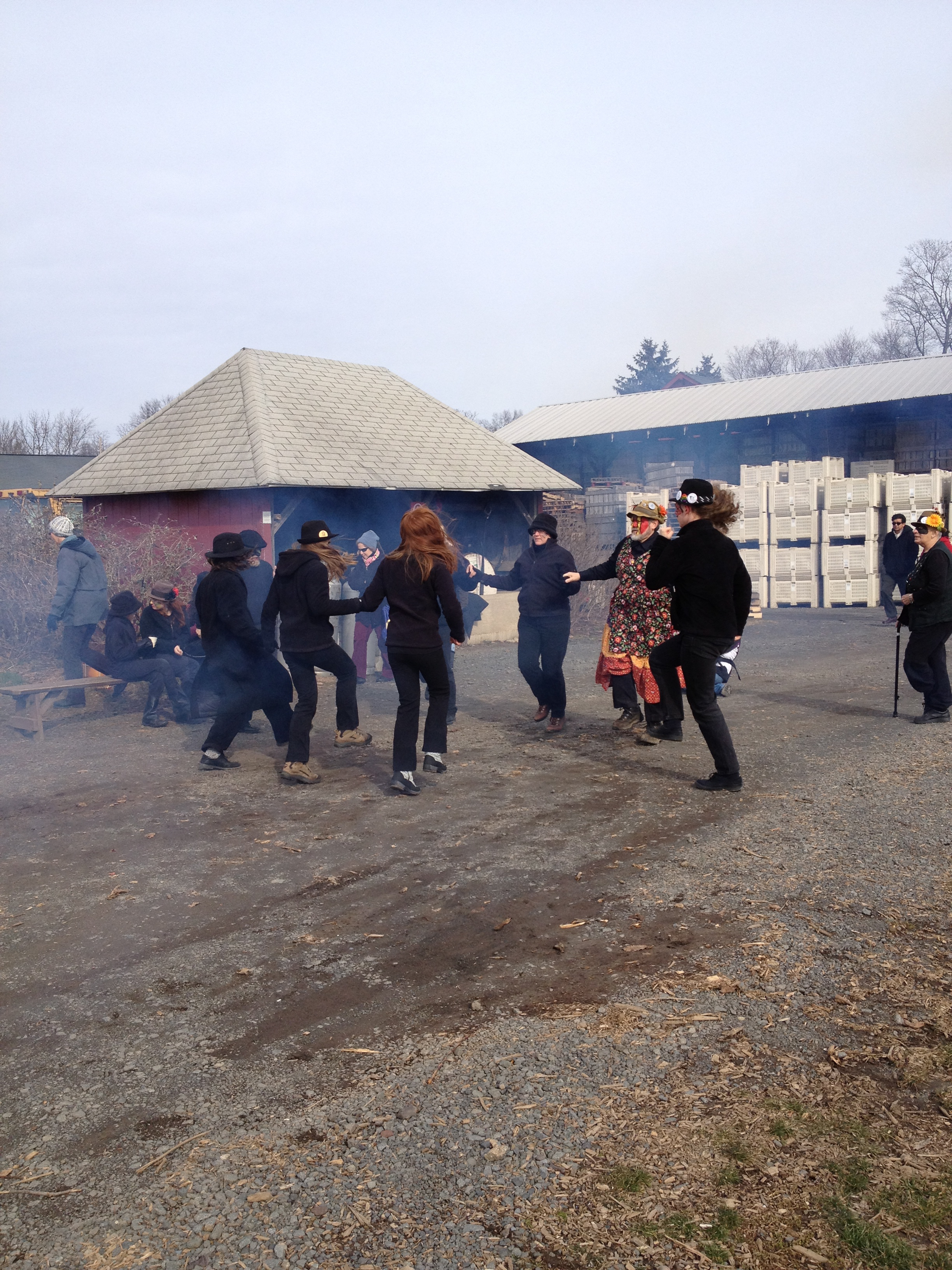
It was a nippy 42 degrees with a chill January breeze cutting through the brightly garbed crowd of maybe two-dozen stalwart souls. There were Molly dancers holding hands and skipping in a circle. Smoke from a bonfire caught the breeze as a woman with a painted face sang about the circle of the sun. The whole event had a Wicker Man sort of feeling to it, but participating in an ancient tradition is strangely fulfilling. A basket on the table held pencils and paper on with instructions to write your wish and burn the paper in the bonfire so that “Your message will travel into the cosmos.” The bare apple trees were seasonally pruned and discarded branches littered the ground. It all sounds suitably pagan for a Sunday afternoon in New Jersey.
Having grown up in a rather sheltered small-town environment I never even heard of wassail until planning for my December wedding nearly twenty-five years ago. A low budget affair with the reception in a church basement, my wife decided not to offend Methodist sensibilities by serving wassail, a spiced cider drink generally associated with Christmas. As I learned this midwinter, wassailing has a deep and mysterious ancestry that is a mix of pagan and Christian traditions. One aspect of wassailing is associated with Christmas carols and is based on the tradition of the wealthy sharing with the poor during the holiday season (a practice clearly extinct these days). The second type of wassailing goes back to nature religion and the blessing of the apple trees. It was observed on midwinter, which, before the Gregorian calendar, fell on January 17. At Terhune Orchards the festival fell on the 29th this year.
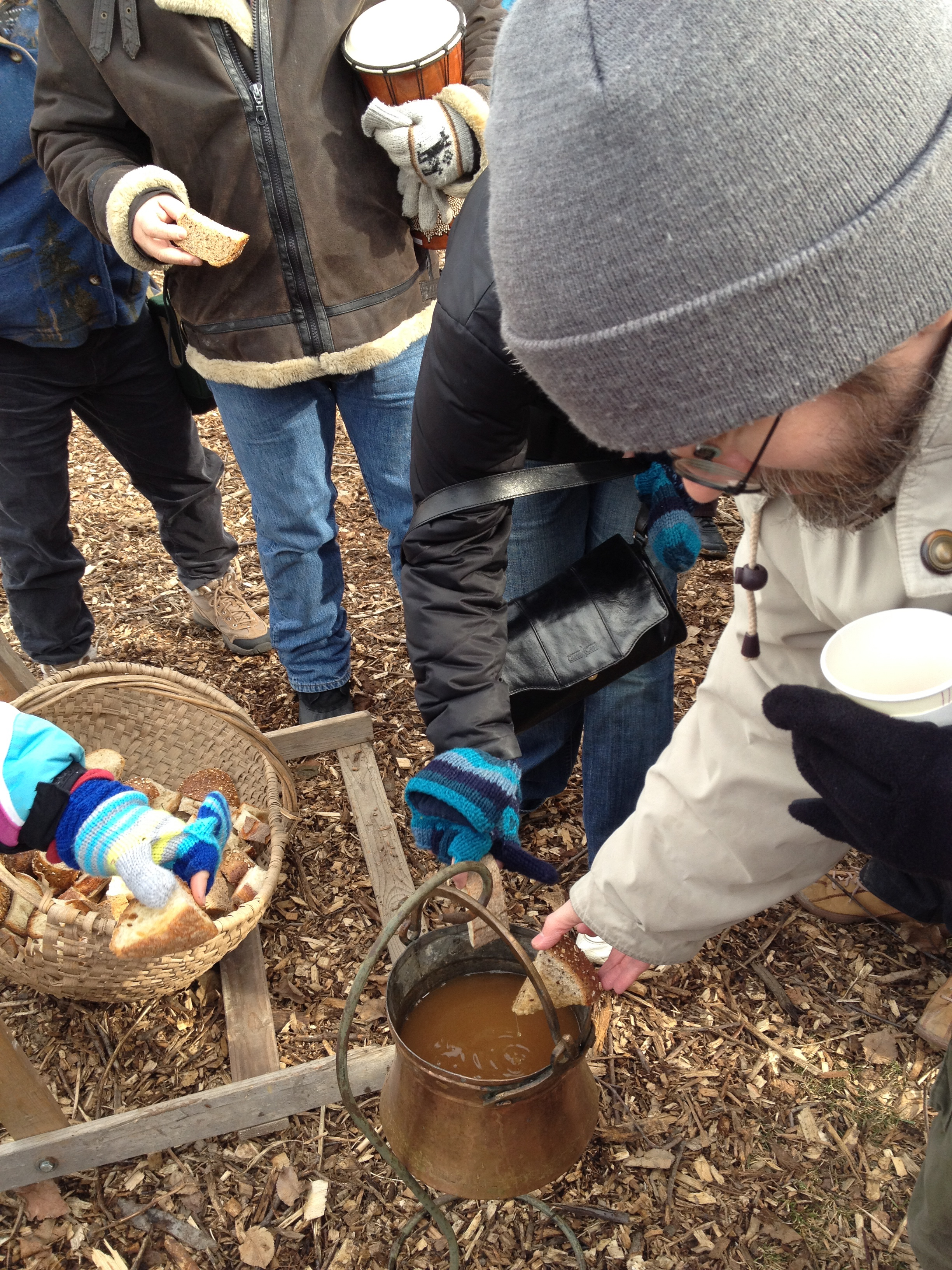
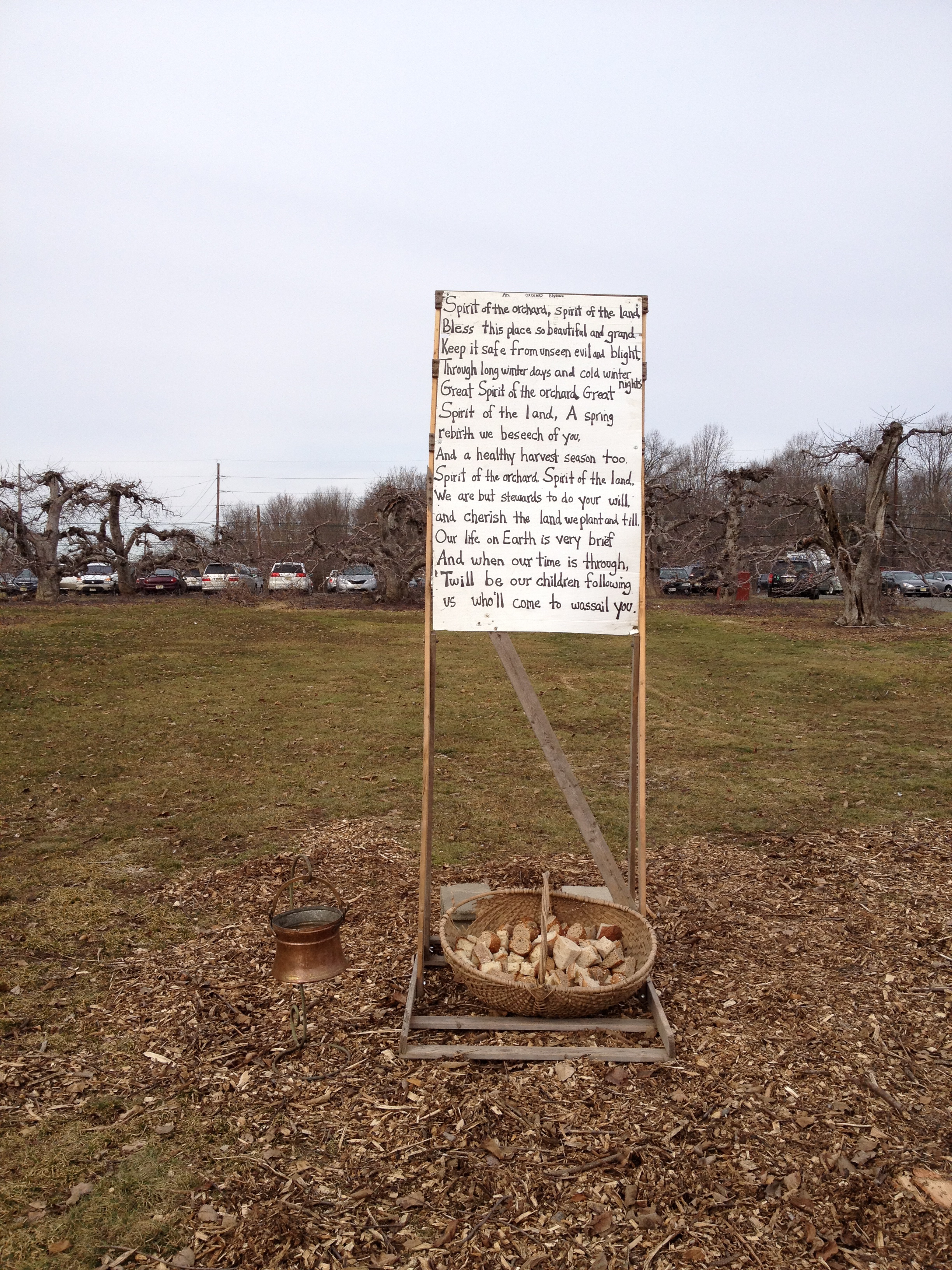
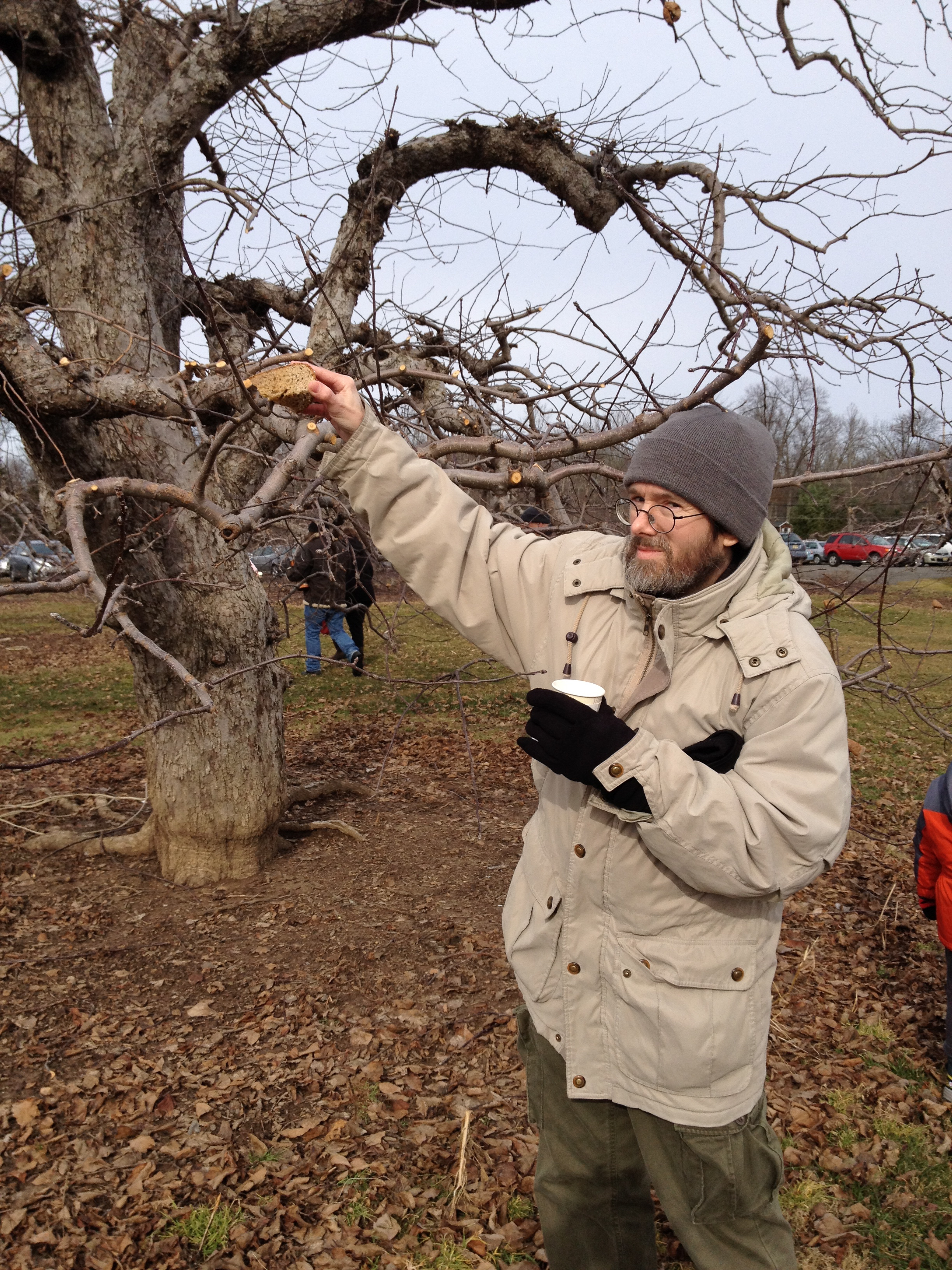
After watching the Molly dancers and sending our wishes up to the cosmos in the bonfire, one of the orchard proprietors gathered the crowd, now having about doubled to fifty, to sing the Somerset Wassail and then to make noise to drive out the evil spirits. This the crowd did with enthusiasm. We were then asked to recite the wassail prayer, printed on a signpost for all to see. Bread was passed out which we dunked in cider and hung on the naked apple trees. After a final blessing we headed to our car to preserve our own wassail. In England’s apple-growing regions, wassailing the trees is still practiced with a sincerity that marks the deeply mysterious. Some Christian sensibilities, I’m sure would be offended, but this ancient custom, like leaving a tree to stand in the midst of a plowed field to propitiate the spirit of nature, goes profoundly into human consciousness. I, for one, will lift a cup of cider and join the ancient rite to brighten a winter day.
 Steve A. Wiggins