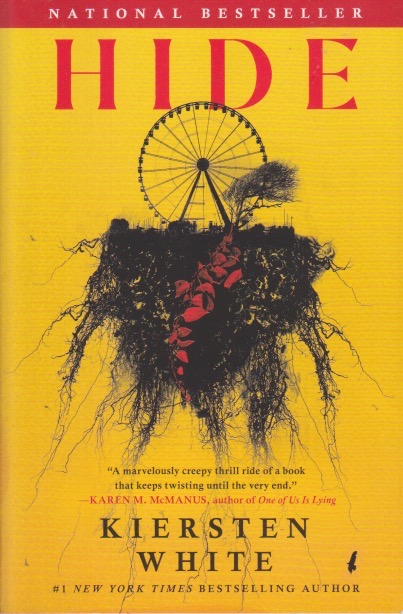
and Seek

I’m afraid there may be spoilers—but not for the ending—below.  Discussing this story will be difficult without giving some things away.  Kiersten White’s Hide has given us an imaginative world with masterful misdirection.  Fourteen people a bit down on their luck, and strangers to each other, are offered an opportunity to win $50,000.  They have to hide in an abandoned amusement park for a week where two of them will be caught each day and the last person remaining wins.  The novel mostly follows Mack, a woman whose father killed her family while she survived by hiding.  Not only does she have survivor’s guilt, but she’s been homeless and the shelter director thinks she’ll have a chance at winning the prize.  There is a lot of social commentary here, as well as a monster.  Okay, spoilers below.

The minotaur is a most useful monster.  The backstory here isn’t in Greece (well, the deep backstory is, but that is only played out partially here) but in Asterion.  No state is given for the town, and the contestants can’t be given that information.  They’re locked in the park, with supplies, but very little information.  Then the contest starts.  After a couple of days Mack and a couple others begin to suspect that something’s wrong.  Those who get caught while they’re hiding leave personal effects behind, and since they all need the money that seems unlikely.  Then their host stops coming, leaving the bewildered contestants on their own.  Mack and those she’s befriended come to understand that being “out” is really being eaten by the minotaur.  Well, they don’t realize it’s the minotaur.  The one who does gets eaten before he can tell.

In any case, this is a tense horror story based on a classic tale.  There is, of course, a rationale for the murderous behavior in a modern setting.  White keeps you waiting quite a while to learn what it is, and there are plenty of places where I thought I’d figured out how it’d end only to be proven wrong.  And she gives believable character sketches and explores the kinds of motivations that drive different people who find themselves needing an income.  (One of the characters was raised in a religious cult—bonus!)  Those who are poor aren’t always at fault, but those who are wealthy will do anything to preserve their excess.  We see that playing out in daily life, even as it’s being explored in fiction.  The minotaur isn’t always what we think it is.  And the more you think about its insidious origin story provided here, the scarier it becomes.


Welcome to the Labyrinth

Do anything long enough and you’ll produce a labyrinth.  I started this blog back in 2009 with the idea of perhaps continuing in the biblical studies/ancient Near East (actually west Asia) studies, where I began.  I always knew this would be a place to talk about books and movies and sometimes current events.  Often it would address American religion because, well, it’s so bizarre.  Over the years the blog has ranged pretty widely.  My interests are fairly diverse and I tend to get obsessed with a subject for some time and then move on.  I suspect that’s one reason followers are few.  People want the same thing—should I dedicate the site to horror films, religion, or social justice?  The weather?  Instead, it’s what catches my interest at the moment.  Thus the labyrinth.

On the rare occasion when someone actually comments on an older post this blog (there was a healthy chain about the Highgate Vampire some years back), I often have to ask myself, “Did I write about that?” “What did I say about it?”   The human mind is a labyrinth.  And life is too short to ever stop learning.  Even if it means that few will be interested in what you’re doing.  The few who’ve known me a long time and read this blog (I know who you are), might be surprised at the horror themes that have become pronounced.  These were, however, part of my childhood.  When I tried to get away from them, they pursued me.  Monsters are like that, of course.  They like to hide in labyrinths.

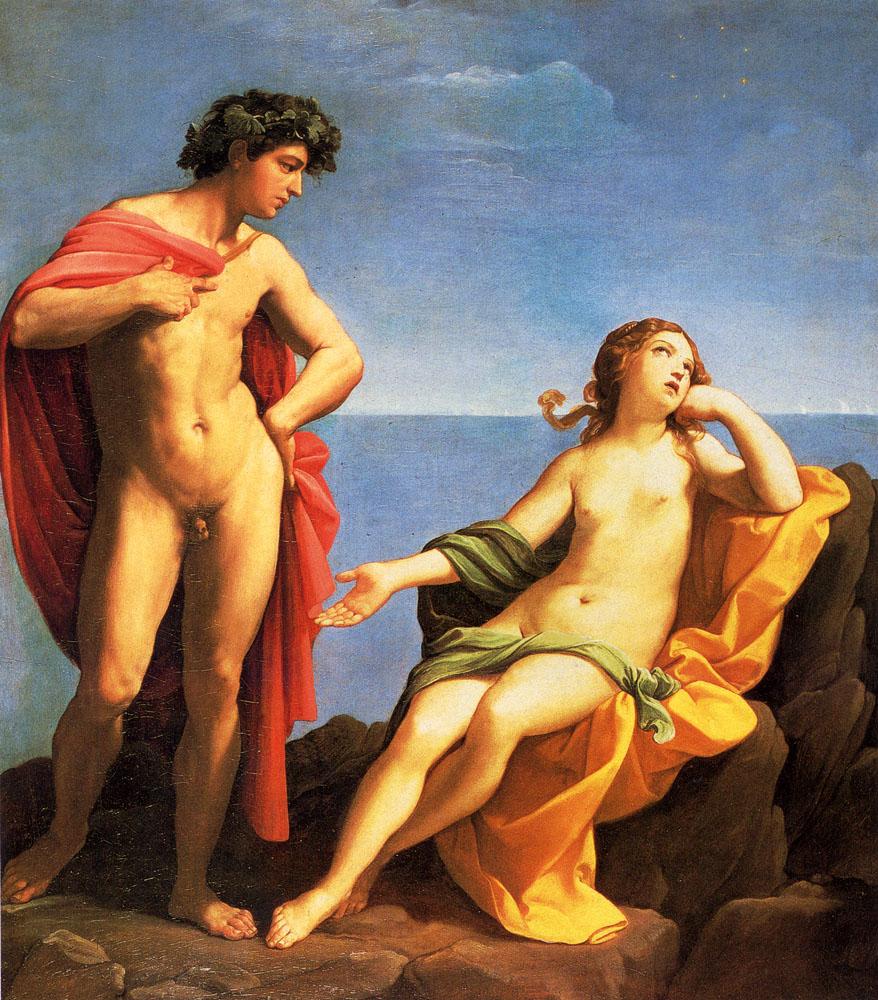
But labyrinths are contemplative spaces.  Contemporary spirituality has rediscovered labyrinths.  You walk them in intentional thought.  In the moment.  We might be able to forget for some time that the original labyrinth was built to house the minotaur.  And without Ariadne Theseus would’ve never survived.  When he left her on Naxos his actions spoke louder, much louder than his fight with the monster.  Labyrinths make you forget where you are.  One saved Danny Torrance.  And perhaps one might save your soul.  Those who make enough chairs, or write enough books, or design enough skyscrapers leave labyrinths behind.  Manhattan may be a grid, but it’s a labyrinth nevertheless.  It seems to be a part of every story.  The thing about labyrinths is that they have no one goal.  There is no single answer to this mystery.  When you begin making one you may not even realize it.  Until you stop to contemplate it.

Photo by Ashley Batz on Unsplash

Enter the Labyrinth

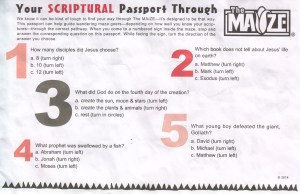
Trying not to think too much about Children of the Corn, I visited a corn maze over the weekend. This particular autumnal activity highlights just how much detail a human mind can pick out in a mass of sameness. You can tell if you’ve been to this particular juncture before—that oddly shaped leaf, or that peculiar stone, or that specific ear with the missing teeth will give you the clues. This particular maze, however, also uses printed clues. Before you enter the labyrinth, you may choose your species of guidance. There were 4-H clues, Girl Scout clues, history clues, and more. One of my companions handed me the scriptural clues. Although it may have been an obvious connection, I thought about it in terms of salvation. A corn maze is not unlike life in the real world; confusion, false leads, and aimless wandering. Having a guide—in my case, knowing the Bible—will lead you out.

corn-maze

Of course, the point of a corn maze is the fun of getting lost. This particular farm had eight acres dedicated to fall fun, and our party did get hopelessly mired in one location and had to ask for help from the corn cop who wanders like a friendly minotaur, or maybe a personal Daedalus or helpful Ariadne, directing those who’ve lost their way. The idea is that once you enter the maze, you look for numbered clues at various junctures—only a few crossroads have them—and answer the question for instructions about which way to go next. Even with the Bible in hand, or in head, we managed to lose our way. Baptized by a sudden cloudburst, we sought shelter in an open field. The only way ahead was to press on.

Those who’ve been with this blog for any length of time know that it is intentionally kind of a labyrinth, often using metaphor. In the case of the literal corn maze and its clues, minimal biblical knowledge was required to figure out the correct way to turn. The trick was even after getting all the hints, there was still some distance to go. Wet, confused, and having only our wits to go on, by trial and error we made it through. Our instructions—for we each had a different set of questions—only got us so far. My biblical guide was damp and see-through with the soaking we received. Metaphors were falling as fast as the rain. After all, the point of a corn maze is that you don’t get your money’s worth unless you get well and truly lost.


Resurrinception

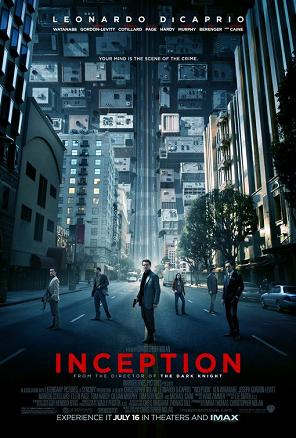
Inception_ver3Like most profound movies, Inception keeps me coming back repeatedly. I’ve already written a post on how the Theseus and minotaur myth lurk deep within the labyrinths of this film, but upon my most recent viewing a new angle caught my attention. In the first level down into Fischer’s dream, when Saito is unexpectedly shot, Eames asks Cobb, “What happens when we die?” It could be the question of a child faced with a dead pet for the first time. Of course, Eames refers to death in a dream under sedation, and limbo is the closest thing to spiritual death that a person can experience. The timing of that question, however, triggered in my head the number of resurrections that take place in the movie. I have frequently noted here that resurrection is a standard part of the tool kit for western movies, particularly American ones. We expect resurrection. So, finally, three layers down, a dream within a dream within a dream (even Poe would be proud), Saito dies. He is lost in limbo.

Limbo is a fuzzy theological construct thought up by the church for those who don’t deserve Heaven, or Hell, or even Purgatory. Some, it seems, end up in limbo. In Inception limbo is unconstructed sub-conscious, an area even Freud would fear to tread. Saito dies and goes to limbo. Fischer, meanwhile, also ends up in limbo because Mal shoots him dead in the third-level dream. Mal is already in limbo because she killed herself in real life—or was it a dream? Cobb, of course, must die to return to limbo to retrieve Saito so that he won’t be arrested when the plane lands. In limbo, three of the four escape, riding the kick back up to consciousness. Only after baptism in the first level dream, when the van plunges into the river, do the lost souls emerge. What happens after we die? Resurrection.

I’m not suggesting that Christopher Nolan planted a Christian idea in the viewers’ subconscious mind. Resurrection is part and parcel of our culture. Perhaps, however, this helps to explain the durability of some religious concepts. We long for resurrection on such a deep—maybe subconscious—level that we want to see it on the big screen. Even ghosts, we’re told, haunt because of unfinished business. It is Saito, the Japanese business mogul, however, who undergoes the most resurrections. He dies in the van underwater, in the fortified mountain hospital, and in limbo (perhaps in the elevator as well, but this is uncertain). His is a regular reincarnation of resurrections. Inception, I’m sure, will keep me coming back for more. One of the questions that none of us escapes while alive, is that uttered at the level of the dream.


Inception of Theseus

Never the first for new cultural memes, but often among the last, I finally took my family to see Inception over the holiday weekend. The Internet has been buzzing with comments about the movie for the last couple months, so it was difficult not to have preconceived notions of what to expect. Nevertheless, I found the film utterly engrossing. At one point I realized that I hadn’t blinked in so long that my eyes had begun to dry out. Having just finished Mark Danielewski’s House of Leaves at the end of June, and having begun my Mythology class on Friday, the Theseus myth has been on my mind anyway. Inception takes the hero’s journey through the labyrinth of the subconscious.

The first hint that Inception was the Theseus story, for me, was the introduction of Ariadne. The daughter of King Minos, Ariadne informs Theseus how to escape the labyrinth, and her first task in Inception is to draw a maze that takes a minute or longer to solve. Dom Cobb, like Theseus, is a deeply flawed hero. Part Theseus, part Daedalus, Cobb has trapped an unlikely Minotaur in the form of Mal, his wife, deep in his subconscious mind. She stalks him in his unsavory work, and when she threatens his very concept of reality, she is slain by Ariadne.

Coupled with classical mythology, the film also raises the unresolved question of the nature of reality. Is conscious existence any more real than the subconscious? This theme was explored in David Cronenberg’s eXistenZ back in 1999 with a similar ending that refuses to answer the question. Both films raise the troubling interference of technology with the most secret of human psychological repositories, the uninhibited subconscious. The closer the Internet comes to a global intelligence, the more the individual mind recoils into its own obscure and unexplored territory. Despite Freud and his disciples, we have not yet even begun to understand our own subconscious minds. Movies like Inception draw on classical sources to help us deal with the Minotaur that surely lurks there.

Ariadne explains her dream to Bacchus


House of Myth

Mythology is everywhere. Although I am prevented by personal experience from declaring with the professionals that it is highly valued by our culture, I nevertheless find it lurking all around. Just yesterday my daughter asked me if anyone still believed in the Greek gods any more. I am sure that with the revival of ancient cults that is all the rage today one wouldn’t have to travel too far to find an ardent devotee of Zeus or Hera. Even on a more pragmatic level, however, mythology maintains its allure. While reading a bit of Apollonius or Euripides recently I was struck at how biblical it sounded. Mythology pervaded ancient life and became woven into the fabric from which our own culture is cut. There is no escaping it.

I just finished reading Mark Z. Danielewski’s House of Leaves. While I’m not a real fan of ergodic literature, the story has a way of luring the reader into the labyrinth of the Minotaur, an association that the book itself disavows. As a student of mythology, however, I approached the book as a decidedly non-demigodic Theseus, wondering where the twists and turns might lead. My conclusion at the end was that no one truly escapes mythology. Classed in the horror genre, the book has few frights and more than a few rest stops to ponder. If we would admit it we would see that mythology still has a tremendous gravity.

The use of mythology as the basis for literary work is nothing new. Clever authors for centuries have recast the classics into newer forms, sometimes transforming them beyond recognition. As the world grows more pluralistic, keeping in touch with our mythology will only grow in importance. It is our shared heritage, and even if far distant cultures have their own cadre of myths, it doesn’t take too long to realize that their stories, like ours, spring from a very deep pool indeed.