A Glimmer

You just never know.  A few months back I emailed Liverpool University Press because my book, The Wicker Man, has apparently not sold any copies.  I had never received (have still never received) a royalty statement or any payment.  Now, I’m willing to accept that no copies have sold.  I’m not a recognized name and a bigger book came out in 2023, the fiftieth anniversary of the film.  I moved on.  Then, the day before my Sleepy Hollow as American Myth copies were scheduled to arrive, a friend sent me a text that made my day.  He’d seen on the MIT bookstore staff picks shelf, a copy of my humble little book.  I was floored.  Someone had read it and liked it.  And MIT!  I mean, that’s worth celebrating.  It also made me curious.
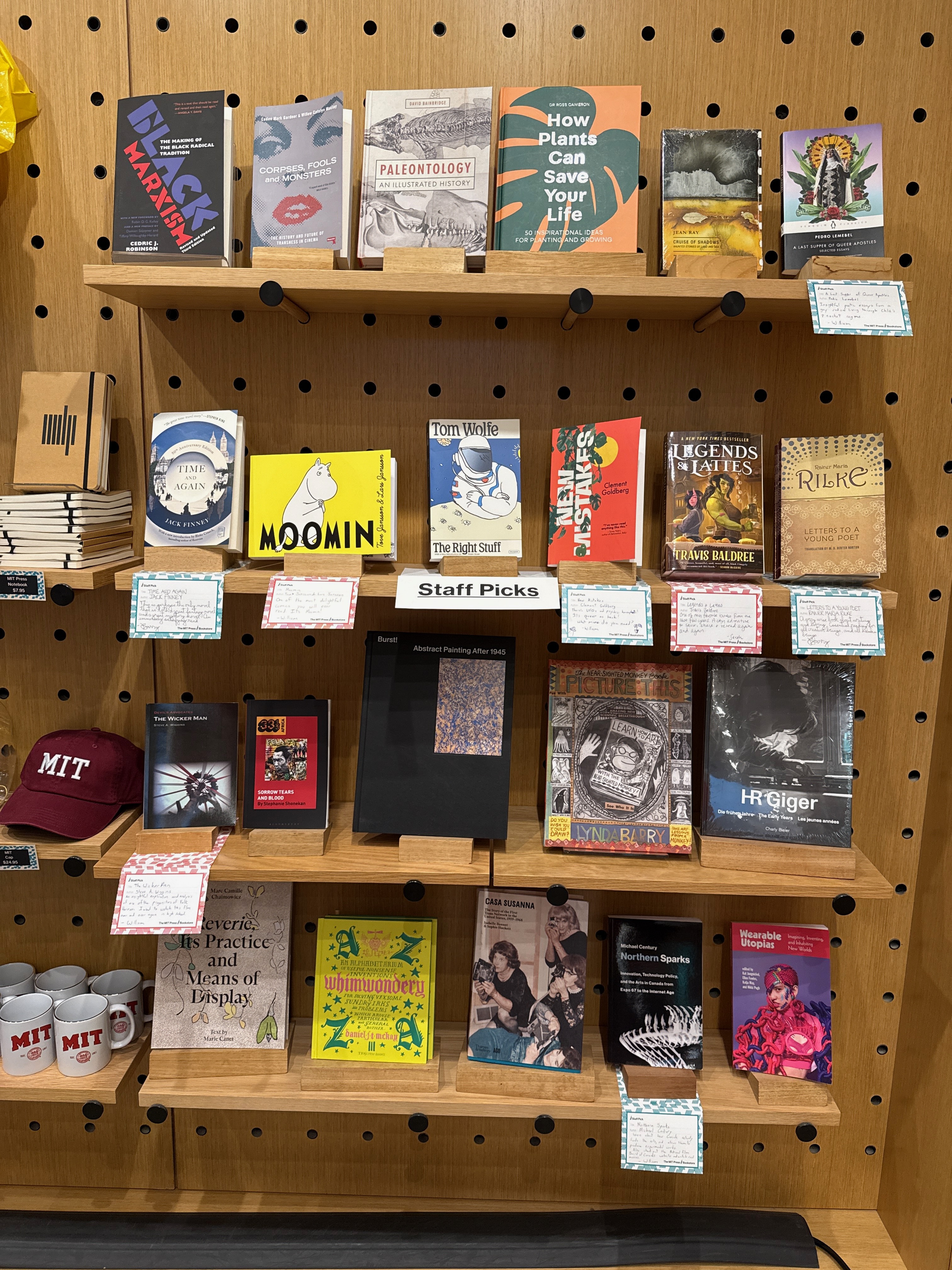
Image credit: a friend

I checked a website that tracks classroom adoptions.  The Wicker Man had been adopted for a class at Kennesaw State University in Georgia.  Ironically, just the day before my friend’s text arrived, a colleague at a nearby seminary asked if I’d come and give a talk about Weathering the Psalms.  This is all very dizzying to me.  I am an obscure private intellectual because no schools will open resident scholar or any other such non-tenure positions to me.  I can’t even verify myself on Google Scholar.  But a few people, it seems, have found my books.  In case you might think otherwise, I’m very well aware that the scholarly world is small (and the current administration would like to make it smaller by the day).  But I tend to think of myself as lost in that small world.

The Wicker Man was a departure for me, as is Sleepy Hollow as American Myth.  In these two books I moved away from my identity as a scholar of religion.  Don’t get me wrong, I’ve used my background and experience, and even latent knowledge of religious studies in both books, but they aren’t fronting religion.  It remains to be seen if the just curious will pick them up.  I know many people don’t default to, “I find this interesting, I’ll buy a book on it,” as I do.  And I’m more than willing to suppose that others aren’t interested in what I have to say.  Still, just when I’m starting to feel down on all my efforts, a little ray of hope shines through.  Someone in a bookstore somewhere has recommended one of my books.  And it feels good.


Plants Will Lead

The world just keeps getting weirder.  Although I very much appreciate—“believe in,” if you will—science, sometimes the technology aspect of STEM leaves me scratching my primate cranium.  What’s got the fingers going this morning is spinach.  Not just any spinach.  According to a story on Euronews, “Scientists Have Taught Spinach to Send Emails.”  There are not a few Homo sapiens, it seems, who might learn something from our leafy greens.  The tech comes, not surprisingly, from MIT.   When spinach roots detect certain compounds left by landmines in the soil, it triggers sensors that send an email alert to a human being who’s probably eaten some of their (the spinach’s) very family members.  I’m not denying that this is very impressive, but it raises once again that troubling question of consciousness and our botanical cousins.

Some people live to eat.  I’m one of those who falls into the other category—those who eat to live.  In my life I’ve gone from being a picky omnivore to being a somewhat adventurous omnivore to vegetarian to vegan.  I’m not sure how much more restricted I can make my diet if I leave out plants.  I’ve watched those time-lapse videos of trees moving.  They move even more slowly than I do when my back’s acting up, but they really do move.  If they had legs and speeded up a bit we’d call it walking.  Studies into plant consciousness are finding new evidence that our brainless greens are remarkably intelligent.  Perhaps some could have made a better president than 45.  I wonder if spinach can tweet?

People can be endlessly inventive.  Our thirst for information is never quenched.  Universities are among those rare places where ideas can be pursued and it can be considered work.  While I don’t think everyone necessarily needs to go on to higher education, I can see the benefits it would have for a culture.  Indeed, would we have armed mobs trying to take over because of a fact-based election loss?  I wonder if the spinach would take place in “stopping the steal.”  Hopefully it would fact-check more than those who simply follow the leader.  Consciousness and education can work together for a powerful good.  I’m not sure why Popeye’s favorite was chosen for this experiment, but it does seem to show that we can all get along if we really want to.  Maybe then we could meet in the salad aisle rather than out in the field looking for explosives.


Artificial Ugarit

Yesterday a friend pointed me to an article in the MIT News entitled “Computer automatically deciphers ancient language.” The language in question is Ugaritic. The article, by Larry Hardesty, narrates how three computer scientists have developed a program that may potentially decipher as yet non-readable languages. Ugaritic was chosen as a test-case because it has already been decoded and since it meets the specific criteria needed for the program to work. Results from the program could be measured against the standard translations already produced by specialists. Perhaps Ugarit will have another day in the sun.

The larger issue, of course, is technology and its role in understanding the human endeavor. Written texts are an extension of the human mind and those of us who practice it copiously know that the written piece is a piece of the author. Ancient texts may not suffer the same burden of individuality – some undoubtedly were rote pieces set to clay only after a lengthy oral life – nevertheless they participate in the constant paronomasia that is the human psyche. We invent the myths that Ilimilku and his colleagues inscribed so carefully over three millennia ago. Computers may indeed aid us in unlocking their often obtuse forms of expression, but how close will they put us to laughing at Ilimilku’s jokes or wondering deeply at his profundities?

Having been involved in a research project involving computerization and the Ugaritic texts (I was an editor in the now defunct Ugaritic Tablets Digital Edition) I am very aware of the benefits that technology brings to the table. As a sometime writer, I am also aware of the ironies involved. Our ancient predecessors, humans like ourselves, wrote texts that they considered worthy of preservation. Their civilization collapsed. Their language died. We rediscovered it and eagerly wanted to know what they had to say. We, however, have lost the ability to understand. Computers have taken on a dominant role in disseminating the written word. They daily participate in the human experience. Perhaps some day it will be AI that is scrutinizing our whimsical words and trying to decipher what in the world we meant. When they succeed they will find we are not that far from where Ilimilku began.