Beauty of Ruins

One of the things I most miss about living in Scotland is the relative dearth of stone ruins in my home country.  In no way to diminish the culture of American Indians, there’s a particular poignancy about stone—which is supposed to be forever—falling apart.  As a homeowner I’ve discovered that you constantly have to repair to keep any kind of building up—something better suited to those with more money than we have.  In any case, my memories of Scotland quite often center on ruined castles and the gothic dreams that accompanied visiting them.  I can’r recall how many we actually had a chance to explore, but it was many.  And not only castles, but other crumbling structures, including monasteries.  Monasteries are, if possible, even more gothic in ruin.

On a rare sunny day this spring I visited the remains of Bethlehem Steel’s silent behemoth.  This industrial powerhouse took up much of the valley dividing the south side of Bethlehem from the older, more genteel colonial part of town.  While these ruins are modern—the factory shut down only in 1995—and steel, it nevertheless caters to gothic sensibilities.  There is a raised platform that allows visitors to examine the exterior from a safe distance, but still close enough to get a sense of its enormity.  The great steel furnaces and blowers and train cars are rusty after nearly three decades of sitting in the elements.  The roofs are falling in on some of the buildings.  Others have been repurposed or replaced with contemporary businesses.  Walking through, however, you can’t help but to imagine past lives.  This was hard, dangerous work.  For most it meant small rewards.  A living wage.  A modest house.
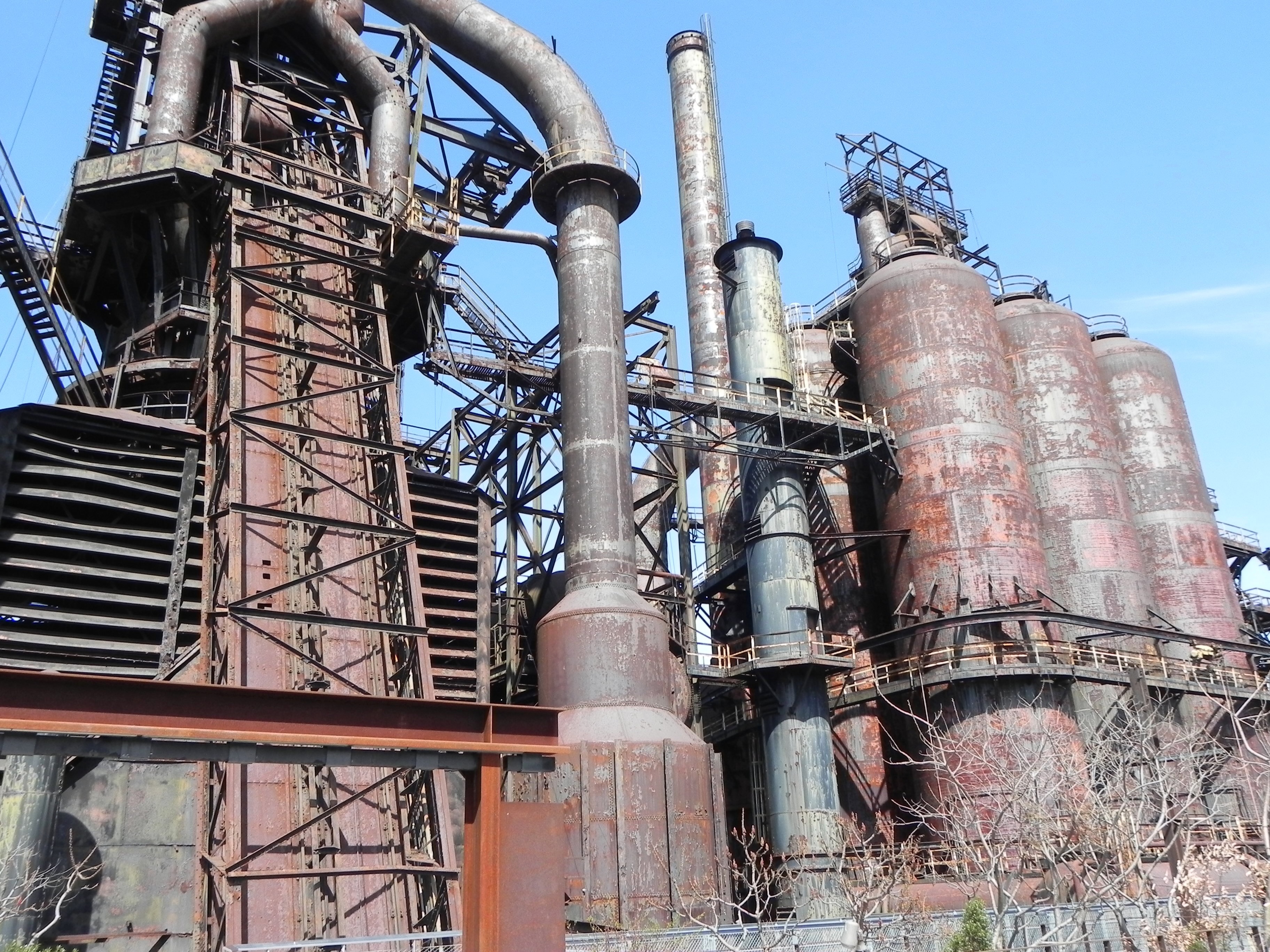
The Bethlehem Steel stacks are a landmark.  Allentown and Bethlehem merge into one another and out driving backroads it’s sometimes hard to tell which you’re in.  Once you spot the steel stacks from afar, however, you know where Bethlehem is.  Like a star guiding magi, the ruins proclaim that something significant once happened here.  Lives in Scottish castles, I expect, were often boring.  Our “something new every second” culture didn’t exist and news traveled slowly.  There was surely humdrum jobs in Bethlehem Steel as well.  Days when remembering that during World War One this factory produced a battleship per day.  Or when the realization that Manhattan’s skyscrapers couldn’t have existed without the I-beam developed in this plant.  There’s a sense of history about such places.  What makes them fascinating is that they’re falling apart.

Monasticism

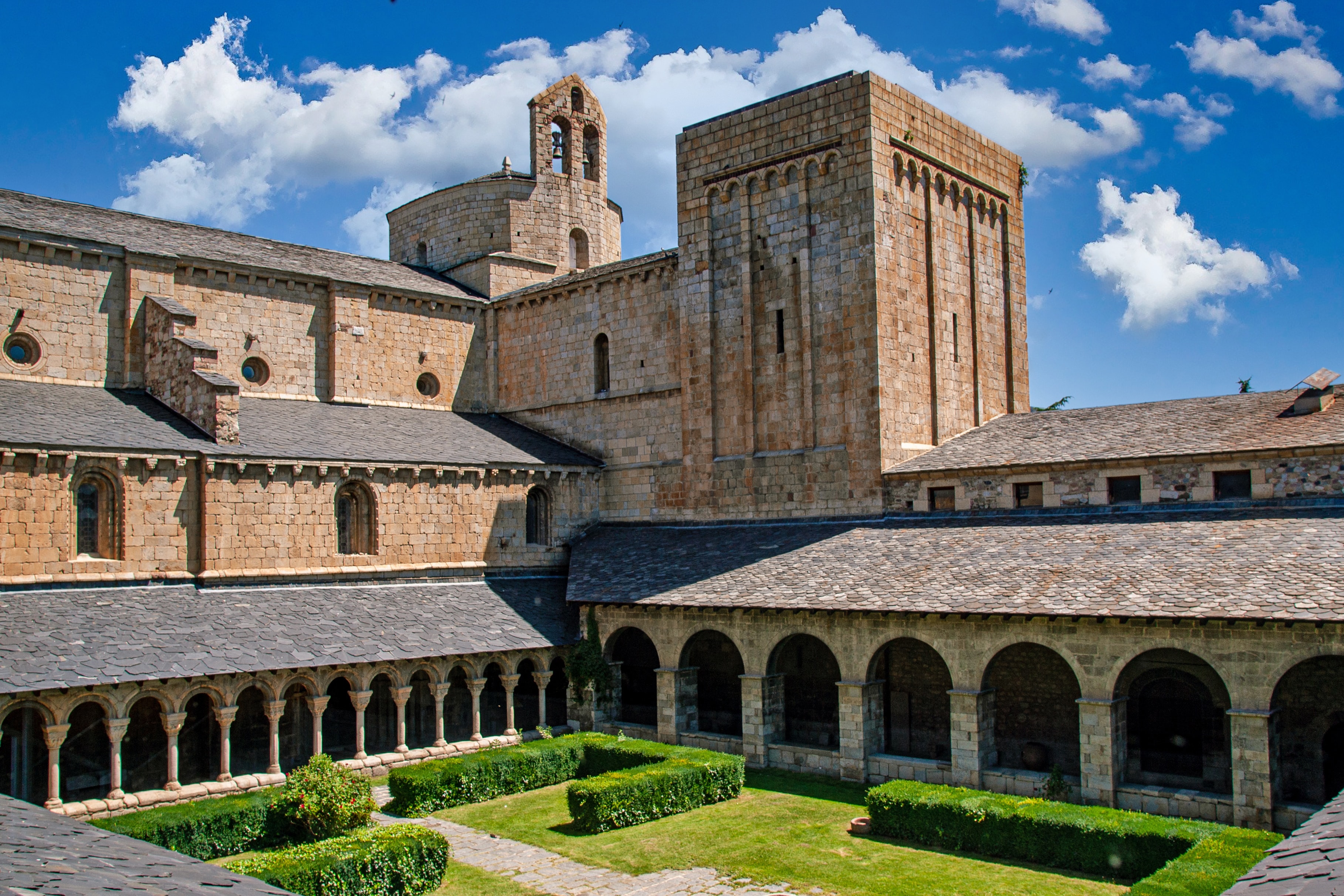
The other day I was reading about monasticism (as one does), and something curious occurred.  The article, which was describing a famous monastery, mentioned that monks lived in the convent.  Now, lest you think anything about religion is simple, I must clarify that in English it is common usage to refer to “monasteries”as places where monks (male) live.  Again, in English usage “convents”are for nuns (female).  The words, however, have a more interesting history than that.  Not exactly interchangeable (can you imagine the confusion?), they do originally refer to different kinds of institution.  

Often monasticism is traced back to Anthony of Egypt.  Anthony famously kept himself away from other people to devote his life to God.  This, of course, led other people to seek him out, wanting what he’d found.  Eventually, the narrative goes, the idea occurred that lots of guys could live together in common, but shut away from the rest of the world.  Thus monasteries were born.  The story’s actually more complicated and I can’t give you the full picture here.  We do know that even in Judaism, before Christianity came along, there were separatist sects.  One of them, known for convenience as “the Essenes,” set up a commune not far from where the Dead Sea Scrolls were discovered.  They lived lives of purity and prayer and women were strictly forbidden.  They seem even to have had a monastic rule.  They lived on the edge of the desert and perhaps were responsible for the famous scrolls.  Monasticism thus had early roots.

The European Middle Ages were the high-water mark for monasticism.  Like our own day, people were dealing with plagues and strong-arm kings and lack of adequate infrastructure.  Many powerful monasteries had been founded, and they could be for monks or nuns, generally not in mixed company.  There were also solitary monks (it was more difficult for women to wander about alone), called mendicants.  Such people needed places to stay now and again, and that was what was called a convent.  A monastery could be for either sex, and the word “nunnery”eventually helped to make this clear.  The English use of the words, while convenient, can lead to confusion because established monasteries could have convents as part of their design.  I suppose not many people are really interested in monasticism these days.  Looking at what’s happening in the world, however, I wonder if we might not be on the cusp of a modern replacement for them.  It would be something curious indeed.


Viking Trail

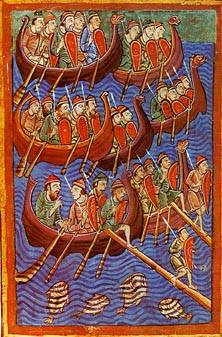
History is a powerful elixir, capable of transforming sinners to saints with the mere passage of time. Well, calling Vikings saints may be a bit of a stretch, but still, they have become some of the sexy bad boys of the Middle Ages, and with the finding of a Viking horde in Scotland last month, they are in the news once again. Vikings and monks were kind of like medieval dogs and cats. Monasteries, located in lonely regions, often amassed wealth and Vikings, looking for loot and less scrupulous about bloodshed, were eager to take it. The give and take (literally) of this violent lifestyle involving seafaring, battles, and churches, makes for good ancient drama and much of it took place along the coasts of Scotland. Our Scandinavian scourge, however, didn’t stop there. It is well established that the Vikings made it to North America well before Columbus. Those who don’t dismiss the Kensington Rune Stone also claim that the Vikings reached Minnesota long before football ever did. Whatever the reason, we are fascinated with Vikings.

Wikinger

Perhaps they are the ultimate autonomous self-promoters. We all would secretly, at least, enjoy being able to set our own standards so that they favored us and our loved ones. The Vikings represent the flaunting of the rule of law, traveling far to take what they want by force. And, perchance, leaving a bit of treasure behind as well. The Vikings became Christianized and the slave trade (long before the New World caught hold of the idea) was effaced to the point of becoming uneconomical to them. Nobody is certain why, but the Vikings, probably for a variety of causes, ceased to be the terror of the seas. Now the Scandinavians are considered among some of the most literate peoples of the world.

Along with the decline of the Vikings, however, also came the fading of the monastic cultural hegemony. To be sure, there are monks and nuns still today, but the force with which they gripped the medieval imagination began to decline with the Protestant Reformation and the recognition that vast wealth, even if cloaked in poverty, is still vast wealth. Now the finds from both monasteries and Viking sites constitute historical treasure. Information about a world long gone. The underlying idea, however, is never very far from the surface. We may lay claim to post-colonialism, but powerful economies have a way of getting what they want in the way of trade treaties and tariffs in any case. When a Scot finds a Viking these days, it is a cause for celebration as we let bygones be bygones and cut the humanities curricula nevertheless. The Vikings never really disappeared.