Old Horror

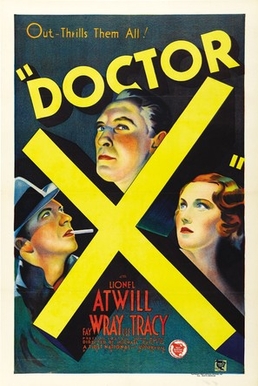
One of the early horror movies not in the Universal lineup was Doctor X.  It deals with themes that are perhaps surprising to modern viewers of old movies since the Motion Picture Production Code had not yet taken effect.  The story itself is slow paced, as is typical for the time, and not very scary according to modern standards.  Police are investigating a series of full moon killings and have traced them near to Dr. Xavier’s institution, the Academy of Surgical Research.  There he, along with four other scientists, are conducting advanced, but unorthodox medicine.  Dr. X convinces the police that he will investigate thoroughly and if the killer is among his colleagues, which he does not believe he is, he’ll learn which one.  There’s quite a bit of screwball humor introduced by the investigative reporter and even the butler and maid.  Hooking everyone up to a machine that indicates excitement, Dr. X has the murder reenacted to determine guilt among the watching scientists.  This is an early form of polygraph, apparently.

One of the colleagues, Dr. Wells, is excused because he is missing a hand and the murderer clearly used two.  The lights go out during the experiment and the “guilty” doctor is found murdered.  The solution Dr. X proposes is to do the experiment again, using his daughter (with whom the reporter has fallen in love) as the “victim.”  In order to prevent anyone from moving around, all but Wells are handcuffed to their chairs that are bolted to the floor.  Wells is then shown transforming himself into a monster by using “synthetic flesh” that he’s developed, allowing himself to animate a second hand and also, to disguise his face, freeing him from being identified.  He attacks Dr. X’s daughter, but the scientists are all handcuffed to their chairs.  The comic reporter saves the day by destroying the monster.

These early horror films blazed trails for later monster movies.  The science is a mix of plausible sounding theory and mumbo-jumbo.  I wasn’t sure what to expect since I knew the movie by name only.  Dr. X is a kind of mad scientist, but he’s not evil.  There’s a theme of cannibalism that runs through the story as well, since this is where Wells gets the material for his synthetic flesh.  The themes are scarier than what’s shown on the screen, of course.  These were the days when Boris Karloff in Frankenstein monster makeup could cause viewers to faint.  Doctor X was never as popular as the Universal lineup and although Wells is grotesque enough, he’s no Frankenstein creature.  He is, however, part of cinematic monster history.


Not Trembling

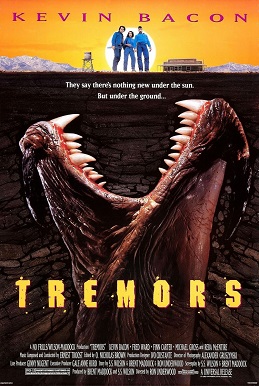
Tremors is one of those monster movies I just plain missed.  Of course, it was released while I was working on my doctorate in Edinburgh, and although we saw some movies we couldn’t afford many.  We certainly didn’t go to any creature features.  I only found out about it because DVD extras on Alfred Hitchcock’s The Birds had a little debate as to whether that film was a monster movie.  They interviewed Rob Underwood, the director of Tremors, for his opinion.  A short clip was included, so I knew I’d need to see it eventually.  It took a few years, but now I can stake my claim.  Tremors is one of those quasi-funny horror movies, maybe edging into comedy-horror, but not quite.  Although not recalled as an inspiration, the story has some resemblance to Frank Herbert’s Dune.  At least as far as the monsters go.

In the remote Nevada town of Perfection, two handymen, Val and Earl, are ready to leave the population of 14 for bigger things.  But then strange deaths begin to occur.  A local seismologist has been noting unusual readings as locals find a dead creature that appears to be some kind of snake.  They want to go for help but find themselves trapped.  The seismologist and handymen try to unravel the mystery of this creature, which the handymen kill.  She (the seismologist) informs them that there are three more.  Warning their fellow citizens of the danger, the underground creatures begin attacking.  As in Dune, they “hear” people walking and use that information to hunt them.  A couple of survivalists manage to kill one of the sand worms, but the surviving townies know they have to escape to the mountains.

One of the final two monsters is dispatched with a homemade bomb, but I’ll let you watch to figure out how the last one is handled.  The movie starts out with folksy humor and nothing too serious.  When the monsters begin to attack, however, they prove relentless and give some scare to the affair.  Although the film didn’t perform especially well at the box office, it led to a franchise with sequels and a prequel (the origin of the monsters is never explained).  Filmed in bright desert sunlight, the movie isn’t typical of horror.  At the same time, it’s built around monsters, so there’s no doubt that it fits.  It probably won’t scare anyone these days, but it has become part of the repertoire, and it remains good fun on a rainy afternoon.


Experimenting with Quatermass

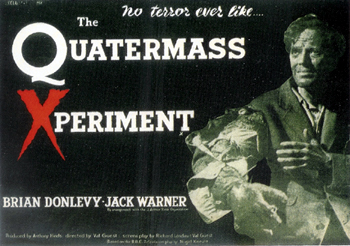
Hammer films are coy.  In these days of digital rights management, they’re often difficult to locate in the United States.  Even on streaming services.  I’d known about Quatermass since I was a kid.  I’d heard about Quatermass and the Pit as a pretty scary early science fiction-horror offering.  I’ve still never seen it.  Quatermass was a BBC television character, a kind of mad scientist figure.  The Quatermass Xperiment was the first of a set of four Hammer films based on him.  Also known as The Creeping Unknown, it was cast with an American Quatermass (ironically, it turns out) to appeal to American viewers (who can now seldom access the film).  In any case, one of the streaming services finally acquired rights to the 1955 movie.  The special effects were naturally primitive, but that doesn’t stop this from becoming a scary film.

Watching these early movies is like studying history.  Other films were influenced by The Quatermass Xperiment, most notably Lifeforce.  I couldn’t help but think of Night of the Living Dead as well.  Quatermass, a rogue scientist, sends a rocket into space with three astronauts.  Since this was before we had any kind of conception of how this might actually be done, the idea seems implausible, of course.  The rocket returns with only one of the three crew members, and he’s morphing into something else.  Despite his arrogance, Quatermass realizes he has to cooperate with the police to contain the menace.  Inspector Lomax describes himself as a “Bible man,” unacquainted with science, and Quatermass considers his work superior to that or mere police.  When the hybrid is finally located and destroyed, however, it is in Westminster Abbey.

Although the runtime is just over an hour and some of the acting is quite wooden, this is an affecting story.  The scene where the transforming man encounters the little girl’s tea party bears elements of the pathos of Frankenstein.  Without the budget, science, and even acting resources of modern productions, The Quatermass Xperiment manages to fall squarely into horror with a monster I’d been waiting since childhood to see.  In those days you were at the mercy of your local television offerings.  Now that we have worldwide content on the worldwide web, we still restrict viewing so that the most money can be made from a movie that’s seven decades old, and its cohort.  In any case, this experiment has left me determined to find what Quatermass discovers in the pit.  Once that becomes available on a service I use.


Hunting Vampires

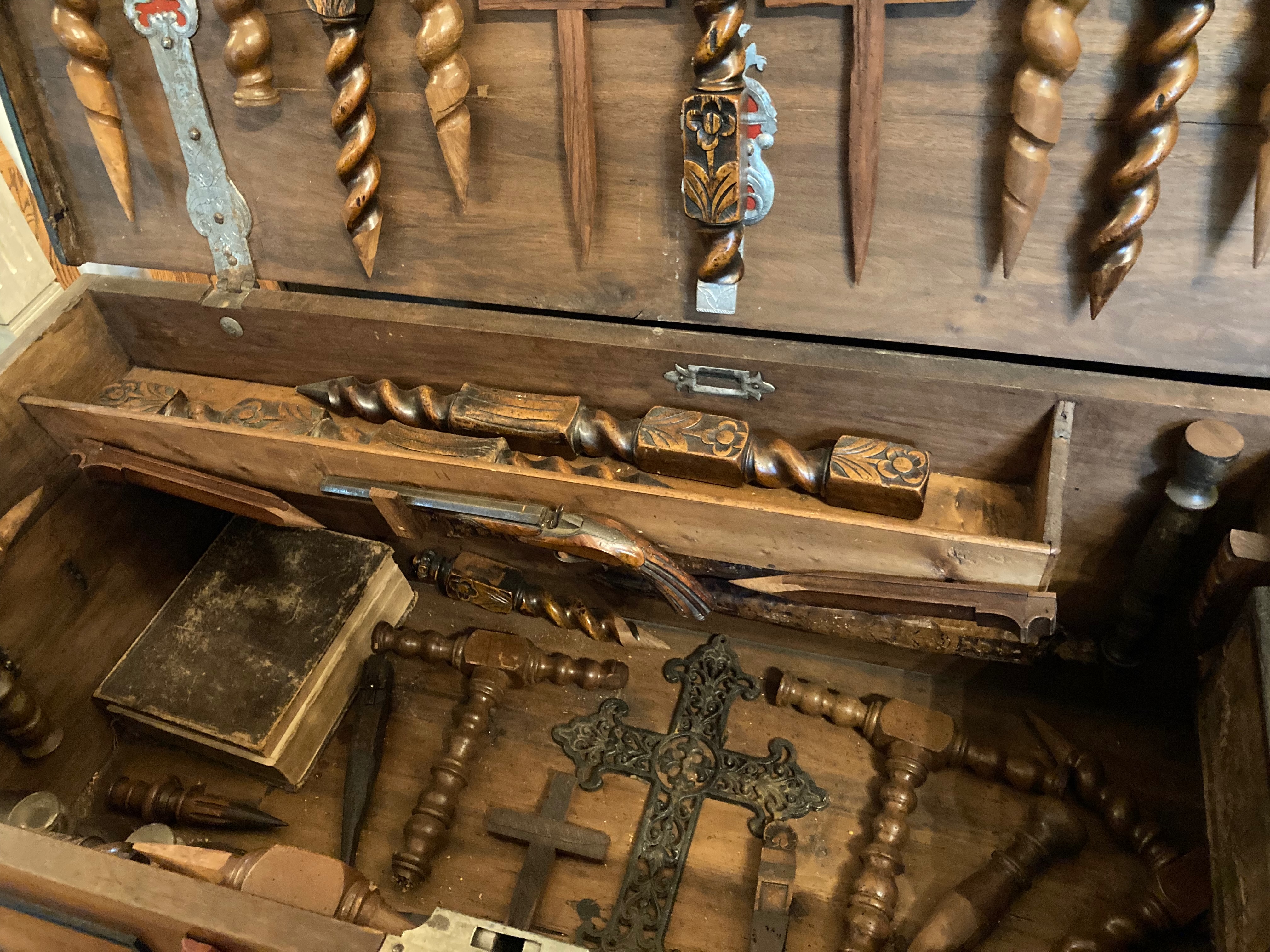
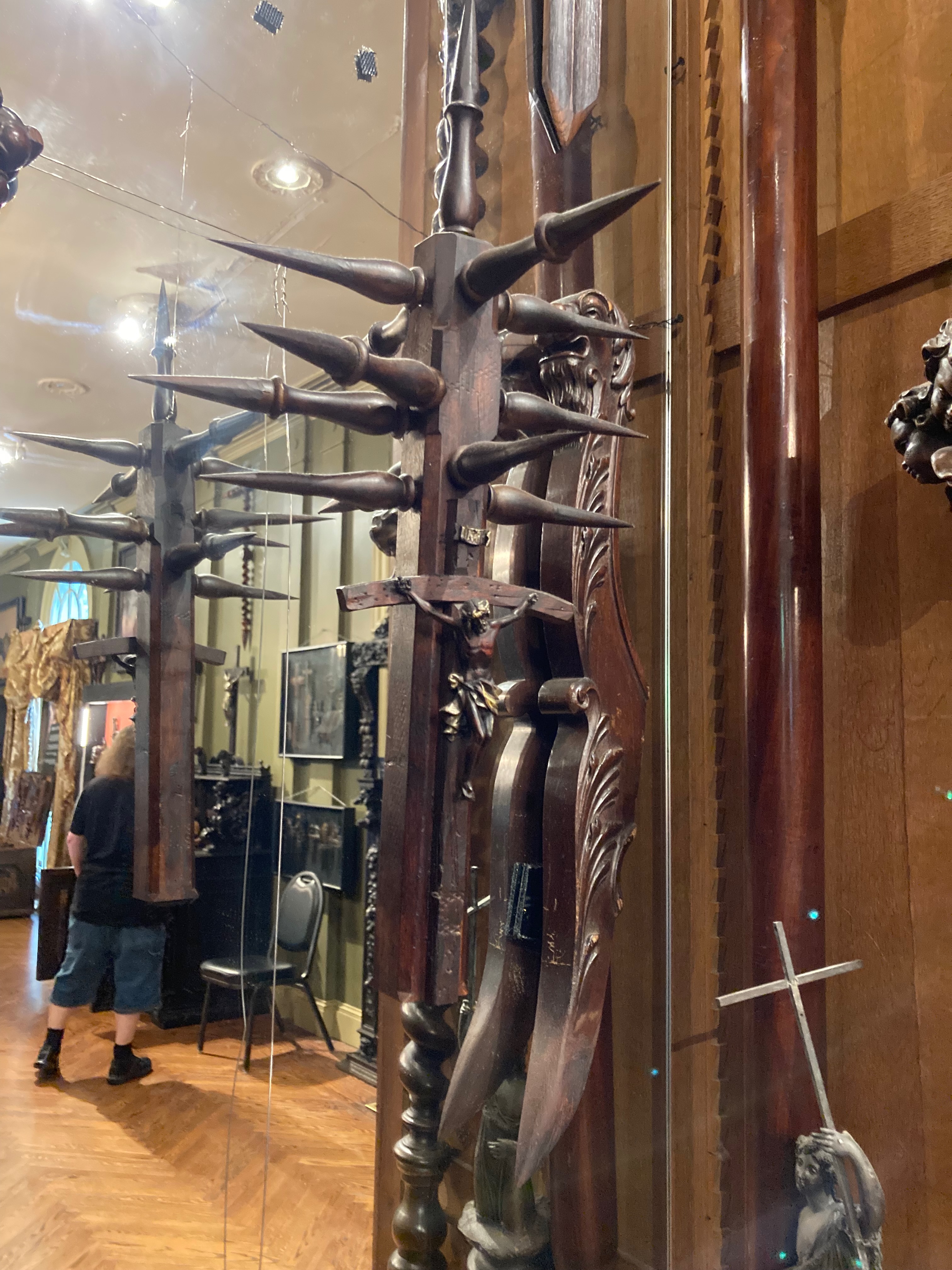
Many years ago some friends took us to the Mercer Museum in Doylestown, Pennsylvania.  Bucks County is one of those places where oddities persist, and I was very impressed by the fact that the museum had an actual vampire-hunting kit.  Now this was before the days of sophisticated cell-phone cameras and my snapshot, through glass, wasn’t very good.  There was no way to know, at the time, that a few years later Vampa: Vampire and Paranormal Museum would open up just a few miles down the road.  And that the latter would have a whole room full of actual vampire-hunting equipment (advertised as “Largest collection of vampire killing items ever in one location”).  A very real fear of vampires existed in Europe up until the technologies of the last century showed that humans don’t need the undead to create fear.  In any case, many chests of vampire-banishing implements line the first room.

And stakes.  As my wife noted, in the movies they just grab a stake and mallet and get to work.  These were stakes made by craftsmen.  Many of them intricately carved, and, one suspects, officially blessed.  Matching sets of stakes and mallets seem like they were for display, rather like some firearm collectors these days proudly show off their guns.  The odd thing, to my mind, is that most of these artifacts weren’t medieval, but from the early modern period.  The earliest I saw was from the seventeenth century.  I had to remind myself that Europe was undergoing a very real vampire scare the decades before Bram Stoker wrote Dracula.  John Polidori, Lord Byron’s associate, had written a vampire novel in the early nineteenth century, well before Stoker’s 1897 classic.

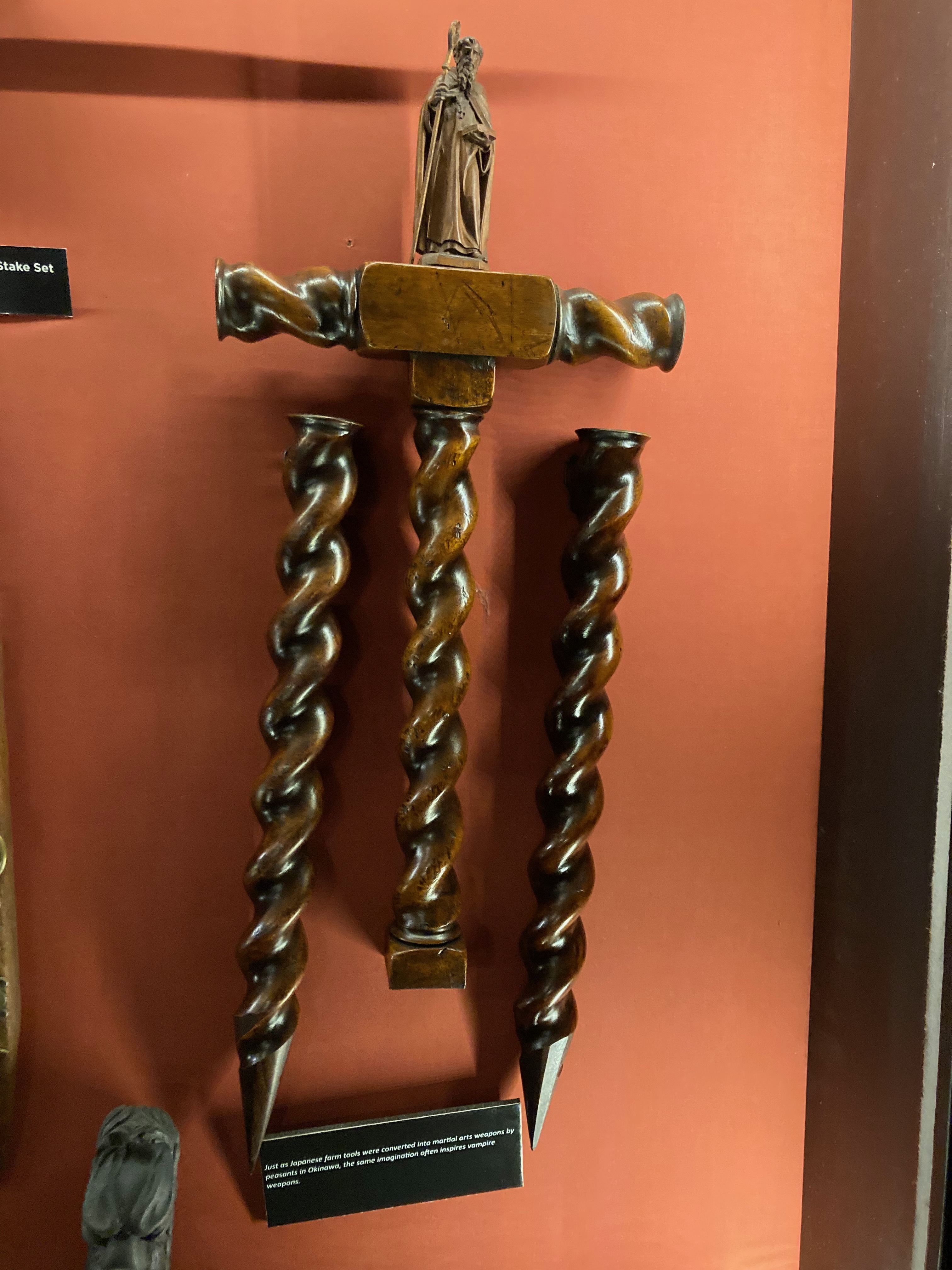
Vampire maces were of a higher magnitude.  The spiked mace, with crucifix, shown here, is an impressive piece of woodworking, as well as enough to make any vampire think twice before biting any necks in this house.  The idea of the Prince of Peace adorning such an instrument of violence encapsulates the contradiction of being human.  And the depths of our fears.  This museum is a testimony of our collective phobias.  Few people in this electronic age really believe in physical, supernatural, vampires.  There are people who do, of course, but most of us are so entranced by our phones as to completely miss a bat flitting through the room, let alone a full-fledged undead monster with fangs.  The fact is, over the centuries many people did gather what was needed to protect themselves from vampires in chests and cabinets, all in the name of fear.  

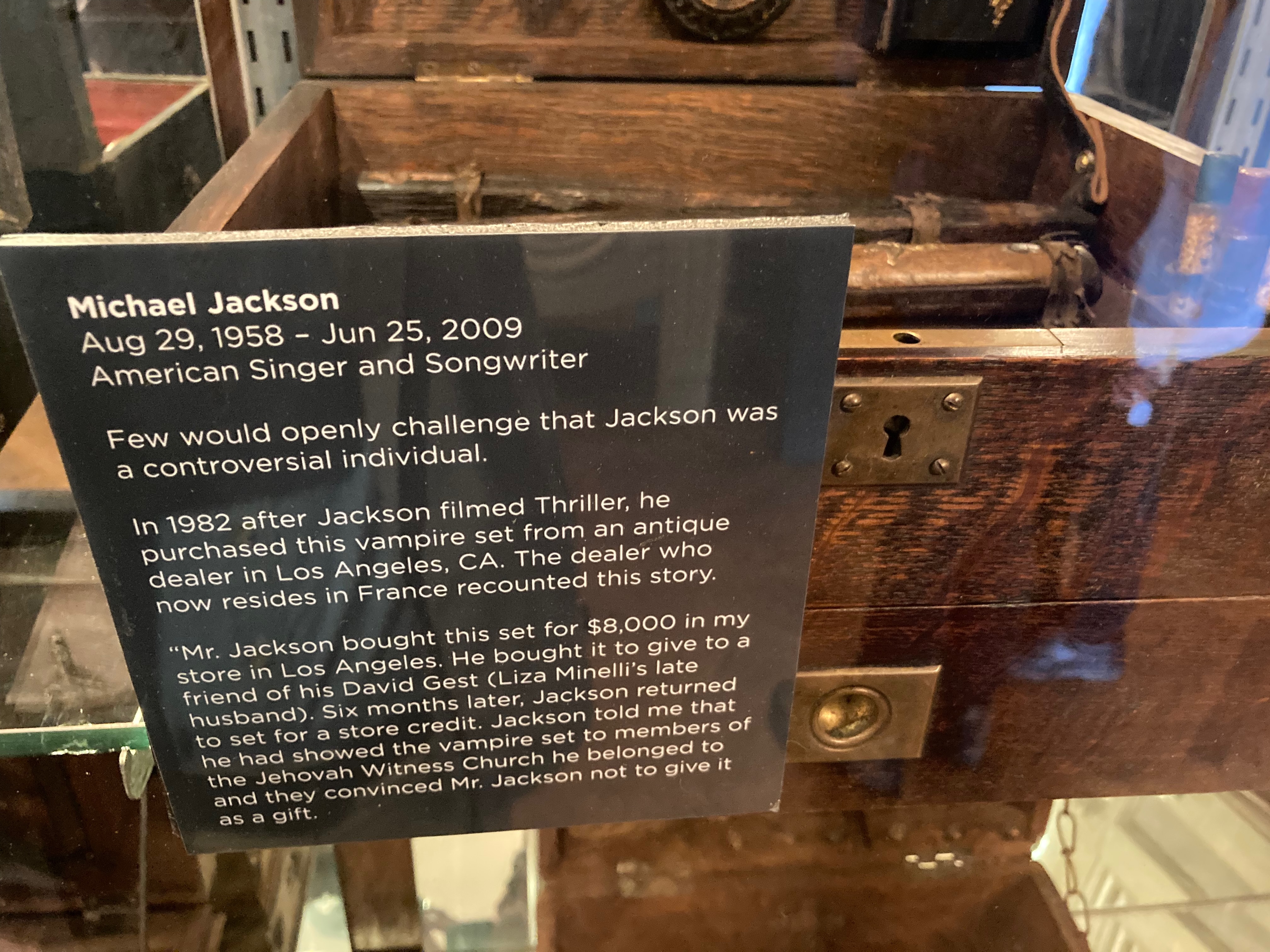
One final note: one of the vampire hunting kits was owned by Michael Jackson.  As the sign (with a typo) notes, the Jehovah’s Witnesses (to which both he and Prince belonged) convinced him not to give it as a gift.  Belief, it seems, persists even into the late twentieth century.


and Seek

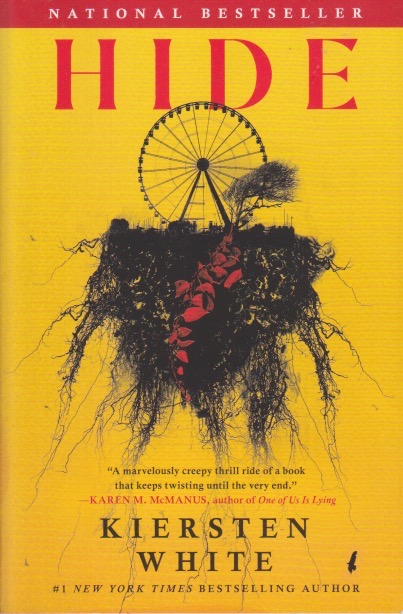
I’m afraid there may be spoilers—but not for the ending—below.  Discussing this story will be difficult without giving some things away.  Kiersten White’s Hide has given us an imaginative world with masterful misdirection.  Fourteen people a bit down on their luck, and strangers to each other, are offered an opportunity to win $50,000.  They have to hide in an abandoned amusement park for a week where two of them will be caught each day and the last person remaining wins.  The novel mostly follows Mack, a woman whose father killed her family while she survived by hiding.  Not only does she have survivor’s guilt, but she’s been homeless and the shelter director thinks she’ll have a chance at winning the prize.  There is a lot of social commentary here, as well as a monster.  Okay, spoilers below.

The minotaur is a most useful monster.  The backstory here isn’t in Greece (well, the deep backstory is, but that is only played out partially here) but in Asterion.  No state is given for the town, and the contestants can’t be given that information.  They’re locked in the park, with supplies, but very little information.  Then the contest starts.  After a couple of days Mack and a couple others begin to suspect that something’s wrong.  Those who get caught while they’re hiding leave personal effects behind, and since they all need the money that seems unlikely.  Then their host stops coming, leaving the bewildered contestants on their own.  Mack and those she’s befriended come to understand that being “out” is really being eaten by the minotaur.  Well, they don’t realize it’s the minotaur.  The one who does gets eaten before he can tell.

In any case, this is a tense horror story based on a classic tale.  There is, of course, a rationale for the murderous behavior in a modern setting.  White keeps you waiting quite a while to learn what it is, and there are plenty of places where I thought I’d figured out how it’d end only to be proven wrong.  And she gives believable character sketches and explores the kinds of motivations that drive different people who find themselves needing an income.  (One of the characters was raised in a religious cult—bonus!)  Those who are poor aren’t always at fault, but those who are wealthy will do anything to preserve their excess.  We see that playing out in daily life, even as it’s being explored in fiction.  The minotaur isn’t always what we think it is.  And the more you think about its insidious origin story provided here, the scarier it becomes.


Imagine Monsters

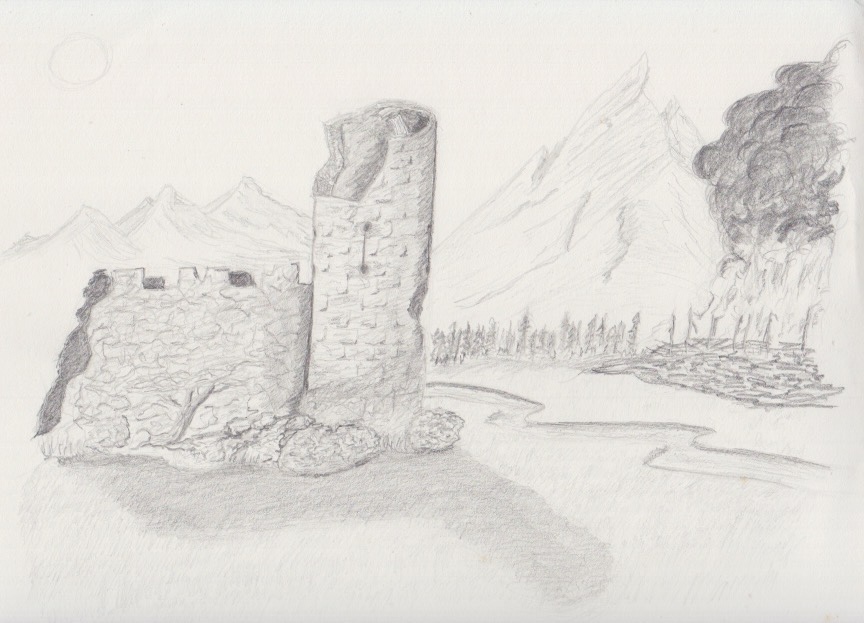
Adulthood is where you begin to recognize the folly of growing up.  Like most people, when I “matured” I was ashamed of things I made as a child and, regretfully, threw them away.  This came back to me recently as I was thinking of a sketchbook—actually a scrapbook that I repurposed in my tween years.  I love to draw.  I don’t do it as much now as I’d like (thanks, work!), but I was encouraged in it by art teachers throughout school who thought I had a little talent.  The sketchbook, however, was only ever shown to my brothers, but mostly only looked at by me.  This particular project was where I was making up monsters.  As with my writing, I’d never taken any drawing classes, but I had an active (some say overactive) imagination.  (That’s still true.)  

In any case, a discussion with my daughter brought back memories of this book I’d discarded by the time I went to college.  I still remember some members of the menagerie I’d concocted.  Even now that I’ve seen hundreds of monster movies, most of those I’d fabricated as a child have no peers that I’ve seen.  These weren’t monsters to be incorporated into stories—they were purely visual.  Although, I can say that my first attempted novel (probably around the age of 15) was about a monster.  I got away with being interested in monsters in high school, but college was a wholesale attempt to eradicate them.  Even so my best friend from my freshman year (who left after only a semester) and I made up a monster that lived in the library.

As an academic, until very recent years, monsters were off limits.  If you wanted to be sidelined (and in my case it turns out that it wouldn’t have mattered) you could explore such outré subjects.  Now it turns out that you can get mainstream media attention if you do (as a professor, but not, it seems, as an editor).  I’m sitting here looking back over half-a-century of inventing monsters, with a sizable gap in the middle.  The interest was always there, even as I strove to be a good undergrad, seminarian, and graduate student.  Now I can say openly that monsters make me happy.  I can also say, wistfully, that I’d been mature enough to keep that sketchbook that preserved a part of my young imagination.  It was tossed away along with the superhero cartoons I used to draw.  And the illustrations of favorite songs, before music videos were a thing.  Growing up is overrated. 

A surviving drawing, unfinished

Low Stakes

Elsewhere on this website I refer to myself as an “unfluencer.”  This quasi-serious attempt at humor does bear a kernel of truth.  It’s difficult to get your voice heard on the internet.  By the time I began blogging, vlogging had already become a thing and people prefer watching to reading.  (I do have a few YouTube videos out there, but they take an awful lot of time to put together and I’m kinda busy trying to write obscure books.)  The reason I mention this at all is to make a point.  People sometimes wonder why a guy who has a doctorate in religious studies wastes his time with horror.  There’s a good reason.  People will pay attention when the stakes are low.  Is horror important?  I think it is, but most people don’t.  Genre fiction is easily dismissed as being off in fantasy land, despite the growing number of voices suggesting we should be paying attention to how it influences (unfluences?) religion.

Those who delve in such blue collar things sometimes grow to be taken seriously.  I suspect—since I wouldn’t know—that it’s a matter of sticking with it long enough, and producing enough content that people have some standard for comparison.  And the interesting thing is, you often notice fascinating features along the way.  While working on my next book the other day, I realized a major gap in the study of history of religions.  I can’t say what it is here, of course, because someone without a 9-2-5 may scoop me.  But the gap is clearly there.  And I would never have noticed it if I weren’t spending my time writing about low-stakes monsters.

I’m a blue-collar thinker pretty much through and through.  Talking it over with my brother the other day, I realized that despite the years and years of higher education, I was brought up working class and I look at the world through those lenses.  When I was actually a professor that began to change, but in retrospect, I think that’s why my students liked what I did in the classroom.  I wasn’t some child of privilege handing down tired observations meant to impress other children of privilege.  I’m just a peasant trying to figure things out.  I can point to no highly educated forebears—neither of my parents finished high school.  No, I have been fortunate enough to have clawed my way through three higher degrees only to realize that people only listen if the stakes are low enough.  And I’m alright with that since I get to spend the time with my beloved monsters.


Thinking about Vampires

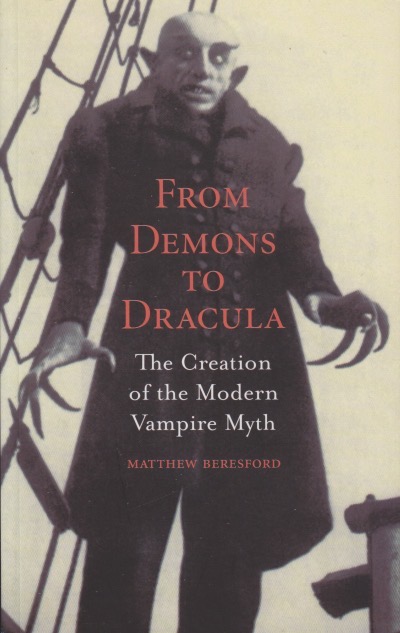
Any book on vampires has to be limited.  I first read Matthew Beresford’s From Demons to Dracula: The Creation of the Modern Vampire Myth back in 2009.  It has lots of information, but it was long enough ago that much of what I’d learned had grown fusty with age.  I began re-reading it as Halloween approached, and am glad I did.  The thing about vampires, however, is that you do have to compare sources.  Like many explorations of the vampire, Beresford’s notes that there are ancient analogues, but nothing precisely like we think of vampires today.  From my own perspective, I tend to think that our modern vampires, like our demons, come from movies.  Starting with F. W. Murnau’s Nosferatu, but more clearly from Tod Browning’s Dracula, our idea of what vampires are have been mediated by the silver screen.

This book ranges widely across time, region, and genre.  It discusses early reports that clearly considered vampires an actual threat, as well as movies made purely for entertainment.  One thing that I noticed this time around is that the author, being British, seems not to have noticed the tremendous influence Dark Shadows had on the popularity of vampires prior to Anne Rice’s Interview with the Vampire.  I suspect that soap operas were not widely known internationally, and even if they were, they were likely not taken too seriously.  Dark Shadows was different, however, and it made vampires chic in a way they simply weren’t before the early seventies.  At least in the United States, Barnabas Collins helped define the vampire.

Beresford makes the point that there is no single defining characteristic that applies to all vampires.  Early European vampires didn’t necessarily drink blood—they were revenants (they’d returned from the dead) but they weren’t always after blood.  In the nineteenth century bloodlust became the defining feature of vampires.  There are historical points on which to quibble with the argument here, but overall this book is a good overview of how ideas like vampires have been around for quite some time.  As someone who specialized in ancient literature for a good part of my life, I would not have called the various ancient analogues pointed out “vampires.”  Beresford is making the case that they lay the groundwork for what later became vampires.  And Vlad Tepes of Wallachia played his part as well.  As did the ancient Greeks.  It seems to me there’s more rich ground to explore here and this book provides a very good starting place.


Another Host

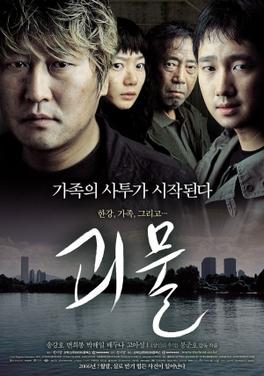
Several months ago I wrote about The Host, a movie I enjoyed but had watched by mistake.  By that I mean that someone had recommended The Host (2006) and I watched the completely unrelated The Host (2020).  (You can’t copyright titles.)  I waited long enough that the right Host became available on a service I use so it was, in essence, “free.”  This one is a Korean monster movie, directed by Bong Joon-ho.  I’d previously seen his excellent Parasite, and The Host didn’t disappoint in either the social commentary department or in the heart-felt monster tale.  In the latter department it has some common ground with Godzilla Minus OneThe Host begins with chemicals poured in the Han River causing a mutation that becomes a big problem.  This monster kills many, but the story focuses on the Park family where a ne’er-do-well father (Gang-du) disappoints his daughter and siblings.  Then the monster carries off his daughter.

The government, wishing to hide the origins of the creature (an American military facility did the chemical dumping) invent a virus story to keep people away from the river where they have trouble locating the monster.  Meanwhile Gang-du learns that his daughter is still alive, being kept as a future meal in the creature’s lair.   His father, sister, and brother all come together to try to find her, having to work around the corrupt government response to the crisis.  In other words, there’s a lot going on here.  The monster is believably rendered and its interactions with crowds of people don’t strain the imagination.  I do have to wonder if the creators of Stranger Things were familiar with this film.  Again, there’s some overlap there.  There are some holes in the plot, or it may be that I didn’t quite get everything (quite likely regardless).

It’s easy to see why the movie won so many awards.  The question that haunts me is whether this is a horror movie or not.  There are definitely horror aspects, but the overall feel is a meaningful monster movie, which isn’t really a recognized genre.  Monsters sometimes—often, in fact—bring out the best in people.  Without giving too much away, we can say that about this movie.  A family torn apart is reunited by a monster.  It doesn’t end well for them, but they have learned something by the experience.  And the movie is impressive from a cinematic perspective as well.  So now I’ve had two Hosts and although quite different from each other, both are recommended.


Digging Again

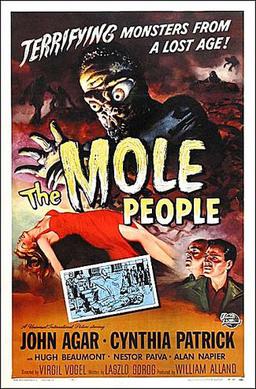
It’s one of those movies that I know I’ve watched before—probably on a sleepy Saturday afternoon—but couldn’t believe I had already seen.  While viewing The Mole People it looked completely new, but in retrospect some of it had seemed strangely familiar.  Had I bothered to check my own blog I’d have noted that I watched it a mere fourteen years ago.  Not that I’d have spared myself again.  I felt like watching monsters in rubbery suits.  Still, as I mentioned in my previous blog post on it, the antagonist are the underground Sumerians.  These Sumerians speak English—a fact that isn’t worthy of remark by the scientists—and express surprise that outsiders can understand them.  Assuming them to be gods because of their bright flashlight, this Gilliganesque story contains, perhaps unintended, social commentary.  The mole people are really the good ones and the “slave revolt” at the end saves our protagonists.

For about the first half of the film they refer to “the goddess of Ishtar” before finally apparently realizing Ishtar is the goddess’s name.  The “eye of Ishtar,” which looks suspiciously like a sideways Star Trek Federation logo, represents where the sun shines down on their ancient kingdom.  (They’ve become albinos from living without sunlight.)  The interesting thing here is that the monsters aren’t the scary part of the plot.  The high priest is.  Elinu is suspicious of the upper worlders immediately and it is he who plots their demise.  He’s also quite willing to depose the king, whom he sees as too weak in his foreign policy.  (In reality the interplay between religion and politics, historically, has been a tug-of-war over power.)  He succumbs to his own plans, however, and the viewer is glad to see the priest go the way of all flesh.

Sometimes billed as science fiction, this is more fantasy horror fare.  It’s literally swords and sandals among the the lackluster Sumerians.  The monsters make it horror, but they aren’t evil, although they do kill one of the protagonists.  To their credit these pre-Civil Rights Act Americans realize that the treatment of the eponymous mole people is unfair.  There is, at the same time, no regret expressed that these scientists have brought the five-thousand-year-old Sumerian civilization to an end.  The Mole People is one of those “so bad it’s good” movies.  Its plodding pace doesn’t make it idea for too sleepy an afternoon, but the story is different than a typical monster flick from the era.  And it is biblically based, as my previous post on it noted.  And a lot has happened in the intervening fourteen years.


Loving Vampires

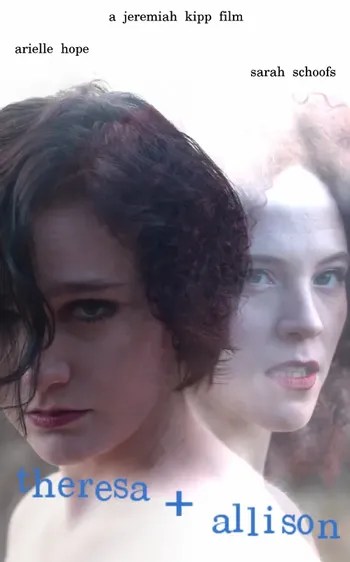
Vampires caught my attention early in life.  I believe, apart from ghosts, that they were the first monsters I learned about.  Apart from the fangs and perhaps an ironically anemic look, they appear to be just like us.  I’ve seen a great number of vampire movies over the years—I can’t seem to resist them.  I don’t care for the blood and gore, but the idea of the conflicted undead is a powerful draw.  It’s this conflicted aspect that brought Theresa & Allison to my vampire radar.  This movie is not for the squeamish, and I have to say up front that it is a lesbian vampire movie, with all that that implies.  You have been warned.  Theresa & Allison is also an indie movie—I’ve been watching quite a few of these lately because they’re often free.  This one is also smart and fairly original and it explores humanitarian concerns as well as vampiric ones.

Said Teresa is “made” when a drunken vampire (they get drunk when their victims are inebriated) decides to turn her (make her into a vampire).  She soon learns that vampires are organized and sanctioned by the government, and there are rules to be followed.  Also, some of the standards for vampire lore, we’re told, are male bovine droppings.   Teresa was lesbian before she was turned, and she’s befriended by fellow vampire Allison.  We learn that two major vampire “families” range about New York City—one graceful and kind, the other brutal and unfeeling.  Teresa has real trouble killing people for blood and she’s confused about what she’s become.  She doesn’t know what to make of it when the kinder vampires offer to let her join.  Instead, she follows Allison and finds herself in a blood-drenched nightmare.

Vampire movies are often full of social commentary.  Especially the spate of movies made available by independent auteurs.  Theresa & Allison asks the question of what makes something right or wrong.  It also explores what it means to accept who or what you are while also having the ability to change some aspects of it.  It reflects, it seems to me, the moral landscape of the young.  In that respect, it makes sense that those of us from older generations (let’s not kid ourselves) may have been raised with very different standards.  Culture, however, has continued to evolve.  The internet sped all of that up immensely.  Still, the acceptance aspect of the young is written all over movies like this.  And the internet means there will undoubtedly be more to come.  Vampires are sure getting interesting.


Flights of Horror

I’m never quite sure where to put him. Alfred Hitchcock, that is. Part of the problem is that “horror” is a very slippery genre. Most people classify much of Hitchcock’s work in the “thriller” genre, wanting to avoid the disrespectful older cousin, horror. I recently rewatched The Birds, a movie I first saw in college. You see, Hitchcock is an auteur demanding respect (never mind that many horror directors are highly educated and sophisticated). Even dainty colleges like Grove City considered him worthy of students’ attention. But while watching the extras it became clear that other horror directors considered The Birds horror, or, as they put it, Hitchcock’s monster movie. With its famously ambiguous ending, the film is still a frightening experience. And yet we consider it safe, because it’s Hitchcock.

I think about this quite a lot.  Even in Holy Horror I wondered whether including Psycho was fair game.  There’s no doubt that the remake is horror, and Robert Bloch, the author, was a horror writer and friend of H. P. Lovecraft.  But Psycho is Hitchcock.  Doesn’t that make it more respectable than mere horror?  Horror is often defined as being, or having, monsters.  That’s a bit simplistic in my book, but it is workable.  Pirates of the Caribbean movies all have monsters in them, but they’re blockbuster adventures.  Have the monsters deserted horror?  Or maybe is it that we have an ill-fitting genre title that we just don’t know what to do with?

The Birds is a scary movie.  Animals mass and attack, with the intent to kill.  Daphne du Maurier wasn’t really considered a horror writer, but her books and stories were adapted into horror films.  Like Hitchcock, she’s often considered above mere horror.  It seems that we’re being a bit dishonest here.  Why are we so afraid of horror?  The category, I mean.  Perhaps because the slashers—which Psycho kinda initiated—gave horror a bad rap.  Too much blood.  But there’s blood in The Birds.  Is it the mindless desire to kill?  Just ask the residents of Bodega Bay after the fire broke out.  It seems we have a real prejudice on our hands.  Horror grew up on the wrong side of the tracks and there’s nothing that can be done to make it respectable.  Horror fans object to recent attempts to call certain films “elevated horror” or “intelligent horror.”  Those who use terms like this sometimes imply that the rest of it is, well, for the birds.  It’s time, perhaps, for a new category.


Starting October

October’s a difficult month to quantify.  When it rolls around I get in the mood for certain books and movies, but I like to see and read new things.  I check lists to see what others recommend for what I hope is a similar mood.  A book that kept coming up was Roger Zelazny’s A Night in the Lonesome October.  Published thirty years ago, it’s not exactly new, but it was new to me.  It’s a humorous story, told by Snuff, a dog.  But not just any dog—he’s a player in a game that takes place when the full moon lines up with Halloween.  There’ll be spoilers hereafter.  The game involves two sides deciding the fate of the world, and each has the usual monsters lined up.  Dracula, the wolf man, Frankenstein’s monster and others are involved.  One side tries to awaken Lovecraft’s Old Gods and destroy the world while the other side tries to stop them.

Each chapter is a day in October and what the game is is only slowly revealed.  The antagonist for all of this is really the parson.  It turns out that he’s a minister for the Old Gods’ true believers.  Various monsters or players are killed and Sherlock Holmes is hanging about, trying to solve the mystery.  The story’s really a mash-up of several characters from yesteryear.  It’s not scary, nor is it particularly moody.  It’s a good example, however, of how religion and horror, even if it’s comedy horror, work together.  The Old Gods are an existential threat and require clergy to perform the correct rituals.  Roger Zelazny was fond of using characters from existing mythologies in telling sci-fi-ish stories, and this fits that writing mode.

This is an enjoyable story, but my October mood isn’t only a monster one.  Set in England, A Night in the Lonesome October doesn’t really have the leaves, pumpkins, and ghosts of my melancholy season.  Also, the humorous aspect is fine, but acts as a distraction from what I generally seek.  This is a magical time in northern climes.  Of course, I read a good deal of this while traveling to and from South Carolina, so getting the right mood was tricky when it’s beach weather and the flowers are still in bloom.  October means different things to different people, I know.  I’m still looking for the novel that manages to encapsulate my experience of it.  There’s something difficult to quantify about it, and that’s perhaps what I need to define.  


Monster Gods

“I would go to Catholic Church and the saints made no sense.  But Frankenstein made sense, The Wolfman made sense, The Creature from the Black Lagoon made sense.  So I chose that as my religion.”  Famed writer/director Guillermo del Toro said these words.  They’re not exactly gospel but they do demonstrate the connection between religion and horror that is only now beginning to be explored.  Del Toro and I are of the same generation, and some of us in that time frame found meaning in the monsters we saw as kids.  They were coping techniques for living in an uncertain and difficult world.  A world with hellfire on Sundays and often hell for the rest of the week.  Fears of bullies and alcoholic fathers and lack of money.  Fears of an unknown infraction sending you to eternal torment, even if you didn’t know or mean it.

Image credit: Manuel Bartual, Creative Commons Attribution 2.0 Generic license, via Wikimedia Commons

I didn’t choose horror as my religion.  I didn’t grow up Catholic like del Toro either.  I haven’t seen all of his movies, but he does evince a kind of religious devotion to his monsters.  Pan’s Labyrinth was distinctly disturbing.  Pacific Rim was intense.  Crimson Peak is one it’s about time I watched again.  The Shape of Water offered a lovable monster.  Many of these films don’t follow standard horror tropes.  They’re thoughtful, emotive, and often wrenching.  These are, of course, traits shared in common with religion.  I suspect my own attempts to articulate this would benefit from conversation with someone like del Toro.  There’s no doubt that monsters give me the sense of Rudolf Otto’s mysterium tremendum et fascinans.

Religion and horror share a common ancestor.  Fear is an emotion that we apparently share with all sentient beings.  How we deal with it differs.  While a bunny will run away a rattlesnake will strike.  Horror is a way of dealing with fear.  So is religion.  We can’t avoid fear because, honestly, there’s much to be afraid of.  Many choose to believe their clergy, taught by people like me, and assume religion has all the answers.  Others, like del Toro, seek wisdom elsewhere.  When the credits roll at the end, you know it was all just a show.  When you walk out of the church, synagogue, or mosque, you know daily life awaits with its peaks and valleys.  Some may substitute one for the other, while others require the support of both.  And both, as odd as it may seem, can be addressed with conviction.  If you don’t believe me, just ask Guillermo del Toro.


Welcome to the Labyrinth

Do anything long enough and you’ll produce a labyrinth.  I started this blog back in 2009 with the idea of perhaps continuing in the biblical studies/ancient Near East (actually west Asia) studies, where I began.  I always knew this would be a place to talk about books and movies and sometimes current events.  Often it would address American religion because, well, it’s so bizarre.  Over the years the blog has ranged pretty widely.  My interests are fairly diverse and I tend to get obsessed with a subject for some time and then move on.  I suspect that’s one reason followers are few.  People want the same thing—should I dedicate the site to horror films, religion, or social justice?  The weather?  Instead, it’s what catches my interest at the moment.  Thus the labyrinth.

On the rare occasion when someone actually comments on an older post this blog (there was a healthy chain about the Highgate Vampire some years back), I often have to ask myself, “Did I write about that?” “What did I say about it?”   The human mind is a labyrinth.  And life is too short to ever stop learning.  Even if it means that few will be interested in what you’re doing.  The few who’ve known me a long time and read this blog (I know who you are), might be surprised at the horror themes that have become pronounced.  These were, however, part of my childhood.  When I tried to get away from them, they pursued me.  Monsters are like that, of course.  They like to hide in labyrinths.

But labyrinths are contemplative spaces.  Contemporary spirituality has rediscovered labyrinths.  You walk them in intentional thought.  In the moment.  We might be able to forget for some time that the original labyrinth was built to house the minotaur.  And without Ariadne Theseus would’ve never survived.  When he left her on Naxos his actions spoke louder, much louder than his fight with the monster.  Labyrinths make you forget where you are.  One saved Danny Torrance.  And perhaps one might save your soul.  Those who make enough chairs, or write enough books, or design enough skyscrapers leave labyrinths behind.  Manhattan may be a grid, but it’s a labyrinth nevertheless.  It seems to be a part of every story.  The thing about labyrinths is that they have no one goal.  There is no single answer to this mystery.  When you begin making one you may not even realize it.  Until you stop to contemplate it.

Photo by Ashley Batz on Unsplash