Zombie Walks

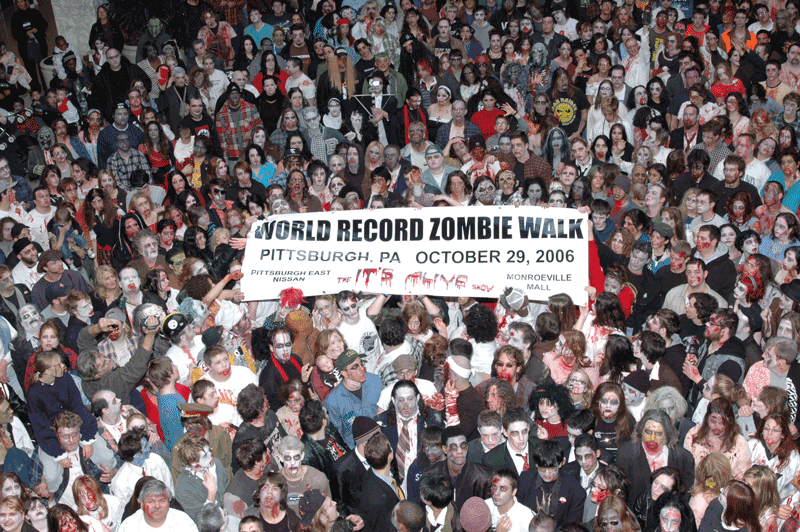
As October nears its creepy climax, signs of the macabre have become abundant. A trend that has reached new heights in recent years is the zombie walk. Various cities or regions host large groups of brainless, reanimated corpses in parade (rather like a Tea Party, I should imagine) to welcome in the darker half of the year. In a most unconventional display of cultural unity, groups of strangers meet for the purpose of sharing their fascination with the undead. Given the inherent potential for overly enthusiastic participation, these events are usually held during daylight hours and are becoming as accepted as trick-or-treating on Halloween.

Fear of death is sublimated in a conquest of the same with less definitiveness than traditional resurrection, but with a more gritty and graphic triumph of life. Organized religions have had difficulty maintaining numbers in much of the “developed world” while this new danse macabre has taken on a life of its own. Many find claims of divine authority in institutions that refuse to make clean breaks with sex scandals or threats of Quran burning somewhat disingenuous, while nobody questions the motives of zombies. They simply do what it takes to survive. An honest zombie stumbles toward eternal life.

Credibility is less easily commanded than it had been in former times. While many voices, such as Tea Partiers’, are claiming the need to erase the sixties and seventies and subsequent decades from the calendar so that the authoritarian Father can be returned to power, thinking people are asking what the plan might be. Is it time to break down that putative wall between church and state and declare America a plutocratic, evangelistic Republic? Never mind that inevitable conflicts will break out over who has the right to set doctrine and public policy – most citizens will be found out walking with their fellow zombies, welcoming in the darkening season.
The Danger of Books

Yesterday the Hunterdon County Library booksale began. I did not grow up as a reader. As a child, television was my primary source of information. For reasons unclear to me, I took to books when I started junior high school. Suddenly I couldn’t get enough of them. I lived in a town with no bookstores, so I usually depended on what I could find on our periodic trips to Goodwill to look for clothes. While my mother was looking for apparel for my brothers and me, I hovered over the quarter-a-piece book bin, buying up to a dollar’s worth of used books at a time. I kept my books in a ratty old suitcase under the bed. There were no bookshelves at home, nor any room for them. Besides, I liked to keep my books separate from other aspects of my life. Perhaps it is an illness, but from that day on, I have not been able to resist the draw of books. It is perhaps natural that I would go into higher education (although my field might have been chosen a bit more wisely). In any case, yesterday I drove to Flemington, New Jersey, with, at least to judge by the traffic, three-quarters of the population of the county.

One of the books I purchased had a slip of paper tucked between the leaves. When I got home I read on it, “The naked witches have been regarded either as a jokey press gimmick or as a complete non-event. The truth of the matter is that the witches played a very important role in a whole series of monster invocations.” Intrigued, I wondered what the source of this unusual quote might be. Then I was struck by the religious imagery implicit in the piece: witches, no matter how defined, are a religious subject. Monsters, as I have frequently noted, share intense neural territory with religion. And invocation? It is a liturgical term! I can only wonder what the original context of this quote might have been, but the book in which it was stuck was in no sense religious. I am a very eclectic reader (so it is perhaps unusual that I would go into higher education) and no books I purchased had anything to do with religion. It seems that religion never fails to find me.

My devotion to books often reminds me of the day when Amazon used to include bookmarks when you purchased from them. My favorite bore a quote from Erasmus: “When I get a little money I buy books; and if any is left I buy food and clothes.” It sometimes drives my wife to frustration that I still wear clothes I purchased before we were married some twenty-two years ago. My informal student evaluations on Rate My Professor sometimes comment on my out-of-date fashion sense. The reason is, however, that I buy books before clothes, and yes, even food. And when you buy used books at a library book sale, you may learn that naked witches invoke monsters, and that may be valuable information. And my clothes are never in a condition Goodwill would consider accepting when I’m finally forced to relinquish them for lack of functionality.


Mournful Metaphor

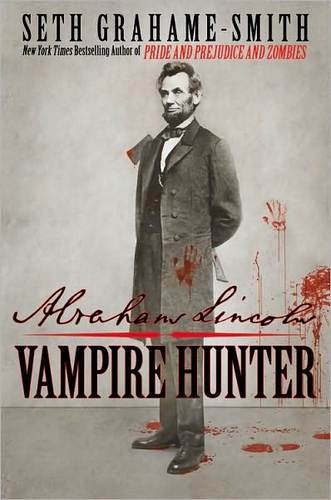
Sometimes the concept is great but the results disappoint. Those who have followed this blog know that a unifying concept over the past half-year has been the often hidden relationship between religion and monsters. Certainly this fascination has its roots in my refusal to admit that I’ve grown up, but with the popular media pushing the undead into our collective consciousness on a daily basis I feel a happy vindication. I posted last week about Seth Grahame-Smith’s new book, Abraham Lincoln: Vampire Hunter. Well, now that I’ve finished the book I would say that the jarring concept of our most honored president leading a secret life was fun to wrestle with, but the book failed to win me.

Lincoln’s great contribution to our nation is still echoing through a society slow to admit the equality of all. Perhaps that fact alone would render any book trying to throw some comic relief on a deadly serious issue mute before it even begins to spin its yarn. That, and I didn’t like the portrayal of the vampires. I’m no undead purist, and I’m aware that vampires have changed form and character over the centuries, but having masses of them in one place felt like being the proverbial cat-shepherd. Giving them political ambitions, with a nod to Francis Ford Coppola’s Bram Stoker’s Dracula, was too much. The issue of slavery, clearly the metaphor being utilized by Grahame-Smith, is hard to smile about. Lincoln’s personal suffering is difficult to lighten with his career as a vampire hunter. The story just didn’t work.

I’ve had enough bumps in my own life to eschew easy categorization. Even my current career must be listed in the TBD category. Nevertheless, I wasn’t sure if what I was reading was a serious attempt at a novel or a humorous exploration of a funny idea. I found the book catalogued in humor, but its narrative seems to have the earnestness of a determined novelist. When the story ended I felt as if I’d read a dime-store novel I’d purchased at Comedy Central. And with the headlines the way they are these days, I’d been hoping for a good laugh. Instead it seems that I have been bitten by a vampire wearing shades.

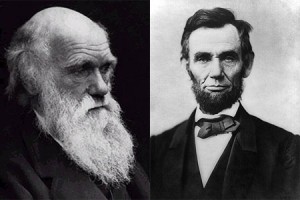
Two heroes, no smiles


Politicians and Blood-Suckers

The old icons and heroes are gone. It is best just to deal with it. No one is above reproach since we are all in this human morass together. Nevertheless, I’ve always held a soft spot in my cynical heart for Abraham Lincoln. I know he wasn’t perfect, but he stood for an issue that has been a driving force for my life: fairness. Now I see that he was a vampire hunter. After having read Seth Grahame-Smith’s Pride and Prejudice and Zombies last year, I’ve decided to give a try to his Abraham Lincoln: Vampire Hunter. My fascination with monsters and religion has not been disappointed in this fanciful story.

Our quasi-fictional honest Abe begins his vampire-slaying ways when he learns that, yes, a vampire killed his mother. As a boy of only twelve, he finds the knowledge stressful to the point of burning the family Bible that he used to read to his departed mother. Why? In Abraham’s own (fictitious) words: “How could I worship a God who would permit [vampires] to exist? A God that had allowed my mother to fall prey to their evil?” I admit that I was secretly pleased to see the classic issue of theodicy being raised in a story concerned with the undead. It is the dilemma of all who want to see a good God behind all the suffering in the world. It is a dilemma that stems from the same deep wells as our inhuman monsters. We can imagine a better world, but we can’t have it.

Politicians with axes

As I see New Jersey’s governor Christie (for whom I decidedly did not vote!) slashing away again and again like Freddie Kruger at the state’s educational system, I see the twin peaks of vampirism and theodicy peering distantly over the horizon. I am deeply disturbed by the facile disregard this “visionary” Republican has for the future of his own state, for the future of our children. And I am forcefully reminded once again that vampires are symbolic of all those who prey upon the unwary. When staring into the fireplace on a cold night, I imagine myself standing beside Grahame-Smith’s fictional Abraham Lincoln, wondering what god it is that vampires worship.