
Anti-pesto to the rescue!
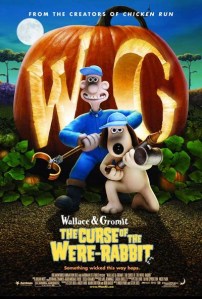
With autumn in the air and the harvest season looming near, my family recently watched Wallace and Gromit: The Curse of the Were-Rabbit. Quite apart from the inspired improbability of Aardman Studios productions, the central role of the village vicar in this film aroused my interest. Confirming an oft-cited proposition of this blog that mythical creatures burst from the same mental regions as religion, at Lord Quartermaine’s inquiry as to what might kill a were-rabbit, the vicar promptly pulls down a monster book from his shelves to reveal the secret. It is the church that knows about monsters.
In my continuing research into religious reactions to death and the afterlife, I constantly run into the name of Montague Summers. Summers was the author of the definitive books, in his period, on vampires, werewolves, and witches. He is best known for his translation of the Malleus Maleficarum, “the hammer of witches,” the main witch-hunting tome of the Middle Ages. A deacon of the Church of England before converting to Catholicism, Summers was a believer in the phenomena that he researched. Styling himself a witch-hunter (he lived from 1880 to 1948), he tried to live the fantasy world he helped to create.
The more that neurologists study the brain, the more we discover how deeply embedded religion can be. Any number of researchers have suggested various “God-shaped nodules” in the gray matter that provide for continuing religious belief in the face of advancing scientific knowledge. I would suggest, as a “religionist,” that perhaps nestled next to our mental menorahs, crucifixes, and statues of the virgin, there are also ghosts, witches, werewolves, and vampires lurking in the dark corners of the God node.
 Steve A. Wiggins