Friendly Bug

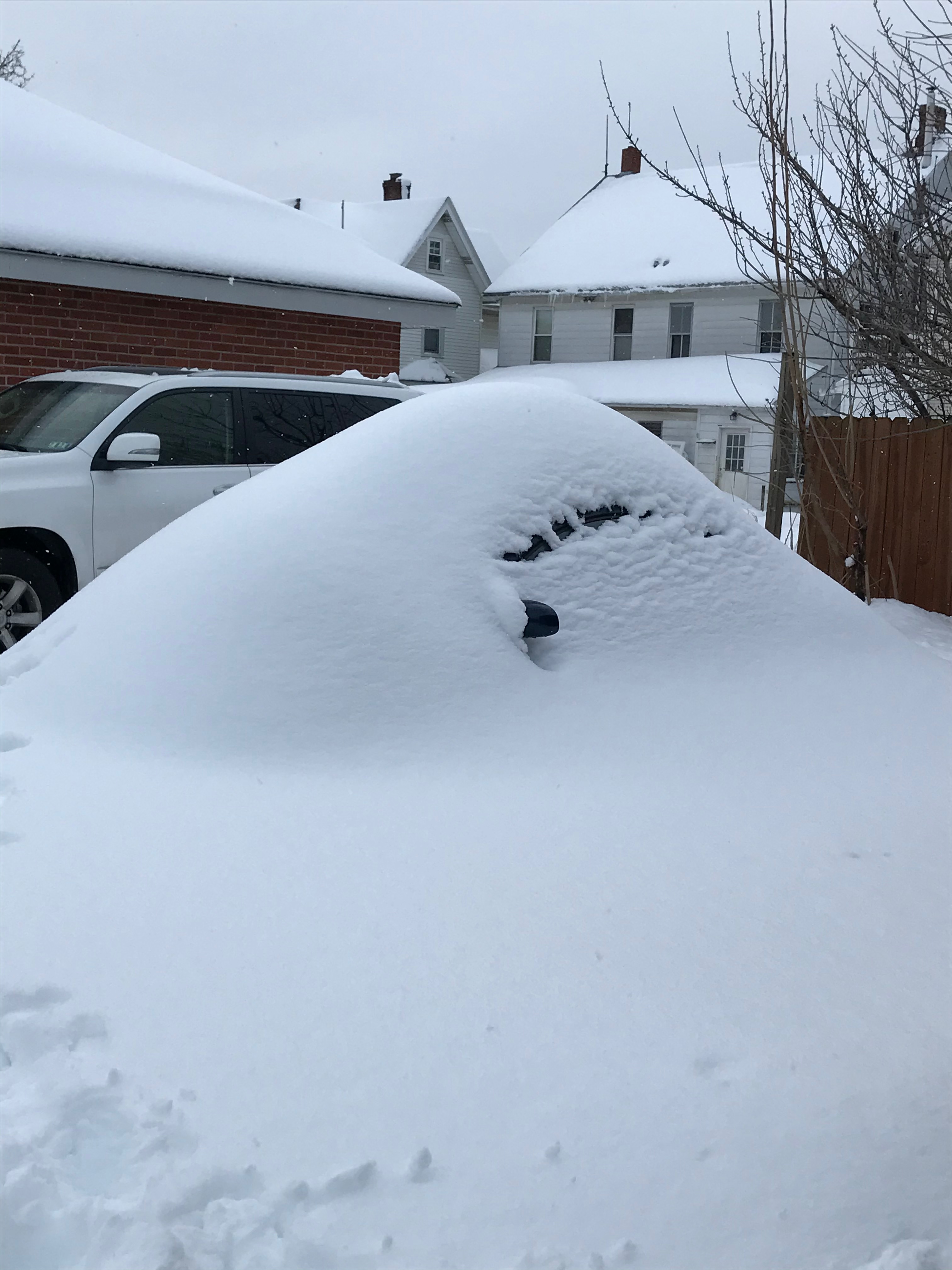
The Beetle and I go way back.  I’m unapologetically a child of the sixties and I’ve always loved Volkswagen Beetles.  My second car was a used Beetle, one of the older kind before they were discontinued.  I had to sell it to pay for seminary.  Since things tend to happen in cycles, I was teaching in seminary when we could finally afford car payments and we bought one of the New Beetles before they discontinued them.  That was back in 2003.  I mentioned in a previous post that I had to trade in a twenty-year old car for a new one.  That was the Beetle.  Cleaning it out was an exercise in history.  And it brought a few tears.  We’d only put 113,000 miles on that car—it had electronics issues that kept it in the shop a lot—but it was more the years than the distance.  There were memories.  It wasn’t unlike having your dog die.

I remember buying the Beetle on Blue Mound Road.  This was back in Wisconsin.  Waiting for it to arrive (only a matter of days instead of months).  Driving a stick-shift again.  It was basic driving.  Each little artifact I pulled out from under the seat, or tucked away in the trunk, triggered another memory.  A tear or two escaped, I confess.  We were unaware that just a couple short years after buying it that Nashotah House would turn savage and we would have to drive the Beetle halfway across the country to find work.  Registering a car in New Jersey is a surreal experience.  I used it for commuting to Gorgias Press until that ended, then commuting to Rutgers and Montclair State.  Then came the long, long years of commuting by bus to New York when the Beetle sat mostly neglected in the driveway.  All those trips up to Binghamton, then Ithaca.

The move to Pennsylvania involved yet more paperwork, since cars are more complicated than any other commodity.  The Beetle became our short-trip car.  I love shifting gears manually.  Feeling a sense, however illusory, of control.  Of longevity.  We kept the car for two full decades, making memories along the way.  It was alas, aging.  At twenty it was like fifty in dog years and the check engine light was on again although it just passed inspection.  It felt wrong pulling all the accoutrements out, getting ready to hand an old friend over to a stranger’s care.  We’d been the car’s only owners in three states.  Through four presidential administrations.  There was a lot of personal history there.  It’s the end of an era.  Goodbye, old friend.

Classic Monsters

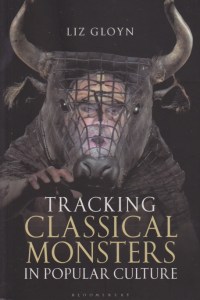
Convergent evolution is a term that’s used for when two unrelated species, separated by some gulf, develop a smilier trait independently.  I began studying monsters in biblical reception history before I really knew others were doing so.  After I’d written Holy Horror I discovered an article by another scholar who was doing similar things, even looking at some of the same movies.  Liz Gloyn, it turns out, was also doing something quite similar with classical monsters.  Her Tracking Classical Monsters in Popular Culture just came out a couple months ago.  Having taught classical mythology for a few semesters at Montclair State University, I have retained an interest in the subject and I was delighted to find a scholar who suggested that to get at the real substance you sometimes have to look beyond the heroes to the monsters they fight.  It’s the monsters who often prove more human.

Covering both cinema and television, Gloyn considers how classical monsters are represented in modern reception.  She looks at their appearance in literary forms as well.  Obviously not all of these reception avenues can be examined, but those she chooses are entertaining and informative.  In the case of biblical studies, I long ago came to the conclusion that biblical scholars pretty much just speak to each other.  The average person doesn’t read their books and the average pastor doesn’t either.  Laity, for the most part, get their interpretation of the Good Book from pop culture.  There’s a very good case to be made that, shy of sitting down and reading through a very big book, people would have little access to the Bible, or classics, if it weren’t for media representations.

Concurrent with my teaching classical mythology, the release of the reboot of Clash of the Titans transpired. (Gloyn covers both the original and the remake in her book.)  Students were really excited, anticipating the film.  It was one of the rare times (The Book of Eli was another) when I felt compelled to watch a movie as an adjunct professor, simply to share the experience with my pupils.  Clash of the Titans had made an impact on me in high school but the reboot failed to take me to the same place.  Still, here be monsters.  Those who’d never read Hesiod, Ovid, Pseudo-Apollodorus, or Homer, may have thought they were getting the straight dope from the silver screen.  That’s what reception history is all about.  Gloyn’s treatment kept me riveted, and I used to teach the subject.  Monsters have a way of doing that to you.


Private Browsing

Montclair, New Jersey, is a diverting place. At least it is for me. I used to teach—strictly as an adjunct of course—at Montclair State University. And like many other diverting towns, Montclair has multiple bookstores. On the occasions my wife has to spend a Saturday working in Montclair I often accompany her. If the weather is decent I can walk to both bookstores and have a leisurely browse. Since anything leisurely is rare these days, I eagerly anticipate such trips. Typically I’ll sit in my wife’s work place counting off the minutes until I can leave to get to the Montclair Book Center just as it opens. Used bookstores are a bit like archaeology—you never know what you’ll find, and some of the treasures may be unique. I often have the store mostly to myself, for private browsing.

This time, however, I had another task to accomplish first, before I could go to the first bookstore. By the time I arrived, it had been open for over an hour and there were, surprisingly, plenty of people there. We’re accustomed to hearing that people no longer care for books. While it’s true they won’t bring in the numbers of, say, those wanting the latest video game, it’s also true that on a pleasant Saturday morning an independent bookstore can be a crowded place. It warmed my heart to see so many readers out. And they weren’t all old like me. Younger people talking about the merits of this or that author, browsing in the sections I frequently haunt. Although I found none of the books on my list, I still had that blessed feeling you have when you discover you’re not really alone.

The other store, Watchung Booksellers, is a couple miles to the north, at least by the walking route I use. A small indie, it typically has what modern-day people might be expected to be interested in. I arrived to find it crowded as well. I’ve been there a number of times in the past and usually there are two or three others browsing. This time it was actually a little difficult to get around the small space. Seeing children there made me especially glad. A crowded bookstore is a sign of hope. As we struggle against the forces of ignorance and hatred that seem to have gripped the privileged classes, Saturdays at bookstores doing brisk business are an indication that the future may correct such ill-informed sentiments. Bookstores are termometers of national health, and seeing them busy made my Saturday. It’s worth getting up early just to spend such a day in Montclair.


O Brother

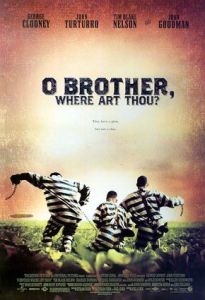
o_brother_where_art_thou_ver1When teaching mythology at Montclair State University, I had students watch O Brother, Where Art Thou? Based on Homer’s Odyssey, the movie follows a trio of convicts during a election campaign through depression-ridden Mississippi. The populist candidate, Homer Stokes, runs his campaign with a little person (but as a true Republican, he can call him a derogatory name and nobody blinks). Both Stokes and “the little man” are members of the Ku Klux Klan and even Mississippi of the 1930s won’t have that. How things have changed!

The movie comes to mind because of Friday’s march on Washington of women in favor of anti-abortion legislation. Look for the numbers to grow as the White House inaugurates comments about it. A few thousands gathered after last weekend’s 1.2 million—yes, a million more than expected—Women’s March on Washington. I respect these folks’ right to protest, of course. They might’ve done well to watch O Brother before heading out the door, however. The incumbent in Mississippi is Pappy O’Daniel. His clueless campaign managers have no ideas how to counter the populist Stokes. Junior O’Daniel suggests they could get an even shorter “midget.” Pappy, as if speaking to Friday’s marchers says, “Wouldn’t we look like a bunch of Johnny-come-latelies, bragging on our own midget, doesn’t matter how stumpy.” With apologies for the insensitive terms, size does matter. The First March had world participation of nearly 5 million. And that’s just those who were free that day.

I’ve been drawing quite a bit of wisdom from cinema lately. Maybe because it is often in harmony with vox populi. If it weren’t the industry wouldn’t be thriving. I think of O Brother and how the south in the 1930s makes us look regressive today. The good, Christian folks of Mississippi wouldn’t have a racist for their governor. When they saw what he really stood for, they voted for the lesser of two evils. Today we have a president that would’ve had a hard time being elected in that past. The tide has shifted to a more selfish and shortsighted instant gratification without benefit of education. “And our women, let’s not forget those ladies, y’all. Looking to us for protection! From darkies, from Jews, from papists, and from all those smart-ass folks say we come descended from monkeys!” Homer Stokes preaches in the light of a burning cross. Instead of booing him out of the town hall, we’ve asked him to lead the free world.


Scholar Universe

One of the resources that editors use to find scholars of obscure fields of study is a website called Scholar Universe. Now, before you all rush to the site and crash the system, I should warn you that you’ll need to purchase an account and get a password to use it. Frankly, for our society it really isn’t worth the effort or expense for most people. The information on Scholar Universe is often outdated, and not always accurate. Once, when searching for who’s who in classical mythology, I was surprised to find my own name. I did teach classical mythology at Montclair State University for three semesters, but my longer and more complete career of teaching biblical studies was nowhere to be found. How quickly our contributions, meager though they be, disappear. In any case, when a contact breaks down, the website lists the position of a scholar as “Last Known.” More than once I’ve searched for a more updated record to find “Last Known” as a circumlocution for “deceased.” There are a few things I think I’d like to ask some dead religion professors.

I recently came across a couple of academics who had, in separate instances, been murdered. One, rather gruesomely, attacked with a hammer as he walked home from the train. We tend to think that education will somehow protect us from the vicissitudes of a world caught up in its own madness. Some of us came to this profession grasping for some sort of immortality. Higher education, while based on great ideals, is nevertheless just as susceptible to taint as any human enterprise. I have been watching as higher education has followed after the role model of business for the past few decades. There was a time when learning was thought to be worth the investment, no matter what the cost. Now a pleasant deception will do, thank you, as long as there’s cash in it.

The history of higher education has been, from the beginning, tied up with religion. The earliest universities coalesced around theological faculties, while others studied law. The two are never far apart. Even in the “New World” our early universities were formed, initially, in the service of the church. Harvard, Yale, Princeton, William and Mary, and many other colleges and universities were founded with the ideal of theological education firmly in mind. Concerns for the affairs of the world, however, inevitably came to preoccupy higher education. Secular schools have little time to study real world phenomena such as religion and spirituality. Unfortunately, those are the areas, our news sources often inform us, that would benefit the most from a bit of sensible learning. But not as long as there is money to be made elsewhere.

IMG_0684


Old Myth

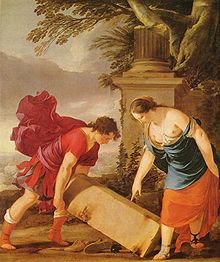
The Greek gods are in the ascendant again. They seldom disappear completely, but the big movie studios have rediscovered the special effects boon that only gods can deliver. When I first began to teach my Mythology course at Montclair State University, the Clash of the Titans remake and Percy Jackson: The Lightning Thief were both released just as the class was getting underway. It seemed like interest had been lost since the original Clash of the Titans back in 1981 when I was still a student. Special effects then meant Ray Harryhausen. Now they are measured in terabytes and whatever is larger than that. So Immortals was released recently, but I haven’t seen it yet. Picking up on the sometimes forgotten hero Theseus, the Athenian answer to Hercules, the movie promises to bring the divine into the theater.

In the spate of movies showing gods, America is not yet ready for a movie featuring Yahweh. Oh, certainly there have been films where the god of Israel has loomed very large behind the scenes, but with a prohibition of making images—no paparazzi need apply—it seems unlikely that we’ll see a special effects extravaganza featuring the Almighty. Besides, few Americans have reconciled themselves with the mythic nature of many Bible stories. As politicians and televangelists insist, these stories are fact, not entertainment. GCI Yahweh always stops at the somewhat comic George Burns or Morgan Freeman figures. Charleton Heston, where have you gone? Yahweh of the Bible is a gun-toting, hard-talking, pestilence-slinging, American-style deity. And action is where it counts.

Critics say Immortals suffers on the side of story-line at the expense of gore and action. A factor that is often overlooked, however, is mythology’s inherent mutability. “The Classics,” as we grandly call them, do not derive from a super-Scripture of literalist myths. Each writer told his (less often, her) story in his (her) own way. Although there were those who took such stories literally, as Socrates will silently confess, I suspect not a few knew these were stories told to make a point. There is no right way to tell a myth. From Harryhausen’s Jason and the Argonauts to Disney’s Hercules to Singh’s Immortals, mythology transcends the mere mortals telling it. This is the greatest shame of the modern world—we have traded the beauty of myth for a paltry handful of literalism approaches to religion. And the literary (and cinematic) world is much the poorer for it.

Theseus looking for immortality


Doubts Creep In

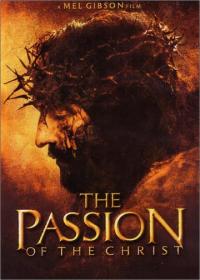
What between Snooki at Rutgers and Mel Gibson’s Passion played at Montclair, I seem surrounded by university controversy lately. A recent article in the New Jersey Jewish News addresses once more the pre-Easter screening of The Passion of the Christ on Montclair State University’s turf. Education is bound to be embroiled in controversy since learning is seldom comfortable. I suspect that is one reason bully governors and the occasional president go after higher education. Few adults like to have their assumptions challenged, their values questioned. I am reminded how blindly many educated clergy accepted the version of the faith story by a disgruntled actor rather than by scholars who actually know what they’re talking about. It is difficult to dismiss the truths of the big screen.

The fact that the wounds opened by this screening are still bleeding weeks after the event demonstrate just how vital open dialogue is. Not only open dialogue, but frank discussion of religion. Many, if not most, religious believers carry on the tradition in which they were raised. Parents begin religious instruction early, and with the threats of a fiery Hell and an enraged divine father overhead, children are shunted toward Heaven everlasting. Not all religions use the same stick and carrot, but no matter what the bludgeon or the vegetable, religions give the faithful reasons to stay in line. Best not to discuss it too much, otherwise doubts might creep in. Educating students in religion is controversial, but necessary as long as people continue in practicing it.

As the article notes, the objection to the film revolved around the fact that no educational component was included. This was one of those “think with your guts” kind of moments, as if feeling sorry for the fictional portrayal of Jesus might somehow make one a better Christian. Educational institutions are duty-bound to teach critical thought when it comes to matters of belief. Emotion is a fantastic motivator, but as history has repeatedly demonstrated, it tends to act without thought. Universities should be open to such constructive criticism, although, it is doubtful that many minds are likely to be changed when the draw at the box office is too great to ignore.

Entertainment or education?


Aftermath of Easter

Holidays, it seems, are increasingly overloading themselves with baggage. Not only are many of them thinly veiled celebrations of materialism, but many are now being tied to “issues.” As I survey the aftermath of Easter as I saw it this year, it becomes plain that even the message of self-sacrifice and hope springing eternal can be co-opted. The Fellowship of Catholic University Students at Montclair State University hosted a screening of Mel Gibson’s The Passion of the Christ last week. An outcry of biblical proportions flooded university discussion groups over what was deemed cultural insensitivity. Gibson’s version of the gospel failed to impress me when I saw it, stressing as it did Gibson’s sadomasochistic torture scenes in an effort to raise a few welts over “Christ-killers.” Back at Nashotah House I was regularly on the preaching rota. (I’m not now nor have I ever been ordained in any denomination. I have, however had preaching experience going back to my high school years.) My final sermon asked whether we should accept theological truths from a loose cannon of an actor. These physical accidents may have had more than a little in common.

Conversely, my first sermon at the seminary – the very year I was hired, and several years since my last pulpit performance – featured Abraham Lincoln. Nashotah House was a bastion for disgruntled southerners at the time; they were often the only ones conservative enough to fit the seminary’s profile. My admiration of Lincoln was expressed in an innocent expostulation on the merits of freedom. Afterwards I was drawn aside and admonished, being informed, “not everyone here believes Lincoln was a hero.” Lincoln was assassinated on Good Friday, a point that has not escaped those who note that the Civil War began 150 years ago this month. Those at Nashotah who disliked my words felt that I was disparaging the south. With roots in South Carolina, I indeed was not. Slavery is wrong in any ethical system that will stand up to scrutiny. Those who believe in equality, however, often pay the ultimate price.

Holidays do not always bring out the best in us. We need the respite, and we have the Jewish community to thank for coming up with the Sabbath that has led to our weekend lifestyle. Each weekend rival churches fill up with those who believe others to be wrong. Religion seems to have failed in its quest to unite. A colleague at Montclair cited the quotation of uncertain attribution: “having a war about religion is like having a fight over who’s got the best imaginary friend” – this was in the context of the screening of Mel’s Passion. The fact is, when it comes to religion nobody knows the correct answer. The humble response one would like to imagine is the mutual encouragement to continue to strive for the truth. More likely than not, the response is someone will select their weapon of choice and try to prove their point of view the old fashioned way.


The Problem with Demons

One of the perks to life among a university community is the special programs that come to campus. As an adjunct instructor with a schedule so confusing that even Escher would get lost, however, I do not often have the opportunity to take advantage of such programs. More’s the pity since next week Montclair State University is hosting an event called “The Real Exorcist.” One of the very few authorized exorcists of the Catholic Church will be speaking on campus. The event overlaps with a previously scheduled class at Rutgers.

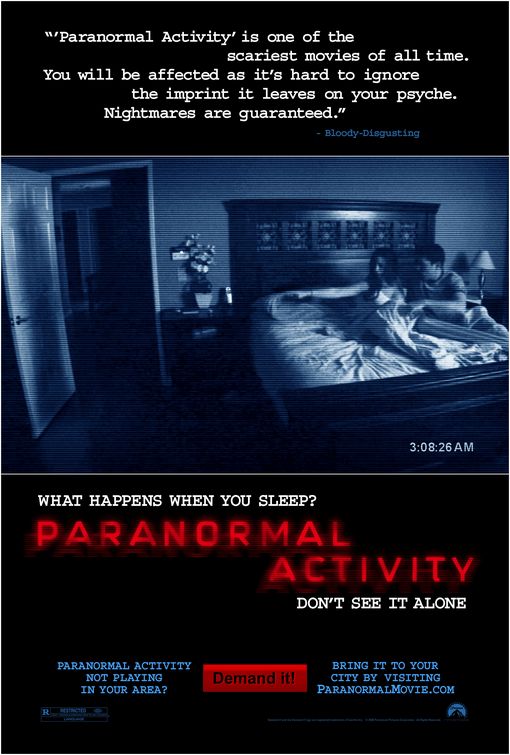
A little disappointed, last night I sat down to watch Paranormal Activity, the indie movie that made such a splash last year. Assuming it was a ghost story, I wasn’t too concerned about watching it alone on an October night. When I discovered it was a demon story, however, I wasn’t sure watching it alone was such a good idea. You see, in the hands of paranormal investigators the demon has undergone a transformation. Ancient Mesopotamians believed in a set of lesser gods who caused misfortune, although they don’t seem to have been pure evil and they didn’t call them demons. By the time we reach nascent Christianity, demons are cohorts of the Devil and are utterly malign and capable of possessing a person making them do the bidding of their dark lord. That’s where they remained on the divinity scale until modern day investigators using scientific equipment found them. I confess to having watched Ghost Hunters a time or two. Here the demon has morphed into a non-human disembodied entity – the very antagonist of Paranormal Activity.

Being aware of the origin of concepts is often a comforting place to be. When I realize that no special revelation has suddenly validated the existence of a baleful creature set to do me serious harm, a relief encompasses me. The problem with demons is that they don’t evaporate so easily. “Invented” by the Mesopotamians to explain misfortune, by the change of the era they had evolved into (largely) an explanation for epilepsy and mental illness. Now today they are back as haunting entities that have no human sympathy since they were never human. Paranormal investigators take them very seriously, despite their checkered theological pedigree. I guess I side with Shakespeare on this one: “there are more things in heaven and earth, Horatio…” After all, it is October and the nights are growing noticeably long.


Higher Ethics

As a part-time public servant (I teach part-time at two state schools, Rutgers and Montclair State) I am required to sit myself in front of the computer for over an hour each year to watch a slide show on the ethics expected of public servants. Probably the first time this was a good thing since I had seriously been considering taking a tip-jar to class with me to help meet the costs of living in New Jersey. You see, part-timers do not get benefits. Some, like me, teach twice as many courses as their “full-time” colleagues and get paid less than half of what their betters do. I am a bargain-basement public servant. I figured a tip-jar might just help to cover mileage (not reimbursed). As I listen to the stern-voiced lady spilling out all the unethical practices (like tip-jars) that can lead to the dismissal of bad public servants, my mind can’t help but to wander to what Bruce Springsteen famously called “the mansion on the hill.”

Froma Harrop, a journalist in Providence, wrote an op-ed piece on higher education that appeared in yesterday’s New Jersey Star-Ledger. After surveying the situation at her local Brown University, Ms. Harrop laments the seemingly endlessly escalating costs of higher education. In the past four decades tuition has increased an average of 15 percent, whereas incomes (at least some) increased at an average of 6.5 percent. She notes, however, that the money is not going to professors or academic programs. The lion’s share of university money goes to sports teams. Students who often have trouble passing my admittedly easy introductory-level courses are pampered, petted, and preened by the university. The average undergrad has plenty of stories to tell of how they have been forbidden goods and services that the university reserves for its sports stars. Ms. Harrop also cites the fact that the number of administrators has nearly doubled in the last 30 years. For all that, the schools haven’t become more efficient, just top-heavy.

So as I waste an evening looking blankly at my computer screen, I realize that I am a public servant. Strictly part-time. I also realize that many public servants – those who hold high political office come to mind – earn far more than they strictly need. In fact, the benefits package alone of some of these “servants” would easily support a family of three mere mortals. And they don’t even have to make their own car payments. As an undergrad I took enough courses in ethics to officially declare it a minor. I have studied religion, a discipline akin to ethics, all my life. As the stern-voiced lady tells me all the bad things I cannot do with state money, I wonder what the top public servants are doing tonight.