Just Trust Me

When I google something I try to ignore the AI suggestions.  I was reminded why the other day.  I was searching for a scholar at an eastern European university.  I couldn’t find him at first since he shares the name of a locally famous musician.  I added the university to the search and AI merged the two.  It claimed that the scholar I was seeking was also a famous musician.  This despite the difference in their ages and the fact that they looked nothing alike.  Al decided that since the musician had studied music at that university he must also have been a professor of religion there.  A human being might also be tempted to make such a leap, but would likely want to get some confirmation first.  Al has only text and pirated books to learn by.  No wonder he’s confused.

I was talking to a scholar (not a musician) the other day.  He said to me, “Google has gotten much worse since they added AI.”  I agree.  Since the tech giants control all our devices, however, we can’t stop it.  Every time a system upgrade takes place, more and more AI is put into it.  There is no opt-out clause.  No wonder Meta believes it owns all world literature.  Those who don’t believe in souls see nothing but gain in letting algorithms make all the decisions for them.  As long as they have suckers (writers) willing to produce what they see as training material for their Large Language Models.  And yet, Al can’t admit that he’s wrong.  No, a musician and a religion professor are not the same person.  People often share names.  There are far more prominent “Steve Wigginses” than me.  Am I a combination of all of us?

Technology is unavoidable but the question unanswered is whether it is good.  Governments can regulate but with hopelessly corrupt governments, well, say hi to Al.  He will give you wrong information and pretend that it’s correct.  He’ll promise to make your life better, until he decides differently.  And he’ll decide not on the basis of reason, because human beings haven’t figured that out yet (try taking a class in advanced logic and see if I’m wrong).  Tech giants with more money than brains are making decisions that affect all of us.  It’s like driving down a highway when heavy rain makes seeing anything clearly impossible.  I’d never heard of this musician before.  I like to think he might be Romani.  And that he’s a fiddler.  And we all know what happens when emperors start to see their cities burning.

Al thinks this is food

Gray Matter

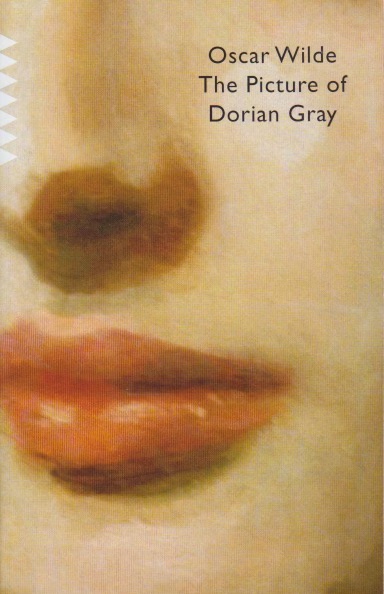
It seems to me that I was living in Boston the last time I read Oscar Wilde’s The Picture of Dorian Gray.  That was long enough ago to have forgotten almost everything except the central premise that everyone knows.  Recently, I had been reading some analysts who consider it a kind of horror story.  Wilde was a great and notable wit, not typically cited as a horror writer.  More recently I’d seen the novel classified as dark academia.  Since there are no students, and there’s no school in the novel, that genre seems forced.  In any case, it is a classic and I was curious about what I had forgotten.  The dialogue regarding morals stands out rather boldly, with traditional Christian values being the gold standard.  In his own life Wilde was known to flaunt these things, but in his story they stand mostly unchallenged.

At the same time, it is a book about seeking redemption.  Toward the end, Dorian regrets the lifetime of evil he’s led.  He wants to turn over a new leaf.  Corrupted from an early age by Lord Henry Wotton, he learned to live a cynical and self-centered life.  He shut out the feelings and needs of others for his own pursuit of pleasure.  As an old man still appearing young, he comes to have his regrets.  Although Wilde didn’t really live long enough to reach this stage in his own, he seems to have understood psychology well enough.  He even tried to have a half-year Catholic retreat.  Length of life often trails regrets in its train.  Of course, for Gray it is too little, too late.  He has made his mark on the world, but it hasn’t been for good.  His final act is a stab at redemption, but the novel gives no hint whether he achieved it or not.

Whether intentional or no, the novel considers the fact that we all wear masks.  And we do so for much of the time.  And there is a bit of horror involved in discovering that we aren’t who we pretend to be.  The real Dorian Gray was locked away in an attic room while his life of dissipation  led to the ruin of many.  The witty dialogue maybe makes this a comedy horror.  At times it seems to get in the way of the mood of the story, but it never stopped the novel from making a similar impression to the nearly contemporary Dr Jekyll and Mr Hyde.  Late Victorians knew something that we, as a society, seem to have forgotten.  The attics of some prominent individuals surely have portraits that belie their appearance on the ubiquitous screen.


Morality, by Contract

So, maybe it’s the crazy wind that was blowing around here all day yesterday, but I’m beginning to wonder about corporate sanity (if there is such a thing).  Specifically, I’ve been hearing about more and more contracts with ethics clauses written into them.  This is downright weird.  Does the signing of a contract make one ethical?  It’s like that silly page that comes up on some workplace servers saying you’re very naughty if you’re not the person you’ve logged in as.  We all know that.  That’s why hackers hack and the rest of us comply.  But legislative morality?  Via contract?  The notion is strange because ethics relies on an agreed-upon set of standards.  If Trump has taught us anything it’s that there’s no agreed-upon set of standards.  Some of us can honestly say that we weigh our own ethics every time we do anything.  Send me a contract and see!

The first time I saw an ethical behavior clause it was in a contract from a Christian company.  They wanted no business dealings with the corrupt, misbehaving, and one might guess, pagan sort.  When such a contract is sent to a business, it means that said business will monitor the morality of all its employees.  That’s something I certainly wouldn’t want to be in charge of.  Rationalization is too easy and far too human.  Let the one without sin cast the first whereas.  Well, one would think that a Christian company might take that point of view.  The way some Christians have treated me over the years makes me shudder at the advantages taken.

This idea seems to be spreading out to secular companies as well.  You read about contracts with ethical clauses in them—anyone who’s not ethical will have no qualms about signing a contract stating s/he is!  Why offer a contract at all if someone’s morals are in doubt?  One of the things you learn from taking ethics courses (of which I had several) is that, beyond widely agreed-upon standards (it’s wrong to kill, for example, or take something that belongs to someone else) the details quickly fade to gray.  People find ways of living with themselves while trying to survive in society.  An ethics clause in a contract suggests I should live by the standards set by the issuer.  It attempts to vouch for my future behavior without knowing my future circumstances.  I’m all for ethical behavior, and I try to abide by my own moral code daily.  It’s just that putting morality into contracts implies thinking poorly of the party of the second part.  Better to add a sanity clause.

Photo credit: Jörg Bittner Unna, Wikimedia Commons


Search Yourself

I was searching for someone on the internet (surprisingly, not myself).  Since this individual didn’t have much of a platform, I looked at MyLife.com.  Such sites draw in the curious and you soon end up paying (I suspect) for any salacious information such as arrest or court records.  In any case, what stood out is that we all presumably have a meter on the site that shows whether we’re good or bad.  It’s like a Leonard Cohen song.  Call me old-fashioned, but that’s what religion used to do.  Some forms of Christianity (Calvinism comes to mind) tell you that you can never be good enough.  Others are more lax (Episcopalians come to mind), as long as you go to mass enough and feel some guilt for misdeeds, you’ll get in.  All the various groups, however, have metrics by which you’re measured, largely based on what you believe.

The odd thing—or one of the odd things—about religion is that it is now categorized as what you believe.  Historically religions began as a kind of bellwether of what you do rather than what you believe.  The two are related, of course.  The motivation behind an action might well be good while the end result is less so.  Secular justice regularly seeks to answer the question of why someone did something.  Was there malice involved?  Aforethought?  Was it an unfortunate accident?  Religion drives over this ground too.  Without getting into the many shades of gray that are morality, value judgments as to the goodness or badness of an action (or a person) were traditionally the purview of religion.

The internet itself has become a kind of god.  We turn to it for all kinds of answers.  It’s both a Bible and encyclopedia rolled into one.  When we want to know something about someone we google them.  Some of us have tried to control the narrative about ourselves by making websites.  (This, of course, presumes others will be interested in us.)  Social media also injects us into larger arteries of traffic.  People judge us by what we post or tweet.  Often without ever meeting us or getting to know who we really are behind our physical walls.  So this person I searched had left little to find.  Scraps here and there.  I didn’t believe everything I saw on MyLife.  After all, not everyone wants to subject her or himself to the constant scrutiny of the connected world.  Maybe it’s a religious thing.


Financial Ethics

In a conversation with a professional colleague recently, I was discussing what might happen to ethics when sex with machines becomes common.  That statement might seem a little bizarre out of context, so let me widen the net a bit.  We were discussing the Bible and sexual ethics.  This led to the question of how those who apply the Bible straight from antiquity might apply their beliefs to a world vastly different than first century Palestine.  In biblical times, in other words, sexual options were limited and people didn’t understand the whole issue of human sperm and eggs, neither of which can be seen without a microscope.  Applying their outlook directly to today is problematic, and so how do we apply a book without outdated views to a world vastly more complicated?

Someone recently paid me a small debt via PayPal.  If sex is complicated, then let’s not even get started on Bitcoin or Apple Pay—for some of us money is money and even getting paid electronically is somewhat suspicious.  I sometimes buy things online with PayPal.  It goes straight onto one of my credit cards and then I write an old-fashioned check to pay for it.  So I had to approach the altar of PayPal itself to figure out what it meant to have money in my account.  What am I to do with it?  Then I found the FAQ—TFIA (The Future Is Acronyms).  One of the questions: “What is PayPal’s policy on transactions that involve sexually oriented goods and services?”  Now, here’s a question of biblical proportions.

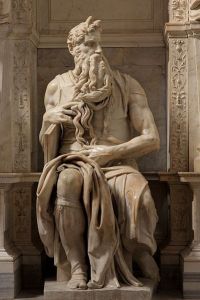
Paying for sexual “goods and services” goes all the way back to the book of Genesis when none other than the ancestor of David and later progeny did so.  This is nothing new.  But the question of ethics now looms extra large.  For those who pay for such things, a new layer of complexity has apparently been added—can you pay with PayPal?  My transaction had to do with tickets purchased for a concert online, where we wanted seats together so someone had to do the buying for everyone.  What if the purchase had involved a somewhat more intimate setting?  Who needs paper or plastic when a string of 16-digits, or even a username and password, will do?  That’s to say nothing regarding the ethics of the transaction—this is, as it were, purely mechanical.  What would Moses say?  Surely this is a question of appropriate tips, for Tamar veiling herself by the side of the road had the moral high ground over her father-in-law who was simply looking for a good time.  A staff and seal, however, were no less complicated that paying for goods and services online.


Canadian Care

Amazon, probably not purely out of kindness, gives some customers access to the most read stories in the Washington Post. Apart from talking to my wife, this is about the only way I learn about what’s happening in the world (mine is a small world after all). I have no idea what Amazon’s metrics are for determining which stories to share, but I was amazed at one focusing on doctors in Canada. The story also appeared in Newsweek and other media sources. Unlike many medical professionals, these Canadian physicians are petitioning the government for lower salaries. They say they already have enough money and other healthcare workers aren’t being paid adequately. Why not share when you have extra? I’ve always thought Canada was far ahead of its southern neighbor in the ethics department, and this about clinches it.

Don’t get me wrong—I’m grateful for doctors. (You should see how much money I give them!) Nobody wants to go through life with this or that hurting or aching all the time. Most of the doctors I’ve met have been kind and descent people. Seldom as strapped for cash as I am, but then my doctorate is in a more intellectual field; serves me right. What really becomes a star in my personal firmament is that somewhere in this world enamored of capitalism, a privileged class has said, “this isn’t right.” Economists have been warning us for years that unbridled capitalism isn’t sustainable, but that falls on deaf ears in this country. Maybe our political leaders should see an otolaryngologist? Maybe they’ve got some wax build-up in there.

Doctors work hard. They have long hours and have to put up with smelly and messy situations. There’s a reason we have to pay so much to compel them to look where the rest of us are told to avert our eyes. At the same time, every other major developed nation in the world has some form of socialized medicine—it is a basic human right. Everywhere but here. If you drive through New Jersey you can’t help but be taken by the palatial campuses of the pharmaceutical companies that call this state home. There’s gold in them thar hills. As I gaze at them from the highway, my thoughts are driving across the border to a land that’s both affluent and caring. When’s the last time we heard an American entrepreneur say, “I’ve got enough—give the rest to someone else”? When too much is never enough, that’s something it’s going to take a Canadian doctor to treat, I fear.


Apologizing for Whatever

Maybe you’ve felt it too. The insecurity of liking something other people don’t. Having grown up an Evangelical, I had to try to explain myself at multiple points for liking scary stuff. I love Halloween. I spent my young Saturday afternoons watching monster movies on our black-and-white television. After losing a long-term job at a decidedly gothic seminary, I began consoling myself with horror films. I don’t know why. I also don’t know why other people shun those of us with this particular habit. It’s not like I’m going to make you sit down and watch them with me if you don’t want to. You don’t even need to buy my book, and if you do (thank you!) you don’t have to read it.

One of the issues I’ve often grappled with is why “Christians” dislike horror. Reading the accounts of the martyrs is way worse than almost anything I’ve seen on screen. Revelation, let’s face it, is a horror show of Schadenfreude and ultra-violence. The Calvinistic idea that God would create the vast majority of people to burn in an eternal Hell of fire for reasons best kept to himself (yup, he’s a guy) is hardly charitable. So why do Christians say you shouldn’t watch horror? One of the observations from this lowbrow viewer is that the message behind horror is often good. Moral. Ethical even. We have trouble getting around the form of the message to see its substance.

I seldom talk about horror movies. Maybe that’s why I write about them so much. But the fear of judgment remains strong, even with maturity. The lurking Evangelical fear is that watching horror will entice the young to become interested in evil. I think it’s fair to say that all Christians are somewhat fascinated by evil—where does it come from? Why doesn’t God stop it? Horror films seldom glorify the monster. The protagonists, often flawed, fight evil and sometimes succeed. Do I really need to justify this interest at all? It’s no exaggeration to say that, although no longer an Evangelical I still feel the weight of both their stares and those of others who can’t understand why a nice guy watches such unbecoming things. My book doesn’t answer those kinds of questions, but it may contain implicit answers within. Of course, you’ll only know that if you read it. Not that I’m asking you to do so—it doesn’t even have a title yet.


Endings

It’s hard not to feel sorry for survivors. In a hostile world, the ability to resist the entropy lapping at your toes is a feat that inspires admiration. Although independent bookstores are making a comeback, there aren’t many around. An evening spent at Barnes and Noble, if allocated well, can evoke some sympathy even for a dying giant. While my wife had an appointment next door, I spent a good while in the fiction section—really the only part of our local B&N that is well stocked. My time among books, excessive to some, is my solace. It’s not a bad vice to have. Seeing others out shopping for books also delivers a message of hope to a world disinclined to read.

In the B section I saw an edition of A Clockwork Orange. If you read my post on Anthony Burgess’s book in the last few weeks, you’ll know that the American edition has always lacked the last chapter. I wondered if maybe, just perhaps, if this edition might contain the missing ending. It has been several decades since the original embargo. I picked it up and, indeed, the last chapter was intact. I stood in the aisle and read it. Say what you will about Barnes and Noble, but nobody thinks this kind of behavior odd. Once again I was transferred back to Alex and the world of his droogs, only to discover that the ending was something like I had anticipated. If you’ve read the standard American edition you know that it ends abruptly. Writers know how to draw a story to a close. Herewith I offer a spoiler alert.

Alex, now 18, has a new band of droogs. They sound quite a bit like his previous gang. Then he notices he doesn’t feel like the old ultra-violence one night. He goes to a coffee shop where he finds Pete, his old gang-mate, now married and holding a respectable job. He realizes with a kind of horror that having a child and wife appeals to him. He’s growing up. Critics often said Burgess was a moralist with Christian sensibilities. The original ending to A Clockwork Orange might suggest that’s true. Alex may be converted, but he’s unrepentant. Indeed, as he thinks of being a father he envisions his son being just like he was, and the cycle of violence and reform spinning on and on into the future. Shortly after I closed the cover, my wife met me in the store. I was amazed at how 15 or 20 minutes immersed in reading had shifted the mental world I inhabited. New information had changed me. This is the power of books, even when they’re found in Barnes and Noble.


Doing the Math

Erich Fromm once defined evil as “attraction to what is dead, decaying, lifeless, and purely mechanical.” Certainly Fromm doesn’t hold the cachet he once did, but this way of thinking about evil has stuck with me. It’s not so much the dead, decaying, or lifeless part—that’s part of nature—but the purely mechanical. I don’t disparage the many machines we have that make life easier, and modern life possible—can you imagine your job without computers? The problem in my mind, as Fromm defines it, lies in the word “purely.” Purely mechanical. By the numbers. You see, we often forget that being human, and thought itself, isn’t about pure logic. Our brains evolved to be half emotive and have rational. Our feelings can be smart. When we reduce all of life to numbers, according to Fromm’s definition, we’ve entered the realm of evil.

Some, in the past as well as present, have posited numbers as the only real truth. No matter where you are in the universe 2 + 2 = 4. It’s about the only certainty we have. I think what Fromm was concerned about was not this kind of certainty, but rather that which sees only numbers as being important. Think of the multibillionaire who’s lost sight of the human misery he (and it’s generally a he) has caused to become so wealthy. It’s not something towards which an enlightened individual would aspire. Purely mechanical it is, by definition, evil. We’ve all known people like that—those who just can’t get beyond the numbers whether they be the bottom line or the instructions for the doomsday device. The human element is missing. Are we truly beyond good and evil?

Does it add up?  Photo credit: Cpl. Jovane Holland, Wikimedia Commons

Does it add up? Photo credit: Cpl. Jovane Holland, Wikimedia Commons

Governments, once upon a time, were put in place in democracies to protect the interests of the people. When people are mere marks—numbers at an inauguration or cheated at the polls—we’ve entered the realm of purely mechanical. Of course, intellectuals are out of favor now. Why be troubled with the news when you can make up your own? 2 + 2 need not equal 4 if you say it loud enough. Behind stage, however, you’ll make sure your accountants know the score. Those who wish to start a New World Order must insist that the classics are outdated. While we’re counting out the days in our prison cell it might be a good opportunity to read. I plan to have Erich Fromm on my list. I’m only human after all.


Surfeit of Ego

img_3098

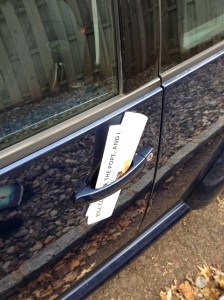
In a world with finite resources, many commodities are in short supply. One clear overabundance is that of ego. We’ve seen that clearly in the long, long months of this year’s political campaign and the single month since then. Running a nation is no longer to be a servant to the people but to the self. So it was while out on an errand I noticed a tract stuck in my car door handle. I’ve mentioned Tony Alamo before. This incarcerated evangelist has a disturbing number of supporters in New York City, at least to go by how prevalent his flyers are in Midtown. I’d never, in my suburban Jersey neighborhood, had my car violated by one before, so this was something new. What caught my eye was the grammatically inept headline: “Bill Clinton, The Pope, and I.” As a title it should have said “and Me.” Letting that foible pass, we’re still left with a religious zealot classifying himself with duly elected world leaders.

I know that the Roman Catholic Church is not a democracy, by the way. Popes, however, are elected from among their peers, and so it’s not purely a matter of one man putting himself forward as the people’s choice. Alamo’s headline screams of a wounded ego. Donald Trump’s famously thin skin does the same. Not that that makes me for one second sympathetic. I grew up with a religion that taught self-denial, self-abnegation, and putting others before oneself. Self, self, self. Selfishness used to be a sign of poor manners or bad breeding. Now it’s the way to the highest political office in the land. We clearly have a surfeit of ego. The same is true for the terrible plague of racism and sexism that have become the flavor of the day. Too much concern with self.

Not only is this a political aberration, it also goes against human nature. In the literal sense. Our species has thrived because of its sympathy for others. We see this is primate societies. When one individual, even—or especially—an alpha male, asserts himself beyond the good of the group, he is taken down. In addition to our opposable thumbs, we’re also endowed with a sense of fairness, of sharing. Call it the ethics of nature. Not only that, but most religions agree—the sign of a just society is one where everyone is cared for. So it may be that we don’t have enough coltan to make all the smart phones we need but we do have enough ego at the top to go around, and then some. Might I suggest it might be time for a fire sale?


Biological Imperative

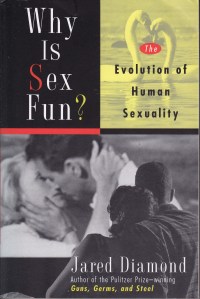
DiamondNothing used to make you feel smarter than being in a British bookstore. With that curious blend of proper, insane, and bawdy, books are displayed that you might find surprising. Alarming, even. Last year as I strolled around Blackwells in Oxford, I spied Why is Sex Fun?, by Jared Diamond. I mean, it was sitting right there, face-up, on a table with perfectly respectable, straight-laced books. Curious, but not curious enough to pick it up in a public place, I remembered the title so that I might find it on Amazon, where it could arrive in a nice, safe, opaque box. I finally stored up enough points on Amazon to get it, but then the problem was how to read it. I do a great deal of my reading on public transit—a place where you inordinately care what others might think of you. Finally, planning a seating strategy that would hide the cover by sitting on the left-hand side, next to the window, I took the book along, hoping it would keep me interested to and from work.

Subtitled The Evolution of Human Sexuality, the book isn’t salacious at all. It is scientific, but not clinical. I’ve mentioned before that all religions have something—quite a lot, usually—to say about sex. While religion doesn’t play into Diamond’s book, morality does. What I found interesting is his use of the phrase “God or Darwin,” which comes up a few places in the book. Diamond is a witty writer, and he explains that not all his phraseology is to be taken literally, but I appreciated his hedging his bets, nevertheless.

This book isn’t really titillating. In fact, it’s somewhat depressing. Perhaps it’s just phrasing again, but the production of offspring is described in economic terms. Resources, investment, efficiency, and the like. I think back to being a child. My family life wasn’t ideal, but I never thought of myself as anyone’s resource or investment. I was just me. That delusion stayed with me until I started working in the corporate world. I quickly discovered that others considered me a resource. “Human resources,” we call it. An investment. My efficiency was valued. Was it God or was it Darwin? Although I learned a lot from this little book, I wonder if it was worth the effort of having to hide the cover on the commute. After all, we’re all stuck together on this bus, units of investment, born to yield a profit. Why not have a little fun on the way?


Moral Money

Yesterday I spent at the Mid-Atlantic Regional American Academy of Religion and Society of Biblical Literature meeting. Not a registered guest, I was there in mufti. Those who know me stopped by to greet me, even without a name tag, but I noticed, as I increasingly do, the youth of the attendees. Apart from the business discussed, the issue of these younger colleagues kept arising. It’s as if the tap was left on but the glass is already full. Presidential aspirants aside, we live in a world where people are increasingly realizing that you can’t squander resources. We have compulsory education to try to make the next generation smarter, more fortunate than our own. And those who have the inclination and ability to go on for advanced study, we throw into menial jobs and poverty because, despite the myth, a doctorate doesn’t help your financial prospects. Universities have become businesses and one of their top-end products is the doctorate. The doctorate with no future.

Sitting in the lobby between appointments, I can’t help but thinking back to a younger me. I am part of what older colleagues are calling “the lost generation” of humanities scholars. Those who have the credentials but no opportunities. A wasted resource of a nation that loves reality TV and blustering windbags, as long as the windbags are billionaires. It makes me sad to think that instead of making a place for those driven to high achievement, that we’ll offer them poverty-level adjunct positions with Obamacare, food stamps, and excessive hours. When they burn out, like a high wattage bulb, we’ll go to the closet and screw in another to replace them. Just don’t turn off the tap. Graduate students bring in money.

This is a moral issue. Since it involves what are scare-quoted as “the elite” we seem not to care. Isn’t it fun to knock down those who think they know too much? I sit in the lobby and watch the bearded young men, the young ladies with heavy backpacks thrown over their shoulders, and I want to warn them all. And it’s not just me. My colleagues, lost generation or not, all agree. We’re sending our best students to oblivion. In the most prosperous nation in the world. You can tell we’re prosperous because all it takes to gain the confidence of a political party is lots of money. Lots and lots of money. I won’t mention the obvious that such loose lucre could be put to good ends, making jobs for those who’ve poured their lives into bettering their minds. Or maybe I will. It is a moral issue, after all.

IMG_0213


The Boy on the Bus

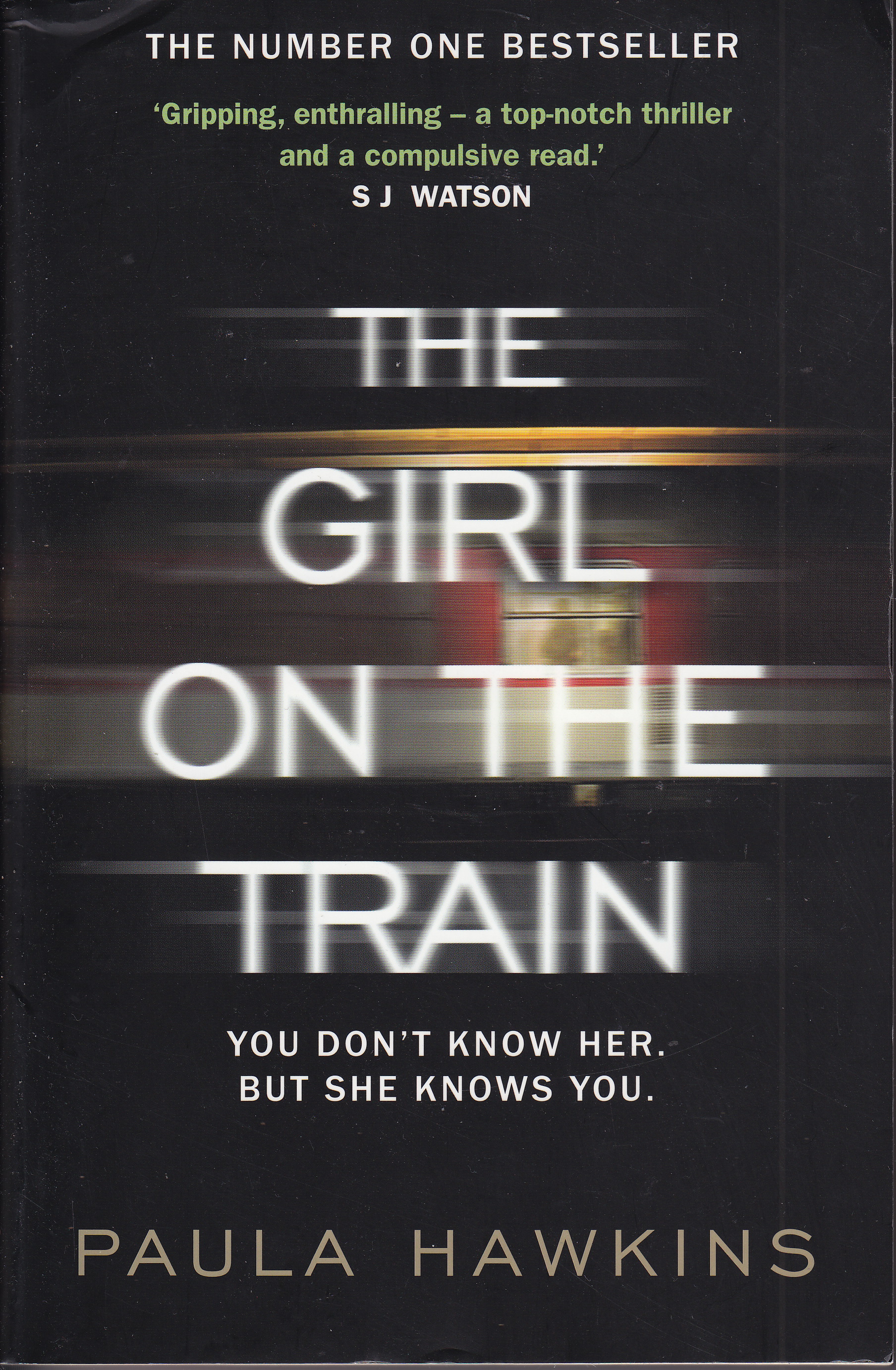
GirlOnTrainCommuting by bus isn’t the most efficient way to do research. While mostly I read non-fiction related to my research interests, monographs are difficult because of the concentration required and the constant interruptions of the road. Journal articles are, still, jealously protected by university libraries so that you can’t access them without an account. So once in a great while I read a novel on the bus to forget it all. I’d heard people talking—literally—about Paula Hawkins’ The Girl on the Train. It is a story about a commuter, and my wife was kind enough to give me a copy for my birthday, so I recently climbed on board to read it. The problem with reading fiction on the commute is that it is difficult to clear your head to negotiate the streets of the city when you’re done. You’re in an imaginary world for a while after you put the book in your bag. The nice thing is you can’t wait to get back on the bus to read some more. It makes commuting bearable. Almost pleasant. Especially when the protagonist’s commute is worse than yours.

I won’t throw any spoilers into this post, but I think it’s fair to say that the story involves trying to find a murderer. It is also a story about adultery. In fact, without adultery there would be no story. I seldom turn to novelists for a course in morality, but The Girl on the Train does have an underlying message that rings true: honesty is crucial for a civil society. The small cast of characters in Hawkins’ book have difficulty being honest with others and with themselves. This makes for a gripping ride, of course, but I couldn’t help thinking throughout that if people were honest the situation would never have occurred. Of course, then there would be no story. And I would’ve had to read something else on my commute.

My reading over the past few years has intimated that something about civilization has put a tremendous strain on people. Whether it is the constant pressure to increase productivity while time off is being stolen by ease of access (cell phones work in the middle of the woods. You can get your email while on a plane), we are never really offline. Our relationships, once the defining factor of who we are, have now become diversions from the time off work. Morality has reverted to what you can get away with. I can recommend The Girl on the Train for those struggling with a long commute. Once in a while I’d look up, surprised to find how fast the trip had gone. It might also give the reader pause to consider the larger implications. Honesty is an undersold virtue. Without it, this civilization we’ve built, and continue to build, cannot long last.


Moral Animals

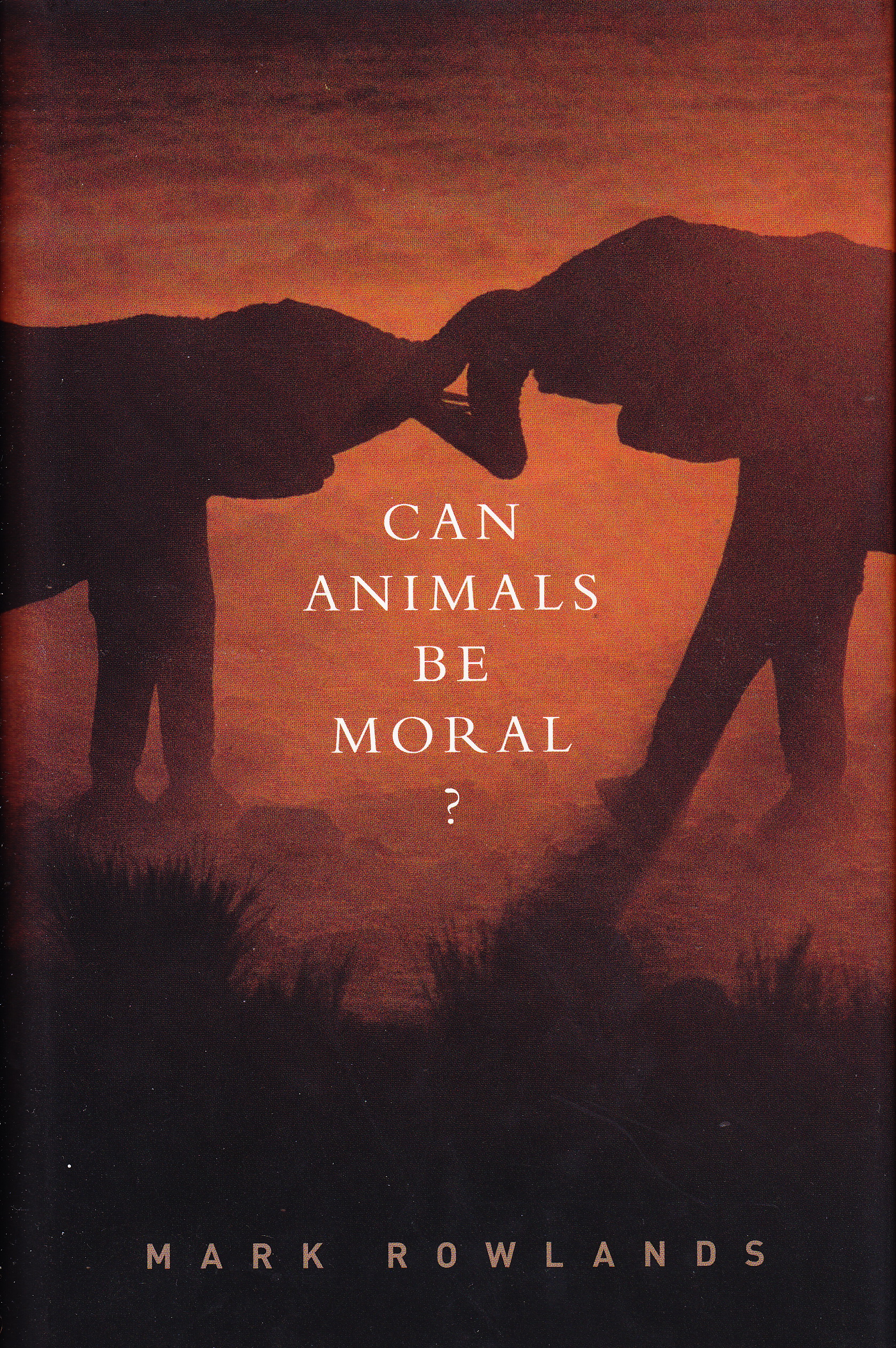
CanAnimalsBeMoralFor all of my life that I can remember, I have felt an affinity with animals. Even when I was relentlessly taught that evolution was wrong—Satanic even—I still held onto the idea that animals are more like us than they are different. I know this is partially the great sin of anthropomorphism (although I secretly doubt it is a mortal sin), but when I’ve interacted with animals, or watched them interact with each other, they’ve convinced me that they’re thinking. Since, however, we are the very top of the food-chain, we can’t allow such things. That’s why I turn to philosophy. Perhaps public transit isn’t the best place to appreciate fully a book of philosophy, but it’s the only time I have. Those who think categorically and with such rigid logic surely must have something to say on the issue of our fellow creatures. Mark Rowlands’s Can Animals Be Moral? is one of those books that might not be best read on a bus. I found myself constantly wanting to draw diagrams to visualize the course of his thought as we hit another pothole, or an angry bird killed a green pig in the next seat over.

While the animal stories that make such an engaging case are not a major part of Rowlands’s book, they nevertheless, for many of us lesser thinkers, seal the deal. When an animal acts in a way that shows its own lack of self-interest (how un-human!) we should sit up and pay attention. The question of morality, however, is thorny. Philosophers of ethics and religious analysts of the same seldom come near one another in their conclusions. We don’t know why we think morally, but it is clear we often do. It is obvious that it isn’t solely because of religion, although religion sometimes has a hand in it. It is, at the end of the day, a matter of feeling what is right. I feel that it is right to treat animals as thinking, feeling creatures. But are they moral?

Rowlands shows that some of the implications of animal morality can be serious. It was not that long ago that some animals were put on trial for the harm they’d putatively caused. Some were executed. (I wonder if they were eaten afterward?) If we attribute morality to animals, can they be blamed for their actions? Here is where the brilliance of Rowlands’s carefully argued book comes out—animals can be moral subjects without being moral agents. That is to say, they can act morally, but they can’t reason it out. I’m sure that I’m not saying this right, but the basic idea still appeals to me. Reading his final chapter on how moral Martians might view the naked apes of this planet gave me the chills. When we take ourselves off the top of the food-chain, the view becomes very sobering indeed. Would we want to be treated by Martians the way we treat animals on our own planet? Morality lies at the answer to that hypothetical question.


Appreciate Your Job

At a gathering of friends recently, a game of trivia broke out. Well, it was actually planned because we were not using the cards and pie wedges that we grew up with, but were making up our own questions. The submitter of the question was the final arbiter on whether an answer was correct or not. As usual, I probably overthought the process, trying not to make my questions too hard or too easy. Maybe my ideal contestant was a student in one of my intro classes since much of what I submitted was what I covered in my courses. Other questions were drawn from choice bits of this blog (something to which I never subjected my students). In any case, one of my submissions asked for the name of Job’s fourth friend. I was honestly surprised when nobody in the grew knew, or could even name one of poor Job’s friends. My slip of paper went into the unanswered pile in the middle, a stack alarmingly dominated by my own questions. Afterward, the friend who knew me the longest, and who grew up in a church-going family, asked “Did you really think anyone had read the book of Job?” Coming so shortly, as it did, after another friend in a different context had indicated that my interests are arcane, I began to feel my age.

Biblical literacy is a topic for which some scholars actively lobby the reading public. I’m not sure if the entire Bible need be known fully, although my job increasingly relies upon its popularity. Students used to ask if I still found the Bible meaningful, even though I spent my career parsing it apart. The answer is always the same: yes, the Bible is worthy of the attention lavished upon it. It has sections of unsurpassed beauty and even some lessons the world could still stand to learn. It is uneven, however. There are bits that probably should’ve never been canonized. There are moral lows as well as highs. And the book of Job is among the greatest pieces included in it.

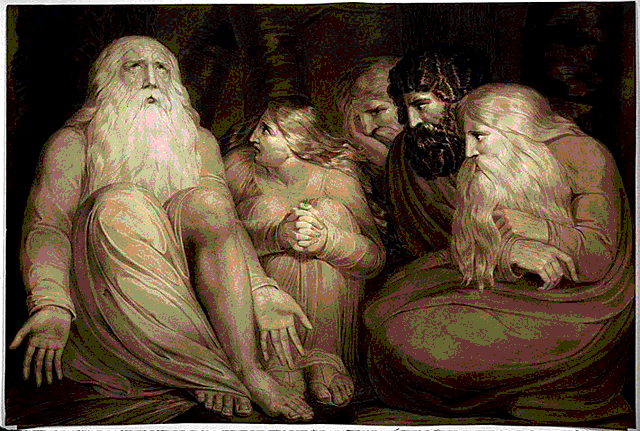
On that point I would receive some argumentation, I’m sure. Many people detest the book of Job. The eponymous hero of the book seems almost blasphemous to some, and a complaining ingrate to others. In the course of his suffering four friends stop by. The last one, surely a later addition to the text, toes the party line of orthodoxy that the book severely shreds. Job also contains some of the finest poetry from the ancient world and has given modern English several catchphrases still currently in use. I’ve always felt a kinship with Job. While my lot has not been as pathetic as his, I have had enough set-backs to lend the book a kind of nostalgic patina. Even in their wrongheadedness Job’s friends can spill out poetry. And there is wisdom to be had in that dusty book. In the end I was probably the one who was wrong. There is nothing trivial about the book of Job.

Blake'sJob