All Relative

Among the most compelling questions raised by consciousness is “where am I from?” Humans are a species of widely traveled individuals and despite the fiction that we all derive from happily married couples, we often end up distant from our relatives. Over time we may forget who they were. Our descendants, however, may be very curious. I have spent some time, over the years, climbing my family tree. It’s endlessly fascinating because you find that the research is about people’s stories, not just who was coupling with whom. Those of us of non-American ancestry who live in America often wonder how we came to be here. Families preserve stories, and sometimes those stories are embellished over time. I’ve spent more than an afternoon or two in county clerks’ offices thumbing through records to try to push things back just one more generation. Who were these people who led to me?

The Mormons, among other aspects of their theology, have contributed greatly to genealogical research. It is an American religion indeed. My family recently gave me a DNA tracing kit, run by ancestry.com, as a gift. Although it wouldn’t answer all the questions about my background, I suspected it would either confirm or deny some of the stories. The results just came in, and, amazingly, family stories were right about on the mark. I’ve always called myself an “American mutt” but it would have been more accurate to say a “northern European mutt.” Mostly Germanic, English, and Irish, I fit into the typical early settler paradigm. There are minor traces in there that I’m not sure I understand, maybe less than one or two percent—some Asian, some African. All of this will take more research. You never really find out who you are. Completely.
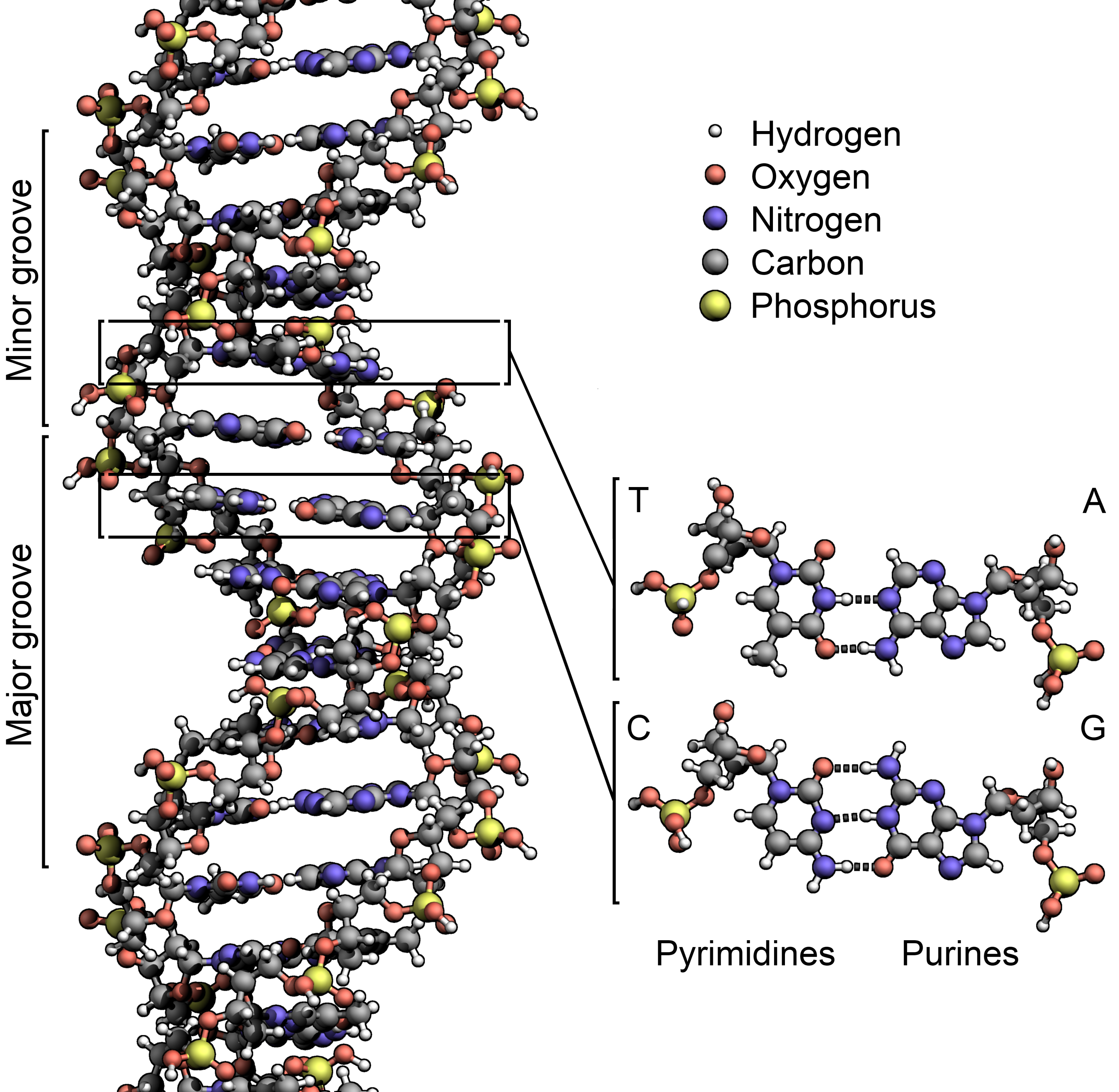
Image credit: Zephyris, Wikimedia Commons

Image credit: Zephyris, Wikimedia Commons

DNA testing is the stuff of science. It isn’t a precise science in that it can’t tell the stories of those ancestors. It takes family tradition to do that. I know that one Irish ancestor stowed away on a ship and she arrived in America not as a paying passenger. I know another branch came as a German engineer and his wife, and that their son opened a bakery. Some of the branches have been here since the Revolutionary War, but they were also germanic—were we Hessians? I haven’t had time to read through all that the Mormons have discovered about me, but I’ve got a pretty good idea that family tradition hasn’t failed me here. While the stories can’t themselves be confirmed by the science, they are not inconsistent with the results. And when it comes to finding out who’s your daddy, the answer really depends on how far back you look.
Burnt Over

I find myself in Syracuse. Skirting the very edge of the Burnt Over District, Syracuse is only a short distant from Oneida, birthplace of one of the uniquely American religions to have been conceived in this area. Moving further west, several of the religions following the “Second Great Awakening” roared through the state, including the one that was to become the Mormon Church. Looking out over the rugged hills, I wonder what might be in this land that inspires such religiosity. Americans are known world-wide for their religious predilections, and back before the South took the privilege of doling out religious mandates, upstate New York was busy churning out new religions. Of course, this was in the days before the extreme urbanization of culture took hold. Individuals, often isolated from others and struggling to survive in a sometimes harsh climate (they are calling for snow this weekend, still), they turned to God in new and innovative ways.

There must be a point at which religion reaches satiety. How many religions does one nation need? Thus, revivalists found a tired population here in the Burnt Over District. How much energy does it take to build a new faith from scratch? Some flared brightly and burned out (like the Oneida Community), while others flourished to the point of putting forth presidential candidates (I need not say which new religion has offered us a candidate too wealthy to countenance). Something in the soil, perhaps. Something in the mountain air.

Scholars opine that the Second Great Awakening occurred in part, at least, in reaction to the skepticism that was surging through intellectual circles at the time. America has always been good for a backlash or two. While many thinkers were praising the accomplishments of intellect, Smiths and Noyeses were at home brewing up that new-time religion for which Americans thirst. We are great consumers of religion. In the early 1800s revival after revival spread through New York, as well as through the southern states. The south reacted by boosting the Methodist and Baptist populations. New York gave us new religions. Americans aren’t that choosey. In a pinch, just about any religion will do. I stand here in Syracuse, the mid-April snow drifting down about me and wonder what is about to awake in this skeptical age.

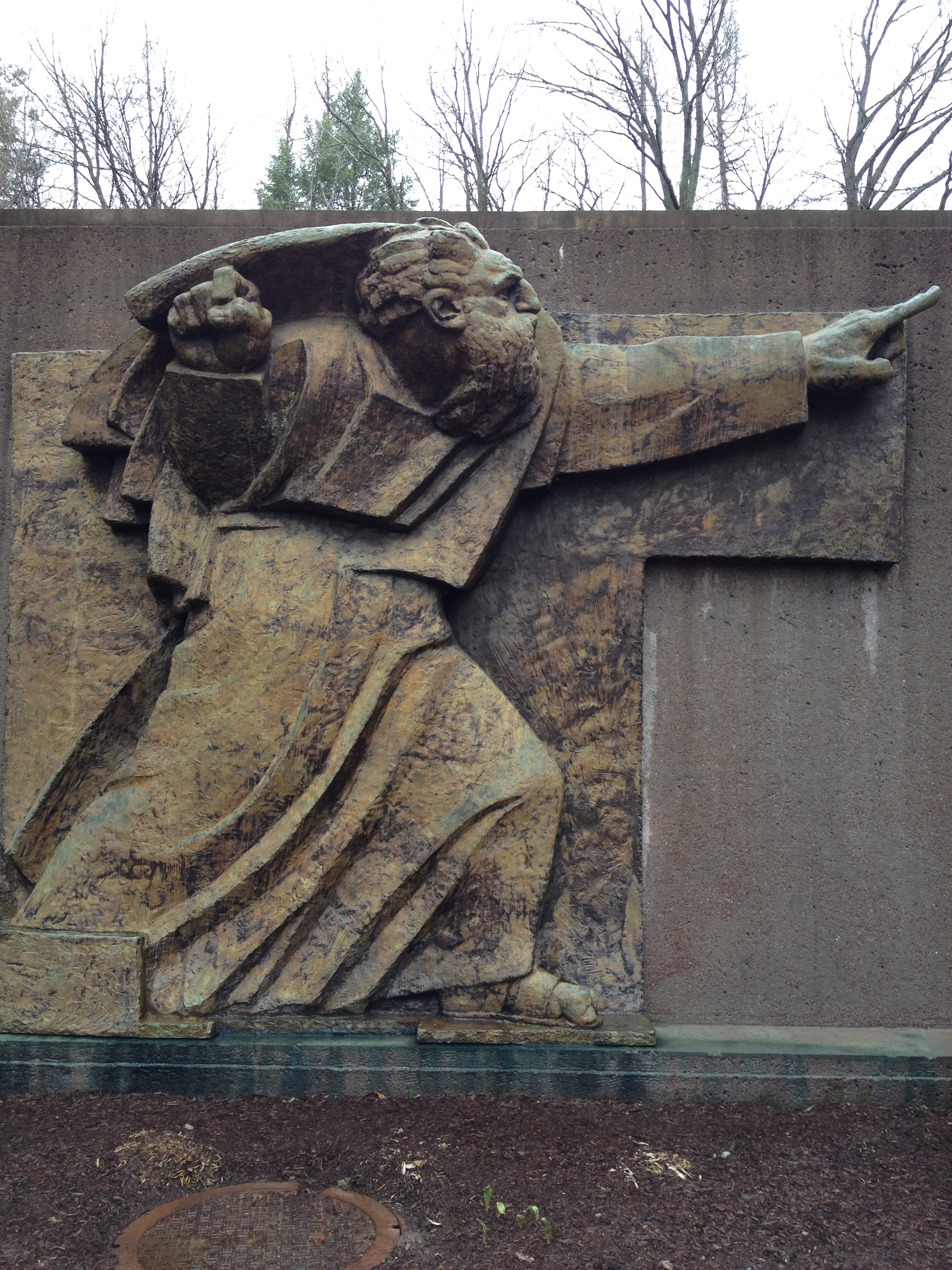
Moses starts a new religion

Moses starts a new religion


Marmots and Briny Deeps

While driving through Utah some years back, I spotted a large rodent next to the road. Born with a need to announce automatically every land-animal I see while driving, I called out “there’s a marmot!” My wife, half-asleep, said “A Mormon? Where?” We were headed toward the Great Salt Lake with an ultimate destination of Dinosaur National Monument. Naturally we saw many more Mormons than marmots. The story of the Church of Jesus Christ of Latter-day Saints has always fascinated me. The whole concept of the “Great Awakening” and “Burnt-over District” conjure images of apocalyptic vividness where nineteenth-century evangelists are shaking angry fists at the declining modern world around them and are warning of the imminent approach of an angry deity.

I naturally found it interesting when the paper declared yesterday that the Mormon Church has decided to back anti-homosexual discrimination legislation. This doesn’t mean the Latter-day Saints approve of the practice, just that they don’t want gays to be unfairly treated in the secular world. One of the implications of a changing world is that modern readers often lose sight of the fact that the world in which the Bible originated was a very different one than the one we inhabit. “Homosexuality” was not a lifestyle in biblical times, but that does not mean there were not men and women born gay. The real issue was the misplacement of “seed” that vital element that mysteriously led to new people. The only references to same-sex “love” in the Bible commend the depth of friendship. The only problem is where the seed ends up.

The story of Sodom and Gomorrah is an etiology for the Dead Sea. The major crime of Sodom, as even Ezekiel directly says, was lack of hospitality, not homosexuality. The city that does not extend hospitality to the needy and the traveler is truly wicked. It is buried under fiery brimstone covered with stagnant water. I dipped my pinkie into the Dead Sea and touched my tongue when I was there (this might explain my current state of mind). The saline brew was gut-wrenchingly revolting. So as we parked beside the Great Salt Lake a couple decades later, I decided to repeat the experiment. I was disappointed; nevertheless, if salty lake basins are a sign of God’s wrath we really ought to wonder whether the salinity will lighten up just a bit more now that an act of human decency has occurred in Utah.

GreatSaltLake

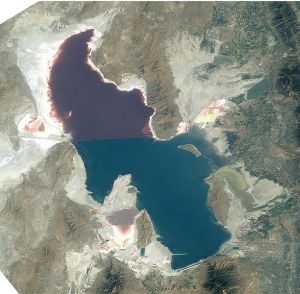
NASA-eye view of the Great Salt Lake