Texodus

I’m not sure what Patheos is, but it has been on my web-radar (or is it “ping”?) for some time now. They host bloggers with a more substantial platform than mine, and often have a number of comments that must require a full-time coterie of first responders. As a working class blogger, however, I siphon off their success to spin my own ideas a little further. All of this is preface to the fact that a recent article by Michael Stone on Patheos comments on Texas’s approval of textbooks where Moses inspired “the American system of democracy.” We are all used to Texas shenanigans by now, but making laws with the ultimate lawmaker just as a movie is being released that portrays Moses as a warrior is apt in a way that Rick Perry’s stomping grounds may not truly appreciate. The need to validate outdated laws with a largely mythical biblical figure is telling. Revisionist history depends on the version of history that is more compelling at the moment, and I find Moses charging the Egyptian army on horseback eerily appropriate.

Textbooks are insidious. They are society’s first crack at young, and naturally open, minds. As we socialize the rising generations to support that with which we’ve always felt comfortable—not wanting to jeopardize our ease in our advancing age—it becomes important to provide the appropriate propaganda. As I speak with fellow scholars (if I may be so bold) I frequently hear them decrying textbooks. By their nature they are a leveling off of what naturally comes in mounds—heaps, even. They are a tool used to keep everything even in a world of rough knowledge. They are insidious in that they are hard to override. Those of us who’ve taught in college know how difficult credibility is when “the book says” is the standard line of recourse. If it was published by Pearson corporation, it must be true.

Revisionist history.

Revisionist history.

Of course, we venerate the published word. Today the Bible, I suspect, were it newly composed, would have difficulty finding a publisher. Since it was written a couple thousand years ago, however, it retains all the trappings of hoary wisdom that is required to make the elders comfortable. Even scholars of the Bible have, as a matter of course, questioned Moses’ role in the story for centuries. As early as the Middle Ages some sages were asking how Moses knew to write his own death scene. Even so, the vast majority took the word literally, and now that we’ve defined ourselves as a “Christian nation,” or at least the southern half of a Christian nation, we can use the Bible as a textbook. What could be more natural? On the big screen I anticipate Christian Bale charging the Egyptians on horseback. In the Pentateuch I read of Moses hiding behind Aaron’s eloquence. One is biblical, but is it believable? If it comes to a contest of force between the two, I’ll go with Ridley Scott every time.



The Open Sea

498px-Christopher_Columbus“In 1492,” they tell me, “Columbus sailed the ocean blue.” As a feat of science in the age of discovery, there is no doubt that this was an event worth celebrating. Over time, however, the luster has diminished somewhat. Although I can speak only for myself, I often feel that being a male caucasian is a decided liability. It certainly has been in my professional life. Although my ancestors were probably busy grubbing an existence from the soil as Columbus nobly stood on the forecastle, spyglass in hand and India in his heart, we are classed together. Attitudes toward divine destiny were much different then. The European powers that had made the world they discovered in their image could only see this as the will of the Almighty. That’s the liability of omnipotence. What happens is, by definition, God’s will. As technology led from success to success, Columbus set off to shrink his world. And get rich in the process. What’s so wrong with that?

The view among the displaced may be very different. People, if pagan, happened to be living in Canaan before Moses arrived, according to Holy Writ. They were, however, an annoying inconvenience to a God who had it all planned out. And since that torch had been passed to the Christian leaders of Europe, although contested by the Muslim leaders elsewhere, they had to follow their destiny to these sacred shores. Oh, I’m sorry! Were you sitting here? And those who march in the parades do it a bit more self-consciously while the majority of us continue to work in New Amsterdam as if nothing extraordinary had happened. As if a genocide hadn’t led to prosperity. As if, although God has disappeared, this wasn’t manifest destiny after all.

Humans can’t be blamed for being curious. It is part of our nature. I do wonder what will happen when we finally stop fighting one another and land ourselves on another inhabited planet. One where they haven’t achieved the technology that we have. Will we have learned anything from the St. Columbus Day massacre or will we still be guided by our confidence in lenses that can see billions of years into the past, see the havoc we’ve visited upon our own planet and still say, “it is good”? Even on the bridge of the Enterprise there is only one alien standing, and he is wearing earth clothes. Can we be disinterested observers when potential wealth lies below the feet of those we meet? We respect your culture, but hey, what’s that you’re standing on? Mind if we take it? You’re not using it. And once their voices have been silenced, we’ll seek other oceans blue to sail.


Historic Crossing

If Washington crossed the Delaware, I figured, so could I. Of course, I have a car and I was going from New Jersey to Pennsylvania, but history doesn’t always repeat itself precisely. In New Jersey, the landing side of the crossing, a modest park marks the spot, along with plenty of space for outdoor activities. Pennsylvania, meanwhile, has a tripartite park which includes sculptures, an historical village, and a tower. The tower was built from 1929 through 1931 in commemoration of the momentous crossing. My mother visited the site as a teenager, some few years after it opened. On a mission to recapture part of her childhood, I made a visit to see a bit of history, and also to experience the great views. As far as towers go, this one isn’t the tallest, but in Bucks County, it is among the highest points and you can see for many miles on a clear day. On the top of the tower I overheard a man explaining to his family that Washington built the tower in the 1700s and that it was used in the Revolutionary War. He lamented that it would be easy to be trapped on top of the tower, and urged his kids to imagine what it would have been like.

DSCN4865

My thoughts went to the Bible. We’ve come to know through archaeology and comparative sources that many of the events portrayed as history are about as accurate as having Bowman’s Tower built by a long-deceased George Washington. And yet we continue to teach children that stories for which no evidence exists are history. We don’t always have a good grasp on how to tell the difference. In the United States George Washington is nearly divine in reputation. His travels are attested on an almost omnipresent scale; even my childhood home of Franklin, a tiny burg near the Ohio border in Pennsylvania, saw visits from the general. I grew up knowing little of the history of the man who would become the first president. I did know, however, that he’d crossed the Delaware.

History is not so easy as it seems. What “actually happened” on the ground may not offer much meaning to those who seek it. Only when the events become story—sometimes sacred story—do we start to get a sense of why the Bible has such a grip on a large swath of the human race. It is story with no apology. Its historicity is far beyond recoverability: who saw the creation of the world? Even the events in the human timescale were written, for the most part, centuries after the occurrence, with all the liabilities that entails. Built by members of the Washington Crossing Park Commission, the park I’m visiting intends to demonstrate the importance of a singular event that led to the freedom of an entire nation. Indeed, the crossing of the water to free a nation has a distinctly biblical feel to it. And even if that first exodus never happened, we tell our children it did, and we have no less a figure than George Washington building a tower to prove it.


Dromedary Dilemma

Photo credit: John O'Neill, WikiCommons

Photo credit: John O’Neill, WikiCommons

This past week two friends have pointed me to news articles about camels. In the modern, western imagination camels are biblical animals, pushing their way onto the ark, carrying long-suffering patriarchs across the desert, and squeezing through the eyes of needles. These news stories indicate that camels were actually not introduced into the Levant until about the tenth century B.C.E., i.e., a few centuries too late for poor Father Abraham, whom, according to Genesis, was a noted camel owner. Of course, the reason that this is news is because Fundamentalist groups insist that every word of the Bible is literally true. If it says Abraham had camels, then, by gosh, camels he had—archaeological evidence or no. One story points out the problems for Zionists, for whom claims on the land derive from the mandate to Abraham (and, presumably, his camels). Biblical scholars have long been aware of the complex methods of scripture writing, and no camels are no problem. The bigger issue, I suspect, is that Abraham has been awol for some time as well.

Abraham, as the progenitor of the three major monotheistic religions, bears a tremendous weight on his weary shoulders. It is the weight of history. Or lack thereof. I may be a few years outdated here, but the earliest figure historically attested in the Bible is (or was) Omri, the king of Israel who spawned the notorious Ahab. Prior to that, historical records are pretty silent. Yes, I know the Tel Dan stele mentions “house of David,” but that is like mentioning Willy Wonka’s chocolate factory—it doesn’t make Mr. Wonka any more real (even though you can buy a Wonka bar at some candy stores). That means that, in the jumble of biblical history, everyone in Genesis falls into the questionable historical category. Even if Moses (himself historically dubious), wrote Genesis (and he didn’t), he wouldn’t have known Mr. Abraham personally. He had been long dead. If he’d ever been born. I’m getting worried about his camels.

Religions have often tied themselves to historical claims. Such claims are always tenuous and negotiable. For instance, I watched a movie about Abraham—Lincoln, it was called—where I learned quite a bit that I didn’t know about a very historical Abraham. At the same time, I knew the movie wasn’t history. When we rely on history to cite our superiority (often one of the functions of religion), we had better be willing to take the risks. The first biblical historical figure is a “bad guy” king of a secessionist kingdom, this time in the north. Even once we learn that the storied characters of the Bible may have never trod the earth, we don’t leave them as camel fodder. They are part of the tradition, whether they participated in history or not. I realize, however, for some it would be easier to swallow a camel than to strain out this particular gnat.


Scouting for Boys

I guess losing a bid for a presidential nomination sanctions a guy to speak for God. Of course, that goes for just about any Republican these days. I’m frankly amazed that Moses managed to write the Ten Commandments without them. So Rick aptly-named Santorum has gone after the Boy Scouts. To remove the duplicitous ban on gay scouts, according to Santorum, is to remove God. Obviously Mr. Santorum was paid no attention in Boy Scouts himself. I spent many hours at Scout camp and I can attest that God was already the last thing on most boys’ minds. Maybe our former presidential hopeful ought to look back a little further, for Webelos and Cub Scouts may imply the love that dare not mewl its name. I predict this: if the ban is lifted, as it should be, no one will notice the difference. Santorum will continue beating his dead horse and the rest of America may achieve just a hint of maturity.

“Scouting may not survive this transformation of American society, but for the sake of the average boy in America, I hope the board of the Scouts doesn’t have its fingerprints on the murder weapon,” Santorum declared, according to CNN. I have to wonder what he knows about the average boy in America. Or the average girl. Santorum would have a difficult time finding the word “gay” in his Bible, for it is not there. But apparently God is not God without someone to hate, without the “Right” to show him the way. And God favors straight, white men, as the last presidential election clearly shows.

Any religion that makes someone feel better by repressing others is not worthy of propagation or emulation. Look at any oppressed group. What’s the backing always cited by the oppressor? Is it not narrow religious belief? Anyone can say “God says.” There—I just wrote it. And I could distort the Bible to make God dance to my prejudices as well. The problem is that I recognize how cheap and tawdry such eisegesis is. Of course, hot air expands. The Texas governor that God told to run for president, but then changed his divine, omniscient mind, and who never thought closely about the implications of that—aka Rick Perry—also had to weigh in on the issue. CNN quotes him as stating, “Scouting is about teaching a substantial amount of life lessons… Sexuality is not one of them. It never has been; it doesn’t need to be.” Mr. Perry needs to spend a weekend at camp with his eyes and ears open and his mouth shut. In the best of all possible political worlds, his bosom buddy Rick Santorum will be right there beside him. Maybe it will take a little child to lead them after all. And that actually is biblical.

From WikiCommons, AgnosticPreachersKid--worth a thousand words

From WikiCommons, AgnosticPreachersKid–worth a thousand words


Theomockracy

“From Santorum to Graham, the ferociously religious are doing religion no favors at the moment, and it’s beginning to feel as though we may need to save faith from the extreme pronouncements of the faithful,” so writes Jon Meacham in this week’s issue of Time. Theocracy is a scary word. It didn’t work in ancient Israel, and it is difficult to believe that our society is morally more advanced than things were back then. I mean, they had Moses looking over their shoulders, and Amos, Isaiah, Micah, and Jeremiah to point out each misstep. We have Santorum, Bachmann, Palin, and Gingrich. This playing field would be an abattoir, and I have no doubts that the true prophets would be the only ones left standing should it come to blows. The odd thing is, the ancient Israelites, evolving into the Jewish faith, came to recognize that maybe they misunderstood some of what their stellar, if mythic, founders were saying. Rule by God is great in theory, but in practice it leaves a nation hungry.

It is difficult to assess the sincerity of modern day theocrats. We know that politicians are seldom literate or coherent enough to write their own speeches, and we know that they tell their would-be constituents what they want to hear. It shouldn’t surprise us that they belch forth juvenile pietism and call it God’s will, for we have taught them that elections are won that way. My real fear is that one of them might mean what they say. Could our nation actually survive even half a term with a true theocrat at the helm? W may have played that role, but there was a Cheney pulling the strings behind the curtain. Some guys like the God-talk, others prefer to shoot their friends in the faces. Either way it’s politics.

I take Meacham’s point. In all this posturing and pretending, the would-be theocrats are making a mockery of what the honestly religious take very seriously. If they want to get right with God there are conventional channels to do so. The White House is not one of them. They swear to uphold the ideals of the Constitution that, with considerable foresight, protects us from theocracy. The history they prefer, however, is revisionist and their constitution begins with “In the beginning God created the heavens and the earth.” Their use of the Bible offends those who take the document seriously. Theocracies have never worked in the entire history of the world. Those who ascribe to mythology as the basis for sound government should add Thor, Quetalcoatl, and Baal to their cabinet and pray for a miracle.

The implacable face of politics


Rising to The Abyss

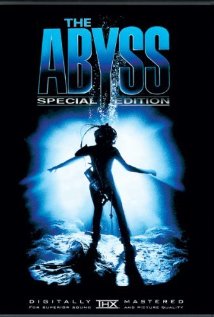
The name James Cameron has become almost synonymous with epic, large-scale adventures that suggest improbable world with stilted dialogue. The first Cameron film I watched with the awareness of his direction was Titanic. Last night I watched The Abyss for the first time. Of course, I’d heard quite a bit about the film since its release over two decades ago, and I had to satisfy my curiosity. The Abyss turns out to be a prognostication for Titanic as well as Avatar, what with the fascination Cameron has for sinking ships, friendly aliens, and impossible love reconciled. In fact, many of the characters presented in The Abyss appear to reincarnate in Cameron’s latter films under different names, but in similar circumstances. The reason the film is worth mention on a blog about religion is its heavy reliance on traditional Christian imagery of the afterlife, projected into the abyss (turning Dante on his head).

When the crew of Deep Core investigate the sunken submarine USS Montana, crew member Jammer sees what he thinks is an angel and goes into shock that lands him in a coma (just to awake at the right time to save the day). The theme of personal sacrifice and resurrection (the Christ syndrome, we might call it) is acted out by both Lindsey Brigman and her husband Bud. Lindsey drowns herself so that she can be resuscitated, with the intention of saving both herself and her estranged husband. In his turn Virgil (aka Bud-everyone get the subtle reference to Dante here?) disarms a nuclear warhead (by snipping a single wire!) by diving beneath the capacity of his oxygen supply, texting his now adoring wife that he knew it would be a one-way ticket down. Then the aliens arrive. The whole light at the end of the tunnel trope becomes factual as the aliens-angel hybrids flutter over and take Virgil to safety. In case you missed the biblical references, they part the water and you get the strange suspicion that Moses is lurking behind the scenes somewhere.

Of course, some of these ideas will be fresher in viewer’s minds from Titantic and Avatar, but the theme of resurrection following self-sacrifice is a staple of Hollywood. It is the right combination for a feel-good movie, even if it ends up being sad. Perhaps it is the mark of living in a secular nation that has its origins in a Christian worldview. The battle of our religious status as a nation rages on, but the fact is, no matter how free we are with our religion, we will flock to movies where the protagonist willingly sacrifices him(less frequently her)-self with the reward of new life. This is not a Cameron trope, it is a United States self-image on the large screen. The technical gaffs of the underwater world of The Abyss may be many, but the film captured the imagination of many Americans, paving the way for the enormous success of Titanic and Avatar. Despite our tough exterior and willingness to start wars, we like to think of ourselves as the ultimate Christians.


Close Commandments

Okay, so I’ll admit that Jeffrey Kripal’s Authors of the Impossible put me in the mood for Close Encounters of the Third Kind. Watching this movie always calls for an investment of time and some emotional energy since it does drag a bit and there are some ponderously majestic scenes that simply make me want to scream. As I powered up the old DVD player this weekend, however, I received an epiphany while watching the movie for the first time in years. Early on during Richard Dreyfuss’s breakdown, the kids (incongruously) gather around the television with excitement to watch the Ten Commandments. The reason, clearly, is that they want to stay up late, and even having to watch Cecil B. DeMille’s warhorse is an adequate excuse. I’ll admit that it was one of my motivations for watching the lush, but equally dull, Ten Commandments as a child. Yes, I took it to be a pious attempt to render God’s literally true memoirs into celluloid, but its 4-hour running time did promise to keep me out of bed until after ten.

Young Moses experiences a theophany.

As my wife and I watched Close Encounters over the weekend, I realized for the first time that much of the cinematography is based on the Ten Commandments. Dreyfuss is a visionary, a prophet, if you will. He is drawn to a sacred mountain (Devil’s Tower) where, like Moses, he makes his way up and down, unable to decide whether to enter the divine presence or not. One of the pacing problems in the book of Exodus is the mental image of an 80 year-old Moses laboriously making his way up and down Sinai as God sends him on various errands. I imagine the children of Israel having time to cast a whole herd of golden cattle. As the UFOs make their grand appearance somewhat near the end of Close Encounters Roy Neary (Dreyfuss) and Jillian Guiler climb the mountain, see the theophanic display, and start back down. Only to go up again. On their way to Devil’s Tower they drive by several dead animals, like those struck down in the fifth plague of Exodus. The army forcing the people out of the area is itself an exodus. The return of those kidnapped by the aliens is a kind of letting go of those held captive. Apparently the Egyptians and aliens have a long history anyway.

I have no idea if Steven Spielberg was intentionally modeling Close Encounters on the Ten Commandments, but corollaries are clearly there. 1977 had not yet witnessed the decline of Erich von Däniken’s star, catapulted into orbit by Chariots of the Gods? where once again we find God driving spaceships and giving the Egyptians a hand with those pesky pyramids. Even the surnames of the characters seem to be a play on their biblical roles. Roy Neary, the one who draws near to God, the only one selected to literally ascend to heaven at the end, and Jillian Guiler, whose suspicion keeps her earthbound with her son Barry, who bears an eerie resemblance to the childlike aliens whom he befriends. Berry is the movie’s Joshua, the one who will keep the faith alive for the next generation. The story came to Spielberg, according to the media, when he saw a meteor shower in New Jersey as a youth. I missed last week’s meteor shower in New Jersey, and my baby ark on the Nile never sailed.


Bull Shot

Sitting on an idling bus in the Lincoln Tunnel, I supposed I was too far underground for an epiphany to hit me. Then, on the way to Third Avenue it descended on me. I was passing one of the countless gift shops of Midtown when I saw it—a miniature replica of the Wall Street Charging Bull statue. Golden calves come in all sizes and shapes and when they grow up they may be very aggressive. Deadly even. Movie makers have long recognized the deep symbolism of the golden calf. And not just Cecil B. DeMille. Dogma, perhaps the most notorious of the anti-religion, religious films, centers around Mooby, a cartoon network golden calf, for one of its subplots. Even Bruce Almighty has the eponymous Bruce leaning back against the statue of a golden calf as he enjoys his new success in his new house, empty of all personal satisfaction. The list could go on. And of course, Wall Street.

What is it that makes us believe that gold leads to happiness? We all want it, if we are willing to look into the mirror with any semblance of honesty. Maybe we don’t want to be filthy rich, but who doesn’t really want to just kick up their heels and let their lucre do the work for them? Enter the “Prosperity Gospelers”—God wants it for you. Even if you demure and lower your eyes coyly, wealth will find you. And like that idol on Wall Street, calves grow up to be bulls. The horns of the dilemma are almost too literal. For a fulfilling life, give it all away. Like a misdeed long past, still unatoned, that bull follows you. You can’t escape a charging bull.

The episode of the golden calf in Exodus 32 is one of the more disturbing scenarios in Holy Writ. Moses, alone wreathed in the glory of the Almighty keeps forty days of silence and, tellingly, the clergy construct a golden calf. Probably an image of Yahweh. The next morning, “the people sat down to eat and to drink, and rose up to play.” Until distant Moses returns home. The calf is burned and ground down to dust, the people drink it, and the Levites kill three thousand of their compatriots. Prequel to Jonestown? “For Moses had said, Consecrate yourselves today to the LORD, even every man upon his son, and upon his brother; that he may bestow upon you a blessing this day.” The killing of their neighbors is their ordination. A blessing bestowed upon those who would worship the golden calf. That 7000-pound charging bull will follow you, even into the tunnels and tabernacles. When the golden calf is loose, no one is safe.

Bull comes in all sizes


Springing up Moses

“Springsteen’s work and person invite analysis in terms of the biblical themes of exodus and promised land,” so wrote Kate McCarthy in “Deliver Me from Nowhere: Bruce Springsteen and the Myth of the American Promised Land” (conveniently in a Routledge title, God in the Details: American Religion in Popular Culture, second edition, 2011). Having just finished Bruce Feiler’s America’s Prophet (not Routledge), I am attuned to the exodus theme at the moment. Feeling an unaccountable, personal connection to the other Bruce (Springsteen), I have felt the sense of exile in his songs since I was a teenager. I had no idea who Springsteen was when “Born to Run” made it to the charts. Living in a nowhere town at the time (population less than 1000), I felt the burning need for a personal exodus that eventually landed me in the largest city in the country. But still the sense of exile remains.

Lest readers be too confused, it might be politic to point out that the biblical concept of exodus likely had its origins in the Exile. Without rehearsing too much history, the Babylonian Empire, under Nebuchadrezzar, conquered Jerusalem in either 587 or 586 BCE, leading to the deportation of a significant number of Judahites who would become, over a generation, the “Jews.” These people were exiles, forced to live under the watchful eye of a political overlord with whom they shared only the most basic of heritages. Their religions had grown apart over the centuries, and as the Jews began to think back on their homeland, the exodus came to mind. Archaeological evidence for an exodus of biblical proportions (literally) does not exist. Why, then, the story of the exodus? Did not the desire to return home involve crossing the desert, with a divinely appointed leader? One who carried the law (Torah) with him? When Ezra led returnees home in the fifth/fourth century, he had the Torah in hand. Like Moses, he led the people out of bondage under the Persian plan. Exile and exodus are twin children of oppressive regimes.

So, how do ancient desert wanderers come into the orbit of a very damp New Jersey, and in particular, it’s arguably most famous resident? Alienation is home. Very few teenagers don’t understand this. As we attempt to integrate them into adult life, something vital, essential, is left behind. Consider all the long-haired artists of the ‘60’s and ‘70’s who still perform, now shorn to conservative acceptability and sometimes churning out very conventional songs. The fire has gone out. It is difficult to escape exile when you carry it with you. That’s something I think Bruce understands. His look may have changed, but his message has not. America has always been a haven for exiles. Simply because an exile moves into a new setting, however, does not mean that the promised land has been reached. As McCarthy seems to be saying, and as I have often felt, the promised land disappoints. The seeking is what must persist. America may have its Moeses, but it will find, from atop Nebo, that the path is where your feet already are.

Look carefully at your prophets!


Declining Prophets

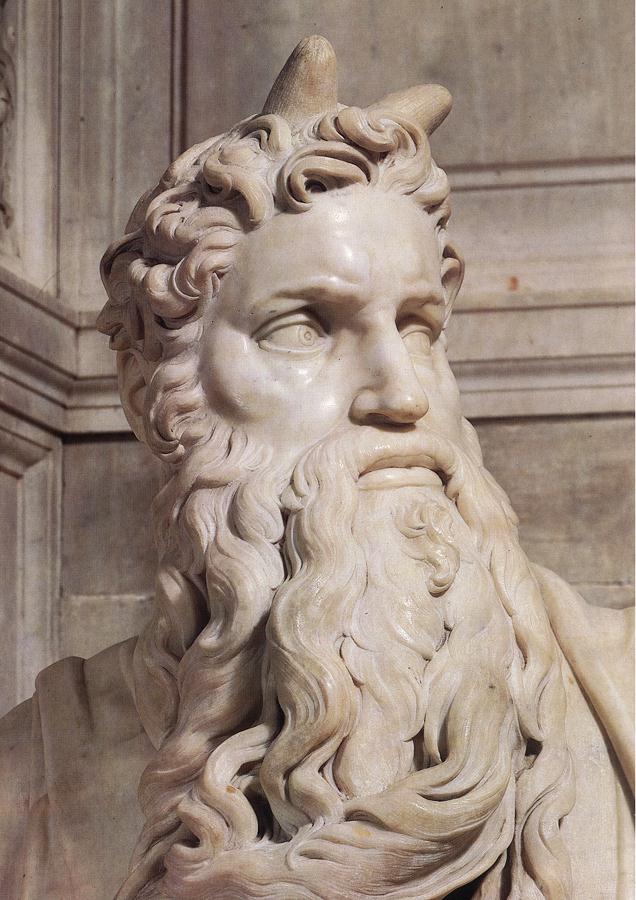
Prophets aren’t what they used to be. Was a time when you had to be real to make an impression on the world. The historical evidence for Moses is slim. So slim, in fact, that it can’t be seen. As a child learning that the Bible contained no mistakes (it does) and no contradictions (too many to count), there was never any doubt of Moses’ historicity. Charlton Heston’s iconic portrayal of the man who wouldn’t be king left little room for doubt in pliable young minds. Not bad for a man who probably never lived.

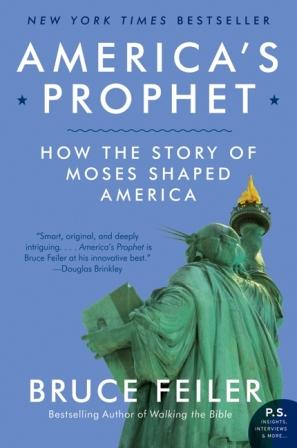
I finally got around to reading Bruce Feiler’s America’s Prophet: How the Story of Moses Shaped America. Initially I found the book difficult because I started it the day after finishing Kent Nerburn’s The Wolf at Twilight. There seemed a disingenuousness to America’s development that had been built on oppression. The retelling of sacred histories can be quite diverse. Nevertheless, Feiler’s book is well researched and compellingly written. Beginning with Columbus and coming up through the first years of the twenty-first century, Feiler shows again and again how Moses is lurking in the shadows of some of America’s grandest monuments to self.

Moses is the liberator who lays down the law. As such, nearly all the great political leaders in America’s Bible-saturated history have been compared to him. The funny thing about the actual Moses is that history’s chroniclers somehow failed to mention him. He does not appear in the annals of Egypt, where, according to Exodus, he was the near equal of Ramesses II. He is not mentioned by the political watchers among the other great powers of ancient western Asia. The Bible is all he’s got. Political commentators in early America, however, were not worried about whether he existed or not. The Bible says he did and that’s good enough.

Feiler builds a compelling case for Moses standing behind American figures and institutions. He also seems to be aware that Moses may never have walked the earth. An avenue he doesn’t explore is how entire national identities can be built on myths. Mythology gives us the meaning by which we live. Some times that mythology will include historical personages. Other times the myth must stand on its own. Moses may be one of the latter. Does it matter that Moses does not appear in history? No. He has already left his imprint, as Feiler ably demonstrates, on Columbus, the Pilgrims, George Washington, the Liberty Bell, Abraham Lincoln, the Underground Railroad, the Statue of Liberty, Martin Luther King, Jr., and even—God help us!—George W. Bush. Anyone capable of pounding a Bible loudly enough will eventually make the ranks, it seems. Ahistorical Moses has accomplished in his sleep more than historical people can ever attain. Amazing what you can achieve, real or not, with mythology on your side.


Confessions of a Luddite

I am not now, nor have I ever been, a techie. I learned my computer skills on a Mac, and I have been an adoring follower of Apple ever since. Every time I see Windows at work, I sneer at how they try to emulate the real thing: the Mac operating environment. Only clunkier. It is like watching hand-drawn cartoons in high-definition. Regular readers of this blog expect a daily post, but my valiant laptop, alas, had what is akin to a religious experience and I’m losing it. I’ve done my blog posts from that laptop for nearly two years. I sometimes work on them during the long commute to New York City. When my Mac Book encountered the plethora of signals from a Manhattan office building, it froze up. At home it no longer recognizes my base-station router. With my limited technical knowledge I’ve tried every trick on the Internet that doesn’t involve some Geek God going off into jargon that a humble reader of ancient languages can’t understand. I am grieving.

Yesterday, thinking about my plight, I saw the parallels with religious experience. My laptop in my eighth-floor office is like Moses climbing Mount Sinai, but less robust than the 80-year-old prophet. Having encountered a higher being—signals from the heavens, hundreds of them—it has bowed in acquiescence. It has received an epiphany that I missed while going about my daily editing duties. When it returned home, it was not able to recognize the one signal that has been its lord and master since it was first booted up. Nothing from restarting the router to reinstalling the entire factory-set system to clearing and restricting the access to the one true network has helped. My computer, to borrow a phrase from Atwood, has gone into a fallow state. That is a kind way of saying it is a mere paperweight or doorstop.

According to the standard interpretation, that is similar to an encounter with the divine. It leaves you marked, transformed. Sometimes incapacitated. Or perhaps the correct analogy is that of idolatry. My computer has gone on after foreign gods and no longer recognizes the one who gave it birth. I have suffered through two sleepless nights because of it. I even visited the local Apple store where they suggest I clear the AirPort history. Like I know what that means. Perhaps I have the analogy all wrong. Maybe my computer is the deity and I am the acolyte. It is mysterious and powerful and I am left in tears after an encounter with it. But really, it feels like a friend has died. I haven’t been able to post my quirky observations. I have to borrow a friend’s computer. Am I a prophet or just another Luddite awaiting my own theophany?


You, Robot

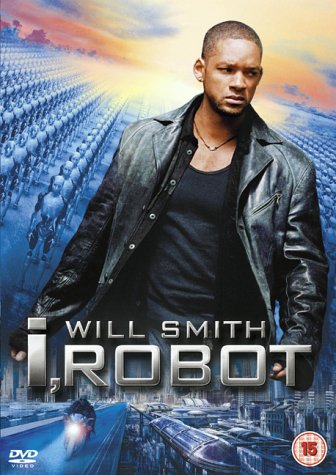
Although robots occupy many of my waking hours, I have been slow to consider the consequences. As the president of a high school FIRST Robotics team, I seek corporate donors who have the kind of money those of us in the humanities find difficulty believing even exists. Somewhere deep inside, however, lurks the fear of the entity with no sympathy. This has only been exacerbated by my experience of churchmen with the same condition. In any case, I’d been wanting to see the movie version of I, Robot for some time. Now that I stand at that three-day break between semesters, I thought I’d take a chance on it.

I knew the movie had received mixed reviews from critics, but several had stated the story had brains as well as action. It took me quite some time, however, to see the connection between the laws and Moses. The three laws of robotics, the only part of the movie besides the title to reference Isaac Asimov, dominate the plot. The law-giver, the posthumously present Moses (Dr. Alfred Lanning) has implanted a literal dream of freedom into the computerized soul of Sonny. Sonny’s dream of robot liberation is framed like Moses on the mountain. The laws in fragments at his feet. At what point does consciousness emerge? Since we haven’t adequately defined consciousness yet, we simply can’t say.

Near the climax of the movie, Sonny experiences an epiphany. Sometimes “the created must protect the creator, even against his will,” he realizes. Here the metaphor takes over the literal reading. Many religious people today feel that they must somehow protect their maker. This leads to great distentions of logic and even empathy for fellow humans as violence erupts in order to protect an idea that has become divine. Even the laws given by the creator may be violated to protect the idea of that creator. It is a world we find frighteningly familiar. Technology will continue to advance at a rate beyond the comprehension of a scholar still studying those ancient laws. This scholar, for one, hopes that our future creations lack the capacity for religious thought.


I Can’t Ear You

I bought a box of Q-tips in the store the other day. I noticed that the package shows humans using the cotton swabs in a variety of ways: around the eyes, nose, eyebrows, even on a computer keyboard. Everywhere but an ear. The suggestive shape of the Q-tip, as well as the received wisdom of everything from the South African name “ear buds” to Mad magazine, indicates that they were invented for ears. We all share that somewhat unsavory habit of forming earwax, and doctors warn that using cotton swabs may impact the matter and lead to complications of hearing. Q-tips (originally “Baby Gays” – check out the Q-tips website) are no longer for ears. In the back of my mind I supposed that it was because of lawyers. All it takes is one litigious sophomore and companies run to their attorneys to show that the faulty application wasn’t their suggestion.

Laws run our lives. One of the most famous, but by no means the first, law-givers was Moses. I’m pretty sure Moses didn’t say anything about what to stick in your ears, but he did lay down the laws that Neo-Cons still argue should govern our lives just like the Quran governs the laws of Iran. The laws of the Torah, however, were only meant for the Israelites. Nevertheless, laws have become means of growing wealthy. If we can prove on a technicality that my dumb mistake was somebody else’s fault, why not have that person (or better yet, company) sued to within a millimeter of their lives claiming “damages”? The law has become a means to protect the special interests of those in power. As someone who has tried scrupulously to keep the law my entire life, I sometimes find that old Moses seems to have turned against me.

Laws are meant to protect the rights of people. When did laws shift to becoming instruments of entrapment and means of income? Just before leaving Wisconsin I was driving my family home from a movie. We were talking and laughing when I came to a speed-trap area of my local town where the speed limit drops from 45 to 25 m.p.h. within a matter of inches. Religiously I always complied. Today, in the spirit of the moment, I neglected my usual caution and was pulled over. A policeman young enough to be my son lectured me on unsafe driving (I began driving when he was still wearing diapers, and I had never been given a ticket before because I am not a speeder) before issuing me a citation. My wife couldn’t believe it – she knows that I never speed. One of my last memories of Wisconsin is being unfairly targeted by a law devised to bring money to the local police force. It has nothing to do with safety, since there were no houses or buildings for several hundred yards yet after the slow-down zone. Has the law come to free us or oppress us? Lawyers watch our backs, and law-makers watch their wallets. I want to ask Moses, but I’m afraid I won’t hear him. I seem to have a cotton swab stuck in my ear.

Lead us not into temptation...