Peace

Mother’s Day should be a time for peace.  In these days when misogyny is in style, it’s an especially important holiday.  The one holiday to explicitly honor women, it’s always been an occasion for reflection for me.  We have 364 days of warring and hatred, and one dedicated to the givers of unconditional love.  I can imagine a different world.  One in which women don’t have to become alt-right to gain positions of authority.  Where compassion and humane treatment would be world priorities.  I can imagine.  Although fathers are necessary too, we have no shortage of men pushing forward their personal agendas.  None of them would be where they are without mothers.  And women are the ones who give us care.  I can imagine a world where Mother’s Day wouldn’t have to feel so politicized, almost polemical.

With all eyes on Pope Leo, I can’t help but think how many treat Mother’s Day like an indulgence.  You know you want to get back to your vices, so why not pay for them in advance?  Celebrate mothers today so we can get back to business as usual tomorrow.  I don’t believe that we’ve lost the ability for transformation.  We can make the world a better place.  Think what it would be like if, before undertaking some cruel action, a person stopped to imagine their mother watching them do it.  Would not the world start to improve?  It is a world where we seem to prefer guns to roses, but it’s also a world with an unwritten future.  Pay attention to your mother.  Maybe things will start to get better.

I believe in the transformative potential of holidays.  We have to take their lessons seriously.  I’m sure I’m not the only working stiff who lives life anticipating the next holiday when things might change for the better.  We have to remember, however, what the holidays teach us.  Not treat them as simply facile days of obligation.  Think of Mom and then get back to the grind.  It doesn’t need to be a grind.  We can learn to cooperate and get along, just like Mom told us to.  Instead of isolating such thoughts to a single day, we could repeat them like a mantra.  I don’t know about you, but looking at the headlines, I could do with a bit of peace and love.  And I still believe that things can, and likely will get better.  And I give the credit to our mothers.

Ordinary Heroes

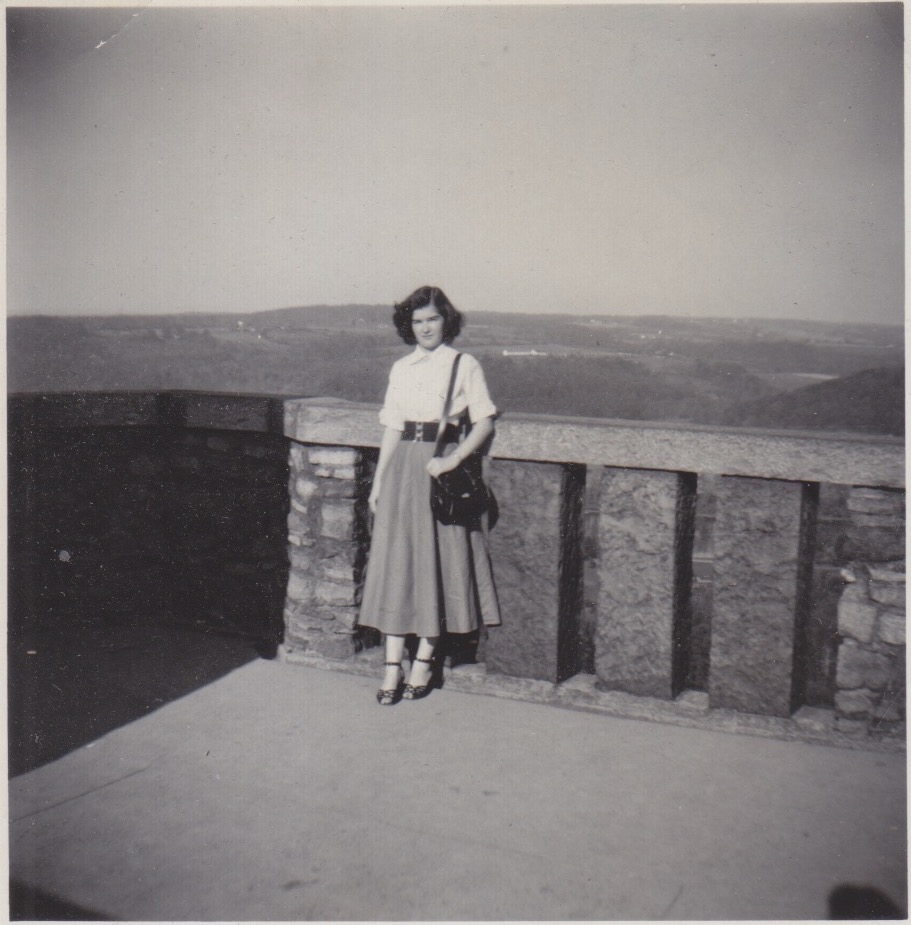
Mothers sacrifice to give us life.  Sacrifice lies at the heart of much of religion, so it may be that women resonate with this theme naturally.  Without mothers none of us would be here to read this right now.  Mothers are mortals, however, like most heroes.  Naturally I’m thinking of my mother today and how much like a hero she was.  Like many heroes, she was prepared to die.  Her love, however, lives on.  It’s difficult, if not impossible, to count all the ways a mother influences our lives.  Not all are gifted at it.  It’s a difficult job, and one for which there’s no “economic” benefit—you don’t get paid for supplying the world with future contributors to this human experiment.  So we pause to think of how we might show our respect today.

I try not to involve family or friends on this blog—I don’t like giving the internet everything—but the other mother in my daily life, my wife, has said it’s okay.  This week we received the news that her cancer is in remission.  This joyous news came just in time for Mother’s Day and gives us yet another reason to celebrate.  Mother’s Day keeps on taking new shades of meaning as life unfolds.  Nature both takes and gives.  Sometimes in rapid succession.  We need to appreciate all that mothers, women, contribute to our lives and society.  I’ve never been able to figure out why this is such a difficult thing to figure out.  Some men seem to think it’s not as important as things like making money and making war.  We couldn’t do anything, however, without mothers to put us here.

My thoughts are just a touch scattered today, being pulled this way and that.  Since my mother’s death last year we’ve passed Christmas, Easter, her birthday, and now Mother’s Day.  There have been plenty of occasions to stop and remember.  I know that my choices in life have been profoundly influenced by her guidance.  Her wisdom.  She always said that she wasn’t smart, but intelligence doesn’t come only from finishing high school.  Life is a teacher for all who are capable of learning.  Having come through a dysfunctional home life herself, and two difficult marriages, she managed to show how to exist in the world with grace.  And she taught the value of sacrifice through her own example.  We honor our mothers by treating women more equitably everywhere.  And guys, there are lessons to be learned here.


Mom

Mom

I just became an orphan.  I tend not to write about other people without their permission, but I have a few words to say about Doris Ruth Miller.  First of all, she was a saint.  I’m often accused of putting the needs of others before my own, and this is something I learned from Mom.  She set me on my lifelong course of reading the Bible, determining, in some inexplicable way, what I call a career.  Mom was born April 7, 1935 in New Jersey.  She was the youngest, and last surviving, of five siblings, and the only girl.  When I reached that age when children (as adults) get curious about their parents, I asked what town she was born in.  By that stage she couldn’t recall, but at one point she told me Cherry Hill, and at another, Asbury Park.  She never finished high school and never had any job training.  But she always believed.  She was faith personified.

She married to get away from a difficult relationship with her own mother.  My father, who died twenty years ago, was an alcoholic.  They had three sons together.  Mom, very aware of Dad’s condition, didn’t believe in divorce and stayed with him until she no longer felt safe doing so.  Not for herself, but for her sons.  Her life revolved around her children.  She eventually remarried and her final son was born.  This marriage involved a move to Rouseville, Pennsylvania—I’ve written about it before—my last childhood home.  Neither of her marriages were happy ones, but she was determined about two things: maintaining her faith, and caring for her children.  She believed unquestioningly and the only book I ever saw her read for herself was the Bible.

I only found out over the weekend that she was in rapid decline.  Circumstances (medical and financial) had kept us away for far longer than I would’ve liked or hoped.  I talked to her on the phone nearly every other day and told her with joy just about a month ago that we had finally got a car that would enable a visit.  We were planning on spending Thanksgiving with her.  The universe, which operates on its own timetable, had different plans.  Mom was a remarkable woman.  She was not afraid of death and she embodied these famous words from Paul of Tarsus: “O death, where is thy sting? O grave, where is thy victory?”  Mom lived eighty-eight difficult years.  She dedicated her life to others and lived the Gospel by example.  I miss her terribly, but I have no doubts about her being among the saints.  Thanks for life, Mom, and for showing how to love unconditionally.


Mothers’ Instinct

Maternity leave (not for me, but still) demonstrates just how sexist capitalism is.  This becomes very clear in publishing where schedules are reinforced by incentives (instead of paying properly) for meeting agreed-upon deadlines.  If an author gets pregnant while writing a book—not an unusual situation—it can throw shockwaves all through a book’s schedule from production all the way back up to editorial.  Why?  Because incentives are on the line.  It’s possible to counter with what if an author falls sick?  Or dies?  Yes, these happen too, but pregnancy isn’t an illness and isn’t infrequently a biologically constrained event—there is an age at which it ceases to become an issue.  So incentives, which are based on schedules drawn up before an author conceives, put the capitalist machine into a tizzy.

If employers didn’t rely on incentives, but paid better wages, this could make the issue less acute.  The entire system is devised from a male perspective.  Sickness and death do occur from time to time, but the invariability of a schedule (which ironically takes about nine months) is based on a view that doesn’t account for the somewhat likely event of a pregnancy.  I often think about this.  The corporate structure was made by men, for men.  We now give lip-service to equality while refusing to change the masculinist structure that underlies it.  By doing so the valuable contributions and improvements that women might make are kept under the standard business model.  No wonder it feels like we’re stuck in a rut.

Societal change is generally slow, and that conservative tendency preserves our property and our means of making a living.  If we gave women more prominence in leadership I would hope that this would start to change.  The male-oriented viewpoints of the capitalist entrepreneur, the stolid religious leader, and the halls of government, and even education, are reluctant to let people think differently.  We want to move forward, but we’re afraid of losing what we have.  This is why the conversation needs to widen.  Maternity leave reminds us that some things are more important than work.  Care for a helpless human being is something nearly all people would support.  It’s when they grow up that society feels it can safely ignore their needs.  We need a mother’s wisdom here.  Every time a pregnancy sets publication schedules in a frenzy I ask myself why we have to rely on incentives beyond just being the most human that we can be.