Experimenting with Quatermass

Hammer films are coy.  In these days of digital rights management, they’re often difficult to locate in the United States.  Even on streaming services.  I’d known about Quatermass since I was a kid.  I’d heard about Quatermass and the Pit as a pretty scary early science fiction-horror offering.  I’ve still never seen it.  Quatermass was a BBC television character, a kind of mad scientist figure.  The Quatermass Xperiment was the first of a set of four Hammer films based on him.  Also known as The Creeping Unknown, it was cast with an American Quatermass (ironically, it turns out) to appeal to American viewers (who can now seldom access the film).  In any case, one of the streaming services finally acquired rights to the 1955 movie.  The special effects were naturally primitive, but that doesn’t stop this from becoming a scary film.
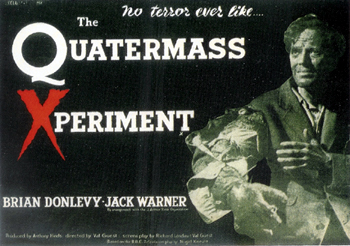
Watching these early movies is like studying history.  Other films were influenced by The Quatermass Xperiment, most notably Lifeforce.  I couldn’t help but think of Night of the Living Dead as well.  Quatermass, a rogue scientist, sends a rocket into space with three astronauts.  Since this was before we had any kind of conception of how this might actually be done, the idea seems implausible, of course.  The rocket returns with only one of the three crew members, and he’s morphing into something else.  Despite his arrogance, Quatermass realizes he has to cooperate with the police to contain the menace.  Inspector Lomax describes himself as a “Bible man,” unacquainted with science, and Quatermass considers his work superior to that or mere police.  When the hybrid is finally located and destroyed, however, it is in Westminster Abbey.

Although the runtime is just over an hour and some of the acting is quite wooden, this is an affecting story.  The scene where the transforming man encounters the little girl’s tea party bears elements of the pathos of Frankenstein.  Without the budget, science, and even acting resources of modern productions, The Quatermass Xperiment manages to fall squarely into horror with a monster I’d been waiting since childhood to see.  In those days you were at the mercy of your local television offerings.  Now that we have worldwide content on the worldwide web, we still restrict viewing so that the most money can be made from a movie that’s seven decades old, and its cohort.  In any case, this experiment has left me determined to find what Quatermass discovers in the pit.  Once that becomes available on a service I use.

Release the Wicker

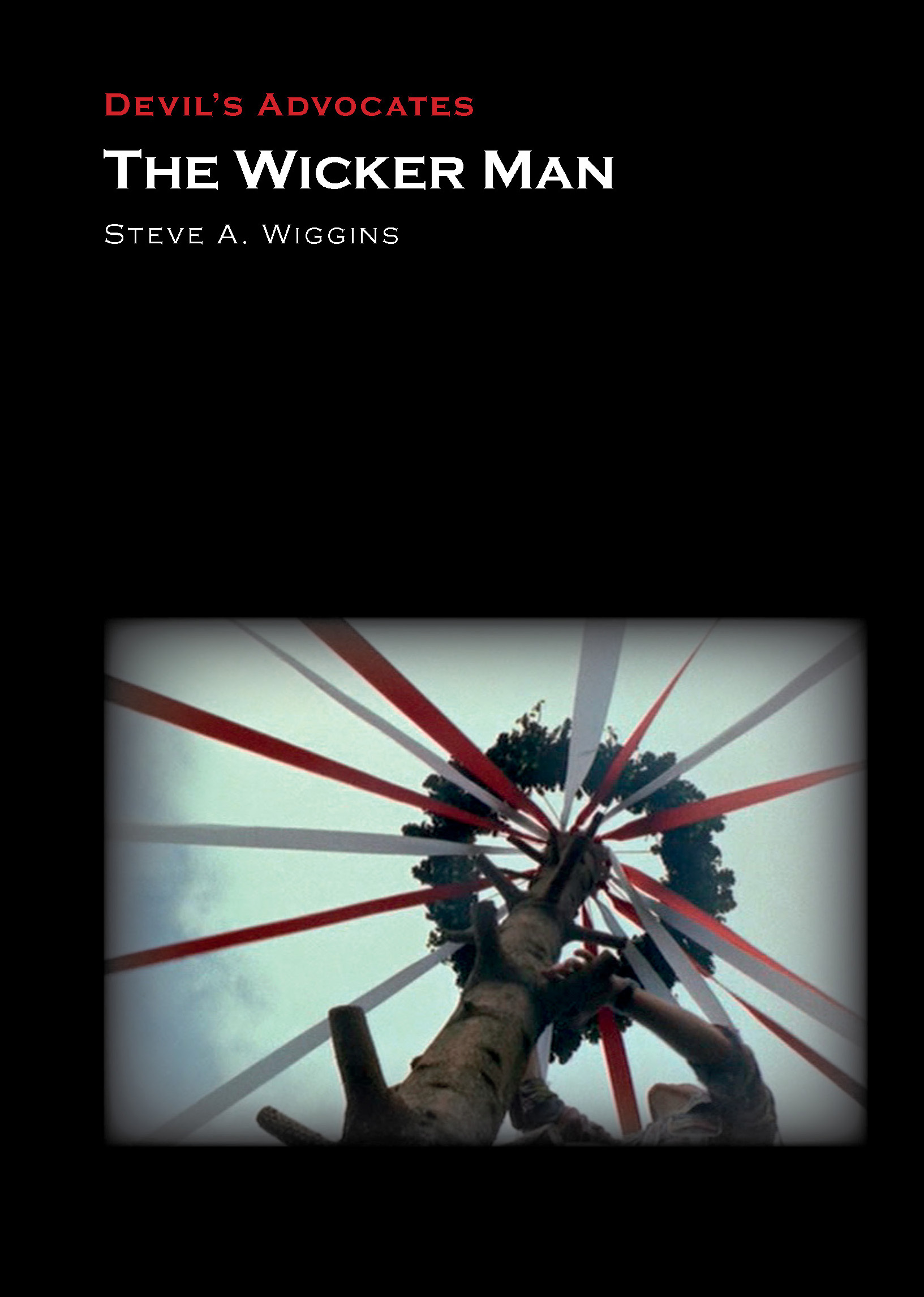
One of the many fascinating things about The Wicker Man is that even its release date can cause confusion.  There should be nothing so simple as to look up when a movie first hit theaters, but especially in trans-Atlanic efforts the dates are often different between the UK and the US.  The Wicker Man had a limited UK release on June 21 (quite close to Midsummer, it turns out) of this year.  It’d been released before, of course.  The initial UK release date was December 6, 1973 (twenty days before the US release date of The Exorcist).  Making its way to the US, it was first released on May 15, 1974—not long after May Day.  One of the features of the curious history of the movie is that it lacked support from its own studio.  Not surprisingly, it performed better overseas, particularly in America.

Release dates can be important, and can make a difference in a film’s success.  Again, the quirkiness of The Wicker Man reveals this—although set in late April-early May, it was filmed in November.  Actors had to suck on ice chips to prevent their breath from being visible.  And who’s thinking about May Day when getting ready for Christmas?  All of these factors swirl around in a mythology that the movie has developed.  My book went to the printer yesterday.  It should be out in August-September, hopefully in time to catch the interest of those who’ve gone to see it in theaters again.  I’ve lost track of how many times I’ve seen it.  I’ve watched all three released versions.  It feels like an old friend.

From the beginning, the plan was to release my book this year, due to the fiftieth anniversary of the movie.  It’s funny how simply surviving half a century can make something interesting to people.  There are plenty of 1973 movies that aren’t getting any particular boost this year.  The thing about The Wicker Man is that it became a cult classic.  Although it was never a mainstream hit, it has sent out its tentacles far and wide.  I notice references to it is unexpected places.  If you’re attuned to this you say to yourself, “that movie really made an impact.”  And it did.  When I first pitched this book idea to the editor of Auteur, I told him I’d do whatever I could to make a 2023 release.  Of course, I started writing it before Nightmares with the Bible came out.  My next book after the Wicker Man doesn’t have an anniversary release in mind.  That’s good, because like a moon-shot it’s nerve-racking to aim for such a narrow target, years in advance.


Entitled Titles

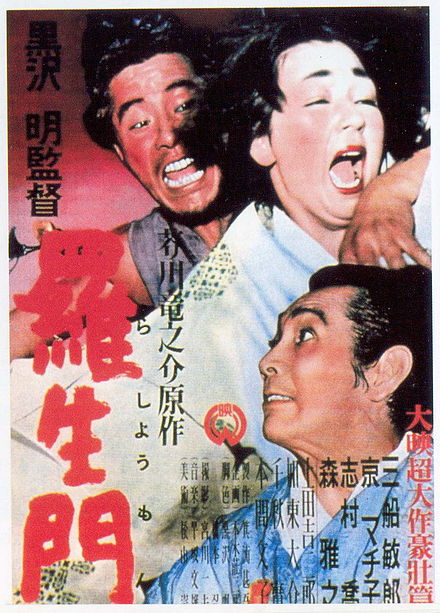
Movies have a tremendous impact.  Nowhere is this more obvious than in movie titles moving into standard vocabulary.  “McGuffin” (which autocorrect thinks is “McMuffin”) and the Wilhelm scream may not be household terms, but many people know what they are without being movie experts.  Even more impressive is when a movie title becomes its own noun.  I learned about the Rashomon effect not from movies, but from history.  When a story is told from more than one point of view, often with contradictory accounts, this is known as “the Rashomon effect.”  It’s named after a movie, Rashomon, that I’ve never seen.  I suspect I’m not the only one to use the phrase who hasn’t.  Movies can become points of reference.  We’re quite often visual creatures and movies can reach large audiences. The title plays a crucial role.

As the writer of a small blog with a small readership, and of books with small circulation, I often think of how movies manage to reach so many people.  I’m constantly discovering movies from before when I was born, or from countries far away.  They ask, like this blog, for only a little bit of time and yet they provide so many things to think about.  In many ways they are the mythology of our age, and no matter whether you watch on your phone or the big screen, you’re joining the ranks of believers.  Sometimes a movie becomes a cultural reference, such as is the case of “the Rashomon effect.”  But this can lead to its own set of problems.  Movies, like some bestselling books, often have one-word titles.  Sometimes that word fits many movies (as in Entity/The Entity).  Or sometimes it has a wider meaning, such as Avatar.  Or it refers to another well-known reference, such as Titanic.  I’m not picking on James Cameron here, but making a point that movies may make meaning, but they also bear the weight of their titles.

Titles are often sticking points with authors.  Many academic writers like the draw of the clever or pithy title, but such titles often hurt the sales of their book.  Using a quote as a title, apart from making confusion, also runs into duplicates.  Titles can’t be copyrighted, so multiple books (or movies) can use the same one. Quotes have long been favorites, so using them for titles is not a good idea.  I was distressed (mildly) when I realized that my fifth book, The Wicker Man, would bear the same title as the movie.  (That’s the way the series rolls.)  I’m now reading the proofs and thinking about titles.  My next book may not have a one-word title, but I hope I’m getting close.  And maybe it will have a little impact?


The Burton of Thought

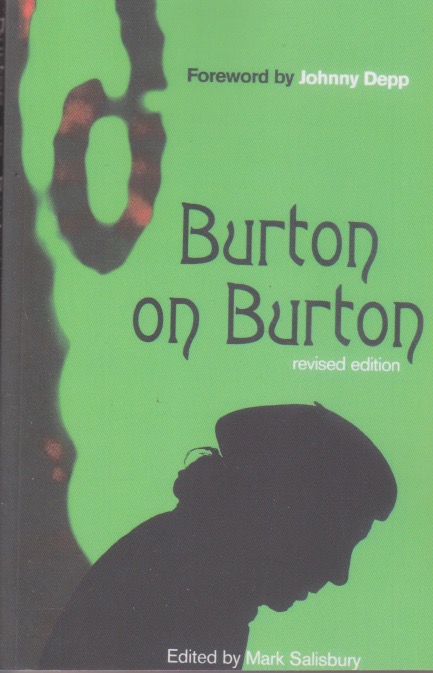
I haven’t seen all of his films.  Some of them I have seen I didn’t really like.  When Tim Burton does strike a chord, however, he does so hard.  Burton on Burton is one of a series of books of interviews with directors.  This one covers all of Burton’s films up to Corpse Bride with free-ranging answers to what are really more remarks than questions.  (The book is edited by Mark Salisbury.)  Although I’ve not experienced his entire oeuvre, it’s pretty clear that I share quite a few sensibilities with Burton.  He expresses that what he’s looking for in movies is feeling.  A good plot helps, but it’s the emotion he’s after.  And he knows that the dark isn’t bad.  At many points I had to shake my head and say, “I thought I was the only one who thought like that.”

This memoir is also full of information on the way movies get made—not the technical side, but from the studio or creative side.  Someone has an idea.  It may be original or it may be an adaptation of a well-known tale.  Sometimes, especially in Burton originals, they begin as a series of sketches.  Anybody who’s watched DVD extras knows about storyboarding.  A movie is sometimes laid out in a series of cards that show, step-by-step, the action.  Before that, or maybe during, a script is written.  In order to get funded—for all this costs money—a studio or production company has to pick up the concept.  The person pitching it might be a screenwriter or a potential director.  And, as in every avenue of life, money talks.  Once you’ve had a breakout success they start to pay attention to you.

Although Burton and I grew up with similar outlooks, he notes that he never did like to read.  Being a visual artist (he got his start at Disney), that’s perhaps no surprise.  You start to realize, once you get a sense of the number of people involved, why film credits go on and on.  It takes a village to make a movie.  Not only that, directors may be involved with several projects simultaneously.  That’s not so different from being an (unofficial) writer, I suppose.  At any one time, from my experience, I’ve got at least a half-dozen projects going.  Some will never be finished, most will never be published.  And who knows?  Maybe someday one of my fiction stories might catch a sympathetic (or perhaps simply pathetic) director’s eye?  In the meantime, we go on creating.