Fine Young

Horror is getting harder and harder to define.  Maybe it’s because movies are venturing further and further into mixed genres.  The best genre I’ve seen suggested for Bones and All is “romance horror.”  It is a most unusual love story with a tinge of the supernatural to it.  Maren has an unusual problem.  She eats people.  This started when she was three and her father, when she turns 18, sets her out on her own.  Another “eater,” Sully, finds her by smell, teaching her that eaters can identify each other that way.  Sully begins to creep her out, so Maren heads west to try to discover her mother.  She sniffs out another eater, Lee.  Not sure he wants to get mixed up with another person with his issues, he nevertheless allows her to come along.  They travel from Kentucky, through Missouri and Iowa, to Minnesota.  Along the way other eaters find them, by smell.
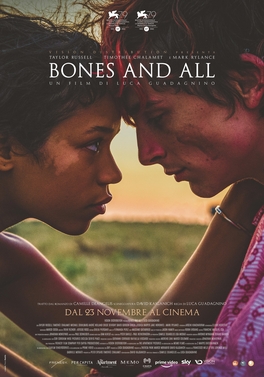
In Minnesota, Maren finds her mother in an institution and learns that her mother was also an eater.  Eventually Lee confesses that his father was an eater.  Sully, who’s mentally unstable (for an eater) has been following Maren and decides he has to kill her for what she knows.  Lee rescues her, but is critically injured in the process and insists that Maren eat him.  Now, from that description you might think this is either a comedy or a film with horror score and stingers, but it’s neither.  It’s a straightforward romance, following two lovers with a unique problem.  Only it’s not as unique as all that since there seem to be quite a few cannibals around.  The theme, and the feeding scenes, are definitely horror.  But is this a horror movie?

Although Maren and Lee are moral people, and likable, they are the monsters in this film.  While they try not to kill, they are driven to eat other people and they do resort to violence to do so.  The signature accoutrement for horror are absent as the focus remains steadily on the building romantic relationship.  You want Maren and Lee to succeed because they’re nice people.  But they are monsters according to definition.  Often in horror serial killers and other humans may serve the monster role in the absence of supernatural, or preternatural creatures.  There’s an almost vampire-film feeling to this story (the heightened senses, and all that blood) but eaters aren’t constrained by daylight or crucifixes.  It’s the kind of movie that keeps asking the question “What am I?” and leaves the viewer to try to digest a definition. 

Somehow Inevitable

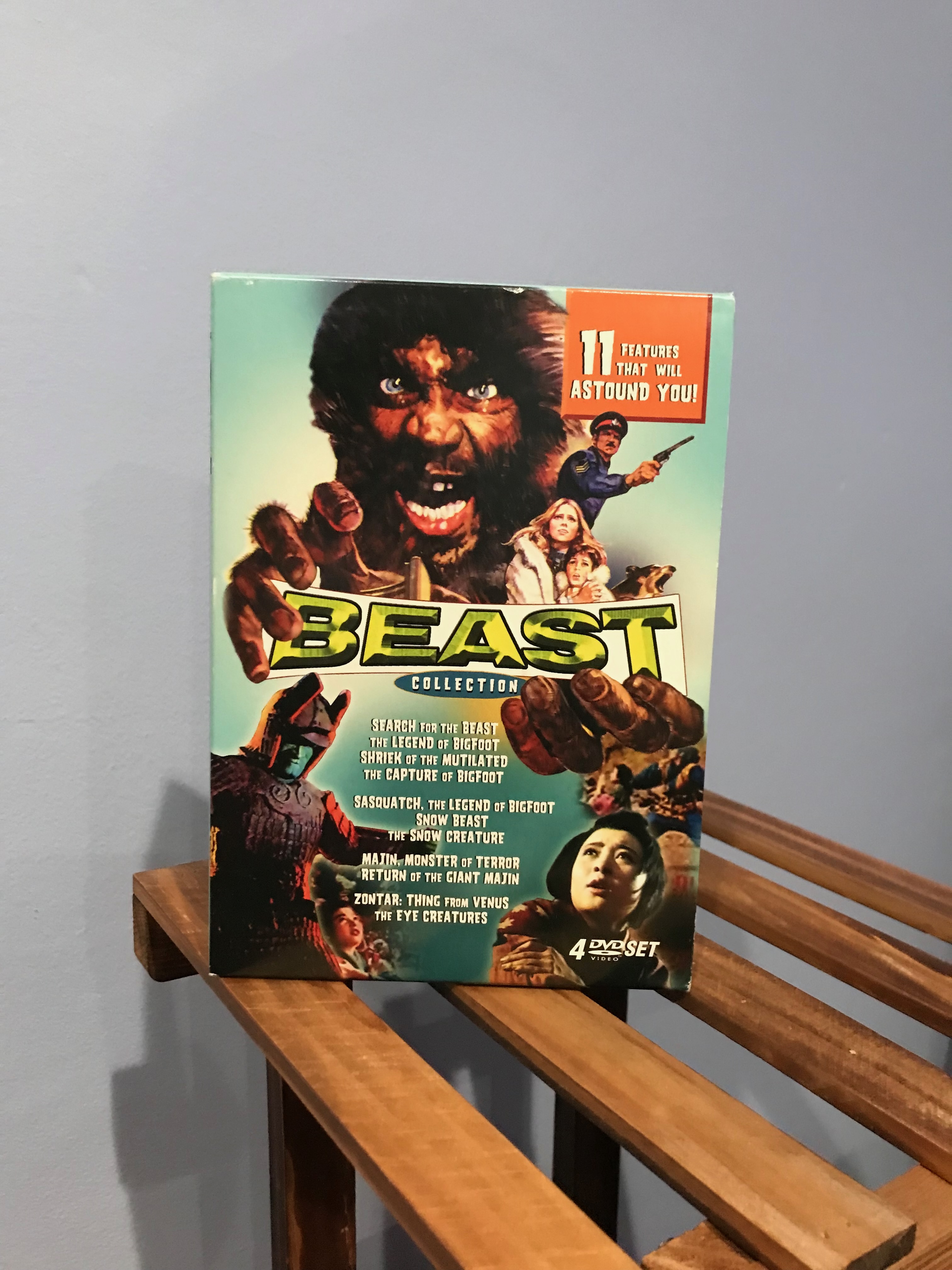
You had to expect me to write about Zontar: Thing from Venus.  I bought the “Beast Collection” set to see it many years ago.  In those days I tried to watch the movies through, in order but I didn’t make it through the first disc, even.  Well, now my perspective has changed—I figured I bought this to see Zontar, and Zontar I must see.  You do know that he controls people, right?  Zontar is a notoriously bad movie.  I saw it on television as a kid, and it may have even been close to the first run since it was made for television.  It’s actually a remake of a cheap Roger Corman movie, so it is a cheap remake of a cheap original.  Nostalgia, however, does funny things to a guy.  Although I saw it half a century ago, I remembered some lines precisely.  Television does funny things to young minds after all, I guess.

In case none of the injectapods has found you yet, it goes like this: Zontar, from, well, Venus, is a bat-like monster with three eyes.  He befriends an earthling outsider scientist, through laser communication, and commandeering a satellite, which becomes a passable flying saucer, lands in  a cave from which he takes over the small town of Jackson, which has a military base and plans to take over by having a general assassinate the president.  Meanwhile, his scientist friend directs Zontar to the four people that he needs to take over the world: said general, the sheriff, the mayor, and his best friend scientist, Curt Taylor.  Things don’t quite go Zontar’s way, despite most of the movie’s running time showing him totally in control.  It feels like it’s a lot longer than its 80-minute running time.

Still, I have to agree with the TV Guide review that says it isn’t as bad as everyone says.  Yes, it is a bad movie but it does have a few redeeming features.  Some of the scenery is nice, and you even begin to care for some of the characters.  The rogue scientist’s wife—despite her constant nagging—is the first person who tries to kill Zontar, and she does this for love.  When Zontar gets her you feel a little sad.  At least I did.  You see, the injectapods haven’t reached me yet and I still have human emotions.  Ironically, it is just such things that drive me to rewatch movies like Zontar all these years later.  And the movie ends with a voice-over moral of the story.  Those 80 minutes weren’t completely wasted.


Red Dress

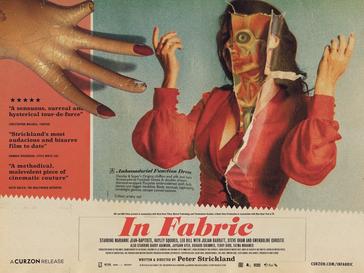
Horror sometimes takes a creative turn.  In Fabric is an art film as well as a horror offering.  The basic premise is that a certain red dress, sold at a bizarre fashion store, causes the death of those who wear it.  Sheila, recently divorced and having trouble with her adult, at home son, buys the dress for a date.  After leaving her with a rash, the dress leads to an arm laceration, a German Shepherd attack, an attack on her son’s girlfriend, and finally, Sheila’s death in an auto accident.  The dress is then picked up by a guy as a stag party prank where the groom has to wear it.  His soon-to-be wife finds it and wears it also.  The man, Reg, loses his job as a washing machine repairman and has no luck finding another.  While Babs, his wife, is shopping at that same strange shop, Reg’s furnace malfunctions, killing him with carbon monoxide.  Babs is trapped in the shop as it catches fire and burns down.  All those killed by the dress are shown working on new ones at the end of the film.

The movie is also called a dark comedy and there are some funny bits.  The sales clerk, Miss Luckmoore, speaks in cryptic, quasi-poetic style, never giving a straight answer to anyone.  The shop’s owner does the same.  And some of the scenarios are amusing.  Although horror, the movie isn’t really scary, but it is stylish.  Unlike some horror comedies, the tone isn’t really funny, but more wry.  And it’s a bit confusing.  The overall story arc is easy enough to follow, but some scenes just confound.  I kept waiting for an a-ha moment when everything would fall into place.  Of course, ambiguity is a hallmark of many intellectual films.

Something that I’ve been noticing, no matter the era that it’s from, is that films really need to justify that last half-hour, if they’re going for 120 minutes.  Maybe it’s just that we’ve become accustomed to the 90-minute feature, but I’ve notice that most two-hour movies (not all) seem to suffer from some pacing issues.  Of course, an art-house movie will defy conventions.  For example, the point of view is Shelia’s for about the first half of the film, then she’s killed and new characters are introduced.  Yes, this shows that the dress goes on killing, but another approach might’ve been to have the protagonist learn about past killings and realize the dress is coming for her.  But then, that might’ve been less creative.


Grown-up Jane

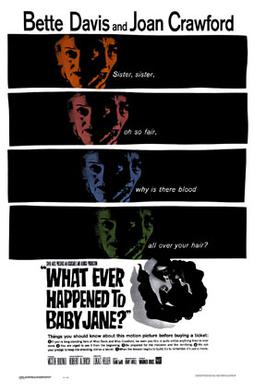
Watching Stephen King’s list of scary movies in the 30 years prior to 1980, I’ve found one or two that hardly strike me as horror.  Some of the others remain remarkably effective today.  I had the wrong idea about What Ever Happened to Baby Jane?;  I’d supposed from the title that it had to do with an abducted child, a topic I generally avoid.  When looking up yet another movie on Tubi that was free, but only in Spanish, I saw Baby Jane on offer and decided to give it a try.  I was pretty impressed.  It’s overly long and drags a bit, but the story is good.  One thing about horror films from the period is that they relied on story because the special effects really didn’t exist to make movies such as many we now see—splashy, but shallow.

In case you’re even more outdated than me, Baby Jane was a successful child actor whose sister grows up to outshine her.  Blanche, the sister, is crippled in a car accident that has been blamed on Jane for the last couple of decades.  Jane really can’t act, and once her sister is disabled, the two live on Blanche’s money until Jane’s growing insanity threatens her wheelchair-bound sister.  Trapped upstairs without any means of communicating with anyone who might help, Blanche is tortured and starved by her sister.  There’s an incredible amount of tension, even if the events begin to seem unlikely as the two hours roll on.  There are a few dropped subplots—the neighbor who harbors no suspicions at all, and the musician Jane hires who discovers her secret—but overall the tension keeps building.

One thing that occurred to me was that part of the plot involves leaving a phone extension off the hook to prevent Blanche from getting help.  I pondered how some young people who only know phones as personal devices might not understand this.  How, when I was a child that if you left an extension off the hook no calls could go in or out.  And that the annoying “off the hook” tone didn’t yet exist.  Ironically, now you could watch the movie on your personal phone that you carry with you at all times.  While this isn’t a perfect movie, it is an engaging one on many levels.  The sisterly rivalry, the growing insanity of Jane, and the helplessness of an invalid all work together to create some frightening moments.  Technology sure makes life convenient, but it cuts off some avenues for horror.  Of course, as Unfriended shows, it opens new venues.  I agree with King—this is one of the actually scary films from before the eighties.


Not Friendly

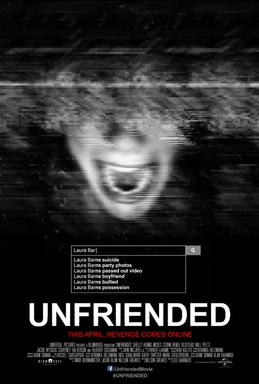
A ghost-revenge story, online.  Unfriended is one of those low-budget horror films that manages to be remarkably effective through the acting and its overall verisimilitude.  It’s also a kind of parable about the dangers of living our lives online.  The only problem is that technology is moving so fast that a ten-year old movie looks outdated.  The scary thing is many people are online even more, especially since the pandemic that came a few years after the movie was released.  Six high-schoolers are chatting on Skype (see what I mean?).  A friend in the group died by suicide a year ago because of an embarrassing video posted of her on YouTube.  Even a mature viewer like me can easily recall how deeply peer pressure cut in high school.  It’s a difficult time for all of us.  In any case, an unidentified person has joined the call and makes threatening comments via chat.

Of course, there are multiple apps (we called them programs long ago) running and nearly the entire movie is on the screen of one of the kids’ laptops.  In real life I was waiting for my low battery warning to come on, because I was watching it on a laptop, and all the notices that appeared on the upper right-hand corner made the thing look real.  Naturally enough, the kids start getting killed off.  Since this is horror their deaths are shown, if briefly, on screen and mostly they’re bizarre.  Hovering in the background is a webpage that warns against opening and answering messages from the dead.  As Blaire (whose screen we’re seeing) comes to realize that the unknown person is the girl who died by suicide, Laura (the dead friend) forces them to play a game of Never Have I Ever.  This leads to dissension and fighting as confessions come out and friends begin dying.

There’s a heavy moral element involved—the teens are being “punished” for typical teen behaviors.  Interestingly, toward the end I noticed that Blaire had a crucifix on her bedroom wall.  The kids don’t talk about religion at all (something I did do as a teen) but they all have a moral sense of what they did wrong.  The webpage about not answering online messages from the dead suggests confessing your sins, if you do open such a message.  Blaire tries to confess, but she has a secret that’s kept until the very end, so I can’t say what it is here.  I wouldn’t want to be unfriended for providing a spoiler.


Historic Vampires

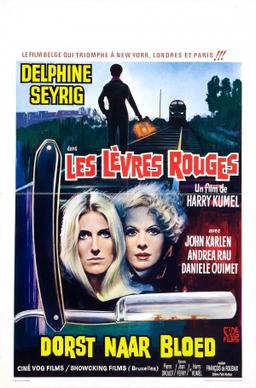
Vampire movies have always been a guilty pleasure.  The thing is, there are so many of them that watching them all would be the task of a lifetime (and a substantial budget).  Those of us who are constantly looking for, shall we say, new blood, can find that our lack of knowledge extends back for years, particularly if a movie didn’t make it big in our home country.  Daughters of Darkness is an early Euro-horror about Elizabeth Báthory.  A stylish, almost art house movie, what particularly struck me about it is that it was very well written.  The use of blood is restrained, given the topic, but verbal descriptions of Báthory’s excesses makes for a particularly gruesome scene.  So, about the story.  (This is from 1971, so I won’t worry about spoilers too much.)

A young couple (his backstory is inadequately explained in the movie, apart from being aristocratic), newlyweds, are headed to introduce her to his family.  Stefan (he) isn’t exactly the ideal husband (played convincingly by John Karlen), but Valerie (she) really wants to meet “mother.”  Stefan stalls the trip, and, in the off season, the couple have a luxury hotel to themselves.  Then Elizabeth Báthory shows up with her “secretary.”  Stefan is a little too interested in violence, as a string of murders make the headlines.  Meanwhile, Elizabeth begins making moves on Valerie.  We come to understand fairly early on that she’s a vampire, but no fangs appear and she’s always impeccably dressed and sophisticated.  Her secretary, who is having second thoughts, is accidentally killed while setting up Stefan as an unfaithful husband—again, the writing here is quite good—and Valerie becomes Elizabeth’s new secretary.

There’s a strong feminist aspect to this film, perhaps because Delphine Seyrig (Báthory) was a prominent feminist and would be attracted to such roles, it would seem.  The daughter of an archaeologist in Beirut, she supported women’s rights and there appear to be elements of this in the movie, although it was written by four men.  I was a bit too young for this movie when it came out, and art movies wouldn’t have stood a chance where I grew up, at least not in circles my family knew, so although Dark Shadows mainstay Karlen took a rare male lead role in the movie I’d been completely unaware of it.  But then, vampires are that way, aren’t they?  They tend to be old and well-hidden in the shadows.  Then they come at you with a bite when you least expect it.


Escape Room

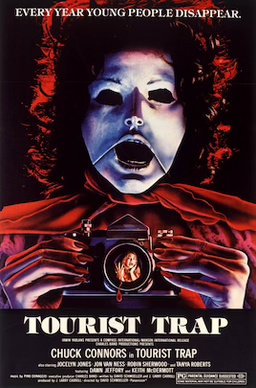
I didn’t go out looking for horror films in 1979.  I knew about Alien, of course.  Everyone did.  Even in a small town.  I didn’t see the movie until many years later, though.  I was still in high school and money was scarce (college was all either scholarship, loan, or work-study money).  If Tourist Trap ever came to town I didn’t know about it.  In fact, I didn’t know about it at all until reading Stephen King’s Danse Macabre.  Enough time has passed that the movie is now streaming for free and, indeed, it is David Schmoeller’s first film.  Critics didn’t love it, but King thought it had some appropriate eeriness, so why not?  It isn’t horrible—I’ve definitely seen worse.  And movies with animated mannequins hit that uncanny valley at just the right angle, even if poorly written.

The story’s a bit convoluted.  Five young people are on vacation and get drawn into, well, a tourist trap.  There’s a fair amount of psychokinesis that goes on, and the tourist trap is Slausen’s Lost Oasis, which is filled with animated wax-work figures/mannequins.  These are what make the film creepy.  As the plot unfurls, the kids get killed off, one-by-one, as horror viewers come to expect.  There is a bit of a “reveal” toward the end, so I won’t spoil it.  It is fair to say that insane antagonists were fairly common by 1979 and that the blurring of real people and manufactured ones is a bit unnerving.  There are some questions of motivation, and many times the characters don’t take the obvious steps to help themselves.  Still, the movie isn’t too bad.

I was drawn to it, having seen Schmoeller’s real groaner, Netherworld.  And King’s recommendation.  There is something about movies that are lacking in undefined ways that keeps you watching.  I was curious how Tourist Trap was going to end up.  There were several points at which I thought I’d figured it out, only to be told, “but wait, there’s more!”  The more wasn’t always really worth waiting for, but the ending has a bit of a payoff.  There is some slasher aesthetic here, but it’s unconventional enough that you may at least be kept guessing.  The thing that the movie gets right is that human figures that aren’t human are scary.  Many films play on this, of course.  Even if you’ve seen others, it still tend to ramp up the shudder factor a bit.  It only took four decades for me to stumble into this tourist trap, and it was a reasonable brief vacation from reality.


Re-Unborn

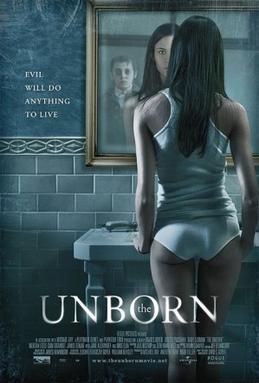
Some months ago I wrote a post about the possession movie The Unborn.  I don’t watch movies to pass the time.  I watch them to learn something.  And many horror movies are fairly smart.  In my blog post on this one I didn’t go into too much analysis because I already knew at that point that I wanted to share my thoughts on the larger venue, Horror Homeroom.  My piece, “Ecumenical Exorcism in The Unborn” has just been posted there.  The fairly small number of regular readers I have know that I post about horror movies with some frequency.  They help me to make sense of things, especially in this insane world where petty dictators keep rising to the top of the political spectrum because, apparently, we hate ourselves so much.  Horror helps prepare you for that.

In any case, The Unborn is a good example of how religion and horror work together.  They cooperate very nicely, in fact.  Religion is pervasive enough in horror that it would be an error to say “religion-based horror” is a sub-genre of the whole.  No, the two go together as naturally as chocolate (vegan, preferably) and peanut butter.  If I had a million dollars I might go back to grad school to explore just this nexus.  (I wouldn’t be looking for a teaching job either, because “fool me once, shame on you; fool me twice…”)  I’m not the only one who knows that there’s something there.  Ironically, before horror films proper were even invented, many churches actively discouraged the movies.  Perhaps they were inherently aware that these represented competition.  And there was already too much competition, what with other denominations and all.  But some films do occupy the same space as religion.  Quite often horror.

If you’re interested in how The Unborn fits into this picture, head on over to Horror Homeroom.  And yes, there is a book-length project in all of this.  It’s one I’ve been chipping away at for years.  That’s because the connection is obviously there, but I haven’t, to my own satisfaction, been able to figure out exactly what it is.  Perhaps I need to add a degree in psychology to my bucket list.  These things meet similar mental needs for a cross-section of people.  I suspect that most horror fans don’t think about it too much, which may be why my blog isn’t exactly jammed with traffic.  That doesn’t mean that the connection’s missing.  There are many things in life yet to be discovered.


Hunting

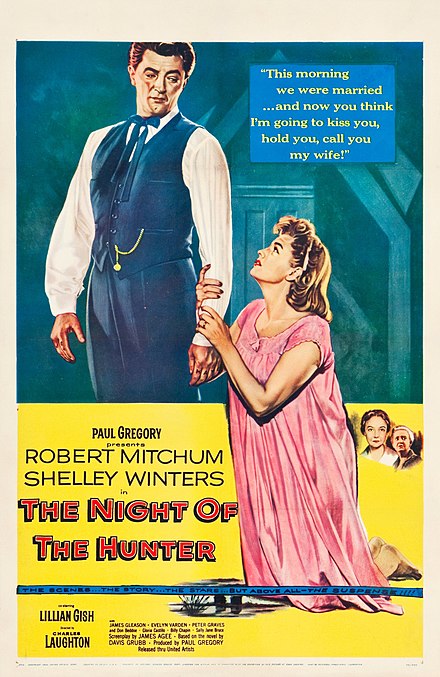
Every once in a while, I see a movie I should’ve seen a long while ago.  The Night of the Hunter is one such film.  Knowing little about it, I watched and was floored.  Not only could I have used it in Holy Horror (oh boy, could I have!), it uncovered a bit of cinema history for me.  Even just the words “love” and “hate” tattooed on Harry Powell’s knuckles have been referenced in so many places that I felt like I’d been missing a vital clue all along.  Since the movie’s now available on free streaming services, there’s no reason not to see it.  Although not generally considered horror, it is one of the genuinely scary movies of the period.  And it’s a strong blend of religion and horror, even if classified as a “thriller.”

Taking inspiration from a true story, the “Bluebeard” character of Harry Powell is a serial killer.  Styling himself as “the preacher,” he murders widows for their money.  An avowed misogynist, he’s driven purely by greed and love of violence.  Yet everyone accepts him—except children—for what he says he is during the Depression era.  He gives sermons, sings hymns, and leads revivals and even his victims come to believe what he says about himself.  This is such a good commentary on the thoughtless acceptance of religion that it’s no wonder that it was a flop in the fifties.  Since then it has become considered one of the greatest movies of all time by many.  The seamless weaving of terror and religion hearkens once again to the wolf in sheep’s clothing.  Some lessons we never seem to learn.  Nobody likes to admit to having been fooled.

In character, the closest comparison I could make would be Cape Fear, which stars the same Robert Mitchum as villain.  That movie I saw in time to include in Holy Horror.  In this one, the only adult who seems capable of seeing through Powell’s lies is a religious widow who informally adopts stray kids during the Depression and raises them with the Bible.  She also keeps a shotgun handy, just in case.  The image of the preacher slowly approaching, singing “Leaning on the Everlasting Arms,” is the stuff of nightmares.  I suspect that one reason that seminaries developed in the first place is that the laity weren’t encouraged to trust self-proclaimed religious teachers.  Of course, the town turns on the preacher once they learn, because of the children, who he really is.  If, like me until today, you haven’t seen Night of the Hunter, I can recommend it.  Especially if you have an interest in how horror and religion cooperate so nicely.


Who’s Pretty?

Movies come at you from all angles these days.  People love stories and streaming companies make enough money to create their own content.  I Am the Pretty Thing That Lives in the House is a notable effort for a Gothic film, financed by Netflix.  The pace is fairly slow and there’s little in the way of jump startles or bloodshed.  The story isn’t fully explained, but then it revolves around a horror writer, so that’s not unexpected, I suppose.  Lily is called in as a hospice nurse for Iris, although what Iris is dying from isn’t specified.  The estate manager supposes the stay won’t be long, but Lily remains in the house for eleven months, not leaving at all.  A few creepy things happen, but nothing terribly threatening.  Meanwhile, Lily, who admits to being too scared to read horror, decides to investigate Iris’ best-known book because Iris keeps calling her by the name of one of the characters (Polly).

After several months of this, Lily comes to believe that Polly was a real person and that she was murdered in the house.  Up front the movie announces itself as a ghost story and lets us know that Lily won’t survive the year.  That’s technically not a spoiler, since it says so at the very beginning.  The question becomes, what has happened to Lily?  Iris remains pretty firmly in the background, but she is the one who initiated the story.  The movie strongly implies, without outright stating it, that Polly was a real person who somehow channeled her story to Iris.  Iris, however, when she talks about Polly, seems to take the point of view of her murdering husband.  I won’t say how Lily fails to survive the year because that might actually be a spoiler.

This is one of those movies that relies on mood more than plot.  In that it manages to approach Gothic sensibilities with the very premise being, from the start, that ghosts own a house.  I live in an old house.  Apart from the previous owners, who both left alive, I have no idea who might’ve lived here since about 1890.  I haven’t seen any ghosts but I often do wonder what has happened in this place.  There are those who prefer modern houses with shiny surfaces (and generally no books),  but some of us prefer to take our chances with history.  We may never unpack that history but living among it makes us feel connected.  That’s kind of like the experience of watching I Am the Pretty Thing That Lives in the House.  Only we hope that are good guests in what may be somebody else’s dwelling.


Haunted Space

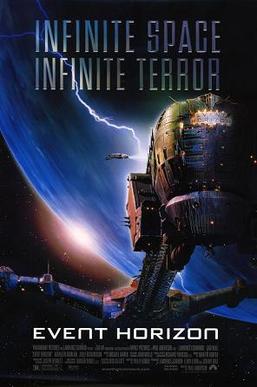
A haunted house film set in space.  That’s what I thought and then read the same words in a published description of what the writer and director were going for.  In that way it was a clear success, but in others it struggles.  The premise is good, if jarring.  Space travel, which is the most scientific of scientific enterprises (there’s a reason the rest of us say, “I’m not a rocket scientist”) collides with the traditional supernatural.  The results are worth pondering.  Event Horizon has become a cult classic, and like many older films, has been more positively reevaluated in recent years.  So the crew of Lewis and Clark is on a rescue mission to the ship Event Horizon, in a decaying orbit around Neptune.  Neptune’s atmosphere provides lightning for this haunted house.  The crew learns that Event Horizon has been through a black hole and has returned sentient.  Its crew has no survivors and it won’t allow Lewis and Clark to either escape or to destroy it.

Those of us who watch horror looking for religion—and even general viewers—can’t help but notice that Event Horizon ended up in Hell and returned.  It plagues the rescue crew with hallucinations of their regrets and failures.  Weir, the scientist who designed Event Horizon, is more or less possessed and stops at nothing to save the ship, which has brought Hell back to this dimension.  Again, it’s a bit jarring, like vampires in space.  (Yes, I know it’s been done.)  There’s even a point where Weir informs one of the crew that the crewman doesn’t believe in Hell.  Heck, they’re in outer space on a ship technology built.  But what if there is a spiritual reality—“dimension,” in the film’s lingo—out there?  What if some traditional religions are right?

The movie’s not apologetic, but it’s offering a reminder that to be human is to be spiritual.  No matter how much science “proves,” there’s always potentially more “outside.”  Hell in Event Horizon is beyond the bounds of the universe.  It is another place but a place it is.  It costs some of the crew their lives, but does it claim their souls?  Event Horizon is one of those movies that the studio ordered severely edited, and for which the edited footage was lost.  Movies ever only show us what directors, producers, and studio execs want us to see.  People crave stories.  And when a movie, like Event Horizon, raises more questions than it answers, viewers want to know—what really does happen in a haunted house in space?


Other Worlds

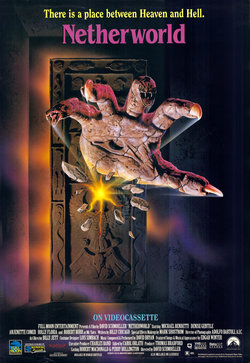
There are any number of movies out there, and you find some that have evaded much comment by checking out the freebies on Amazon Prime.  That’s how I found Netherworld.  It’s not a great movie.  In fact, it’s about the opposite, but it is more southern gothic and since I’ve been watching Louisiana horror, well, why not?  It was free.  The story doesn’t make a whole lot of sense, which is a pity because the ideas seem to have some potential.  So, Cory Thornton has inherited his father’s Louisiana estate.  He didn’t know his father and the estate is run by an improbable staff of one.  (One suspects a low budget had something to do with that.  For the film, not diegetically.)  The estate abuts a brothel where one of the employees turns evildoers into birds with the help of magic.

Meanwhile, the young master finds hints how to raise his estranged father from the dead, which, for some reason, he decides to do.  There are dream sequences and perhaps shades of Papageno.  Lots of birds in this film.  Cory—not very bright—only discovers late in the movie that his father was evil.  Hm, no hints of that in his admitted sexual dalliances and his desire to be resurrected.  No siree, none at all.  By the end I wasn’t surprised to learn that it was released directly to video.  But I was led down the rabbit hole by David Schmoeller, the director.  Schmoeller has received notice of such people as Stephen King, and has given the world some notable cult movies.  It’s fair to say he never made it big in Hollywood, but he worked on some films of repute, even drawing in Klaus Kinski at one point.

There are several tiers to the creative life.  There are those who attain fame, and layered down from them, those who produce movies, songs, novels—any kind of creative output—to those most of us have never heard of.  I find this profoundly hopeful.  Nobody is known to every single person on this planet.  Even the famous aren’t known by everyone.  I like to think I’m reasonably informed, but I keep on hearing about celebrities in art forms I don’t follow and have no idea who they are.  So before watching Netherworld I never paid attention to David Schmoeller, but then I learned he’d nevertheless made a career out of doing what he enjoyed, without becoming a famous director along the way.  There are some practical obstacles, of course.  Getting that first book published, or first movie distributed, but if you can get over that wall there may be a possibility of doing what you like.  It may not make you rich, but you’ll have accomplished something important.


Teaching Horror

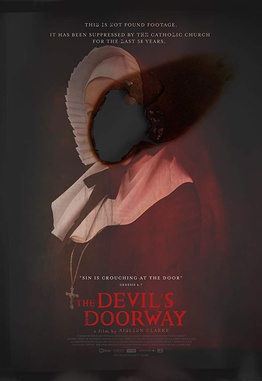
Critics who complain that Aislinn Clarke’s The Devil’s Doorway has nothing new really have no appreciation for parables.  An Irish found-footage film, The Devil’s Doorway is, as it clearly states, a lament over the Magdalene Laundries in Ireland.  I’d never heard of these institutions that existed until less than 30 years ago.  Founded by the Catholic Church, these “asylums” were places where women in trouble were essentially treated as slave labor.  Women, who often have difficulty hiding the results of sexual promiscuity (something men more easily get away with), were put to work in these reformatories.  I don’t know if the conditions were as bad as presented in the movie, but they provide a springboard into a perfectly serviceable horror film.  The horror tropes may be familiar, but that’s true of most horror of these days.

Two priests are sent to a Magdalene Laundry to investigate a reported miracle of a bleeding statue of Mary.  Please pardon my invocation of Alice Cooper here, but “Only Women Bleed” would be appropriate to consider.  Fr. Thomas, older and skeptical, doesn’t believe in miracles while Fr. John, the “techie” (it’s set in 1960) films the proceedings.  The priests uncover layer after layer of hypocrisy and deceit.  The Mother Superior, who shows no deference to the priests, insists that many of the pregnant women that have passed through the asylum were impregnated by clergy.  But there’s more.  As the statues bleed, a young woman, a pregnant virgin, is found kept in a dungeon.  Ghosts of murdered children cavort through the night.  A satanic niche for a black mass is discovered.  And the pregnant virgin is also possessed by a demon.  There’s a lot going on here.

To mistake all of this as “just a horror movie” is to miss the point.  Such is the way with parables.  Clarke, the director, was an unwed mother at 17 who realized that, had this happened a few years earlier, she could well have found herself confined to a Magdalene Laundry.  The movie doesn’t, it seems to me, condemn Catholicism per se.  For example, the two priests documenting the activities seem to be good people.  Fr. Thomas, as it turns out, had been born in this selfsame institution.  Raised as an orphan, he became a priest who, not surprisingly, doesn’t believe in miracles.  He too, was a victim.  Religious horror serves many purposes.  Often the very unfamiliarity of religion itself can drive the fear.  Another purpose, however, is to educate.  The Devil’s Doorway educated me, and I appreciate the parable.


Who Recommended?

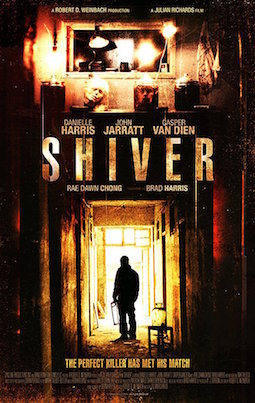
A couple of things: one-word titles can be confusing, and I need to start writing down where I get movie recommendations.  Trying to live reasonably on an editor’s salary, I can’t afford purchasing movies all the time, so I stream what’s free, now only when it’s on my list.  That’s how I had the misfortune of watching Shiver (2012).  I’m not sure it was the right movie, but I couldn’t find any others by that title near the top of IMDb and I couldn’t remember where I got the recommendation.  Although it uses many standard horror tropes, this flick veers a little too much into torture porn for my liking.  Also it’s very poorly written and many of the scenes are improbable (to put it mildly).  The police are totally incompetent (how many times can a serial killer’s intended victim be assured she’s safe by police when they can’t even get the perp to prison in good order?), almost to a Keystone degree.

And this isn’t some Hannibal Lector, either.  He’s kind of a psychopath that’s been making a living selling jewelry to his eventual victims.  Of course he’s a sexually frustrated guy who was bullied as a kid.  See, there are some moments of trying to establish some kind of social commentary, but the writing and most of the acting keep getting in the way.  The violence toward women goes unremarked, and that’s probably what most requires comment.  So I’m sitting here scratching my head trying to figure out who, or what, might’ve suggested this movie to me.  Or is there a different Shiver?  Did somebody leave the “s” off the end?  (I’ve already seen that one.)  I really do need to keep better records.

Bad movies come in many varieties.  This one was disturbing from any number of angles.  I don’t tend to watch serial killer movies.  Violence against women bothers me a lot.  Every main character had a bad childhood.  (One of the stories is simply told and then dropped.)  It’s a movie that might helpfully come with trigger warnings.  As I watched I wondered.  I wouldn’t been watching this if someone, or some respected publication, hadn’t recommended it to me.  Who and why?  Since I watch movies on weekend mornings, mostly, a bad one can start the day off on the wrong foot.  Someone, or some source, suggested Shiver.  Or maybe someone forgot a letter.  That’s the problem with one-word titles.


Deep Woods

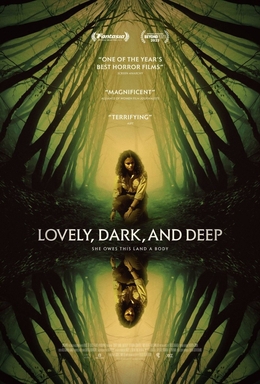
The output of female horror directors tends to be thoughtful.  And there are some legitimately terrifying scenes in Lovely, Dark, and Deep.  Nobody, however, has posted a Wikipedia entry on Teresa Sutherland.  At least not yet.  This movie is obviously aware of David Paulides’ work.  It went by a little quickly, but I think one of his books even made it into the film.  Lovely, Dark, and Deep is set in the fictitious Arvores National Park in California.  (Interestingly, the movie was filmed in Portugal.)  Lennon is a newly hired park ranger with what she thinks is a secret.  Her motivation is to search for her sister, who went missing in the park when they were kids.  If you like movies with flashlights in the forest at night, this is your film.  

Lennon discovers  that she’s not the only one with secrets.  Many people have gone missing in the park and the rangers know about it.  Some entity that they can’t identify requires people to be left behind.  There is a quid pro quo relationship involved.  If one of the taken ones is rescued, a substitute must be left.  Lennon learns that her sister was one of those taken, and once taken a person can’t come back.  They live in a nightmare world while their family and friends have to deal with the loss.  Lennon has trouble accepting this arrangement, but there is nothing to be done about it except pretend you don’t know it’s happening.

The movie gets its teeth from the fact that many people do go missing in National Parks.  And, as Paulides suggests, there is no public register kept.  Some who are found are often inexplicably miles from where they went missing, or their bodies are found in areas already thoroughly searched.  This is obviously a great concept for a horror film.  Sutherland, who wrote as well as directed the movie, has the makings of an art horror auteur.  Lovely, Dark, and Deep hasn’t received a lot of attention yet, but I think it deserves to.  Wilderness horror films have so much potential.  Particularly for people who seldom spend any real time in the forest.  Even those of us who have braved the wilds from time to time can find it frightening.  More than that, this is a movie that makes you think.  For anyone who likes to theologize films, it definitely has the theme of sacrifice running through it.  Deep is appropriately part of the title.