Precedes Essence

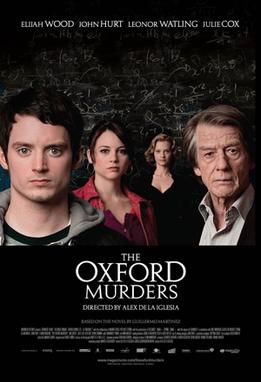
Lars von Trier makes existentialist art films that sometimes veer into horror.  Antichrist was such a film, and one of the more disturbing that I’ve ever seen.  Melancholia was initially welcomed in a kind of reserved way, as I recall, when released in 2011.  A few years ago I sat down to watch it and didn’t quite make it halfway through.  The pacing wasn’t terribly moving and the story depressing.  These days Melancholia has been upgraded to one of the best movies of this century, so far.  It was a rainy Saturday and I decided to steel myself to try again.  It is an art movie, but not horror.  There are horror elements, but it is more about the torment of existence—existentialism again—as two sisters anticipate and face the collision of the earth with a rogue planet called Melancholia.

The ultra-slow montage at the beginning lets the viewer know that earth will not avoid or survive this collision.  Then Justine, one of the sisters, is shown heading toward her wedding reception.  She’s already depressed and the first hour or so of the movie shows the troubled interactions at the reception.  When things finally begin to wind down near dawn, she refuses to consummate the wedding and sends her new husband away.  Cheerful stuff.  The focus then shifts to Claire.  She and her husband John, and their son, are enormously wealthy.  They are also aware that Melancholia is approaching.  John insists that the calculations show it will be a near miss, but one nobody would want to miss seeing.  Claire isn’t so sure.  Justine comes to stay with them.

As the effects of the larger planet’s proximity begin to be felt, John realizes the calculations are wrong and dies by suicide.  Claire and Justine have opposite views of the impending end, with Justine declaring life is evil and should be wiped out (again, existentialism).  Then worlds collide.  This is a disturbing, but beautifully shot film.  I found out that it is, after Antichrist, the second of von Trier’s “Depression Trilogy.”  As someone seeking joy in melancholy, I’m glad to have seen the film.  I knew the planet collision plot, but I try not to read about movies in advance, so I wasn’t sure if this would be horror or not.  It was pretty clear from Antichrist that von Trier suffers from depression.  Melancholia confirms this and is a poignant cry of distress at being helpless in an uncaring universe.  And it invites viewers to ponder this as well.


Not Fragile

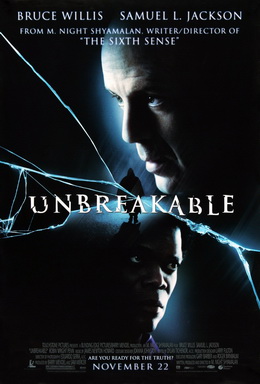
One of the problems with auteur theory is that you cast directors into an expected genre in your mind.  Or at least I do, and that is unfair to directors since they, like those of us who write, sometimes explore different genres.  My first exposure to M. Night Shyamalan was The Village.  Next was Signs.  And finally, The Sixth Sense.   (I was one of those creeped out by the “I see dead people” of the trailer for the latter, and it took several years for me to get over that.)  These were enough to solidify Shyamalan as a horror auteur in my mind.  I think the other films of his that I’ve watched, The Happening, Knock at the Cabin, have all been horror as well.  While some have classified it that way, many consider Unbreakable to be a thriller instead.  These two genres are very closely related, in any case, and I’d been wanting to see it.

Unbreakable is a movie to get you thinking.  It’s old enough that I’m not going to worry about spoilers here, so be warned.  David Dunn, after surviving a train wreck that killed everyone else, runs into Elijah Price, an art dealer and comic book aficionado, who is, literally fragile.  A rare disease renders his bones weak and since his childhood love of comic books informed his outlook, he wants to find a hero.  Dunn seems to be the man.  Never sick in his life, he survived a car crash with no injuries and his only weakness seems to be water (he nearly drowned as a child).  Price tries to convince him that he is indeed a superhuman, but his partially estranged wife disagrees.  Their son, however, believes.  The twist ending has us realize that Price has been conducting terrorist activities in order to find a hero and he “confesses” once he’s certain Dunn is real.

There are definitely some very tense moments in the film.  There aren’t any monsters, and Shyamalan wanted this to be known as a comic book hero movie (which it is).  He has directed some others in this genre as well, none of which I’ve seen.  I watch hero movies now and again, but they often lack the depth of good horror.  Unbreakable, however, does have depth.  At least it makes you think.  Is the good of convincing a hero that he can help people worth the hundreds of deaths it took to find him?  Price’s motivation seems pure, but his methods are evil.  These kinds of dilemmas are inherently thought-provoking.  But I will still probably continue to think of Shyamalan as a horror director.  Maybe that’s just wishful thinking.


Prior Memory

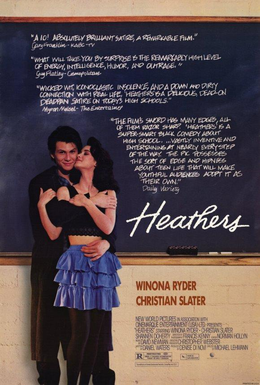
Sometimes I just don’t know where my mind is.  A few months back my wife and I decided to watch Heathers for the first time.  It got a bad rap when it came out but we finally gave in because there were so many cultural references to it that we felt we had to be informed.  Now none of that makes it worth comment.  What does, in what’s left of my mind, is that I was sure I’d written a blog post about it.  I hadn’t.  The thing is, I even thought I remembered some of what I wrote about it.  Uhn-uhn.  Didn’t happen.  So I guess I can trawl my memory and see if I can recollect what I thought I had already said.  Here goes.

The movie is a disturbing and funny look at growing up and its hard lessons.  Everyone said that it glorified suicide, but that wasn’t what I saw.  One person attempts it, and the others are all actually murdered and made to look as if they died by suicide.  Not a lighthearted topic, I know, but the students pretty much all want to live.  J. D. (read into that what you will) is the real criminal.  An outsider with a chip on his shoulder, and who has no problems being (or associating with) a criminal.  Or making others into criminals.  

As with many, perhaps most, adults, I remember the confusion of puberty quite well.  I wanted to be liked in school (I never had many friends) but I was quiet, bookish, and very religious.  Having grown up feeling generally unliked, I found acceptance, for a time, at church.   This movie captures that aspect well—the desire to fit in with a cohort that is particularly hostile (teenagers).

What brought Heathers back to mind after these few months was the fact that some classify it as a dark academia movie.  Dark academia generally has some schooling involved, sometimes directly, sometimes as implied.  There is a natural kind of darkness in high school and into college years.  This is something we may be in danger of losing with universities becoming glorified trade schools.  Not all of life is about finding a job.  The humanities suggest that being human is sometimes enough.  Heathers seems to have aged pretty well, being over thirty at this point.  Some of us took three decades to see it.  And if we feel like we’re losing our minds from time to time, at least now I’ll know I have indeed posted upon this movie.


Eye Eye

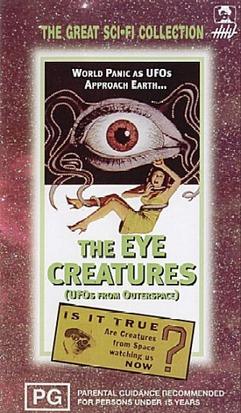
When trying to be conscientious about not spending too much money on movies there’s always the risk of seeing something cheap.  In the case of The Eye Creatures, not only was it cheap, but it was also a throw-back to childhood.  I remember seeing this one in my younger years, and, not yet old enough to be critical, loving the costumes.  Rewatching it as an adult, where some critical faculties remain, reveals it to be a bad movie.  Poorly written, poorly acted, and poorly financed, it ticks all the boxes.  It’s actually a remake of an earlier American International Pictures film, and AIP wasn’t known for its lush budgets.  To be fair, the film is supposed to be a sci-fi horror comedy, but the comedy isn’t that good.  The unintentional gaffs are.

So, the Air Force is concerned about keeping flying saucers secret.  When an “unfriendly” one lands where the teens all go parking, the Air Force investigates while the eponymous eye creatures terrorize the local kids.  Specifically, they seem bent on revenge against Stan Keyton and his girl, because they ran over one of the creatures.  Keyton gets arrested for manslaughter because the creatures substitute the body of a drifter they killed for the corpse of their own comrade.  The police don’t believe in aliens, of course, and the Air Force denies everything.  Keyton and gal decide, after discovering the the eye creatures explode when exposed to light, to round up the necking kids and wipe out the aliens with their headlights.  They figure nobody will believe them anyway.

Some movie monsters stick with you for decades.  The eye creatures are one example of this.  Simply seeing the movie title reminded me of them, although the only plot point I could remember was that they exploded in the light.  I didn’t recall all the voyeuristic watching of teens making out that the Air Force officers did.  Or the tedious revisiting of the Old Man Bailey character.  One of schlockmeister Larry Buchanan’s films, it was released the same year as his other cheap childhood favorite, Zontar, Thing from Venus.  As much as people like to make fun of makers of such cheap movies, Buchanan gained recognition in the New York Times (as have other makers of schlock such as Roger Corman and William Castle), so there is something to these movies.  For one thing, those of us who grew up in the sixties remember them.  And, if we also remain cheap, we can see them again as adults, and relive a bit of cinematic history.


Not Quite

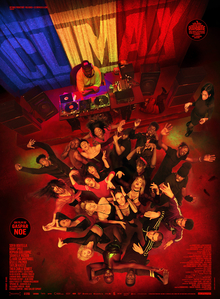
There’s a debate among horror nerds that goes like this: “Blumhouse or A24?”  If this is Greek to you, Blumhouse and A24 are entertainment production companies that both make notable horror films.  I’ve always leaned a bit toward A24, to the point of making a list of their horror films and watching them when I can find them on streaming services.  Since I generally don’t read about movies before watching them, I wasn’t sure what Climax was going to be.  Distributed by A24, I figured it would be intelligent horror and it may have been.  Honestly, it was a little difficult to tell.  Nihilistic and non-scripted, it’s a movie with a very slight premise: a French dance troupe holds an after-practice party in which somebody spikes the sangria with LSD.  The entire first half of the movie, practically, is dancers doing their stuff to an incessant techno-beat.  I honestly don’t know why I kept with it.

Since it’s unscripted, most of the young people talk about sex, and occasionally other topics.  They begin to get paranoid when the acid kicks in, and throw one of the dancers out in dangerous winter conditions where he freezes to death.  They think he spiked the drink.  The troupe manager, also a suspect, has a young son that she locks into an electrical closet for protection, with predictable results.  Since she also drank the sangria, the troupe supposes she must be innocent.  A third non-drinker, who is pregnant, also gets accused.  Meanwhile some dancers keep on dancing while others start to pair off, all of them but the pregnant one, tripping hard.  In the end the police arrive and find dead or stoned dancers and really that’s about it.

How is this horror?  Psychologically, mostly.  There is a little body horror, but mostly it’s just viewers wondering what is going to happen.  Which, it turns out, is not much.  There are some religious references in the movie, which maybe offer a little depth, but really this is largely a filmed rave-like dance with a minimal storyline tossed in for good measure.  Also, it’s in French, meaning subtitles are important for following whatever plot there is.  Wikipedia leads me to believe Gaspar Noé, the “writer”-director is fond of making polarizing and controversial movies.  There’s nothing surprising about young people being interested in music and sex, nor, for that matter alcohol and drugs.  All of this is entirely conventional.  It isn’t enough for me to lose faith in A24, but it does make me wonder what they were thinking.


Somehow Inevitable

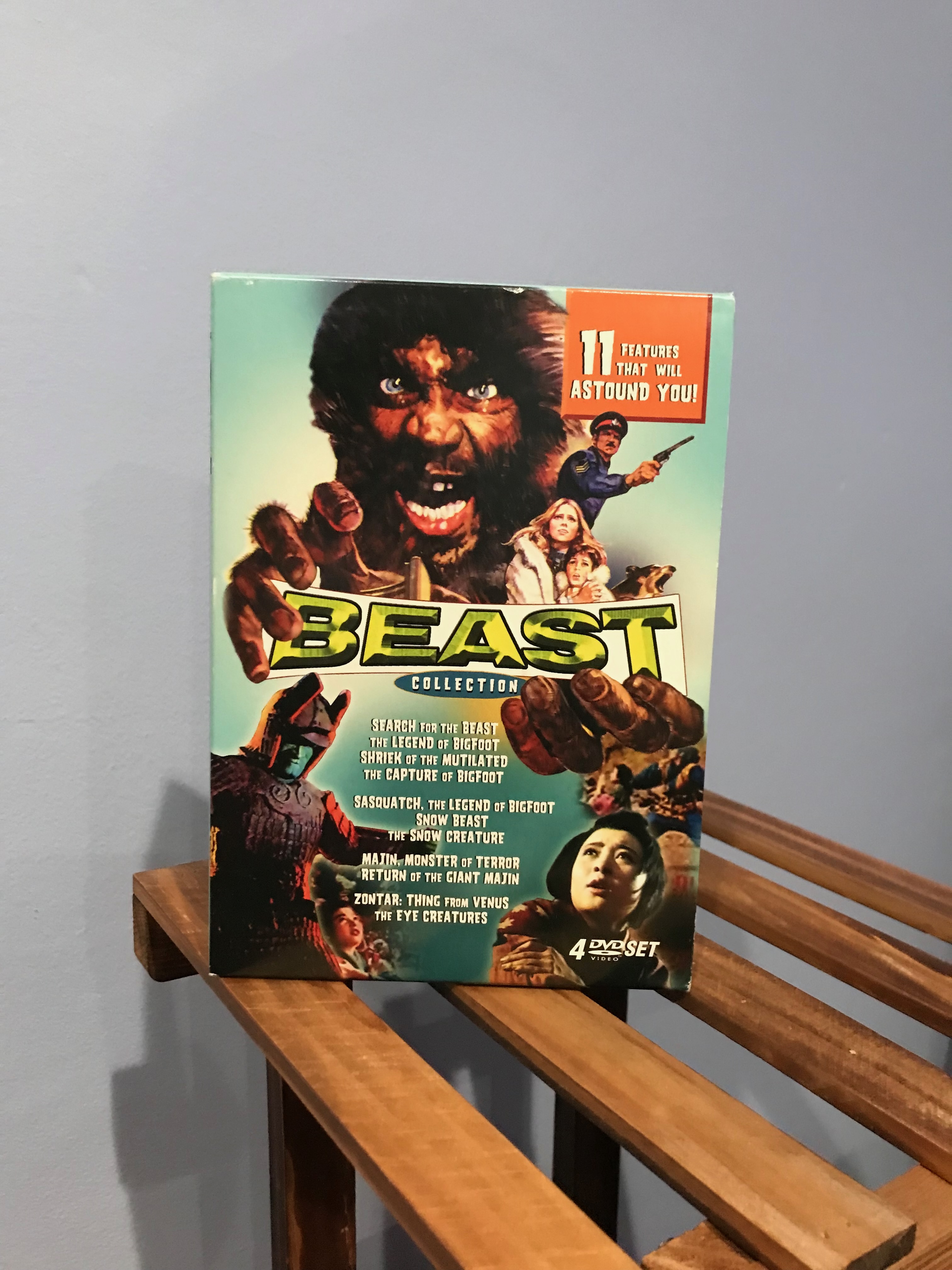
You had to expect me to write about Zontar: Thing from Venus.  I bought the “Beast Collection” set to see it many years ago.  In those days I tried to watch the movies through, in order but I didn’t make it through the first disc, even.  Well, now my perspective has changed—I figured I bought this to see Zontar, and Zontar I must see.  You do know that he controls people, right?  Zontar is a notoriously bad movie.  I saw it on television as a kid, and it may have even been close to the first run since it was made for television.  It’s actually a remake of a cheap Roger Corman movie, so it is a cheap remake of a cheap original.  Nostalgia, however, does funny things to a guy.  Although I saw it half a century ago, I remembered some lines precisely.  Television does funny things to young minds after all, I guess.

In case none of the injectapods has found you yet, it goes like this: Zontar, from, well, Venus, is a bat-like monster with three eyes.  He befriends an earthling outsider scientist, through laser communication, and commandeering a satellite, which becomes a passable flying saucer, lands in  a cave from which he takes over the small town of Jackson, which has a military base and plans to take over by having a general assassinate the president.  Meanwhile, his scientist friend directs Zontar to the four people that he needs to take over the world: said general, the sheriff, the mayor, and his best friend scientist, Curt Taylor.  Things don’t quite go Zontar’s way, despite most of the movie’s running time showing him totally in control.  It feels like it’s a lot longer than its 80-minute running time.

Still, I have to agree with the TV Guide review that says it isn’t as bad as everyone says.  Yes, it is a bad movie but it does have a few redeeming features.  Some of the scenery is nice, and you even begin to care for some of the characters.  The rogue scientist’s wife—despite her constant nagging—is the first person who tries to kill Zontar, and she does this for love.  When Zontar gets her you feel a little sad.  At least I did.  You see, the injectapods haven’t reached me yet and I still have human emotions.  Ironically, it is just such things that drive me to rewatch movies like Zontar all these years later.  And the movie ends with a voice-over moral of the story.  Those 80 minutes weren’t completely wasted.


Escape Room

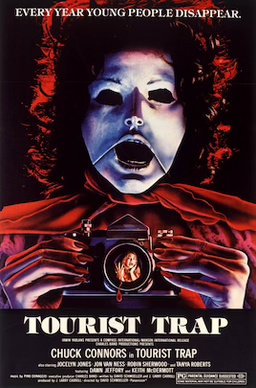
I didn’t go out looking for horror films in 1979.  I knew about Alien, of course.  Everyone did.  Even in a small town.  I didn’t see the movie until many years later, though.  I was still in high school and money was scarce (college was all either scholarship, loan, or work-study money).  If Tourist Trap ever came to town I didn’t know about it.  In fact, I didn’t know about it at all until reading Stephen King’s Danse Macabre.  Enough time has passed that the movie is now streaming for free and, indeed, it is David Schmoeller’s first film.  Critics didn’t love it, but King thought it had some appropriate eeriness, so why not?  It isn’t horrible—I’ve definitely seen worse.  And movies with animated mannequins hit that uncanny valley at just the right angle, even if poorly written.

The story’s a bit convoluted.  Five young people are on vacation and get drawn into, well, a tourist trap.  There’s a fair amount of psychokinesis that goes on, and the tourist trap is Slausen’s Lost Oasis, which is filled with animated wax-work figures/mannequins.  These are what make the film creepy.  As the plot unfurls, the kids get killed off, one-by-one, as horror viewers come to expect.  There is a bit of a “reveal” toward the end, so I won’t spoil it.  It is fair to say that insane antagonists were fairly common by 1979 and that the blurring of real people and manufactured ones is a bit unnerving.  There are some questions of motivation, and many times the characters don’t take the obvious steps to help themselves.  Still, the movie isn’t too bad.

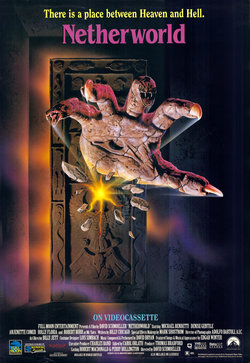
I was drawn to it, having seen Schmoeller’s real groaner, Netherworld.  And King’s recommendation.  There is something about movies that are lacking in undefined ways that keeps you watching.  I was curious how Tourist Trap was going to end up.  There were several points at which I thought I’d figured it out, only to be told, “but wait, there’s more!”  The more wasn’t always really worth waiting for, but the ending has a bit of a payoff.  There is some slasher aesthetic here, but it’s unconventional enough that you may at least be kept guessing.  The thing that the movie gets right is that human figures that aren’t human are scary.  Many films play on this, of course.  Even if you’ve seen others, it still tend to ramp up the shudder factor a bit.  It only took four decades for me to stumble into this tourist trap, and it was a reasonable brief vacation from reality.


Not Fantasy

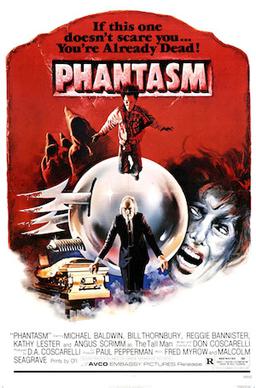
There’s a reason I watch horror.  One of the many things you can’t find online is how popular movies were before the internet days.  This is an issue for me because I only just now found out about Phantasm, which was released in 1979.  Granted, I lived in a small town, but I did know about The Amityville Horror—everyone knew about The Amityville Horror.  The films were released the same year, but Phantasm was an indie production and probably didn’t have reach into my local region.  Nobody talked about it at school and I only became conscious of it a few weeks ago.  I learned that it was quite a box office success, but the critics didn’t care much for it (and I can see why).  It was, however, rediscovered and has become a cult classic.  I can see that too.  The thing is, it is a bad movie.  I’m learning to appreciate such things.

Part of the reason the film bothered me is that I really dislike “but it was all a dream” endings.  Even though there’s a final suggestion that some of it “really happened,” or Michael is dreaming within a dream, such endings always make me shrug.  Horror, to really work, has to be in that liminal zone between believability while on screen and the deeper knowledge that it’s fiction.  Phantasm just had too many strikes against it to be believable.  The dwarves were lifted straight from Star Wars’ Jawa.  The Tall Man isn’t scary (this is from a current-millennium perspective, granted) and while you’re just trying to get into the horror mood (the music is appropriate) a flying ball of death, a sudden sci-fi element, is thrown in.  Of course, the plot takes a kind of sci-fi turn near the end.  It didn’t, however, do any heavy lifting.

I was surprised to learn that it became a franchise, no members of which I’d ever heard.  It is interesting that speculation exists that the creepypasta stalwart, the Slender Man, was developed from the Tall Man concept.  Given that I was seventeen when this movie came out it might be someone of my vintage—but from a different vineyard—would find Tall Man scary.  Of course, if I’d seen it when it was first out, and in a theater, I might’ve gotten some chills from it.  I could have included it in Holy Horror since there is some Bible in it, but it isn’t used to its full extent for a movie that mostly takes place in and around a funeral home.  There is some comfort in knowing that even if your work isn’t great, it can still be rediscovered if enough time passes.  And there’s good reason to watch it.


Other Worlds

There are any number of movies out there, and you find some that have evaded much comment by checking out the freebies on Amazon Prime.  That’s how I found Netherworld.  It’s not a great movie.  In fact, it’s about the opposite, but it is more southern gothic and since I’ve been watching Louisiana horror, well, why not?  It was free.  The story doesn’t make a whole lot of sense, which is a pity because the ideas seem to have some potential.  So, Cory Thornton has inherited his father’s Louisiana estate.  He didn’t know his father and the estate is run by an improbable staff of one.  (One suspects a low budget had something to do with that.  For the film, not diegetically.)  The estate abuts a brothel where one of the employees turns evildoers into birds with the help of magic.

Meanwhile, the young master finds hints how to raise his estranged father from the dead, which, for some reason, he decides to do.  There are dream sequences and perhaps shades of Papageno.  Lots of birds in this film.  Cory—not very bright—only discovers late in the movie that his father was evil.  Hm, no hints of that in his admitted sexual dalliances and his desire to be resurrected.  No siree, none at all.  By the end I wasn’t surprised to learn that it was released directly to video.  But I was led down the rabbit hole by David Schmoeller, the director.  Schmoeller has received notice of such people as Stephen King, and has given the world some notable cult movies.  It’s fair to say he never made it big in Hollywood, but he worked on some films of repute, even drawing in Klaus Kinski at one point.

There are several tiers to the creative life.  There are those who attain fame, and layered down from them, those who produce movies, songs, novels—any kind of creative output—to those most of us have never heard of.  I find this profoundly hopeful.  Nobody is known to every single person on this planet.  Even the famous aren’t known by everyone.  I like to think I’m reasonably informed, but I keep on hearing about celebrities in art forms I don’t follow and have no idea who they are.  So before watching Netherworld I never paid attention to David Schmoeller, but then I learned he’d nevertheless made a career out of doing what he enjoyed, without becoming a famous director along the way.  There are some practical obstacles, of course.  Getting that first book published, or first movie distributed, but if you can get over that wall there may be a possibility of doing what you like.  It may not make you rich, but you’ll have accomplished something important.


Not What It Says

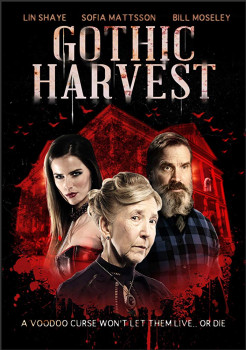
The title sounds promising.  Gothic Harvest.  But the movie in no way lives up to it, even with its vampires vs. voodoo theme.  So, during Mardi Gras a group of four coeds decides to party in New Orleans.  Of course, this is the capital of American voodoo.  While drinking themselves to oblivion, one of them gets picked up by a local and taken back to the family home.  There, of course, she’s kept as food for the “vampire.”  An aristocratic woman who fathered a child with a slave has received a curse—she and her child remain alive, she aging, while the rest of the family is arrested at their present age.  (Really, the story makes little sense, so don’t ask.)  They need young blood to keep the aristocrat alive so that they can continue living.  In the right hands such a story might’ve made a passable horror film.  These weren’t the right hands.

It’s a good thing I’m trying to develop an aesthetic for bad movies.  The acting is bad, the dialogue is bad, the writing is bad.  Is there a moral here?  Don’t go partying during Mardi Gras since you might get picked up by a family under an ancient curse?  And  would it really hurt to do a second take of scenes where an actor stumbles over their lines?  I don’t know about you, but to me the title Gothic Harvest suggests that lissome melancholy of October.  You can start to smell it in the air in August and you know something is coming.  Honestly, I’m not sure why more horror films don’t capture that successfully.  I’m always on the lookout for movies that will catch my breath in my throat with the beauty and sadness of the season.  They are few and far between.

So, like a clueless coed during Mardi Gras, I’m lured into movies whose titles promise such things.  One of the movies that I, inexplicably, saw when I was young was the James Bond flick, Live and Let Die.  Roger Moore had taken the reins from Sean Connery but that film set my expectations for both the Big Easy and voodoo.  I’ve only been to New Orleans once, and that during a conference.  It was before the revival of my interest in horror.  Successful horror has been set there, of course.  The one thing Gothic Harvest gets right is the evocative nature of Spanish moss.  And the opportunity to try to learn to appreciate bad movies.


Who Recommended?

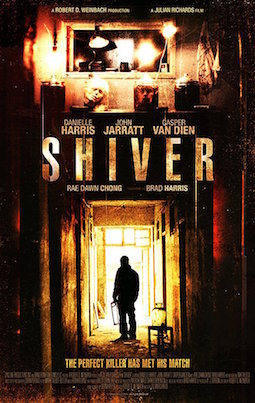
A couple of things: one-word titles can be confusing, and I need to start writing down where I get movie recommendations.  Trying to live reasonably on an editor’s salary, I can’t afford purchasing movies all the time, so I stream what’s free, now only when it’s on my list.  That’s how I had the misfortune of watching Shiver (2012).  I’m not sure it was the right movie, but I couldn’t find any others by that title near the top of IMDb and I couldn’t remember where I got the recommendation.  Although it uses many standard horror tropes, this flick veers a little too much into torture porn for my liking.  Also it’s very poorly written and many of the scenes are improbable (to put it mildly).  The police are totally incompetent (how many times can a serial killer’s intended victim be assured she’s safe by police when they can’t even get the perp to prison in good order?), almost to a Keystone degree.

And this isn’t some Hannibal Lector, either.  He’s kind of a psychopath that’s been making a living selling jewelry to his eventual victims.  Of course he’s a sexually frustrated guy who was bullied as a kid.  See, there are some moments of trying to establish some kind of social commentary, but the writing and most of the acting keep getting in the way.  The violence toward women goes unremarked, and that’s probably what most requires comment.  So I’m sitting here scratching my head trying to figure out who, or what, might’ve suggested this movie to me.  Or is there a different Shiver?  Did somebody leave the “s” off the end?  (I’ve already seen that one.)  I really do need to keep better records.

Bad movies come in many varieties.  This one was disturbing from any number of angles.  I don’t tend to watch serial killer movies.  Violence against women bothers me a lot.  Every main character had a bad childhood.  (One of the stories is simply told and then dropped.)  It’s a movie that might helpfully come with trigger warnings.  As I watched I wondered.  I wouldn’t been watching this if someone, or some respected publication, hadn’t recommended it to me.  Who and why?  Since I watch movies on weekend mornings, mostly, a bad one can start the day off on the wrong foot.  Someone, or some source, suggested Shiver.  Or maybe someone forgot a letter.  That’s the problem with one-word titles.


Not Murphy’s Mansion

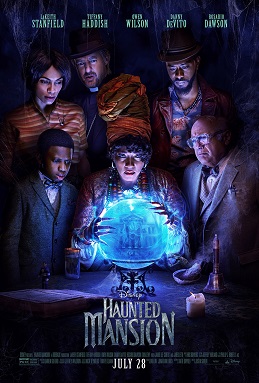
One of the dangers of streaming is that you can be talked into a movie by the fact of its availability.  Curiosity drove me to Disney’s The Haunted Mansion movie and that led to the discovery that there had been a reboot.  I’m drawn to haunted houses but not to theme parks, but well, you wonder how they might’ve thought they could’ve done it better.  The original movie failed to rock the critics, so, as the saying goes, try, try again.  Last year’s Haunted Mansion is over the top.  The story is more complex, with an ensemble cast, and not really funny or scary.  Based on a sad premise—two families with deceased spouses—they’re drawn, with three other New Orleans outsiders, to a, well, haunted mansion.  The main ghost is looking for a soul to harvest but as the two hours wend on, the characters reveal their sadnesses (one doesn’t).  Perhaps the idea is catharsis, but there are too many subplots and too many abrupt shifts of mood.

A movie should know, it seems to me, what it wants to be.  You feel for the sadness and loss of the characters but  I know something about using horror cathartically, and this movie doesn’t do it.  There are jokes and running gags, but they’re not really funny.  There’s religion involved, but it turns out to be fake, with even a faked exorcism.  There are literally 100 ghosts.  And really only one bad guy among them.  There’s drinking to drown sorrows, murders, and even adult humor that is somehow deeply disturbing.  There are a few nods to the original movie but the plot is quite different and it leaves you feeling drained.

With a budget of about $150,000,000, stops were pulled out all over this organ.  It doesn’t, however, have a focus.  In the original film, the Evers family really has a need to reconnect.  The mansion does that for them, through its ghosts.  The reboot implies at the end that two broken families might heal each other and that evil leads to its own punishment.  Still it leaves open the question: what is this movie trying to be?  The more cynical might say it’s only for money (the worldwide gross didn’t reach covering its budget), but I have to think that those who make movies do so for more than just a buck.  Coping with death is a profound human need that begins when a pet or, more seriously, a family member dies.  I’m not sure that Disney is the best authority on the subject.  At least not for those of us who use horror as therapy.


Haunted Life

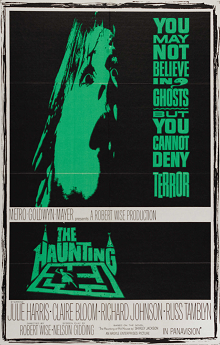
It’s funny what a difference that a few years can make.  I can’t seem to recall from where I sourced my movies in the noughties.  Streaming was extremely tenuous in our Somerville apartment—the plan didn’t include the required speed for it.  Like in the old days when it took twenty minutes to upload a photograph through dial-up.  In any case, I know I’ve watched The Haunting before.  I know it was in Somerville, but having watched it again I have to wonder if my mind is playing tricks on me.  I read Shirley Jackson’s The Haunting of Hill House there, and I saw the movie.  But how?  It’s all about mind games, but the mind games are played on a woman who has an abusive family, one that damages her psychologically.  Escape is important to her, even if it is to a haunted house.

I think the last time I watched this I was looking for something that might scare me.  That phase was one of thinking not much frightened me—but this movie is scary.  Even with its “G” rating, its lack of blood and gore, and black-and-white filming.  It scares.  One thing I’ve noticed when reading about these older movies after I watch them is that many improve with time.  Shirley Jackson was known during her life but you become a classic writer only AD—after death.  The Haunting has aged well.  I suspect it has something to do with Robert Wise, the director.  What must the psychology of a man be who directed The Sound of Music, The Day the Earth Stood Still, and The Haunting?  The latter is all about psychology.

Movies that make you think are those, I believe, that may become classics.  And perhaps there’s a bit of Eleanor inside all of us.  Wanting to be noticed but eschewing publicity.  Needing someone to love us, but pushing away those who try.  Children in bad environments learn unorthodox, and often unhealthy, coping techniques.  Eleanor has difficulty accepting that John is married when she thinks she’s finally found a place that accepts her for who she is.  Even if it’s a haunted house.  Especially if it’s a haunted house.  As a child I’d no doubt have found the movie boring.  There is, however, much for adults to absorb.  And, I expect, I’ll need to go back and read the novel again.  One of the reasons for watching horror is that the viewer is seeking something.  It’s not just thrills.  I didn’t write about the movie the last time I saw it so I don’t recollect when it was.  Or even how.  My thoughts now, however, are that I should’ve paid closer attention the first time.


No Changes

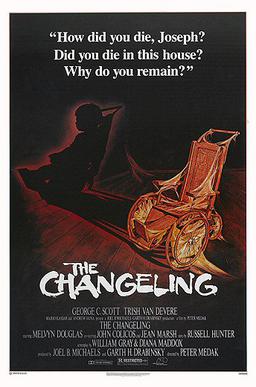
It’s one of those polarizing movies.  Well, maybe middling-polarizing.  For certain kinds of people.  I didn’t see The Changeling when it came out, but I watched it about a decade ago.  It struck me as lackluster then, but I decided to give it another try.  One of the reasons is that I’d read a couple of things about it recently and thought that maybe I’d misjudged it.  There are those who say it’s a very good haunted house movie—one of the most influential Canadian films of all time.  Hyperbole aside, it’s one of those vengeful ghost movies and the most affecting scene, to me, is when George C. Scott is crying in his bed about the death of his wife and daughter.  There are a couple startles, but nothing really that scary overall.  It is slowly paced and sophisticated, but not terribly so.  It still strikes me as lackluster.

I’ve seen many movies since that feature a child murdered seeking to have their story told.  The end result is, however, a feeling of “so what?”  The boy’s father got away with the murder and the beneficiary—who may or may not know all or part of the story—dies in revenge.  There are just too many questions left unanswered.  The haunted house tropes are fairly conventional, and the wheelchair chase scene is a bit strange.  I wondered if there might’ve been something I was missing.  There are critics with a “meh” response, but others rate it highly.  I did learn that, although the film makes no such claim, it is purportedly based on actual events.  That I’d like to know more about.

Playwright Russell Hunter (who lends his name to Scott’s character), alleged that these kinds of things happened to him while living in the Henry Treat Rogers mansion (in Denver).  A local, Katie Rudolph, has done some fact-checking that casts doubt on the story.  Hunter claims to have found human remains (as in the film) and this would seem to be something that could be checked out as well.  In all, there’s not a ton online about the story and its supposed authenticity.  The house was torn down some time ago.  It would seem that any author (Hunter co-wrote the movie) would see the benefits of claiming actual events.  Even if the film doesn’t play that card.  Was there a murder in the mansion?  From what I’ve been able to find, there are about as many unanswered questions as there are in the movie itself.  Although next time I’m in Denver, that’s not to say I won’t be tempted.


Creeping Religion

In a disappointing email, Amazon Prime has announced that its free movie streaming of select titles for members will now be subject to commercials.  I suppose that’s little difference, actually, from the way I watched most movies growing up.  I watched them on television before cable, and commercials were a necessary evil then.  Speaking of evil, I decided to watch a film that I missed in my childhood.  It was better than expected.  The Creeping Flesh suggested itself by star power.  Although not a Hammer film, it features both Peter Cushing and Christopher Lee as a pair of mad scientists.  Interestingly enough, it struggles with the question of evil and, appropriately enough, has an ambiguous ending.  There’ll be spoilers below, but since the movie was released over a half-century ago, I’ll use them with a clear conscience.

Cushing’s character, Dr. Emmanuel Hildern, has discovered a skeleton of pure evil personified.  It will become the end of the world once it’s revivified.  Meanwhile his half-brother, Dr. James Hildern (Lee), runs an insane asylum where questionable treatments are performed.  The brothers are rivals and although not quite estranged, they don’t work together.  It’s actually late in the movie that the corpse of evil is resurrected, but in the meanwhile Emmanuel’s daughter goes insane, like her mother had, after being given a vaccine against evil that her father devised.  Her Ms. Hyde-like exploits make her dangerous to Victorian society and she has to be committed to her uncle’s asylum.  The being of evil attacks Emmanuel and we find him at last in his brother’s asylum.  James is explaining to his assistant that this madman thinks he is his brother and that another patient is his daughter.  The film has been a fantasy in an unbalanced mind.  Except for a suggestion in the final close-up that the story of the corpse may indeed have actually happened.

What particularly intrigues me is the discussion of evil in the film.  Emmanuel claims that it is like a virus, an actual physical pathogen.  He believes it can be prevented by a vaccine.  I’ve actually read some academic work in the past few years that suggests that “sin” is an actual, almost physical thing.  A kind of cosmic force.  More sophisticated, of course, but not entirely unlike what this horror film was suggesting fifty years ago.  The Creeping Flesh isn’t a great movie—it suffers from pacing and a somewhat convoluted plot, but still it demonstrates why I keep at this.  Horror often addresses the same questions religion scholars do.  And occasionally it even seems to anticipate more academic ideas, fed to a viewership making the same queries.  It’s worth watching, even with commercials.