A Different Zone

I haven’t read Stephen King’s The Dead Zone yet, but it’s on my list.  That’s why I was a little reluctant to watch the movie.  It was free on Amazon Prime, however, and I reasoned to myself that I’d seen The Shining and Carrie before reading the books.  Indeed, my earliest introduction to Stephen King was through movies.  (Well, I did read one of his short stories in high school, but the novel side of things came later.)  When the opening credits revealed it was directed by David Cronenberg I wondered what I was in for.  I didn’t know the story, but I hadn’t heard of this as a Cronenberg body horror spectacle either.  It was quite cold outside and I was nodding off, so why not.

The thing is, it’s not always listed as horror.  That’s a faulty genre designation, as is sci-fi.  There’s one futuristic scene in the movie and it lasts for just over a minute.  Does that make it sci-fi?  Also, I  realized, it deals with clairvoyance and for similar reasons the X-Files are also listed as science fiction.  Paranormal, it seems, is permanently ruled out of the realm of possibility by assigning it an improbable genre.  Well, back to the zone.  I figure the title will be better explained by King, but there is a brief scene explaining what a dead zone is.  The story follows Johnny Smith, a schoolteacher who becomes clairvoyant, although it manifests itself only after a car accident and a coma.  The main purpose of this, at least through the movie lens, is to prevent a Trump-like populist from being elected president.  That is the horror part, I guess.  And it’s becoming clear to me that writers were warning about these things since the seventies.

Unlike many of my weekend movies, I’d actually heard of The Dead Zone before.  There are some horror tropes present.  It begins with Edgar Allan Poe’s “The Raven,” and has a few other horror references tossed in.  Still, it’s a very human story.  The movie probes the difficulties of a life with special abilities.  Johnny never gets over the woman he was going to marry before his coma, and he feels for those whose futures he sees.  The movie is fairly slowly paced and it drops a few threads, again, likely found in the novel.  In the book or movie debate I generally go for book first, but that often leads to disappointment on the silver screen.  Maybe this was the right order to go this time around.  Once I read the novel I guess I’ll know.  Or at least have an opinion.

Le Fanu Fans

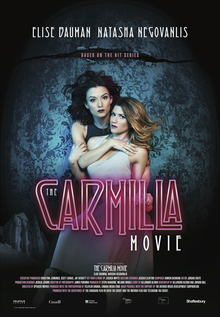
Sheridan Le Fanu is sometimes called “the Irish Poe.”  He was a contemporary of Poe but his name doesn’t bear the same cultural cachet.  He wrote a number of stories that are classified as “horror” in today’s genre settings, and one of the most famous is Carmilla, known as the lesbian vampire story.  Le Fanu didn’t use that terminology himself, that I know of, but Carmilla is a vampire and she does have fondness for other females.  I’ve watched a few lesbian vampire movies (I mentioned Theresa & Allison recently), since they give a distinctive taste to the lore.  I don’t generally research the free movies I watch beforehand, so when I saw The Carmilla Movie, I figured it was likely based on Le Fanu (it is) but I didn’t realize that it was a follow-up to a web series with the same characters.  Nevertheless, it’s a pretty good story.

Set in the modern day, with a cast of young people doing things for a living that weren’t options when I was growing up (internet content provider, starting a paranormal investigation business—I was laughed out of school for admitting I was interested in this stuff before the X-Files made it mainstream), the film updates Le Fanu’s story.   Carmilla has become human and has a girlfriend.  But then Carm starts to revert to vampire status.  (Fortunately there’s soy-based blood for her to drink—did I mention this is comedy horror?)  Although this is comedy horror, it’s not a silly story.  There are plenty of humorous asides, but you still feel for the characters and want them to overcome the evil they face.  Here that evil is a past that has to be rectified.

I found The Carmilla Movie to be intelligent and fun.  There are some genuine horror elements to it, and I suspect that being familiar with the web series might help answer a few head-scratchers for us non-initiated.  In general it seems that such independent films as this serve to raise the bar on movies as a whole.  The flip side is, however, that you can’t easily tell if a movie is a studio release or a television movie, or even a web movie without doing some research ahead of time.  Amazon Prime—my go to service—doesn’t distinguish them.  All I know is that if a movie is one I have on my watch list, I’m going to have to pay for it.  Carmilla was free and worth the time to watch.  And it’s good to see Le Fanu getting some deserved air time.


Creeping Religion

In a disappointing email, Amazon Prime has announced that its free movie streaming of select titles for members will now be subject to commercials.  I suppose that’s little difference, actually, from the way I watched most movies growing up.  I watched them on television before cable, and commercials were a necessary evil then.  Speaking of evil, I decided to watch a film that I missed in my childhood.  It was better than expected.  The Creeping Flesh suggested itself by star power.  Although not a Hammer film, it features both Peter Cushing and Christopher Lee as a pair of mad scientists.  Interestingly enough, it struggles with the question of evil and, appropriately enough, has an ambiguous ending.  There’ll be spoilers below, but since the movie was released over a half-century ago, I’ll use them with a clear conscience.

Cushing’s character, Dr. Emmanuel Hildern, has discovered a skeleton of pure evil personified.  It will become the end of the world once it’s revivified.  Meanwhile his half-brother, Dr. James Hildern (Lee), runs an insane asylum where questionable treatments are performed.  The brothers are rivals and although not quite estranged, they don’t work together.  It’s actually late in the movie that the corpse of evil is resurrected, but in the meanwhile Emmanuel’s daughter goes insane, like her mother had, after being given a vaccine against evil that her father devised.  Her Ms. Hyde-like exploits make her dangerous to Victorian society and she has to be committed to her uncle’s asylum.  The being of evil attacks Emmanuel and we find him at last in his brother’s asylum.  James is explaining to his assistant that this madman thinks he is his brother and that another patient is his daughter.  The film has been a fantasy in an unbalanced mind.  Except for a suggestion in the final close-up that the story of the corpse may indeed have actually happened.

What particularly intrigues me is the discussion of evil in the film.  Emmanuel claims that it is like a virus, an actual physical pathogen.  He believes it can be prevented by a vaccine.  I’ve actually read some academic work in the past few years that suggests that “sin” is an actual, almost physical thing.  A kind of cosmic force.  More sophisticated, of course, but not entirely unlike what this horror film was suggesting fifty years ago.  The Creeping Flesh isn’t a great movie—it suffers from pacing and a somewhat convoluted plot, but still it demonstrates why I keep at this.  Horror often addresses the same questions religion scholars do.  And occasionally it even seems to anticipate more academic ideas, fed to a viewership making the same queries.  It’s worth watching, even with commercials.


Troubled Water

There’s nothing like a good monster movie.  Of course, your local streaming service will have some considerable say over what you might watch.  Amazon Prime is likely my biggest influencer because I can’t afford the movies on my watch list and there’s a monster-load of “free” content.  Still, I fear something may have been lost in translation.  I wasn’t in the mood for anything too heavy, and The Lake thumbnail had a retro-Godzilla vibe to it.  The fact that it’s a Thai horror film certainly enhanced the appeal.  But I’m not sure I understand what it’s supposed to be saying.  The dialogue translation wasn’t, I suspect, very accurate.  More than that, however, I’m in no position to judge cultural tastes for a culture I know primarily through cuisine.  There’s more than a rampaging monster here, but it doesn’t translate well.

There’s a monster in the lake, shown pretty clearly early on.  It kills several villagers, perhaps for disturbing its egg.  A bunch of characters are thrown at the viewer—a family where the brother psychically bonds with the young monster (there’s a bigger, madder, mother monster), a researcher and his assistant, a detective and, quite late in the movie, his daughter, a police chief and his daughter, and none of them have enough screen time for us to figure out who the story’s about.  The monster doesn’t seem evil, although it killed several people at the start.  The police chief evacuates people to the temple and some Buddhist priests show up.  There’s religion and horror worth exploring here, but the dubbing calls the temple a “church” more than once.

The story largely seems to be about family.  The initial family, after losing a couple of members, reunites.  The detective’s daughter dies after he has reconciled with her in the ambulance.  The female police officer reveals near the end that the chief is her father.  (The researcher doesn’t seem to be related to his assistant, but they drop out of the plot.)  It’s difficult to tell if this is a bad movie or simply a cultural gap that puts real understanding beyond the reach of those in such a different realm.  From my viewpoint it was a movie not unlike the Godzilla films with which I grew up.  In other words, better than sleeping away an afternoon but not worth putting too much brain power behind trying to comprehend.  Technically it was a movie better than I could hope to make.  Some of the cinematography was quite nice.  I’m just not sure if I understood what was being translated or not. 


Not The Sting

Why do we make the decisions we do?  Watch the movies we do?  I have to confess that for me a number of strange factors combine to make for some weird choices.  For example, Invasion of the Bee Girls is difficult to explain apart from compounding oddities.  One is that Amazon Prime auto-suggested it too me (for free).  Yes, I have a history of watching bad movies and this definitely fits that bill.  Fuzzy-headedness during my weekend afternoon slump time probably played into it.  Along with the fact that I’d been researching bees and that brought the movie The Wasp Woman back to mind.  Wasp woman, bee girls?  It’s free and I’m not going to be able to stay awake otherwise.  The movie is about what you’d expect from a low-budget 1970s sci-fi horror film.  It did make me think I should read about movies before I watch them rather than after.

Nevertheless, I’m trying to develop an aesthetic for bad movies.  If you’re a regular reader you’ll know that I have a fascination with Ed Wood and his films.  I even read a book about him and also read a book on why it’s okay to like movies that we tend to label as bad.  No matter how you parse Invasion of the Bee Girls, it’s bad.  The acting, the writing, the plot.  Still, some of us have a taste for films from the seventies—it’s kind of a nostalgia trip since I was really only becoming aware of the odd world of science fiction about then.  Nicholas Meyer, who wrote the initial screenplay wanted his name removed after he saw the changes that’d been made.  That should be telling you something.

Meyer, while not a household name writer, did pen some good detective stories about Sherlock Holmes, and wrote, uncredited, both Star Trek II: The Wrath of Khan and Fatal AttractionInvasion of the Bee Girls has a somewhat salacious plot that fits the Zeitgeist of the seventies of which I was unaware, growing up.  The seventies were my sci-fi high point, it was good escapist material for someone living in a situation less than ideal for day-to-day living.  I watched, for example, Killdozer about that time and thought it was great.  Now that streaming is how we watch, the amorphous internet has a record of what we’ve seen and then recommends products for us based on our record.  I really thought we outgrew being tracked all the time.  Little did any of us know that it was only getting started in high school.  And as long as you have a penny to spend, those who track us will try to figure out how to take it.  You could get stung.


One Demonic Night

I only discovered after watching Night of the Demons (2009) that it was a remake.  Eventually curiosity got the best of me and I had a spare moment to watch the 1988 original.  It’s still kind of a bad movie, but it is scarier than the remake.  It’s also a horror comedy, but the emphasis is a bit more on the horror here.  A group of ten high schoolers go to Hull House, which used to be a funeral home, for a Halloween party.  When the power goes out they decide to have a séance.  Unbeknownst to them, however, there is a real resident demon.  This demon gets passed on through kissing, and it animates the kids who’ve been killed along the way.  Although the final girl is pretty clear from the beginning, in a usual twist the only surviving guy is African-American, the son of a preacher.

The concept of demons here is explained as entities that were never human.  This is the explanation Ed and Lorraine Warren used, often without making reference to fallen angels.  Since the demons are using the physical bodies of the kids, they can be stopped by locked doors, but killing them doesn’t really help, since they keep coming back.  It seems that there’s really just one actual demon, a dragon-headed entity that lives in the crematorium.  Rodger, the Black man, brings the element of religion to the story.  He objects to the séance in the first place, and suggests that they pray as he and Judy, the final girl, are attempting to escape.

In-between all this is sandwiched the gore and violence that make it pretty typical horror.  The humor involved, however, makes it less intense than a typical slasher.  Although I didn’t walk away thinking this would be a favorite movie, I could see why it’s garnered a cult following.  As is often the case, the original is better than the remake.  For one thing, it understands that religion seasons horror quite well.  Demons are, by definition, religious monsters, at least traditionally.  And the two “good kids” who survive are uncomfortable with messing with spiritual forces to begin with.  Judy just wants to go to the dance, after all.  The movie went on into sequels as its cult fandom grew.  If I ever do a sequel to Nightmares with the Bible I’ll need to include this franchise, I guess.  For a sleepy weekend afternoon, there are worse bad movies to watch.


Seeing in Darko

Having seen it I have to wonder why I waited so long.  Part of it was timing, of course.  I was still teaching at Nashotah House when Donnie Darko came out, and I didn’t watch as many movies then.  My loss of that job started me on my horror-watching spree, but Donnie Darko is more than horror.  In fact, it’s usually labeled a thriller instead.  Another reason I avoided it is, alas, the title.  It’s actually the name of the protagonist, and one of the other characters in the movie remarks that it sounds like a superhero name rather than a regular person.  What’s it about?  Well, that’s where it gets interesting.  Donnie has mental health issues, but those issues are tied in with time travel and philosophical discussions about the existence of God.  The high school Donnie attends, although not explicitly stated, seems to be Catholic but there aren’t priests and nuns about, and one of the teachers is seemingly evangelical.

Donnie has trouble distinguishing reality.  Instead of allowing the audience to get away with labeling him easily, the question of reality itself is left unanswered.  The movie is deep like Brazil or The Matrix, and is often considered one of the greatest independent films of all time.  It’s the story of Donnie’s October 1988.  He sleepwalks and sees a guy in a bunny costume who tells him the world will end in 28 days.  Of course he’s medicated and sent to see a psychologist, but what the guy in the bunny costume tells him ends up coming true.  The story is intricate and doesn’t bear a brief synopsis.  It is a movie that will make you think.  It’s become a cult film and I think I’ll be joining that crowd on this one.

Films that manage to put philosophical reflection in the spotlight are rare.  Even more uncommon are those that do so with high production values and convincing acting.  Movies that do this aren’t often cheerful—philosophers in general don’t tend to be a jovial lot (some are fun, of course, but they’re not the majority).  Thinking is serious work, even if those who do it aren’t really paid for their efforts.  Donnie Darko is a movie that will make you think.  Is it horror?  Some classify it so.  Others say sci-fi, but it didn’t really seem like that to me.  In fact, it’s very difficult to classify at all.  Many of the best movies are that way, in my experience.


Mind Echoes

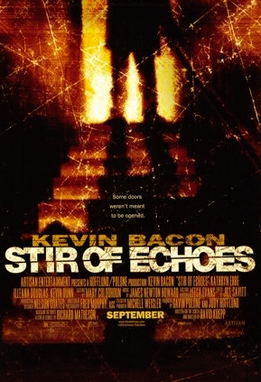
One of the things that must be frustrating about making movies is that so much competition exists.  Even when you hit on a great idea, such as using a Richard Matheson novel for a story basis, others might be producing something similar.  This isn’t unique to movies, of course.  Some of us have had the experience while writing books.  For those of us who watch movies online, rather than in theaters, the timing differential can still warp perspectives.  I’d not heard of Stir of Echoes until I stumbled onto a website that lists horror movies that have a little something extra.  While watching it I couldn’t help but think of The Sixth Sense, which I also saw at home, but quite a few years earlier than Stir of Echoes.  The acting in the latter is quite good.  The haunted kid pulls this off effectively.  And Kevin Bacon and Kathryn Erbe do a great job as parents (actor-wise).  Spoilers follow.

If you’ve intuited that the child sees dead people, you’re not far off.  It’s actually only one dead person and it’s not a Shyamalanian counsellor.  But the spooky part is his dad begins to see them too, after he’s been hypnotized by his sister-in-law, who’s an amateur.  At its heart the story follows the traditional trope of the undiscovered murder.  It does a good job of hiding the perpetrators until near the end.  The build-up is good also, with Bacon portraying Roy Neary-like obsession (interestingly, they’re in similar professions) quite well.  

The scary part, for me, was the sense that you’re not in control of your own mind.  There’s perhaps just a little too much possibility here.  We tend to think we own our minds, but what if they’re really just on loan?  I remember reading, as a high schooler, that religious people are difficult to hypnotize.  Hypnosis is still not well understood.  The larger fish in the pond is consciousness itself, which we really can’t even define.  We do know that memories are altered with time, and we can demonstrate this to ourselves by rewatching an old movie and seeing what we got wrong.  I suspect that’s why Stir of Echoes is so effective as a horror film—taking us into the realm of mind exposes us to so much that we really don’t understand.  And since ghosts seem to be pretty believable, well, the combination works.  Stir of Echoes is unsettling and a cut above much of what’s available for free streaming.  So if you’re in the mood for a ghost story, this might just fit the bill.


Out There

While Amazon Prime includes a few A-list horror movies, those that it does I’ve already watched.  Since I can’t afford to pay for this habit, I watch what’s free.  That brought me to the horror comedy There’s Nothing out There.  Written and directed by a twenty-year-old guy, it’s kind of what you might expect.  Its main claim to fame, apart from being a low-budget monster flick, is that it anticipates Wes Craven’s classic Scream.   The latter is famous for being so self-aware.  One of the characters keeps telling the others what happens in horror films and, of course, those things happen.  Although There’s Nothing out There is silly, one of the characters does exactly that.  In the funniest moment in the movie he looks directly at the camera and says “It’s a distinct possibility” in response to one of the girls asking “So you’re saying we’re in a movie?”  Craven didn’t borrow that, but then, Scream is a landmark.

So what’s it about?  There are seven young people who head to a cabin in the woods.  Actually, it’s a regular house, and quite a nice one at that.  The three couples are there for sex but the single guy (Mike) is the horror expert and gets on everyone’s nerves.  He’s right, of course, that there is a monster on the loose.  A slimy green thing with a huge mouth full of pointy teeth, has fallen from space into the neighborhood and it slimes the guys, digesting them, and tries to mate with thee girls.  And if it shoots lasers into your eyes you become its servant, helping out with its mission.  The kids are picked off, of course, with Mike surviving along with one of the couples.  Before they can stop the monster a plumber also gets eaten.

Horror comedy is a strange genre.  It tends to work because there are elements of humor in much of horror.  It’s not all blood and gore—the best examples use that sparingly, in any case.  And horror comedy doesn’t really frighten since it’s pretty clear that it’s being played for laughs.  Sometimes such movies venture into the bad realm—there’s a reason some movies are free on Amazon Prime—but at times they actually have quite a bit to offer.  There’s nothing scary about There’s Nothing out There.  It’s the kind of movie that tends to grow into a cult classic over the years, however.  And while it’s not A-list material, it’s still worth watching for free.


Not All Vampires

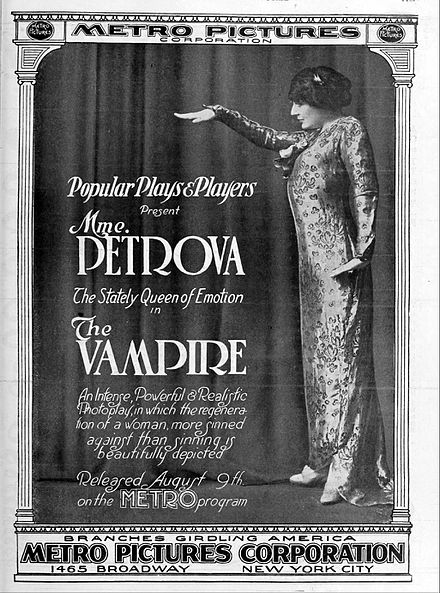
Early film research owes great debt to YouTube.  Many historic and significant films cannot be purchased or watched anywhere else.  Even in this uber-greedy late capitalist era, few (if any) are willing to sell that for which many would pay.  This is brought on by my learning about Alice Ida Antoinette Guy-Blaché, also known as Alice Guy.  Guy was the first female film director.  She left a substantial body of work and is credited with being the maker of the first narrative-based film in history.  If you’ve not heard of her, you’re not alone.  Even during her lifetime she wondered why she was never recognized for her cinematographic achievements, incredible though they were.  She filmed one of the first adaptations of an Edgar Allan Poe story known, The Pit and the Pendulum (1913).  This one is partially lost—many early films are.

I wanted to see her 1915 film, The Vampire.  Given the date, you will have correctly guessed that it’s a silent movie.  It still survives and the only place it can apparently be found is on YouTube.  Before you run off and watch it, be aware that it’s not about a literal vampire, but rather “a woman of the vampire type.”  The current term is “vamp.”  The movie, which takes a feminist approach, is framed around Rudyard Kipling’s poem, “The Vampire.”  It runs for about an hour, which was pushing the envelope in those early days of cinema.  It tells the story of a happy, wealthy family broken apart by a “vamp.”  The husband receives a government appointment in Europe and his wife and daughter can’t follow for a month.  On the way over by ship, the vampire seduces him, after compelling her current love to shoot himself.  This isn’t a comedy.

The film doesn’t end happily—the statesman, aging prematurely, just can’t break the vampire’s hold on him.  Still, friends and family urge his wife to wait for him because divorce is wrong.  The film lingers on the suffering of the wife and on how much his young daughter misses her father.  The film quality is quite good for the time, although the YouTube version has been digitally restored.  So this isn’t a horror film, but watching it is a tribute to a woman who influenced filmmaking and then was summarily forgotten, largely because of her gender.  Alice Guy was the first woman to run her own movie studio.  Sadly, her husband left her and their children just three years after The Vampire.  Shortly after that Guy’s filmmaking career was over.  Fortunately for history, Guy has been rediscovered and has been receiving credit for her pioneering work.  Although The Vampire was about a dangerous woman, the reality is, and was, that patriarchy continues to ruin women’s lives.


First Stories

I won’t say more than that her first name was Tina.  She lived next door to us in the earliest boyhood home I can remember.  She was a few years older than my brothers and me and, according to my mother, grew into quite the delinquent.  She ended up in jail, I’m told.  Still, even in a childhood full of scarring memories, I remember Tina as being the first person who told me a scary story.  Funny how these things stick with you.  We lived in Franklin, Pennsylvania, a town on the edge of the woods.  Indeed, Venango County is largely wooded and populated by some of the most avid hunters I’ve ever seen.  There were woods across the street from our house, climbing one of those ubiquitous hills that make the area so beautiful.

There was a man in those woods, Tina told us, who’d been kidnapping small boys and cutting out their hearts.  She was telling it as the truth and well over half a century later I remember the fear that story instilled in me.  Of course, Mom told her to stop telling us scary stories.  I was only five or six at the time.  Maybe four.  My path to watching horror movies wasn’t straightforward.  We were a religious family, but taking care of three young boys and an ailing mother with no husband around eats up all your time.  Mom was content to let the television babysit us in the next room at times.  And as late monster boomers, we watched monster movies on Saturday afternoons.  They gave me a cozy feeling.  Things could be worse than not having a father.  Much worse.

After high school I gave up monsters for the Gospel.  Went to college to become a preacher.  I ended up teaching in a seminary and didn’t want my daughter to grow up scared, like I had done.  Then my world collapsed.  Fundamentalists fired me from my first and last full-time teaching position.  I dealt with it by watching horror films.  Perhaps I was reverting to childhood coping strategies.  Over the years, however, I never forgot that story that Tina told us when my brothers and I were little.  It is a scary world out there, and you’ve got to learn that one way or another.  Many people don’t understand my fascination with horror.  In times of trouble, however, we go back to those self-soothing practices that we associate with good feelings.  For some of us it was watching monster movies on Saturday afternoons and knowing things could be worse.  


Don’t You Sleep

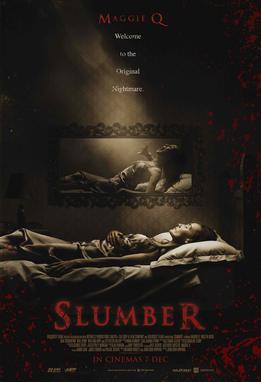
Sleep is pleasant but it’s such a vulnerable time.  Something deep in our animal DNA tells us to find a sheltered place to do it.  That vulnerability is compounded by demons.  So claims Slumber.  While not the most original story, it’s pretty effective for a while, but then holes begin to appear in the plot and you find it difficult not to keep asking why the problems weren’t addressed.  Let’s take a step back.  Doctor Alice Arnolds lost her younger brother to a demon when they were children.  This demon, called Mare, causes, well, nightmares.  These nightmares lead to sleepwalking and ultimately death.  As a doctor specializing in sleep disorders, Arnolds helps others scientifically.  She’s come to believe that her brother’s death was because of natural causes—the supernatural doesn’t exist.

Okay, so sleepwalking is creepy, and the idea isn’t a bad hook.  Then Arnolds meets a family of four, all of whom sleepwalk with nightmares.  The demon’s target here is their young son, who reminds Arnolds of her lost brother.  At the sleep clinic the monitors show something odd, but circumstantial evidence points to the father as the guilty party.  But here’s where the big hole appears.  Once Arnolds becomes convinced something supernatural is happening, she decides to handle it herself, at the family’s home.  Even when it’s clear they’re out of their league, nobody calls the police or even an ambulance, let alone a priest.  Instead they rely on a janitor’s father whom they’ve just met.  They try to keep the boy awake until they’re endangering his life, then they fight the demon in their dreams.  There is a kind of twist ending, and the production values are good.  

The demon, which Arnolds researches on Wikipedia, is a notsnitsa.  Why this Slavic demon targeted both her brother and the family under distress isn’t explored.  The connection is made with “the night hag”—a folkloric demon that attacks in your sleep and is generally explained as sleep paralysis.  This is not a possessing demon.  In the film it’s said to be parasitic, and the sleeping victim acts out what the demon tells it to do.  The lack of any religious tension hurts this movie.  As does that lingering question—why not call in some kind of expert?  Either sacred or secular will do!  I won’t ruin the ending of the movie, but I’ll warn those tempted to watch to come armed with a great deal of suspension of disbelief.  You’re gonna need it.


Through the Woods

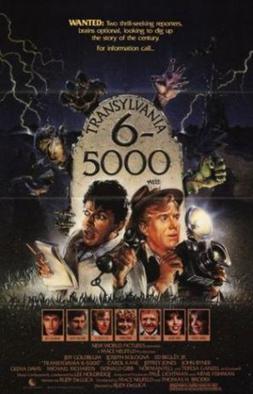
The thing about appreciating bad movies is that it’s difficult to be disappointed.  On a recent weekend I’d watched a horror film that didn’t sit well with me (or maybe it was the last night’s supper), and I decided I needed to see something else.  Something that was free on my streaming service.  I’d read about Transylvania 6-5000 someplace, but I couldn’t remember where.  The list of stars won me over: Jeff Goldblum, Ed Begley Jr., Jeffrey Jones, Geena Davis, Michael Richards—why don’t more people talk about it?  Because even for a comedy it has trouble working.  Well, a horror comedy, to be precise.  Emphasis on the comedy, which tries too hard.  I couldn’t get over the fact that this was a tall guy movie—Goldblum, Begley, Jones, and Richards are all over six feet tall.  Usually other actors literally have to look up to them.

Even though it’s a groaner, it’s not without worth.  It was filmed in what used to be Yugoslavia when it was rare for anything to come from behind the Iron Curtain.  Set in Transylvania, it wasn’t too far off.  (Transylvania is located in Romania, of course.)  Some of the performances aren’t bad, Davis’ vampire nods to Frank-N-Furter in Rocky Horror, and Carol Kane is fun to watch as Lupi.  The male roles are generally the problem.  In case you’re wondering, the plot is that two reporters—Goldblum and Begley—are sent to Transylvania to find a story.  The locals laugh at them, insisting Transylvania’s a modern country with no monsters.

When the classic monsters do appear, they all have rational explanations.  There are riffs off vampires, werewolves, Frankenstein’s monster, swamp monsters, and the mummy.  There’s even a mad scientist.  The problem is the movie really doesn’t give itself over to either comedy or horror.  There are ways to make that combination work.  And, as with C.H.U.D., the title put me off.  I didn’t know until reading about it later that it was also a riff, but from the Glenn Miller song “Pennsylvania 6-5000.”  I’d never heard the song before and was unfamiliar with its title.  Rudy De Luca, the director, had worked with Mel Brooks and perhaps if they’d collaborated on this one the results might’ve been better.  So, it’s a bad movie.  That doesn’t mean it isn’t worth watching.  Movies like this sometimes serve as an homage to the monsters with whom we grew up, and who even met Abbott and Costello in their own lifetimes.  Just be prepared not to take it too seriously and not to laugh too much.


Demonic Night

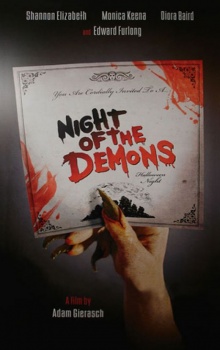
There’s a type of film—I don’t have the vocabulary for it—where the action is loud, brash, and in-your-face.  Colors are often lurid and, in horror, gross sounds are emphasized.  I’m not sure what it’s called, but it’s the style used with Night of the Demons.  I didn’t realize until after I’d seen it that it was a remake of an earlier film by the same name.  The one I saw was the 2009 version.  I’d just finished a book about demons, and I was looking over Amazon Prime and what I could watch without spending any more money.  Well, I did learn something.  But first, a little plot reveal: a group of friends are going to a Halloween party in a haunted mansion.  Mainly they’re looking for controlled substances and uninhibited sex.  The party hostess has rented said haunted mansion for the night.

Once they get there the final girl, Maddie (and you can tell from the beginning that she’ll be the final girl) starts to realize that there seem to be supernatural forces at play.  The cops show up and break up the rave, but seven kids remain behind since they’ve been locked in.  They find a hidden room where the bodies of six previous victims have decomposed.  This leads to the possession of the woman hosting the group and these demons are transferred either by bite or sex—they are sexually transmitted demons.  So, naturally, all the friends except the final girl fall victim.  These demons dissolve in the sunlight unless they get seven victims, so when Maddie makes it through Halloween night, the demons are defeated.

What makes this moving interesting is the type of demons on show.  These seven demons are so bad that they’ve been kicked out of Hell—they don’t follow the rules.  This made me think.  Logically, no demons in Hell follow the rules.  The root of the word “pandemonium” means “all demons.”  If none of them obey rules, how can any be kicked out for breaking rules?  Laws and rules are what preserve any civilization.  Those who use their money and power to flaunt the law are, in their own way, demonic.  These demons are kept at bay by spells written on the walls of one room in the house.  Those rules they must obey.  Is this a parable about free will?  It doesn’t seem sophisticated enough for that.  Night of the Demons is one of those fast, loud, lurid movies that need a monster.  Demons, which have no basic form, seem to be purpose made to fill such gaps.


Tall and Slender

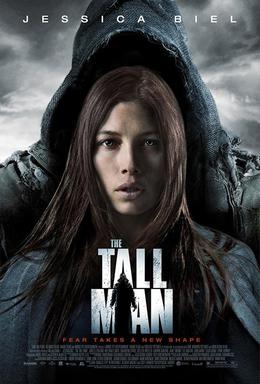
At first I thought she was mistaken.  A friend mentioned, in a litany of horror films, The Tall Man.  I thought she meant The Slender Man.  Then I saw an online post that referenced The Tall Man and I grew curious.  That curiosity almost cost me my lunch.  Not for the reasons you might assume, but because The Tall Man’s one of those movies that seems to think the camera has to be in constant motion.  I have an inner ear condition that makes me extremely susceptible to motion sickness.  It happens even if I watch train cars passing (which is, indeed, one of the images with which the movie starts).  I kept telling myself, give it a few more minutes, maybe they’ll buy a tripod.  I’m glad I stayed with it because it was inspired by the Slender Man urban legend.  Later, The Slender Man was made into a movie, perhaps inspired by The Tall Man.

Although horror, this probably isn’t what you think.  The reason I was glad that I stuck with it is that, although confusing, it has a good message and everything becomes clear at the very end.  Director misdirection is very common, of course, but this one worked on me.  There’ll be spoilers here—so you’re warned.  The common thread behind both Tall and Slender is missing children.  Some mythical or folkloristic creature snatches them away.  There’s no supernatural in this movie.  It revolves around a widowed nurse in a dying town, Cold Rock, Washington.  The children are suffering and the nurse wants them to live a better life.  Here’s a spoiler—read no further unless you want the ending ruined.  I’m serious.  The next paragraph will spill the beans!

Her husband isn’t really dead.  Working together they kidnap working class children and get them to loving, caring, affluent families.  There’s a ton of social commentary in this film.  As the nurse explains, the system is broken.  Too many children are left to suffer and the only way to break the cycle is to break the rules.  The appearance of William B. Davis made me think X-Files, but his role here is a straight-up sheriff.  There is no “Tall Man,” just like there is no Slender Man, but legends do take on lives of their own.  This isn’t one of my favorite movies, but it is better than I was led to believe.  And having a social conscience, while not rare, is always a good thing to see in a horror movie.  If only they could keep the camera still.