Bad Intensions

What, exactly, defines dark academia?  I ask myself that question a lot.  Looking for movies that might help answer that question sometimes brings about unexpected results.  A film that appears on several dark academia lists is Cruel Intentions.  I’d never seen it before and since it’s generally classified as a teen romantic drama, it isn’t exactly what I tend to go seeking.  Still, that definition is important to pin down, dark academia.  So I tried.  It presents itself, at least up front, as a teen sex comedy.  A rich playboy at a private school, and his scheming step-sister, enjoy destroying the innocence of new coeds.  She uses coke and he appears to be addicted to sex.  There’s not much to really like about either one.  Then the unexpected happens—he falls in love with one of his intended victims.

If the plot sounds a little familiar, it may be because it is a retelling of Dangerous Liaisons, a movie I’ve never seen based on a novel I’ve never read.  What makes it dark academia is that it takes place in a private school.  An exclusive private school (but aren’t they all?).  And it does take a dark turn toward the end.  The cad (Sebastian by name) is eventually caught in his relentless womanizing and although the woman he truly loves is a forgiving sort, it can’t save him in the end.  The movie has the fun of double-double crossing and certainly doesn’t paint a very flattering portrait of the rich.  Indeed, Dorian Gray comes to mind as well.

The movie, qua movie, is enjoyable enough.  The acting is pretty good.  I’d seen it described as a thriller as well, and there may be some junior-level thriller moments.  Dark academia, at its best, has some crossover with thrillers, or even horror.  Since the aesthetic appeals primarily to the young, it is perhaps inevitable that it goes gently into that dark night.  I’m trying to get a handle on it because it has captured my imagination.  In many ways dark academia has helped make sense of what has happened in my life.  I love the gothic aspect of the genre.  The few shots of the gothic architecture of Manchester Prep were appreciated, but the movie as a whole doesn’t have much of a gothic feel, beyond the monied privilege of kids who’ll probably never have to do a day’s work in their lives.  Dark indeed.


Finding Fossils

Mary Anning was a real woman.  She made valuable contributions to paleontology in the first half of the nineteenth century, although she wasn’t always credited for her work.  The movie Ammonite is a fictionalized account of her life at Lyme Regis, where she lived and discovered dinosaur fossils.  Being fiction, the movie focuses on how Mary “came out of her shell” by entering into a relationship with Charlotte Murchison (also an historical person, wife of the Scottish geologist Sir Roderick Impey Murchison) who was left in her care when she came down with a fever after trying to recover from melancholy by taking the sea air.  Mary had established a life of independence and wasn’t really seeking relationships; her mother still lived with her and, according to the movie, they had a distant but loving regard for each other.

I was anxious to see the film because it is sometimes classified as dark academia.  Since I’m trying to sharpen my sense of what that might mean, it’s helpful to watch what others think fits.  The academia part here comes from the intellectual pursuits of Anning and the academic nature of museum life (one of her fossils was displayed at the British Museum).  Anning, who had no formal academic training, tried to make a living in a “man’s world,” and in real life she did contribute significantly to paleontology.  The dark part seems to come in from her exclusion from the scientific community, and perhaps in her love for Charlotte, a forbidden relationship in that benighted time.  Of course, this relationship is entirely speculative.

Fictional movies made about factual people make me curious about the lives of those deemed movie-worthy.  Ammonite is a gentle movie and one which raises the question of why women were excluded from science for so long.  No records exist that address her sexuality—not surprisingly, since she lived during a period when such things weren’t discussed.  Indeed, she didn’t receive the acclaim that she might have, had she lived in the period of Jurassic Park.  She was noticed by Charles Dickens, who included a piece on her in his magazine All the Year Round, in 1865, several years after her death.  These days she is acknowledged and commemorated.  This movie is one such commemoration, although much of it likely never happened.  As with art house movies such as this, nonfiction isn’t to be assumed.  Nevertheless, it might still be dark academia.


What the Devil

Apart from being one of the most controversial films of all time, The Devils is also devilishly difficult to locate.  For as influential as it was (you can’t tell me nobody in Monty Python saw this before making Holy Grail) it has largely been buried, at least in the United States.  It doesn’t stream and to get a viewable copy you are limited to a Spanish language import DVD and have to manually select English as the language if you want to hear it as produced.  The question is if you do want to see/hear it.  Written and directed by Ken Russell, it is over-the-top.  Chaotic and cacophonous, it’s almost distracting and somewhat boring for about half its run time.  Then it turns incredibly violent and grotesque.  So why did I watch it?  Well, for one thing, it was something I knew I could’ve included in Holy Horror, had I been able to access it then.  For another thing, I’d read about it many times and was determined to find it.

Based on historical events (but stylized to the point of abstraction), the film is about the Loudun possessions of 1634.  Nuns in an Ursuline convent began displaying the kinds of tics that girls would display in Salem some 58 years later.  A local, unconventional priest, Urbain Grandier, was accused of bewitching them and was burned at the stake.  The film makes much of the political machinations taking place, and revels a little too much in the behavior of the nuns.  It also enjoys portraying medieval torture methods and has an almost Clockwork Orangesque feel to it.  Released in 1971, it was given restrictive ratings where it was permitted to be shown, and although some horror has surpassed the excesses in recent years.

Religion’s relationship to horror is a frequent topic of discussion on this blog.  This movie is a textbook example of that.  After my nerves stopped jangling so much, I recollected that Ken Russell was also responsible for Lair of the White Worm.  Another story of debauched nuns and religion gone awry, it made me wonder what Russell’s personal interaction with religion might have been.  He apparently converted to Catholicism and then converted away again.  It certainly doesn’t get much sympathy in his movies.   Father Grandier is somewhat heroic in The Devils, but the overall institution is clearly corrupt.  In some cases religion is the means of fighting horror.  In other cases it is the cause of the horror.  Here the latter is clearly on display, and even that is, unfortunately, over the top.


Sunday Wednesday

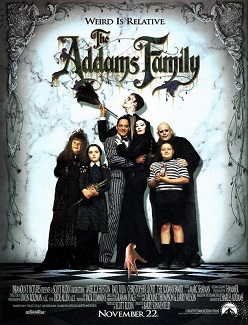
Being busy people, it took us a couple weeks to watch the eight episodes of Tim Burton’s Wednesday, and I think he’s really outdone himself.  As I mentioned before, I was never a great fan of The Addam’s Family, but I watched it often enough to know the characters and their quirks.   I wasn’t quite sure what to make of the television show.  It had monsters, but nothing really scary.  It was funny but some of the humor seemed beyond me.  I watched it anyway.  I didn’t bother with the movie when it came out.  Then on a rainy weekend afternoon I watched episode 1 of Wednesday and I was hooked.  For one thing, this is dark academia personified.  Exclusive, gothic, school, dark mysteries, secret societies.  It’s all there.  And for another thing, it’s well written and the acting is very good.  And then there’s Poe.

Image credit: Chainwit. This file is licensed under the Creative Commons Attribution-Share Alike 4.0 International license.

(On a side note: I recently found another review of Nightmares with the Bible.  It is my most reviewed and least successful book.  The reviewer agreed with other reviewers that the Poe angle didn’t convince them.  As I told one critic, the Poe angle is a personal one.  Poe was a man, a sin of which I’m also guilty.  And men of a particular stripe feel protective of women.  Maybe it’s one of those biological things we should just get over, but Poe felt that it was poetic and, being a far less intelligent experiencer of that same disposition, I feel it too.  I think Tim Burton might also, for Wednesday seems full of that as well.)

At Nevermore Academy, the morbid, anti-social loner Wednesday learns to accept a kind of friendship from other outcasts.  There’s a town vs. gown aspect as the residents of Jericho don’t exactly love the academy, but they appreciate the money it brings in.  The founding pilgrim, Joseph Crackstone, was a hater of those who were different and tried to rid the world of others not like him (this is important).  Over eight episodes this backstory interrupts into the present and threatens the very existence of Nevermore.  What ties it all together, of course, is Wednesday.  Nearly as gothic as Sleepy Hollow, this Netflix series showcases the aspects of Burton’s vision that I find most compelling.  And the first season was nominated for quite a few awards.  A second season has been approved and I’ll be watching that one, down the road.  I can’t get enough dark academia these days, no matter the day of the week.


Prior Memory

Sometimes I just don’t know where my mind is.  A few months back my wife and I decided to watch Heathers for the first time.  It got a bad rap when it came out but we finally gave in because there were so many cultural references to it that we felt we had to be informed.  Now none of that makes it worth comment.  What does, in what’s left of my mind, is that I was sure I’d written a blog post about it.  I hadn’t.  The thing is, I even thought I remembered some of what I wrote about it.  Uhn-uhn.  Didn’t happen.  So I guess I can trawl my memory and see if I can recollect what I thought I had already said.  Here goes.

The movie is a disturbing and funny look at growing up and its hard lessons.  Everyone said that it glorified suicide, but that wasn’t what I saw.  One person attempts it, and the others are all actually murdered and made to look as if they died by suicide.  Not a lighthearted topic, I know, but the students pretty much all want to live.  J. D. (read into that what you will) is the real criminal.  An outsider with a chip on his shoulder, and who has no problems being (or associating with) a criminal.  Or making others into criminals.  

As with many, perhaps most, adults, I remember the confusion of puberty quite well.  I wanted to be liked in school (I never had many friends) but I was quiet, bookish, and very religious.  Having grown up feeling generally unliked, I found acceptance, for a time, at church.   This movie captures that aspect well—the desire to fit in with a cohort that is particularly hostile (teenagers).

What brought Heathers back to mind after these few months was the fact that some classify it as a dark academia movie.  Dark academia generally has some schooling involved, sometimes directly, sometimes as implied.  There is a natural kind of darkness in high school and into college years.  This is something we may be in danger of losing with universities becoming glorified trade schools.  Not all of life is about finding a job.  The humanities suggest that being human is sometimes enough.  Heathers seems to have aged pretty well, being over thirty at this point.  Some of us took three decades to see it.  And if we feel like we’re losing our minds from time to time, at least now I’ll know I have indeed posted upon this movie.


See Monsters

I have a soft spot for seventies movies, but I can’t decide if The Sailor Who Fell from Grace with the Sea is horror or not.  I found it on a horror list, and an oblique reference to Lord of the Flies got me interested.  It reminded me, in some ways, of The Wicker Man.  Although based on a Japanese novel, the movie’s set in England.  Two subplots seem unrelated except they happen to the same widowed mother and son.  The son is part of a group of five boys in a private school who have a secret society (echoes of dark academia here).  The leader, although not yet at puberty, is a sociopath who’s very bright and the others follow him.  He declares that a perfect balance (a very East Asian religious outlook) exists that adults simply cannot realize it.  Indeed, adults are bad.

At the same time, the boy’s mother meets and falls in love with a second-mate on a merchant ship.  The boy likes the mate too and feels that they have found a perfect balance.  Thus the two plots come together.  The boys in the club feel that the son has gone soft on their principles, and so to prove he hasn’t they arrange the vivisection of an anesthetized cat.  When the sailor returns, unexpectedly, to try to marry the widow, her son objects.  The perfect balance has been distorted.  The boys decide that the sailor must be treated “like the cat.”  They take him to a distant overlook on a pretense, and drug him.  In a long shot at the end, the boys gather around his unconscious body.  Now, the similarities to The Wicker Man may seem passing, but the idea of human sacrifice is there.

Is this horror or not?  Hard to say.  Most of the movie revolves around the mother’s relationship with the sailor (which the son watches, voyeuristically, through a knothole in his bedroom cupboard.  The secret society is always there, however, and when the plots come together you realize that the sailor will have to be killed.  Like Wicker Man, there’s nothing really explicit here, although Wicker Man does have a horrific ending.  The Sailor only has one by implication.  The leader of the secret society of boys is pretty scary and apart from the widow, parents are pretty scarce in the movie.  I was left wondering what it was that I’d just seen.  I can see why someone would list it as horror, but it had other echoes that I felt might fit better.  It was, however, free for the streaming.


Eye Eye

When trying to be conscientious about not spending too much money on movies there’s always the risk of seeing something cheap.  In the case of The Eye Creatures, not only was it cheap, but it was also a throw-back to childhood.  I remember seeing this one in my younger years, and, not yet old enough to be critical, loving the costumes.  Rewatching it as an adult, where some critical faculties remain, reveals it to be a bad movie.  Poorly written, poorly acted, and poorly financed, it ticks all the boxes.  It’s actually a remake of an earlier American International Pictures film, and AIP wasn’t known for its lush budgets.  To be fair, the film is supposed to be a sci-fi horror comedy, but the comedy isn’t that good.  The unintentional gaffs are.

So, the Air Force is concerned about keeping flying saucers secret.  When an “unfriendly” one lands where the teens all go parking, the Air Force investigates while the eponymous eye creatures terrorize the local kids.  Specifically, they seem bent on revenge against Stan Keyton and his girl, because they ran over one of the creatures.  Keyton gets arrested for manslaughter because the creatures substitute the body of a drifter they killed for the corpse of their own comrade.  The police don’t believe in aliens, of course, and the Air Force denies everything.  Keyton and gal decide, after discovering the the eye creatures explode when exposed to light, to round up the necking kids and wipe out the aliens with their headlights.  They figure nobody will believe them anyway.

Some movie monsters stick with you for decades.  The eye creatures are one example of this.  Simply seeing the movie title reminded me of them, although the only plot point I could remember was that they exploded in the light.  I didn’t recall all the voyeuristic watching of teens making out that the Air Force officers did.  Or the tedious revisiting of the Old Man Bailey character.  One of schlockmeister Larry Buchanan’s films, it was released the same year as his other cheap childhood favorite, Zontar, Thing from Venus.  As much as people like to make fun of makers of such cheap movies, Buchanan gained recognition in the New York Times (as have other makers of schlock such as Roger Corman and William Castle), so there is something to these movies.  For one thing, those of us who grew up in the sixties remember them.  And, if we also remain cheap, we can see them again as adults, and relive a bit of cinematic history.


Good Hearts

If you’re looking for more religion-based horror, you might try the 1987 film Angel Heart.  As I’m discovering quite a bit lately, I could’ve used this one in Holy Horror as well.  The religious elements are pretty hard to miss, beginning with the protagonist’s name, Harold Angel.  (Hark the, any one?)  A private detective, Angel is hired to find a missing person for a Louis Cyphre.  His search takes him from New York (where a guy keeps a pistol in a Bible (there’s maybe an entire book in this trope), down to New Orleans.  First he meets Cyphre in the back room of a black church but soon he starts getting chased out when he starts to uncover any clues.  Time to head to the Big Easy.

In New Orleans he finds all kinds of occult practices taking place.  And the folks are none-too-friendly when he starts making mention of the guy he’s after.  He ends up witnessing a voodoo ritual and complains about the bad religion he encounters.  The big reveal indicates that there’s been a case of mistaken identity.  Louis Cyphre (Lucifer) has actually been setting an elaborate trap all along.  The portrayal of the Devil as a sophisticated gentleman isn’t new, of course.  There is a scene where Angel and the Devil are in a church and Angel, being a detective, uses inappropriate language.  Lucifer (not yet revealed as such) has to remind him a couple of times to watch his tongue while in a sacred place.  Satan is more pious than Angel.

The movie has multiple issues, but it has become a cult film over the years.  Like many others that I’ve discussed on this blog, the entire plot draws its horror from religion.  Angel has a difficult time with the non-Christian worship he witnesses.  But really, it is the Christian Devil that’s the antagonist here.  Quite often in movies like this, fear of other religions is based on the supposition that Christianity is correct.  That’s been a broad American trait for centuries, and it gives horror room to run.  The idea of a generic Christianity (which is probably what most Christians hold to) overlooks the doctrinal differences, often quite significant, between denominations.  This particular avenue isn’t much pursued in horror films, at least in my experience.  Interestingly, like Cat People (1982), it places this religion-based horror in New Orleans.  There’s plenty to explore in that connection as well.  Angel Heart is not a great movie, but it can lead in some interesting directions; a holy sequel may be necessary.


Remembering Winter

There’s a deep satisfaction at attaining a goal, no matter how low the bar.  Having rediscovered the “Beast Collection” after looking to see if Snowbeast was on it—it was missing from another DVD collection I have—I determined to watch my way through.  It took two or three months, maybe four, but I finally finished it out with Snowbeast itself.  One of a spate of Bigfoot films from the seventies, this was a made-for-television movie.  Many retrospectives show a movie going up in critical estimation over the years, but this one seems to have sunk down into the “bad movie” category.  But still, of the seven (!) Sasquatch films in the pack, it is clearly the best.  A low bar, as I say, but still, it has the advantage of being relatively well written.  Joseph Stefano, who wrote the screenplay, was one of the minds responsible for The Outer Limits.  He also had credit for writing the screenplay for Psycho

Decent writing can help redeem bad movies.  But more than that, you can actually care for the characters.  In some bad movies you have a difficult time raising any feeling for the people portrayed—that’s true for more than one of the other films in this collection.  Here are people that doubt themselves, but have good hearts.  The story isn’t complex (one of the reason modern critics scorn it).  A ski resort in Colorado—much of the movie shows people either skiing or snowmobiling—a young woman is killed by the eponymous snowbeast.  When the owner of the lodge insists on keeping it open for a festival, the current manager (her grandson) is reluctant to kill something that’s so human.  There’s a bit of a moral quandary here, which provides some traction on a slippery slope.

The beast then kills a member of the search and rescue team, and they know they have to destroy it.  The principal characters track it down, and after the beast gets the sheriff, they shoot it.  As I say, not much of a plot, but the characters have some depth.  It’s not a great movie by any stretch, but it doesn’t leave you feeling as if you’d have more enjoyed doing your taxes.  And that’s saying something for a collection of movies that cost less than most single DVDs.  Now if that makes me sound old, keep in mind that this movie was from the seventies.  And even if most re-appraisers think it has grown worse over time, I’m willing to disagree.  After all, I just accomplished something by watching it.


Step Far

It made a bit of a splash when it came out, Longlegs did.  It took a while to get to a streaming service I can access, but I can say that it’s a movie with considerable thought behind it.  And religion through and through it.  I would’ve been able to have used it in Holy Horror, and it is one of the very few movies where a character corrects another, saying “Revelations” is singular, not plural.  Somebody did their homework.  Although the plot revolves around Satanism, you won’t be spoon-fed anything.  The connection’s not entirely clear, but it does seem to involve some form of possession.  The plot involves ESP and a literal deal with the Devil.  Things start off with a future FBI agent encountering Longlegs just before her ninth birthday.

As an adult, she’s forgotten the childhood encounter but a set of murders with a similar MO indicates that a serial killer, called Longlegs, is on the loose.  The murders are all inside jobs, and it turns out that a doll with some kind of possessing ability is responsible for inspiring fathers to murder their families.  No details of the connection between the dolls, Satan, and the reason for the killings ever emerges.  The movie unnerves by its consistent mood of threat and menace.  Satan, the guy “downstairs,” appears more properly to be chaos rather than a kind of literal Devil.  Satanic symbols are used and there are plenty of triple sixes throughout.  The Bible has a role in breaking the killer’s code, but talk of prayer and protection also find their way in the dialogue.  Longlegs uses a ruse of a church to get the dolls into his victims’ houses.

I’ll need to see it again to try to piece more of the story together, but Longlegs is another example of religion-based horror tout court.  Serial killers are scary enough on their own, but when their motivation is religious they become even more so.  Nicholas Cage plays Longlegs in a convincingly disturbing way, but there’s definitely some diegetic supernatural goings on here.  The art-house trappings make the plot a little difficult to follow, particularly early on.  Religion, however, shines through clearly.  The FBI agent, although psychic, has ceased believing in religion while trusting the supernatural.  Even as the credits rolled I had the feeling that I’d missed some important clues.  And those clues would be important, particularly if I ever do decide to write a follow-up to Holy Horror.


Father of Yeti

“Always steals women.”  So Subra mutters high in the Himalayas.  Perhaps one of the most unintentionally funny bad movies, The Snow Creature does hold a place in history.  It was the first abominable snowman, or yeti, movie made.  It’s also incredibly cheaply made with a costume that most twelve-year-olds could’ve fabricated better.  As the antepenultimate movie in the “Beast Collection,” I felt obligated to watch it one snowy weekend.  Spouting colonialist and sexist values like a Republican, the story is tedious even at eighty minutes.  But funny at times also.  So a botanist travels to the Himalayas to study plants at 10,000 feet.  His fun is interrupted when a yeti kidnaps the head sherpa’s wife, causing the sherpa to take charge and start to hunt the beast.

The American scientist decides to capture the yeti instead so that he’ll have something to give the foundation sponsoring the expedition.  Leaving behind a female and baby yeti, both killed, he drugs the snowman until a special refrigerated container can be built—gee whiz, Americans can do anything!—to bring the beast back.  And they fly west from Bombay to California, where, when they land the beast is held up in customs (I kid you not).  There’s a debate about whether he’s human or animal and while the debate goes on, the creature escapes.  The hapless police can’t find a seven-foot tall yeti wandering around Los Angeles at night, harassing the women.  Finally they figure he’s using the storm sewers.  They trap him but, alas, have to shoot him.  At this point they completely lose interest in the corpse and exchange meaningless banter as they drive off.

This movie seems to be what the Trump administration wants America to revert to.  Bossing around BIPOC people in their own countries, women being helpless without men to rescue them, and corporations buying what is arguably a human being.  Sounds like a playbook to me.  Also, it was extremely cheap.  What amazed me is that United Artists distributed it.  People must’ve been pretty hungry for entertainment back in 1954.  Having said that, it is worth watching for a laugh.  Now that streaming exists, you can find this free on various services.  If you like very wooden acting, and superior Americans having their way in Asia just because they’re, well, Americans, you might find this a passable way to spend a snowy weekend (wait til winter to watch it; it’ll keep).  Only a word of advice: be sure to lock up your women before you do, because the beast always steals women.


Watching Watching

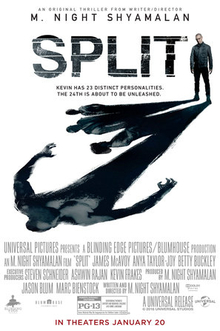
Dynasties exist in many professions.  Some of us grow up where there’s no succession, but for those who do the results can be good or bad.  I’m thinking in the case of Ishana Night Shyamalan it will be good.  I have not seen all of her father’s (M. Night Shyamalan) movies, but I have seen enough to know that he has considerable talent but also sometimes misses the mark.  That’s how I felt after watching The Watchers.  I didn’t know anything about it (including the director or producer) before watching it, but it only took a few minutes before I began thinking that it was like an M. Night Shyamalan movie.  Like his work, it is intelligent and intriguing.  And, in this case, slightly off the mark.  The story is a little too involved, and it may remind you, at points, of The Village (one of my “old movies” that I still go back to now and again).

Mina, an American living in Ireland (never explained), gets trapped in a forest from which no one ever escapes.  Now, this part was scary if you’ve ever been lost in the woods.  (I have been and it still terrifies me.)  These woods are inhabited by watchers—in lore known as fairies, among other things.  A professor had built an observation deck where he could observe them.  The only way a human can survive in the woods is to stay inside the shelter at night.  Mina’s car breaks down in the woods and she comes across three survivors.  They’ve been in the shelter for months and since it is in the middle of the woods, there’s no way to get out before sunset, when the watchers will kill you.  Now, were the premise of the film to have stopped there, it might well have been believable.  The story gets deeper (but I won’t give it away), straining credibility a bit.  There’s a little too much stuffed in.

Does it work as a gentle horror movie, in the Night Shyamalan vein?  Yes.  It satisfies an itch on a rainy or snowy weekend.  Too many unanswered questions remain.  The setting in Ireland makes sense, given the fey plot, but why is Mina American?  Why is her sister Lucy also in Ireland (or is that just a visit at the end)?  Why didn’t [redacted: spoiler] watch the video long ago and leave?  Other questions also haunt.  Why did the professor shoot twice?  And more.  Still, having a source of Night Shyamalan movies for more than one generation seems like a good thing to me.  And I really want to know where, exactly that forest is located in real life, with or without the fairies.


Pseudo-documentary

Documentaries have an honored place in visual education.  Of course, there are some who want to spice them up a bit with dramatic re-enactments.  These are sometimes called docudramas.  Then there are those who fake the documentary style to make mockumentaries, generally as a species of comedy.  Sasquatch: The Legend of Bigfoot is none of these.  A pseudo-documentary, it comes with “The Beast” collection I’ve mentioned before a time or two (mainly to excuse my bizarre viewing).  It presents itself as a documentary, but pretty much everything about it is fake.  The only real people are Roger Patterson—the movie shows his famous Bigfoot film—and perhaps the miners at Ape Canyon.  Oh, and Teddy Roosevelt.  In any case, the movie follows seven men as they make their way into remote British Columbia where “the computer” tells them sasquatch likely live.

The pseudoscience is easily enough spotted early on, but the movie never lets up its purported intent to bring low-budget proof back from the wilderness.  I’m not sure how the actual wildlife footage was captured.  In this slow-paced horror film there is quite a bit of actual nature thrown in.  I also wondered how they managed to get a cougar to attack a horse train and a bear not to maul one of the incompetent actors.  These two scenes aren’t special effects, and it strikes me as being either foolhardy or that trained animals were used.  It doesn’t seem to have had the budget for the latter, but a real mountain lion does land on one of the horses before quickly making an escape.  Although shot at night, the bear attack doesn’t seem entirely fake.  These things kept me wondering.

After about two months of horseback riding the crew makes it to the computer-predicted sasquatch homeland.  Bigfoot attacks the camp at night—no question that this one is fake—and after all these weeks of riding they decide to leave the next day.  Getting there is, apparently, most of the fun.  Fun, however, isn’t a word I’d use to describe this movie.  The hokey caricature characters (the old-timer, the dopey cook, the injun, the scientist—who does nothing but measure a thing or two) are worth a pseudo-laugh or two but the story struggles to keep the viewer awake on a cold weekend afternoon.  I kept wondering, in the Pennsylvania chill, how the weather in northern Canada was better in late September than it was around here in April.  I had to remind myself that Bigfoot was big in the seventies.  Big enough to handle both documentaries and fiction, and movies that are the latter, pretending to be the former.


For the Camera

Smile 2 is getting some good critical notice and I hadn’t seen Smile (1) yet.  Psychological horror often bothers me, but I figured I’d grin and bear it.  I’m glad I did.  The ideas in the film, which participates in “the stigma trope,” are disturbing because it’s unclear if Rose (the protagonist) is mentally ill or not.  The stigma trope posits that something has infected someone either by having seen something they shouldn’t (as in Ringu) or by physical contagion (It Follows) and the victim can’t shake it.  Smile may trigger viewers with suicidal phobias since the premise is that an entity feeding on trauma passes from person to person by having the new victim witness the previous victim’s suicide.  Rose is a therapist who hasn’t gotten over the trauma of her mother’s death.  Rose witnesses a patient die by suicide, and who smiles just before she does it.

The patient told Rose that she’d watched one of her professors die by suicide.  Rose subsequently learns that the professor also witnessed a suicide and so on and so on.  Each prior victim had watched someone else die.  Now Rose has to figure out how to break the cycle, otherwise she’ll perpetuate it.  The idea of inadvertently obtaining a “sticky” entity is pretty scary, and a very human concern.  One of the more frightening aspects of possession movies is the belief that now that demons know that you know, they will target you.  Interestingly, what makes this film provocative is that the victim has to have suffered trauma before.  As such, it is a study of trauma and its lasting effects.  I suspect most people don’t intentionally traumatize others (world leaders excepted).  Trauma can be dealt with (or not) in very different ways.

Smile did quite well at the box office.  I suspect there are a lot of us traumatized people around.  Capitalism encourages traumatizing others through slow violence, if not the more obvious quick way.  People don’t easily walk away from events that scarred them, particularly if they happened at an early age.  Such people, if experience is anything to go by, find themselves in vulnerable positions in life and rather thoughtless people, often for religious reasons, end up traumatizing them even further.  I have to admit that there were triggers for me in Smile.  I still struggle with a few of my own traumas that were never resolved.  Like Rose, I sometimes don’t know who can really be trusted with such things.  This is a perceptive movie.  I guess now I can put on a happy face and see Smile 2.  But first I’d better talk to my therapist.


First Visit

Dark academia prompted me to do it.  I have never read an Evelyn Waugh novel, but the title Brideshead Revisited is fairly ubiquitous.  I’d heard it many times but knew nothing about the story.  With tastes that tend toward horror, selecting a Friday-night movie that my wife will watch with me is sometimes tricky.  I’ve been discovering that films listed as dark academia often appeal to her taste, and Brideshead was one of them.  Interestingly, although we’d both heard the title many times, neither of us knew anything about the actual story.  So we found out.  The novel had been adapted into a successful television mini-series, and eventually became a cinematic version.  That’s the one we saw.  At the start it reminded me of E. M. Forster’s Maurice.  Two young men meet at Oxbridge and fall in love.  Only Charles Ryder is middle class, not aristocracy.  Lord Sebastian Flyte is.

Lord Flyte lives at Brideshead, a country house that any gothic dreamer would be glad to own.  While there, Charles meets Lady Julia, Sebastian’s sister.  Like Maurice’s Clive, he eventually prefers her company to his.  She’s already engaged to be married—you get the picture.  What I wasn’t expecting was just how much of this movie was about Catholicism.  The Flytes are Catholic, the mother demandingly so.  Charles is an atheist.  Agog at being welcomed into high society, he is nevertheless firm in his atheism.  This sets up the tension between the mother and Charles, but both Sebastian and Julia are okay with it.  Charles eventually becomes a successful painter with a society wife himself (the movie kind of just drops her), but still in love with Julia.  When her dying, atheist father accepts the last rites and crosses himself at his dying moment, Julia knows her Catholicism means she can’t run off with Charles.

The dark academia part derives from the Oxford part of the story, but also from aristocratic society.  It operates by its own rules and there are secrets and power struggles.  In the end, Brideshead is abandoned during the Second World War and is billeting soldiers.  Charles is now a captain in the army, in charge of the operation at Brideshead.  He has no wife or girlfriend, and Julia has left.  He goes into their private chapel and is about to extinguish the single burning candle, but decides not to.  Apparently Waugh himself converted to Catholicism, but movies adapted after successful mini-series based on the novel might distort things.  Overall, the film is a good reflection of that age-old English struggle with religion.  And dark academia.