Late Night

If you lived through the seventies, Late Night with the Devil will take you back a bit.  It’s one of the more creative possession movies I’ve seen, but what really makes it stand out is the insider winks plentifully on offer.  Jack Delroy is a late-night variety show host wanting to top Carson.  His ratings have been up and down, and he decides to make his 1977 Halloween episode his ticket back into the game.  His guests that night include a psychic, a James Randi-like debunker, and a parapsychologist and her demonically possessed charge, Lilly.  A character resembling Anton LaVey, Lilly’s father, had raised her to be a child sacrifice to the demon Abraxas.  The broadcast even mentions Ed and Lorraine Warren, as well as The Exorcist.  Someone knows what the paranormal scene was like in the seventies.

The psychic has authentic contact with what he believes is Delroy’s deceased wife and while the debunker, well, debunks him, the psychic nevertheless dies after a mysterious attack.  Delroy insists that the parapsychologist summon Lilly’s demon, while on stage.  The debunker claims that what the audience saw was a case of group hypnosis, but the demon finally attacks, killing everyone but Delroy and Lilly.  Toward the end the layers of claimed deception become so deep that it’s difficult to know, at first, how to interpret the ending.  Or whether you are supposed to “believe” the climatic demonic attack, of if you’re supposed to conclude that it was part of the mass hypnosis.  What is certain is that religion is front and center in this horror, but the demon ensures that in any case.

The taped pieces between segments of the show make it clear that this is all about ratings.  Indeed, Delroy sacrificed his wife’s health and life to try to break into the lead.  The real demon here is capitalism.  The desire to be on top has outweighed every other and hints are given throughout that Delroy isn’t as innocent as he pretends to be.  Still, the main thing is that the movie gets the paranormal seventies in America just about right.  The disturbing implication is that people are suggestible to the point of not being able to distinguish reality from manipulation.  That pall hangs over the entire movie plot as well as the ending.  This kind of meta critique isn’t intended to detract from what is really quite a good horror movie.  It is believable in the context of the world it devises, and that world includes demons.


Lights, Cam

Techno-horror is an example of how horror meets us where we are.  When I work on writing fiction, I often reflect how our constant life online has really changed human beings and has given us new things to be afraid of.  I posted some time ago about Unfriended, which is about an online stalker able to kill people IRL (in real life).  In that spirit I decided to brave CAM, which is based on  an internet culture of which I knew nothing.  You see, despite producing online content that few consume, I don’t spend much time online.  I read and write, and the reading part is almost always done with physical books.  As a result, I don’t know what goes on online.  Much more than I ever even imagine, I’m sure.

CAM is about a camgirl.  I didn’t even know what that was, but I have to say this film gives you a pretty good idea and it’s definitely NSFW.  Although, having said that, camgirl is, apparently, a real job.  There is a lot of nudity in the movie, in service of the story, and herein hangs the tale.  Camgirls can make a living by getting tips in chatrooms for interacting, virtually, with viewers and acting out their sexual fantasies.  Now, I’ve never been in a chatroom—I barely spend any time on social media—so this culture was completely unfamiliar to me.  Lola_Lola is a camgirl who wants to get into the top fifty performers on the platform  she uses.  Then something goes wrong.  Someone hacks her account, getting all her money, and performing acts that Lola_Lola never does.  What makes this even worse is that the hacker is apparently AI, which has created a doppelgänger of her. AI is the monster.

I know from hearing various experts at work that deep fakes such as this can really take place.  We would have a very difficult, if not impossible, time telling a virtual person from a real one, online.  People who post videos online can be copied and imitated by AI with frightening verisimilitude.  What makes CAM so scary in this regard is that it was released in 2018 and now, seven years later such things are, I suspect, potentially real.  Techno-horror explores what makes us afraid in this virtual world we’ve created for ourselves.  In the old fashioned world sex workers often faced (and do face) dangers from clients who take their fantasies too far.  And, as the movie portrays, the police seldom take such complaints seriously.  The truly frightening aspect is there would be little that the physical police could do in the case of cyber-crime.  Techno-horror is some of the scariest stuff out there, IMHO.


Not Quite

There’s a debate among horror nerds that goes like this: “Blumhouse or A24?”  If this is Greek to you, Blumhouse and A24 are entertainment production companies that both make notable horror films.  I’ve always leaned a bit toward A24, to the point of making a list of their horror films and watching them when I can find them on streaming services.  Since I generally don’t read about movies before watching them, I wasn’t sure what Climax was going to be.  Distributed by A24, I figured it would be intelligent horror and it may have been.  Honestly, it was a little difficult to tell.  Nihilistic and non-scripted, it’s a movie with a very slight premise: a French dance troupe holds an after-practice party in which somebody spikes the sangria with LSD.  The entire first half of the movie, practically, is dancers doing their stuff to an incessant techno-beat.  I honestly don’t know why I kept with it.

Since it’s unscripted, most of the young people talk about sex, and occasionally other topics.  They begin to get paranoid when the acid kicks in, and throw one of the dancers out in dangerous winter conditions where he freezes to death.  They think he spiked the drink.  The troupe manager, also a suspect, has a young son that she locks into an electrical closet for protection, with predictable results.  Since she also drank the sangria, the troupe supposes she must be innocent.  A third non-drinker, who is pregnant, also gets accused.  Meanwhile some dancers keep on dancing while others start to pair off, all of them but the pregnant one, tripping hard.  In the end the police arrive and find dead or stoned dancers and really that’s about it.

How is this horror?  Psychologically, mostly.  There is a little body horror, but mostly it’s just viewers wondering what is going to happen.  Which, it turns out, is not much.  There are some religious references in the movie, which maybe offer a little depth, but really this is largely a filmed rave-like dance with a minimal storyline tossed in for good measure.  Also, it’s in French, meaning subtitles are important for following whatever plot there is.  Wikipedia leads me to believe Gaspar Noé, the “writer”-director is fond of making polarizing and controversial movies.  There’s nothing surprising about young people being interested in music and sex, nor, for that matter alcohol and drugs.  All of this is entirely conventional.  It isn’t enough for me to lose faith in A24, but it does make me wonder what they were thinking.


Learning Bunnies

Although it was released during the first Trump administration, Jojo Rabbit was written before he was sharp bit of dust in the GOP’s eye.  Still, in the second debacle, it seemed like a good time to watch it.  Its message is appropriate for any time, but especially now.  Jojo is a ten-year-old boy who’s an enthusiastic member of the Hitler Youth.  So enthusiastic that he has Hitler as his imaginary friend.  He buys the party line without even thinking (he who has ears to hear, let him hear).  Jews are evil, according to the rhetoric.  Monsters even.  Jojo’s mother tries to help her son, missing his father, understand that love is the better way.  Then Jojo discovers something.  A girl his deceased sister’s age has been living in the walls of his sister’s room.  He quickly deduces that she is a Jew.  Were it not for her threats to implicate him and his mother, he would turn her in.

An unusual coming of age story, we see Jojo do something rare—he matures.  Getting to know Elsa he can’t reconcile what he sees with what he was taught.  She’s not evil.  She has no horns.  She’s not rich.  She fell in love with a guy and wants the same thing anyone wants.  The conflict faces Jojo every day as he decides he must learn about Jews to report this intelligence to the authorities.  The authorities, however, know Germany is losing the war.  It’s only a matter of days.  When Hitler dies by suicide, Jojo fully realizes that he has been simply following along instead of following the evidence.  His mother was hanged for not being loyal to the party and his father, he learns, was also helping the Jews.  In a moment of singular hope, Jojo grows up.

Movies can teach lessons.  Some are widely enough viewed to make a major impact on society.  Can any of us imagine a world without Darth Vader and Luke Skywalker?  In this era when sensible people seem to have forgotten that fascism is evil in its nature, films like Jojo Rabbit are important.  Thinking is not a crime.  Learning is not a crime.  Even if they’re being touted that way by the wealthy in order to protect their privilege.  We watched the movie for entertainment on a Friday night, but I received an education instead.  I wonder just when the message of love fell out of Christianity.  But then, I think it becomes clear when you think about particular movies and how we’ve come to be where we are.


Shivering Vampires

When casting about on free movie streaming services, you occasionally stumble across something odd.  It doesn’t take a rocket scientist to figure out that I’ve been favoriting vampire movies the last few months.  I’d not really heard about The Shiver of the Vampires, perhaps because it was a French movie, or perhaps because there are just so many vampire films out there.  Well, it had the desired monster in the title, and it was free (costing only a few commercials).  As might be expected for a European movie, there’s a bit of nudity involved.  A fair amount of that is appropriate for vampire films, it seems.  This one involves a newly married couple going to visit her cousins who live in a castle in the country.  These cousins are groovy vampire hunters, but unbeknownst to her, have become vampires themselves.

The young couple arrives to be told that the cousins have died, but they are welcome to stay.  Soon, the vampire that turned them shows up and begins visiting the bride.  The groom is slow to catch on that there are vampires involved, although he fairly quickly finds out that something’s the matter with his wife.  Then the cousins show up alive.  Well, technically, undead.  They don’t reveal themselves as vampires, but their cousin, the bride, is being turned as well.  The poor groom sees odd rituals being enacted, and a couple of familiars decide to help him destroy the vampires in the hopes of rescuing his wife.  Stakes, crucifixes, and sunlight are all effective against these vampires, but they don’t seem especially evil.  In fact, there’s a kind of self-loathing among them.  The ending isn’t exactly cheering.  

A little shy on depth of story, the film does feature an impressive castle and some strong seventies vibes.  Interestingly, the Wikipedia article on the movie refers to the familiars as “renfields.”  This term, derived from Bram Stoker’s Dracula, was one I’d never come across before.  Renfield’s Syndrome now seems to be preferred to Clinical Vampirism, although neither has much scientific standing.  “Familiar” is, of course, a term adapted from the witch craze of Early Modern Europe.  Vampires need a living helper since they are vulnerable in the daytime.  The director of Shiver, Jean Rollin, was known mostly for his vampire movies.  They’re not easily found, at least at this point, on streaming services.  Shiver has an arthouse film feel to it and it makes me curious about how vampires cross cultures, even if the results are a little odd.  


Littlefoot

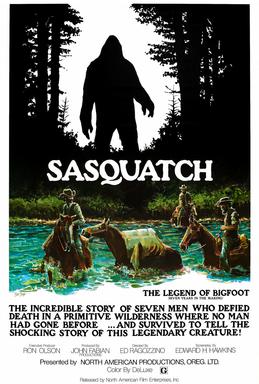
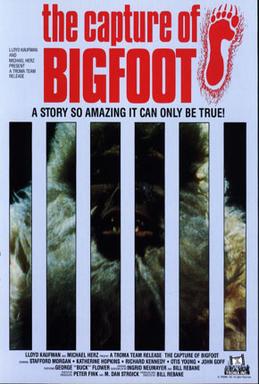
A film is an object.  Just like a book, a film exists and waits for someone to discover and promote it.  The vast majority of both don’t make the cut and exist in obscurity.  The Legend of Bigfoot by Ivan Marx is one of those obscure films.  I only knew of it because it was included in the DVD pack called “Beast Collection,” which I’ve already mentioned a time or two.  This set of movies is united by a few different themes which have little to do with one another.  The “Bigfoot Terror” disc includes Marx’s Legend although there’s no terror here and it presents itself as a documentary.    Interestingly, this movie actually had a theatrical release.  Of course, the mid-seventies were a high-water mark for Bigfoot interest in general, prior to the current phase.  Marx followed up his movie with a couple sequels and to his dying day claimed that his Bigfoot footage was authentic.

As far as the movie goes, it is just plain bad.  The wildlife footage, shot by Marx, is actually impressive a time or two.  Most critics dismiss his Bigfoot footage as a hoax, a view supported by the fact that the bona fide Bigfoot researchers he worked with eventually distanced themselves from him.  The movie is rambling and dull but intriguing at the same time.  It’s amazing, for example, that he was able to get this into theaters at all.  But what drove the producers of “Beast Collection” to include it, beyond it perhaps having been cheap and bit of filler on a disc claiming “approx. 5 hours of yeti scares”?  Well, it’s an object.  And it fits the theme of “yeti” but not really that of “Terror.”

There’s not a ton of information on Ivan Marx online.  IMDb has a mini-bio of him, noting the others who worked with him.  Even his wife, Peggy, who appears in the film, gets a little IMDb notice.  Such movies as this are hopeful artifacts.  Those of us who struggle against obscurity can take heart that, although probably a hoax, a movie that would otherwise likely have been forgotten made its way into a schlocky collection of horror movies to be purchased by the gullible and the hardcore.  As I mentioned in my post on Search for the Beast, I bought the collection to see Zontar: Thing from Venus, which, at the time, was available nowhere else.  I got what I wanted, and oh so much less.


and Seek

I’m afraid there may be spoilers—but not for the ending—below.  Discussing this story will be difficult without giving some things away.  Kiersten White’s Hide has given us an imaginative world with masterful misdirection.  Fourteen people a bit down on their luck, and strangers to each other, are offered an opportunity to win $50,000.  They have to hide in an abandoned amusement park for a week where two of them will be caught each day and the last person remaining wins.  The novel mostly follows Mack, a woman whose father killed her family while she survived by hiding.  Not only does she have survivor’s guilt, but she’s been homeless and the shelter director thinks she’ll have a chance at winning the prize.  There is a lot of social commentary here, as well as a monster.  Okay, spoilers below.

The minotaur is a most useful monster.  The backstory here isn’t in Greece (well, the deep backstory is, but that is only played out partially here) but in Asterion.  No state is given for the town, and the contestants can’t be given that information.  They’re locked in the park, with supplies, but very little information.  Then the contest starts.  After a couple of days Mack and a couple others begin to suspect that something’s wrong.  Those who get caught while they’re hiding leave personal effects behind, and since they all need the money that seems unlikely.  Then their host stops coming, leaving the bewildered contestants on their own.  Mack and those she’s befriended come to understand that being “out” is really being eaten by the minotaur.  Well, they don’t realize it’s the minotaur.  The one who does gets eaten before he can tell.

In any case, this is a tense horror story based on a classic tale.  There is, of course, a rationale for the murderous behavior in a modern setting.  White keeps you waiting quite a while to learn what it is, and there are plenty of places where I thought I’d figured out how it’d end only to be proven wrong.  And she gives believable character sketches and explores the kinds of motivations that drive different people who find themselves needing an income.  (One of the characters was raised in a religious cult—bonus!)  Those who are poor aren’t always at fault, but those who are wealthy will do anything to preserve their excess.  We see that playing out in daily life, even as it’s being explored in fiction.  The minotaur isn’t always what we think it is.  And the more you think about its insidious origin story provided here, the scarier it becomes.


Non-Demon

The psychological horror film The Neon Demon isn’t about a literal demon.  It’s a movie about rivalry between runway models in Los Angeles, but there isn’t a great deal of story.  And what story is told doesn’t really make sense.  Sixteen-year-old Jesse, who should probably technically be an orphan, has made her way to LA because all she has is her prettiness.  Some photos get to an agency that agrees to hire her.  The other young women become jealous of the attention Jesse receives.  Only one, Ruby, a make-up artist, befriends her.  The jealous models confront her, and the creepy hotel manager where she stays seems to prey on the women who are trying to break into the dream of the city of angels.  Jesse escapes to Ruby but Ruby’s interested in a sexual relationship that Jesse doesn’t want.  Ruby and two rival models kill Jesse and eat her.  This leads to the death of Ruby and one of the models.

Some of what I describe here is speculative since there are abstract, dream sequences thrown in and it’s not always clear what is going on.  I kept finding myself wondering if this was horror, as presented in the list where I found it.  The unrelenting male gaze could be considered horror for women, but the movie doesn’t take up that narrative.  There are a few male characters, and one of them actually seems to be a good guy, but the threat comes from the other women.  Reviews for the movie were deeply polarized.  Some declared it one of the best movies of the year (2016) while others gave it abysmal ratings.  At the box office it earned about half its budget back, and that budget was a respectful seven figures.

Horror is a difficult genre to define.  I keep coming back to the fact that it’s artificial.  The history of the term began with monster movies but eventually other films with dark themes were included.  Some have no monsters unless a human acting aberrantly counts (and some do count such as monsters).  Slashers have their serial killers and gothic tales have their haunted houses.  Well over seventy sub-genres of horror have been defined.  Casting about for freebies on the weekend leads to some that you just can’t pin down.  Neon Demon does, ultimately seem to fit the label, but many viewers will probably wonder exactly how.  Being out on your own can be frightening, and cannibalism is creepy, so I’ll go with that.


Institutionalized

When movies set out to present a different period, a bit of historical research can go a long way.  Someone like Robert Eggers offers such verisimilitude that you feel like you were at the intended time.  Others are less successful.  The Institute claims to be based on true events, and, apparently human trafficking did take place at the Rosewood Institute for a number of years.  The movie, however, gets many period details wrong and suffers from a labyrinthian story.  Also, it is shot so dark that even with brightness at full it’s difficult to tell what’s happening much of the time.  So what are these allegedly true events?  Wealthy women are admitted to the fashionable institute to recover from mental stresses.  At least that’s why Isabella Porter is there.  Drugged by the fictional Aconite Society, she is trained to be impervious to pain, erase her identity, and believe she is fictional characters to act in plays.  A strange premise.

Her brother suspects something is wrong, but under the influence of wolf’s bane, Isabella kills him.  The women are repeatedly tortured and dehumanized, ultimately to be sold to the wealthiest elites of Baltimore as slaves.  The true part of the true events is quite slim, and it’s never explained why Isabella is trained to believe that she’s Young Goodman Brown, and paired off with another woman as his wife Faith.  Also, there are Satanists involved.  With all the stops pulled out, the whole begins to sound rather silly.  It’s unfortunate since there does seem to be the core of a good idea here.  It needs a little less rather than more.

If all the storylines came together into a coherent whole, there might’ve been some takeaway.  As it is, layers of a secret society cover other layers and when you get to the center there’s nothing there.  Movies about mental institutions are difficult to pull off well, particularly when they’re based on true stories.  While a wolf-bane drinking society of the uber-wealthy does sound plausible, it leaves unanswered why they want their female patients to act out stories when they could easily afford to attend plays with professional actors.  ’Tis difficult to fathom.  The satanic aspect is never really explained but again, I wouldn’t put it past the rich.  The acting is good, from what I could see of it, except for the institute’s doctors, all of whom were woodenly portrayed.  Perhaps this was intended to be a parable, or maybe a retelling of “Young Goodman Brown.”  There was a bit of Poe thrown in as well, so all was not completely wasted.


To Dracula, a Daughter

Nosferatu, by F. W. Murnau, was deemed in copyright violation of Bram Stoker’s Dracula, and ordered destroyed.  Rights to the novel were properly purchased by Universal and the horror film proper was born.  Other studios wanted to get in on the action, so the rights to the story of the Count’s daughter were bought by MGM.  They then sold the rights to Universal so that the latter could produce a sequel to their earlier hit.  Dracula’s Daughter didn’t do as well as the original, but it kept the vampires coming.  Some years later, Son of Dracula came out, keeping it in the family.  Having watched Abigail, I had to go back to Dracula’s Daughter to remind myself of how the story went.  I recalled, from my previous watching, that it wasn’t exactly action-packed, but beyond that thoughts were hazy.

Picking up where Dracula left off, von Helsing (that’s not a typo) is arrested for staking a man.  Then a mysterious woman arrives and steals the body to destroy it in an attempt to rid herself of vampirism.  We see that just five years after Dracula the reluctant vampire was born.  Creating a scandal at the time, Dracula’s daughter also seemed to prefer females.  Apparently the script was rewritten several times to meet the approval of censors during the Code era.  The modern assessment is that this is based more on Sheridan Le Fanu’s Camilla rather than an excised chapter of Bram Stoker’s novel.  Since the world wasn’t ready for lesbian vampires in the thirties, she falls for Dr. Garth, a psychologist that she wants to live with her forever.  Kidnapping his secretary to Transylvania, she draws him to Castle Dracula.  Her jealous servant Sandor, however, shoots her with an arrow.  Von Helsing explains that any wooden shaft through the heart will do.

Already as early as Stoker, at least, Dracula had brides who were vampires.  It makes sense that there might be daughters and sons.  And studios, learning that people would pay to watch vampires on the silver screen, were glad to keep the family dynamics rolling.  Vampires proved extremely popular with viewers—a fascination that has hardly slowed down since the horror genre first began.  Some of the more recent productions explore themes and approaches that simply wouldn’t have been possible in the early days of cinema.  We don’t see Dracula’s daughter actually biting victims—one of the many things the Production Code wouldn’t allow—and there’s no blood.  Nevertheless, the story itself went on to have children and they are still among us.


Stop for a Bite

Universal does monsters right.  I’m no movie maven but I don’t know why the whole Dark Universe thing didn’t work out.  These movies are good!  Abigail recently came to one of the streaming services I use and I watched it right away.  (There’s sometimes a delay between when I write about a movie and when it appears on this blog.)  There will necessarily be spoilers here.  I write this as someone who doesn’t watch trailers if I can help it, and who tries not to read about movies before watching them.  So be forewarned, if you are, by any chance, like me.  In case you’re bowing out now, this is a very good flick.

So, this is one of those spates of recent vampire movies where you go for quite a while before realizing it is a vampire film.  Set as a taut thriller, a group of six criminals who don’t know each other kidnap a twelve-year old ballerina.  She’s being held for ransom and the kidnappers have to keep her in the mansion for 24 hours, after which they each will receive their share of $50 million.  What they don’t know is that Abigail is a centuries-old vampire who likes to play with her food.  Suspecting they’ve been set up, the criminals speculate that the girl’s father has set his most vicious killer on them.  Modern, educated people, they don’t believe in vampires (there’s quite a bit of shading from Dusk Till Dawn in here) but they have to figure out how to defeat one.  Like Dusk Till Dawn, they ask themselves what they know about vampires, trying to come up with a plan to survive the night.  As you might expect, a bloodbath ensues.

If you’re the kind of person who reads about movies first, you’ll know, as I didn’t, that this was planned as a remake of Dracula’s Daughter.  It’s been so many years since I saw “the original” that I scarcely remember it.  (So you know what’s coming, eventually.)  I’ve watched many monster movies—like the books I’ve read, it’s so many that I lost count long ago.  Many of these films are pretty good.  And, of course, there are many I haven’t seen—that depends on money, time, and circumstance.  I do have to note, however, that coming up on the centenary of Universal monster movies, they haven’t lost their touch.  I have no idea what happened to their Dark Universe, but I do get the feeling they maybe gave up on the idea a little too soon.


Dead Darlings

The thing about being a writer is that there’s no one size fits all.  I watched Kill Your Darlings because it is an example of dark academia, or so it’s sometimes presented.  I have read some Beat Generation writers, but the movie made me feel very ignorant of that aspect of American counter-culture.  The movie is based on true events and such things as coincidences of writers always makes me feel terribly alone.  In case you don’t know the story (I didn’t) Allen Ginsberg came under the influence of Lucien Carr at Columbia.  Carr had been surviving at the university by the writing of his one-time lover David Kammerer.  Carr introduces Ginsberg to William S. Burroughs and Jack Kerouac, and the four (excluding Kammerer) kick off what would become much of the Beats.  Carr, however, kills Kammerer and Ginsberg, who has become Carr’s lover, must decide what to do.

Ginsberg grew up in a broken home, as did Carr.  I could relate to their feelings of loss.  Of course, the Beats relied on drugs and alcohol and sex to write, breaking the rules of institutions like Columbia.  Now that I’ve written my “million words” (and more), posted for free on this blog, I think back to my literary friends.  Both in high school and college I knew guys (I was awkward with girls) who dreamed, or at least talked, of becoming writers.  Over the years this pool has dried up.  Seminary and doctoral study were too focused to find those who really wanted to write.  Academic books, maybe, but not forms of self-expression.  Now, I’ve never used drugs, nor have I wanted to.  I write nonfiction books that are creative forms of self-expression.  Naturally, they don’t sell.

Many of us who write were raised in broken homes.  With tattered dreams we set out to try to make something of our lives in a hostile world.  My behavior in college wasn’t exactly conventional, as any of my roommates could attest.  It often appeared that way on the outside, even as poems rejected from the literary magazine were called “too depressing.”  So I pursued an academic career, but there was, whether anybody saw in or not, always a wink in my eye.  The same is true of my writing since.  This blog scratches the surface.  There’s a huge pile of fiction, and yes, poems, underneath.  They may someday be found, but I do have my doubts.  Movies about writers will do this to me.  Even if they don’t really fit my tastes in dark academia.


Sounds Funny

It may be the strangest vampire film ever.  Lifeforce not only postulates the origins of vampires as beings from space who come to suck humans dry of their souls, it also plays off of Invasion of the Body Snatchers, any number of zombie films, and Alien, all with a score by Henry Mancini.  Patrick Stewart is in it, but the plot makes very little sense.  Although it didn’t perform at the box office, it has become a cult film, and some parts of it are actually pretty good.  Directed by Tobe Hooper and partially written by Dan O’Bannon, there was some real talent involved.  Too bad it just can’t seem to hang together.  The main reason seems to be the story-line.  It’s based on a novel, but not all novels translate to film so well.

What’s interesting is that it attempts to provide an origin story for vampires.  When the crew of the Churchill initially discovers the alien ship, the creatures are bat-like.  This intends to explain why vampires are associated with bats.  Since these beings had come to earth long ago, their association with sucking people dry, and bats, led to the belief in vampires.  Of course, following the logic of the story, vampires should’ve nearly taken over the earth before since victims revive after two hours and victimize those nearest them.  Only one scientist in this future London can uncover a specific combination of metals that have to be used to stab a vampire in precisely the right location in order to kill it.  Meanwhile the souls of thousands of residents of London are being sucked up to the alien ship.

The score for the movie also rings a bit oddly.  Henry Mancini isn’t the first name to come to mind as a composer associated with horror movies.  Or science fiction.  Even G-rated 2001: A Space Odyssey knew that.  Perhaps we’re lulled into thinking nothing of it by big studio productions that make the soundtrack sound natural to the movie.  Like all of the elements of a film, however, they really have to work with all the other elements to make something spectacular.  Lifeforce had a large budget and nevertheless struggles.  Tobe Hooper had just come off of directing Poltergeist, which, although never one of my favorites, was a stronger and more lasting entry into the horror canon.  Maybe it’s that vampires and space just don’t mix.  Vampires are gothic monsters and that’s difficult to transfer to outer space with all its gadgetry.  That, and a score that’s difficult to take seriously.


The Power of

One rare treat is rediscovering something that intrigued you as a young person, but which you’d completely forgot.  Living in a small town and seldom going to movie theaters, I had to have learned about Magic from television commercials.  I remember parts of the trailer, even down to particular phrases, but it was a movie I’d never seen.  I forgot about it.  That’s not to say that in the intervening decades I might not’ve relived that trailer in my head—I’m sure I did—but since I began binging on horror films a few years ago, it never occurred to me.  I remember it scared me as a kid because the trailer consisted of a monologue by the ventriloquist’s dummy.  Herein hangs the tale.  The movie did reasonably well at the box office but nobody seems to discuss it much.  When it showed up on a streaming service, the thumbnail of Fats’ face transported me back to the seventies and I knew I had to see it.

I have a soft spot for seventies horror.  I was surprised to learn that Anthony Hopkins and Burgess Meredith were in it.  And Ann-Margaret.  A movie about a stage magician going mad, I found that it kept me tense.  I didn’t know how the story went.  In case you’re curious, it goes like this: Corky, a stage magician with a ventriloquist act, is about to hit the big times.  He then flees to his childhood Catskills and finds his high school crush managing a remote, rundown resort.  She’s in a loveless marriage and Corky has trouble with women.  Two things become clear: his dummy says what he (Corky) really feels and Corky is seriously disturbed.  Fear of being found out leads him to murder and although Peg, his crush, really liked and likes him, he can’t separate himself from the dummy.

There’s an ambiguity here.  There are a couple scenes when Fats moves on his own.  Otherwise there’s nothing supernatural going on here.  That raises the question of whether the camera is lying or whether spooky action at a distance is taking place.  Overall I thought the movie was well done.  I wouldn’t have tolerated the language Fats uses when I was younger, but I did think Hopkins’ acting was quite good.  Playing a person struggling with a mental disorder requires some convincing acting to be bought.  And there was a feel to many seventies horror movies.  This one brought me back with the power of suggestion, and perhaps a little magic.


Somehow Inevitable

You had to expect me to write about Zontar: Thing from Venus.  I bought the “Beast Collection” set to see it many years ago.  In those days I tried to watch the movies through, in order but I didn’t make it through the first disc, even.  Well, now my perspective has changed—I figured I bought this to see Zontar, and Zontar I must see.  You do know that he controls people, right?  Zontar is a notoriously bad movie.  I saw it on television as a kid, and it may have even been close to the first run since it was made for television.  It’s actually a remake of a cheap Roger Corman movie, so it is a cheap remake of a cheap original.  Nostalgia, however, does funny things to a guy.  Although I saw it half a century ago, I remembered some lines precisely.  Television does funny things to young minds after all, I guess.

In case none of the injectapods has found you yet, it goes like this: Zontar, from, well, Venus, is a bat-like monster with three eyes.  He befriends an earthling outsider scientist, through laser communication, and commandeering a satellite, which becomes a passable flying saucer, lands in  a cave from which he takes over the small town of Jackson, which has a military base and plans to take over by having a general assassinate the president.  Meanwhile, his scientist friend directs Zontar to the four people that he needs to take over the world: said general, the sheriff, the mayor, and his best friend scientist, Curt Taylor.  Things don’t quite go Zontar’s way, despite most of the movie’s running time showing him totally in control.  It feels like it’s a lot longer than its 80-minute running time.

Still, I have to agree with the TV Guide review that says it isn’t as bad as everyone says.  Yes, it is a bad movie but it does have a few redeeming features.  Some of the scenery is nice, and you even begin to care for some of the characters.  The rogue scientist’s wife—despite her constant nagging—is the first person who tries to kill Zontar, and she does this for love.  When Zontar gets her you feel a little sad.  At least I did.  You see, the injectapods haven’t reached me yet and I still have human emotions.  Ironically, it is just such things that drive me to rewatch movies like Zontar all these years later.  And the movie ends with a voice-over moral of the story.  Those 80 minutes weren’t completely wasted.