The Search Continues

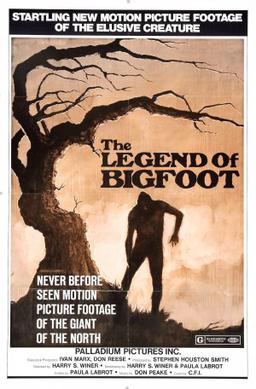
This movie’s so bad there’s a backstory.  Years ago I was really wanting to see Zontar: Thing from Venus.  This was before streaming, and I found it as part of the “Beast Collection,” a set of 11 movies for less than the price of one regular first-run DVD.  I watched a few other movies in the collection, but before long it got shoved to the back of a shelf and forgotten.  I remembered it recently because another collection I have was missing a movie, Snow Beast.  I wondered if it might be part of this otherwise forgotten set.  It was (this really encouraged me because maybe my memory is still much better than I sometimes suppose).  In any case, one of the other movies—one I’d never seen—was Search for the Beast.  I figured, why not?  This is a film that fails on every level.  And I mean every single one.  It really should merit a Wikipedia page, just for being so bad.

So, a professor in Alabama goes in search of the beast in the Okaloosa mountains.  The budget for the movie must’ve been a matter of pocket change.  Anyway, the beast has been “killing” anyone who ventures into the mountains and the professor wants to prove it exists.  He’s backed by a guy with money, who isn’t explained at all, and his university office is less well equipped than an average undergrad’s dorm room.  He takes a female grad student with him but his financier, unbeknownst to the benighted professor, hires a bunch of beefy guys with assault rifles to go along, although they’re only going to take pictures.  Of course the professor sleeps with the grad student but then the head of the tough guys kidnaps her as the beast kills off the tough guys’ heavily armed posse.  Turns out the local hillbillies are, apparently, trying to mate the beast with the women who come into the woods.  It’s worse than I’m describing it.

There is some chatter on the internet about this groaner, so I’m sure that I’m not the only one who’s seen it.  Someone recently asked me how such movies even get made.  Well, anyone with a camera can shoot a movie.  Of course, getting paid screen time (or video distribution) is another story.  I doubt the makers of this film made much money off of it, but since other suckers like myself have discussed it online, the producer, director, writer, and actor Richard Arledge, has the last laugh.  His work is being talked about, no matter if nobody has a good thing to say about it.  Of course, I wouldn’t have ever seen it at all, if I hadn’t had a hankering for Zontar: Thing from Venus all those years ago. 


Old Vampyr

Early movies are fascinating.  I learned of Vampyr, a 1932 production by Carl Theodor Dreyer, from Raymond T. McNally and Radu Florescu’s In Search of Dracula, where they praise it.  I’d never heard of it before.  There are probably a few reasons for that.  One is the movie was considered not very good when it was released, and it never garnered much of a reputation.  Another is that the original prints, including the soundtrack, had been lost.  Three language versions had been shot—German, French, and English.  Since this would obviously lead to lip-syncing problems, there is very little dialogue.  The movie as it exists today is accessible in the German version, and it tends to fall into that category that includes work by directors such as Ingmar Bergman and Stanley Kubrick.  It has art house elements and the story requires some pondering.  It isn’t bad, although in today’s viewing culture, it might seem dull.

It is a vampire story based on the works of Sheridan La Fanu.  The star, and also financier of the movie, was an actual Baron from France (in real life), Baron Nicolas de Gunzburg.  He plays a student of the occult who happens upon a gentry-class family plagued by a vampire.  Interestingly enough, this kind of character is distinctly Lovecraftian, and there is a passing resemblance between de Gunzburg and H. P.  The acting isn’t great, but the story is good.  It includes shadow people who assist the vampire—a female, in this case—and a kind of mad doctor who helps her reach her victims.  The occultist and the household servant of the gentry family locate the vampire’s grave and stake her.  And in a scene that may have inspired Witness, they suffocate the mad doctor in the bin of a flour mill.

Like many vintage movies, Vampyr has received a more positive reevaluation over time.  While some consider it great, the consensus seems to be more at the “very good” level.  It is an early vampire movie, apparently filmed before Tod Browning’s Dracula.  While not scary by today’s standards, there are some definitely creepy scenes.  Particularly when the elder daughter of the gentry family begins to become a vampire, leading to some quite effective facial expressions.  McNally and Florescu weren’t film critics by any stretch but they felt that, up to the early seventies, this was the best vampire movie made.  I might not go all the way with them, but I would suggest it is certainly worth viewing by those who like old cinema, and who appreciate vampire stories.


Black History

The first of the “blaxploitation” movies, Blacula is a period piece.  In 1972 vampires were still all the rage, following from Dark Shadows and the continuing Hammer hammering of the monster.  They even produced Dracula AD 1972, not to put too fine a point on it.  American International Pictures wanted in on the action and produced the first Black vampire in cinematic history.  Rather than a remake of Bram Stoker’s novel with a Black cast, the story begins with Mamuwalde, an African prince, entreating Dracula (whom he doesn’t know is a vampire) for help ending slavery.  Instead, Dracula turns Mamuwalde into a vampire that he names “Blacula,” and places him under a curse.  In the seventies, a homosexual couple purchases Dracula’s castle, intending to sell the contents on the antique market.  One of those antiques is a locked coffin.

Once he’s freed in America, Blacula quickly runs into Tina Williams, the spitting image of his long-deceased wife.  Meanwhile Tina’s friend Dr. Gordon Thomas, suspects that there is a vampire on the loose in LA.  Although the opportunity for camp is clearly present, this movie is played straight.  Mamuwalde is a monster—he kills several people—but his real motivation is to regain his dead wife, whom, he is convinced, is Tina.  When Tina is shot by a trigger-happy cop in the tunnels below a chemical plant, Blacula turns her into a vampire.  When she is staked, Mamuwalde tells the doctor that he need no longer pursue him.  He voluntarily climbs into the sunlight and dies.

Now, this wasn’t a great movie but it does seem to have a reasonable bit of social commentary.  It was the seventies, but racial and orientation slurs were still widely accepted.  And people dressed like, well, it was the seventies.  The Black characters, however, are portrayed with dignity, and Mamuwalde is presented as nobility.  Perhaps more importantly, this movie opened the doors for further horror films featuring African-American lead characters and plots.  A few decades later Blade, based on a comic book hero, would once again foreground a Black vampire who’s on the side of good.  It’s still some distance from Black Panther, but the process had to begin somewhere.  Watching Blacula was like watching history, and I suppose viewing movies is like a selective piece of history.  By this point AIP was well established, and influential in its own way.  I’d heard about Blacula since childhood, but until streaming it never really came across my screen.  Nevertheless it remains an important piece in this country’s ongoing vampire mania.


Red Dress

Horror sometimes takes a creative turn.  In Fabric is an art film as well as a horror offering.  The basic premise is that a certain red dress, sold at a bizarre fashion store, causes the death of those who wear it.  Sheila, recently divorced and having trouble with her adult, at home son, buys the dress for a date.  After leaving her with a rash, the dress leads to an arm laceration, a German Shepherd attack, an attack on her son’s girlfriend, and finally, Sheila’s death in an auto accident.  The dress is then picked up by a guy as a stag party prank where the groom has to wear it.  His soon-to-be wife finds it and wears it also.  The man, Reg, loses his job as a washing machine repairman and has no luck finding another.  While Babs, his wife, is shopping at that same strange shop, Reg’s furnace malfunctions, killing him with carbon monoxide.  Babs is trapped in the shop as it catches fire and burns down.  All those killed by the dress are shown working on new ones at the end of the film.

The movie is also called a dark comedy and there are some funny bits.  The sales clerk, Miss Luckmoore, speaks in cryptic, quasi-poetic style, never giving a straight answer to anyone.  The shop’s owner does the same.  And some of the scenarios are amusing.  Although horror, the movie isn’t really scary, but it is stylish.  Unlike some horror comedies, the tone isn’t really funny, but more wry.  And it’s a bit confusing.  The overall story arc is easy enough to follow, but some scenes just confound.  I kept waiting for an a-ha moment when everything would fall into place.  Of course, ambiguity is a hallmark of many intellectual films.

Something that I’ve been noticing, no matter the era that it’s from, is that films really need to justify that last half-hour, if they’re going for 120 minutes.  Maybe it’s just that we’ve become accustomed to the 90-minute feature, but I’ve notice that most two-hour movies (not all) seem to suffer from some pacing issues.  Of course, an art-house movie will defy conventions.  For example, the point of view is Shelia’s for about the first half of the film, then she’s killed and new characters are introduced.  Yes, this shows that the dress goes on killing, but another approach might’ve been to have the protagonist learn about past killings and realize the dress is coming for her.  But then, that might’ve been less creative.


Grown-up Jane

Watching Stephen King’s list of scary movies in the 30 years prior to 1980, I’ve found one or two that hardly strike me as horror.  Some of the others remain remarkably effective today.  I had the wrong idea about What Ever Happened to Baby Jane?;  I’d supposed from the title that it had to do with an abducted child, a topic I generally avoid.  When looking up yet another movie on Tubi that was free, but only in Spanish, I saw Baby Jane on offer and decided to give it a try.  I was pretty impressed.  It’s overly long and drags a bit, but the story is good.  One thing about horror films from the period is that they relied on story because the special effects really didn’t exist to make movies such as many we now see—splashy, but shallow.

In case you’re even more outdated than me, Baby Jane was a successful child actor whose sister grows up to outshine her.  Blanche, the sister, is crippled in a car accident that has been blamed on Jane for the last couple of decades.  Jane really can’t act, and once her sister is disabled, the two live on Blanche’s money until Jane’s growing insanity threatens her wheelchair-bound sister.  Trapped upstairs without any means of communicating with anyone who might help, Blanche is tortured and starved by her sister.  There’s an incredible amount of tension, even if the events begin to seem unlikely as the two hours roll on.  There are a few dropped subplots—the neighbor who harbors no suspicions at all, and the musician Jane hires who discovers her secret—but overall the tension keeps building.

One thing that occurred to me was that part of the plot involves leaving a phone extension off the hook to prevent Blanche from getting help.  I pondered how some young people who only know phones as personal devices might not understand this.  How, when I was a child that if you left an extension off the hook no calls could go in or out.  And that the annoying “off the hook” tone didn’t yet exist.  Ironically, now you could watch the movie on your personal phone that you carry with you at all times.  While this isn’t a perfect movie, it is an engaging one on many levels.  The sisterly rivalry, the growing insanity of Jane, and the helplessness of an invalid all work together to create some frightening moments.  Technology sure makes life convenient, but it cuts off some avenues for horror.  Of course, as Unfriended shows, it opens new venues.  I agree with King—this is one of the actually scary films from before the eighties.


Like Father

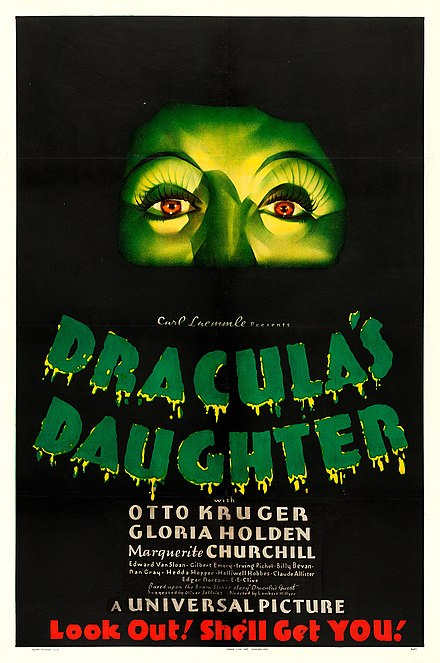
There’s just something about old movies.  After Universal discovered that Depression-Era people would still pay to see scary movies, they made a kind of industry of filming new monsters (for them) or spinning off of their successes.  Several years ago, when Universal was selling collections of their famed monster line up on DVD, I bought a few.  I realized recently that I had never watched Son of Dracula, included in the Dracula DVD set.  While it’s not a great movie, it’s by no stretch a bad one.  The story is complex and soulful, and even though Bela Lugosi’s not in it, the film participates in the ever-growing vampire lore.  It also introduced the world to Alucard, a character that would take off in Japan as a vampiric character in video games and manga.

Katherine, a well-to-do southern belle, met a Count Aculard while traveling in Eastern Europe.  He’s now visiting her in America, much to her fiancé’s chagrin.  A local doctor and friend of the family comes to expect that Alucard, Dracula spelled backwards, of course, may be a vampire.  He brings over a professor acquaintance from Hungary to test his hypothesis.  Meanwhile, Alucard, Dracula’s son, marries Kay and in so doing inherits her estate.  She becomes a vampire, which was her plan all along.  She, however, plans to turn her fiancé into a vampire, after they kill Alucard, so they can spend eternal life together.  The doctor and professor figure out what’s going on, but the local police don’t believe them and are ready to commit the doctor as insane.  Frank, the fiancé, refuses to go along with Kay’s plan, so he kills the Count by destroying his coffin before daybreak, and then also immolates Katherine as well, ridding the New World of vampires.

This is definitely a period piece, but it manages to have a southern Gothic appeal.  The black folk are all servants, and the Hungarian doctor sounds just like Peter Lorre, but the story is complex enough to retain interest.  Lon Chaney, as Alucard, doesn’t have as much screen time as you might expect, but there’s a lot going on in various subplots.  The movie was released in 1943, when there was still a ban on horror movies in war-time England.  The concern about invading foreigners is pretty clearly spelled out but the story is fairly well-told, even with some small holes remaining in the plot.  All of this makes me think I’d better check my other Universal monster DVDs.  There may be some other good bits that I’ve been missing.


Not Friendly

A ghost-revenge story, online.  Unfriended is one of those low-budget horror films that manages to be remarkably effective through the acting and its overall verisimilitude.  It’s also a kind of parable about the dangers of living our lives online.  The only problem is that technology is moving so fast that a ten-year old movie looks outdated.  The scary thing is many people are online even more, especially since the pandemic that came a few years after the movie was released.  Six high-schoolers are chatting on Skype (see what I mean?).  A friend in the group died by suicide a year ago because of an embarrassing video posted of her on YouTube.  Even a mature viewer like me can easily recall how deeply peer pressure cut in high school.  It’s a difficult time for all of us.  In any case, an unidentified person has joined the call and makes threatening comments via chat.

Of course, there are multiple apps (we called them programs long ago) running and nearly the entire movie is on the screen of one of the kids’ laptops.  In real life I was waiting for my low battery warning to come on, because I was watching it on a laptop, and all the notices that appeared on the upper right-hand corner made the thing look real.  Naturally enough, the kids start getting killed off.  Since this is horror their deaths are shown, if briefly, on screen and mostly they’re bizarre.  Hovering in the background is a webpage that warns against opening and answering messages from the dead.  As Blaire (whose screen we’re seeing) comes to realize that the unknown person is the girl who died by suicide, Laura (the dead friend) forces them to play a game of Never Have I Ever.  This leads to dissension and fighting as confessions come out and friends begin dying.

There’s a heavy moral element involved—the teens are being “punished” for typical teen behaviors.  Interestingly, toward the end I noticed that Blaire had a crucifix on her bedroom wall.  The kids don’t talk about religion at all (something I did do as a teen) but they all have a moral sense of what they did wrong.  The webpage about not answering online messages from the dead suggests confessing your sins, if you do open such a message.  Blaire tries to confess, but she has a secret that’s kept until the very end, so I can’t say what it is here.  I wouldn’t want to be unfriended for providing a spoiler.


Non-Believer

Heretic may be the ultimate horror and religion movie.  It’s also a film you may need to see multiple times to follow the all-important dialogue.  It’s a movie that would’ve been front and center in Holy Horror.  And it’s deceptively simple.  As I’ve written many times before, I try to know very little about a film before I watch it.  This if often difficult with the internet and people wanting to tell you about the latest cinematic marvel.  I managed to watch Heretic knowing only that it was about two Mormon missionaries visiting a potential convert.  If you want to leave your level of knowledge at that point before seeing the movie you might not want to read on.  You have been warned.

e two women in on an inclement evening, assuring them his wife is in the next room.  He then, ever so innocently, questions them about their beliefs and about religion in general.  The missionaries grow increasingly concerned that there is no wife and that Mr. Reed (Grant) has been toying with them.  They find themselves locked in his house as he unrelentingly questions them and asking them what, and why, they really believe.  Charmingly he assures them they can leave at any time, but they have to pick a door—the lady and the tiger-like—marked either belief or disbelief.  (Both lead to the same place, and it’s not out.)  Using a trick he attempts to get them to die by suicide.  When they refuse, he kills one of them but the other discovers the truth, “the one true religion.”  I won’t tell you what it is.

The film is remarkable in that there is no horror without religion.  I made a similar argument about The Wicker Man, in my book on the movie.  When we ask ourselves what makes a horror film scary, seldom is the answer overtly “religion.”  Usually it’s a monster of some description.  Or the threat of annihilation.  Or plain old death.  Religion can be scary.  In fact, it has historically been the nepenthe for death and sorrow in this life.  Some would trace the origin of religion to that very phenomenon.  I’ve been writing for years on this blog that religion and horror belong together.  They overlap.  They blend.  They, on occasion, may be the same thing.  Heretic displays that clearly.  If I haven’t spoiled it for you, I highly recommend it.  I can honestly say it’s the first movie that has literally given me nightmares, in many, many years.


Dusk’s Early Dark

It may be the strangest vampire movie ever, and that’s saying something.  To understand this, you have to realize that I read as little as possible about a movie before seeing it.  I try to avoid trailers, and recommendations from well-wishers play a big part in my choices.  I came across From Dusk till Dawn in a couple of online lists and when I saw it was Quentin Tarantino and George Clooney, I doubted the vampire part.  Indeed, for the first twenty minutes to half hour I was convinced I’d stepped into Pulp Fiction 2.  (Tarantino wrote it, after all.)  Those kinds of movies unnerve me, and just when I was wondering if I’d made a mistake, it became a monster movie.  An action horror film.  Lots of vampires and, surprisingly lots of talk about God.

In case you haven’t seen it, Clooney and Tarantino are brothers out on a crime spree.  Harvey Keitel is an ex-minister out on a road trip with his teenage kids.  After his wife’s death, he lost his faith although he still believes in God.  (Classic theodicy.)  The criminals abduct the family to get them into Mexico where they’ve made a deal with a guy.  They meet at about the most salacious strip club you can imagine, one that caters only to truckers and bikers.  It turns out that the staff and strippers are all vampires and they prey on the patrons.  Okay, so the story doesn’t hold together.  Clooney’s character, which is hardly the sort you’d want anywhere near you, tells Keitel’s that unless he re-finds his faith none of them will make it out alive.

There’s quite a bit of humor packed into the over-the-top fight scene, including dialogue about how to defeat vampires.  A couple of the patrons, it turns out, are pretty adept at that sort of thing, but the human holdouts keep getting bitten and have to be killed.  Finally, the titular dawn arrives, leaving just Clooney and the minister’s daughter alive.  I couldn’t help but to be reminded of Willy’s Wonderworld, in overall story arc, but the two are completely different in tone.  The fact that the movie is 28 years old and that I’d only heard of it recently really surprised me.  Especially since religion is so heavily involved in the story.  Not only that, but the message about religion, in service of the story, is that belief is good.  And this from a murderer and a thief.  Strange indeed, but not easily forgotten.


Old Movies

Something strange is happening.  (“How’s that new?” you might well ask.)  There seems to be a bifurcation taking place in my brain, what techies might call “partitioning.”  Specifically it regards what I think of as “old movies.”  By this I don’t mean movies from the sixties or before.  No, I mean movies I saw some time ago, often on DVD or even VHS, sometimes in theaters, that became part of my standard repertoire.  I imagine most cinephiles have certain films to which they keep coming back.  But for me, the “old movies” are those I haven’t blogged about.  Also, they predate streaming so, in that sense, they are “old.”  You see, I’m not a very internet-savvy thinker.  It took me quite a few years to figure out I could link my posts with other posts on my own blog so that in the rare event that someone might want to read more they could click on the links like you do on Wikipedia.  (Now that you’re here, stay a while!)

Photo by Denise Jans on Unsplash

This blog was started in 2009.  For most of its history it has been daily.  I didn’t automatically start blogging about movies, though.  For a few years I tried to tie all my posts into religion, widely conceived.  Then, kind of establishing my own “brand,” I started writing about less ethereal topics.  Including movies that don’t have religion in them.  By far most of the movies I discuss on this blog are first-time films for me.  Occasionally I’ll go back and address one of my “old movies.”  This occurred to me the other day when I went to link to Tim Burton’s Corpse Bride.  I thought I’d posted about it, but it’s one of my oldies, so I hadn’t.  I don’t even remember when I first saw it.  If feeling nostalgic, I’ll look backward, as an historian is wont to do, but it doesn’t happen often.

Since we can’t see ahead in our lives with any real clarity, I didn’t anticipate this blog focusing on darker themes. When I started, finding a position back in academia seemed like a possibility.  For me this blog is therapy, but this is as good a place as any to talk about movies, and most of mine fall into an ill-fitting genre called “horror.”  Even among these, my “old movies,” like The Exorcist, The Amityville Horror, Sleepy Hollow, or even Paranormal Activity, which now more or less define my research, were missed out for having been too old (having been seen too long ago).  Most of the movies discussed in the past few years here have been streamed.  Many of them are easily forgotten.  But the old ones, they’re stuck, apparently for good. Such is the power of old movies.


Light Shadows

I often do things backwards.  It’s not really intentional.  You see, I’m busy with my day job and something most people may not realize is that researching and writing are also a full-time job.  Only they don’t pay well, unless you’re a professor.  In any case, I find out about things in odd ways.  A friend got me watching What We Do in the Shadows, the current FX television show.  I then realized it was based on a movie so I decided I should see that before going any further.  The movie is funny, but the television show develops some of the same bits so really, it is best to see the movie first.  It turns out that while I’ve been busy working, and writing books on other types of horror movies, this franchise has been developing.  So what’s it about?  Vampires unliving together.

One of the contradictions about vampires, as the undead, is that they live by certain rules that make them distinct.  Going back to Bram Stoker’s Dracula, they don’t always live alone.  In fact, three female vampires live in Castle Dracula (although the Count moves to England without them).  What We Do in the Shadows is based on the premise of vampire roommates in contemporary housing.  How would they get along as roommates?  Many of us have experienced roommates and we know the kinds of conflicts that normally arise.  Would the undead have some other complications?  In case you haven’t gathered so already, this is comedy.  There are a few vampire chase scenes and a hilarious interaction with werewolves, all filmed as a mockumentary.  It’s pretty funny stuff.

There’s nothing too serious here, but there is bloodshed, of course.  And the developing of different characters for the undead and putting them together in one house does lead to all kinds of situations, some of them adult.  The television show is binge-worthy, if you’ve got the time and if you like vampires.  If you want to start from the beginning, the movie sets the premise well.  Vampires are so well established culturally that there’s plenty of room to fly.  Comedy horror has really come into its own.  Vampires have been culturally ascendant for quite some time now.  They are yet another thing I was fascinated by as a child that later became cool.  I wrote one of my senior term papers on vampires in high school, before college convinced me such things were puerile.  Now I’m finding that the culture has gone after them.  As I say, sometimes I do things backwards, even on a large scale.  


Poe Day

Perhaps best known for his rabidly racist The Birth of a Nation, D. W. Griffith was nevertheless influential in early filmmaking.  I’m fascinated by how literature made its way to celluloid, particularly in the early days.  It was thus that I discovered Griffith’s Edgar Allen [sic] Poe, a silent film from 1909.  A dramatized version of Poe’s writing of “The Raven,” this seven-minute movie opens with Virginia Poe—the “Lenore” of the poem—in the process of dying at the Poe’s hovel.  Not able to keep warm or to find nourishment, she languishes on a cot until Poe arrives home and covers her with his coat.  At that moment a raven appears on the bust of Pallas above the chamber door, leading Poe to write the poem in a white heat.  He knows it’s a masterpiece and leaves Virginia promising success.

In a scene only too familiar to any writer, Poe takes the poem to the publishers, three of whom simply dismiss him, the third laughing at his work.  This particular scene rings so true.  A fourth editor buys it from him on the spot.  This is, in fact, how publishing works.  I’ve had 33 short stories either published or accepted for publication.  By far the majority of them were rejected multiple times.  One of them, previously turned down by six editors, ended up winning a prize.  So it goes.  You’ll never find an editor who “gets” you every time.  Even those who like your work may eventually start sending you elsewhere.  I often wonder how many writers of what would be classics died unpublished because of some editor’s choice.  But back to Poe.

Screenshot: public domain,

Newly paid for his work, he buys food and a blanket and returns home jubilant.  Of course, it is only to find Virginia dead.  Poe’s life did have its share of intense drama.  His death remains mysterious all these years later, and Virginia’s death was a severe blow to him.  “The Raven” was published in 1845 and Virginia died two years later, with Poe himself passing yet two years beyond that.  This film, which I learned about from Jonathan Elmer’s In Poe’s Wake, was made sixty years after Poe’s death.  He’d already become an icon by then, instantly recognizable in pancake makeup.  But even now, more than a century later, publishing is still a matter of the same process.  One of my own novels has been declined over 100 times, despite having once been under contract.  I do know the feeling of being rejected by publishers, even as I participate in a ritual as old as writing for publication.  Happy birthday, Mr. Poe.


Car Talk

Body horror isn’t my favorite sub-genre, but Titane (French for titanium) had been recommended in several places.  Body horror directed by women takes on a particular cast, especially since pregnancy is, I imagine, kind of scary.  Certainly from a male perspective it can be, so I suspect such major body changes must involve some psychological adjustments for women as well.  The story is strange.  Alexia, after a childhood car accident, has a titanium plate in her skull.  After being released from the hospital, she starts to really love cars.  I mean, really love.  She works as a car model and ends up making love to her showroom car one night.  After that she becomes pregnant.  Emotionally distant from most people, including her parents, she becomes a serial killer.  She’s not a complete sociopath, however, because she realizes this is wrong.

Wanted by the authorities after killing everyone at a house party, she tries to change her identity by cutting her hair, breaking her nose, and wrapping her torso in body tape to pass herself off as a man.  A firefighter chief whose son has been missing for a decade, believes Alexia is his son and he takes her in.  She won’t speak, which he supposes is part of the trauma.  He gives Alexia work among the other firefighters, who are generally sexist and not a little suspicious.  Especially since the chief gives Alexia preferential treatment even though she doesn’t know what she’s doing.  In one scene he tells the firefighters he is God to them and Alexia is his son.  One of the firefighters quips later, that Jesus is white and gay.  (Alexia is pretty and the broken nose only makes her appear androgynous.)

Her painful pregnancy, which involves motor oil, eventually forces her father to acknowledge that she’s not his son, but the lonely man still vows to care for her.  When it’s time to give birth the baby is part titanium (as is Alexia’s distended belly).  She dies in childbirth but her “father” accepts the hybrid baby as his own.  This art-house Euro-horror won several awards.  Exploring issues of both sexism and women’s body changes during pregnancy—particularly an unwanted one—the movie has something to say.  And it’s something that a male writer-director simply couldn’t do.  There are no jump-startles here, and the horror is a slow dread as the viewers’ sympathies tend to be with Alexia.  The first murder we’re shown is when a fan attempts to make love to her (it doesn’t go as far as rape), despite her lack of interest.  She has a motivation and it doesn’t seem evil.  And, of course, there’s a good deal of fantasy at play.  Like most Euro-horror, it leaves you thoughtful.


Meanwhile, on Earth

Low budget doesn’t always translate to cinematic disaster, but in The Crater Lake Monster, it unfortunately does.  I have a soft spot for those who attempt to make movies but don’t succeed the way that they’d hoped.  The Crater Lake Monster is poignant in that respect as the production company, Crown International, apparently messed up the financials and insisted on cutting scenes that helped to make a bit more sense of the story.  The actors are certainly not those at the top of their game, but the stop-motion plesiosaur isn’t half bad.  The story itself doesn’t seem to support its tonnage, however.  A meteor crashes into Crater Lake (not the famous one).  Some months later a monster begins attacking people after it eats up all the fish.  There are a handful of characters who are concerned, and some just casually passing through.

The sheriff, at first skeptical, becomes a believer after seeing with his own eyes.  The doctor, who examines a victim’s body, thinks there’s something in the lake.  A couple passing through on their way to Vegas see the monster up close and survive, but their trauma is so great that they can’t talk about it.  A pair of guys who rent out boats to fishers are having trouble because there’s no fish left.  And a pair of archaeologists from “University Extension” insist that the creature should be kept alive since, well, you don’t often come across dinosaurs.  They also figure out that the hot meteorite incubated a fertile plesiosaur egg that had been at the bottom of the lake for millions of years.  There’s even a story of a liquor-store robber thrown in.  The robber’s only tied to the plot by getting eaten by the monster.  The monster is finally killed by the sheriff with a bulldozer.

Some of the people that worked on this film, especially the stop-motion crew, had some recognizable chops in the biz.  One of them had worked on that childhood Christian kids’ show Davey and Goliath, and another was concurrently working on Star Wars and went on to work on Jurassic Park.  Meanwhile, Crater Lake is so bad that it’s a bit surprising that it hasn’t really become a cult classic.  Creature features are a guilty pleasure.  With a bit of coaxing, and financing, this one might’ve been made passable.  Who doesn’t like to see the underdog achieve some success?  Of course, it did come out the same year as Star Wars, with its budget, and clearly couldn’t compete down here on Earth.


Scary Things

I recently set myself the challenge to come up with the scariest movies I’ve seen, up to 1979.  The date is the publication date (I think) of Stephen King’s Danse Macabre, which gave me the idea.  Book publication dates can be difficult to decipher; I have the Berkley Trade paperback edition, which is copyrighted 1981 and published in ’82.  So, let’s just say 1980.  Now, I would never challenge Mr. King, who is older, and wiser (not to mention much better known) than me.  And I suspect, if I understand writers at all, his views may have changed since then.  Several of the films he discusses are thrillers.  And, of course, each person’s viewing history is unique as their thumbprint.  So let’s give it a try.  First, I need to say there are different kinds of scary.  We all have our triggers, and I’m going for things that frightened me.

Photo by Stefano Pollio on Unsplash

Since we’re using 1980 as the cutoff, The Shining has to be on the list (of course King wrote the novel).  Like most of these movies, I saw it at home and the theatrical experience would’ve made an even bigger impact.  The Exorcist also has to be on this list as well.  For older fare, Eyes Without a Face certainly qualifies.  The Haunting, based on Shirley Jackson’s The Haunting of Hill House is among those in this period but it isn’t terribly scary.  I watched a number of King’s movies—many of which I’d never seen—and found some frightening ones among them.  Night of the Hunter, which makes me add the original Cape Fear, should be included.  So is The Bad Seed.  Something all of these have in common, apart from perhaps The Exorcist, is that they derive their terror from psychology.  There may be some supernatural involved, but the mind is the truly scary part.

Growing up—and even in the present—I’m not really looking to be scared.  I have no trouble getting to that state all by myself, thank you.  The monster movies of childhood thrilled with the unusual, and the realm beyond the everyday.  The haunted house movie held its own frisson for a similar reason.  Of course, children are often not developed enough to understand the nuances of psychological horror.  The more I ponder it, the more it seems that “horror” is the wrong name for what I’m after.   We gain bragging rights by watching scary movies.  And I don’t count jump startles as truly frightening.  I’m more of an existential dread kind of guy.  But I do love monsters.  Even this little exercise made me realize how difficult ranking such movies can be.  Perhaps I should bow to the King.