
“There are no atheists in foxholes,” so the old saying goes. No doubt, war is among the most stressful circumstances in which humans insinuate others (who goes to war happily and without reservation?). As a corollary, to keep soldiers comforted in hellish surroundings, it has at times been common to supply them with Bibles. In an exhibit I’ve not yet seen, the Museum of Biblical Arts in New York currently has a display of soldier’s Bibles. A poignant dissonance accompanies such a concept. In the newspaper story announcing it, the phrase that leapt out at me was “Bibles clothed in camouflage.” To be sure, the Bible contains many narratives of war, even demanding genocide in certain circumstances, but as a whole the most valued commodity appears to be peace. Too often, however, it is peace on our terms.
According to the article, Bible distribution began in the United States in the Civil War. Bibles were offered to belligerents on both sides. Naturally, taken into the viewpoint of the chosen ones, God is on the side of the reader. God is the ultimate conflicted deity. This is cold comfort to a soldier dying on the battlefield of all-too-human contention. In keeping with religious differences, over time Protestant, Catholic, and Jewish versions have been offered. Notes in these government-issued religious documents urge the soldier to find succor here. One need not read too deeply between the lines to find the message is the willingness to lay down one’s life.
In a world acutely aware of religious differences, the idea of supplying fighting forces with religious backing may seem questionable. Can there be sincerity in the message that Scripture of any description ought to comfort a person who has been placed in this unenviable position by human greed, powerlust, or self-aggrandizement? What reason have we for war any longer? If religion be true, why have we not matured by even a millisecond since Joshua invaded Canaan? Giving a soldier a camouflaged Bible is to place a Band-Aid on a gaping wound requiring many stitches. Far better to take the message of peace to heart and look for reasonable ways to solve our differences. Idealistic? Without doubt. But it might help to save the cost of distributing Bibles to those whose lives are seemingly less valued than those who begin armed conflicts in the first place.
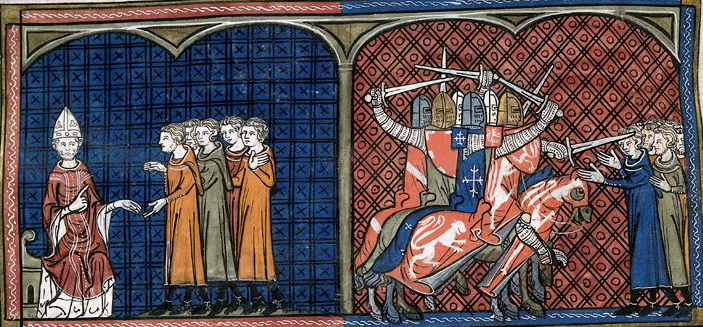
There is no “holy” in war.
 Steve A. Wiggins