Scary Father’s Day

Given my circumstances, I never really celebrated Father’s Day growing up.  By the time I was old enough to get the concept, my father was long gone.  My step-father, some years later, was no real father.  Besides, we were poor and it was hard to think what such a celebration might entail.  All of which is to say that I never really expect much from the day myself.  My wife and daughter suggested we try Nightmare in New Hope again—this is the horror movie museum in New Hope, Pennsylvania, which had been closed last time we tried.  It was an appropriately rainy day, the kind we seem to specialize in around here.  I suspect that the museum will show up in a future blog post or two, but suffice it to say that it’s an impressive little collection.  It’s an odd feeling, this human desire to be in the presence of something you’ve seen in a movie.  I recommend it for any horror fans who happen to be along the mid-Delaware.

Not being large enough to take all day, we considered what we might do that afternoon.  In keeping with the theme, a visit to Vampa: Vampire and Paranormal Museum was suggested.  This museum is in Doylestown, which is only about a quarter hour from New Hope.  There’s more to it than just the museum, so it too will likely come up in future posts.  This museum contains a truly impressive array of artisanal vampire hunting equipment from Europe, dating between the seventeenth and nineteenth centuries.  I’ll try to put together a photo essay of it soon.  But that’s just the first room.  A second deals with demonic possession.  Then rooms have displays of occult and other esoteric artifacts, along with creepy suggestions to be careful of engaging too much with them.  The final room is dedicated to St. Michael the Archangel, and it warns that the struggle with evil is real.
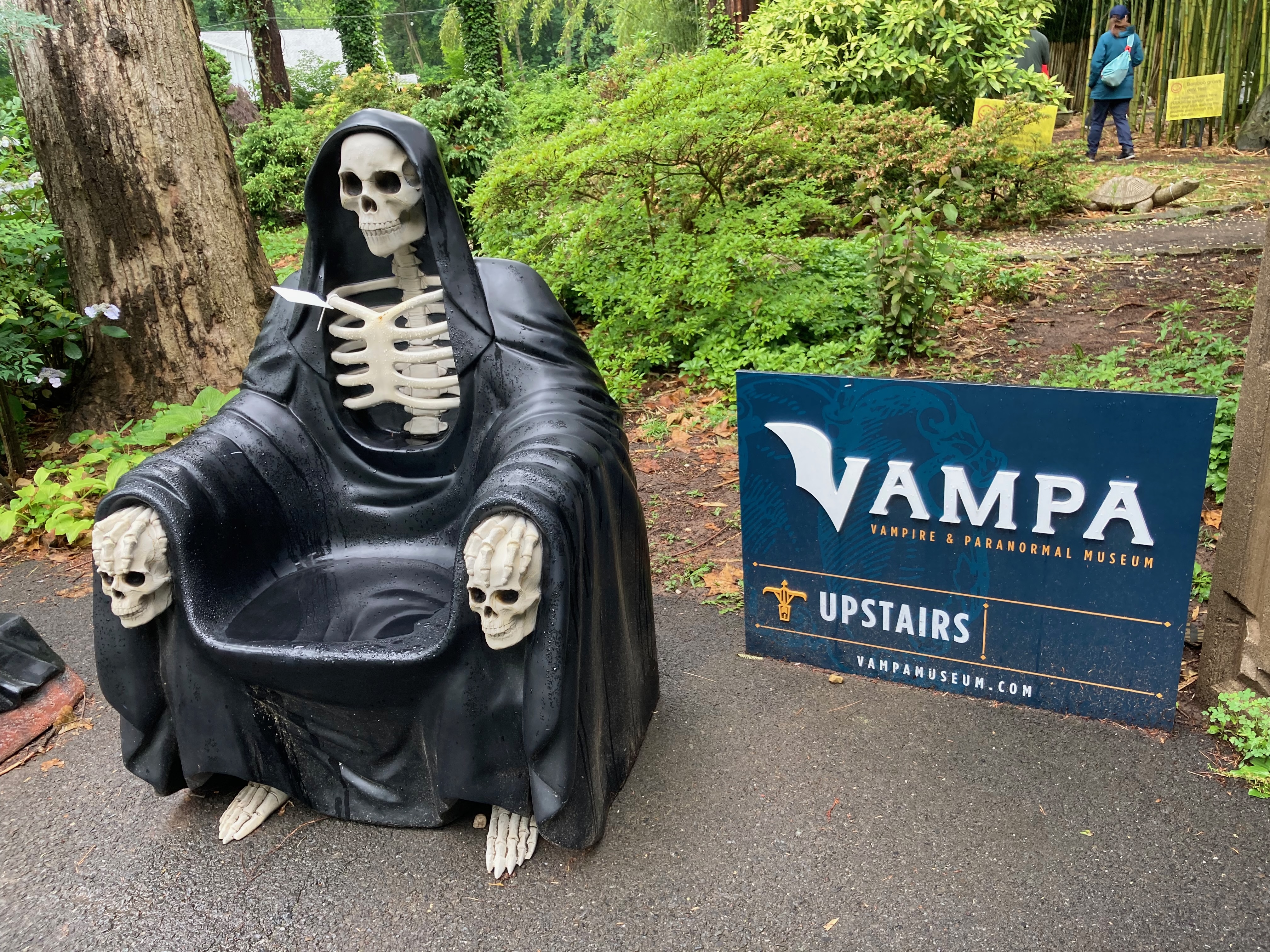
Both places had a steady stream of visitors yesterday.  It would be fair to say that by the time we finished I was over-stimulated.  You have to understand that I personally don’t know many people interested in horror.  Going to these places was the sacrifice of a rainy Sunday afternoon for my family but will likely become one of those pleasant, lingering memories of the unusual that take on a rosy afterglow over the years.  This blog quite often ponders over why such things take on meaning for someone interested in religion and belief.  Being in the presence of artifacts, as noted above, puts you in touch with a kind of earnestness that mere electronic reading on the internet lacks.  If you happen to be along the mid-Delaware, the side trip to Doylestown is a worthy add-on, Father’s Day or not.
Museum Life

Allentown is the third largest city in Pennsylvania after Philadelphia and Pittsburgh.  Here in the Lehigh Valley it abuts Bethlehem and is just a few miles from Easton.  Getting an early jump on Memorial Day this year my family visited the Allentown Art Museum.  My daughter had been there before and let us know that it’s not huge, but certainly worth seeing.  They do have a Rembrandt among their collection, and a few Medieval pieces, including a tapestry that I could swear I saw on a book cover once.  In any case, I would recommend it.  We’re still fighting with rain around here, so it was a great Friday diversion.  We’re museum people, and I’ve pursued creative outlets my entire life.  I like to look at those good enough to be on public display.  As I told my family, when I was young I was curious about art and checked out books from the library on the great masters so that I could learn to identify paintings I hoped some day to see.  And as a bonus, the Allentown Art Museum is free.

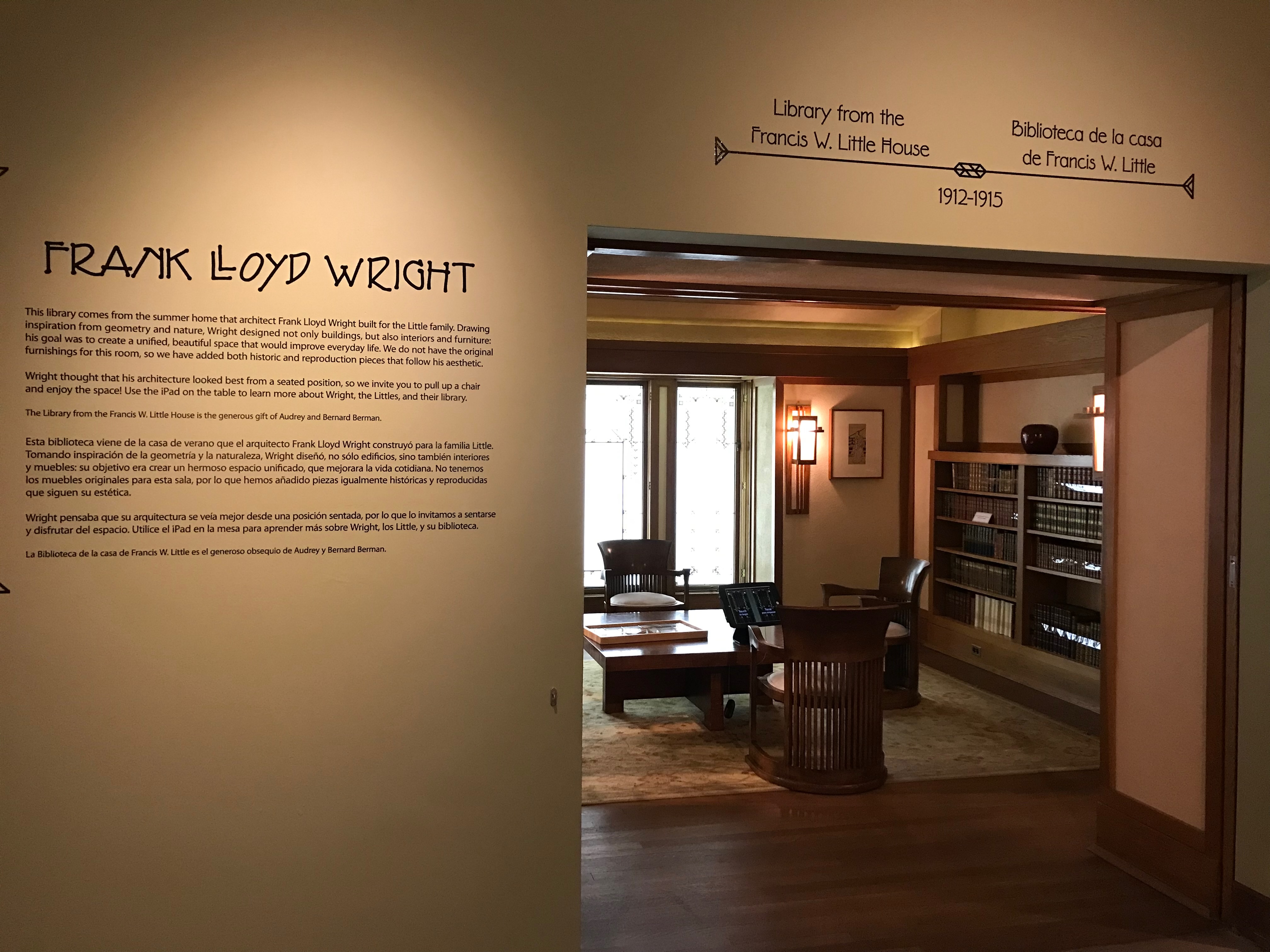
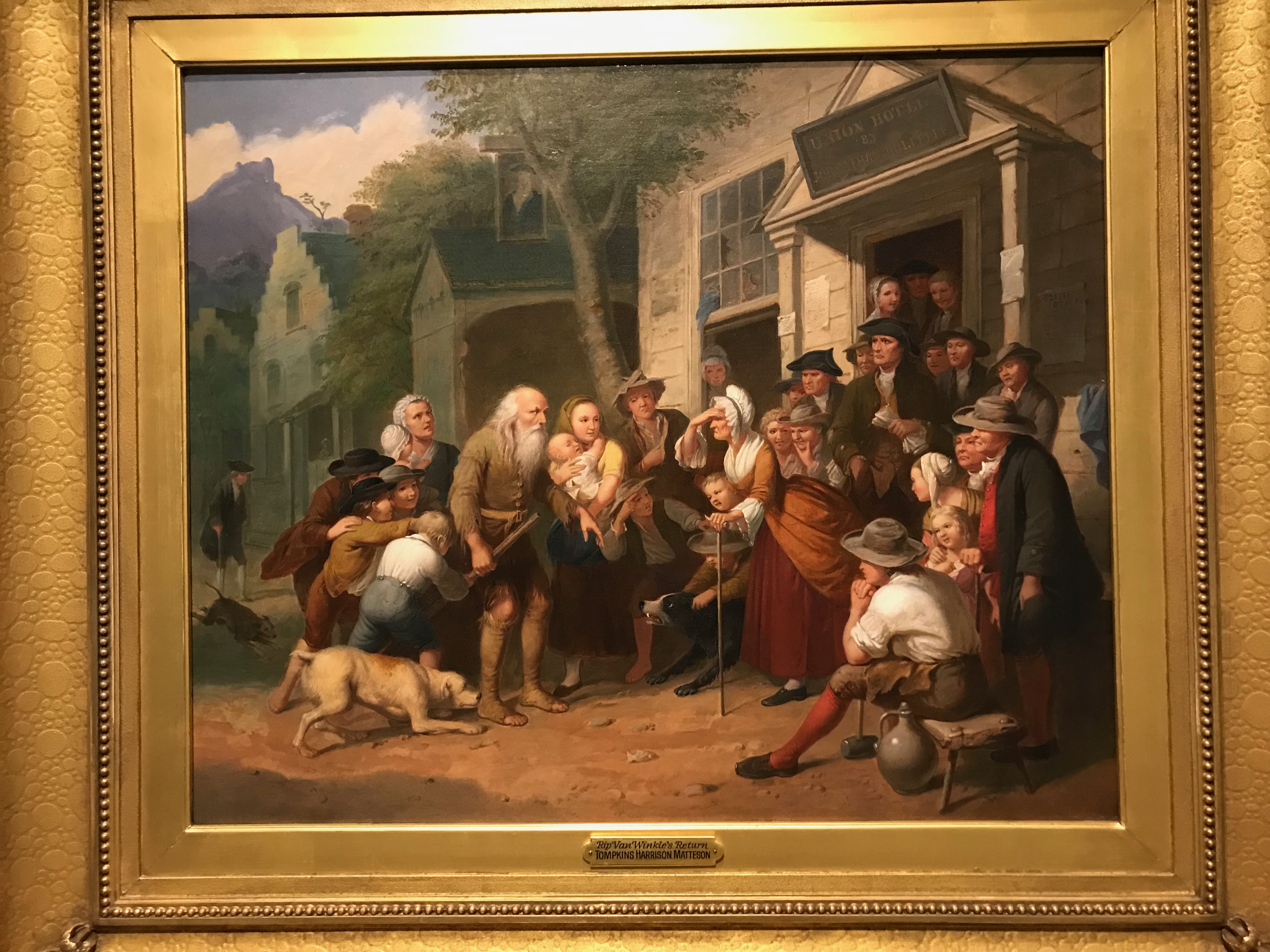
One of the features of the facility is a personal library designed by Frank Lloyd Wright.  The books on display aren’t his actual books (I don’t think), but being a book person I had to look over the titles.  Washington Irving was well represented.  Since Sleepy Hollow as American Myth will be out shortly, I was curious to see if they had The Sketchbook of Geoffrey Crayon, Gent.  This is the book in which “The Legend of Sleepy Hollow” first appeared.  It seems they have all of Irving’s books because I did indeed find the Sketchbook.  Such an unexpected connection was a bonus on what was already an enjoyable visit.  I wandered out into the paintings again and found Tompkins Harrison Matteson’s “The Return of Rip Van Winkle.”  As I discuss in the book, “Rip Van Winkle” is also in the Sketchbook.  Not for the first time, I’d made a personal connection with art.

Visiting art museums always leaves me in a liminal space.  For a while my soul was mingling with those of others driven by creativity.  I’ve made a few art works myself over the years but I’ve really had no training.  I did take a drawing and painting class in college, but I kept none of my output.  I enjoyed making it, however.  My daughter asked why I don’t do more and the issue always comes down to time.  Work takes the lion’s share and now weed control (they love the rain) takes most of the rest.  And writing, of course.  That’s why I need to go to museums.  To become fully human again.


Write It Down

Those of us with a bookish outlook often wish we could look things up.  This comes to mind because of a recent documentary I watched, but the thought has occurred many times when visiting museums, particularly for special exhibits.  I’m pretty easily overwhelmed by too much information at once.  In a museum I have trouble reading all the placards and remembering how they tie in because there are so many interesting artifacts to look at.  I leave inspired and impressed and wishing I could look up the information I just read.  I’ve often wondered why museums don’t sell exhibition books that have photographs of the objects with replications of the placards describing what they are.  Maybe it’d just be a market of one, but I’d buy them.

The same thing is true of documentaries.  I’ll readily admit I’m poor with names.  It takes many interactions before a person’s name sticks with me.  (It’s nothing personal, I assure you—it’s just the way my brain works.)  When I watch a documentary I often wish a booklet accompanied it with the names, and credit lines of the interviewees and (because I know this is available on IMDb) a full bibliography.  The books mentioned.  You see, those of us inclined to research enjoy looking things up.  In the case of a long documentary (and that’s only if you subscribe or buy it instead of “renting” it for a one-time viewing) it means having to skim through it all again to reach the information that you could easily look up in a book.  Books are wonderful.

For me, one of the benefits of books is their stability.  Electronic resources change.  When you go to cite a website as a source you have to list the accessed date because things may have changed.  The book on your shelf remains reliably unaltered.  The few ebooks I’ve read come with marks in them.  There’s probably a way of turning this off, but I don’t want to see what other people think is noteworthy.  I suppose it’s supposed to make reading a communal experience.  Reading, in my experience of it, is mostly a private things.  One of the great joys in life is talking about reading with others, whether it’s the same book you’ve read, or a different one.  Why not add to that by making books to go with other species of information-sharing, such as museums and documentaries?  Those of us with a bookish outlook aren’t hard to please.  We just like to have it down on paper.


Museum Haven

At various points of my career I’ve applied for museum curator positions.  Since those who actually land those jobs have degrees in museum studies, I’ve never gotten as far as an interview.  Still, I like to think I’d be good at it.  I spend time in museums and I’ve been told I have an okay eye for design.  And I recently read that museums are educational institutions.  That makes sense since people tend to be visual learners.  (This is something I took into account in my classes as well, illustrating lectures to make a point.  The traditional academic feels that pictures are somehow “soft” learning as opposed to the harsh realities of text and word-based instruction, but I beg to differ.)  We see things and they stick with us.

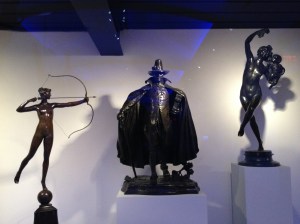
On a visit to the New York Historical Society museum I once looked at their somewhat abbreviated sculpture collection.  This isn’t the Met, after all.  One of the tricks I’ve learned about museum displays is that some curators place subtle humor in their framing of objects.  For example, my gaze was drawn to a figure of a pilgrim.  A stern-looking fellow, he’s captured in full stride, massive Bible tucked under his arm, determined frown on his face.  This is a man trying to create Heaven on earth, dour though it may be.  Taking a step back, my camera found a smile in this image.  On either side of this angry Christian were two naked women: one was apparently Artemis with her bow, the other perhaps a Muse.  The lines of the display draw attention to this juxtaposition.  There’s some humor here, intentional or not.

This also takes me back to yesterday’s post about Heaven.  Perceptions of what it is differ.  There’s a mindset like the pilgrim that sees a life of suffering being rewarded in the hereafter with endless bliss.  I do have to wonder whether too much hardship down here might not make one forget how to enjoy oneself.   It’s difficult to picture a Puritan in rapture.  It’s as if the journey—the hard road—is the real source of enjoyment here.  Each of us, I suppose, has her or his own view of Heaven.  Mine’s kind of like a library with all the time in the world without end to read.  Others, I suspect, would find paradise as a garden.  Yet others would see Heaven as a kind of museum, but it would be one where laughing out loud was okay, for the Curator definitely has a sense of humor.