Christmas Music

While reading about holidays recently, I came across the idea of Christmas as a cultural holiday as well as a religious holiday. Now that it’s here, it feels like a little of both. My wife grew up in a musical family and Christmas music was a large part of her experience of the holiday. Although I grew up in a family where the religious aspect of the holiday was as preeminent as it could be with young boys, I don’t recall music being much a part of it. Perhaps we had enough of Christmas carols in church and on every shopping excursion. I don’t recall having a record player beyond maybe a close-and-play for our few 45’s. Now a large part of our holiday experience is the music. We listen to contemporary secular and classical religious and, to borrow an expression from popular parlance, it’s all good. Music spans the sacred and secular and suggests that we might all get along if only we were willing to try.

IMG_2649

Scanning our shelves we have a wide variety of Christmas music. It begins with Medieval carols and spans to a Very Metal Christmas and the most recent Pentatonix album. Even Amy Grant has a place in there from my college days. Like a kid I awake early on Christmas, from the long habit of getting up around 3:30. The house is quiet and, rare for New Jersey even the street outside is silent. In the hush I can still hear a kind of music. The music of peace, of a dream, of an ardent hope, of Christmas.

Christmas is all about sharing. We know Jesus of Nazareth was unlikely born this time of year, but we take it as a symbol. The peace of a silent night is best enjoyed in mixed company. With the political rancor of exclusion burning in our ears other days of the year, maybe we could think about sharing today. Sharing our land. Sharing our sense of hope. Sharing our music. The world could be such a wonderful place if we would only listen for Christmas.


Musical Mind

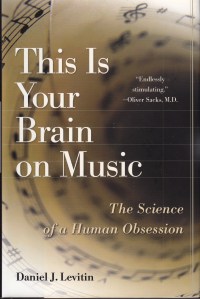
BrainOnMusicMusic is perhaps the most natural of human arts.  We are all, as Daniel J. Levitin says, expert listeners from an early age.  This Is Your Brain on Music: The Science of a Human Obsession is a fascinating study of neuroscience and music.  I began exploring this connection about a decade ago when studies on religion and neuroscience were only just beginning to appear.  Music, although closely related to religion in many ways, does not bear the stigma of “belief” and although music programs are often tragically cut from school budgets, we all value music because not to do so makes us less-than-human.  Levitin shows clearly how music accompanies the most important parts of our lives and how it forms and develops the brain.
 
Music is somewhat easier to define than religion.  Those who decry the humanities, I suggest, should be locked away with no access to music for a few years to see if they change their tune.  I suspect they would.  We need music, and music’s impact on the brain is an analog to that of religion.  More studies of religion and the brain have begun to appear, and one gets the sense that materialists are a little bit angry and disappointed that religion hasn’t disappeared the way that it was predicted to have done by now.  That’s because being human is more than being molecules and chemical reactions. It involves what we call the humanities.
 
Our brains are our gateways to all of human experience.  They are complex in ways that computer designers emulate, but there’s a messy something about biology that straightforward mechanics seems to have trouble replicating.  Our brains are part of one large, organic whole that encompasses life on this little planet.  While studying the brain to understand it is indeed a good idea, calling it a meat computer is not.  While software may be coded to compose music, of one thing we can be sure. Computers can’t enjoy music.  It takes a brain to appreciate music, and the brain that appreciates music is mere synaptic connections away from seeing why religion is still important.


Ports of Call

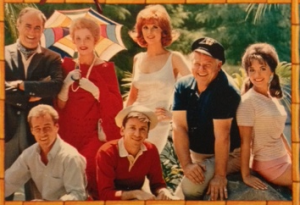
“Just sit right back and you’ll hear a tale,” so began far too many evenings of my childhood. Well, although as an adult it may seem that the time was ill-spent, Gilligan’s Island was the induction to popular culture that I had to undergo some time. The series has aged well; we bought the DVDs (speaking of aging) as soon as they came out and watched them all, multiple times. But what must it really be like to be on a boat, and for more than a three-hour tour? Here’s where I’m lucky in my extended family. A cousin, who is much younger, has been working as a musician on a cruise ship for a couple of years, and has recently started a blog. If you’ve ever wondered what it might be like to be a singer on a vacation vessel, check out David Tarr’s take. He has a more realistic outlook than Ginger did, although seeing Tina Louise in person was still quite a thrill, back when she stopped into the local Borders. Back when there still was Borders.

TheIsland

It seems to me that we don’t often enough take the time to wonder what other people’s lives are like. We are a myopic species. Apart from the occasional educational tour in school, we don’t have much opportunity to consider what it feels like to be someone else. I grew up in a working class family that lived at the poverty level. I didn’t get along with my step-father, but I have, in the years since he died, thought back on his perspective. He worked long hours, had little education, and was very patriarchal. When he was too old to do his duties as a laborer, he took a job running an elevator in one of the five-story buildings in a nearby town. I once went to visit him on duty. He was sitting in the tiny cube of a metal box, waiting for the very rare customer. I asked if I could bring him something to read, something to do, to pass the hours of tedium. No, he replied, he didn’t want to miss any calls from potential passengers. What must it be like in the head of such a man?

The internet has given us a chance to learn the lives of others. David is living a young man’s dream, with the good and bad. We have lost all hope when such things are no longer possible. Too soon we find ourselves chained to a desk, 9-to-5, working to make money for others. Dreams are strictly forbidden, at least on work time, which is the only time there is. Somewhere on an ocean, there is a ship. It may take a three hour tour, a three week cruise, or a three month voyage. It is more than a ship, regardless. It is the people on board, and their lives, and hopes. I’m not sure of the course charted for me. I suspect it has no cruises to exotic climes. It has, however, writing written all over it, and that is one thing I share with a talent cruise singer in my extended family.


Growing Green

It was bound to happen sooner or later. I married into a family of singers, and when we gather at a cabin in the woods, singing breaks out. In the drought-tormented northwest, under an extreme fire ban, there was no campfire, but that doesn’t stop the music. Once campfire songs begin, “Green Grow the Rushes, O,” always appears. I’m no singer, but I spent a couple years as a camp counselor, and many years before that as a youth conference attendee in the United Methodist Church. I know the song by heart. Usually it is now a sign for the adult males to sneak back to the cabin rather than endure the twelve repeating verses. Nevertheless, the question invariably comes up: what do the words mean? We have a couple of lists, here and there, explaining the lyrics, but the fact is the origins and meaning of the carol are obscure. It’s origins appear to be England, but the countdown of twelve verses contain imagery that is Christian, Jewish, and pagan. Over time, many of the verses have, like most oral tradition, undergone corruption. In many respects, it is almost biblical.
While it might be fun to run down all the verses and discuss their potential meaning, that is a task best left to a day when I have my computer working again. With limited internet access and an iPhone from which to post, full-scale exegesis is a daunting task. One aspect of the song, in any case, is clear—it is generally accepted to be a Christian catechetical tool. Repetitive and, especially before adulthood, fun, the song rewards those with strong memories for such obscure phrases as “April rainers,” “symbols at your door,” and “bright shiners,” in the proper order. After the song is over the teaching begins.
I have a book of camp songs from my counseling days, and it suggests a hermeneutic key to the song. My wife studied musicology, and she provided a somewhat more authoritative source. Then, of course, there’s Wikipedia. On some of the verses there is a general consensus, but most are open for debate, with some seeming to point to pagan origins. Tied up with the fact that the song is, in some places, connected with Christmas, this blend of Jewish, pagan, and Christian ideas comes as no surprise. The age and origins of the song are unknown, but it features references to Greek deities, Jewish laws, and Christian miracle stories. Musicologists have had a crack at the song, and surely will examine it again. The strangeness of the lyrics suggest a mystery to explore. Some mysteries are still to be found around the campfires of the north woods on a summer’s night.


Autumn Music

It is an experience as old as humanity itself. At least humanity that started to realize that age, as remote as it may seem, will always eventually catch up with you. This past weekend was Family Weekend at my daughter’s college. Since her school does things up right, there were a variety of events on offer, one of which was an a cappella group concert. A cappella has come a long way since my college days, with students able to use their voices to sound like a band, professionally mixed, and full of energy. Somehow, I don’t recall that much energy from when I was a student. In any case, the inevitable group doing “oldies” took the stage an opened with a song from 1987. Wait. What? Since when was a song of which I remember the first release an oldie? The kids did a great cover, and I suspect in their minds it was really an old song. I was only 25 when it was given to the world. Can I really be an oldie? Outside the leaves on the trees were brilliant, as if on cue for the tuition payers to have their heartstrings wrung. Trees become their most alluring as they are about to die.

Songs, however, have a way of becoming part of you. Back when we were young(er) and idealistic, my wife had thought to study music therapy. Nashotah House, however, decided to change the career trajectories of an entire family in the name of orthodoxy. One of the things she learned in her classwork, prior to being sent back to the work-a-day world, was that patients suffering from dementia can often sing a song from their youth, even if they can’t speak a word. Music gets into our brains in a way that language learning doesn’t, and when we hear that song we are, to borrow a phrase from Bob Dylan (which another of the groups sang), forever young. It is a beautiful wish, endlessly covered and recovered. Watching those kids on stage, I recalled being on the cusp of adulthood myself. Everything seemed possible then. Then a world that others constructed imposed its constraints on me. My hair began to grow gray even as the leaves lit up yellow and scarlet and fire orange.

DSCN4928

Religion is the business of those who are old. Even as a religion major in college I was classed among those old before my time. We think of the hereafter on our deathbeds, not when we’re twenty. For those who teach their children to ponder eternity at a young age, however, that portal is never far from view. My fellow students were looking ahead to careers in all kinds of fields that would make their fortunes and reputations. My modest attempt to bring a younger generation to a more mature outlook faltered at the hands of Fundamentalists, and it was music that helped me through that terrible shock. Little do we think that that song we like so much is marking us indelibly as a child of our age. Time will not relent. We will be the ones, like the trees, showing our signs of age as our children show us where the future lies. And the attitude of that song from 1987 will be, for any who truly listen, forever young.


The Big Man

“When the change was made uptown/And the Big Man joined the band…”

Clarence Clemons (from WikiCommons)

Among the earliest markers of religion in human culture is the advent of music. While still disputed, bone “flutes” from about 40,000 years ago seem to indicate that early humans knew the value of music. Driving around now that the weather has warmed up, it is clear that people still find music so important that they like to share it from their open car windows at a volume I find uncomfortable even across the street. Like religion, music is an intensely personal aspect of life. Although I mention bands I like occasionally in this public forum, I never parse my music tastes too much because they are a little too revealing. With Clarence Clemons’ death yesterday, however, it is appropriate to pause and give my respects.

Those who know me sometimes wonder at the fascination I have with Bruce Springsteen; I am not an idol-worshipper and not all of Springsteen’s work appeals to me equally, but he represents an appreciation of the ordinary person. What first drew me to his music was the fact that he understood blue-collar mentality and angst generated by an unfair society. In an interview on his Born to Run special edition, Springsteen notes the seminal change that Clarence Clemons made in the E-Street Band, as reflected in the opening quote from “Tenth Avenue Freeze-Out” above. The playing of Clemons’ saxophone was so distinctive that even my very untrained ear could often pick it out on other artists’ albums even before reading the credits.

The E Street Band, of course, changed over time and lost a first-generation member with Danny Federici’s death three years ago. Although Bruce Springsteen is alive and well, and still active in causes to help those who are victims of an uncaring system, the E Street Band will never be the same without Clarence Clemons. The old camp song says that music never dies, and that is a hope we can hold out for the impact of remarkable performers as well. When I walk into a classroom with kids who have no idea who the Beatles were and who’ve never heard of Alice Cooper, Deep Purple, or Pink Floyd, I feel my age. But it is okay as long as I can still listen to the music once I get home (I never play the stereo while driving—I prefer to concentrate on the music a little too much). It is like a religious experience. I am sure the cosmos is a more harmonious place for having hosted Clarence Clemons, even if just for a little while.


Eine Kleine Neanderthal-Musik

I suffer a limited form of amusia. No, it’s not a fear of amusement, but rather lack of musical ability. I appreciate music very deeply, but I simply can’t make it. I’ve tried lessons and teachers end up turning away in exasperation. The embarrassing part about all this is that music is an integral part of religion – almost all forms of religion have their musical repertoire, and musicologists have demonstrated that the early human impulse to make music has a religious basis. I can only sit in the audience.

That's me on the left

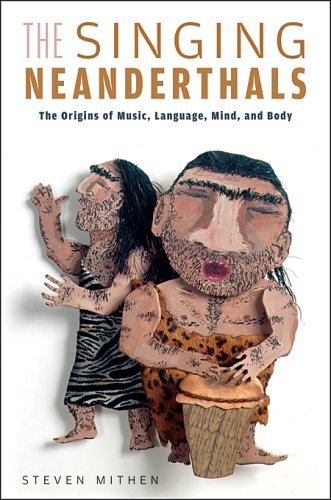
I’m finally getting around to reading Steven Mithen’s The Singing Neanderthals: The Origins of Music, Language, Mind, and Body. A few years back I gave an academic paper suggesting that musical development could be an analog to religious development on a neurological level in the Bronze Age. Since I’m not a neuroscientist I have to rely on others to do the experimental side of the equation. Mithen serves this function nicely. When I read about music and the brain, which I do frequently, I am surprised that more scholars of religion haven’t picked up on this connection. Since music is frequently “background noise” today, many people casually assume that it is insubstantial, a whim. I look at it (listen to it) from a different angle. I seldom listen to background music – if music is playing, I pay attention to it, and something in my unprofessional brain says Mithen is often right on target.

Of course, religion and music is not the main thrust of The Singing Neanderthals, but rather the idea that music was formative for human cognition. Perhaps music even developed before speech. For me this is an important piece of a much larger puzzle: whence did religion arise? Like all inquiries that delve too deeply into the past, the answer is lost among ambiguous artifacts and ancient dust. And yet, those who know more about this than I do seem to be pointing in the direction that both religion and music have their origins in the pre-Homo sapiens stage of our evolution. I’m not surprised. I only wish I could play along.