A Kind of Lunacy

I can never keep track of the vernal equinox. Actually, I have the same problem with the autumnal equinox and both solstices. I think it’s because when I was growing up I thought they always came on the 21st of the month. That’s a nice, regular interval. Our months, however, are not natural. Were they to follow the moon (whence we get the word “month”) they would be about February length. The moon’s phases, however, do not keep to human time. In actuality, a month is approximately 29.53 days. Various emperors throughout history added days to their months, making our jumble of 365.25 days a mix of mostly 31-day periods, with some being 30, and February alone holding out at 28. Or 29, depending. All of which is to say, I didn’t realize spring was here until the day was mostly over. Here in the northeast it was snowing, and the celestial dome was occluded. That was a shame since it was also the day of a solar eclipse. I consoled myself by realizing that even if it had been sunny I was in the wrong location to see the eclipse, so I wasn’t missing much.
DSCN3762

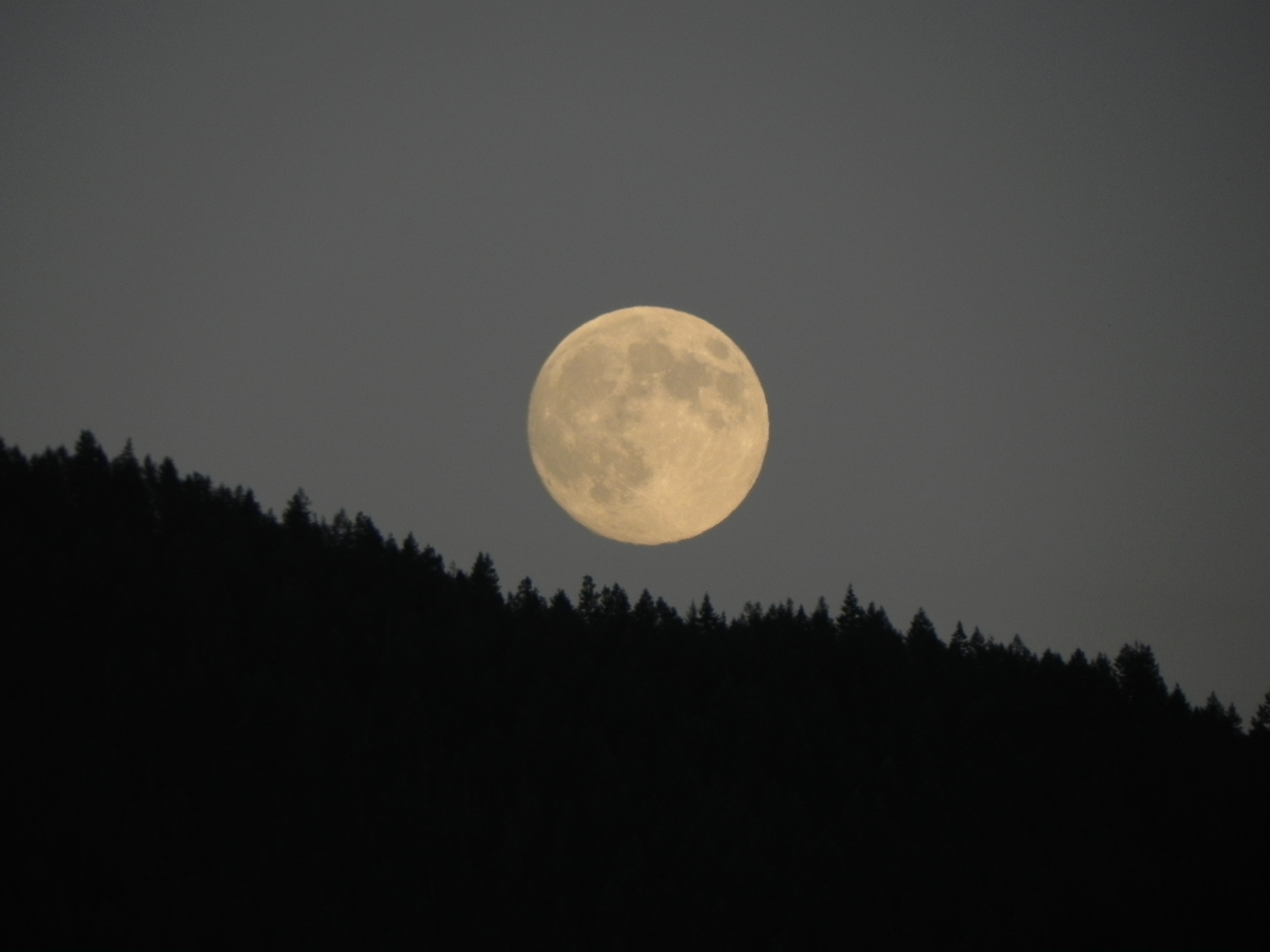
So spring subtly appeared this year. Not only was the day an eclipse day, for some, it was also a “supermoon” day. That is to say, the moon was at its closest point to earth at the time, making the eclipse a truly spectacular one, if you could see it. All of these astronomical machinations on the event that sets the date for Easter has developed a new kind of mythology. According to The Guardian, some minority of clergy have seen this event as initiating the apocalypse. Of course, eclipses are by their nature local events. The vernal equinox occurs every year, and the first Sunday following the first full moon of the equinox will be Easter. We get a supermoon (or perigee-syzygy of the Earth-Moon-Sun system) about every 14 months, so this is hardly rare. But then, the moon has always been the locus of mythology.

Ancient peoples knew the phases of the moon intimately. As the main source of non-artificial light at night, it was a boon to those without electricity, or even gaslight. Without physics to provide a mechanism, stories developed to explain the ever-changing status of our nearest neighbor. Some of those tales took on religious elements, and many religious calendars remain lunar. The vernal equinox, however, is a solar event. From now on the days will get longer until the summer solstice, a day of celebration and mourning, as we move back into the days of declining light. Each of these celestial events comes with its own religious freight, and it seems, dissenting clergy notwithstanding, that so it shall carry on for many moons to come.

Coming of the Green

For many years I actively attended to the calendar of saints while at Nashotah House. Although we celebrated Mardi Gras, we never seemed to celebrate St. Patrick, although he does hold a place on March 17. I suppose most people were too busy wearing black to attend to the green. I always, however, donned some verdant vestment for the day, and we usually had leprechaun gifts left behind for my daughter. After leaving Nashotah, I discovered that many universities scheduled spring break around St. Patrick’s Day. This wasn’t because of any love of the Irish or of liturgy, but because campus damage was so bad after the heavy drinking of that day, that many schools decided to let that be somebody else’s problem. St. Patrick isn’t particularly associated with alcohol, but even a quick walk by the bars of New York City demonstrates that the saint has found a home among the inebriated.

Little is known of the historical Patrick. He was associated with Lough Derg, an island of which was said to contain Purgatory. The lake also boasted a sea serpent, which may give some background to the legend associating Patrick with the banishing of snakes from Ireland. The shamrock story is likely apocryphal, but there’s no denying the brilliant green of the Emerald Isle, so the tradition developed of wearing his favorite color to commemorate the day. The traditions of Patrick grew by accretion. The Irish belief in wee folk gave legs to the leprechaun connection and, I’m told, heroic drinking might lead to the seeing of the same. One reason his day might have been downplayed liturgically is that it has become an unlikely cultural holiday. Those of us with some Irish ancestry run into some pretty high numbers.

The myth of St. Patrick is more powerful than his history. This may be a lesson for us even today. The stories we tell of our cultural heroes need not be grounded in fact in order to be meaningful. Over time the religious of many faiths have grown more and more literal to demonstrate their devotion. This is a risky proposition. We know little of the life of Patrick, or even of Jesus and other various religious founders’ lives. Their followers have been free to fill in the blanks for many centuries, building meaningful legends. I have no idea if Patrick of Ireland liked green. He may have found snakes charming. Upon an intemperate evening he may have seen leprechauns dancing about his parlor. It is less the tale that is important than it is what one might choose to learn from it.

StPat


Monsters of Science

ScienceOfMonstersMaybe it’s the ebola in the air, or perhaps the gas from all the midterm elections verbiage, but I’ve been on a monster run this October. I just finished Matt Kaplan’s The Science of Monsters: The Origins of the Creatures We Love to Fear. It is a charmingly written book, at parts approaching the finesse of Mary Roach. Beginning with the ancient Greeks (and sometimes stepping back into the world of the Bible or the Mesopotamians) Kaplan examines the major categories of monsters and tries to offer scientific explanations for why people came up with them. It is a keen conceit and it is deftly handled. Noting that animals sometimes got jumbled in the fossilization process, he offers explanations for creatures such as the Chimera, Griffon, and perhaps even the Sphinx. Some of the unlikely episodes are quite fun to visualize as well, as when a snake slithers over a tar pit where a goat got stuck and was eaten by a lion that also got stuck. Beast after hideous beast he brings down to analytical size, sometimes convincing even this old monster lover.

One of the problems, however, is that science often doesn’t comprehend the symbolic nature of mythical thought. Quite apart from sheer creativity—and it does exist!—some of the material in Kaplan’s analysis would have benefited from having a mythographer’s look. For example, demons do not suddenly appear as monsters in the Middle Ages. Kaplan knows this, but that’s where he starts. The ancient Mesopotamians knew of them very, perhaps, too, well. And Lilith isn’t even mentioned when discussing succubi. Still, there’s a great deal of interesting conjecture here, and some scientifically, if not mythographically, viable suggestions on whence vampires and werewolves. As expected, modern sightings of cryptids are simply swept off the table, but I almost shouted aloud when I read that he gave credence to Wade Davis’s work on Haitian zombies.

The larger question here is one of approach. Do monsters lend themselves to scientific explanations at all? The case that elephant/mammoth skulls might suggest a cyclops seems reasonable enough, and the occasional dinosaur bone that represented a giant in ancient times is entirely possible. (Who can tell one femur from another anyway?) But the monster is primarily a creature inhabiting the shadowy realms of religion and psychology. Our fears are seldom directed toward science, although, now that I’ve read his chapter on “The Created” I’m not so sure. Constructing backward toward the unknown is always a dicey proposition, as those of us who’ve studied history of religions know. We may be able to find the genesis of modern monsters, but, admittedly, the fun for most of our scary friends is that they are mysterious. Impervious, as it were, even to science.


The Truth about Elves

We are nothing if not certain. We know that there are no such things as intelligent non-human entities anywhere in the natural realm. We may reluctantly nod toward some animal intelligence, but that’s as far as the head inclines. Humans are the acknowledged and absolute top of the chain of command. Until you try to build a road in Iceland.

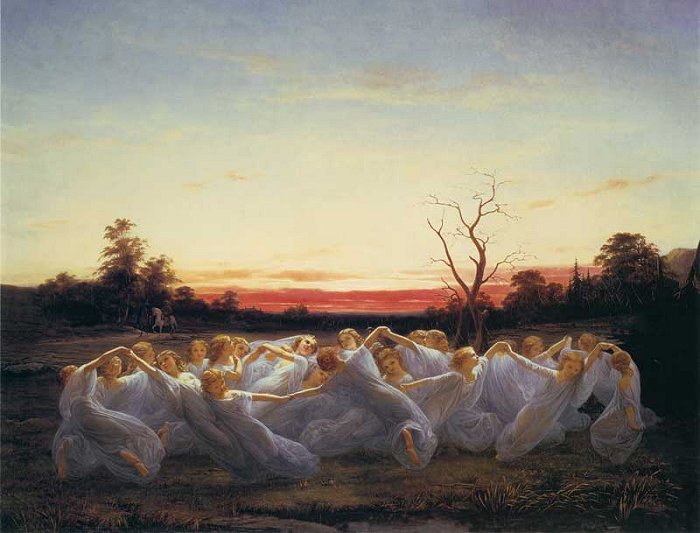
The story of how the road crews were called to a halt because of fear of infringing on elf territory hit the internet months ago. An article in the BBC News recently revised the scene. Emma Jane Kirby traveled to Iceland to see just how seriously this was being taken. I, for one, am glad that mythology survives on the surface in at least a few small places in the world. According to Kirby, surveys suggest about half of all rational adults in Iceland at least hold open the possibility that Huldufolk exist. The Huldufolk, or “hidden folk” are not diminutive, but human-sized and invisible. Who’s to say that invisible people don’t exist? Show me.

Ängsälvor_-_Nils_Blommér_1850

Rationalists are quick to jump out with the accusation that witch trials and other superstition will soon follow should we allow that perhaps the angelic, demonic, or folkloristic beings exist. Of course, it was the rational authorities of the day—often the church—that made those trials possible. Without religion, though, we never would have had science. I don’t think the invisible beings had anything to do with it. Human, all too human, hatred was the real culprit. Fear can lead even the most well-adjusted to the precipice on a dark and stormy night (with apologies to Edward Bulwer-Lytton). People are inclined to mythology to give meaning to a world that, no matter whether scientifically described or not, must make sense to us. Sometimes the elves seem to be the most likely explanation.

The only thing really lost by catering to the belief in elves is money. It might take a little more time and a bit more effort, and empty the coffers just a bit more, but in the end both elves and humans are happier. This worldview has a sense of wonder that a money-padded saunter through Manhattan simply lacks. When faced with the choice between mean money or disgruntled elves, I know the path I would rather take.


Myth of Infinity

There are only five major trade publishing houses left. Despite the bewildering number of publishers around, five corporate giants own most of the industry labels that make really big money. Those of us who dabble in the literary arts dream of some day being published by one of these big houses because it might mean some success is involved. There are, of course, hundreds of indy publishers who are more author friendly, but you might never get noticed. So when I attend meetings and see the zig-zag that represents the EKG of capitalistic vital statistics, I often wonder about the myth of perpetual growth. A business isn’t really considered a success unless it can chart continued growth, year after weary year. And this in a finite world of shrinking resources. How long can perpetual growth last? In the publishing industry, if you get too successful you’ll be purchased by an even bigger company. Remaining solvent isn’t enough in a hungry, hungry capitalist world. The winner, they say, takes it all.

EndlessThis idea bothers me long after the meeting’s over and the lights have been turned off. Have we truly come to believe in our own mythology? What kind of value is it that can be measured only by acquiring more? I went into higher education unsure of my commitments to capitalism. I’d rather not have some kind of quota hanging like Damocles’ stock report over my head. I want to ponder through the implications and burst out on the other side, hold the whole thing at arm’s length to consider it. If all businesses constantly grow, we run out of material. Don’t we? If all businesses don’t grow, some will shrink, then die. As often as not, they will be the ones I like the best. Infinite growth in a finite universe. Or is it really infinite and the capitalists are mining the very stars we can’t yet reach?

Glancing over my bookshelves, I see publisher’s names I’d never noticed before. Long before I was forced out of academe, I had purchased books on esoteric aspects of religion from publishing houses most consumers would never recognize. I even surprise myself sometimes. Some of these publishers haven’t survived. The self-published never outlast the death of the author. This is not a world of perpetual growth, but some of the ideas are nevertheless very fruitful. Can infinity grow from a finite stock? I think we all know the answer to this deep down. But mythologies thrive when not examined too closely. So perhaps it is better just to keep on pretending. And if you ever find someone who works for an independent publisher, give that person a hug.


Just Plain Bible

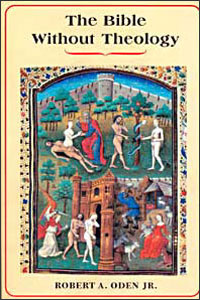
BibleWithoutTheologyBack when I was teaching Hebrew Bible in a seminary for a living, I purchased a book entitled The Bible Without Theology by Robert A. Oden Jr. I had intended to read it as a sanity break from the over-compensatory theological glosses that even the slightest reading of the Bible had in that setting. As the years passed and the book remained unread, I came to think of it as a systematic deconstructing of theological readings of the Bible, which it is not. Instead, Oden has gathered in this useful little book several essays centered on the topic of how the theological reading of the Bible has all but drowned out any other interpretations and has secured the privileged position of the Bible not only in society, but also in academia. Naturally, many people see such privilege as a witness of undisputed truth, even though how that truth is interpreted remains an open question.

Scholars, however, have the obligation not to favor their worldview over the evidence. Oden begins by discussing how history itself is perceived differently among those of various mindsets. History is an important part of the Bible’s theological reading since many Judeo-Christian interpretations revolve around a sense of historical veracity. After illustrating how history and mythology both lay claim to the text, Oden points out that even obviously mythological episodes have been blockaded by a theological reading of the scriptures. With examples from socio-anthropological studies, he demonstrates that parts of Genesis are best understood by investigating how kinship structures work, as well as how clothing serves as a status marker rather than a hidden justification for sacrifice, or chilly nights outside Eden.

Although The Bible Without Theology wasn’t exactly what I’d come to suppose it was, it remains a proper prologue to the issue. When Oden’s book appeared in the 1980s, the Religious Right was just finding its feet, fueled by a hyper-theological reading of the Bible. Since that time, the Bible has been used as theological justification to repress everyone from women to those biologically inclined toward their own gender. Bible scholars have, in general, known this is wrong. However, theologically inclined institutions won’t pay instructors for honestly engaging the text. Bible scholars are expected to throw their expertise behind the theological outlook of their institution in a way that Oden rightly points out, no other academic discipline would accept. In reaction to the biblical abuses of the Neo-Con crowd, many Americans are wondering why this one holy book is so privileged. While it may not have all the answers, Oden’s riposte will help to explain why the Bible deserves better.


Campbell’s Swansong

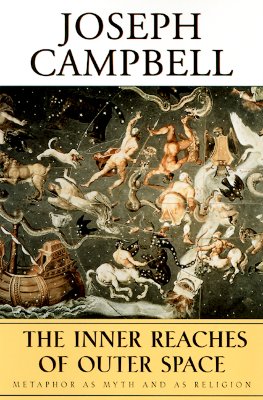
InnerReachesofOuterSpace Joseph Campbell may not be the best reading for the bus. Despite the many signs and placards gently suggesting to passengers both in the Port Authority Bus Terminal, and on the buses themselves, that keeping quiet is courteous, we are a people in love with noise. We are used to annoying electronic beeps, squawks, and farts. People find it difficult to sit more than 20 minutes without talking. I’m trying to read. At the Hunterdon County Library Book Sale I picked up Joseph Campbell’s last book, The Inner Reaches of Outer Space. It requires some concentration. Campbell was a brilliant comparative mythologer. I was reared in the scholarly hermeneutics of doubt, however, especially when it comes to comparing myths from different cultures. Campbell has a great appreciation for Jungian concepts, and soon minor details are blurred and the similarities stand out in stark relief. Still, as I always do with Campbell, I came away with plenty of rich concepts over which to mull.

Campbell, the great inspirer of Star Wars, the original series, was that rare breed of scholar who appreciated without participating. He is recorded as stating he was no mystic, and certainly not any kind of conventional religionist, but he couldn’t get enough of mysticism or mythology. Religion, he implies, is just mythology taken literally. He is, I believe, very close to the truth here. What we know of indigenous peoples today is that they don’t have that sharp and hard line between literal reality and story that marks much of western civilization. We tend to think fact and fiction cannot be of a kind. Looking around, we find no gods, so our choices are not to believe, or to believe too literally. And those who believe literally differently, we tend to want to kill. This is the history of religion in the western world, in a Campbellian nutshell.

Apart from the little gems I located scattered throughout The Inner Reaches of Outer Space, the main theme I found applicable was the driving force of chapter two, Metaphor as Myth and Religion. Metaphor is our way of interacting with a reality we just can’t experience directly. As human beings, we experience the physical world through the mediation of our senses, filtered by our brains. If there is something deeper, more profound than nature, we are even further removed. Our experience of meaning is metaphor. Joseph Campbell may have been a little too swift to spot congruities that are probably best left apart, but he clearly recognized the fact that our religions are not so different from our mythologies, and that both are narrated in the form of metaphor. This is not to devalue them, for metaphor is one of the most potent substances in our chemistry set. Now if only I could find the vial that has the stuff to make people want to keep quiet on the bus, we might all be able to get a bit more reading done.


True Myth

A friend of mine, I am glad to see, has started a blog. I’ve mentioned K. Marvin Bruce (“Marvin”) before on my blog, but his situation is such that job and blog don’t mix too readily and so he writes under a pseudonym. While Marvin knows a fair bit about religion, his blog focuses more on writing—he started his blog to announce his forthcoming novel. For those who are feeling adventurous, please stop by. His site is called Reinsurrection, and is located on Blogger.

I don’t envy Marvin his task of trying to make a writing voice heard in this overly noisy world. The decibel level of the internet is deafening for those with any artistic sensitivity. Marvin’s an academic in a poet’s skin, a dangerous combination in these days driven by cash and commodity. His novel, which he permitted me read before sending it off, is called The Passion of the Titans. It’s a fun send-up of Greek mythology told through the eyes of Medusa. For those of you who like off-color parody and classical mythology, I’m pretty sure you’ll enjoy it. It’s due out this summer.

Classical mythology is boxed, academically, in a compartment hermetically sealed away from religion. In fact, mythology is religion. (I wouldn’t look for too many religious ideas in Marvin’s book, though!) What it comes down to is that universities in the “Age of Reason” determined that mythology was fictional and religion—or at least one religion—was factual. Western society has tended to romance fact while jilting fiction as a way of understanding reality. Our obsession with the factual may be our eventual undoing. As for me, I can’t wait for Marvin’s book to appear. Hopefully it won’t be his last.


Illini Wisdom

Running through the Midwest like a massive, erosive serpent, the Mississippi River has an unrivalled place in the American imagination. In many locations the relentless river has carved impressive bluffs over the millennia, providing impressive views out over the valley that has been carved in nature’s time. Down near the town of Alton, Illinois, along the eastern bluffs left by the sculpting waters, is a reproduction of the Piasa Bird. Years ago, while living in the Midwest, some relatives took me to see the replica, a local tourist attraction and not a bad place to watch for bald eagles. It was then that I first heard the myth of the Piasa Bird. “Bird” is a bit of understatement, or perhaps a misnomer. The creature was really a monster, by any description. According to the lore presented by the tourist literature, the Piasa was a flying, human-eating beast that terrorized the local Illini tribe. Unsure of what to do, the tribe was at a loss until Ouatoga, their leader, had a dream that revealed an ambush as the means of defeating the monster.

The ambush involved, as is often the case in folkloristic accounts, a victim. Someone had to be bait to draw the Piasa into the ambush of poisoned arrows that had been arranged. Ouatoga, aware of the obligations of leadership, volunteered for the role of the victim and stood in the open to lure the Piasa into the trap. As the monster swooped down on him, the warriors released their arrows, killing the beast and saving their leader. The story bears much in common with myths throughout the world: a frightful beast, a sacrifice, and ultimate deliverance. This framework also appears in many religions, outlining the human condition. It also reflects, in an abstract way, the ideal of pre-modern society; we are all in this together. Banding together against an outside evil, human society might banish the monster and everyone’s chances would be improved. It is the world of mythology.

In our enlightened society the emphasis seems to have changed completely. Our leaders are often our Piasa, snatching from the populace at will and maintaining uneasy control. Ouatoga, in the myth, understood the role of leadership as being willing to sacrifice everything for the good of those who were under his watch. The idea also occurs in the Bible where Ezekiel charges the ungodly kings of Judah with being shepherds who eat the sheep. I still believe in the power of mythology. Stories are preserved because of a truth that resonates with the hearers. Monsters are in no short supply, and a society that is subject to the whims of an oligarchy perhaps has the most to learn from our mythological past. When is the last time a public leader offered to give up anything in order to serve the populace who grants him (sometimes her) his power? Old Man River, he must know somethin’. Looking up at the Piasa, I think I might be able to guess what it is.


Declining Prophets

Prophets aren’t what they used to be. Was a time when you had to be real to make an impression on the world. The historical evidence for Moses is slim. So slim, in fact, that it can’t be seen. As a child learning that the Bible contained no mistakes (it does) and no contradictions (too many to count), there was never any doubt of Moses’ historicity. Charlton Heston’s iconic portrayal of the man who wouldn’t be king left little room for doubt in pliable young minds. Not bad for a man who probably never lived.

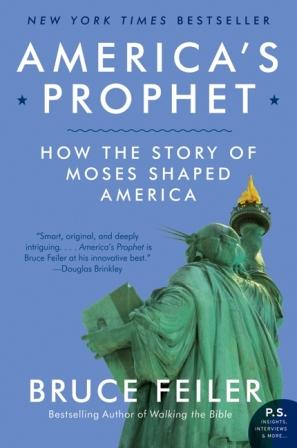
I finally got around to reading Bruce Feiler’s America’s Prophet: How the Story of Moses Shaped America. Initially I found the book difficult because I started it the day after finishing Kent Nerburn’s The Wolf at Twilight. There seemed a disingenuousness to America’s development that had been built on oppression. The retelling of sacred histories can be quite diverse. Nevertheless, Feiler’s book is well researched and compellingly written. Beginning with Columbus and coming up through the first years of the twenty-first century, Feiler shows again and again how Moses is lurking in the shadows of some of America’s grandest monuments to self.

Moses is the liberator who lays down the law. As such, nearly all the great political leaders in America’s Bible-saturated history have been compared to him. The funny thing about the actual Moses is that history’s chroniclers somehow failed to mention him. He does not appear in the annals of Egypt, where, according to Exodus, he was the near equal of Ramesses II. He is not mentioned by the political watchers among the other great powers of ancient western Asia. The Bible is all he’s got. Political commentators in early America, however, were not worried about whether he existed or not. The Bible says he did and that’s good enough.

Feiler builds a compelling case for Moses standing behind American figures and institutions. He also seems to be aware that Moses may never have walked the earth. An avenue he doesn’t explore is how entire national identities can be built on myths. Mythology gives us the meaning by which we live. Some times that mythology will include historical personages. Other times the myth must stand on its own. Moses may be one of the latter. Does it matter that Moses does not appear in history? No. He has already left his imprint, as Feiler ably demonstrates, on Columbus, the Pilgrims, George Washington, the Liberty Bell, Abraham Lincoln, the Underground Railroad, the Statue of Liberty, Martin Luther King, Jr., and even—God help us!—George W. Bush. Anyone capable of pounding a Bible loudly enough will eventually make the ranks, it seems. Ahistorical Moses has accomplished in his sleep more than historical people can ever attain. Amazing what you can achieve, real or not, with mythology on your side.


And I Feel Fine

“Is something supposed to have happened?”—Jane Banks in Mary Poppins. The world was supposed to have ended yesterday, but I haven’t yet looked out my windows to make sure. I suspect that everything is pretty much the way it was on Friday. Nevertheless, I have to admit to a tiny bit of relief. I do not believe in a mythic end of the world, and yet there is always that taunting doubt that maybe somebody knows more than me. To calm my jitters, I watched Chicken Little last night. This particular Disney movie has never been one of my favorites, but yesterday it struck me as a parable for our times. Even better, the original folktale is a parable for our times. No one knows when the story originated; it is an example of a folktale that belittles paranoia and the mass hysteria that tends to accompany it. A common ending has a fox eating all the concerned animals as they make their way to the authorities.

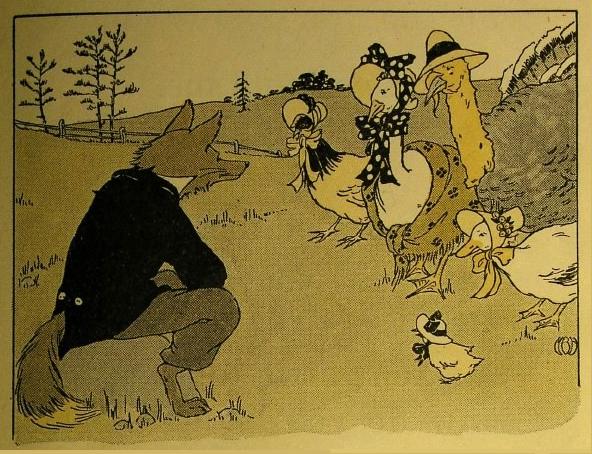
Our culture is rife with end-days beliefs. Since this is an idea clearly traceable to non-biblical origins, one might suppose that Fundamentalists would eschew it, but as we have seen the last few days, quite the opposite is true. Those who like Chicken Licken or Cocky Lockey go around declaring the end of all things clearly believe they will be rewarded for their special efforts. Instead, history will class them along with Goosey Loosey and Turkey Lurkey—those who are easily led. Perhaps the oddest result of this recent scare is that many people will not abandon the belief, but will simply push it off. We have another scheduled apocalypse for the end of 2012. Is it because we are now so closely connected by the umbilical Internet that our natural fears have become international?

The claims seem to be arriving thick and fast. I remember the end of the world scare of 1979 when I was in high school. There seemed to be a hiatus until 1999, and since then the dates have begun to bottleneck. What we are seeing is the role-playing of a Christian mythology, and herein is the real danger. A true believer can try to initiate the end times. We only need recall 9/11 to test that. Like most religions, Christianity has developed its own unique mythology that freely borrows elements from both other religions and popular culture. The apocalypse has a history, you know. Overall the false scare of the end of all things has been good for this blog. It was not without irony that I noticed my post for May 21 was number 666. But like the clock that is still ticking, this post will clear that hurdle, and the world will be around for a long time yet to come. Now I need to go and pull back the curtains, just to make sure, and keep an eye out for Foxy Loxy.


My Myth is Bigger

“Do some people still worship those gods?” That is the question my daughter asked on the way home from seeing Thor yesterday. I had to staunch my immediate “no,” and qualify it. Revival movements exist for most ancient religions, although it is difficult to gauge how serious they are. Then I open this morning’s paper and see that conservative Muslims have been attacking Copts (by definition conservative) in Egypt again. Religion foments hatred more effectively than just about any other aspect of culture because it concerns belief. Beliefs must be held with conviction, we are constantly reminded, and conviction means convincing others that you are correct. This is the devolution from mythology to religion.

Mythology is a meaning-seeking system of stories that are true but not factual. The modern religious (and scientific) mind has difficulty accepting something that is true and false at the same time. No one requires convincing that life harbors plenty of difficulties. Even in this softer, technologically sophisticated environment we’ve created for ourselves, disappointments and difficulties abound. Religions often promise paradises that they just can’t deliver, and so true believers often grow frustrated. The myths, however, remind us that struggle is part of existence even for gods. For every Thor there is a Loki. The simplistic nicety of one God padding a harsh world with a comfortable lining simply does not match reality. Mythology has an answer for that, an answer which is more honest than many “sophisticated” religions.

In ancient times it really did not matter what you believed. Gods don’t really care what you think of them as long as you provide what they require. Offer your sacrifices, do your duty, and get on with life. Religion today is a matter of correct mental assent. If in my head I agree that this particular deity is the only one, and I love that deity, all will be well. Funny thing is, even monotheistic religions can’t figure out that if there’s only one God than everybody is worshiping it (him, according to many) already. Better to kill off those who don’t agree, just to make sure. All gods, after all, demand sacrifice.

Even scientists honor the gods: the Thor Delta


The Ides of March

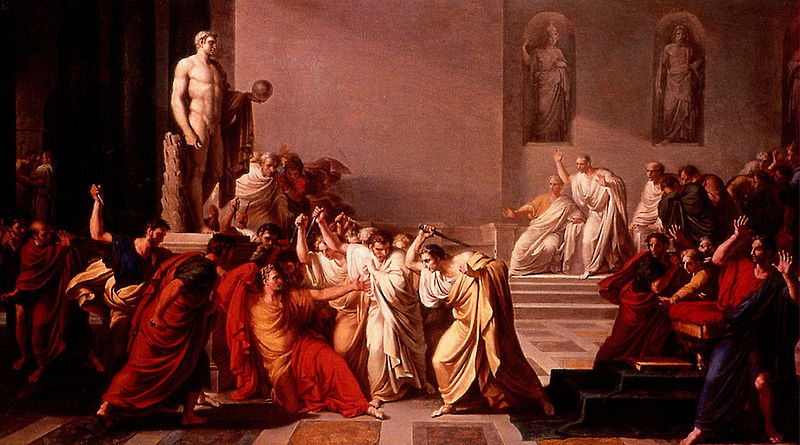
In the days of ancient Rome, politicians as well as plebeians feared the interference of the gods. Auspicious days were ignored, even by emperors, at their own peril. In my Mythology class the concept of hubris frequently emerges. Generally thought to be excessive pride, hubris can take many forms. Whenever a mere mortal strives for godhood, however innocently, it must be punished. Julius Caesar, declaring himself emperor, had to face the wrath of the gods. The ides of March kept in check the ambitions of the powerful. In a world where the political become too powerful, the very phases of the moon step in to restore balance.

The ides seem to have their origin in the date of the full moon. The month of March, named after the god Mars, featured a military parade on the ides. Then, as now, political power is simply the form of government backed by the military. The history of human unrest, especially notable since the American and French revolutions when the common people shouted, “Enough!”, is where might is shown not to equal right. Pontiffs and presidents, enamored of firepower and its blandishments, appear like Caesar before their populaces, confident in their wealth and military backing.

The concept of hubris might once again be meaningful to a culture under siege. As pundits and politicians make bids for places of abusive power, confident that there is no one above them, ethics are reformed in their own images. Have they not become their own gods? We the people bow to their vision of what should be. How many political leaders retire to uncertain futures because their own pensions have been slashed and healthcare diminished? Those who care for them in their dotage are the very children whose educational funds they’ve slashed. Hubris? It behooves all of us to beware the ides of March. Most, like Caesar, will ignore the warning and don the purple. Those who read, however, will not anger the gods.

Et tu, Brutus?


Myth of Jerusalem

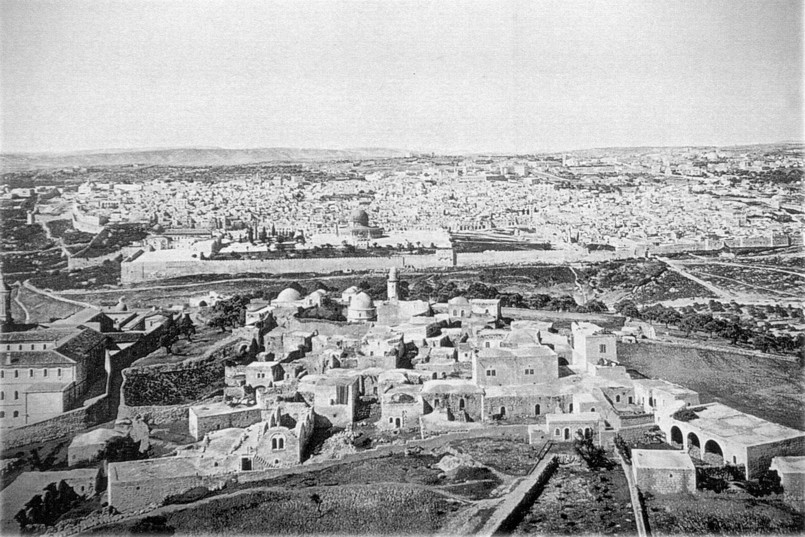
As I stood atop the Mount of Olives watching the sun set over Jerusalem several years ago, I had difficulty believing I was actually there. For a working class kid who’d only ever been to Canada before (and only because we lived not too far from Niagara Falls), this was a moment like a scene from the Bible itself. Jerusalem is a city of myth and dream, and it represents just how seriously mythology may be taken. A new book, Jerusalem, Jerusalem: How the Ancient City Ignited Our Modern World, by James Carroll, was reviewed in Sunday’s newspaper. I have not yet read the book myself, but a couple of lines from Tom Mackin’s review leapt out at me: “Jerusalem is as much a symbol as a reality. Because most Orthodox males spend their time studying the Torah, they are unemployed. Piety brings poverty.” This is editorializing with parsimony.

Those of us raised to believe that pursuit of the highest calling of humankind is that of seeking the divine often end up forced to live the consequences. This pursuit does not pay, unless one is willing to sell one’s soul to become a televangelist. Unemployment has a way of sharpening one’s focus. The message repeatedly heaped upon you by society is that you have nothing of value to contribute. True, religious founders often declare the ineffectual satisfaction of lucre, but then, most of them didn’t have a child to put through college. Having spent nine years after high school studying the Torah (and Prophets and Writings and documents written long before any of this), I see now what could not be seen then.

When I watched the sun set over Jerusalem with some friends, a stray cat wandered over, looking for affection. Or, more likely, food. I had some scraps that I shared with the hungry kitten when it unexpectedly bit my finger and scampered away. My friends, concerned for rabies or some other infection, rushed me down the Mount of Olives and into the Holy City seeking a holy pharmacy. Little did I know at the time that a myth was being enacted at the expense of my aching finger. Acts of kindness are rewarded with the hand that feeds being bitten. I had to come down from the mountain, earn a doctorate, and be dismissed by well-groomed evangelicals before I could finally see that the symbol was the same as reality. I need to read this book to restore my faith in mythology.

More and less than it seems


Jehovah’s Eden

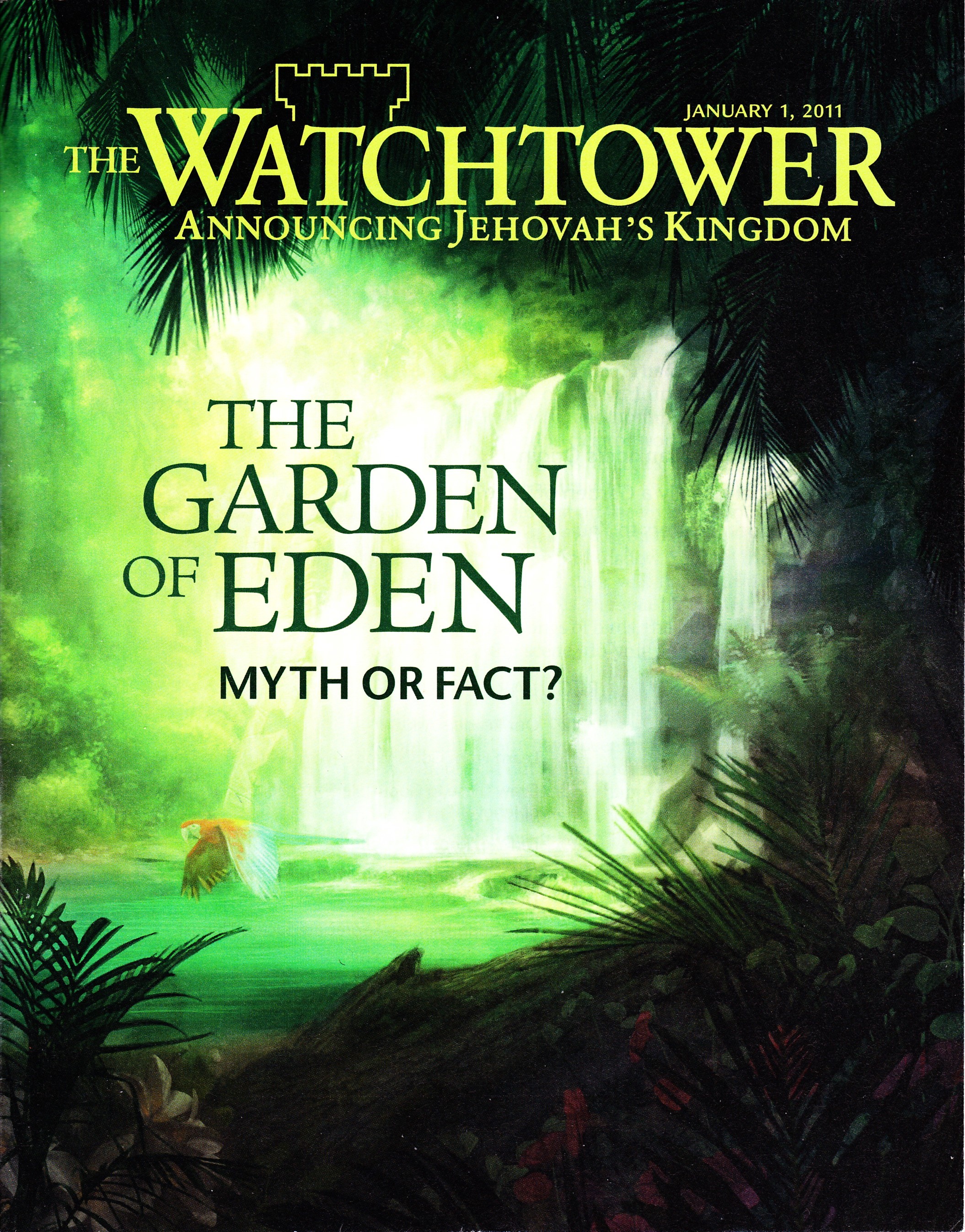
As a religious studies specialist, I inhabit a world where definitive answers are comparatively rare. It is clear that my assigned Jehovah’s Witnesses case-workers are not similarly constrained. While I was out earlier this week, they left a copy of the newest edition of the Watchtower for my edification. The cover shows an Edenic garden and bears the legend, “The Garden of Eden: Myth or Fact?” Now, I thought I knew the answer to that one. So I started to read. I learned that it was because of philosophers and their nonsense that people ceased to believe in Eden. Most people in world believe there was a paradisiacal garden, way back when, so it must be fact. I also learned that the reason we can’t find Eden today is that the Flood wiped it away. Seems a shame; with proper drainage it could be as dry as Aden and as rich as Dilmun.

The story in the magazine is set up as a series of objections raised as to why the Garden of Eden is rejected by skeptics. Literalist biblical answers to the objections are then offered. Ironically, one of the most obviously missing objections is that of geology. The article states that, prior to being destroyed by the flood, Eden would likely have suffered from the devastation of earthquakes. The area, it seems, is in the earthquake belt. Still, the garden was created “some 6,000 years ago,” despite what all those earthquake-toting geologists tell us. Somebody has forgotten to set their calendar back by a few billion years.

A more serious objection missing from the critique is that of mythology itself. Those who’ve studied the background to the story of Eden realize that most of the elements in the story are recycled myths known among the Mesopotamians. Special trees, crafty snakes, people being created from clay – all these are standard elements in Mesopotamian mythology that predates the Genesis creation accounts. If modern people understood that the point of mythology is to convey truths that are beyond the factual, perhaps we wouldn’t have such insistence that Eden is fact, despite the facts of science. The Garden of Eden: Myth or Fact? Clearly myth. And that rescues the story from the burden of bearing facts it was never intended to convey.