Naming the Dead

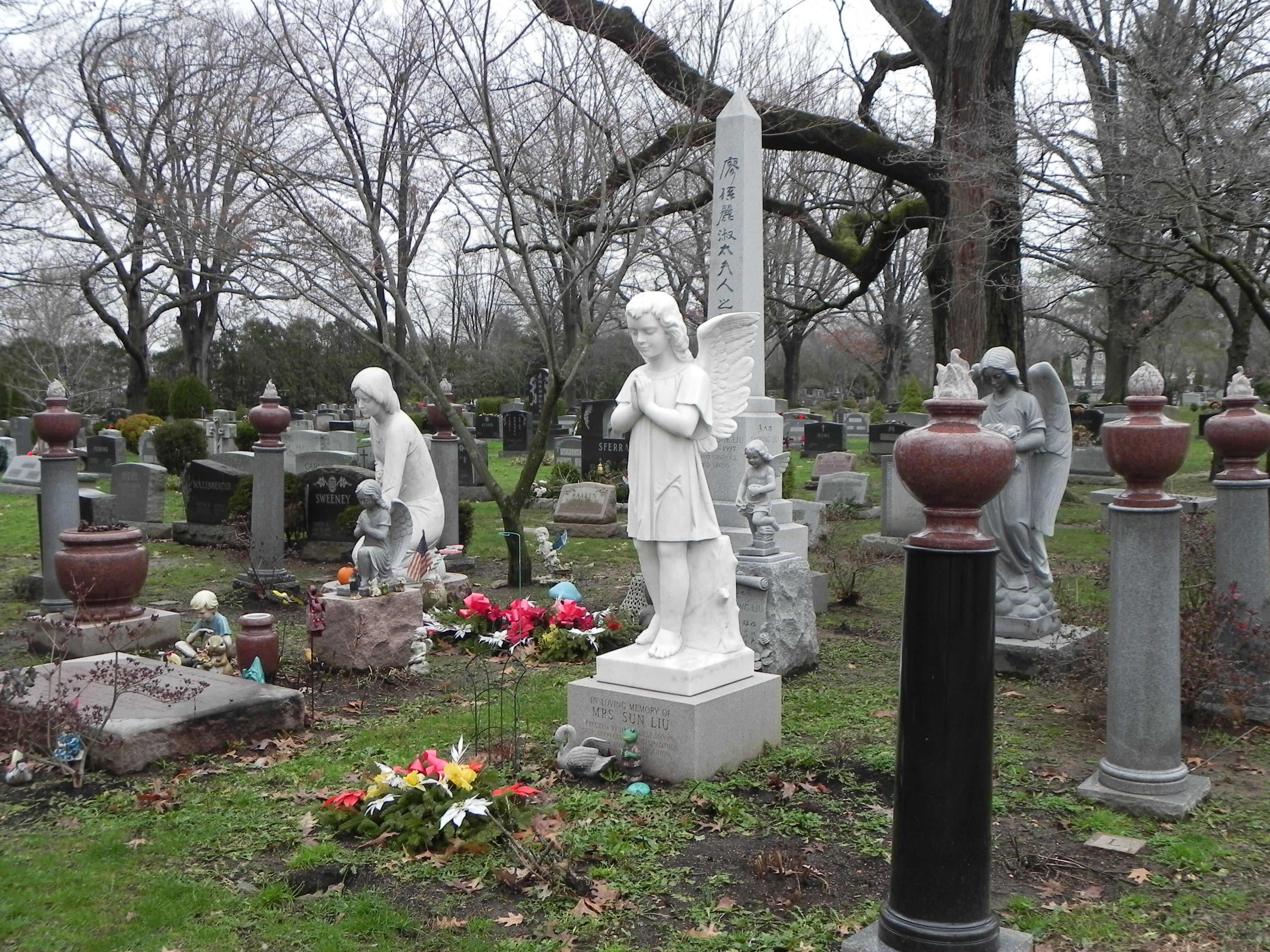
It probably just goes with the territory, but I’ve noticed something.  A big part of my job is searching for people on the internet.  (Academics, of course.)  Mostly these are folks I don’t know, some of them with very common names.  This presents special challenges, of course.  Every once in a while, though, you search for a name and pretty much every entry you find is an obituary.  I’m not talking about someone prominent who has died, but rather several people with the same name who’ve passed away.  The other day, after four or five pages of Google I found nobody alive.  That particular name wasn’t an “old fashioned” name either.  It could be (perhaps is) still a very common name.  It does get me pondering whether some names are “safer” than others.  Is anyone by this name still alive?

We place a lot of stock in our names.  Being the way that others get our attention, and identify us, they do have importance.  And many names are common—parents aren’t always the creative sort.  And the internet is a source of frustration when trying to narrow down a common name and attach it to someone you don’t already know.  Growing up, kids want to be like everyone else—no standing out in the herd.  “Wiggins,” where I grew up, was an unusual name.  We got teased for it quite a lot.  When my mother remarried, my brothers and I went by our stepfather’s common last name for a few years.  In seminary I decided to revert to my birth name—Wiggins.  I was wanting to do two things: reclaim my heritage, and stand out a little.  Even so, a web-search for Steve Wiggins will bring up at least four or five individuals not me, including an obituary or two.

Before the web, when trying to find a scholar you had to use letters.  (Or maybe the phone, but cold calls weren’t really professional). You’d send them a letter.  In a way, the web is a great equalizer.  But it favors those with names that are somewhat less common.  Some people change their names—performers and some authors do this to make their persona more to their liking—but this is a fraught activity.  I know from switching back to my birth name that the process is complex and if you try it after you’ve started to publish things it adds whole new layers of complications.  So I spend quite a bit of time searching for people who aren’t easily found.  Not infrequently I seem to be naming the dead.


Non-Saints

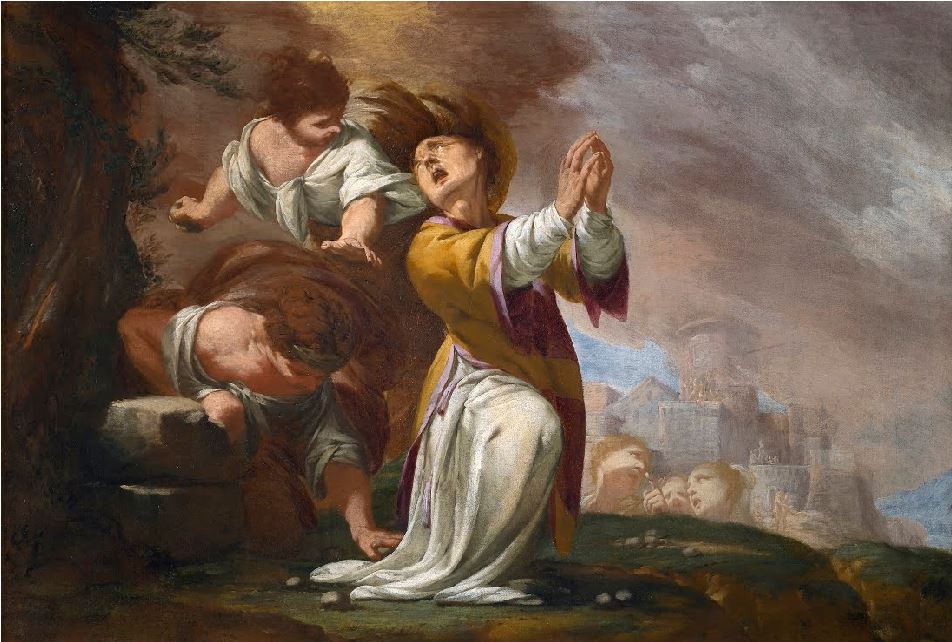
It was an epiphany.  My wife has, on more than one occasion, accused me of playing the martyr.  I know very well that I let other people step all over me.  The epiphany came when I was reading about Stephen’s martyrdom in the Acts of the Apostles (in the New Testament).  Unbidden by me, a memory—more of a distinct impression, a deeply planted feeling—arose.  I started reading the Bible at a young age.  The story of Stephen is disturbing to a child.  The thought of being stoned to death for saying what you believe is a species of horror.  The memory, or impression, was of my mother pointing out how good it would be to be like Stephen.  He is not technically my namesake, but since there were no male role models in my family, I subconsciously made the connection: Stephen the martyr, Steve the martyr.

Giovanni Battista Lucini – Martyrdom of St. Stephen, public domain. Source: https://artsandculture.google.com/asset/martyrdom-of-st-stephen/twGNCf3waLKDvA via Wikimedia Commons

It’s strange to realize this suddenly after half a century of not consciously recollecting it.  What we teach our children stays with them.  If we tell them that it’s good to die for your beliefs, well, we shouldn’t be surprised when they grow up with strong convictions.  (My brother tells me that Virgos think they’re always right and that’s why we’re stubborn; is it the stars or is it the Good Book?)  The Bible puts a positive spin on Stephen’s death.  Formal sainthood isn’t a biblical concept, but he dies forgiving his murderers.  It struck me there in the middle of a working day.  Some of my subconscious personality traits floated to the surface.

My deep desire to avoid Hell also formed my young outlook.  Although my beliefs have to be held accountable to what I’ve learned over decades of study, that fear never departs.  This too was planted in me before I had any real concept to absorb it.  When I grew old enough, the horror became academic, but nonetheless real for it.  I’d studied the history of Hell and I knew New Testament secrets.  To avoid the bad place, be like Stephen.  The dilemma is that as life goes on, we continue to learn.  Young parents don’t know as much as old ones do.  And since we have to teach our children not to run out into the street, or not eat that thing they found, we cast ourselves as The authority.  And that includes things religious.  If we live an examined life, we see shades of nuance where once there was only certainty.  And sometimes we have epiphanies.


Naming Names

I recently saw a story suggesting that Elon Musk was named after the leader of a Martian colony in an unpublished novel written by none other than Wernher von Braun.  Now, I don’t know if this is true or not, but it did get me to thinking about names.  The awesome responsibility that parents have in naming their kids.  I suppose many people don’t think much of it, but I remember asking, at a young age, why I was named “Steve.”  (There’s no “n” at the end, despite what people throughout my life have tried to “correct.”)  An old belief suggests that children might emulate those they’re named after.  Of course, some of us just can’t let things go.  Nobody else in my family was named “Steve,” and being very Protestant, I wasn’t named after no saint.  (Besides, he was Stephen.)

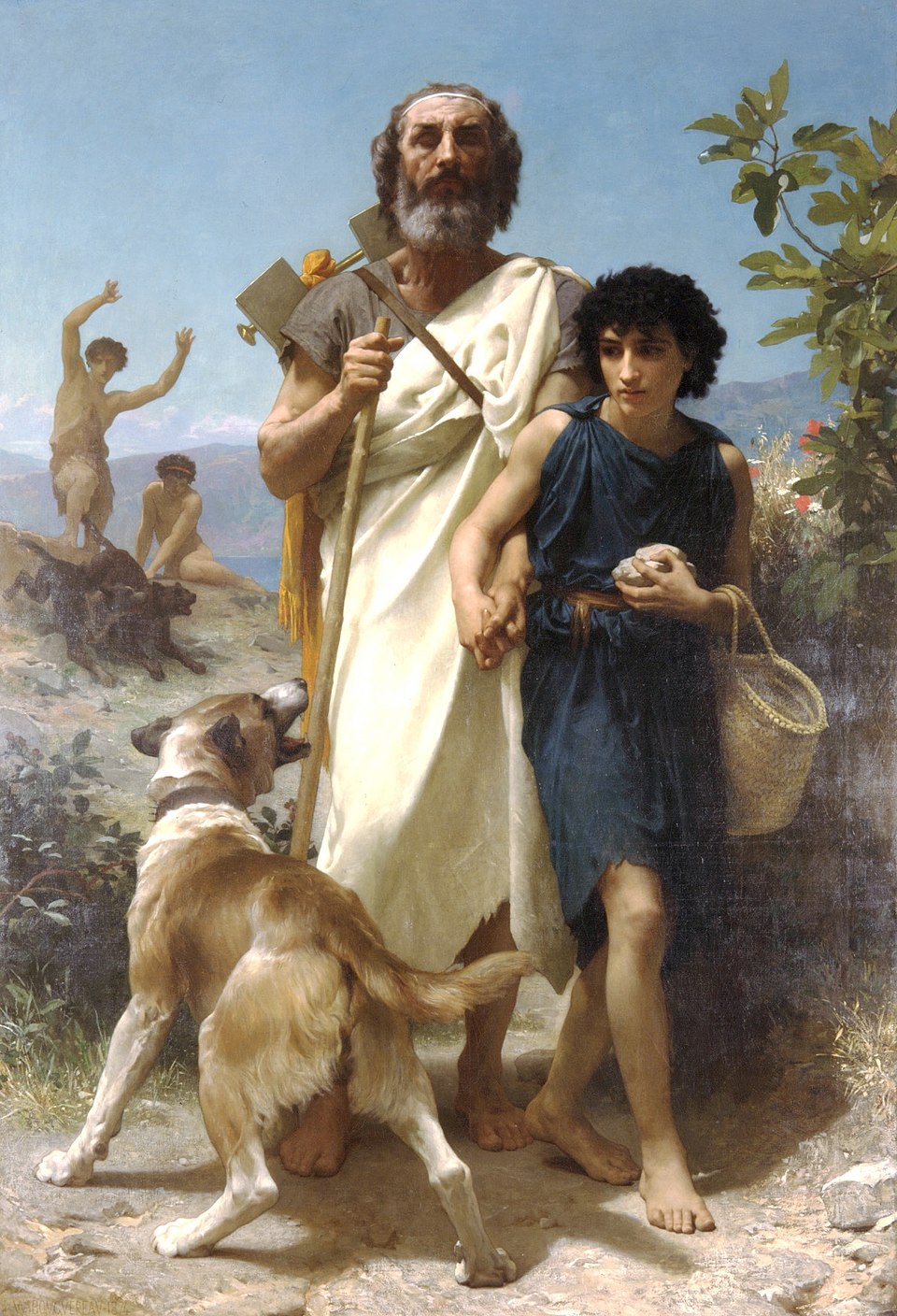
My mom told me a couple of things.  First of all, she wanted to name me after her father, Homer.  As an adult I think it might’ve been worth the childhood beatings I’d have to have taken, but my father vetoed it.  “Steve” was taken from a character in a Dick Tracy cartoon.  Mom liked the sound of it and my father didn’t object.  I’ve never read Dick Tracy—I’m not much of one for newspapers in general—but I did see that Warren Beatty movie back when it came out.  Once I tried to find a character named Steve in the cartoon line-up and I did find that there was a criminal by that name at one point.  Mom never told me this and I only found it as an adult, after I’d already decided against a life of crime.  But still, names sometimes inspire behaviors.  Influence choices.  Don’t they?

Homer and His Guide: Image credit: William-Adolphe Bouguereau, public domain, via Wikimedia Commons

Children named after their parents sometimes follow in their footsteps.  Or those named after a great person in history use that in their internal monologue as they try to attain similar things.  Now, I haven’t researched this—I’m just guessing here.  But for many years it was unusual to find a German boy named Adolf.  There are also names that are retired for someone being, say, the son of God.  Mom swore it was wrong to name a boy “Jesus,” even in admiration.  She didn’t know that the Anglicized Hebrew name was actually “Joshua,” common then as it is today.  Homer was a pagan, and I wondered how my great-grandparents came up with that name.  The best I can figure is that they were from upstate New York and there’s a town called Homer in Cortland County.  And I wonder if he ever asked his parents why he was named that way.