
The snow fountain from a fast-moving snow-plow is a thing of beauty. Unless you’re standing in the way. It’s been that way this winter. The sidewalk where I usually stand to wait for the bus is an arctic wasteland of waist-high snow piles shoved higher and higher by weary plow-drivers. So I stand in the road, near a streetlamp in winter, but this is not Narnia. I decided to try out New Jersey Transit’s highly anticipated “real time” bus locator—that way I know when to step out into the blowing wind to wait for the bus. After I’d been sprayed by passing cars and the occasional snow-plow for 20 minutes, I became convinced that “real time” is just academic; it is the time that the bus would arrive, were the bus actually on time, if it ever left the garage. Not that I blame the drivers—theirs is a thankless job that must lead to early retirement, or at least support the state mental hospitals.
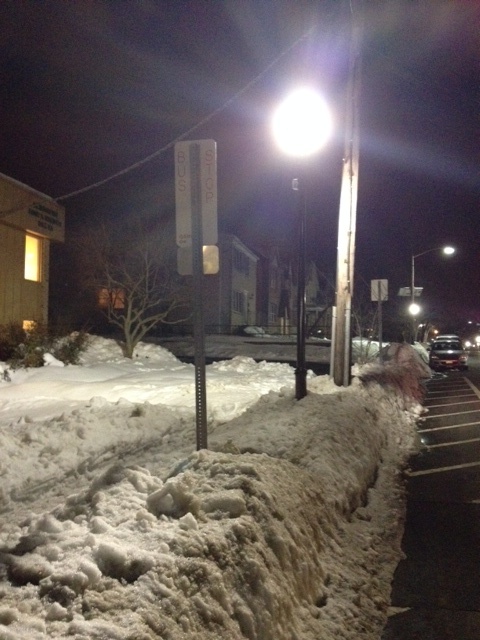
Where’s Mr. Tumnus?
Now, I’m not the only one to be standing in the street, a hooker for capitalism, under my lamppost, and some of the stops are completely snowed in. When three passengers ganged up on the driver for nearly missing them because they weren’t at the stop because of all the snow, I began to feel a bit uncomfortable. Springs can be wound too tightly, you know. All of this is an issue because businesses don’t want to close for inclement weather. During last week’s blizzard, I ended up taking the PATH train into New York, not knowing where it was going. A young lady was fretting—she was going to be late for work. An older African American gentleman comforted her. “Don’t worry. They don’t care if you come in late on a day like today. They just want you to show up.” They just want you to show up. His words have haunted me. Businesses want you to show up because that reinforces the power of capitalism. You don’t show and you don’t eat. You lose healthcare. Cobra is aptly named—you pay far more than unemployment’s pittance for monthly coverage. Obamacare is about thirty years too late.
Every time I see the Mayor of New York justifying his decision to keep schools open when literally nine inches of well-predicted snow fall on the city—dressed in his trendy action-figure jacket, just like Christie after Hurricane Sandy—I wonder who is really being cared for. The Mayor claims that of the over 1 million kids in the school system, a substantial proportion go to school so they can get their only hot meal of the day. Is this the purpose of schools? Is it not the humane duty of the largest city in the country to make sure fair opportunity is offered to those who wish to contribute? Their parents, he adds, as an aside, have to go to work. Why aren’t they being paid enough to feed their kids? Oh, there is a blizzard coming, and it’s one of our own making. As for me, it’s time to step back because I think I see another snow-plow coming.

 Steve A. Wiggins