Theological Cemetery

Implosion is a word frequently associated with demolition. Implosions are episodes where buildings collapse in upon themselves, in theory, harming no one on the outside. In 1992, as a starry-eyed, fresh Ph.D., I was hired by one of the then eleven Episcopal seminaries in the United States. Each had been around so long as to acquire a feel of almost biblical antiquity—something their governance models appear to reflect. Just over two decades later, the mythically wealthy Episcopal Church is watching its seminary structure implode. It’s not for want of funds, but from lack of will. With shrinking demand for clergy, some had to merge to maintain even their historic names. Others are effacing by degrees. The Nashotah House I was asked to leave was not the Nashotah House where I began my academic career.

General_Theological_Seminary_1890_crop

Within hours of hearing rumors of a mass firing of the faculty of the General Seminary—The General Seminary!—I received confirmations both personal and from the Huffington Post. Eight faculty who had concerns over the Dean committed the (in the Anglican world) unpardonable sin of requesting a meeting with the board of trustees. At Nashotah, I served two stints as a faculty representative to the board of trustees and my nightmares have taken on a different quality since. In the Episcopal system the Dean is also President. Not a whiff of democracy taints these hallowed halls. They claim the title Very Reverend, no matter how appropriate, and some, if they’ve ever read Acton, did it for instruction. There must be incredible power knowing that higher education is in crisis and that faculty with legitimate complaints are only setting themselves up for protracted purgatories of joblessness, should they question you. Trustees don’t want to be bothered with the “formation” that is happening within. O Captain! My Captain!

I am heartsick. This is how Christians treat their most highly educated and dedicated—no one takes a job at a seminary without knowing the risk it poses to a career. A more protracted dismissal of faculty, including yours truly, took place in Wisconsin almost a decade ago. I knew those who lost their jobs—fine scholars and decent human beings—as apocopated visions of a fictional future flashed before the credulous eyes of true believers. Where do discarded seminary faculty go? Back into the arms of Judas? I could not. I admire those wounded healers who returned to the cure of souls. We started, did we not?, with the best of intentions. The church, it seems, forgets that even faculty are human beings. “Enlighten,” the collect for education reads, “those who teach and those who learn, that, rejoicing in the knowledge of your truth, they may worship you and serve you from generation to generation.” Or, barring that, speak the truth, and lose their vocations.


Academic Freedom

Azusa Pacific University, 2013. Emmanuel Christian Seminary, 2012. Interdenominational Theological Center, 2012. University of Illinois, 2010. Carroll College, 2005. Nashotah House Episcopal Seminary, 2005. Unfortunately the list could go on and on. Academic institutions in the land of the free and the home of the brave dismissing faculty for saying or writing something that offended their doctrines. This is the land of my birth, and yet I’m still rocked by its permissiveness. That’s not permissiveness in that sense. I was latterly working on a paper called “the myth of academic freedom.” I know too many people for whom that myth has become a reality and all the while the governments, state and national, try to decide on more important issues such as whether or not to give children equal opportunity, our institutions crumble for petty points of pretentious pugilistic piety. Not only books may be banned, but those who potentially write them as well.

“You say you’re afraid for America,” Ellen Hopkins’s “Manifesto” suggests. Academics, of all people, should be afraid. Our society asks us to borrow thousands and thousands of dollars to become experts in some obscure topic only to release us from any possibility of finding employment that allows us to pay off said debt. “I don’t need no arms around me,” but I sure could use a podium in front of me. I am afraid for America. I am afraid for a nation that doesn’t defend its thinkers, instead following the wealthy to the peak of an unscalable Everest.

Academic freedom was once the guarantee that no question was disallowed, no thought anathema. We live in a time of pronounced conservative pushback, where those who feel threatened by knowledge persecute those who dare to think. Ironically in this situation many academics have become complacent. Having a place of your own, and the compunction not to make waves in this bathtub will allow your toy boat to float for many a year. Long enough to reach safe harbor. Beneath the surface shipwrecks lurk and books will never be written. Banned books are easiest to engineer at the aborted career stage. Even a pro-lifer knows that.

They don't write 'em like that anymore...

They don’t write ’em like that anymore…


Whether the Psalms

How about that weather? Changeable, isn’t it? I have spent a large part of the last few days going over the proofs for Weathering the Psalms, the book I wrote over a decade ago. While I’m excited with having the validation that comes with publication, I worry a bit about the changes that the last decade has brought. Although I live near some impressive libraries, my time is devoted to commuting and working and anyone who has tried to be a serious scholar as a weekend warrior only knows that it is unsustainable. One element that good research absolutely and uncompromisingly demands is time. When I began commuting into New York City three years ago, I taught myself to read on the bus. As someone who easily gets car-sick, this took an enormous effort, but it paid off in the number of books I’ve been able to finish. There are limits, however. Seriously research-oriented academic books do not fare well on a noisy commute or at early hours. As much as we scholars like to think our books are riveting, try reading them at 6 a.m. Perspective makes all the difference. In short, I had to leave the main body of the text of my book as it was a dozen years ago.

There is a lot of good information there. You notice things by laying out all the Psalms that refer to weather side by side. I can’t tell you those things here, since that’s the point of the book, but suffice it to say, I still agree that the material should be published. One of the main reasons is the change in worldview over the last several millennia. Although we like to complain about the weather, for most of us it is merely the inconvenience of being outdoors that brings it to focus. We spend our days behind computer screens, living a virtual reality. But when we have to trespass outdoors—weather awaits us. For those in the world of the Bible the opposite was true. Indoors was shelter, but not insulated like today’s homes. Most of the day would be spent outdoors, weather permitting. They knew a lot more about the practical aspects than we tend to. We, on the other hand, know the science but have tended to forget the experience.

IMG_1520

My book surveys a cross-section of the biblical worldview (the Psalms) for what it tells us about the weather in ancient thought. I suspect others have begun to explore this since I wrote my humble contribution to the discussion. Today I would have done it very differently, but Weathering the Psalms was written by a scholar isolated in a seminary, literally and figuratively in the woods. The fact that other scholars had noticed the weather now and again showed me that the task, though halting, was necessary. Rereading it is like a time-capsule. These were the thoughts of a younger man, employed full-time in a kind of academic setting. Hopeful that the next job would be worthy of tenure. Believing that there was a next job. But the weather is changeable. Indeed, we know it is unpredictable. Despite its archaic cast, I look forward to Weathering the Psalms and hope that it inspires others who are isolated to keep up the effort. Even if it’s raining.


Equal Measure

Far off in the woods of Wisconsin sits a seminary. In these woods, I’m told, wolves eat little girls. That seminary has for decades distinguished itself by its stance against women priests. I knew of, and respectfully disagreed with this policy when I was hired to teach there in 1992. I didn’t make waves, but rollers have a way of finding you nevertheless. It doesn’t take much to capsize an unstable boat. Within my first year a student challenged me, “Did your life change forever on July 29, 1974?” I was unfamiliar with the code and asked what happened on that date, vaguely thinking perhaps it had something to do with the run-up to the Bicentennial. On that date, it turns out, Barbara Harris was ordained among the first female priests (the Philadelphia Eleven) in the Episcopal Church in the United States. I suppose my life should’ve changed—for the better—but I was a Methodist at the time. Perhaps my life changed then, for I was 12, but that change had little to do with what the student intended. Or maybe everything. I wouldn’t have had a problem with a woman priest in any case. In 1989, Harris was elected bishop, the first woman to hold that title in the Anglican communion. Just three years later I found myself in the lion’s den.

When I asked male students what their problem was with women priests the answer invariably pointed to three factors: Jesus had no women disciples (wrong, according to a certain sacred book they claim to have revered), the Roman Catholic church did not ordain women, and the Church of England did not ordain women. The problem with backing and filling is that filling always overtakes backing. By 1994 the Church of England was ordaining women. Yesterday, at long last, the General Synod approved of female bishops. Welcome to the twentieth century. Now only Rome stands in the way. I am confident, despite the certitude in the eyes of my Nashotah interlocutor, that Rome will eventually come around. I may not live to see it, but justice will be served.

Photo credit: ChrisO, Wiki Commons

Photo credit: ChrisO, Wiki Commons

There is good evidence that most religions, prior to the monotheistic triad, had women priests. Something about the singularity of deity seems to have contraindicated a protective mother in the psyche of male clergy. Ironically, the same day that the C of E decided to do what was right, Oxford University Press’s blog ran a post on Mormon women bloggers. Among the newest monotheistic faiths, like the traditions before it, the Church of Jesus Christ of Latter Day Saints has not recognized the sacerdotal role of women, leading some to be excommunicated for speaking out. We are told that God is a jealous god. This is, after all, the wilderness. After yesterday’s long-awaited decision the woods seem a little less dense, and the threat of the wolves may have been exaggerated all along. If religions would only see people as people all our lives might just change forever.


Psalm 151b

sinead-oconnor-take-me-to-churchI can’t claim to know much about Sinéad O’Connor. When she did her Saturday Night Live act a few years back, I remember the outrage among several Nashotah House students muttering unholy threats. Not that they were Catholic, having *ahem* celibacy issues, but they objected to a picture of Pope John Paul II, known colloquially as “J2P2,” being torn up. This symbolic gesture lost her, on campus anyway, about a dozen fans. I had nearly forgotten the Irish bardess when my wife sent me an NPR story on her recent song, “Take Me to Church.” I was immediately struck by the lyrics that, to this old Psalter reader, sounded very much like a Psalm. The lyrics, while some will certainly disagree, resonant very strongly with the self-confession that permeates the hymnal of ancient Israel. Not that O’Connor has suddenly become a proper Catholic, but she has entered the band of David.

Many popular artists over the years, I would contend, have struck that familiar chord. Anyone who reads the Psalms at face value will find it hard to miss the angst of the writer who tries to do right only to find that s/he needs someone to “take them to church.” Music is the confessional of the soul. Psalms can be a most secular book. The way some biblical scholars like to explain it is that the Torah and the prophets are God speaking to (read “commanding”) people, and Psalms are the opportunity of people to speak their mind to the divine. This might explain the otherwise inexcusable anger that pours out in invective which, if we’re honest, we’ll have to admit to having felt from time to time.

The line we draw sharply between sacred and secular is attenuated in the Psalms. In fact, it is in any honest religion. When religions present themselves as strictly lived as if people could be truly righteous while others should be excluded, trouble is on the horizon. Pictures get torn up, and the “faithful” grow angry. I know few who would argue that humans are perfect just the way we are, yet, for the most part, we try to do what is right. The standards any religion proffers are too high, and we are bound to fail. Perhaps the saving grace, if I may borrow a bit of religious language, is that even the secular can write effective psalms along the way.


Private Religion

Some things are best left private. I don’t know what possessed me to request a car maintenance visit first thing in the morning on a Saturday. I mean, the dealership is a 45-minute drive, and there are few places less inspiring than an automotive waiting room. The coffee is weak and tepid. Usually the television’s blaring some nonsense, and even before eight on a Saturday morning there are plenty of other people around. But there’s free wifi. Well, not exactly free when I get a glimpse at the bill. So I think perhaps I can write a blog post while I’m waiting. How do you write about religion with people watching? It’s the bashful bladder of the soul. Back in my Nashotah House days, when I was required to preach, I couldn’t write a sermon with wife or daughter in the room. I couldn’t practice it in front of family. For some things, you just need to be alone.

So, as I’m trying to write this innocuous little homily, someone pulls up next to me on the single table in the waiting room. It’s like standing at a row of exposed urinals. Trying not to be obvious, I turn my screen a little more in my direction, and less in his. Still, there are people sitting behind me and who says that the sense of being stared at is a myth? Although communal worship is often a public event, at least in a crowd of like-minded believers, the experience of the divine, however defined, is deeply personal. It seems that there’s only one soul per customer. We don’t know what a soul is, but it shouldn’t feel lonely, because we don’t know what consciousness is either. Still, trying to perform here is trickier than I’d imagined. I might just have to finish this at home.

photo-19 copyIt used to be a truism that two topics are not for public discussion: religion and politics. Such fightin’ words only lead to tears and wars. The magazine rack next to me is insipid with Sports Illustrated, Bowhunting, and AutoSuccess for the guys, Real Weddings, Good Housekeeping, and Martha Stewart Weddings for the ladies. The only book I brought has an overtly religious title. What was I thinking? Next time maybe I’ll bring Zen and the Art of Motorcycle Maintenance. I climb into the newly serviced car to drive home. Are those docile bubble lights on the car behind me? I’m still being watched. All the way I never even touch 55, because driving is one of those situations where non posse non peccare truly does apply. When the cruiser finally turns off, I read New Jersey State Park Police on the side of the car. Some thoughts, like religion, are best left private.


Vive la compagnie

I’m cleaning out the closet at work. I doubt that either J. C. L. Gibson or Nicolas Wyatt envisioned my future thus. Edinburgh University was exotic and optimistic, designed to make my curriculum vitae stand out. More like standing out in the rain. “We have to ask what’s best for the company,” I’m told. I’m not a proud person, but earning a Ph.D. to take out the trash seems like a strange allocation of resources to me. “Take one for the team,” we’re told, since we’re part of a company and when the company prospers, we prosper. On a pro-rated scale, of course. It’s not that taking out the trash is beneath me. I willingly do it at home; my first career aspiration was to be a janitor. Only now I’m dressed in work clothes for the City. And I spent nine years in higher education to get here.

Lately I’ve been pondering how this “for the company” trope is a one-way street. Knowing in advance that Nashotah House could be a Hindenburg career for a liberal, I gave it the old college try. Writing about 90 pages of class notes a week for my first year of teaching, attending mandatory chapel twice a day, I tried not to step on any toes. Even though the theology over which I was forced to chew smelled a bit like this garbage I am now carrying, I made no fuss. Don’t rock the boat, especially if it’s a garbage scow. Take one for the team. After fourteen years of not making a fuss, I was summarily dismissed. I found out, literally, how hard it is to get a job as a garbage man.

Portrait of a livelihood about to end.

Portrait of a livelihood about to end.

Eventually I landed a job at Gorgias Press. Neither prestigious nor lucrative, it was a job and I had already proven I could take one for the team. Positions evaporate around here like dribbles from a spilled cup of coffee. So I found myself at Routledge, jetting around the country, spending long hours on the bus, being told to think what was best for the company. Only don’t expect the company to do the same for you. Stoking egos, I tried to get people with qualifications I could match to write a book for me. At Nashotah House I played on the football team (don’t laugh, it’s true). We had only one game a year, against our rival—the now defunct Seabury-Western in Chicago. During practice one day, one of my students blocked me with a forearm to the chin that left me on my back, seeing stars. I can take one for the team. But sometimes the company needs someone to take out the garbage. Ask the guy with a doctorate in rubbish removal. He always thinks about the company.


Hotel Nowhere

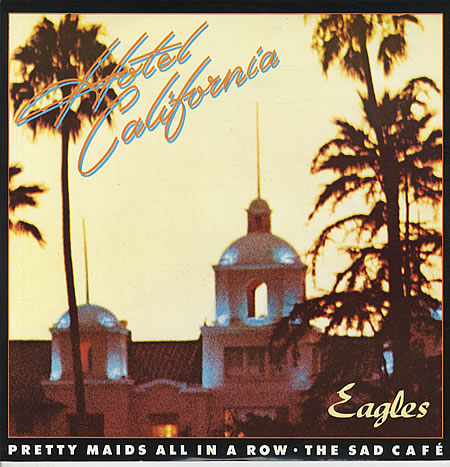
HotelCalifornia1977. I was in junior high school and I wore my hair long. I hadn’t yet donned the cross that I carried through my high school years with a constant fear of Hell on my back, but I did listen to the radio. The haunting song “Hotel California,” by the Eagles, scared me. There was something lurking there—something undefined and yet compelling. Cults were in the news, and after the People’s Temple suicide a year later, we were all pretty well convinced that the song was based on fact of some sort. Religious analysts concluded that the song referred to everything from the Antichrist (“they just can’t kill the beast”) to a New Religious Movement that had taken over a western mission (“we haven’t had that spirit here since 1969”). Members of the Eagles, when asked, said their intentions were to expose the darkness of the music industry as idealistic hippies came of age and realized, yes, it’s just business. Still, I shivered.

Nashotah House used to be on the frontier. Although it is only 30 miles from Milwaukee, it could still feel terribly isolated less than two decades after the Eagles had flown. Indeed, there were sotto voce suggestions that “Hotel California” should be the official seminary hymn. “You can check out any time you like, but you can never leave.” The nights could be very dark in the Wisconsin woods, and for those attuned to some of the more honest aspects of a religion based on exclusion this didn’t seem too far to stretch. “Hotel California” came forcefully back to mind reading about Oneiric Hotel in Wired. (Mentioning Wired makes me look smart.) The Oneiric Hotel is a lucid-dreaming device by artist Julijonas Urbonas, the kind of thing Wired finds newsworthy. The story mentions that Urbonas’s previous project—called Euthanasia Coaster—was designed to kill its passengers.

Now my mind checks into Bates Motel. I know Psycho is set in Arizona, but the desert southwest is terra incognita to an easterner, and besides, it’s just a metaphor. It looks like California to me. I saw Psycho as a college student, and was rather afraid to watch it while at Nashotah House. Indeed, the night I moved to campus I found a dog-eared script from a play about a murderous maid at the seminary left on my coffee table. “This could be Heaven or this could be Hell.” Psycho, it is asserted, was based on the macabre case of sociopathic killer Ed Gein who had roamed these self-same woods of Wisconsin, and who had died less than a decade earlier just down the road in Madison. There was, I knew, a psychiatric hospital just across the small lake that the campus bordered. We don’t call them cults anymore, but we all know what we’re talking about. There are indeed places that you can never check out, even if you leave.


Lord Have Mercer

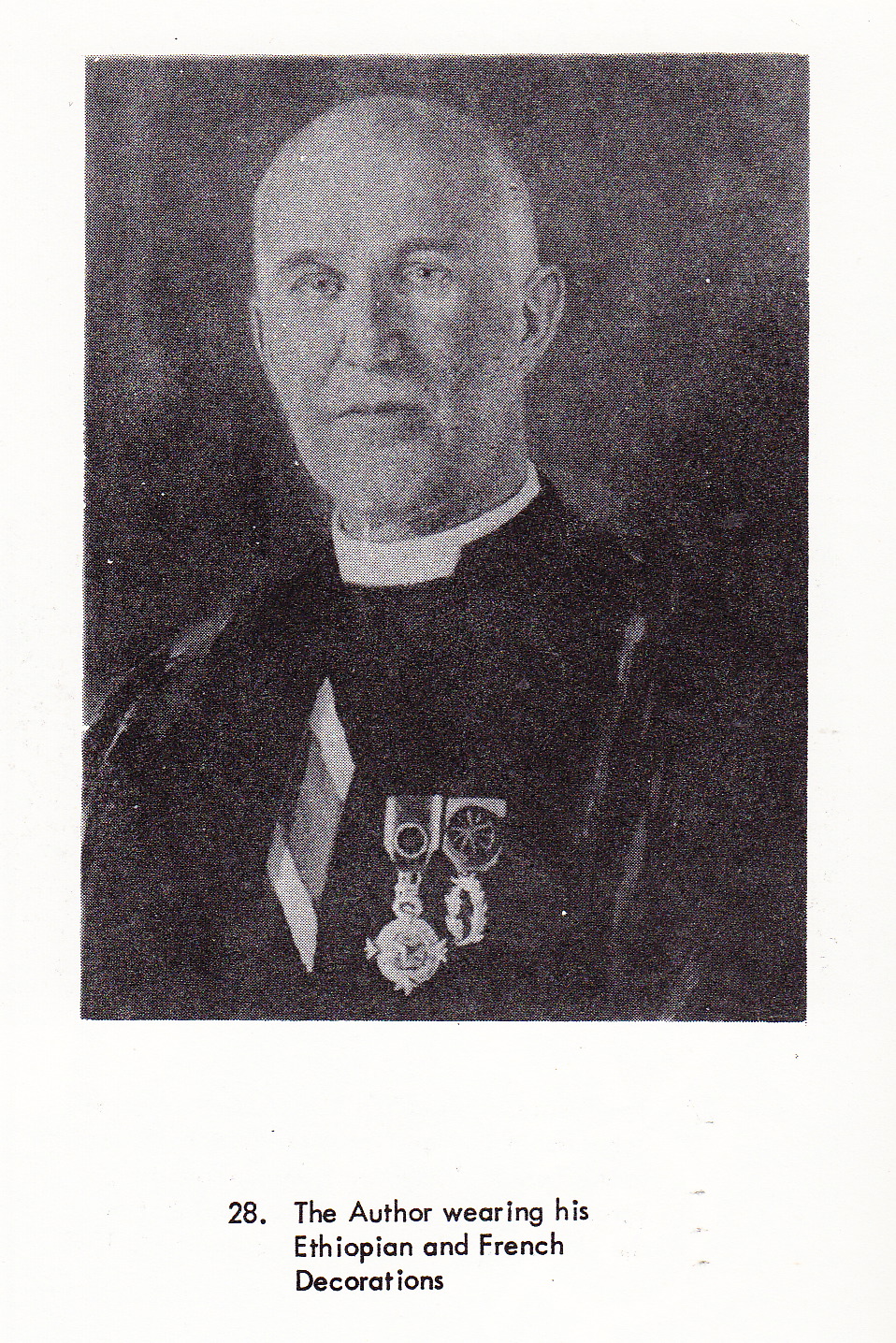
Samuel Alfred Browne Mercer was an Assyriologist who failed to establish an academic legacy.  I quickly learned, when consulting his The Tell El-Amarna Tablets that his work was considered inferior, and that it would not have been published, had it not been for his wealthy wife.  Not a very ringing endorsement for a guy who wrote a grammar of Assyrian.  It was a little odd, then, in the library at Nashotah House when Mr. Tolan was clearing out shelf space, that he asked me if I would like a copy of Mercer’s autobiography.  The library had two and, well, needed more shelf space.  I thanked him for the slim volume and took it home to read.  The little book is self-published, and it had been typed with a sans serif font, something rare for a published volume in those days.  It had been annotated by hand, I presume by the author.  And it told a most interesting story.
 
Mercer, I was to learn, had been a student at Nashotah House.  Now, in my days at the seminary the internet had not yet made it that far into the backwoods of Wisconsin.  We eventually did get a dial-up connection and we thought we were so twenty-first century.  In any case, Nashotah House, when it finally established a website, did nothing so vainglorious as to list noted alumni or faculty.  The only two I ever heard praised were Gustaf Unonius and Michael Ramsey, the former for being the first graduate, and the latter as an adjunct instructor (and, incidentally, the Archbishop of Canterbury).  Samuel A. B. Mercer, as he styled himself, would not likely have raised even a unibrow.  He had written a couple of books on a learned topic, but had failed to impress.  Reading his life story was somewhat intimate, however.  He tells of riding on the top of a train in Russia to get from city to city with little money, and of visiting Ethiopia where, it seems, he was convinced the Ark of the Covenant might just be.  Had I not studied Akkadian and read about Assyriology, I might not have ever come across his name.  We were, however, touching at an odd juncture.
 
Not even rating a Wikipedia article, Mercer disappears into obscurity after his informal accounting of his life.  He apparently had a wealthy wife (home life is not the focus of his brief story), and a lasting desire to spend time in Kush.  Although it has been years since I’ve read his story, I recall that he did have a life of adventure and a little intrigue.  Maybe we were spiritual kin after all, for we each tried and failed to make an impression on an ivory tower world where those who tarry too long at Nashotah are deemed among the least important of academics.  After all, even the relatively comprehensive list of institutions of higher education on the University of Texas website (and Texas and Nashotah have a lasting connection) fails to mention the seminary.  Its little library, nevertheless, does hold evidence of a lost life-story or two.

SABMercer


Fleeting Meaning

Just a year before I had been unceremoniously dismissed from a fourteen-year teaching job at Nashotah House, devastating everything I thought I knew. I’d found a temporary job at the University of Wisconsin, Oshkosh and the head of the department encouraged us to go see the mandala that some Buddhist monks were constructing in Oshkosh one weekend. My family came up and we breathlessly watched as the orange-draped, shaven monks meticulously tapped brightly colored sand into an intricate pattern of incredible beauty. My daughter, quite young at the time, wondered what they would do with it when they were done. We’d been told, in the department, that the sand would be safely flushed into a local waterway, as Buddhism teaches about the transitory nature of life. My daughter was upset at the thought of such a nice piece of art being destroyed. But that’s part of the point of a mandala. As the Buddhists say, too many people concentrate on the hand pointing at the moon rather than on the moon itself.

Photo credit: Kamal Ratna Tuladhar, WikiCommons

Photo credit: Kamal Ratna Tuladhar, WikiCommons

I’m no expert in Buddhism. It is a complex way of thinking, and, like many religious systems, it is not unified into one particular thought-structure. Nevertheless, one of the main teachings of Buddhism is that life is, pardon the crass translation, suffering. We experience desire and we will continue to experience desire until we die. Then we’re reborn to experience desire all over again. Those who are enlightened may break out of this system into Nirvana, or a kind of non-existence where desire can no longer afflict us. There is an appeal to this way of thinking in a universe that science tell us will eventually burn out so that we’re all just a bunch of cinders in infinite, but expanding space. Almost Buddhist in its conceptualization, actually.

So when this morning’s New Jersey Star-Ledger had a front-page, below-the-fold, story of a mandala incident in Jersey City, I had to read. This entire past week, three monks have worked on a mandala at City Hall in Jersey City, for up to ten hours a day. Having watched this work, I know it can be backbreaking, and it is incredibly meticulous. Yesterday, after four days of work, a three-year old, while his mother was distracted, jumped on and ruined the mandala. A mayor’s aide, horrified, had to show the monks what had happened. A mandala is all about the transitory nature of life. Its fleeting moments are, after all, suddenly swept away. Despite the drama, the monks repaired the mandala and one of them quipped that perhaps the child’s action had underscored the lesson the mandala was intended to teach. Indeed. Many religions recognize that children know something about life that most adults simply forget. It’s the moon that’s important, not the hand.


Pair of Docs

I’m not planning any trips anytime soon, but if I were I’d give Pair of Docs Travel a look. The founders of Pair of Docs are friends of mine who’ve also landed in that black hole of academia: hired, established, dismissed, forgotten. In my days at Nashotah House, eager to escape, I talked to Nelia Beth and Joel about an adjunct teaching stint at Carroll College (now Carroll University) in Waukesha, Wisconsin. They arranged for a couple of classes for me, and even wished me luck as they knew they were being forced out. Not for performance or lack of competence, but because of politics. Shortly after their moorings were thwarted, I too was cast off without an anchor. I’ve been adrift ever since. Last week, however, I had a letter from my old colleagues letting me know that they’ve gone into the travel agent business. Give them a chance—I’m sure you’ll be pleased.

An unspoken moral dimension is at work in higher education. Actually, the dimension is immoral. Those who embark on the track of higher education are culled from their teenage years by their teachers and professors. Having taught quite a long time myself, I know that a promising student stands out like a glowing rock in the sand. You know that this person is sharp enough to go far. You encourage, you advise, you try to open doors. The doctorate is awarded and before the silly academic hood touches those untried shoulders, you’ve just created another beggar to line the streets. A tin cup might be a better emblem of higher education than a diploma. At least it’s more useful.

IMG_0595

Universities keep cranking out Ph.D.s because they need the money graduate students bring to the programs. The graduate students, for the last two decades at least, have been the sacrificial victims. I have to wonder about the future of a society that takes those deemed most able by their many teachers and demoralizes them to the point of endless depression and penury. In some cultures teachers are treated like the high-achievers that they actually are. The future rests with them, not entrepreneurs. Not that you would be able to tell the difference from our sluggish economy. Seems to me that maybe we don’t have enough slaves to row this galley. And if you’re wanting to book a place on a ship or plane, maybe it would be considered a form of social justice to give Pair of Docs a try. If I could afford to travel, I know I would.


Inhabit Eden

InhabitingEdenNashotah House, although now a name recognized by only a handful of mostly disgruntled Episcopalians, used to have a name in higher education. Real intellectuals found their way there—scholars who saw that spiritual life did not equal brain-death. Of course, for some that may be the case. While I was on the faculty there, one of the student wives (it is a fully residential campus) was castigated by others for going through the garbage and pulling out discarded recyclables. “How extreme can you get?” they’d say in disbelief. Not extreme enough, I’d say. I just finished reading Patricia K. Tull’s Inhabiting Eden: Christians, the Bible, and the Ecological Crisis. Tull, a retired seminary professor from Louisville Presbyterian, offers a much-needed perspective on the real apocalypse we’re bringing upon ourselves, often justified by the Bible. Many Fundamentalist sects declare the world to be short-lived and for our “domination” because of Genesis. Tull, a biblical scholar, challenges that myopic view of Genesis and suggests that the Bible commends care for our planet. Christians, she indicates, should lead the way in caring for our ailing planet.

Although it is written for the average educated reader, this is not an easy book. It is distressing to read about the many ways that we have blindly (and that’s only putting it in the least culpable language imaginable) set about destroying our environment. Misreading “have dominion over” as “dominate,” Christians have often seen their prerogative as mastery, frequently cruel, over all others. Pollution? The world’s going to end soon, so let’s get the rapture out of here—and throw your waste on those left behind. Economic inequality? You’ll always have the poor, so exploit them. Agri-business? People cannot live by bread alone, so let’s make a huge, exploitative business out of growing crops and processing them to death. Ironically, and not in the good sense, much of this thinking comes from “Christian” entrepreneurs, people who see nothing wrong with making a few extra bucks on the way off the planet. We fry ourselves with our greenhouse gasses and poison ourselves with our drinking water. It’s all gonna burn.

Tull gives the lie to all these misplaced concepts that some claim are biblical. Sure, the Bible is no environmentalist handbook, but then, things weren’t so extreme a couple of millennia ago. We hadn’t yet developed the technology truly to dominate, radiate, and eradicate this planet. Besides, the early Christians figured they’d be long gone a couple hundred centuries ago. It should’ve been clear, even as the Enlightenment lit up, that we were in this for the long haul. And we’ve got only one home. The ethical implications fall thick and fast—those who destroy the environment are worse than war criminals, for it is the entire planet that pays the price for such thoughtless greed. Many turn their noses up at the humble street person collecting bottles and cans for a few pennies. It may not be their motivation to clean up the planet, but then, saints who are willing to dig through the garbage are seldom recognized for what they are.


Weathering Qohelet

Over the weekend I finished the initial formatting of Weathering the Psalms, my long-suffering book on the weather terminology in the Psalter. While I’ll have to give it another going over, a strange cocktail of feelings has come over me in the process. Scholars age quickly. The time between putting that last period on that last sentence and the book showing up in a few dozen hands is generally over a year. You feel outdated. Not only that, but this book was finished, for all practical purposes, a dozen years ago. In this world of endless, indeed, almost insane academic publishing, many books and even more articles have appeared that I should have read, pondered deeply, and incorporated into my work. That, however, is a luxury reserved for those society deems fit to place in colleges, universities, and seminaries. The predominant feeling, apart from relief, was a kind of melancholy, however. The book represents a world that no longer exists. Indeed, a young scholar who no longer exists.

From the day I started teaching at Nashotah House in 1992 (or even before), I knew it would be a limited-time engagement. The then dean, interviewing me, knew that I was too liberal to fit the medieval theology then current (and still current) at the school. As a teacher of the “Old Testament,” however, the damage I might do was deemed minimal. I wrote several articles on my beloved Ugaritic, but no job interviews came. Those who’d sussed the system suggested I try publishing biblical material—after all, that’s where the jobs are. (Ha!) So I began. Weathering the Psalms took several years to research and write in scholarly isolation. I began rising at 4 a.m. to find the time to do the writing. Most of the book was written between four and six in the morning. Yes, it’s rough. And tentative. A young scholar unsure of himself. Now I’m an old man even more unsure of himself. Still, there are insights in that outdated tome that I hope some will find worth their time.

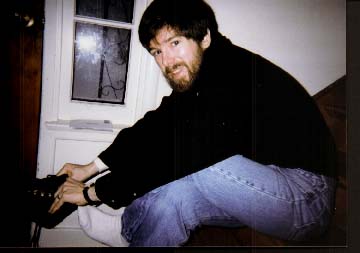
I have a photograph of myself that my daughter took at the time. I was putting on my boots to go shovel some snow. The face in the photograph is young. Optimistic, even. I was facing the weather. I’ve come to realize that all photographs are lies. They capture an instant of time that has already vanished. In my case, a livelihood. A dream that was shredded on the plains of some theologian’s ideological Somme. Winters seem to have become much harsher since then. Colleagues who’ve found jobs prosper while the rest of us fight against nightmares and that sense that all we ever tried to do was, in the end, vanity. One of the questions in the study, The Bible in American Life is, which is your favorite book of the Bible? Mine has always been Ecclesiastes. And even as I make final preparations to ship my manuscript to Wipf and Stock, I know that the preacher is right: there is nothing new under the sun.

snowman


Weathering the Psalms

Book contracts make me happy. In the case of an academic out of water, they are rare. Few people care what a PhD has to say unless s/he has a university appointment to back him or her up. Still, I wrote Weathering the Psalms while I was fully employed at Nashotah House. I carved the time out by waking at 4 a.m. to do my writing (a practice that has stayed with me ever since), and from 1995 to 2000, the bulk of the book slowly emerged. The day I was terminated at Nashotah I was working on a revision of the manuscript, a bit uncertain of what direction to go. After the trauma of that day, I couldn’t face my little project without the anxiety of association tainting the effort. It seemed to represent my failures in finding the job I knew I was meant to do. Such potent reminders soon weary even those of us who awake well before the sun.

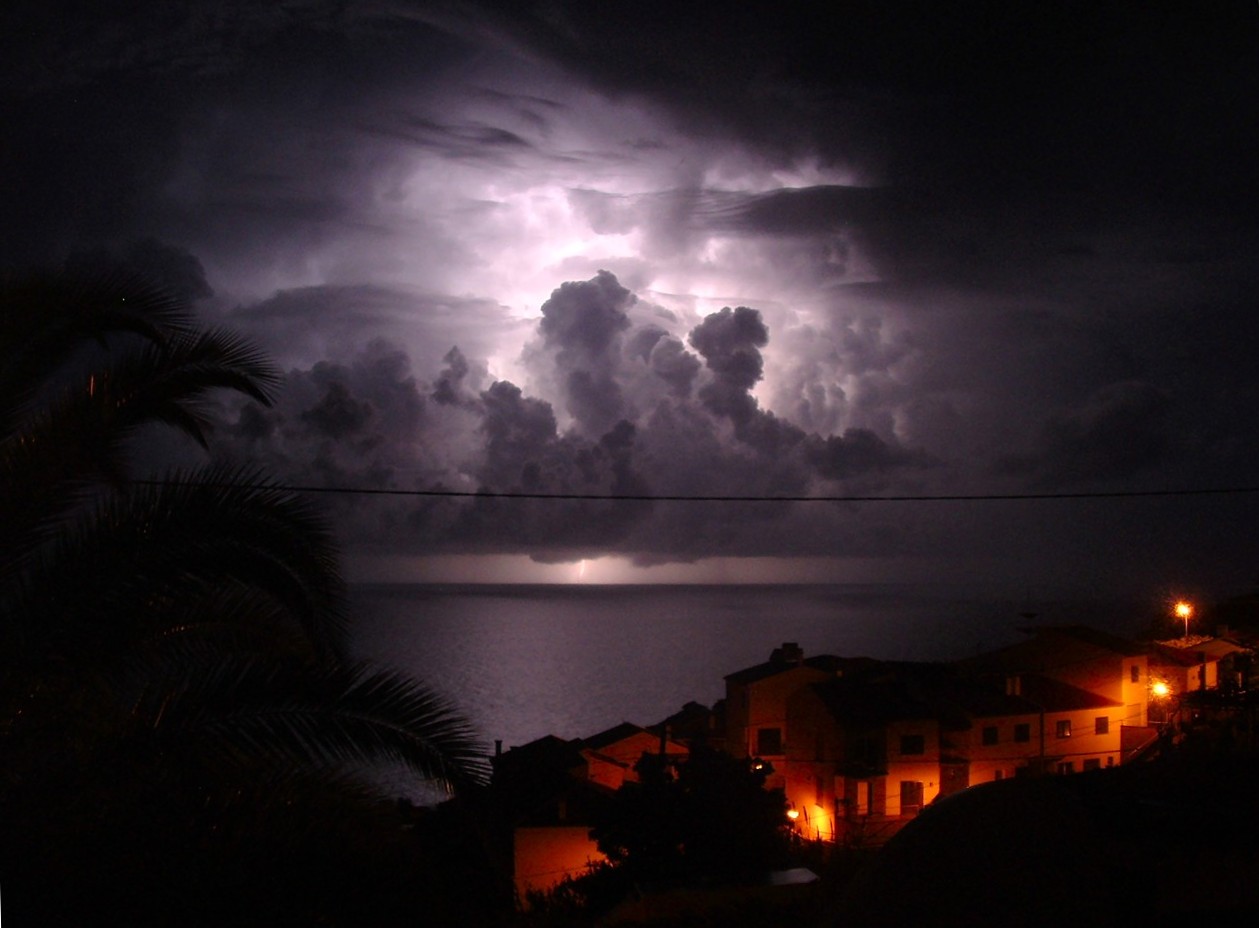
Working in isolation, I had noticed that the weather is a very common motif in the Psalms. The problem is, any attempt to fit the evidence into an overarching scheme is artificial. I undertook a survey of all the weather references in the Psalms, and explained them as scientifically as a layman could. The result was not the smoothest reading, nor was it tied together with a strong thesis, but it was important. Although I have not been in a position to keep up with the research such a project requires, I’ve not seen anything similar emerge. The weather, however, still happens. And people still blame it on the divine. In ancient times there was no natural world. What we call nature was actively directed by the divine. The weather is probably only the most obvious example. We all know the phrase “everything happens for a reason.” This encapsulates the biblical view of the weather. This winter with its series of storms has reminded me of this, forcefully.

Photo credit: Don Amaro, wiki commons

Photo credit: Don Amaro, wiki commons

Ironically, editors started to show interest in the project only after I’d abandoned hope of ever getting it published. It was the fruit of my despair. It represented several years of my academic life, but, like its creator, it was growing older. So last week when a contract landed on my desk from Wipf and Stock, a profound happiness settled in. A sense of completion. I am not in a position to update the contents, but at least one academic publishing house sees the worth in the manuscript that came from so much personal experience. A decade is a long gestation period. I suppose if I had to write the book today it would reflect much more the experience of world-weariness that comes from not ever finding the job you know you were meant to do. Nevertheless, it is a small offering to the deity of the weather, and I am glad that, come next year, others will be able to share in my struggles to make sense of that world.


Dead Certain

One look frightens me above all others. I have spent probably too many hours watching horror movies late at night, and I’ve seen actors—talented and otherwise—projecting the look of fear. It is a temporary thrill, soon banished by a more mundane reality. The look that frightens me above all others, however, is that of certainty. Well I remember it planted, etched, chiseled on the face of a man who believed without question that his duty was to deprive me of a career. I have seen it on faces devoid of any human emotion, but with a surfeit of self-righteousness. I was reminded of this when my wife pointed me to an article in the New York Times blog entitled “The Dangers of Certainty: A Lesson from Auschwitz,” by Simon Critchley. In this piece Critchley recounts watching Jacob Bronowski’s “The Ascent of Man” as a child. He focuses on the episode wherein Bronowski describes the danger of certainty, which often eclipses wonder when science alone is understood to be the basis of knowledge. And we have gone forty years further down that road.

Bronowski, in the clip provided by Critchley, describes how unwavering certainty led to the holocaust. It is a moving and poignant scene; indeed, the only one I remember from the episode as I watched it along with my classmates in the required humanities module at Grove City College. Bronowski, who had relatives murdered at Auschwitz, walks into the pond where their ashes were flushed, a man in a suit and good shoes, oblivious to the rational, and reaches down to touch whatever remains of the millions who died there. The scene has stayed in my head for over thirty years.

As an undergraduate I was certain. I knew the unflinching truths taught by my rock-solid faith. After four years as a religion major I had become more circumspect. Seminary found me still pretty well convinced, although much more temperately so. The doctorate, which required more intensive work than all the previous years combined, convinced me of how little I knew. I went to Nashotah House full of questions, and my goal was to bring my students, many of them very certain, to that human point of unknowing. We need to live with a question mark before we can be truly human. Curiosity is one of the more endearing traits people possess. Certainty disallows curiosity—questioning becomes the devil’s tool and honesty is the farthest thing from God that one might attain. In this era of easy certainty I often see a look on the faces of those in power that frightens me. I need to be reminded, along with Bronowski, that when shoes become more of a concern than human beings, we’ve already gone too far.

800px-Nazi_Holocaust_by_bullets_-_Jewish_mass_grave_near_Zolochiv,_west_Ukraine