Flighty Thoughts

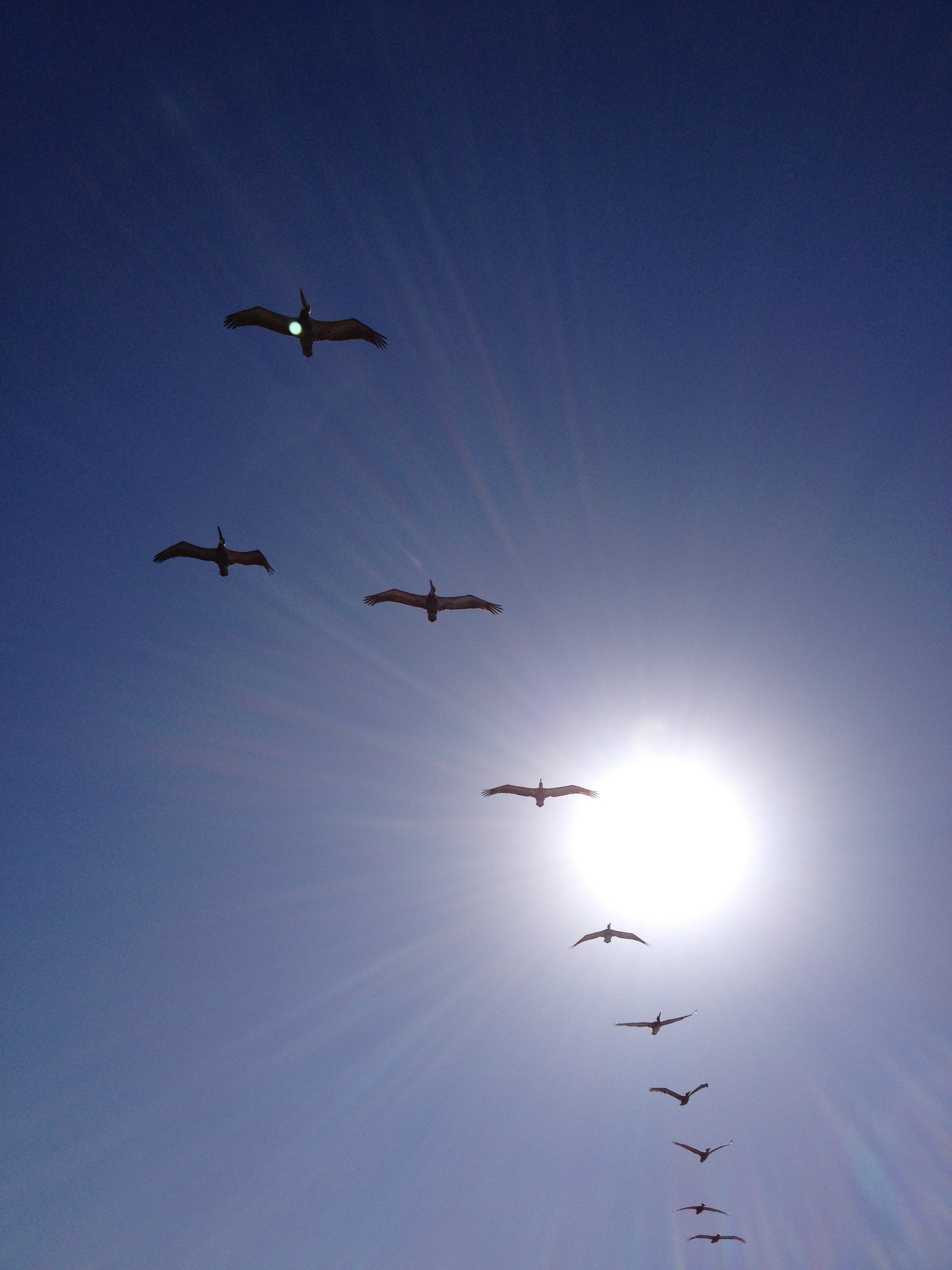
Life, domain, kingdom, phylum, class, order, family, genus, species.  My apologies if I’m bringing back bad memories of high school biology, but I’m doing an experiment.  It has to do with the class level.  (I have to confess that this has become more complicated since high school since there are a lot more of them than I remembered.)  Specifically, I was thinking of those of us with backbones (which seems to exclude many congressional Republicans these days), namely fish, amphibian, reptile, bird, and mammal.  I read somewhere—I can’t recall where; I seem to be reading all the time—that the only other order of animals that human beings see every single day, apart from other mammals, is birds.  I suppose some of this depends on location, but it seems to be true even for landlubbers who don’t work in zoos.  I’ve been watching, however, to see if I do see birds every day.

I work in an office with two windows, one facing south and another facing west.  There are trees outside the west window and during spring, summer, and fall birds are abundant.  Yes, I see them every day.  Winter, however, is a bit more dicey.  Songbirds famously either migrate or retreat into more sheltered places for the season.  The other day, during a cold snap, I got to thinking I hadn’t seen any birds at all.  The only thing that rescued the allegation was that I remembered I saw some birds that I startled out on my jog, before it was fully daylight.  The rest of the day I keep my peripheral vision on alert for any motion outside my windows.  Late in the day I saw a crow dart between two trees.  I do see birds most days, but I’ll be keeping a watch this winter for birdless days.

It’s not that I want to prove this author wrong—I can’t even remember who s/he was.  No, this experiment is driven by pure, naked, curiosity.  I’m pretty sure that the author wasn’t writing in a literalist tone (that’s more of a problem with my wiring).  The point that was being made is that people pay special attention to birds since they are so prevalent in our world.  They’ve adapted from conditions of arctic to desert and they can get around many obstacles that might prove troublesome to our class, even bats.  I know that I rarely see amphibians, reptiles, or fish.  Certainly not on a daily basis.  So birds do seem to be top of the class, and, so far, I have seen at least one every day since reading this from a fellow mammal.


House Spiders

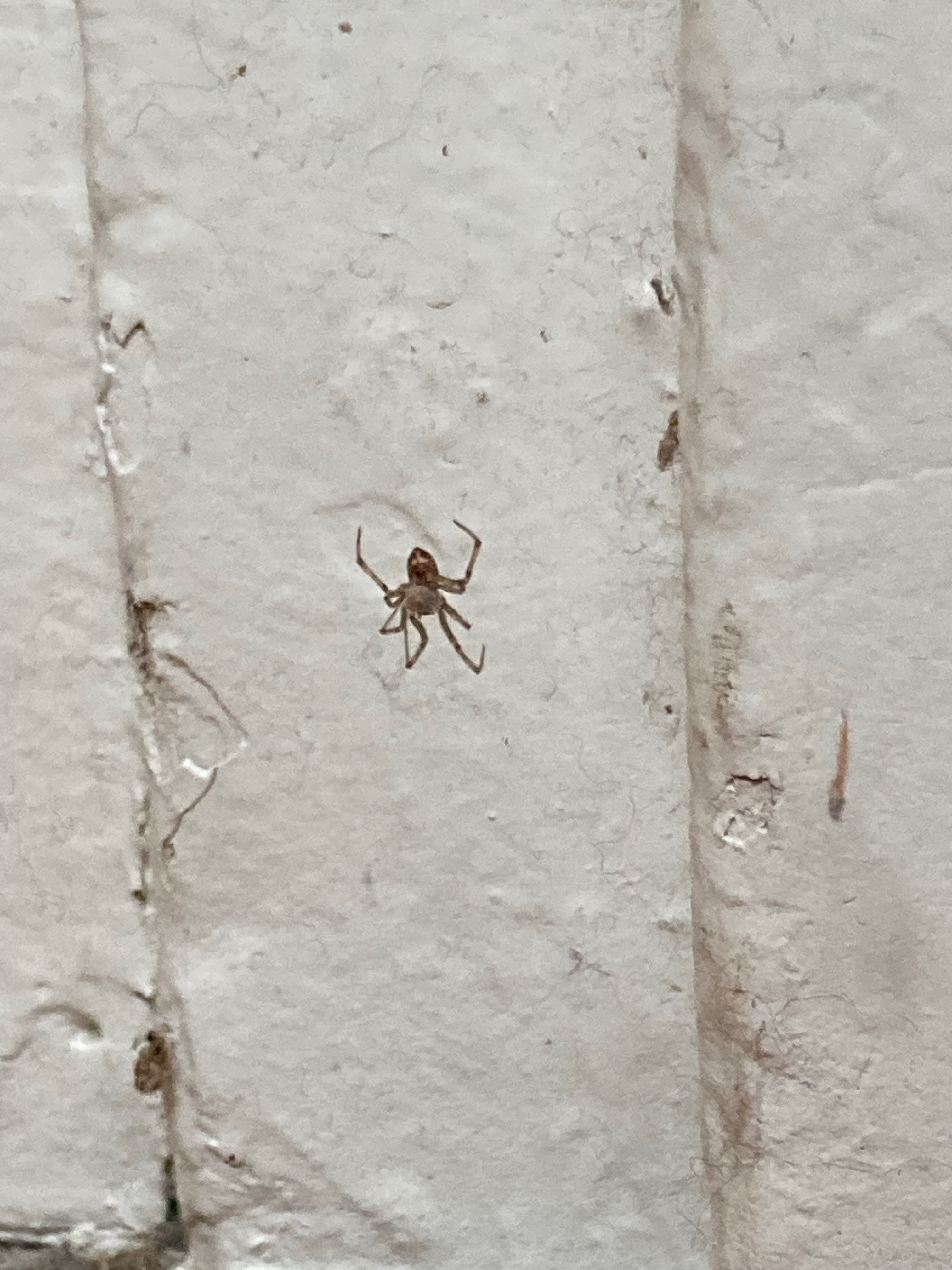
I give them names, the spiders who choose to live in our house.  That’s how I named Henry, shown in the photo.  I grew up with an almost debilitating arachnophobia, and as with most of my fears, worked hard to overcome it.  So when a spider moves in, I let them stay.  Unless they’re too big.  Here’s where it becomes interesting.  Like quantum mechanics, there seems to be an arbitrary point when something is “too big” for the rules to apply.  What is that tipping point?  The other day I bumbled into the kitchen early to get some water, having given up coffee years ago.  There was a spider that I could see from across the room.  It was very large.  It’s a sign of how much I’ve overcome my phobia that I was able to walk around the counter and to the sink to fill up.  I kept a wary eye across the room, however, in case Octavian made any funny moves.

The spider held very still, as arachnids often do when they know they’ve been spotted.  I sometimes wonder if they know how scary they are to other creatures.  I searched around for a jar large enough to catch and release, without pinching any legs, and crept over.  Turns out Octavian was faster than I am first thing in the morning.  And, honestly, I was still recovering from a vaccine that had knocked me out the day before.  At least I can blame that.  I wonder if that’s one of the reasons fear of spiders is so widespread—they’re fast.  Or is it something inherently menacing about those eight legs?  I’ve never experienced any kind of octopus phobia, so I can’t think that it’s merely the number.  The jointed legs?  That seem disproportionate to the body size?  Whatever it is, days later I’m still cautious in the kitchen.

I have a great appreciation for spiders.  I don’t like to be startled by them, but otherwise, if they keep their distance, I’m fine with them.  I do wonder what they think, living in a world of giants.  Some insects, in the same size range as arachnids, seem ignorant of the human threat.  It’s not unusual for an ant to find its way inside and walk right up your foot and leg, oblivious to the danger.  They seem to have no fear.  Spiders, however, do.  They’re very good at running and hiding.  I like to think they know our house is generally a safe space, until the vacuum cleaner comes out.  When I’m behind it, I always try to give Henry and his friends a chance to get out of the way.


October’s Poetry

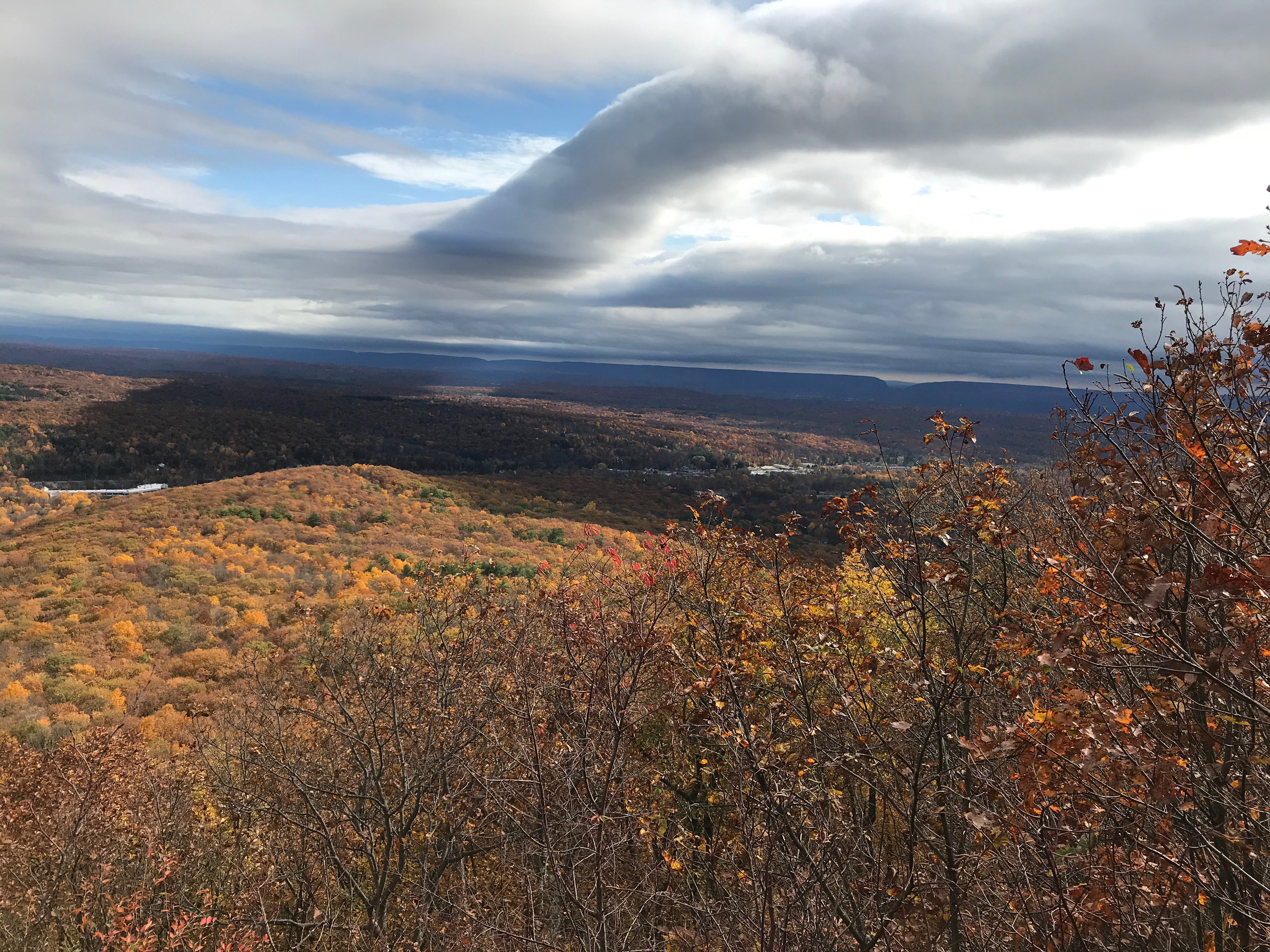
October is a beautiful, melancholy time of year.  Edgar Allan Poe died on October 7.  Two years ago today, my mother died.  This was brought home to me forcefully yesterday.  A colleague had invited me to address her class at Princeton Theological Seminary about Weathering the Psalms.  I had vacation days that have to be used up or lost, so I took the day off.  My wife and I drove to Princeton, a town we know well.  When we lived in Somerville, about 15 miles north of there, we’d visit Princeton not infrequently.  I wasn’t really familiar with the seminary grounds, however.  My colleague informed me that her class, on the Princeton Farminary (where a program in ecology and theology is housed) would be meeting in a barn so I should dress appropriately for the weather.  A cold front had come through, so I went for the tweed and turtleneck combo.

So we set off on a beautiful drive along the Delaware.  The leaves aren’t at peak yet, but there was plenty of fall color as we navigated our way toward Frenchtown, where there is a bridge across the river.  The GPS also told us this was the way to go.  On River Road, still in Pennsylvania, a flagman refused to let us on the bridge, although the signs did not say it was closed.  He impassively waved us on.  The GPS insisted we “return to the route.”  We soon found out why.  The next crossing is seven miles further down, along winding roads with a 25 mph speed limit.  The drive was beautiful, but suddenly I was going to be late for my appointment.  The new route added 45 minutes to the estimated travel time.  After uttering some choice words about unplanned bridge closures on a road where there are only a very few ways to emulate Washington’s crossing, we eventually arrived.

The weather beautiful, if a little chilly, the class decided to meet outdoors.  I hadn’t forgotten how much I love teaching.  It was brought back to me with force.  With the trees reminding us that winter is not far off, and the students eagerly asking questions, I felt at home for the first time in many years.  It was a temporary shelter, I knew, but it was a kind of personal homecoming.  Carefully avoiding the Frenchtown bridge, we drove north, crossing to River Road at Milford.  If the GPS had known that to go forward you sometimes need to go backward, it would’ve sent us to Milford that morning.  We arrived home tired but glowing from a day out of the ordinary.  As I put my tweed away that evening I found a pencil from the the funeral home where I last saw my mother in the pocket.  It had been the last time I’d worn this jacket, two years before.  October is a beautiful, melancholy time of year. 


O Deer

I spent my tween and majority of my teen years in a house that backed up to some rather extensive woods.  We lived on the edge of town.  I spent quite a bit of time wandering among the trees and deer were never an unusual sight.  Opening day of deer season was a literal school holiday, but I was never a hunter.  Since we’ve killed off many deer predators, cars may be their biggest natural enemies these days.  I recently found deer droppings in the yard of my current house, right next to the newly mown down hosta.  I see deer all the time while out jogging.  A few years back I even saw a doe giving birth in a secluded glen along the trail.  I guess we do kind of live at the edge of town here too, but the woods don’t begin until across the road, and the jogging trail, and they aren’t as extensive as those I grew up with.

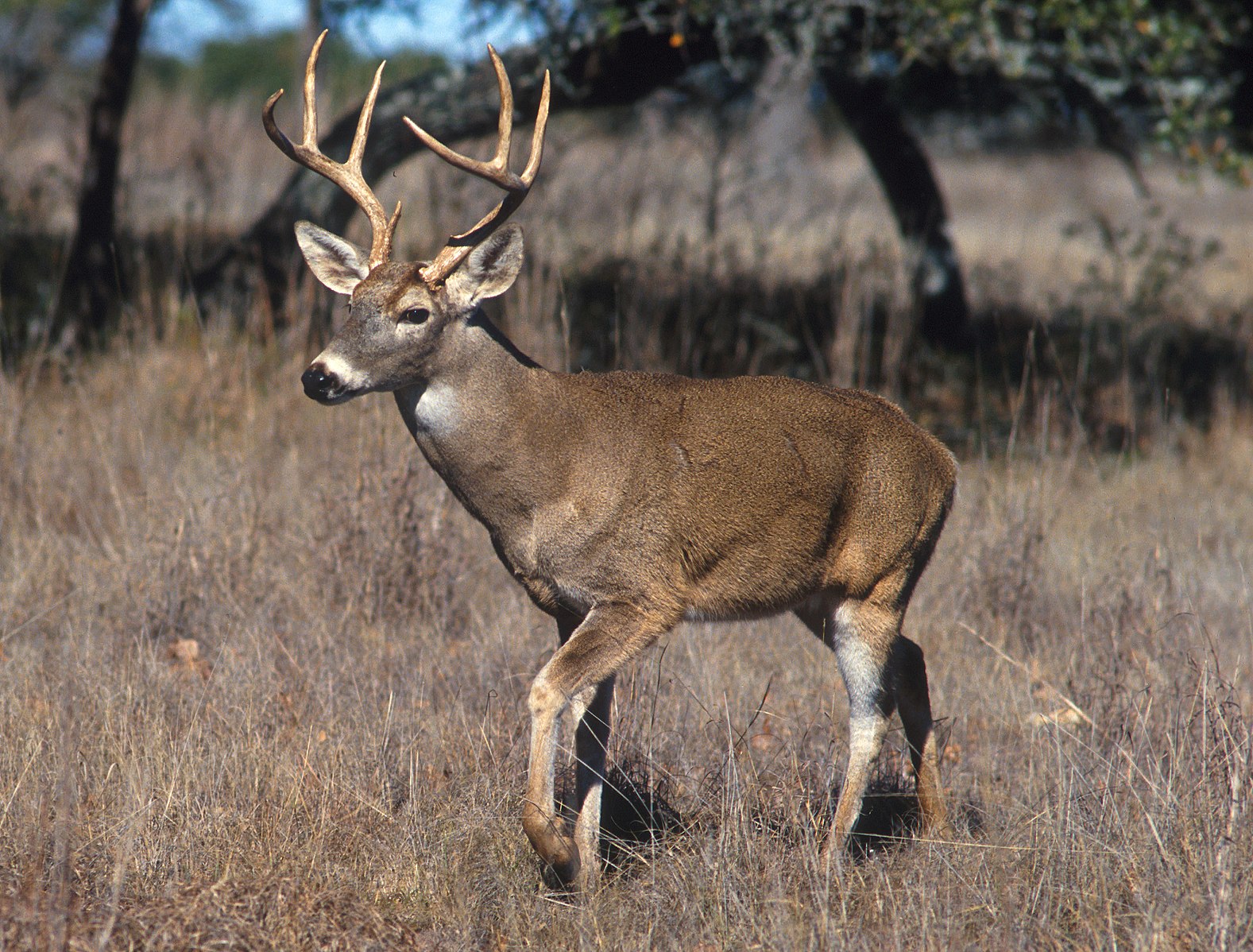
I’ve started to notice that deer are creatures of habit.  These are the common white-tails that predominate around here.  I often see them in the same area while on my crepuscular jog, sometimes multiple days in a row.  The other day I saw a young buck up on its hind legs to reach some low leaves on a tree.  I’d never seen a deer do that before.  There’s a spot a little further on where a doe and her two, sometimes three, fawns hang out.  I’ve seen them several times.  Recently they were in their accustomed place and when I reached the end of the trail and headed back, they were still there.  These deer aren’t too skittish around people and sometimes I can get quite close before they bolt off.

This particular day, however, I learned something.  Deer can vocalize.  I knew that elk did, but I’d never heard a white-tailed say anything.  Even when giving birth.  I thought they were completely silent, and as an introvert I tend to understand.  Coming back, the doe had crossed the trail and two fawns were on the other side as I approached.  The young ones ducked into the trees and one of them called for its mother.  I almost stopped in my tracks.  I didn’t know that white-tails vocalized.  I had to consult the internet when I got home just to make sure I had actually heard what I thought I had.  I’m at an age where motivating myself to get out and jog at first light isn’t always easy.  But when nature makes it a learning opportunity, well count me in.  

Image credit: USDA photo by Scott Bauer, public domain, via Wikimedia Commons

Pseudo-documentary

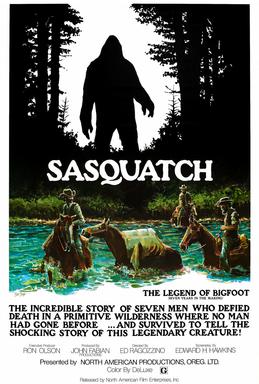
Documentaries have an honored place in visual education.  Of course, there are some who want to spice them up a bit with dramatic re-enactments.  These are sometimes called docudramas.  Then there are those who fake the documentary style to make mockumentaries, generally as a species of comedy.  Sasquatch: The Legend of Bigfoot is none of these.  A pseudo-documentary, it comes with “The Beast” collection I’ve mentioned before a time or two (mainly to excuse my bizarre viewing).  It presents itself as a documentary, but pretty much everything about it is fake.  The only real people are Roger Patterson—the movie shows his famous Bigfoot film—and perhaps the miners at Ape Canyon.  Oh, and Teddy Roosevelt.  In any case, the movie follows seven men as they make their way into remote British Columbia where “the computer” tells them sasquatch likely live.

The pseudoscience is easily enough spotted early on, but the movie never lets up its purported intent to bring low-budget proof back from the wilderness.  I’m not sure how the actual wildlife footage was captured.  In this slow-paced horror film there is quite a bit of actual nature thrown in.  I also wondered how they managed to get a cougar to attack a horse train and a bear not to maul one of the incompetent actors.  These two scenes aren’t special effects, and it strikes me as being either foolhardy or that trained animals were used.  It doesn’t seem to have had the budget for the latter, but a real mountain lion does land on one of the horses before quickly making an escape.  Although shot at night, the bear attack doesn’t seem entirely fake.  These things kept me wondering.

After about two months of horseback riding the crew makes it to the computer-predicted sasquatch homeland.  Bigfoot attacks the camp at night—no question that this one is fake—and after all these weeks of riding they decide to leave the next day.  Getting there is, apparently, most of the fun.  Fun, however, isn’t a word I’d use to describe this movie.  The hokey caricature characters (the old-timer, the dopey cook, the injun, the scientist—who does nothing but measure a thing or two) are worth a pseudo-laugh or two but the story struggles to keep the viewer awake on a cold weekend afternoon.  I kept wondering, in the Pennsylvania chill, how the weather in northern Canada was better in late September than it was around here in April.  I had to remind myself that Bigfoot was big in the seventies.  Big enough to handle both documentaries and fiction, and movies that are the latter, pretending to be the former.


O Levels

Out jogging last week, I was thinking about a harsh interview I once had.  It was in Manhattan.  The woman interviewing me made no attempt to hide her disdain.  I’m not sure if it was for me personally or what I represent.  She did not smile at all, not even for the usual niceties.  She asked me whether I was better at speaking or writing.  I said they were about equal.  “No,” she briskly corrected.  “Which is it, one or the other?”  This came to me while jogging because I was reflecting that public speaking and writing are really the only two things I’m any good at, and I have worked on both for my entire life.  These years later I still can’t say which is stronger.  That was appreciated by my students and fellow scholars in my teaching career, if reviews are anything to go by.  I like to communicate.  (My wife might say too much so.)

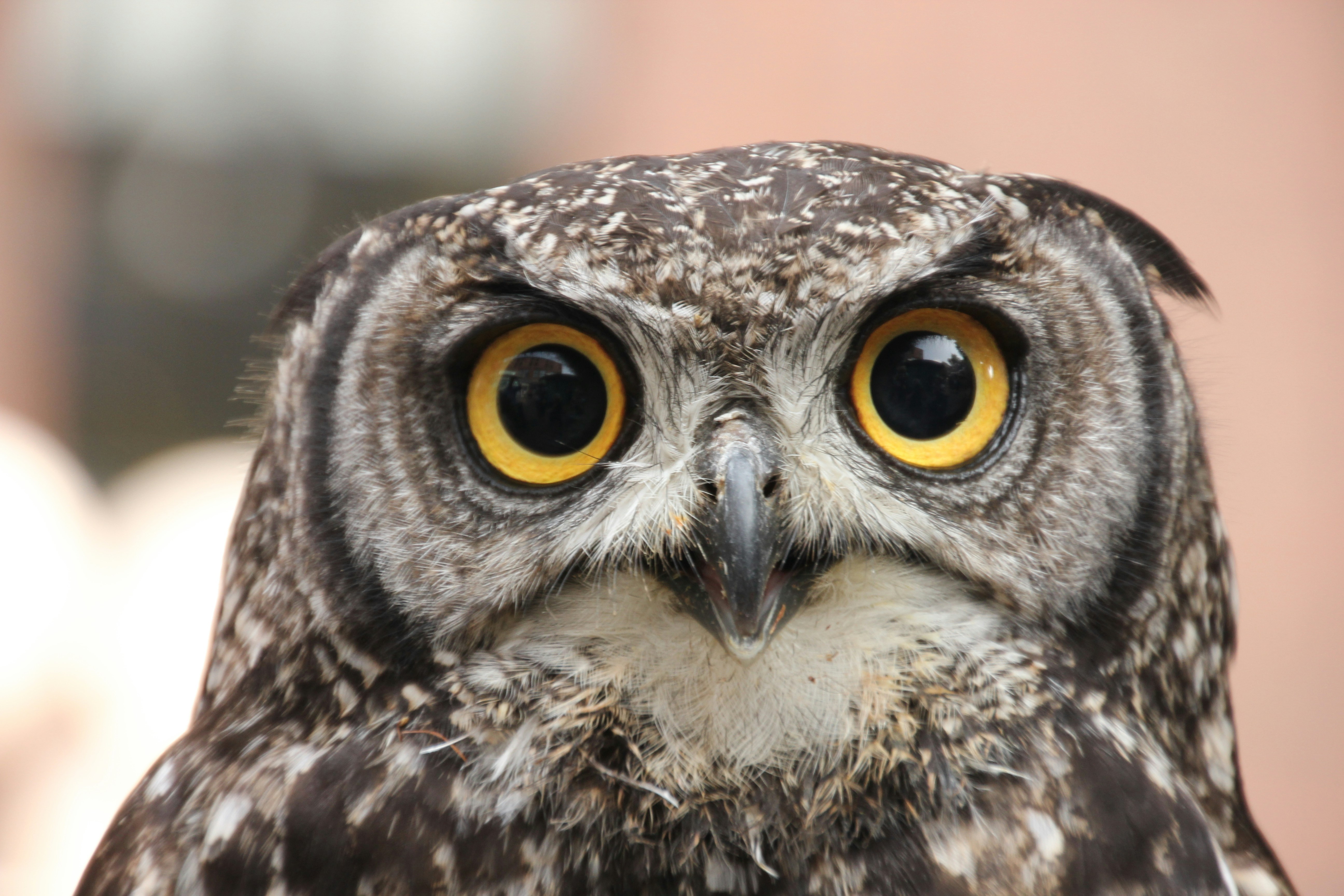
Owls are difficult to spot in the wild.  Just last week I’d seen only my second in some sixty years.  This was a screech owl.  It’s not unusual to hear them when jogging at dawn.  This time my right ear picked up on it more than my left as I jogged past a grove of trees.  I looked but saw nothing.  The trees were budding and some had small leaves already.  I reckon I’ve seen my fair share of bald eagles.  They’re large and they’re pretty obvious when they’re in the area.  Owls are more secretive.  Good at hiding.  I reached the end of the path and turned around.  As I reached the stand of trees, now on my left, it screeched again and I saw a blurred flapping of wings as it disappeared in flight.  I couldn’t identify this owl in a line-up, but then again, that’s not something I’m good at. The voice is distinctive, however.

The person hiring is a bald eagle.  Bold, aggressive, and sometimes literally bald.  I’m more like that screech owl.  Their public speaking is distinct and isn’t really a screech at all.  I can’t speak for their writing ability.  Life is our chance to come to know ourselves.  We may think we have it figured out in our twenties, but each score of years makes you question past assumptions.  Two things I always thought would be part of my career—public speaking and compelling writing—have both fallen by the wayside.  At least professionally.  What we say to others has an impact.  Especially if we’re eagles.  All things considered, however, I would rather be an owl.

Photo by James Toose on Unsplash

Four-leaf Clover

It was recently my late mother’s birthday.  I didn’t post about it on that that day since it might become a security question some day.  In any case, it was a somber day for me.  It’d been raining on and off for several days straight and I was wanting a picture of her for my bulletin board.  I remembered that I had inherited one of her photo albums.  This was the old kind with black paper onto which you had to lick and stick corners to hold the pictures.  Many of the photos had fallen out even back when she asked me to hold onto it, but there were some still there of her as a young woman.  As I was looking through them, something inside the front cover caught my attention—the crumbly brown remains of three four-leaf clovers that she’d glued there.

Since this isn’t likely to be a security question, I can say that her home life wasn’t ideal.  The page with the young photos of her were obviously from a day that she and my father were taking pictures of each other as young lovers.  They were outside a house on a summery-looking day.  Smiling and looking for a better future.  Four-leaf clovers.  My father was an alcoholic, and my mother knew that, but hoped that she might change him.  I don’t know the dates of the photos so I’m not sure if they yet knew they’d be parents.  One of the oddities of life is that about the time the questions occur to you, your parents might already be gone.  I wanted to ask about that happy day.  Those clover leaves.  The sunshine.

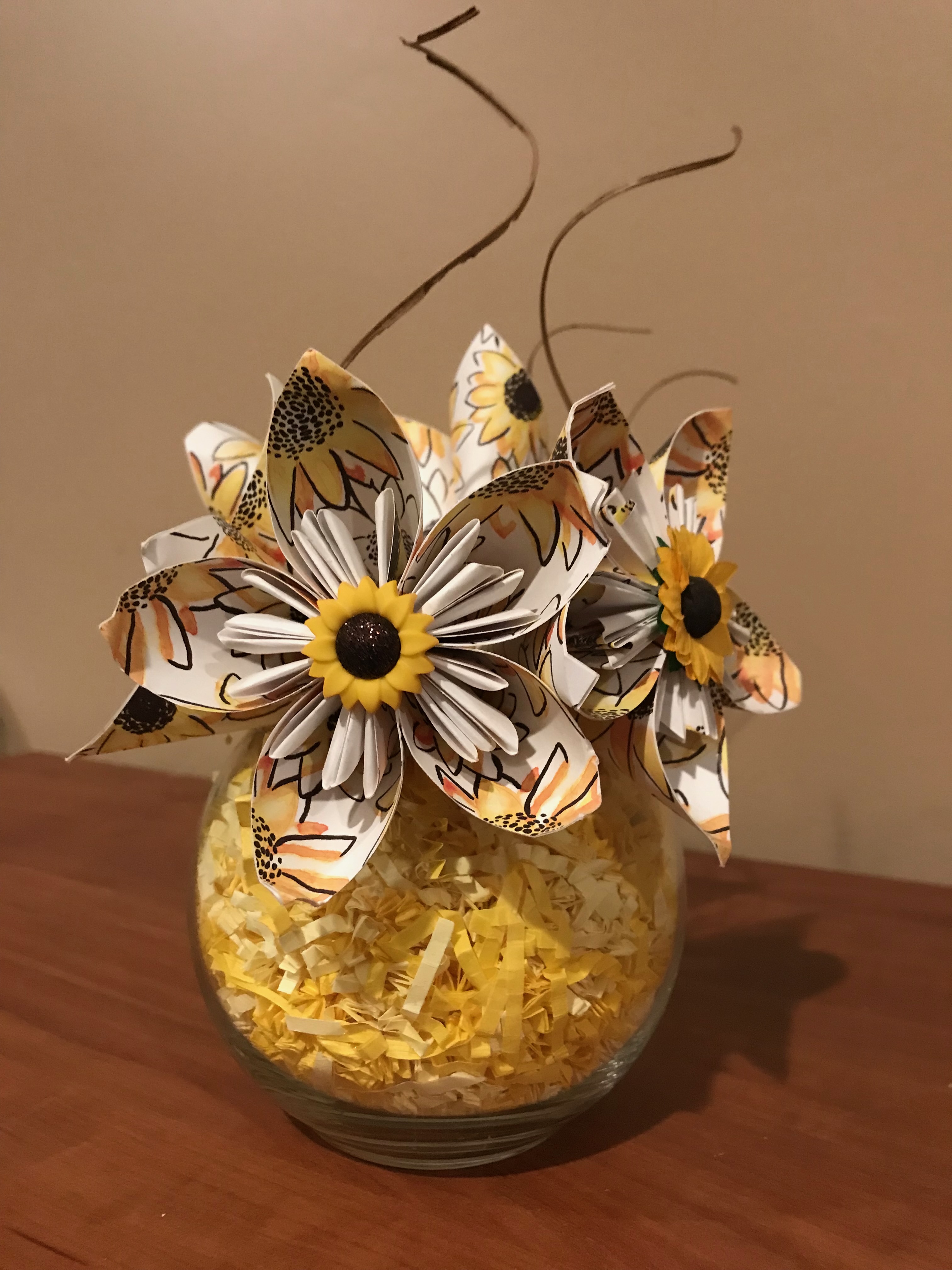
Rain and gray clouds persisted.  That particular day I had little human interaction, and I felt her presence with me.  I’m not a minister, as she always hoped I would be.  I could never find a job closer to home, as she wished time and again.  I didn’t even get to see her before she died.  Instead I had a photo album on my lap and rain falling.  And work for the day looming.  Her birthday is an engrained date in my mind.  Those last years we tried to find appropriate gifts for a woman who always said, “I don’t need anything.”  A few of those gifts are scattered around our house now.  One that gives me hope is a vase with flowers made from colorful paper that we purchased at a craft show for her.  I look at it and think of crumbled four-leaf clovers.


CSI: Backyard Edition


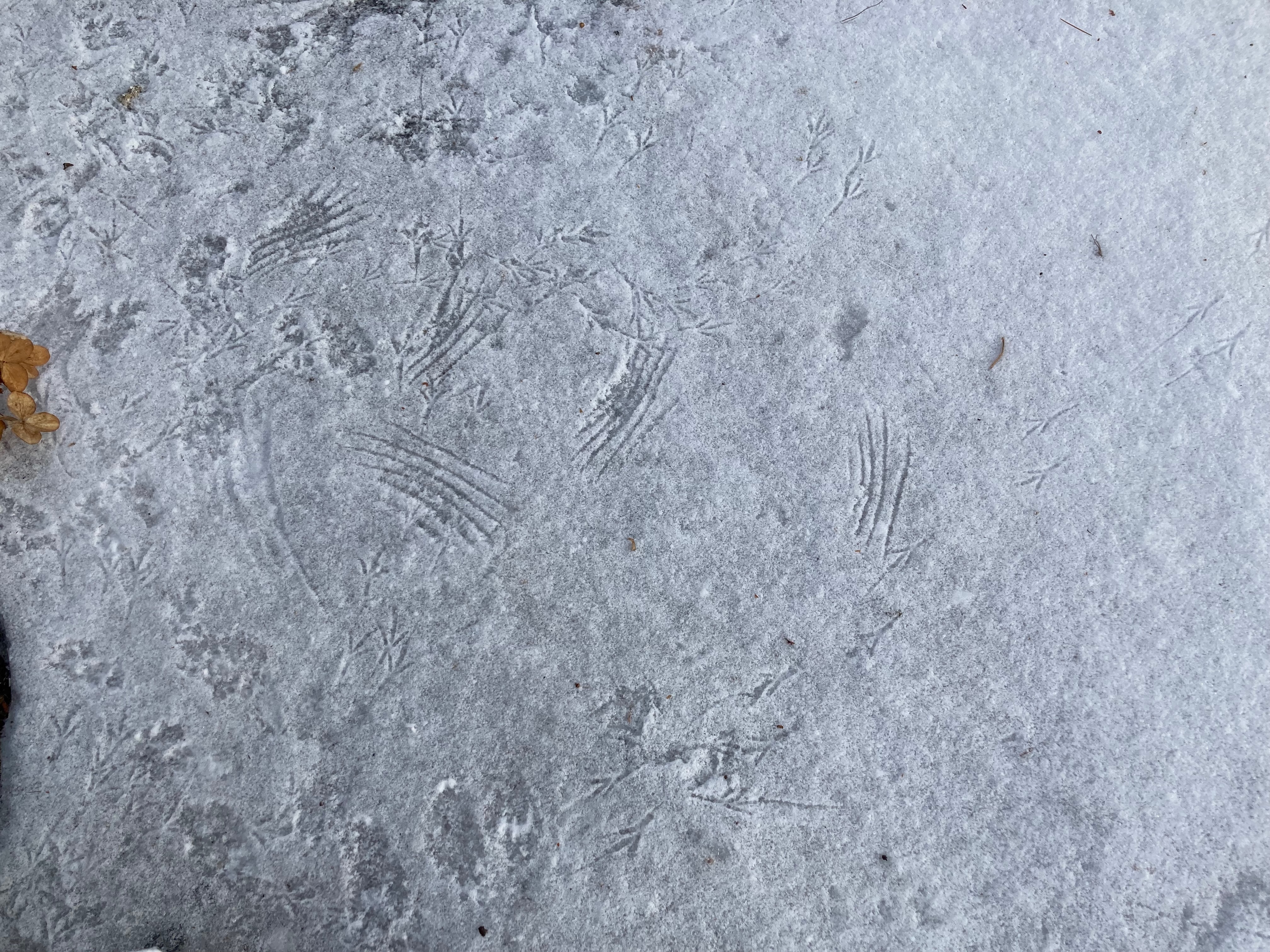
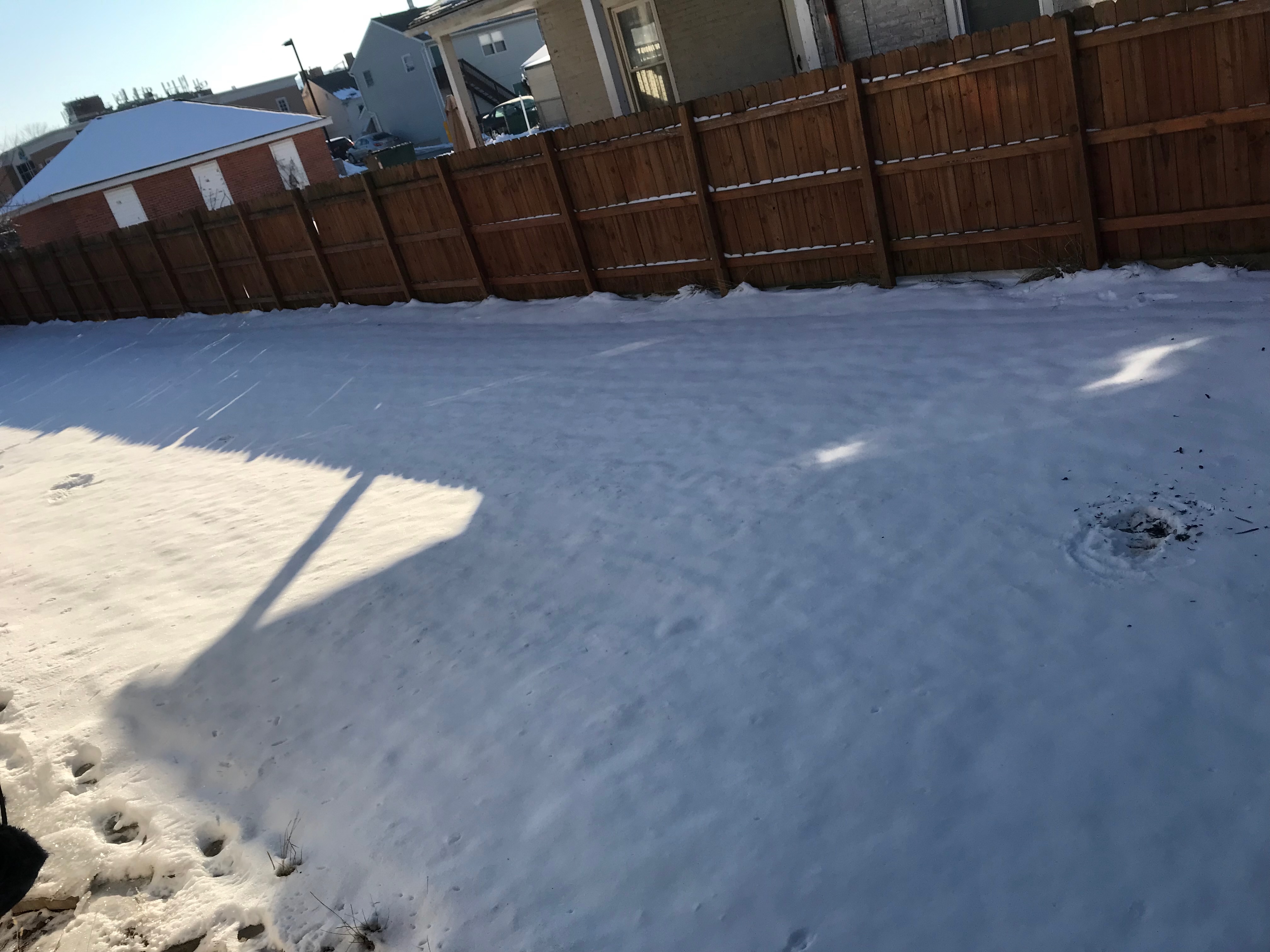
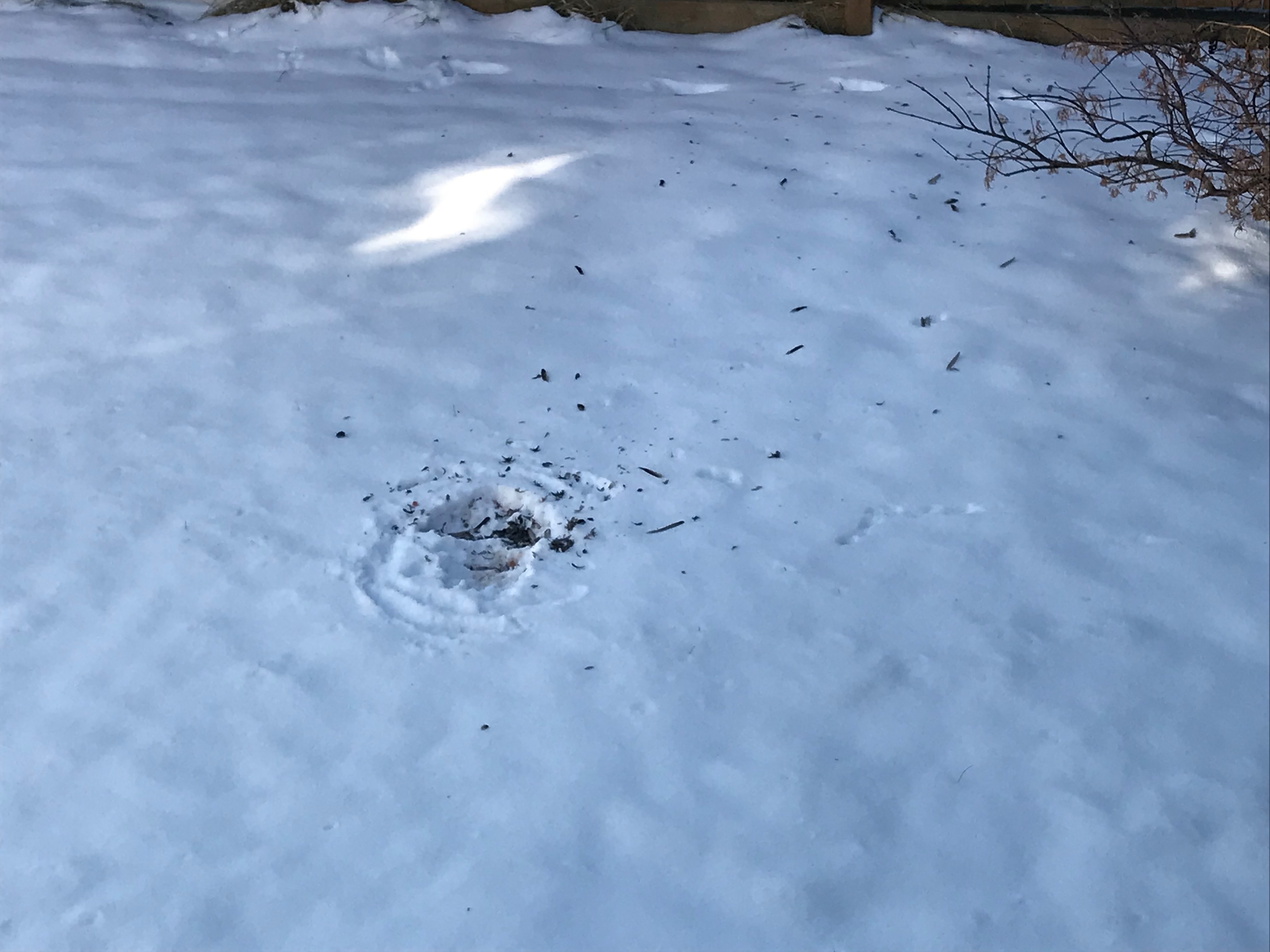
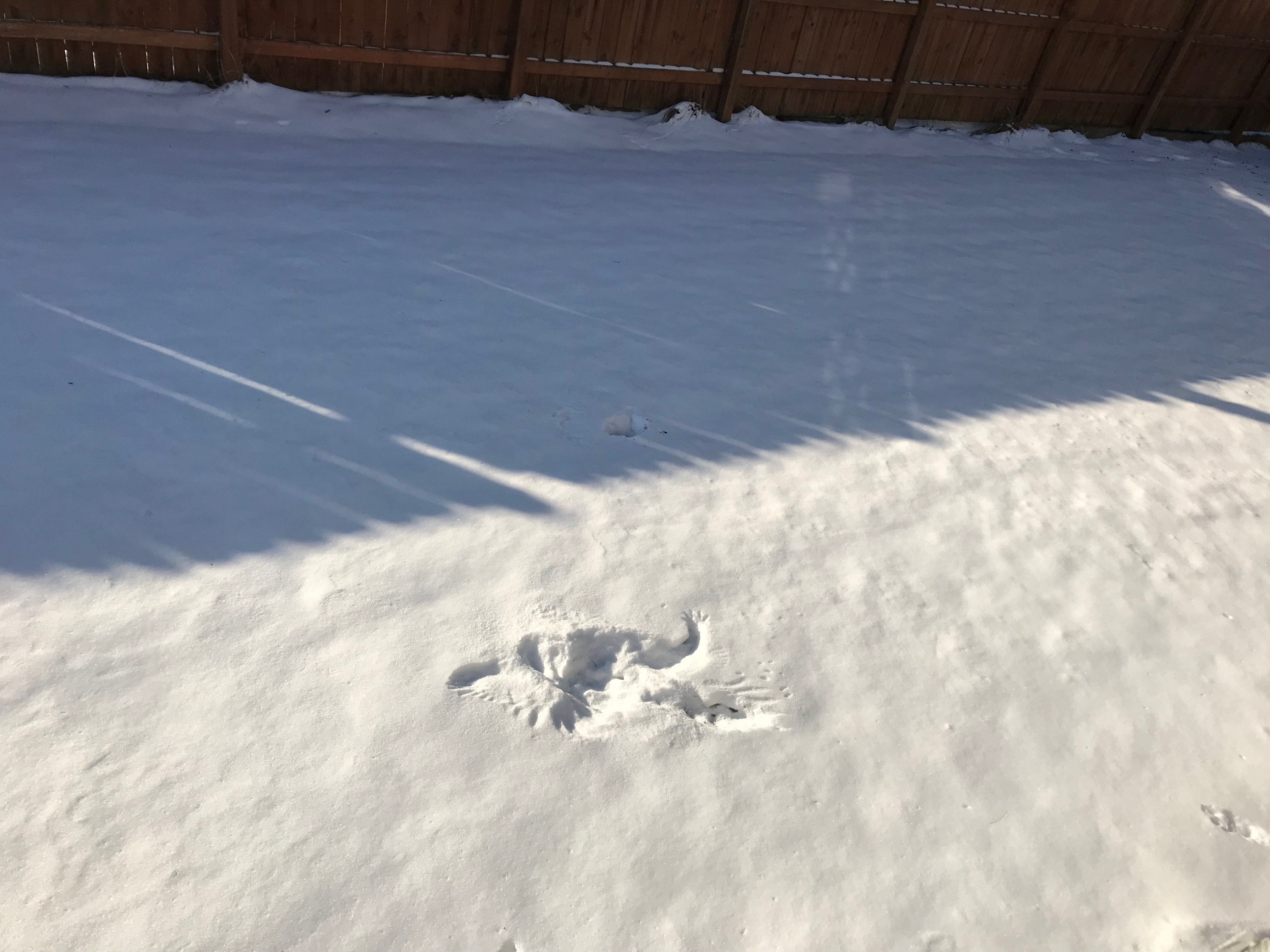
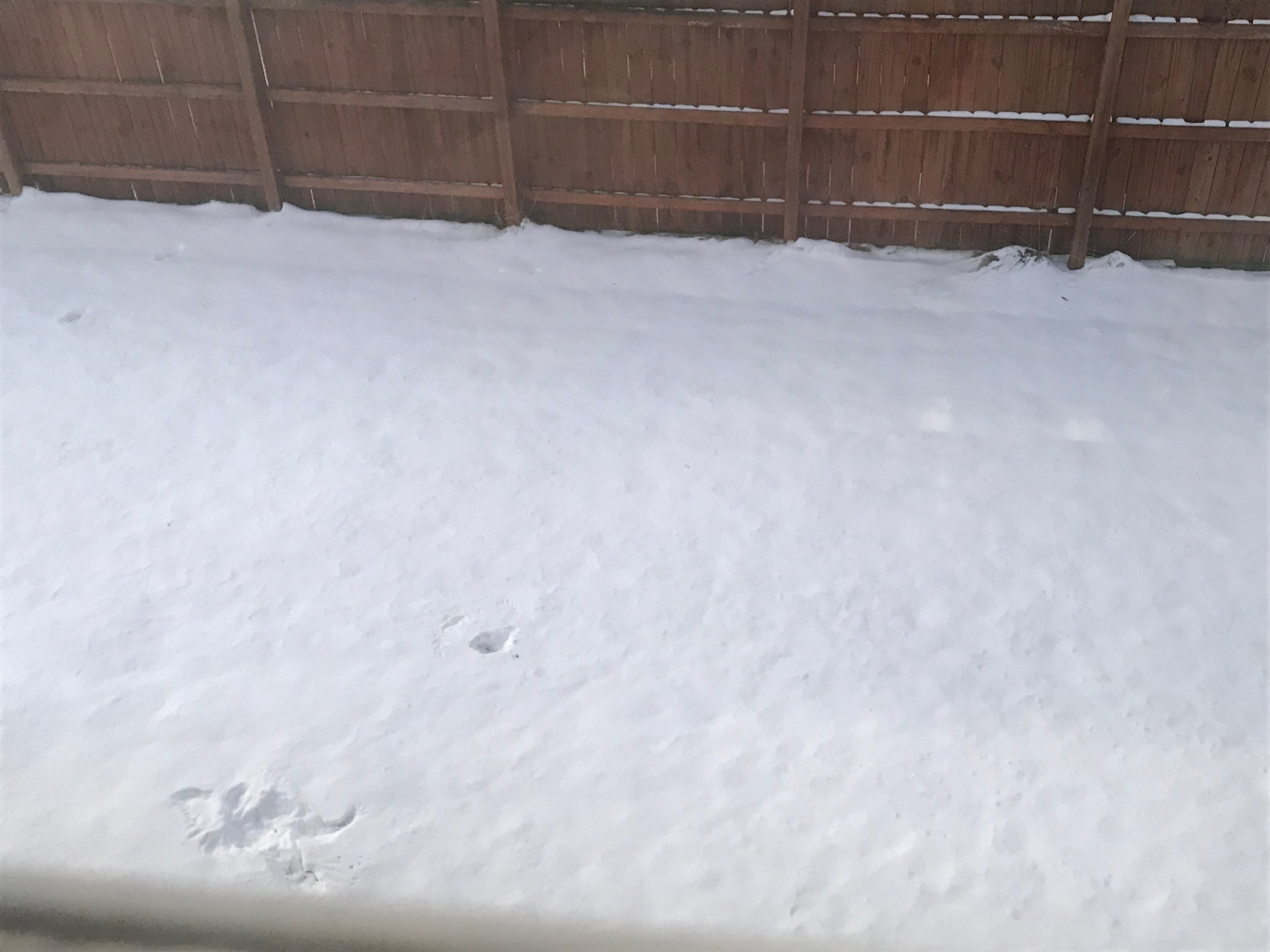
Dateline: January 24.  Location: Backyard.  It was clearly a crime scene.  There were prints in the snow.  Blood.  Signs of a struggle.  The marks hadn’t been there the evening before, so I knew I was looking at a recent offense.  Two indentations in the snow, about 10 yards apart.  Too far for a small animal to have leapt.  A third impression, closer to the second.  Clear feather imprints in the snow.  Earlier on the day in question, I had observed a hawk in the white pine across the street.  Two angry blue jays strafed the interloper, but he appeared unintimidated.  He fluffed his feathers and surveyed the area, including, I presume, my back yard.  In his own time he left, in an unmarked flight.

In the morning, rabbit tracks.  The first impact had been violent.  Debris had been raised from under the snow blanket and scattered toward the southwest.  No footprints leading away from the site.  This led me to conclude the victim had been lifted into the air.  But why the second impact site?  There had been a struggle.  The victim, presumably of the Lepus genus, had tried to make a stand.  The second impact site had bits of blood toward the west.  Neither of these first two scenes of investigation bore any indicative hints to the identity of either the victim or the perpetrator.  I did not have the means to test the blood.  No tracks led from either impression.  The third site clearly involved a struggle.

Impressions of feathers, spread at least two-thirds of a meter across, remained clearly visible in the snow.  Between these wing prints evidence of a scuffle.  Perhaps an argument ensued.  No feathers or fur remained on site.  I had to piece this together before the snow began to melt.  What I am labeling site 1, the initial strike, was near a bush under which rabbits are frequently observed to rest.  A hawk, confident of its ability, swooped down in the night and apprehended the rabbit.  The victim fought back, enforcing an unscheduled landing.  Site 2.  Blood was drawn.  Site 3 was an easy rabbit’s leap from site 2.  Perhaps the rabbit escaped.  The wing and claw marks on the snow suggest that the victim did not survive this third attack.  No solid physical evidence could be recovered.  It was just too cold outside to go and look personally.  I am not paid enough to do that kind of work.  Or I could have it backwards.  Site 3 could be the initial strike, but my reconstruction seemed more likely  Either way, the backyard would, however, never feel safe again.


Mere Eagles

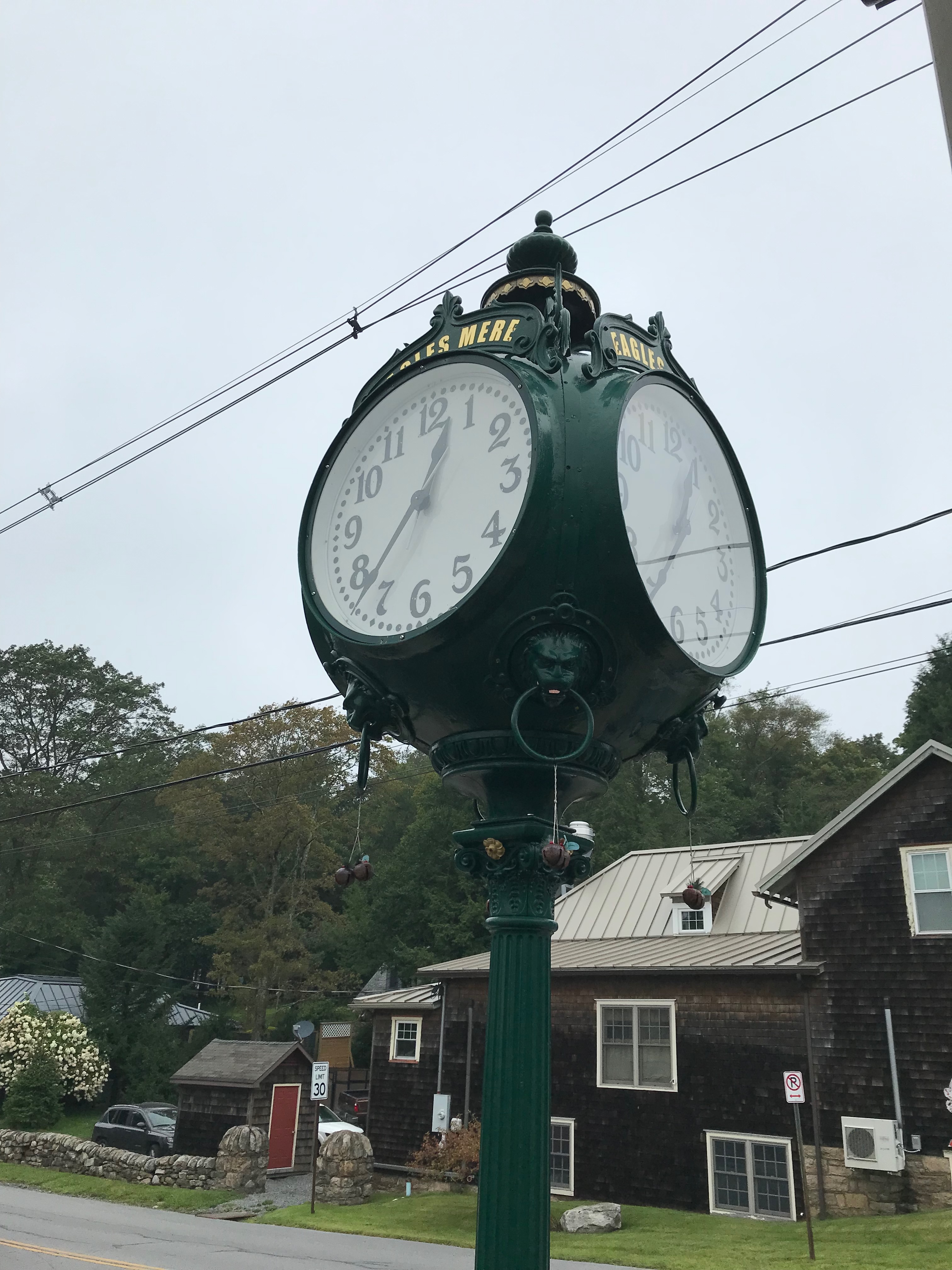
One of our summertime jaunts was to the small town of Eagles Mere in the Endless Mountains region, north of the Poconos.  Growing up in western Pennsylvania, I often heard of the mysterious Poconos out east, and now that we live just south of them in the Lehigh Valley, they are weekend-getawayable.  As are points north.  Eagles Mere was an early resort town built on the second highest natural lake (“mere”) in Pennsylvania.  In the early days it was accessible mainly by a slow moving train that took visitors up the mountain.  Today, of course, everyone drives.  It’s a town of about 150 people but the population increases to 3,000 in the summer.  It’s also known for its winter sporting opportunities.  It’s fully dependent on tourism.  I got the sense from walking around that it’s the kind of place you need to stay in to appreciate fully.  Once there were four major historic hotels, all of them gone now, so visitors stay in more modest accommodations, or like us, far enough away to be affordable.

I often wonder what it must be like to live full-time in such a place.  I mean, the rest of us slog away at daily jobs until we can get away for a few days, perhaps to Eagles Mere.  I can’t imagine having to draw in your entire income during a summer with lesser business in the winter, and a smattering of visitors in the fall.  What must life be like in the off-season?  Is it better than the 9-2-5 sitting in front of a computer screen?  At least they have a beautiful, clear lake.  And peace and quiet.  One of the things that struck me—we were there on a drizzly, somewhat chilly August day—is just how silent things can be when we get away from the sounds of civilization.  Perhaps this is the pay-off to not getting year-long pay.

Such places exist because the rest of us need to escape what is it we normally do.  Work, at times, seems mainly to be dealing with other people’s frustrations.  These build up over time until we need to forget about it for a while.  In other words, getaways are interludes of fantasy.  Imagining how it must be to live with so much money that you could afford not to work, but just to paddle out on the lake, watching for eagles, and listening to silence.  Every time I visit a resort town I wonder what it must be like to live in one.  The docent at the museum said many of the 150 are descendants of those who ran the grand hotels.  Even in, perhaps especially in, the off-season this is home to dreamers.


Ever Hopeful

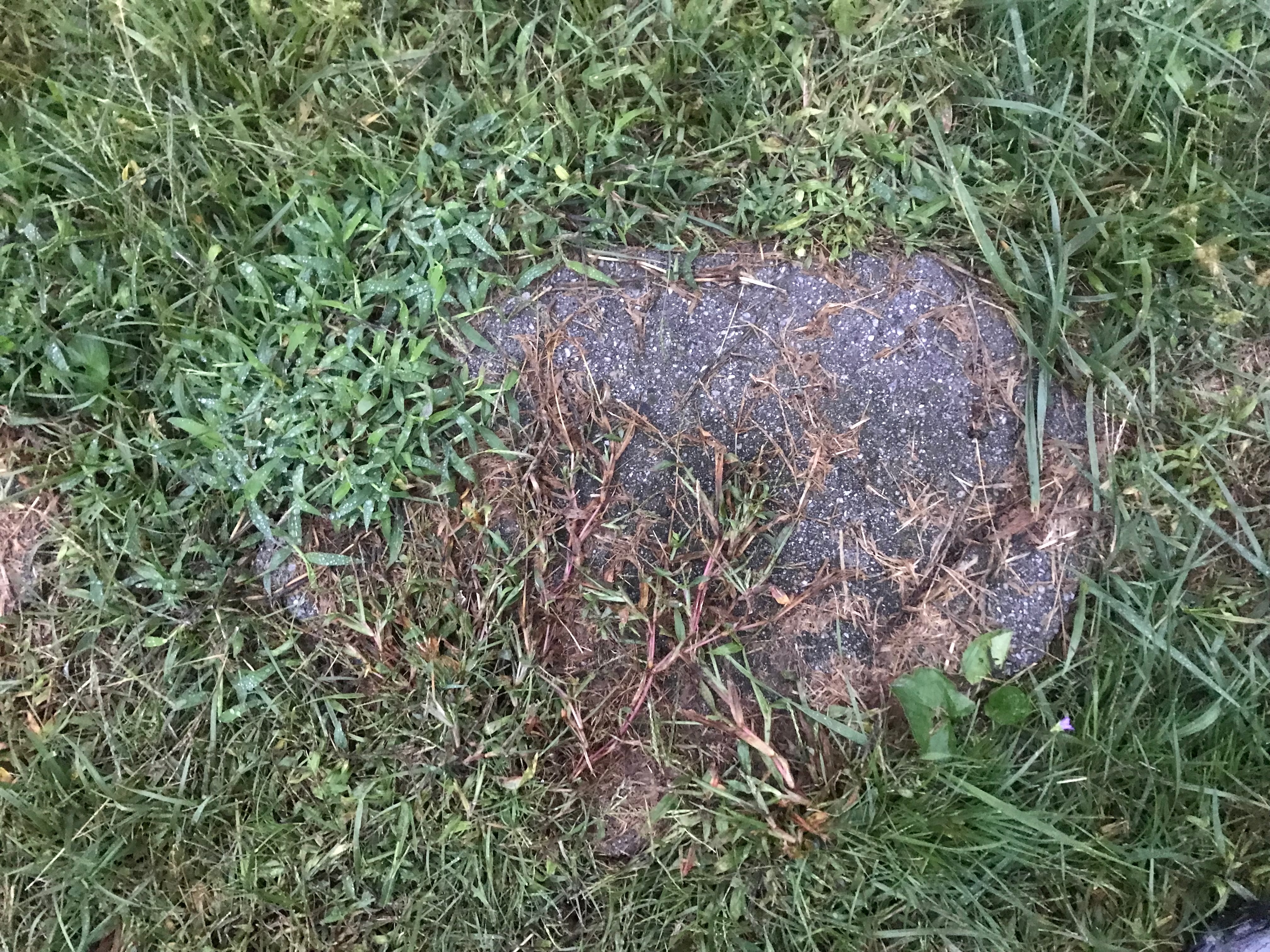
Plants are some of the most hopeful entities on the Earth.  As much as I’ve had trouble with houseplants, outside they seem to do fine.  Great, in fact.  Long-time readers will know that I struggle with lawn care.  It really didn’t enter my calculus of house buying—I was rather focused on the actual house, strangely.  We ended up with more yard than we required.  Thus, plants.  I’m not a fan of paving over greenery, but there’s a small strip of land between the sidewalk and the street—technically a “verge”—that’s difficult to mow.  Weed-eating it is also tricky because neighbors park their cars there practically 24/7 and some people don’t want a weed-eater that close to their showroom finish.  A couple years back I hauled some paving stones from our backyard out to the verge.  It decreased the grass by maybe 50 percent, but it still has to be whacked regularly.

I’ve been noticing over the summer into the fall that grass with a strong will to survive had begun growing roots over the top of the paving stones, intent on breaking them down.  That’s what plants do.  They work slowly, steadily, to achieve more room to grow.  This is always amazing to me.  Life is persistent.  Many animals see a stone as an obstacle—something to be stepped on or over.  Some plants see them as opportunities.  Our human obsession with allowing only certain kinds of plants close to our habitations, and those trimmed just so, seems an exercise in futility.  Of course, yard work isn’t my favorite activity, thus the paving stones in the first place.

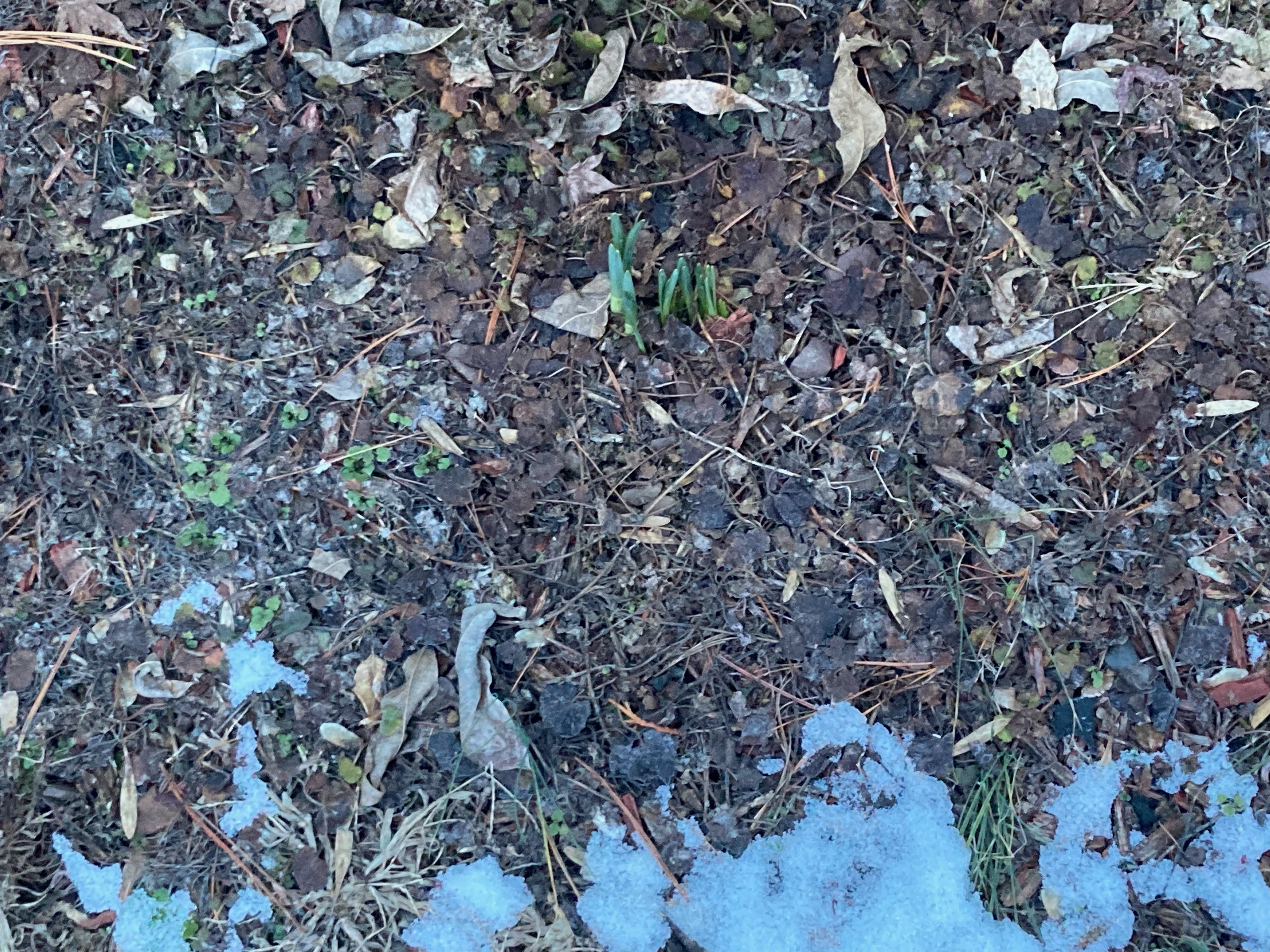
After our species is done making a mess of the planet, plants will quietly take over again.  Especially anyplace near where someone once planted ivy.  We’ve got some very aggressive ivy in the back yard that I pull down year after year, and no matter how often I do it comes back with renewed vigor the next year.  And crabgrass.  That stuff won’t take no for an answer.  I can tell some former owners were trying to do some landscaping with, well, landscaping fabric and decorative gravel.  If you turn your back for a few weeks, the crabgrass gets in and its roots begin breaking the gravel down into soil.  I wonder how there’s any exposed rock in the world, or maybe my yard is a paranormal plant paradise.  I can imagine that without people here to “maintain” things, paradise (which is a garden) would return.  Perhaps there’s a parable of hope among the plants.


Or Plastic

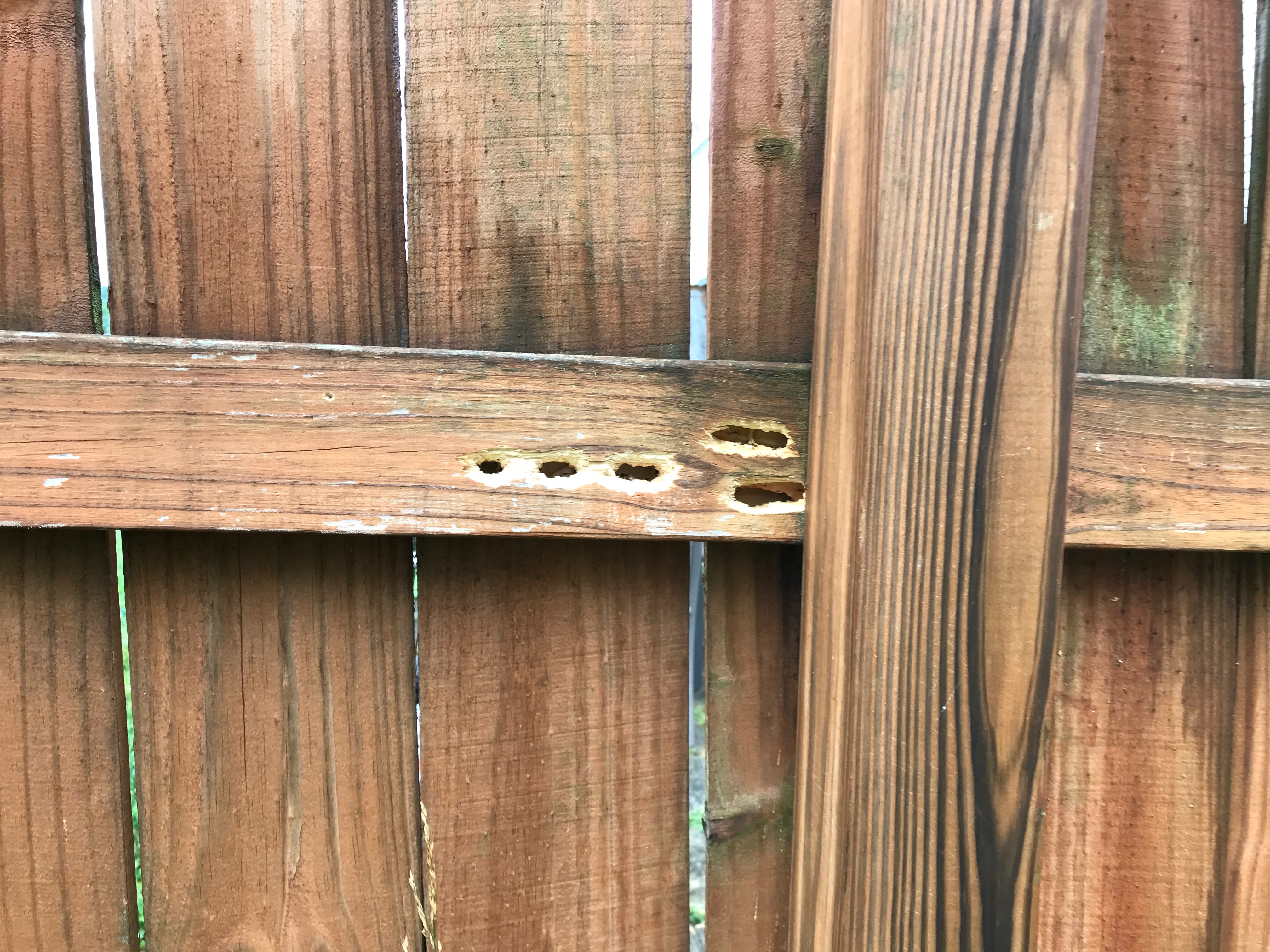
I’m no fan of plastic.  When looking for a house a non-negotiable with me was vinyl siding—nope.  In our neighborhood several houses have plastic fences pretending to be wood. I dislike materials pretending to be something else.  I was dead-set against such a thing, but our house came with a lot of neglected outdoor woodwork.  The fence was wood and had been stained, probably just before we moved in.  Then the carpenter bees arrived.  Local pest control will spray for them, but they come back each summer and unless we have the pest store on speed-dial the bees will find new things to damage.  See, the problem isn’t just the bees.  Woodpeckers, which as a kid always seemed exotic to me, love carpenter bee larvae.  I’ve watched a downy woodpecker hoping along the fence, knocking until it finds one, and then hopping a few feet further to repeat the process for another.  (If you’ve ever watched a woodpecker at work you’d not doubt animal intelligence.)

My wife and I talked it over.  The fence was in poor repair to begin with (another thing our house inspector missed).  I finally came around to seeing why plastic might be the best solution in our case.  Not for me, but for resale value.  The former owners had a thing for untreated outdoor wood.  They’d built a new back porch, but didn’t paint or stain it.  When the carpenter bees noticed, I painted it.  I couldn’t reach the ceiling, though, being short of stature.  Well, this year the carpenter bees have gone for the ceiling.  And the downy woodpeckers have followed them.  Now, when I hear knocking, I have to run downstairs to the back door to frighten off downy.  I will buy a paint sprayer to paint the ceiling, but the bees have had a head start this summer.

So I was in my office and I heard a tapping, as of a woodpecker gently rapping.  I ran downstairs and threw wide the door.  To my surprise, nobody was on the porch.  I went back to work.  Soon again I heard a tapping somewhat louder than before.  I followed my ears to the front door.  Yes, the tapping was from out front but daylight there, nothing more.  I stepped to the edge of the porch.  More tapping.  I leaned over the railing and looked down.  A rare, and large, pileated woodpecker was going at the fence post.  I was about as startled as she was.  My wife was out on an errand and when she returned home she found selfsame woodpecker working elsewhere on the fence.  I’ve learned my lesson.  While wood looks nice, and is natural, it will soon be paper thin if we don’t do something.  It’s a big fence.  And the only option to paper is, unfortunately, plastic.


Storming Fourth

Our founders picked a day of uncertain weather to declare independence.  One gets the sense that people were more stoic about the weather in those days.  Of course, we’ve increased global warming and made things more extreme.  Nevertheless, I can remember very few fourths of July when the possibility of storms was zero.  The weather around here has been odd this year with a suddenly hot June, with a dry spell that killed quite a few plants, followed by a cool start to July and some very intense storms.  And now, on the fourth, the possibility of rain in the forecast.  The grass hadn’t been growing in the dry spell, but I’m hoping the rain will hold off today long enough for me to get that job done.  In fact, on this secular holiday I’d been hoping to get quite a few outdoors chores checked off the list.

When I was younger and fireworks were the main draw to the day, I noticed that just about every year rain fell, or threatened to, on July fourth.  I’m sure it’s not that way everywhere, but here in Pennsylvania, where the declaration was signed, it’s a reality of life.  Of course, the modern Independence Day celebrations evolved over time to include the cookout and fireworks—outdoor activities both.  For me, apart from the outdoor chores on a day off work, a movie seems like an indoor celebratory alternative.  Perhaps Return of the Living Dead, set on the fourth.  Or I Know What You Did Last Summer.  Or Graveyard Shift.  Maybe something else.

Watching the political theater unfold—and my, what a dramatic election year it’s been—perhaps a comedy horror is just about right for today.  This is going to take some thought.  Something to occupy my mind while doing those outdoor chores.  Of course, I’ve got a book to get submitted as well.  If the weeds can hold off for another day or two—is it wise to paint the porch when rain’s in the forecast?—maybe I can finish up Sleepy Hollow.  It’s a good American ghost story.  That might be appropriate as well.  You see, holidays are so rare that too many things crowd in on them.  They’re breaks from the constant earning of more money, which is the American way.  Of course, our founders were largely restless gentry.  For me a day off work is always a busy day.  Especially when the rains have returned and the grass has grown.  It must be the fourth of July.


Eclipse 2024

Eclipses.  They’re fully explainable.  Or are they?  Yesterday’s solar eclipse, with totality within driving distance of many Americans, led to an inexplicable need to see it.  April, we’re told, is the cruelest month and upstate New York is known for its “ever-changing skies.”  I admit I was skeptical.  Together with some friends we arranged to meet near the umbra, in Penn Yan, and to drive from there to totality up on Lake Ontario.  As is typical in New York, the day started out fair, with a few high clouds.  It was chilly, but this is April.  Our destination: Fair Haven Beach State Park.  The location was nice; we arrived early and found a good spot.  The clouds, however, were willful and wanted to remind us, like last week’s earthquake, that we’re not really in charge here.

As the day went on—totality for us was 3:20 p.m.—more and more people came into the park.  To its credit, with what must be a limited state budget, it absorbed many eclipse seekers without any trouble.  By 3:00 the cloud cover was heavy-ish.  Our friends had heard a sponsored eclipse speaker, however.  Totality was nothing like even 99%.  This would be of a different magnitude, even with clouds.  I remember three previous eclipses.  One in school with the pin-hole method where you really don’t see anything, one in Wisconsin after teaching one morning at Nashotah House, and the 2017 which I saw in midtown Manhattan.  None of this prepared me for totality.  Around 3:18 it started to look dusky.  We could catch glimpses (but no photos) of the crescent sun.  Within seconds it was completely dark.  It was another of those transcendent earthly things, like the earthquake three days earlier.

Perhaps I’m getting old enough to realize that you can’t really describe such feelings.  Maybe I’m getting sensible enough to understand such things are called ineffable for a reason.  All the planning, worrying, anticipating, was for this moment.  Yes, there were clouds overhead, but the park was full of cheering people.  They too had come here for something extraordinary and to my surprise I found tears in my own eyes.  I captured no photos of stunning clarity, but I had experienced something I’d heard about since childhood but had only glimpsed in the most crude of facsimiles before.  We were able to experience a kind of rebirth that comes only after night.  Conditions weren’t ideal, but are they ever?  And an encounter with the numinous always comes on its own terms.

The sun, hours before being eclipsed

Showing Gratitude

Stealing is something that we all, except some capitalists, know is wrong.  I think quite a lot about the land that was stolen to make America possible and I know that simply giving it back isn’t an option.  Nevertheless, I do believe that we should listen, and listen attentively to those who’ve been here longer than Europeans.  Robin Wall Kimmerer’s Braiding Sweetgrass is an important reflection of this dilemma.  Kimmerer is Potawatomi and she’s also a professor of Environmental Biology.  The book is a series of essays that focus mostly on plants and what we can learn from them.  It also brings in indigenous teaching, contrasting the outlook of gratitude against that of greed.  By turns sad, funny, and profound, Braiding Sweetgrass contains a message that is vital to counter climate change.  To correct our attitude before it’s too late.

There’s so much in this book that it’s difficult to know what to touch on in this brief notice.  Throughout, Kimmerer notes that the First Nations viewed life as a gift.  The earth is constantly giving and the native way was to be thankful and to accept the responsibility of being given a gift.  Seeing how the European attitude was “take until there’s no more to take,” she points out that taking what you need and leaving for others is a way out of our current dilemma.  She does this, most strikingly, by the story of the windigo.  The windigo has become popular among monster fans as a consuming beast, but Kimmerer shows how the story has a profound point.  If all you do is consume you become a monster.  You stop a windigo by showing gratitude.

Perhaps the most striking thing, to me, was how Kimmerer describes her own experience becoming a scientist.  How standard academics refused to believe they had anything to learn from Native American outlooks, especially when borne by a woman.  How she was told she couldn’t be a scientist, not with that outlook.  And how she learned the European way but didn’t give up her native understanding.  How she brings two worlds together and does so with a sense of urgency and hope.  Things have gone too far simply to turn back the calendar and say that our ancestors had it all wrong, but it’s not too late to learn from those who lived for millennia on this land and were untainted by ideas of private ownership.  Those who knew how to live sustainably with nature.  Those who knew, and still know, how to defeat monsters.


Balance

Spring came early this year.  I’m not talking about Punxsutawney Phil, but rather the fact that a leap year shifts the vernal equinox a day forward.  According to experts, spring begins today.  In The Wicker Man (it’s about oh so much more than the movie!) I discuss the seasonal holidays of the Celts.  The vernal equinox was surely known, but the beginning of spring was understood to be Imbolc, around February 2.  Since their summer began on May Day (thus the eponymous Wicker Man), the equinox was halfway through spring.  Modern paganism traces the equinox celebrations back to Ostara.  The day takes its name from the germanic goddess Ēostre, who also gave her name to Easter.  The holidays were intertwined, just as Christmas was entangled with Yule.

I find the equinoxes and solstices times for a spiritual pause.  Sure, there’s the simple astronomical fact of equality of light and dark, but there’s also something more.  Something that feels cosmic and that helps direct our destiny.  From now on there will be more light than dark.  But only for six months.  Even with Daylight Saving Time, our capture of light is of limited duration.  It makes sense to make use of the light while we have it.  Of course, those of us who rise early end up falling asleep before dark, but even so it’s starting to get lighter in the mornings again.  The equinox is a time for reflection.  And like most times for reflection, business doesn’t recognize it as a holiday.  Who ever heard of a holiday on a Tuesday?

The thing about spiritual messages is that they often come to you rather than the other way around.  At certain times, however, conditions are just right for something to break through.  It does require some listening, however.  So today, as nature holds everything in balance, try to take an unrushed moment to ponder.  For some of us it may come before the fury of work tears through our peaceful meditations, while for others it may come with the calm that five o’clock brings.  However we find it, this is a special time because this day is unusual.  It is a time of balance.  We all know how rare such things are in life in a topsy-turvy world.  The earliest flowers are already blooming around here, suggesting that as light increases so will hope greet us, if we watch for it.  The world is full of wonder, and an equinox is a time to look for it.