
I’m on vacation for a week. My job is such that taking vacation is becoming a rare commodity, what with precious few allotted days and move-in, move-out schedules of a collegiate child, and so on. And also company policy about keeping employees in the office between Christmas and New Year. Anyway, now that I’m here I should be kicking back and enjoying the beautiful lake and getting out to do the things inmates of the city seldom do. It has, however, rained every day that I’ve been here. Not all-day rains, of course, but just enough that plans have to be interrupted or changed at the last minute. I end up sitting in the cabin playing Solitaire when I should be out getting some fresh air. So it goes.
Ironically, I am staying in the drought-stricken west. The western United States, I learned when researching for Weathering the Psalms, has been ensconced in a decades’ long drought. In fact, prior to my family trip here it hadn’t rained in quite a while. Our arrival with the clouds was, after all, mere coincidence. Still, it’s hard not to take the weather personally. I know that the weather is larger than any one person’s needs or desires. I also know that water is a commodity even rarer than vacation days, largely because of our misuse of the limited supply that we have. California’s plight has been in the news. We have large cities in water-challenged environments and people treat water like there’s no end to its abundance while the opposite is the case. Just thinking about it makes me thirsty.
There are many things a person can go without, some of which feel absolutely essential at the time. Many vacations, I know, are extravagant. Fancy hotels, high-priced entertainment, exotic locations. Work can feel so crushing that vacation my become the one island of sanity in the midst of a hostile ocean of obligation. For me, vacation is time with family in a stripped-down, natural setting. Of course, we do indulge in some of the comforts of home, but having nothing in view outside the window beyond that which nature dictates is a transcendent experience. From where I sit, I can see nothing of human artifice. I do see clouds, however. I know that more rain is on the way. And I know that it is a gift, complain as we might, of the highest magnitude.
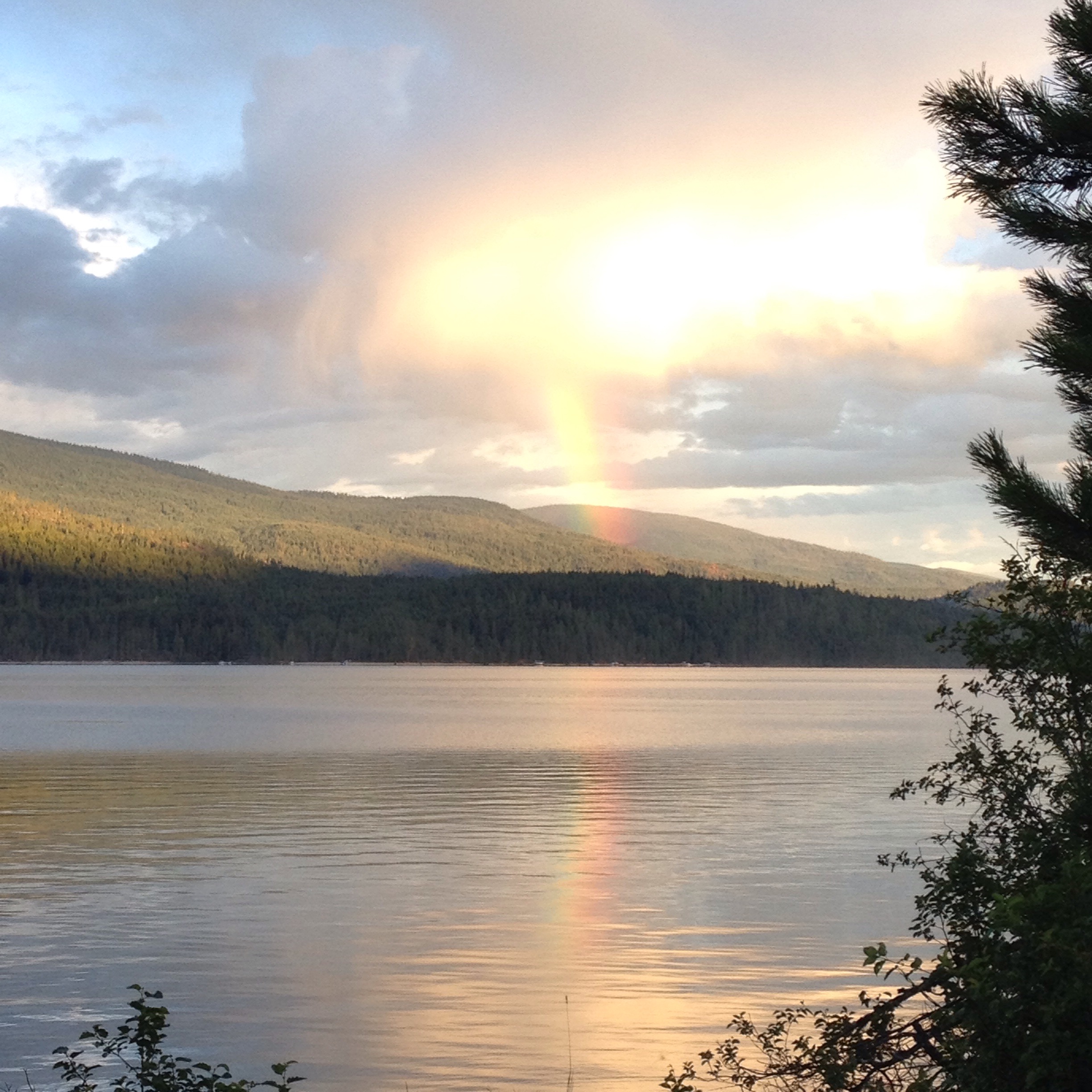
Fly Like an Eagle
Hummingbirds, according to my bird book, have hearts that beat 1260 times a minute. That translates, if my math is to be trusted, to 21 beats per second. As the only birds capable of flying backwards, their aerial acrobatics are fascinating to watch as they hover, accelerate, and change directions like a biological UFO. During the summer they guzzle the empty calories of sugar-water that we leave for them in our feeders, so that we can lure them close enough to observe (that is, after all, how humans interact with their environment). The other day I watched a snapshot of developmental behavior. This July has been a good one for hummingbirds, with several a day visiting the local watering hole. I sometimes wonder about the flowers that are overburdened with nectar as these tiny birds hover by their communal font. At first it seemed that only one bird frequented the feeder. Then two came along, and although four feeding spouts were available, one would always chase the other away in a dogfight worthy of Baron von Richthofen. A third showed up, and when the first was busy chasing the second away, would fly over to the feeder to attempt a nip. Then a fourth. Eventually a fifth. And although there are four evenly spaced openings, only one took a drink at a time.

“Bird brain” is a speciesist insult. Many birds are very intelligent and the comparison with human behavior is often apt. Protecting one’s private stash that is more than adequate for the community is worthy of comparison. Not to complicate speciesisms, but when a person prevents another from enjoying what one cannot, we call it being a dog in a manger (dogs, of course, do not eat the provender of the barnyard herbivores). A bird flying so fast that it’s a blur chases another away and cannot enjoy the high-calorie, human intoxicant we offer so that we can appreciate its incredible display. If we could fly like that, would we be so short-sighted?
God-like, we attempt to make nature in our own image. And mix metaphors like a professional editor. Not far from the shelter of the human breadline we offer, hover the larger, predatory birds. Those who fly fastest, super-charged with sugar and spite, stand a better chance of surviving. And when a luxury liner encounters an iceberg in the frigid north Atlantic, those who’ve lingered longer at the feeder are better equipped to gain quick access to the lifeboats that are sorely inadequate for the overbooked cruise. And if I were on board, would I not be like a hummingbird in the manger? My heart beats 21 times a second just to think about it.
Dead Wood
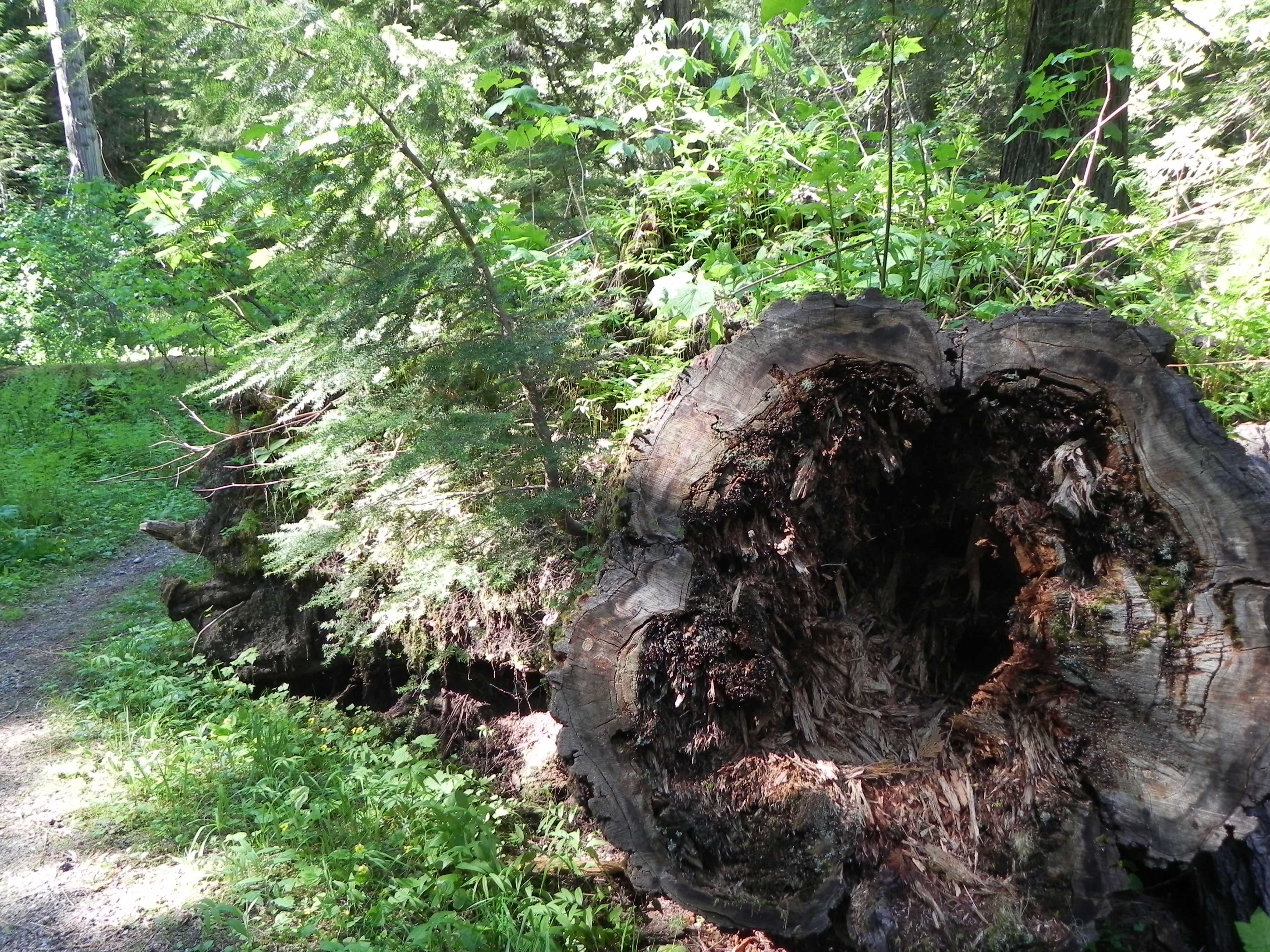
nurse log
Nature has no theology. In its immediacy and pragmatism, creatures live without pondering what it means, striving to pass on the gift of life they’ve been given through their offspring to keep the cycle going. Evolution may shape forms into new varieties along the way, but we are more amoeba than angel. We are part of something larger than ourselves. Unfortunately our society has evolved to emphasize individual drive over collective effort. We don’t want to tax the ultra wealthy, for they are where we all want to be. It is the poor who are sacrificed on the unholy altar of this thinking that truly reflect what nature intends for us to be.
To justify our selfish outlook humans made gods in their image, adding prerogative to perfidy. Somehow we deserve more than others—longer life and even more life after that. Evolution has, in its non-directional way, distorted the picture by providing us with inordinately parsimonious attribution of souls, according to theologians. Nature belies our paltry attempts at self-deification. Quietly in the forest a tree dies, offering its life for those that will come after. The nurse log knows the true meaning of resurrection, while we fumble to gain more for ourselves, backed by the religions we’ve invented.
Vindication
Back in the summer of 2009, I chose the name of this blog on a whim. Relatives had been encouraging me to provide a platform for podcasts and the occasional post and asked me what I would call such a blog. The pun of sects and violence initially drew some good humored interest, but there was a serious subtext beneath the choice. Nature has now published an article declaring that violence and sex are related. (Sects and violence is a no-brainer; just look at the newspaper.) The connection has been established satisfactorily only in the brains of mice so far, but what is the real difference between mice and men?
Yes, men. The studies focus on the male brain, that organ that continues to confound those of us who daily try to use one. Certain circuits in the mouse hypothalamus trigger either a violent or loving response when stimulated certain ways. Aggression is almost an automatic response. My mind tied this in with the Singularity article in last week’s Time. As we race forward with technological mergers between artificial intelligence and the human machine, do we really understand what that brain is that we are attempting to emulate electronically? Biology, according to many theorists, does not bow to the rules of reductionism. What happens when the violence of natural circuits (fight or flight) kick in with titanium feet?
I commented on a friend’s post when he cited the Singularity article in Time. Others responded to my remarks suggesting I did not take the reality of this seriously enough. Those who are familiar with Sects and Violence in the Ancient World will have no such questions. The minds that have given us both gods and guns are machines that can not be replicated precisely. Their function is to keep a degenerating biological mass alive. Electronic brains with replaceable parts (think Wall-e) have no such concerns. The missing limb syndrome is a very human response that is well recognized by those who understand the human psyche. And that psyche, it seems, is ready to fight as long as it is properly stimulated.

A boy's eye-view of the world
Blessing Nature
Today is the traditional Feast of St. Francis of Assisi. Yesterday the local Episcopal Church celebrated this feast with the somewhat Anglophile practice of the blessing of the animals. This is not generally an event to which my family pays particular attention – although we are animal lovers the only pets we have are hermit crabs and the spiders and bugs that naturally make their home along with us. Yesterday also happened to be a beautiful day for the local street fair and my brother and his family joined mine for the event. His family includes a dog and we noticed a sign advertising the local blessing of the animals. As my brother noted that his dog might better do with an exorcism, we decided to pick up a free blessing while the offer was good.
Normally animal services are held outdoors. This in itself is a commentary on the true equality of species. Many people feel it sacrilegious to bring animals into churches. Biologically speaking, however, that would exclude us all. Perhaps for allergies or the price of carpet cleaning it may be more expedient to bless the critters outside. After all, animals do fend for themselves out-of-doors, right? As we sat in an informal circle, the priest emerged from his office with his own dog at his side. A makeshift card-table altar had a simple wooden cross atop it to sanctify the area. As soon as they reached the center of our circle, the priest’s dog squatted to defecate on the lawn. It was a lighthearted moment, but it also spawned some reflection.
When it comes to religious settings and ceremonies, many normal behaviors and actions are considered inappropriate. This invisible divide reflects the time-honored division between the sacred and the profane. There is no tangible way to distinguish between the two; sacredness is a matter of cultural taste. Absolutes for sacred and profane simply do not exist. A priest’s dog following the dictates of nature is about as sacred an example of life as experienced by all creatures on this earth as any other. Expelling of waste is one of the characteristics of life as we know it. While some may find dog droppings offensive in sacred settings, I have a feeling St. Francis would simply have laughed.
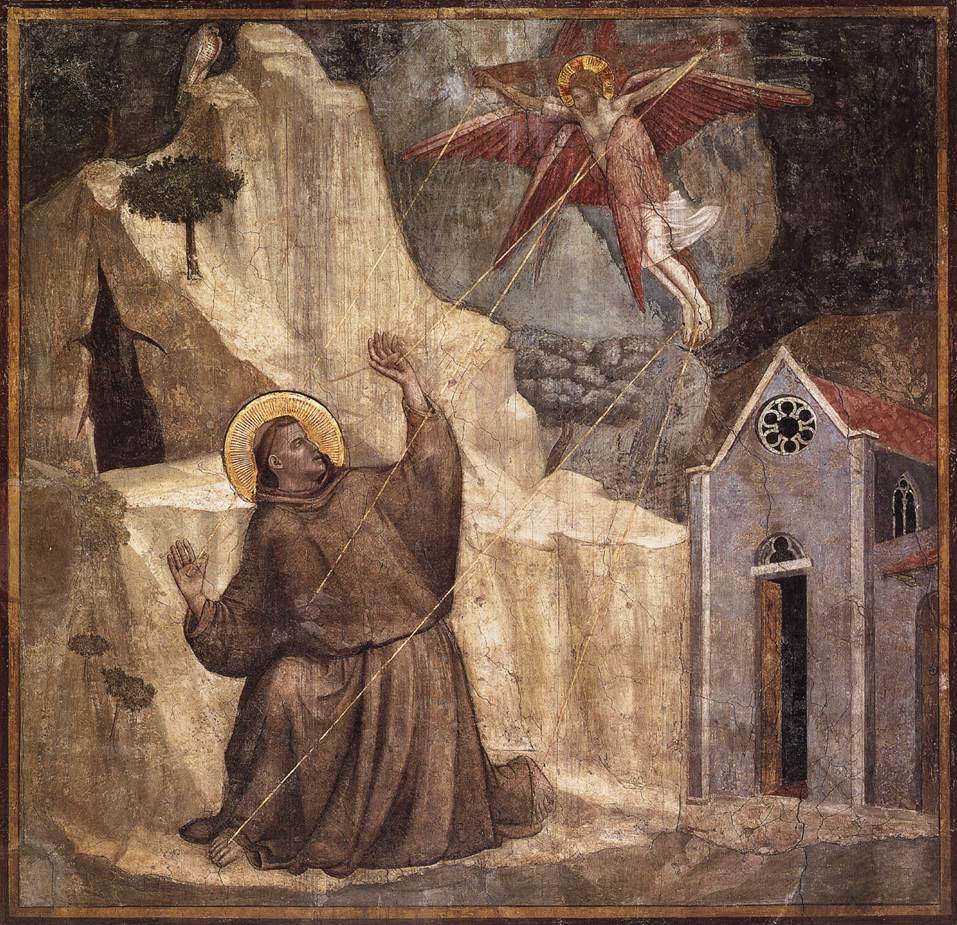
Your dog did what?
 Steve A. Wiggins