Locating Yourself

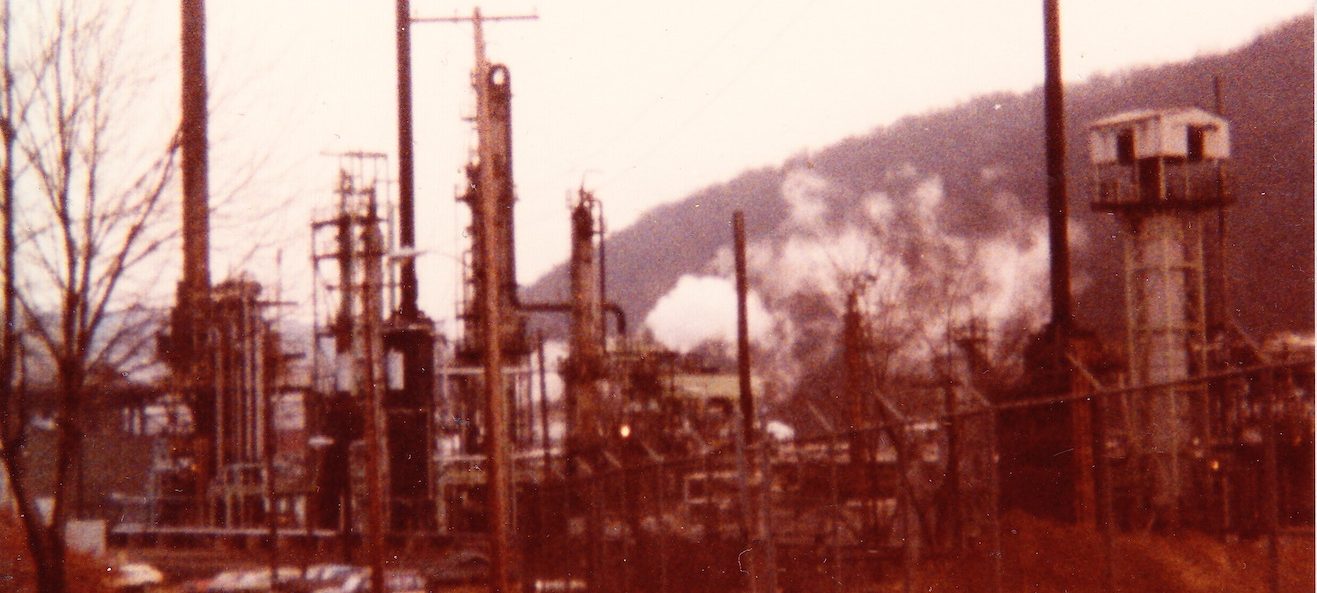
How do you come to where you spend your life?  It could be where you’re born.  I was born in Franklin, Pennsylvania.  Neither of my parents were.  On my mother’s side we had a tradition of wandering.  We eventually moved to Rouseville, a refinery town not too many miles from where I grew up initially, but very different in character.  I knew I wanted to get away.  I lived in Grove City next, only as a student.  For a short while I resided with some friends in the South Hills of Pittsburgh before moving to Boston to attend seminary.  Like many who go to Boston for school, I wanted to settle there.  I did so for about a year after graduation, making a living, such as it was, selling cameras.  My next move was precipitated by love.  I moved to Ann Arbor, Michigan to be with my fiancée, but I’d already been accepted to Edinburgh University, so an international move was imminent.
Roseville

Edinburgh, like Boston, is a spiderweb.  We would’ve stayed if we legally could have, but with a job market for academics already tanking, we headed back over the Atlantic.  My wife was a grad student at the University of Illinois, so we moved first to Tuscola (family there), then Savoy (on the outskirts of Champagne-Urbana).  Meanwhile I commuted to Delafield, Wisconsin, home of Nashotah House.  We eventually moved to Delafield and stayed until I was no longer wanted.  Our move to Oconomowoc was necessary to keep our daughter in the same school.  The possibility of full-time employment drew me to Somerville, New Jersey.  We would stay there until my daughter had a chance to graduate.  Depression convinced me that I’d run out the clock in that apartment, but a financial advisor suggested Pennsylvania, where I was born.  Thus we ended up in the Lehigh Valley.

I’ve liked every place I’ve lived.  If I had my druthers, however, I would’ve ended up teaching at a small college in Maine.  Several friends have moved to Maine as I’ve jealously watched.  The places we spend our lives, at least in my case, are determined by a measure of fate.  Nashotah House was the only job I was offered from Edinburgh.  Gorgias Press was the only job I was offered after the seminary.  Moving to my home state was volitional, of course.  As a couple we’d have been content in Massachusetts, Michigan, Wisconsin, or New Jersey.  Economics, of course, has a heavy hand in all of this.  I sometimes think that, if I could ever retire, moving to Franklin again would be a way of coming full circle.  But then, life is change and we end up, it seems, where we’re meant to be.  Perhaps Canada?

Craving Stability

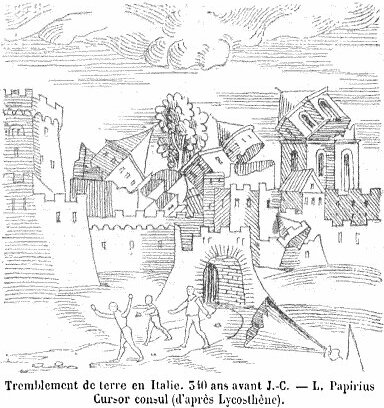
As memorable events go, earthquakes are right up there.  Well, we don’t get them often around here, but at 10:23 a.m. yesterday a 4.8 hit about 30 miles east of us, in New Jersey.  The whole house was shaking and it took quite a while to calm back down.  (Me, not the ground.)  The only other time I experienced an earthquake was the Virginia quake of August 23, 2011.  Yesterday’s was much closer and therefore felt much stronger.  It took a few seconds to believe it was even really happening.  Work will do that to you.  Such an event, just 3 days ahead of a total solar eclipse, has an almost apocalyptic feel to it.  And we’d just come off of a punishing super-soaker storm that left puddles in one of our bedrooms.  Those of us out east just don’t get these kinds of things happening very often.  It’s a little difficult to process and it kind of makes me wish I’d gone into geology after all.

Since apparently nobody was hurt, this goes into the category of transcendent earthly things.  Ironically, confirmation came from social media before any news networks had anything to say about it.  Big wheels turn slowly, I guess.  The first minutes after it hit were a time of confusion—did it really happen?  Was that actually an earthquake?  What else could it be?  The same was true after the Virginia quake.  I don’t want to brag about surviving an earthquake if that’s not what it was.  Funny how you want validation, even at a time like that.  Such events remind us that we’re small compared to this planet we call home.  When the earth moves there’s nothing you can do about it.

Ironically, there are no maps detailing the Ramapo Fault line that was responsible for this quake. At least there aren’t any on the web. At 5:58 p.m. we had a 4.0 magnitude aftershock, much briefer than the main event.  An end-of-the-day reminder that we rely on mother earth for just about everything.  Earthquakes are times to call certainties to question.  Time to ask what we really know.  The tri-state area (in this case New York, New Jersey, and Pennsylvania) isn’t particularly susceptible to earthquakes—or isn’t prone to them, in any case.  I grew up in Pennsylvania and never felt one, although a bolide shook my childhood house back in January 1987, I believe it was.  Such reminders serve a purpose and in that sense they’re signs and portents.  We need to listen to the earth.  If we don’t, she will get our attention.  And then we must ponder.

Nothing as bad as this! Image credit: illustration extraite Prodigiorum ac ostentorum chroniconde Lycosthène, public domain via Wikimedia Commons

Not so E-Z

Paying for someone else’s mistake.  That’s what technocracy brings.  We’ve used E-Z Pass for years.  We first got initiated in Pennsylvania although we lived in New Jersey at the time.  In those days we were taking lots of trips from New Jersey to upstate New York, for which you generally have to drive through Pennsylvania.  Hey, we’re a tri-state area.  One of the ironies my wife and I noticed is that you have to pay tolls to get out of New Jersey, but not to get in.  That’s not a scientifically-verified fact, just a pedestrian (or vehicular) observation.  Since I’ve got more things on my mind than I know what to do with, we set the account to auto-replenish.  When funds get low, it automatically refills.  Nifty, huh?!

For some reason I can’t even remember the card on which this system was based had to be reissued.  Like most people I can’t remember all the auto-renews on any given card, so when I get a notice that there’s a problem, I update immediately.  So let it be with E-Z Pass.  See, there—wasn’t that easy?  But apparently not.  The day after I updated (and given that transactions are instantaneous these days, what, me worry?) we happened to drive to New Jersey.  My wife had four work-related trips to our neighboring state over the next two weeks.  Then the violations started arriving.  From New Jersey E-Z Pass.  I’d spoken with a rep from Pennsylvania E-Z Pass the day before and he assured me everything was set up correctly.  But New Jersey plays hardball.  They won’t even talk to you until you’ve received the violations by mail—weeks after the fact.

Any violation comes with a $30 surcharge.  I needed to speak to a person since NJ’s E-Z Pass menu doesn’t offer an option for “If our system has screwed up and your being charged for it, please press 666.”  The message immediately says there will be a forty-minute wait to speak with a representative (PA E-Z Pass picks up on the first ring, just sayin’).  Forty-minutes of muzak turned into an hour.  My phone died.  I recharged and tried again.  Another hour passed.  Finally I called at 8 a.m. the next morning—there’s still a forty-minute wait, but it’s only forty minutes.  I finally spoke with a truculent rep (if you’re already out of sorts by 8:40 a.m. perhaps it’s time to look for a different job) who told me I had to set up an account for NJ E-Z Pass—they don’t have truck with PA E-Z Pass—and check it seven-to-ten business days later to see if the charges had cleared.  E-Z Pass really isn’t that easy.  Keeping a pocket full of quarters might save you time in the long run.


Middle Ground

It’s the real poison Trump baptized.  Polarization.  The idea that there is no middle ground.  It’s a shame since the middle ground has been what’s kept America stable over the years.  Now it seems to be eroding rapidly.  While my sympathies have always been on the left, I realize that radical change tends to dirempt societies.  As much as I deeply desire justice and fairness for all, I know it will take time.  In my way of thinking that “all” includes animals.  That’s why I’m vegan.  Now, I know being completely vegan is likely not possible since who knows what everything is made of, and who has the time to find out?  I do the best I can and I don’t eat animal products and I try not to wear them either.  I know there are those who don’t share my outlook and they’re entitled to their point of view.

For nostalgia’s sake, and to get out of the house, we attended a 4-H county fair.  An annual event when we lived in New Jersey, it’s now a rarer treat.  So I put on that scarce recording of Bruce Springsteen’s song “County Fair,” not on any of his studio albums, and headed for New Jersey.  This county fair is the kind with animals rather than rides, and we stopped in to see the sheep, goats, cows, and alpacas.  It was in the cattle tent that I saw the following poster, claiming “There’s no such thing as vegan.”  Well, I don’t go around saying there’s no such thing as omnivores (thus the polarization) but this poster convinced me that we need to try even harder to stop raising animals to exploit. I understand, I think, the intent of the poster—cattle aren’t just meat.  The thing is, I think of them as conscious beings.

I miss the middle ground.  People no longer want to compromise or negotiate.  Since Trump it’s become “my way or the highway.”  I think I prefer the highway.  That highway takes me far from industrial feedlots where it’s illegal to document the cruelty that these animals undergo daily.  It’s quite a different thing for Bessie to lay down with a fan blowing on her under a tent with a small farmer caring for her, but that won’t feed a nation.  Small farms aren’t the problem. I don’t insist everyone be vegan.  I would like it if we could sit down and talk about it, however.  Cattle raising is the industry that generates the greatest amount of greenhouse gases that are causing global warming.  If we keep dividing ourselves and refusing to change we’ll be having this polarizing argument under water before too many years have gone by.  My highway is middle of the road.  Even slow change can benefit many.  The goal is to get “many” to “all.”


Here and There

There’s nothing like forgetting to make you remember.  Although we could scarcely afford it, we made many budget trips once we moved to New Jersey from Wisconsin.  As a family we used to keep detailed travel logs and we’d type up the results so that we could remember our trips.  For some reason, drifting about after losing a career, I stopped taking such notes.  Fortunately our digital camera time-stamped the photos.  I spent months organizing them only to have the external hard drive on which they were stored fail.  I’m now getting around to piecing together a bit of a chronology.  “Blog” was originally a portmanteau for “web log,” and since I’ve had no instruction on how it should be done, I mix an actual log with mental musings.  I’ve been doing so daily since 2009. Results may vary.

This blog has helped me keep track of travel, but those hazy days after the Nashotah House incident in 2004 up until blogging in 2009 remain undocumented.  Looking at the time stamps on those photos, it’s clear we traveled quite a bit.  Of course, New Jersey is a somewhat of a feast and it’s within easy reach of quite a few fascinating places.  Even a weekend was enough to explore someplace exotic, relatively local.  We used to make literary road trips on Memorial and Labor Day weekends.  Sometimes even later into the season.  Somewhere in that fog we made road trips to Maine, Connecticut, and upstate New York.  And although I grumble about technology sometimes, were it not for those digital timestamps the dates would be lost forever.  Of course, if we’d kept up our travel notebook…

As an historian, looking back comes naturally enough.  Gorgias Press downsized in 2009 and for a couple of years I made a living as an adjunct professor.  Even so, we managed a few trips (some of them mentioned on this blog).  Things must’ve been less expensive then.  Or else having a mortgage changes your perspective (the roofers are coming yet again this summer).  And the pandemic kept us at home for three years.  Whatever the cause, the urge to stretch wings and see new places remains.  Of course, it’s important to recollect where you’ve been.  In the meantime, I’m trying to piece together what happened those first few years in New Jersey.  That’s the historian’s task—putting together the events of the past from bits of evidence.  It’s pretty clear why historians get excited when they have diaries or notebooks from which to work.  We are, after all, the historians of our own lives.


Time Well Spent

If you want a bookstore mostly to yourself, go on a fine, sunny summer weekend.  There will always be those with reading on their minds, of course, but since we’re still dealing with a pandemic, going when it’s quiet feels right.  Having to drop someone off for an event in rural New Jersey, I found myself with a couple of hours and the prospect of sitting in a hot car and trying to read or to find another way to use time productively.  It was a fine, sunny summer weekend day.  I realized the event wasn’t far from Frenchtown.  Now, I’d been through Frenchtown several times, often with my wife on her way to a weekend stint at work.  I’d noticed Frenchtown Bookshop, but since we were always on our way somewhere, we could never stop.

Public parking in Frenchtown is difficult on a fine, sunny summer weekend.  There is a bike and hike trail that passes near the Delaware there, and there’s also the river itself.  Kayaking and rafting on the border between New Jersey and Pennsylvania are popular pastimes.  The mercury was creeping up to 90, so people were out, either sweating on the trail or cooling their heels in the water.  Both public lots in town were full, as was all the on street parking I could find.  A bank tow-away lot—the bank was closed—seemed like the only option.  Independent bookstores are national treasures.  I always carry a list with me since it’s too easy to lose my head when surrounded by print.  If my specialized tastes aren’t represented, I can always find something.

Books are one of the great achievements of humankind.  Although circumstances may have prevented many women from making careers in writing early on—Enheduanna proved even among the Sumerians that women had wisdom to convey.  Once novels came to be written, the form was well populated with female sages.  Reading and writing were kept from slaves for fear of what might happen could they see what the knowledge of humanity really said.  The internet has, of course, become the great democratizer of writing, but has made it more difficult to get a publisher’s attention.  Apart from all that, books laid out on a table, or stacked neatly on shelves, are one of the simple, usually inexpensive, joys of life.  For about the price of a movie you can stretch that entertainment dollar out over several days.  Even when they’re fine, sunny summer weekend days.


A Walk in the Park

About five years ago my wife and I took a drive along the infamous Shades of Death road in Warren County, New Jersey.  Urban legend has all kinds of creepiness associated with it.  It was a pleasant enough autumn drive for us, and we didn’t see any ominous signs.  History has moved on since the road had been named and, as is typical, the origins had been lost to time.  Something I’ve noticed in moving from east to midwest back to east and a little further west again is that names tend to travel with westward expansion.  I haven’t read enough local history to gain a good sense of this, but we noticed that if New Jersey has a “Devil’s Half Acre,” so does eastern Pennsylvania.  

Yearning to get outdoors for a bit—it’s been rainy here and the pandemic limits options for seeing much of anything—we decided to visit Hickory Run State Park in Carbon County.  Not a bad drive from where we live, we decided to pick out a hiking trail before making the trip.  With over forty miles of trails, your choice of parking depends on which one you want.  We found that there was a Shades of Death trail.  The website tries to dispel the fear factor of the name, noting that early settlers referred to heavy woods and rocky terrain when they named the area.  It is some of the more challenging hiking offered in the park, with passages over small boulder fields and some slippery rocks.  It also turned out to have some wonderful scenery.  We’d arrived early enough to avoid the crowds that’ve made walks in the woods less pleasant in pandemic times.

Indeed, as we finished our hike near noon, families with kids excitedly shouting “Shades of Death” were making their way along the at times narrow path.  I couldn’t help but think how our lives have become so much easier, at least with physical challenges, than those of the original settlers who named these once treacherous places.  We find the names quaint and a little amusing.  Indeed, at the visitor center, the outdoor art emphasizes that particular trail, demonstrating its popularity.  Part of the draw of horror is, of course, reading or watching it from a safe location.  On a sunny morning with modern conveniences never far away, the name gives a little thrill even as it reminds us that a walk in the woods once held a peril difficult to imagine when you can drive right up to the trailhead for a walk in the park.


Night of the Living

The New Yorker view of the world, so the joke goes, sees the five boroughs in great details, then a very thin New Jersey across the Hudson with a vague California somewhere out west.  Having worked in New York City for nearly a decade now, I know that such a view is exaggerated, but has a small glimmer of the truth.  We can only pay attention to so much and things are constantly coming at you in Gotham.  I sometimes forget, now that I’m in Pennsylvania again, just how diverse my home state is.  I’m not from old Pennsylvania stock—neither of my parents were born here and neither of my mother’s parents were born in the same state she was.  Still, when you’re born in a place it’s natural to feel that’s where you belong.  You inherit the outlook.  I inherited Pennsylvania.

Pennsylvania is a bit unusual in being a commonwealth divided in two by a mountain range.  Laid out with an horizontal orientation, it’s about 280 miles across, and once you’re over the Appalachians, you’re into a different subculture.  On our way into Pittsburgh, signs for Evans City reminded me that among its many contributions to American culture, the Steel City also gave us zombies.  Now from a history of religions point of view, zombies came from Caribbean religions that fused indigenous African beliefs with Catholicism.  A religion that arose among people commodified as slaves.  A zombie was a body with no will.  It took George Romero, living in Pittsburgh, to give us the movie zombie with The Night of the Living Dead.  Pittsburgh, among some, is glad to claim the title of zombie capital of the world.  Its zombie walk is a thing of legend.

Ironically, the western end of the state, beyond the mountains, tends to be more conservative than the side closer to the seaboard.  (Pennsylvania is the only of the original thirteen colonies not to have direct Atlantic Ocean water frontage.)  Yet it has adopted the most egalitarian of monsters—the living dead.  Romero tapped into the universal fear of unsettled death to make what were later to appear as “zombies” the unnamed monsters of his most famous film.  Everyone has to die, and no matter our religious outlook (or lack thereof) the question of what comes after is asked on both sides of the Appalachians.  And even by those across the Hudson in New York City.  There may be even something between the two.


Friends with the Devil

The Pine Barrens of New Jersey strike the first-time visitor as eerily odd, even today.  Stunted trees grow from sandy soil, crowded close together and growing hard up to the edge of the road.  You can see the sky above, but dwarf trees of uniform height block your lateral views over any distance.  It feels claustrophobic.  Add to this tales of inhospitable residents and an actual profusion of tree-climbing lizards, and you’ve got the grounds for wondering what else might lurk in the deciduous woods.  Brian Regal and Frank J. Esposito aren’t so easily frightened.  Their fascinating book, The Secret History of the Jersey Devil: How Quakers, Hucksters, and Benjamin Franklin Created a Monster is a bit of a chimera on its own.  The subtitle gives a pretty good idea of what you’ll find in the book.  For someone who had lived in Jersey for a dozen years, and who loves monsters, it was a must-read.

Not to provide too many spoilers, Regal and Esposito spend some time in colonial New Jersey sketching the little that can be known of the rather prominent Daniel Leeds.  Anyone from Jersey knows that its eponymous state demon is also known as the Leeds Devil.  This particular family had good connections despite being Quakers—a capital crime in some parts of the British Empire.  Daniel, however, had a falling out from the Friends and made his name by publishing an almanac.  This almanac and the proximity of Philadelphia to the Barrens brings Benjamin Franklin into the story.  Franklin competed with the Leeds almanac, and Poor Richard eventually won out in this war of the words.  Demonized by their former Friends and gently satirized by Franklin, the Leeds family was eventually all but forgotten.  Then stories began to emerge of a dragon-like monster in southern Jersey.

To get the details you’ll need to read the book.  Particularly interesting for this blog is the way religion and monsters interplay.  There’s a good bit of history of monsters in the story, including Quakers and early attempts among scientists to understand birth defects.  The very word “monster” is, in its “word cloud,” related to ideas such as revelation and portents.  Early scientists resorted to divine anger when they couldn’t explain what nature had wrought.  And of course folklore is a very potent lubricant.  There are some gaps in the story here, but this is an enchanting exploration of whence monsters might come.  The Jersey Devil has international fame now, and its birth may have begun with insults flashed back and forth among religious believers that eventually were taken literally.  The devil’s in these details.  Or at least in the spooky topography of the Barrens.


Holly Days

Thirty years ago today, my wife and I were penniless grad students.  Trying to be logical about when to marry—I’d been accepted at Edinburgh University shortly after we’d decided on a May wedding and the latest I could matriculate was April—we decided the holidays would be the best time.  Not Christmas, of course.  Or New Year’s Day.  As students we held to the illusion that others observed the natural caesura between the two.  We considered it from the feast of Stephen to New Year’s Eve, days when everyone is recovering from the intensity of Christmas or staying up late to welcome in 1989.  We settled on December 30.  The church was already decorated for Christmas, saving that expense.  Having moved up the date by some five months we did ask them to remove the banner that read “For unto us a child is born.”  Our reasons were purely academic.

I generally avoid writing too much about my personal life on this blog, but a thirty-year wedding anniversary is somewhat extraordinary.  Being a working-class kid I told my wife when I proposed that I couldn’t promise much but I could assure her our life together would be interesting.  That slippery qualifier has proven correct time and again.  Our first three years as a couple were spent in Edinburgh, and quite unexpectedly, the next fourteen at Nashotah House.  The first two of those years involved being apart from Sunday through Wednesday as I commuted from Champaign-Urbana to Delafield to teach my courses.  And, of course, to attend chapel.  Our daughter was born while we lived at the seminary and a Fundamentalist takeover led to the loss of my first (and to date only) full-time academic job.

The academic job market had been tough when I started and it had tanked in the meantime.  We had to uproot and move to New Jersey to find any work at all.  Publishing proved remarkably unstable and yet we stuck together.  This year we bought a house and moved to Pennsylvania.  It took three decades, but we’ve finally achieved what some would term normalcy.  The fact is, though, that long-term marriages are to be celebrated.  Many of the vicissitudes we’ve faced could easily have capsized our little boat.  Looking back over the years I can see that we never did prosper in any kind of financial or career situation.  Life has indeed been interesting.  I don’t blog much about my personal life, but today I can’t help but think of how incredibly fortunate I am to have found a soul-mate willing to stick with a guy who still thinks like a penniless grad student.  Thirty years of schooling and it’s not nearly enough.

A young couple’s anniversary in Wales.


Free Reading

I think I was driving through Montclair, New Jersey when I first noticed one.  A “little free library” in someone’s front yard.  Then I began to notice them around elsewhere.  Neat little outdoor kiosks filled with books.  Despite my love of literacy I’m not inclined to take books from such places.  For one thing my reading tastes are odd, and for another I want other people to catch the interest in reading.  And “free” is a great motivator.  The idea is simple: set up a little free library on your property, seed it with books, and watch it work.  People are encouraged to take what’s there for free.  And leave books they want to donate, if so inclined.  Now that we’re in Pennsylvania we discovered one in a nearby park.  A community feels more homey with books.

Searching for the concept online, I came to LittleFreeLibrary.org.  I’m not sure if they started the trend, but it provides the basic idea.  They even have plans for how to build your own and get your neighborhood reading.  If anyone wants a clue for making America great, here’s a free hint: it will involve books.  They’re a commodity unlike any other.  Mass-produced (often too enthusiastically so) they are generally inexpensive and can be used over and over again.  One of the biggest headaches for publishers is the used book market—since a book is a handful of ideas, once they’re released they’re difficult to control.  They can be sold again for less than market value, and yes, even given away.  Those who read see the value in giveaways, even if there’s no personal profit in it.

Early in our tenure here we decided to take a book to donate each time we go to the park.  Sometimes we forget, of course.  Our first donation was there for two weeks, but then found a new home.  A strange kind of joy accompanied finding the book gone.  Perhaps we’d done some good simply by opening a door and leaving something we were no longer using.  Then something unexpected happened—I saw a book from my reading list in the local.  Should I take it?  I have a list of books to seek in used bookstores, for, to the chagrin of my own industry, I participate in the used book market.  I had been looking for this tome for a few years, reluctant to pay full market value since it has been around since the sixties.  In the end I couldn’t resist.  Next week, I told myself, I’ll take two books to give back.  Literacy’s that way—it’s something even introverts can share.


Breaking Day

When does the day start?  Years of awaking around 3 a.m. may have distorted my perceptions a bit, I suppose.  Here in the mid-Atlantic states, the sun is never up that early.  Year round I get out of bed when it’s still dark.  I’m not complaining—this is generally a peaceful time, a rarity in New Jersey.  If the bus didn’t come so early I’d get an awful lot done in a day.  But when does the day really begin?  I rise early to write.  Computers have changed my writing style quite a bit.  I used to write everything by hand.  Even as a kid with a second-hand typewriter, I preferred longhand first.  I still do, truth be told.  It’s slow, though, morning’d gone before I got too far.

So I get up and boot up.  I’m not sure that I’m crazy about my computer knowing so much about my personal life, but one thing it simply can’t understand is that I’m an early riser.  Many days my laptop will condescendingly ask me if I mind if it reboots—it’s been updating software when it thinks I’m asleep.  For the computer, day doesn’t begin this early.  Sometimes I worry that my blog doesn’t get readers because the new posts come up around 5 a.m., before I jump in the shower and head for the bus.  If things don’t appear in the feed at the top of the page, well, they’re old news.  I admit to being guilty of that myself; yet knowing when it’s day has consequences.  Maybe I should be posting a bit later?

For some reason my computer likes to send me notices.  Like I’m not already paying attention.  I’m sure there a setting someplace I could change, but I’m busy most of the time and figuring that sort of thing out takes longer than I have time for.  Birthday notices for complete strangers—maybe they’re connected on LinkedIn?—appear, at 9:00 a.m.  I’m at work already by then.  I think this is my devices’ way of letting me know that it’s a nine-to-five world.  As an erstwhile academic I never cottoned onto that.  I started getting out of bed at 4 a.m. when I was teaching so I would have time to write before daily chapel.  I also taught classes that ran from six-to-ten (p.m.) while at Rutgers.  When does the day start?  When does it end?  The decision’s not mine, as my laptop’s only too happy to remind me.


Private Browsing

Montclair, New Jersey, is a diverting place. At least it is for me. I used to teach—strictly as an adjunct of course—at Montclair State University. And like many other diverting towns, Montclair has multiple bookstores. On the occasions my wife has to spend a Saturday working in Montclair I often accompany her. If the weather is decent I can walk to both bookstores and have a leisurely browse. Since anything leisurely is rare these days, I eagerly anticipate such trips. Typically I’ll sit in my wife’s work place counting off the minutes until I can leave to get to the Montclair Book Center just as it opens. Used bookstores are a bit like archaeology—you never know what you’ll find, and some of the treasures may be unique. I often have the store mostly to myself, for private browsing.

This time, however, I had another task to accomplish first, before I could go to the first bookstore. By the time I arrived, it had been open for over an hour and there were, surprisingly, plenty of people there. We’re accustomed to hearing that people no longer care for books. While it’s true they won’t bring in the numbers of, say, those wanting the latest video game, it’s also true that on a pleasant Saturday morning an independent bookstore can be a crowded place. It warmed my heart to see so many readers out. And they weren’t all old like me. Younger people talking about the merits of this or that author, browsing in the sections I frequently haunt. Although I found none of the books on my list, I still had that blessed feeling you have when you discover you’re not really alone.

The other store, Watchung Booksellers, is a couple miles to the north, at least by the walking route I use. A small indie, it typically has what modern-day people might be expected to be interested in. I arrived to find it crowded as well. I’ve been there a number of times in the past and usually there are two or three others browsing. This time it was actually a little difficult to get around the small space. Seeing children there made me especially glad. A crowded bookstore is a sign of hope. As we struggle against the forces of ignorance and hatred that seem to have gripped the privileged classes, Saturdays at bookstores doing brisk business are an indication that the future may correct such ill-informed sentiments. Bookstores are termometers of national health, and seeing them busy made my Saturday. It’s worth getting up early just to spend such a day in Montclair.


Hope for the Future

I’m standing in a haunted place. There was an act of violence here this week. Gun violence. A man died in this restaurant where I sat with my wife and had lunch just a couple of months ago. I’m in Princeton for a rally organized by a teenager. We’re here to tell the government we the people want sensible gun control laws. The website said they were expecting 500. Five thousand turned out instead. Princeton’s not the kind of town where you expect gun violence. Affluent and privileged, it’s the kind of place many of us go to get away from real life for a while—they’ve got the best bookstore around and you can still find DVDs at the Princeton Record Exchange. You don’t expect people to be shot dead here.

America’s perverse affair with firearms goes hand-in-hand with its refusal to ensure adequate treatment for the mentally ill. We give them firearms and wonder what could possibly go wrong. We elect the mentally deficient to highest office in the land and instead of reining him in, the GOP reigns with terror. They have shown time and again that they prefer NRA money to our children. They have sold out. And the word appropriately used to describe such a party good manners prevent me from inscribing on this blog. Republicans, true republicans, need a new party. Instead they refuse to call this aberration in Washington what it truly is. Thousands took to the streets yet again this weekend. This was my fourth rally or march since January of last year, and hey, government—they keep getting bigger.

“Woe to the inhabiters of the earth and of the sea! for the devil is come down unto you, having great wrath, because he knoweth that he hath but a short time.” So saith the Good Book. It’s a book the Republican Party has forgotten how to read. Especially the “evangelicals” who’ve betrayed their saintly name. While I’m here in Princeton, a few hours away in the sullied capitol of this once reasonable nation, half a million are on the march. And just as women led the way last January we’re being shown the truth that anyone can lead better then old white men. And the fact that the organizers of these protests are high schoolers, I am inclined to leave the last words to the prophet Isaiah, whom, for any Republicans who might be reading, is in the Bible: “The wolf also shall dwell with the lamb, and the leopard shall lie down with the kid; and the calf and the young lion and the fatling together; and a little child shall lead them.”


The Power of Literature

Among the uber-wealthy families that America has produced were the Dukes. Most famous for the university that bears the family name, they made their money in tobacco and then electricity. And what a lot of money it was! Although many people can point to North Carolina as the home of Duke University, many don’t realize that they liked to vacation in New Jersey. A large property, regally landscaped, rests just outside the unlikely town of Hillsborough. When the last Duke heir died, the foundation opened the property to the public, taking Green initiatives to heart. It’s good to see money with a conscience once in a while. Since we’re not far from Hillsborough, when cabin fever sets in and there’s actually sunshine on a late winter weekend, Duke Farms is a convenient getaway for a few hours.

Surrounded by a rock wall, the main property once housed luxury that most people will never experience. Ancient sycamores line one avenue that leads to a coach barn far nicer than the houses hoi polloi live in. Although we’ve visited the grounds many times, we haven’t seen all of it by a long stretch. Over the weekend we came across a gravel trail we’d never taken. The main avenues are wide, blacktop, pedestrianized boulevards that lead past aging structures, fountains, ponds, statues, and quaint bridges. The gravel trail meanders back and forth through small hills and glens, and it’s easy to believe you’re in the middle of the woods from time to time. At the top of one of these hills we came to the pet cemetery, amid the leafless trees.

We can all understand the emotional attachment to pets. Even the wealthy feel it. The cemetery was large for non-humans, with stones going back to 1953. Even a pair of camels were buried there. I can’t visit a pet cemetery, however, without thinking of Stephen King. It was a blustery, chilly day. We were alone on this remote trail we’d just discovered, and thoughts of resurrection didn’t seem that far fetched. The rich, after all, can do anything they please. Nevertheless, there was a pathos here. We were being given a glimpse into private lives. The names of other people’s pets, and sometimes their species. The things that had touched the monied class deeply. I’ve buried a few pets in my time, and it is always a solemn activity. One from which not even wealth can protect anyone. And here was another testament to the power of literature. Groping for a way to understand this place, a favorite horror novel seemed just about right.