Not What It Says

The title sounds promising.  Gothic Harvest.  But the movie in no way lives up to it, even with its vampires vs. voodoo theme.  So, during Mardi Gras a group of four coeds decides to party in New Orleans.  Of course, this is the capital of American voodoo.  While drinking themselves to oblivion, one of them gets picked up by a local and taken back to the family home.  There, of course, she’s kept as food for the “vampire.”  An aristocratic woman who fathered a child with a slave has received a curse—she and her child remain alive, she aging, while the rest of the family is arrested at their present age.  (Really, the story makes little sense, so don’t ask.)  They need young blood to keep the aristocrat alive so that they can continue living.  In the right hands such a story might’ve made a passable horror film.  These weren’t the right hands.
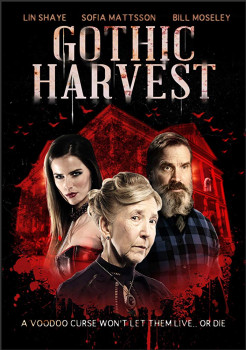
It’s a good thing I’m trying to develop an aesthetic for bad movies.  The acting is bad, the dialogue is bad, the writing is bad.  Is there a moral here?  Don’t go partying during Mardi Gras since you might get picked up by a family under an ancient curse?  And  would it really hurt to do a second take of scenes where an actor stumbles over their lines?  I don’t know about you, but to me the title Gothic Harvest suggests that lissome melancholy of October.  You can start to smell it in the air in August and you know something is coming.  Honestly, I’m not sure why more horror films don’t capture that successfully.  I’m always on the lookout for movies that will catch my breath in my throat with the beauty and sadness of the season.  They are few and far between.

So, like a clueless coed during Mardi Gras, I’m lured into movies whose titles promise such things.  One of the movies that I, inexplicably, saw when I was young was the James Bond flick, Live and Let Die.  Roger Moore had taken the reins from Sean Connery but that film set my expectations for both the Big Easy and voodoo.  I’ve only been to New Orleans once, and that during a conference.  It was before the revival of my interest in horror.  Successful horror has been set there, of course.  The one thing Gothic Harvest gets right is the evocative nature of Spanish moss.  And the opportunity to try to learn to appreciate bad movies.


Musical Magic

IMG_2327


In-flight magazines aren’t a place I turn for inspiration. Having been raised in poverty, I’ve never found the jet-set interests to be at all engaging. I can’t turn my brain off, however, even when on vacation. Still, I hate to miss anything and I know I’ve got plenty of time in the air ahead of me. I was flying Alaska Air, so the in-flight magazine possessed a native exoticism. This particular issue focused on music. Music reveals a tremendous amount about the interior life, it seems to me. Some people live their lives to a constant soundtrack, while others listen to music seldom. Music, like religion, has the capacity to stir profound pleasure centers in the brain and, if I might be so bold, where your music is, there your heart is also.

One of the music festivals highlighted in the magazine was Voodoo Music and Art Experience in New Orleans. Right across the page was Sasquatch! Music Festival in Washington state. This unusual juxtaposition caught my eye. New Orleans, in the popular imagination, at least, has an association with the “exotic,” hybrid religions of the Caribbean. Voodoo is particularly feared by those who believe that somehow the supernatural can break into this mundane realm. Magic, although difficult to define, persists even in Richard Dawkins’ neatly ordered world. What better way to celebrate it other than music? There’s a homespun charm to it. Magic, despite the best efforts of many, won’t go away.

Since I was flying to the Pacific Northwest, the Sasquatch! Festival demanded my attention. Sasquatch, while disputed, has become the gentle giant frequently connected with magic. The stigma associated with believing in a New World ape has been eroding slowly, although it’s still on the list of “woo” factors for many. Like Voodoo, Bigfoot is an American concept that keeps a belief in magic alive. Well, we were in the air by now, and many had their earbuds in, passing the time with their own soundtracks. For me, music is often looking out the window while making no demands on that probable harmony the rational know as magic.


Southern Comfort

CajunNightOnce upon a time, long before Hurricane Katrina, the American Academy of Religion and Society of Biblical Literature held their annual meeting in New Orleans. It must’ve been an incongruous sight: the Big Easy filled with right proper professional religionists discoursing eruditely. While there, my family purchased the Cajun Night Before Christmas, by Trosclair. A cute knock-off of Clement Moore’s “A Visit from Santa Claus” (‘Twas the Night Before Christmas), the story unfolds of a fur-bedecked Santa visiting a destitute, but grateful family on the bayou. Each year I try to reach deep in my southern roots to find an accent that accommodates the poem, and read the story the week before the holiday comes. A number of factors have suggested that perhaps this year Christmas might catch many people on a more subdued level. Crushing poverty is a reality, guns are too readily available, and the one percent don’t get close enough to humanity to contract the common cold. Even the effects of Katrina have refused to dissipate completely. Her sister Sandy visited the Big Apple, and things still aren’t quite right.

Big Apples and Big Easies may seem to have little in common, apart from how much money is available to assist in hurricane recovery. They both also participate in Christmas, being havens of Catholicity. Yet after the hurricanes some in New York and New Jersey were without power several days, but parts of Louisiana were simply abandoned. The will to help the disadvantaged seems to have improved since 2005. Considering changes at the top, this isn’t necessarily a surprise. Nevertheless, tragedy throws into sharp relief what we consider human decency. Too bad it takes a disaster to make us more human.

What sticks with me about the Cajun Night Before Christmas, apart from the flying alligators, is the profound hopefulness that the poem conveys. Those with so little take so little to improve their lot. Yet those with too much insist it is their right not to be taxed at all. Those who live in a shack don’t expect much from Santa. They have learned through the disappointment of experience that double standards are endemic in life and while some are unbelievably rich, the poor are happy with just the smiles of children. Ironically, Santa is the great equalizer here. While the children of the wealthy may expect and receive more, the children of the humble are also allowed a portion of hope. As I remember New Orleans, in the palmy days before Katrina, it was a city that knew Mardi Gras was far more humane than Lent, and that even a city marked my radical inequities (let those with eyes to see read) could come to a joyous accord when sins are about to be atoned. And even if he has to commandeer alligators, Santa will visit the poorest children the night before the holy days.


Criticism Is Not Attack

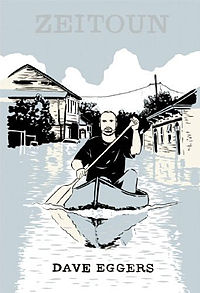
Each administration of George W. Bush was marked by a major disaster. 9-11 was followed four years later by Hurricane Katrina. The United States had received a one-two punch. I recently read Zeitoun by Dave Eggers. This is a book that should be read by every American, and it wouldn’t hurt others to read it too. This account follows the lives of a New Orleans family through the aftermath of Katrina. The main character, a tradesman named Abdulrahman Zeitoun, is a permanent resident of the United States from Syria. His wife Kathy, a convert to Islam, was American. When Katrina bore down on New Orleans, Kathy took their kids to safety with friends while Abdulrahman (known by many as Zeitoun) stayed in the city to look after the properties they owned. When the flooding had engulfed entire sections of the city, Zeitoun paddled about in a canoe, rescuing those he could, and even feeding abandoned dogs. Family and friends urged him to evacuate, but he felt he was doing good. Until he was arrested on his own property and imprisoned for being Syrian.

In a wrenching account based on interviews with Zeitoun and Kathy, Eggers describes how the US government quickly set up Guantanamo Bay-style prisons rather than attempting to rescue those stranded in their homes. Zeitoun was arrested and never informed of the charges, although he heard paramilitary guards armed with machine guns uttering “Taliban” and “al-Qaeda” at him. He watched as a mentally disabled man was pepper-sprayed by soldiers when he clearly couldn’t understand what they were commanding him to do. Despite having government issued ID and good standing as a business owner in New Orleans, Zeitoun was presumed guilty because of his profile: “Arabic” and Muslim. As Eggers reminds us, Homeland Security is now the administrative head of FEMA, and those that Homeland Security distrusts (all of us) are potential terrorists rather than citizens in need of help during times of disaster.

I grew up in a rather monochromatic part of the country, but as I traveled I met and befriended those of differing nationalities, including Syrians. Those considered “the others” by xenophobic bureaucrats are just as kind, loving, and good as those of us born under the sign of the cross with “white” skin. Zeitoun stands as an indictment of the jingoism that has come to be recognized as the only legitimate American citizenship. Zeitoun spent nearly a month in maximum security prison before being released after a makeshift trial, when no evidence existed that he’d done anything wrong. What has happened to the tired, the poor, the huddled masses yearning to breathe free? They’ve become the enemies of the state. I know, Katrina engendered extraordinary circumstances. Extraordinary circumstances, from a “Christian” view, however, demand extraordinary sympathy. Do the nation a favor. Before November, read Zeitoun.


Reap the Whirlwind

A pillar of cloud by day

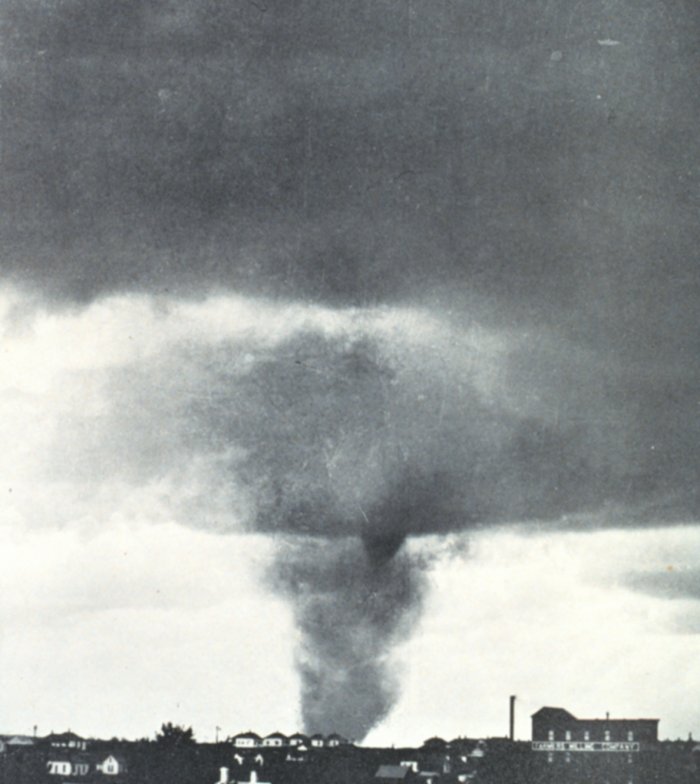
Something seems to be absent. The blazing rhetoric of televangelists and others proclaiming the wrath of God on New Orleans when Katrina blew ashore are strangely silent as a massive outbreak of tornadoes has ripped through the Bible Belt. Hundreds have unfortunately died as nature’s most severe weather-weapon has raked the south. In an apoplectic frenzy rivaling the 1974 Super Outbreak, tornadoes are well ahead of seasonal schedules this year as one wholesome Christian location after another vanishes in a whirlwind the envy of Elijah himself. I do not make light of this disaster. Having lived for many years in “Tornado Alley,” I very much feel for those victimized by these severe storms. They are a great tragedy and the loss of life, for Americans, is mind-boggling.

There is, however, a lack of continuity. Katrina, we were repeatedly informed, was the judgment of the Almighty on the sinful city of New Orleans. The tornado, surely the most divine of windstorms, remains a tragic natural phenomenon. “He makes the sun to rise on the just and unjust,” I recall someone once saying. Human tragedy is never easy to explain in any religious system. Even the self-righteous must acknowledge that – on some level – their pristine, exemplary lives deserve a thunderbolt or two. They speak loudest, however, when lifestyles of which they do not approve are decimated. How does the Bible-believing, rural farmer offend God? Were there no Christians in New Orleans?

The problem is forcing all members of one location into a category fit for reaping. It is sowing the wind. Human compassion demands that we not stand in judgment of the unfortunate, we simply help in what ways we can. One of the greatest dangers of any religion is that it validates one group above all others. Either we are all favored or none of us are. Waiting for a divine answer may take centuries, or even millennia. Lifting a hand to help a fellow human being is the only ethical response. Tornadoes are not the finger of God. Katrina was not the Almighty losing his masculine temper. We are all victims of the world into which we are born, and the sooner we refuse religion’s diabolical temptation to claim our special place, the sooner we will find our own way to a just society.