On Vocation

“There ain’t no use in complaining,” Bryan Adams once wrote, “when you got a job to do.” If I may be pardoned from removing rock and roll from its love song context. As a guy who’s suffered unemployment several times, I have to agree that having a job is good. Of course, such goodness has its natural limitations. Switching jobs too often means starting out over and over again. In today’s world, that means that at half-a-century-old you might well find yourself having to earn vacation days from nothing all over again. So when family vacation plans were made this year, one of us—the one with a new job—could not be included. My family is out near the west coast while I remain here on the east. Once upon a time we were somewhere in the middle. I’m glad they have the opportunity. This post isn’t about sour grapes, or vacation; rather, it’s about vocation.

I often think about how life has become only earning for the sake of earning. People say you should get a job you like, which is fine if such jobs exist. The jobs I like are now considered beneath me. Not by me, but by those doing the hiring. Where has the sense of vocation gone? Back in the Middle Ages (and I’m not one to suggest that things were necessarily better then) the learned had opportunities. Those who had a skill could be inducted into a guild that would help to ensure job security. We’ve moved to a free agent model where someone can be removed from their natural vocation with nary a thought what they might do next. Detritus of a throw-away culture. For those with highly specialized skills—Ugaritic, anyone?—such severance is like setting one on an ice floe, only crueler. Ironically, the guild offers no help.

Reading about the Transcendentalists reminds me of how restorative the woods are. Emerson and Thoreau, heading off to the forest to commune with the divine. Since this road is blocked for me, I take the one better traveled, into Manhattan where, I’m sure, there is life. Elevators, ubiquitous pavement, quotas and tallies. Prove your worth. Among the students I knew I was accomplishing something. Since then it’s all just numbers. In the woods I don’t count the trees. I don’t demand to know what they’re producing for the good of the company. I don’t question their motives. Outside my window, if I had a window, I would see only stone, concrete, and steel. And inside all I feel are numbers. Can a soul be quantified? I think I would have to side with the Transcendentalists on this one. But that’s not what I’m paid to do.


June Bugs

On my way to work yesterday, I came upon an overturned June bug clawing at the air, trying to regain its feet.  I’m always in a hurry getting to or from work, but I decided to stop, offering the insect a leaf to grip, and turning it back over.  I knew, as I spied birds flying overhead, that its chances weren’t good.  In the course of nature, insects are radically overproduced because so many get eaten.  In my apartment they can even be a source of sudden terror when they find their way inside.  I knew the June bug was probably nearing the end of its short time on the earth, but as I held out that leaf to it, I knew that in the act of struggling we were one.  That sounds terribly Buddhist of me, I know.  Insects and humans share, on the most basic level, the desire to survive.  Who likes to feel vulnerable—soft, unprotected underbelly exposed to the air?  Defenseless and helpless?  Certainly not this poor beetle.

Photo credit: Patrick Coin, Wikimedia Commons

Photo credit: Patrick Coin, Wikimedia Commons

Stepping off the bus in New York City, I began my daily power walk to work.  The bus had arrived a few minutes late, and my anxiety level about clocking in works as if it’s on steroids.  I have to buzz past the interesting things happening in the city, the people who merit a second look, the architecture that has an unexpected amount of detail, only to be lost in the overwhelming number of buildings.  Big buildings as numerous as bugs on a summer morning.  Then I saw a box pulled up on a low sill outside some swank bank.  I often need boxes at work, and I can’t help stopping to appreciate how this unbroken expanse of paperboard would be useful.  Then I noticed the feet sticking out the end.  There was life in this box, not so different from the beetle I’d stopped to help an hour and a half ago, in its exoskeleton, grasping for some kind of salvation.

I arrived at work agitated. I had been able to help the beetle, but what could I do for the sleeping human being in his box? I had no money in my pocket, and even a twenty would stay the exposed, raw human on the city street for no more than a few hours. To care for a person takes commitment, long-term willingness to make sure that those who fall on their backs are set again on their feet, given the resources, the opportunities they need to get along in a world where those circling above are far more dangerous than the birds in my neighborhood. I looked at my calendar. June is nearly over. The June bugs will soon disappear. And yet I couldn’t erase the image from my mind. How much relief seemed to show on that inexpressive June bug face when it could finally crawl away from the center of the sidewalk. Something was terribly wrong here. And a man was sleeping in a box just two blocks away. In the act of struggling we are one.


New York Calvin

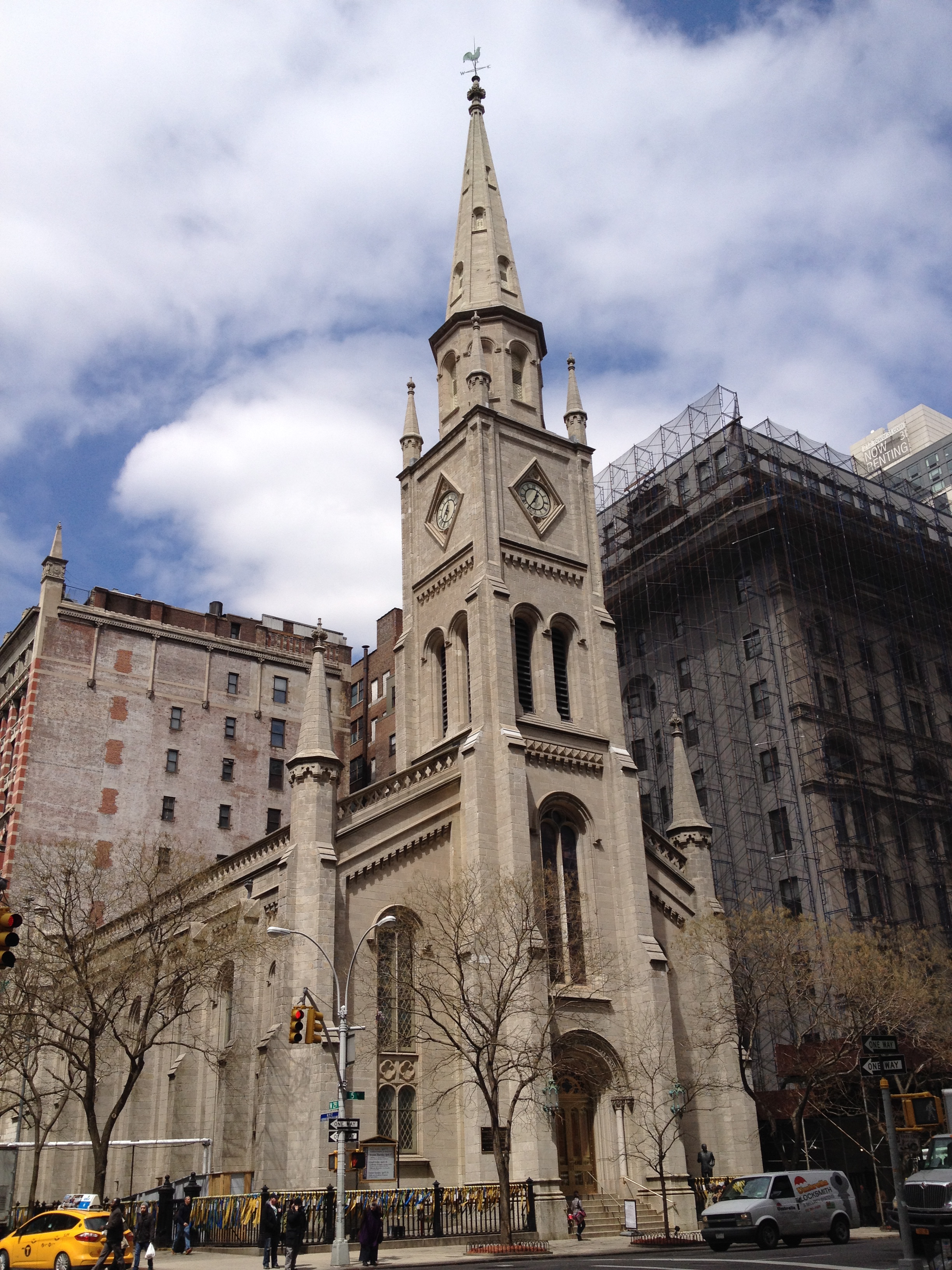
So I’m standing at the corner of Fifth Avenue and 29th Street, gazing at Marble Collegiate Church, of the Reformed Church in America.  A cold breeze is blowing, and I wish I’d thought to dress a bit more warmly.  Although the building in front of me was erected in the nineteenth century, the church was founded in 1628, making it among the oldest continuous Protestant congregations in the New World.  It is regularly passed by tourists and shoppers who give it nary a glance, not realizing that the Dutch who gave us New Amsterdam also gave us a Reformed Church that has stood the test of time in an increasingly secular New York City. 

IMG_1294
 
I am not now, nor have I ever been, a Calvinist.  That may seem odd coming from a religion scholar who attended a very Presbyterian College and earned a doctorate at a Presbyterian department at the University of Edinburgh.  Nevertheless, despite the many belief systems I’ve indulged, the Reformed wing has never appealed.  That’s not to say that I don’t appreciate what Calvinists have to offer: where would we be without the many good things Presbyterians have brought to us?  In any case, I was recently considering how I automatically equate Calvinism with Presbyterianism, and how I really need to get over that habit.  The Swiss reformers were a far more fragmented sect than the Lutheran contingent ever became.  That still shows in the many historic Calvinistic traditions out there.
 
Presbyterianism, on its own, is not a uniform denomination anymore.  For the time being, however, if we consider all Presbyterian groups as one stream of Calvinism, we need also to consider the Reformed groups.  Although all Calvinists are reformed, the Reformed Church had its historic stronghold in the Netherlands.  Doctrinal differences continued to fracture the Reformed Church into several denominations, two of the most prominent in the New World being the Reformed Church in America and its splinter, now larger, of the Christian Reformed Church (not to be confused with the Christian Church, (Disciples of Christ)).  Congregational churches, which have no overarching governing body, frequently fall into the Calvinistic theological tradition, although that is not necessarily the case.  Other Protestant denominations, such as Methodism, have equally diverse origins.  Others, like the Baptists, have an early history that is unclear even today.
 
The Calvinist theological family tree is well studied, and it stretches back from where I’m standing to Huldrych Zwingli and John Calvin and their peers, some five centuries ago.  Although it never reached the size of the Baptist and Methodist growth spurts during the Great Awakening, Calvinism did make a lasting imprint on the landscape of North America, and still continues to bring some of us out on a chilly day just to look and wonder.


High School All Over

“Jungle calls around the corner!”  This shout was followed by hoots, grunts, and squeals as the bus turned, intended to madden the driver of infamous bus 18. My high school bus had a reputation for driving its drivers—driving them to drink, anyway.  Some of the more memorable replacements had unflattering nicknames hurled at them: Wedgehead and Illiterate Bob are two I remember well.  I arrived at school smelling of pot and slightly deaf from the shouting more than once. Then we got a driver who fought back. One day he expelled all the boys from the bus for the remainder of the week. Being a Bible-reading, church-going youth who sat quietly up front, I felt that I didn’t deserve this punitive measure. Still, I felt sorry for the drivers.  And I’d learned a valuable lesson—being responsible for the safe arrival of fifty people is a lot of pressure.

Yesterday I climbed aboard the adult NJ Transit bus 117. Only later did I ominously realize that if the first digit were added to the final digit, you would get bus 18.  Or was it really the Pequod?

Those of us who stumble aboard the bus before 6 am are a docile, sleepy crowd, for the most part.  I open my book, and if someone insists on talking, plug my buds into the white noise app on my phone.  This is how I get my reading done.  Some of the regulars like to argue with the drivers. “You’re too early,” one woman says (although she’s ironically on the bus at the time). Or “Why didn’t you stop for me? I had to chase the bus!” The latter was the complaint yesterday.

For being soporfiric, the early crowd is pretty tightly wound. Daily we spend about 4 hours commuting for 7 hours of work.  We catch the early bus because traffic going into Manhattan meets the dictionary definition of Hell. Well, the complainer chose a tightly wound driver to challenge yesterday.  The complainer wouldn’t let up. I could hear the yelling through my static-filled earbuds.  In a move that would’ve done Illiterate Bob proud, the driver slammed on the brakes right on the highway and pulled over.  He demanded the lady off the bus.  She wouldn’t leave. He got off the bus and called his supervisor for 30 minutes. At the dawn of rush hour. The passengers began to grumble, not least of which was the complainer.  Held hostage, we all knew we were going to be late for work. I put away my book.  I’d been here before. I knew what would come next. I braced myself.  “Jungle calls around the corner!”

In the belly of the whale.

In the belly of the whale.


Not Narnia

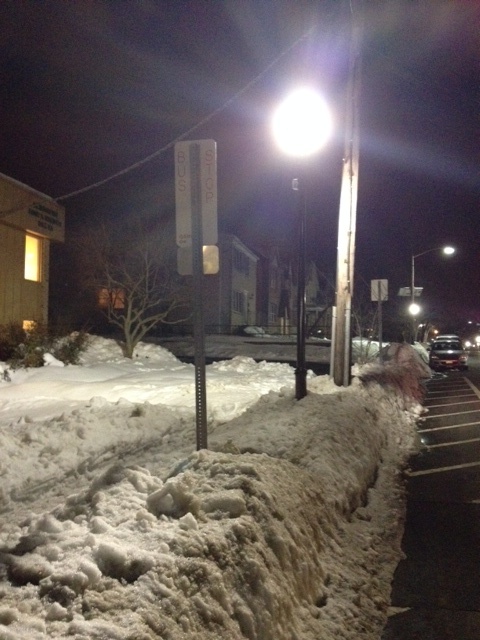
The snow fountain from a fast-moving snow-plow is a thing of beauty.  Unless you’re standing in the way.  It’s been that way this winter.  The sidewalk where I usually stand to wait for the bus is an arctic wasteland of waist-high snow piles shoved higher and higher by weary plow-drivers.  So I stand in the road, near a streetlamp in winter, but this is not Narnia.  I decided to try out New Jersey Transit’s highly anticipated “real time” bus locator—that way I know when to step out into the blowing wind to wait for the bus.  After I’d been sprayed by passing cars and the occasional snow-plow for 20 minutes, I became convinced that “real time” is just academic; it is the time that the bus would arrive, were the bus actually on time, if it ever left the garage.  Not that I blame the drivers—theirs is a thankless job that must lead to early retirement, or at least support the state mental hospitals.

Where's Mr. Tumnus?

Where’s Mr. Tumnus?

Now, I’m not the only one to be standing in the street, a hooker for capitalism, under my lamppost,  and some of the stops are completely snowed in.  When three passengers ganged up on the driver for nearly missing them because they weren’t at the stop because of all the snow, I began to feel a bit uncomfortable.  Springs can be wound too tightly, you know.  All of this is an issue because businesses don’t want to close for inclement weather.  During last week’s blizzard, I ended up taking the PATH train into New York, not knowing where it was going.  A young lady was fretting—she was going to be late for work.  An older African American gentleman comforted her.  “Don’t worry.  They don’t care if you come in late on a day like today.  They just want you to show up.”  They just want you to show up.  His words have haunted me. Businesses want you to show up because that reinforces the power of capitalism.  You don’t show and you don’t eat.  You lose healthcare.  Cobra is aptly named—you pay far more than unemployment’s pittance for monthly coverage.  Obamacare is about thirty years too late.

Every time I see the Mayor of New York justifying his decision to keep schools open when literally nine inches of well-predicted snow fall on the city—dressed in his trendy action-figure jacket, just like Christie after Hurricane Sandy—I wonder who is really being cared for.  The Mayor claims that of the over 1 million kids in the school system, a substantial proportion go to school so they can get their only hot meal of the day.  Is this the purpose of schools?  Is it not the humane duty of the largest city in the country to make sure fair opportunity is offered to those who wish to contribute?  Their parents, he adds, as an aside, have to go to work.  Why aren’t they being paid enough to feed their kids?  Oh, there is a blizzard coming, and it’s one of our own making.  As for me, it’s time to step back because I think I see another snow-plow coming.


Snow Job

Snow does not get mentioned very often in the Psalms. Sometimes it surprises people unfamiliar with Israel that the Bible mentions snow at all. It does, and snow does fall once in a while on the higher elevations of the hills of the Levant. This year has been a memorable one for snow in the New York City area. Generally speaking, the coastal cities of the northeast are not known for their snow. This year, however, global warming is flexing its muscles as erratic weather brings storm after storm to the region. Interestingly, an internet rumor of a thirty-inch snowstorm (supposed to have come earlier this week) demonstrates just how gullible we’ve become. If it’s on the internet it must be true.

A story in the New Jersey Star-Ledger traces how the rumor began, starting with an experimental weather model by a credentialed meteorologist, which, in the keyboards of novices, grew to biblical proportions. Fact checking is something we just don’t bother with any more. The facile understanding of “global warming” as tropics for everyone shows that. The internet makes information—true or false—available at nearly the speed of light anywhere on the globe. Except where the power is out, perhaps due to weather. Not only does knowledge spread quickly, ignorance is just as fast. People weary of snow are perhaps more open to suggestion than others. We don’t hear our Minnesota or Wisconsin friends complaining (at least not too much).

There was a time when the standard sources of authority determined what we would believe. We didn’t accept just anybody’s word for it just because they had a Facebook account. For all the debunking that we hear about, it is easier to preach than to practice. Don’t get me wrong, sledging to work through piles of snow is not fun and the old circulation isn’t as vital as it used to be, so I have to add more layers than is practical to keep warm. But I’m not expecting palm trees and rain forests in Manhattan any time soon. Nor am I expecting a three-foot dump of snow. I know better than to trust what I read on the internet. After all, they even let me post things on it every day. Talk about your theoretical blizzard…

DSCN0099


‘S No Day in New York

“You’re waiting for a train. A train that’ll take you far away. You know where you hope this train will take you. But you can’t know for sure.” Yet you’ve been standing on the windy platform in Newark for twenty minutes and they’ve announced the next train to New York will be an hour late.  A man you don’t know says the PATH train will take you to New York, but New York is a big city, and you only go there to work.  It must be a snow day.  Well, almost.  I work for a company that only closes when New York City Public Schools close for weather.  Today, kids, school’s open; but all is not lost—field trips are cancelled.  And so, the constellation of companies who take their cue from NYPS truck (sometimes literally) their New Jersey-based employees across or under the river, into a city where slush half a foot deep awaits them on every street corner, and that doesn’t slow those muck-flinging cabs down at all. 

With the weather we’ve been experiencing this year, I hear a lot of people saying that Mother Nature is still in charge.  Allow me to differ.  You see, I’ve been researching the weather and the Bible for years now and I’ve come to a slightly different conclusion.  In the Psalms, anyway, it is clear that God is in charge of the weather.  Given that New York is such a sinful place, I guess none of us should be surprised.  Still, I’m not sure the Bible has got this one quite right either.  After all, I’ve walked through ice-crusted snow up to my knees for a good part of my walk to the station, and I have my coat open so the cold breeze will cool me down a little bit before I have to walk into work with crazy hair and a scowl frozen on my face.  Didn’t some great theologian once say “sin boldly?”  No, it is not Mother Nature in charge.  It is not even the deity.  It is something far more powerful than God—money.  Can’t lose a red cent when there are human resources to be utilized.

I’ve never been on a Port Authority Trans-Hudson train before, and I’m not sure where this one stops.  I heard someone say 33rd Street, and that sounds encouraging, so when the train stops I follow him across the platform.  Sheep, as any shepherd knows, will follow a random person who looks confident enough.  I emerge from the dark underground, not quite sure where I am, and I just can’t find a Psalm in my heart at the moment, unless it’s an imprecatory one.  I stepped out of my front door into freezing rain three hours ago.  My trousers are wet to the knees, and I’m a little sick from facing the wrong way on the PATH train for a lengthy ride.  The cars, I notice, are shaped like Krell.  Yes, this is a forbidden planet and I don’t know where I might end up.  Excuse me, Mr. Mayor, but I think you got it wrong.  Field trips are not cancelled after all.  And I’m not sure I’m even worshipping the right god.

Deceptively peaceful

Deceptively peaceful


Sidekick

I have moved from the territory of Sharon to that of Laura. New York City is a conglomeration of smaller neighborhoods, and even Midtown Manhattan hosts hundreds of smaller sub-divisions. Although I’ve never intentionally consulted a psychic, I do tend to notice them. Once while on a visit to Galena, Illinois during the summer, we stumbled on a psychic booth where the proprietor was giving free readings. With some trepidation, we let her give our daughter a reading, just for fun. I don’t recall what she said, or even what her name might have been. There’s just enough fear of the unknown left in me to compel me ever want to visit a psychic, even if it is for entertainment purposes only. Clearly, however, there is a market. Where the market makes a hole someone will fill it. So I pondered Laura the psychic.

IMG_1178

The other day I passed her sign. Like most psychic ads I see, Laura’s sign makes use of religious symbols; the cross, bird, crescent and star, all thrown together amid an interfaith openness from which most religions might learn a lesson. Are psychics religious? I suppose that’s a personal question. The phenomenon of psi, if it does exist, and if it does involve spooky influence at a distance, tends to be classed with the supernatural. A few brave universities have from time to time explored the phenomenon, whether or not commercial psychics have it, scientifically. They set up controlled experiments and have even obtained statistically significant results. I’m more inclined to doubt statistics than the outcomes. Statistics are the tools of markets, and markets, well, make me shiver.

IMG_1183

Then I passed another sign. This one, just a block or two from Laura, seemed to suggest that witchcraft might unleash my potential and power. That sounds like a good thing. But then I noticed the FOX logo at the bottom. Another quality program, it seems, has fallen to the spell of witchcraft. It did confirm, however, that it is all about money. One size does not fit all. Religion adapts to fit a free market economy. Totalitarian states either attempt to disband religion completely and/or build up a national mythology that supplements traditional teachings. It doesn’t take a psychic to see that coming. As long as there’s money to be made, who’s complaining?


Best Nowledge

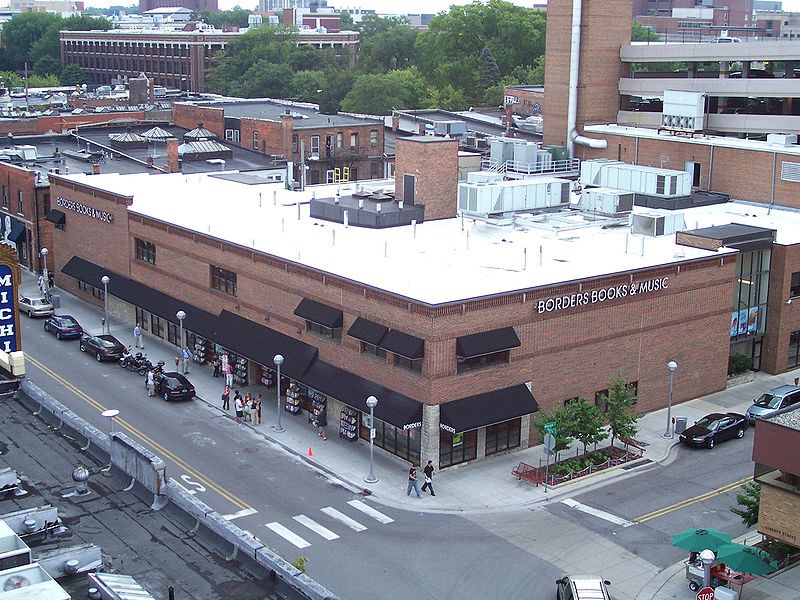
Back in the day when paper books ruled, New York City used to be known as the publishing capital of the country. Even though many publishers still call New York home, a depressing lack of interest pervades the city that never sleeps (sounds like it could use a good book). Although I’m no fan of Barnes and Noble, it is just about the last presence left of the brick-and-mortar-style bookstore. When news arrived this week that one of the large New York branches of B&N was closing, a sense of despair settled in. I love my indie bookshops. I literally went into mourning when Borders shut down, even now the sight of a vacant Borders can make me weep. A walk though any trendy mall will reveal no books to be found, and I go home perhaps fashionably dressed and smelling vaguely of perfume but sad nonetheless. Perhaps it is because the book is/was the culmination of one of the most important technologies of all time: writing.

Technology, as we think of it today, is largely electronic. Circuit-boards, nano-chips, embedded in sealed cases constructed in sterile rooms where the humans are more protectively suited than a surgeon. Isaac Newton once famously noted that if he’d seen further than others it was because he’d stood on the shoulders of giants. One of those unnamed giants invented writing. Dragging a stick through clay would probably be considered decidedly low tech these days, but the person who realized that a crude scribble of an ox-head with dots next to it might indicate how many cattle you were selling was a giant. We have no idea who the scribes were who wrote down the first narrative stories of gods and heroes, but the process resulted in a still largely anonymous Bible that is used to decide public policy even today.

There’s no doubt that books take up space that electronic gizmos don’t. Storage has been an issue for libraries constructed before publishing became a major, competitive industry. But electronic books have their problems too. With the ease of self-publishing, you never know who is really an expert without researching the author. Often on Amazon I find an intriguing title only to see that it has been produced by any number of self-publishing software platforms that indicate only the author’s own word for his or her expertise. I wonder what happens when people who don’t know to assess information in that way take anecdote for fact. Where are the shoulders of giants? Perhaps I’m just old-fashioned, but the world without bookstores looks a lot like the stone age to me.

Alas, Babylon!  (Photo credit: Lovelac7, Wiki Commons)

Alas, Babylon! (Photo credit: Lovelac7, Wiki Commons)


New Century

Time is the ultimate commodity. New Year’s Day is one of the ten standard holidays to the business world, a grudging nod in the direction that those who are tasked with making money for others might take a little break. Yesterday as I arrived in Times Square at 7 a.m., with a handful of others on the bus, vendors were already setting up their card tables on street corners with cheap, glitzy baubles to celebrate the drop of a ball as 2013 slowly wound out. Like many others, I marched to a job where little was happening. Emails elicited no response. Entire buildings in parts of Manhattan didn’t bother with anything but emergency lights since who really works on New Year’s Eve? Some of us must. As the long hours slowly passed at my cubicle, my mind wandered back over the past few weeks, months, year, decade, quarter and half centuries. New Year’s Day is one of the oldest religious holidays, if not the original one. But how far have we come?

800px-Royal_Irish_Rifles_ration_party_Somme_July_1916

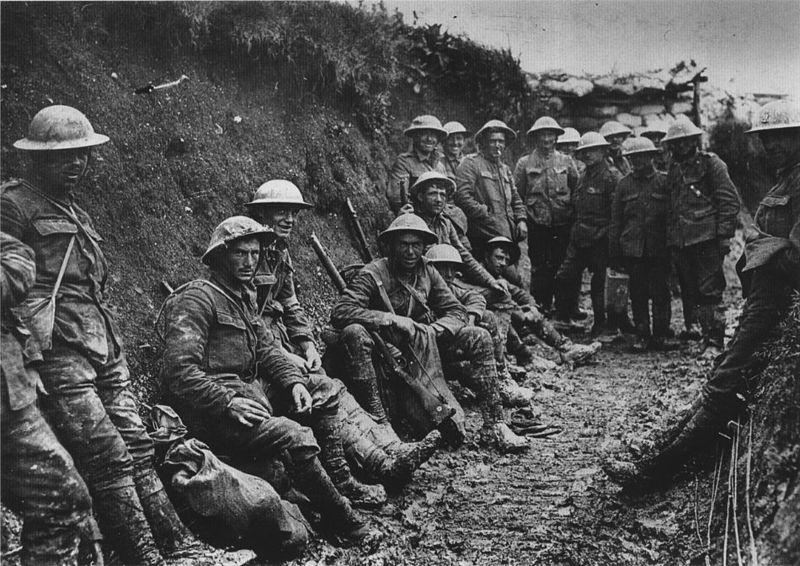
Only a century ago the world was poised for the Great War as 1914 dawned. Trenches were dug in minds before they ever appeared in the mud of the Somme. 1918 brought a tenuous peace that would lead toward inevitable renewal of hostilities after a decade was allowed for Gatsby and the jazz age. World War Two ended with the first threats of mutual annihilation, and just five years later the Korean War began. The police action ended in time to offer another opportunity at war in Vietnam around three years later. I grew up aware of the Vietnam War, but in a religion that taught me it was just preparation for the Really Great War yet to come. We gave ourselves fifteen years before starting a war in the volatile Persian Gulf, a conflict with a sibling Second Gulf War with its premature mission accomplished. Technically it’s over, but for how long? Drones fly over our heads even now. Books on World War One line bookshop shelves (in as far as there are any bookstores anymore). Sometimes I hope there are no prophets.

New year was a ritual marking that sacred resetting of time, and eventually it took on a significance all its own. A spiritual reboot, as it were. A time to move on from past troubles. As I walked through Times Square yesterday evening, my only thoughts were for the bus that would take me home, away from the massive celebration. I had a book to read against the long journey and already by five o’clock the crowds had begun to coalesce. So many people. So many hopes and dreams. The ball stood poised over Midtown, ready to fall, and a new kind of symbolism became apparent. We begin the new year with a downward trend. The tangled webs we’ve been weaving for decades have not been reset. Politics and power-brokers will continue to build on what they started long ago. Some of us just want to get home.


Writing the Cosmos

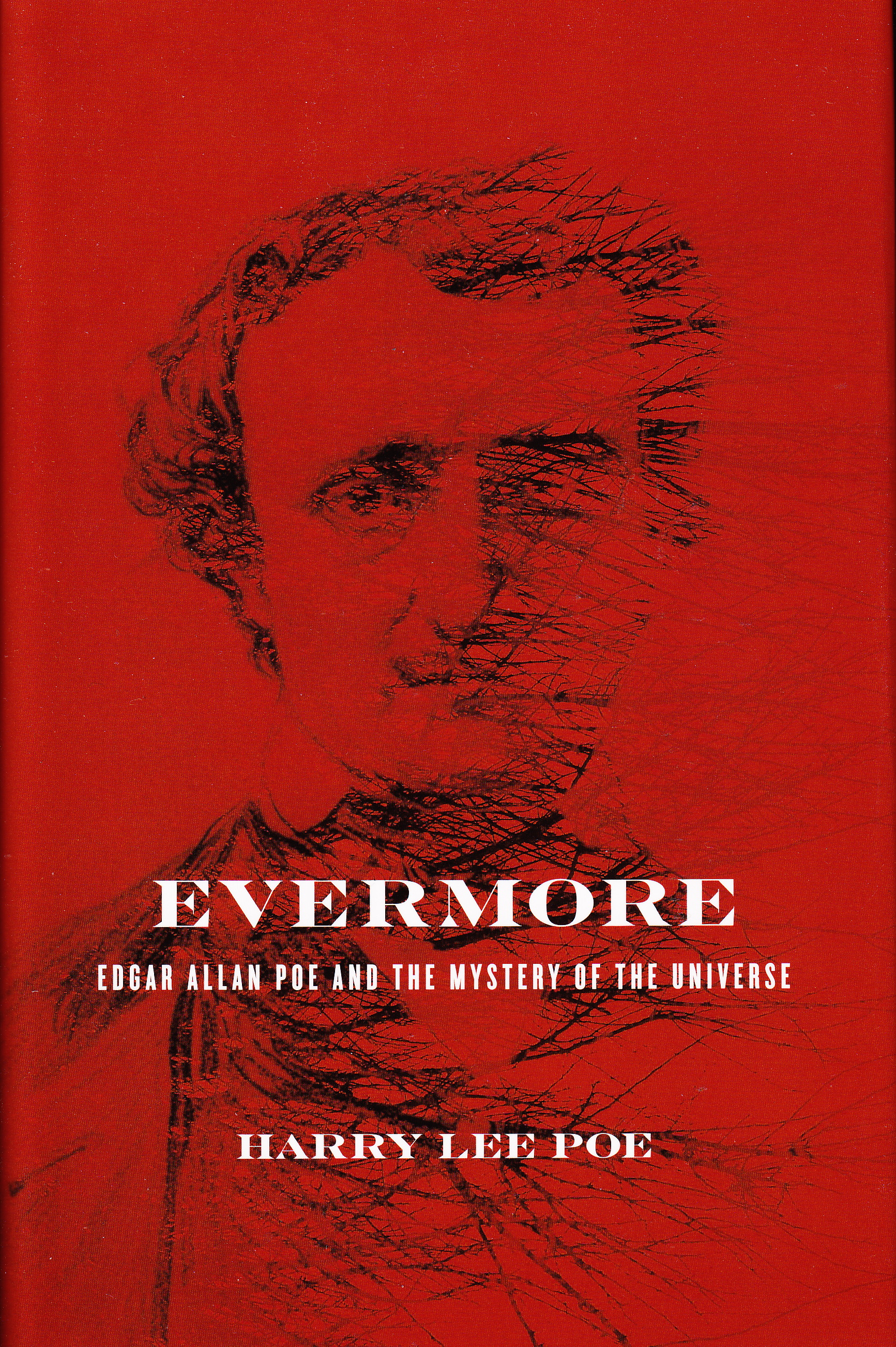
EvermoreOn occasion those with great wealth try to give something back to society. One such gift takes the form of libraries. The J. P. Morgan Library on Madison Avenue in New York is a touch pricey for those who live in humbler domiciles, but the Edgar Allan Poe display proved too immense a draw to ignore. Standing inches away from manuscripts written in Poe’s fine hand was a kind of communion. It wasn’t too difficult to believe he might have somehow been there. In Baltimore last month I didn’t have the opportunity to revisit his grave, but I picked up a book by one of his modern cousins, Harry Lee Poe. This Poe has theological training and an interest in seeing that his famous cousin isn’t theologically shortchanged. Evermore: Edgar Allan Poe and the Mystery of the Universe is a rare look at Poe and religion. Treatments of the theology of writers are hardly rare, but since Poe wasn’t openly religious, he was typecast a little too readily into the putatively godless camp of those of us with a taste for the macabre.

Evermore may not convince everyone that Poe was a profound religious thinker, but Harry Lee Poe marshals substantial evidence from both Poe’s published writings and letters that he was often caught in that crux between science and religion. Indeed, there is no evidence that Poe was an atheist. He wrote on what were considered lowbrow topics because those were the kinds of pieces that would sell. Since Poe was perhaps the first American to attempt to make a living solely by his pen, he had to pay attention to what people wanted to read. Evermore, while not a biography in the usual sense, does point out that Poe wrote across genres and that his life, while often tragic, had many spells of happiness and some contentment. Poe was a victim of character assassination after his death by a second-tier clergyman, Rufus Griswold. Much of the book is spent dispelling myths.

Perhaps above all, Edgar Allan Poe had a clear mind that could keep imagination alive in the religion and science debate that was to explode shortly after his death with Darwin’s Origin of Species. For Poe, the universe was a story being crafted by God. Creativity was essential to beauty, a concept that haunted Poe. A writer must be introspective, and this will often leave him or her open to criticism by those who prefer simpler answers. Great beauty can be found in complexity, however, and the practice of ratiocination requires a healthy dose of imagination to help make sense of a world that often seems to make no sense any other way. And standing here, my face inches from a handwritten copy of “The Bells,” I can almost hear them ringing.


Eating Your Prophets

Ezekiel was an odd character, even for a prophet. He’s become a kind of patron saint to ancient astronaut theorists, and his name in fiction often denotes someone slightly off balance. In his defense, he believed that God was demanding his many strange actions. A priest in a period of exile from the “one true temple,” Ezekiel lived an existence as a captive in a foreign land and came to some radical conclusions about the nature of Israel’s god. His visions and actions were considered the original weird, even by his contemporaries. Since Ezekiel believed Babylon would conquer Jerusalem, the people there would have to go on starvation rations. In chapter 4 of his book, Yahweh tells the prophet to try to make a bread out of wheat, barley, beans, lentils, millet, and spelt. This odd mixture is to be eaten in very meager portions to symbolize the coming privation for 390 days (during which time he is to lie on his left side). His bread is to be cooked on dung.

IMG_1156

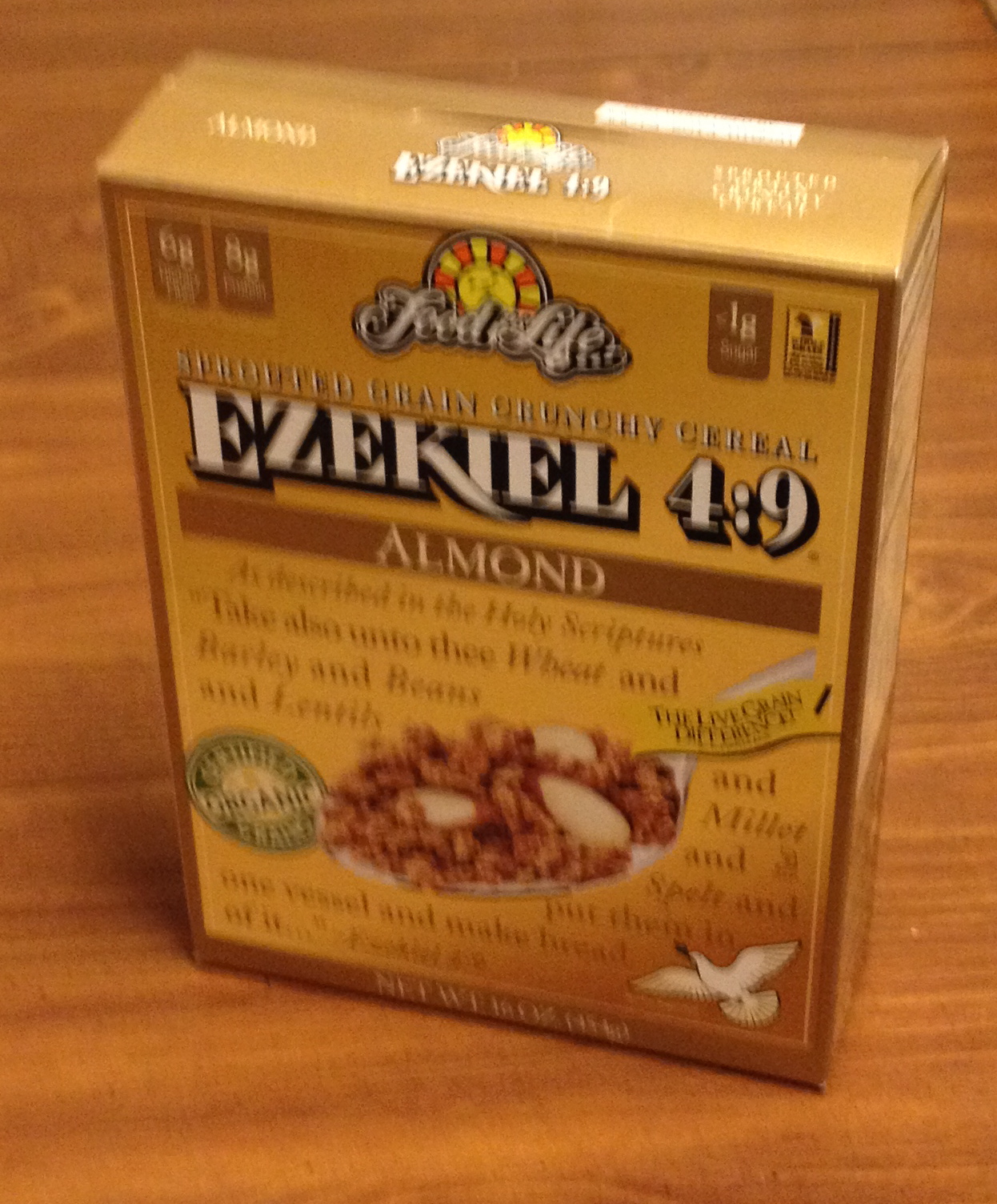
I eat breakfast around 4 a.m. My bus to the City comes before 6:00 and there are no restrooms on NJ Transit buses. Many New Yorkers eat breakfast in the office, but I’m just too Episcopalian in sensitivity for that to really be an option. I don’t like really sweet cereals, but granolas are often quite sugary unless you want to pay top dollar (and most of my dollars are bottom dollars) for some organic, European blend. Then I spied Ezekiel 4:9. Knowing full well the context of the reference should’ve given me pause, but it was two dollars less a box than some of its competition—downright exilic prices—and my curiosity was roused. What would Ezekiel eat?, I asked myself.

Most people don’t realize that so many of us eat breakfast cereals due to the efforts of our Seventh-Day Adventist friends. Adventists, in addition to being literalistically inclined, advocate healthy living. Will Keith Kellogg, a faithful Adventist, believed that eating cereal for breakfast was healthy and widely promoted the idea through the company he founded to produce cereals. Kelloggs does not produce Ezekiel 4:9. Food for Life, an organic bakery, are the purveyors of this organic breakfast. Their religious convictions, if any, aren’t evident from their website. Just about the time I’m climbing aboard the bus, I know that even as Ezekiel saw the wheel, I’m in for a moving experience. Isaiah-os or Jeremiah Flakes may be difficult to imagine, but with Ezekiel nothing really surprises. Today’s Bible lesson may be as close as the larder shelf. I just skip the cooking on dung part.


Meaningless Words

IMG_1086

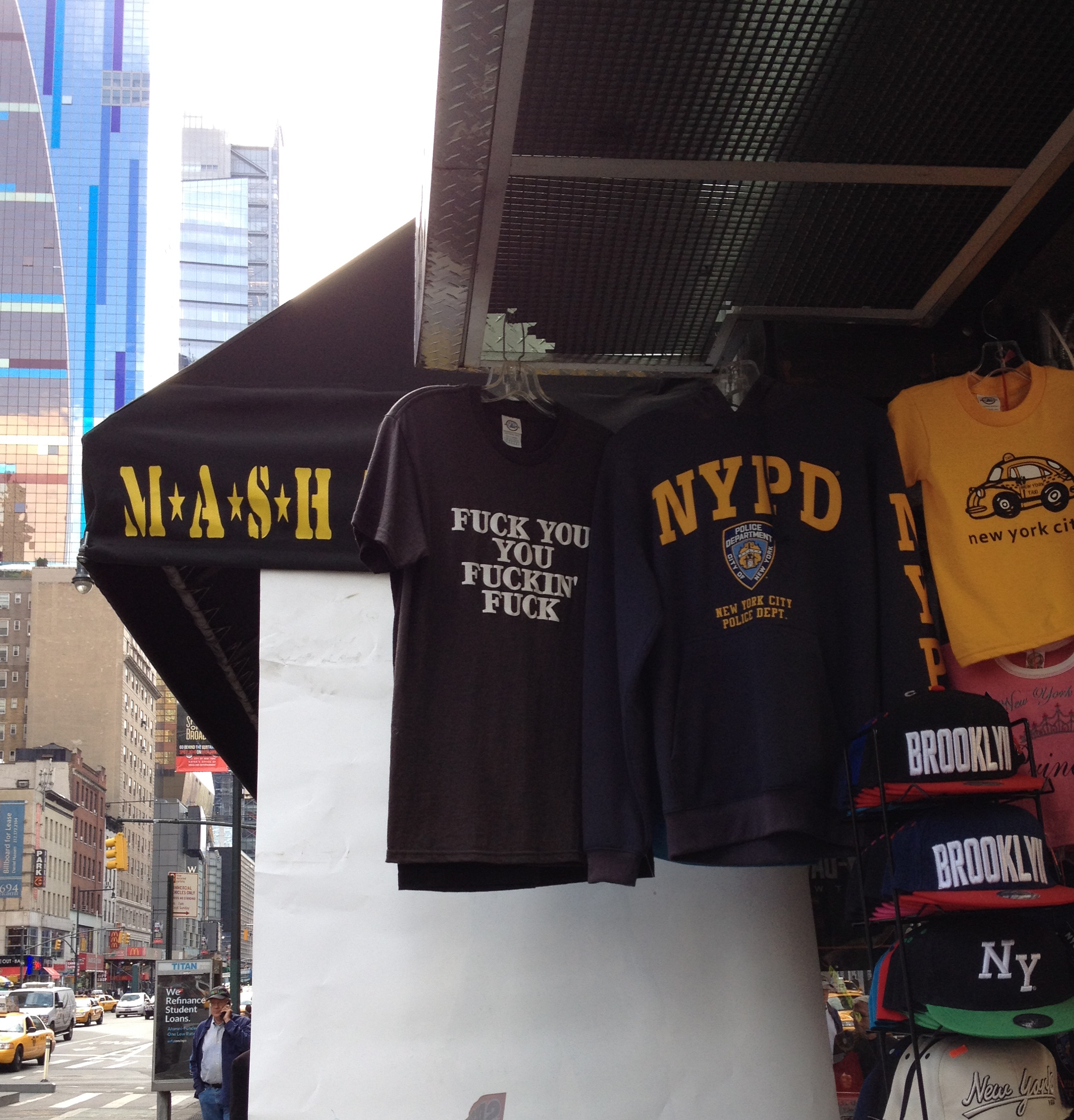
I’m glad to be back in New York City. It’s a funny place. A walk down the street can be an education. When I saw this shirt the other day, I had a thought—what happens when words lose their meaning? I’ve been fascinated by the concept of “bad words” since I was a kid. Although I never uttered them, I wondered why they were considered bad. That thought gets stretched out a big longer in this instance, to wondering whether overuse destroys the power of the swear. Although most religions claim taboo words are made that way by god(s), some psychologists have suggested that the function of swearing lies precisely in its ability to shock. If so, what happens when the shock wears off? We may need to come up with new words for copulation to take the place of the f-bomb. And it’s not just naughty words that are at risk.

I saw a report a while back that made reference to “Libertarian fundamentalist Jimmy Wales.” Wales is at least the co-, if not sole, founder of Wikipedia. The libertarian label didn’t surprise me, but the fundamentalist part did. Wales is no conservative religious believer. Of all people fundamentalists are the least likely to support a wiki concept where the final version is never nailed down. It would be like reading a Bible where the words keep floating around the pages, shifting combinations, changing meanings. Of course, the concept of words even having meanings is a matter of debate. A colleague of mine used to remind me, “words don’t have meanings, they have usages.” He was technically correct. Even the f-bomb, when uttered in other languages, as sophomorically portrayed in many a movie, has an entirely different usage.

Dictionaries are filled with archaic words. I don’t recall the last time I saw eftsoons in print, or iwis, or maugre. Have they lost their meanings, or just their usages? In any case they live on in written language history. Overuse of a word leads to calls for restraint among literary types, as when the word “awesome” got out of control a few years back. The case for the f-word is somewhat different. When I walk through the streets of the city it is obvious that it is one word that is in no danger of dying out. The gerund, or more properly, adjectival form ending in -ing, is freely interspersed in blasé sentences with complete abandon. For some people it appears to fill the mental pause generally reserved for “uh” or “um.” When it ceases to shock us, it will become just another Howard Stern of the lexical world. And some tee-shirts, I expect, will be available quite cheaply then.


Honorable Theft

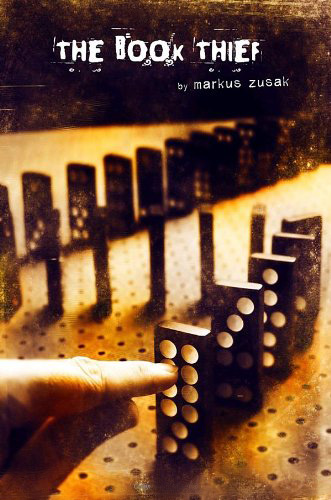
The_Book_ThiefYoung adult literature can be amazingly profound. My curiosity about Markus Zusak’s The Book Thief bubbled to the surface after the movie was released last weekend. I didn’t see it, along with thousands of others, because of its very limited theatrical release. I’m sure you know that distressing feeling when you type your zip code into Fandango and come up with zero results. Short of going all the way into New York City just to see a movie, I was pretty much out of luck. The silver lining is that it made me read the book. I’m not sure what I was expecting (I can also be the victim of hype), but what I found was deeply engrossing while also being deeply disturbing. Spoiler alert!

The Book Thief is set in Nazi Germany. It is narrated by Death. The protagonist, Liesel Meminger, represents the plight of all people; we have no control over when, where, or to whom we’re born. With parents considered enemies of the state, the Book Thief is raised by foster parents who are German, but who are also poor. They are good people, and much of the tension in the book revolves around their hiding a Jewish friend in their small house. The convention of Death as a narrator predates George Pendle’s Death: A Life, by three years. Although in the end Death is the only survivor, he is remarkably sympathetic to the human condition. Death also supplies the main religious observations in a book otherwise devoid of God. When Death attempts to pray during the horrors of war, a devastating conclusion is drawn: “God never says anything.” Is that why Veteran’s Day celebrations tend to be so silent? There may not be any atheists in foxholes, but there’s no God there either.

As Death stalks all those who are dear to her, Liesel finds her comfort in books. Although she begins the story illiterate, and although books are difficult to find in a poor family in a nation at war, Liesel discovers that words have a power that even dictators can’t steal. Her love of reading saves her life as her street is obliterated in an air raid. Even Death has to question the futility of war. In my most idealistic of moments, I hold the conviction that many of the world’s evils would be eliminated if people just read more. We would discover, for example, that even the devastation of war can be overcome by words. The only book Death is portrayed as reading is the Book Thief’s life story. And this gives Death pause, because even young adult literature can be amazingly profound.


Crowing Up

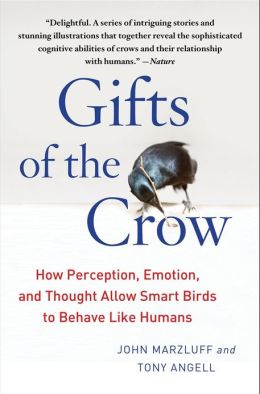
GiftsOfTheCrow Whether we climb up or down the evolutionary scale, one factor remains constant—our human sense of superiority. Despite the castigation of biblical-era thinking in the eyes of many scientists, few are willing to relinquish that Genesis-bestowed sense of being the pinnacle of nature. We know the universe is vast, but we assume we’re the best and brightest in it. Climbing down the ladder a bit, we like to distance ourselves from our fellow creatures because of our superior mental capacity. That is why I am so engrossed by scientists who explore animal intelligence. We find we are not so different after all. Gifts of the Crow: How Perception, Emotion, and Thought Allow Smart Birds to Behave Like Humans, by John Marzluff and Tony Angell is such a book.

If you’re like most people in this electronic age, you probably haven’t given much thought to corvids. Corvids are the members of the crow family: ravens, jays, magpies, and, of course, crows. Scientists have long known that these birds are exceptionally intelligent, and Marzluff and Angell have written a spell-binding little book that shows a remarkable level of intellect among the birds. Documented cases of tool making and use, conscientious interaction, and perhaps even language, have occurred among the corvids. We try to shoo them from our crops with “scarecrows” and we poison them en masse when they become “pests,” but when we take the time to understand them, we find that we may be far darker than the crows.

Not that Gifts of the Crow is all that easy-going. There is plenty of brain physiognomy and quite a bit about brain chemistry here as well. Knowing that not all of us are scientists, though, Marzluff and Angell include a generous portion of narrative description of what corvids have been observed to accomplish. For three days in a row I climbed off the bus stunned, scanning the skies for crows, just to see for myself. In this suburban jungle outside the New York City metropolitan area, crows aren’t so abundant as they were when I lived in the Midwest. They will, however, serve to remind me, when I see one, that our privileged place in nature has more to do with our thumbs than with our intelligence. When I saw a solitary crow atop a tree during a neighborhood stroll after finishing the book, I stopped, smiled, and bowed. Nature belongs to each and every creature, and there sat one intelligent enough to appreciate it.